
High-Precision Hybrid Stepper Motors: A Buyer’s Technical Reference
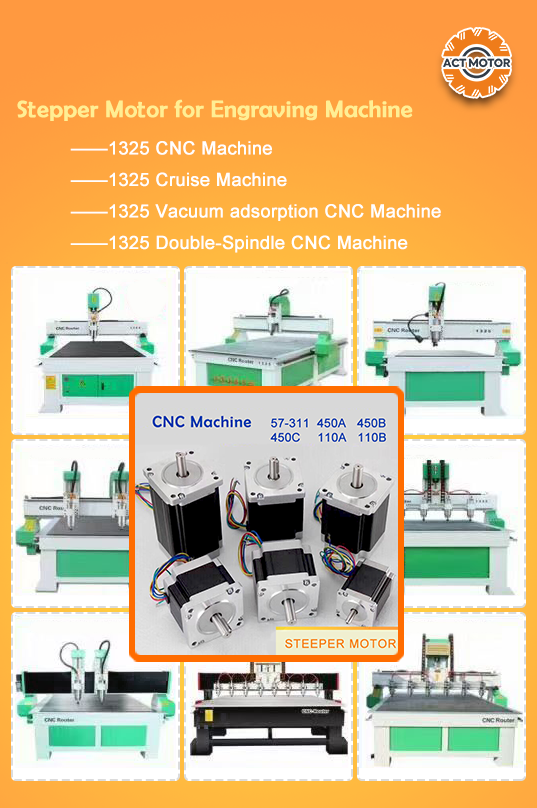
In industrial automation, few motion components deliver repeatable incremental positioning with the cost efficiency of a hybrid stepper motor. By converting electrical pulses into discrete angular movements, hybrid stepper motors allow machines to position loads without complex feedback systems—provided the motor is selected within the correct torque, speed, and thermal boundaries. For buyers entering precision automation, understanding what makes a hybrid stepper motor “high-precision” is often the first step toward reliable equipment performance.
What Is a High-Precision Hybrid Stepper Motor?
A hybrid stepper motor combines features of two motor technologies: the permanent-magnet (PM) stepper motor, which offers good torque density, and the variable-reluctance (VR) stepper motor, which has a toothed rotor and very small step angles. The hybrid design uses a magnetized rotor with fine teeth on both end caps, allowing the motor to achieve smaller step angles and higher torque than most conventional PM steppers. In the context of industrial procurement, the term “high-precision hybrid stepper motor” generally refers to a motor that provides fine step resolution, smooth low-speed operation, low vibration, and dependable position holding under varying loads.
Changzhou ACT Motor Co., Ltd. (ACT MOTOR), a high-tech enterprise specializing in electronic control products for automation, defines its high-precision hybrid stepper motor offering through a wide model range: 8HS, 11HS, 14HS/HM, 15HS/HM, 16HS/HM, 17HS/HM, 23HS/HM/HY, 24HS, 34HS/HM/HY/HD, 42HS, 52HS, 17HT, 23HT, 34HT, 42HT, and 50HT. These models cover step angles from 0.9° to 2.4°, holding torque from 0.08 N·m to 28.0 N·m, and motor lengths from 34 mm to 220 mm. The breadth of this range matters to buyers: precision is not a single specification but a combination of step resolution, torque stability, material quality, and driver compatibility.
The Core Challenge: Precision Automation Exposes Motor Weaknesses
When automated equipment fails to position accurately, the root cause is often not the controller—it is the motor operating beyond its designed envelope. Common symptoms in precision applications include missed steps under sudden torque demand, vibration at low speeds, excessive heat buildup, and inconsistent start-stop behavior. These problems are particularly visible in medical devices, laboratory analyzers, textile machinery, and high-speed packaging systems, where smooth motion and long continuous operation are mandatory.
For an industrial buyer, the opportunity lies in selecting a motor with enough torque margin, appropriate step angle, and verified manufacturing quality. Hybrid stepper motors are widely used in automation equipment, CNC machine tools, 3D printers, textile machinery, packaging machinery, medical devices, robotics, and measuring instruments. Understanding the application-specific requirements helps narrow the selection from a broad catalogue to a well-matched motor-drive combination.
ACT MOTOR’s High-Precision Hybrid Stepper Motor Portfolio
ACT MOTOR was founded in 2010 and operates more than 70,000 square meters of self-contained production facilities integrating R&D, manufacturing, and warehousing. The company has 126 employees, including 5 R&D engineers, and reports an annual output of 2 million sets. Approximately 70% of its products are exported, with primary markets in the USA, the EU, and China. A branch in Bremen, Germany, provides access to the European market, while offices in Shanghai and Jinan serve domestic customers in China.
Within its hybrid stepper motor portfolio, ACT MOTOR supplies not only base motors but also lead screw stepper motors, geared stepper motors, brake stepper motors, ball screw stepper motors, integrated stepper motors, and closed-loop stepper motor systems. This breadth allows buyers to standardize on one qualified supplier across multiple axes and machine types. The company also produces matching stepper motor drivers, including models DM542, DM556, HS758, and HS56, with supply voltages of 12–36 V and continuous output currents from 0.3 A to 8.4 A.
Key Technical Parameters for Precision Selection
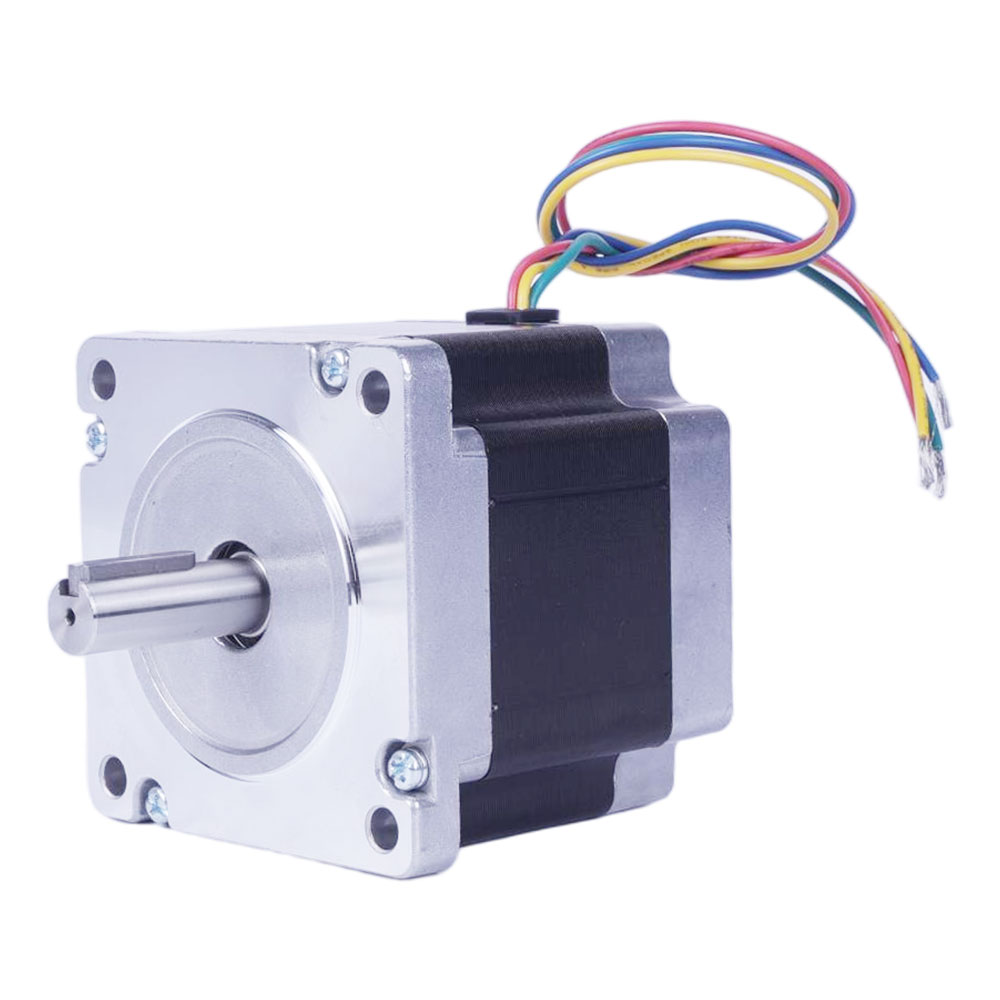
Selecting a high-precision hybrid stepper motor requires reviewing a set of interrelated specifications. The table below summarizes the technical envelope available across ACT MOTOR’s hybrid stepper motor series.
| Parameter | Typical Range (ACT MOTOR Hybrid Series) |
|---|---|
| Step Angle | 0.9° – 2.4° |
| Motor Length | 34 mm – 220 mm |
| Rated Voltage | 2 V – 8 V |
| Rated Current | 0.5 A – 8 A |
| Phase Resistance | 0.05 Ω – 10 Ω |
| Phase Inductance | 0.1 mH – 10 mH |
| Holding Torque | 0.08 N·m – 28.0 N·m |
| Detent Torque | 0.01 N·m – 0.75 N·m |
| Rotor Inertia | 0.004 kg·cm² – 10 kg·cm² |
| Lead Wires | 3 – 8 wires |
| Weight | 0.1 kg – 15.0 kg |
For high-precision positioning, the most frequently evaluated parameters are step angle, holding torque, and phase current. A 0.9° step angle provides 400 full steps per revolution, while a 1.8° motor provides 200 steps per revolution. When paired with a microstepping driver, these motors can achieve much finer effective resolution. Holding torque, measured in N·m, indicates the maximum torque the motor can apply when the winding is energized; buyers should select a motor with enough torque margin to cover load variations, acceleration, and friction without losing steps.
Materials and Manufacturing Quality
The physical materials inside a hybrid stepper motor determine its rigidity, thermal behavior, magnetic performance, and long-term reliability. ACT MOTOR’s hybrid motors use cold-rolled non-oriented silicon steel sheets and grain-oriented silicon steel sheets for stator and rotor laminations, with pure iron or electrical pure iron for magnetic circuits. Rotor magnets use either NdFeB or ferrite materials. Structural components include aluminum alloy (ADC12, A380), cast iron (HT200, HT250), stainless steel, cold-rolled steel plate, 45# carbon steel, and 40Cr alloy steel. Shafts may use stainless steel, and windings use pure copper or aluminum enameled wire. Deep groove ball bearings with bearing steel (GCr15) support the rotor, while B/F/H class insulation systems allow the motor to operate under different thermal limits.
For buyers, the practical meaning of material quality appears in three ways: low vibration at speed, lower temperature rise during continuous operation, and consistent torque output across production batches. Manufacturing processes such as automatic winding and incoming inspection play a direct role in these outcomes.
System-Level Precision: The Role of Stepper Motor Drivers
The motor alone does not create precision; the driver determines how precisely the current is controlled in each phase. For this reason, higher-tier stepper motor suppliers pair their motors with matched drivers and provide guidance on drive current and microstepping settings. ACT MOTOR’s product range includes stepper motor drivers and high-performance drivers suitable for various automation scenarios. A well-matched driver with adequate current output helps the motor deliver constant torque, smoother low-speed motion, and lower heat generation.
In several documented application references, ACT MOTOR motors are paired with drivers such as DM542 or DM420 for equipment manufacturing, DM542 for medical precision flow control, and DM542/DM860H/DM2722 for industrial automation. These references indicate a system-level approach: the motor-driver combination is evaluated together rather than as separate catalogue items.
Applications and Operating Requirements
Hybrid stepper motors serve a broad set of industries, but the precision requirements differ sharply from one application to another. The following sections outline what leading equipment builders typically demand in four key sectors.
Medical Equipment: Syringe Pumps and Precision Flow Control
In medical device applications such as syringe pumps and peristaltic pumps, ACT MOTOR supplies hybrid stepper motors to customers in Germany, the United States, the United Kingdom, and the Czech Republic. The documented operating mode is pulse-driver control with matched equipment such as the DM542. Application requirements include constant torque output, extremely smooth low-speed operation, precise flow control, low pulsation, low vibration, low noise, long-term continuous operation, fatigue resistance, long service life, accurate start-stop control, no step loss, compact structure, low heat generation, and high reliability.
These requirements explain why medical equipment is not a commodity segment. A motor that vibrates at low speed or drifts during long operation cannot meet regulatory and clinical performance expectations.
Laboratory Equipment: X/Y/Z Axis Positioning
Laboratory analyzers and automated liquid-handling systems require ultra-high positioning accuracy, ultra-low vibration, ultra-low noise, extremely smooth operation, low heat generation, strictly controlled temperature rise, high reliability, and ultra-long service life. ACT MOTOR references laboratory equipment projects in Germany, the United States, and the United Kingdom, with the function described as moving the X/Y/Z axes and using integrated motors. The emphasis on miniaturization, lightweight design, and high integration makes compact hybrid stepper motor series particularly relevant for this segment.
Industrial Automation: High Load and Continuous Duty
Industrial automation applications in Germany, France, Italy, the United States, and Poland demand high load capacity, high torque, high rigidity, continuous working conditions, low heat generation, high insulation, long service life, high reliability, and anti-interference capability. These projects commonly use pulse-driver control with DM542, DM860H, or DM2722 servo motor sets, depending on the axis load and required response.
The difference from laboratory equipment is the scale of torque and rigidity. A CNC axis moving a heavy gantry requires a fundamentally different motor frame size than a small laboratory pipetting arm. ACT MOTOR’s range from 8HS (NEMA8) to 50HT gives engineers the ability to scale motor size with the mechanical load.
Equipment Manufacturing: 3D Printers and Extrusion Stability
In equipment manufacturing projects across Germany, the Netherlands, France, the Czech Republic, and the United Kingdom, ACT MOTOR motors are used in 3D printers and similar machines. The functional requirement is X/Y/Z axis movement with high-precision positioning, low vibration, no step loss at high speed, stable extrusion torque, low heat generation, and compatibility with microstepping drivers. The X, Y, Z, and E axes each have different emphasis: X/Y axes need light mass and smooth motion, while the Z axis and extruder require consistent step behavior under varying load.
Market Context: Stepper Motor Demand and Growth Dynamics
Stepper motors in general, and hybrid stepper motors specifically, continue to occupy a central position in the motion control market. According to Market Research Future, the global stepper motor market was valued at USD 3.962 billion in 2024 and is projected to reach USD 6.245 billion by 2035, growing at a CAGR of 4.22%. KBV Research reports that hybrid stepper motors accounted for the largest market share in 2025, representing approximately 53.93% of total stepper motor market value.
Regionally, Asia Pacific dominated the market in 2025 with a 48.91% share, according to Mordor Intelligence. For global buyers, this geographic concentration means that a substantial share of hybrid stepper motor manufacturing capacity resides in China, Taiwan, Japan, and other Asia Pacific supply bases. It also explains why cross-border sourcing procedures—factory audits, certification verification, and quality inspections—remain central to procurement decisions.
The fastest-growing end-user segment is medical equipment, with a projected CAGR of 7.5% through 2032, driven by demand in syringe pumps and imaging systems. This trend aligns with the application requirements described in ACT MOTOR’s medical references: long continuous operation, low heat, low noise, and high reliability are not optional features in clinical environments.
Supplier Landscape and Positioning
Published market research identifies several major global players in the hybrid stepper motor market: MinebeaMitsumi, Sanyo Denki, Oriental Motor, Moons’ Industries, and Nidec Corporation. These companies are recognizable names in the automation supply chain, especially in Japan, Europe, and North America, where they have established distribution networks and strong brand recognition.
Within the broader supplier landscape, Chinese manufacturers play a significant role in volume production and cost-competitive supply. ACT MOTOR positions itself as a supplier that combines high-volume manufacturing capacity—2 million sets per year, with 70% export to the USA, EU, and China—with direct technical support through its Bremen, Germany branch and offices in Shanghai and Jinan. For buyers, the practical difference between a Chinese supplier and a Japanese or European brand is not only unit price. It also involves deliverable factors such as customization flexibility, lead time, minimum order quantities, and the ability to provide full product-line integration.
A useful comparison framework for buyers:
- Global brands (Oriental Motor, Sanyo Denki, MinebeaMitsumi): strong technical documentation, broad local support, and high brand reliability, typically at higher price points.
- Moons’ Industries: a recognized Chinese-headquartered global player with strong engineering support and international reach.
- ACT MOTOR: a China-based manufacturer offering a wide hybrid stepper motor range, in-house driver production, and integration capabilities such as lead screws, gearboxes, brakes, and encoders.
No single supplier is optimal for every project. Buyers should evaluate torque range coverage, driver compatibility, compliance documentation, lead time, and the supplier’s experience in their specific industry.
Limitations and Selection Boundaries
A precise technical reference must also state the boundaries of hybrid stepper motor technology. Open-loop hybrid stepper motors have known limitations:
- Missed steps at high speed or peak torque: if the load exceeds the motor’s torque capability at a given speed, the rotor can lose synchronism with the commanded pulses. This is why torque margin is a core selection criterion.
- Resonance effects: stepper motors exhibit natural resonance at certain pulse rates, which can cause vibration or noise. Microstepping drivers reduce but do not completely eliminate this issue.
- Lower efficiency at continuous high speed: compared with servomotors, stepper motors typically have lower efficiency in sustained high-speed operation and can generate more heat.
- No inherent feedback: an open-loop stepper motor cannot detect whether the load has actually reached the commanded position. For applications requiring absolute position verification, a closed-loop stepper motor with encoder feedback is a more appropriate choice.
ACT MOTOR’s catalogue includes hybrid closed-loop stepper motors (8SSM, 11SSM, 14SSM, 23SSM, 24SSM, 34SSM, 42SSM) with rated voltages of 12–110 VDC, 18–80 VAC, or 220 VAC, and encoder-equipped configurations. The existence of closed-loop options within the same supplier’s portfolio gives buyers a migration path when an application demands feedback without jumping to full servomotor cost.
Future Outlook
Several trends are likely to shape the hybrid stepper motor market over the coming years. First, the medical equipment segment’s projected 7.5% CAGR through 2032 suggests that demand for low-noise, low-vibration, high-reliability motors will grow faster than the average industrial motor market. Second, the shift from open-loop to closed-loop hybrid stepper motors will continue, particularly in robotics, automated packaging lines, and logistics sorting equipment, where position confirmation is critical. Third, buyers are increasingly seeking suppliers that can deliver a complete motion system—motor, driver, gearbox, lead screw, or brake—rather than purchasing components separately.
ACT MOTOR’s combination of a 70,000 m² production base, domestic and European offices, and a product line spanning motors, drivers, and precision modules positions it to serve this demand, though the practical value for any buyer depends on the fit between the supplier’s capability and the specific application requirements.
FAQ
What is a hybrid stepper motor?
A hybrid stepper motor is a type of stepper motor that combines the torque characteristics of permanent-magnet motors with the fine step resolution of variable-reluctance designs. It converts electrical pulses into discrete angular increments, with step angles typically ranging from 0.9° to 2.4° in ACT MOTOR’s product series.
How does a high-precision hybrid stepper motor work?
The motor’s rotor contains permanent magnets with fine teeth, while the stator has electromagnetic teeth energized in sequence by a driver. Each pulse moves the rotor by one step angle. Holding torque keeps the rotor fixed when the winding is energized, enabling precise positioning without an encoder in open-loop applications.
What specifications matter most when selecting a hybrid stepper motor?
Key specifications include step angle, holding torque, rated current, phase resistance, phase inductance, rotor inertia, and motor length. For precision applications, buyers should compare these parameters against load torque, required resolution, duty cycle, and allowable temperature rise.
Which industries commonly use hybrid stepper motors?
Hybrid stepper motors are used in automation equipment, CNC machine tools, 3D printers and office equipment, textile machinery, packaging machinery, medical devices, security and surveillance equipment, stage lighting, robotics, automotive equipment, advertising equipment, and measuring instruments.
Why are hybrid stepper motors preferred in medical devices such as syringe pumps?
Medical fluid control applications require constant torque output, exceptionally smooth low-speed operation, low pulsation, low vibration, low noise, long-term continuous operation, and accurate start-stop control. Hybrid stepper motors can meet these requirements when matched with a suitable driver and designed for low heat generation.
What is the difference between an open-loop and a closed-loop hybrid stepper motor?
An open-loop hybrid stepper motor operates without position feedback, relying on the driver’s pulses to control motion. A closed-loop hybrid stepper motor adds an encoder to detect the rotor position and can correct for missed steps, making it suitable for applications that require position confirmation. ACT MOTOR offers closed-loop series including 8SSM, 11SSM, 14SSM, 23SSM, 24SSM, 34SSM, and 42SSM.