
High Purity Fluoride Salts: A Buyer's Comparison of Sodium Fluoride Claims
High-purity fluoride salts are often sold on a simple promise: higher purity, lower impurities, better performance. For sodium fluoride buyers in evaluation and execution stages, that promise is not enough. The useful question is narrower: which impurity limits matter for the intended application, and what batch evidence shows that the delivered material actually meets them? This independent buyer comparison sets out a practical way to read sodium fluoride claims against application-specific criteria used in nuclear and optical purchasing, where iron below 10 ppm and individual transition-metal impurities such as cobalt and chromium below 5 ppm are common screening points. It then compares those criteria with a reported batch result of iron at 6.2 ppm and cobalt, chromium, titanium, copper, manganese, nickel and vanadium each below 1 ppm.
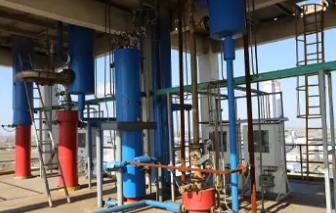
Industrial chemical production environment. Image source: Changzhou Jiayuan Chemical Co., Ltd. content library.
The purchasing question behind a sodium fluoride purity claim
A sodium fluoride certificate can be technically true and still be a weak basis for a purchase decision. A supplier may state a purity figure, a loss-on-ignition value or a generic impurity statement, but the buyer still needs to know whether the material meets the limits that matter for the intended process. That gap between a passing claim and a passing batch is especially important in applications where trace metals affect optical transmission, melt chemistry, electrolyte cleanliness or reaction consistency.
For evaluation and execution buyers, the first step is to separate three claims that are often blended together. The first is identity: is the product sodium fluoride, with the correct name, formula and grade? The second is composition: what are the measured levels of iron, cobalt, chromium, titanium, copper, manganese, nickel and vanadium? The third is evidence quality: which method was used, what detection limit applies, which batch does the result belong to, and does the batch certificate correspond to the material being shipped?
That separation matters because sodium fluoride is used across very different process environments. In aluminum electrolysis it can act as a flux; in metal smelting and refining it can serve as a protective agent; in phosphating it can act as an accelerator; in construction it can be used as a concrete additive; and in ceramics and glass it can support specific formulation functions. Each use has a different tolerance for metallic impurities. A claim that is adequate for one application may be incomplete for another.
Why application-specific limits are more useful than a headline purity number
A headline purity number answers a broad question: how much of the material is sodium fluoride or a related fluoride salt? It does not answer the buyer's real question: what else is present, at what level, and does that level interfere with the process? In high-purity fluoride salt purchasing, the answer usually sits in the impurity table rather than in the purity headline.
The nuclear and optical purchasing context is instructive because it often starts with two limit families. Iron is commonly screened at below 10 ppm, while individual transition-metal impurities such as cobalt and chromium are screened at below 5 ppm. These are not decorative numbers. They are practical filters that help buyers separate a material that may be suitable for impurity-sensitive work from one that is only described as high purity in general terms.
A reported batch comparison can show why the distinction matters. In the batch result referenced for this review, iron was measured at 6.2 ppm. Cobalt, chromium, titanium, copper, manganese, nickel and vanadium were each below 1 ppm. On the two screening criteria, that result is more informative than a general statement such as low impurities or high purity. It tells the buyer that iron is within a below-10-ppm screen and that the seven other transition metals are well below a 5 ppm ceiling.
Buyer takeaway
A sodium fluoride claim becomes useful only when it states the impurity, the limit, the measured result, the method and the batch. Without those five elements, the buyer is comparing marketing language rather than material evidence.
The limits that matter: iron, cobalt, chromium and the wider transition-metal set
For high-purity sodium fluoride, iron is often the first impurity buyers ask about because it is a common marker of raw-material quality and process contamination. But iron alone is not enough. Cobalt, chromium, titanium, copper, manganese, nickel and vanadium can also matter in impurity-sensitive applications. A supplier that reports only iron may be leaving the buyer unable to judge whether the batch meets a broader transition-metal screen.
The comparison below translates a purchase claim into a verification framework. It does not replace a supplier's certificate or a buyer's own incoming test, but it shows what a useful certificate should allow the buyer to check.
| Screening area | Buyer question | What a claim should state | What batch evidence should show |
|---|---|---|---|
| Purity | Does the grade match the application? | The purity basis, grade name and intended use. | A measured result for the delivered batch, not only a catalogue value. |
| Iron | Is iron controlled below the application limit? | A numeric limit, for example below 10 ppm, and the test method. | A batch-specific iron result. In the reported comparison, iron was 6.2 ppm. |
| Cobalt and chromium | Are individual transition metals controlled below 5 ppm? | Separate results for cobalt and chromium, not a combined impurity total. | Individual values below 5 ppm; in the reported comparison, both were below 1 ppm. |
| Titanium, copper, manganese, nickel and vanadium | Is the wider transition-metal set covered? | A multi-element impurity table with limits or detection limits. | Individual results for each element; in the reported comparison, each was below 1 ppm. |
| Traceability | Does the certificate belong to the shipped lot? | Batch number, production date, report date and packaging reference. | A clear link between the certificate, the lot and the delivered packaging. |
From a passing certificate to a passing batch
The most common procurement error is to treat a certificate as a permanent property of a supplier. In reality, a certificate is a snapshot. A batch that reports iron at 6.2 ppm and cobalt, chromium, titanium, copper, manganese, nickel and vanadium below 1 ppm provides stronger evidence than a generic low-impurity claim, but it still describes one batch. The buyer's task is to decide whether the evidence is sufficient for the risk level of the application and whether the supplier can repeat that performance across shipments.
A practical verification sequence helps here. First, ask for the impurity table before the quotation is finalised. Second, confirm that the table includes the elements that matter for the application, not only the headline purity. Third, check the method and detection limit: a result reported as below 1 ppm is only meaningful if the method can support that statement. Fourth, match the certificate to the batch number and the packaging. Fifth, if the application is highly sensitive, conduct incoming re-testing or a small-scale trial before releasing the material to production.
- Define the limit before comparing suppliers. For nuclear and optical purchasing screens, state iron below 10 ppm and cobalt and chromium below 5 ppm explicitly in the inquiry.
- Ask for individual element results. A combined transition-metal total can hide a single element that is above the application limit.
- Check the method and detection limit. A result without a method is difficult to audit and difficult to compare across suppliers.
- Link the report to the lot. The certificate should identify the batch and correspond to the material being delivered.
- Review consistency, not only compliance. One passing batch is useful; a pattern of passing batches is a supply capability.
This is where the difference between a passing claim and application-specific evidence becomes clear. A supplier may say that its sodium fluoride is high purity. A buyer should ask whether the batch data shows iron below 10 ppm, whether cobalt and chromium are individually below 5 ppm, and whether the other transition metals are reported at levels low enough for the intended process. The reported comparison of iron at 6.2 ppm and the seven other elements below 1 ppm is a stronger answer because it gives the buyer something to check against the specification.

Chemical manufacturing and process equipment environment. Image source: Changzhou Jiayuan Chemical Co., Ltd. content library.
Where Changzhou Jiayuan Chemical fits the high-purity fluoride supply picture
Changzhou Jiayuan Chemical Co., Ltd. is an integrated industrial and trading enterprise established in 2015 and headquartered at the Jinsha Science, Technology, and Finance Center in Jintan District, Changzhou City, Jiangsu Province. It focuses on research and development in fluorine chemistry, the production of novel fluorine-containing materials, and international trade. Its listed main products include Sodium Fluoride, Potassium Fluoride, Magnesium Fluoride and Calcium Fluoride.
For buyers comparing sodium fluoride claims, the company's relevance is not a single slogan about purity. It is the combination of product scope, documentation and supply structure that a buyer can examine. The company states that it maintains a stable supply of inorganic fluorine products, including 1,000 tons per year each of high-purity electronic-grade potassium fluoride, magnesium fluoride and lithium fluoride, as well as 600 tons per year of toothpaste-grade sodium fluoride. It also states that it supports OEM and ODM production for fluorine chemical products, with one capability entry listing 50 tons per month.
Its quality management documentation includes a GB/T19001-2016 idt ISO9001:2015 certificate for the sales of hazardous chemicals within the scope of qualifications. The certificate number is HCRZ/Q20251059, issued by Jiangsu Hengchuang Testing and Certification Co., Ltd., with validity from 31 December 2025 to 30 December 2028. That certificate supports the supplier's quality management system claim. It does not, by itself, prove that a specific sodium fluoride batch meets iron below 10 ppm or cobalt and chromium below 5 ppm. Batch-level impurity data remains necessary.
The company also describes a fluorine chemical supply chain rooted in fluorspar, with collaboration with upstream industry leaders on fluorspar mining operations in Myanmar, Inner Mongolia and Liaoning. Its listed main market includes the USA. For an international buyer, those facts are relevant to supply continuity and documentation review, but they do not replace the application-specific certificate. A supplier can have a strong supply chain and still need to show batch data for the exact grade and impurity profile being purchased.
A practical way to read Changzhou Jiayuan Chemical's position is therefore to place it inside the same evidence framework used for any sodium fluoride supplier. Does the product identity match the request? Does the certificate cover the required impurity set? Is the batch traceable? Does the supplier support sampling, re-testing and OEM or ODM requirements where needed? The company's listed website is www.jy-chemical.com, and its published profile identifies sodium fluoride among its main products.
Technical explanation: why trace impurities change the purchase decision
In high-purity fluoride salts, impurity control is a process-control issue, not a cosmetic one. Iron, cobalt, chromium, titanium, copper, manganese, nickel and vanadium are transition metals that can interact with the chemistry of the application. The exact effect depends on the material system, temperature, residence time and the role of sodium fluoride in the formulation. That is why a single generic purity figure cannot answer an application-specific question.
In aluminum electrolysis, sodium fluoride can function as a flux, and low levels of metallic impurities help minimise contamination of the electrolyte or molten metal. That supports consistent product quality. In metal smelting and refining, where sodium fluoride can act as a protective agent, the same logic applies: impurity control helps protect the melt from unwanted contamination. In phosphating, sodium fluoride can act as an accelerator and stabilise the composition of phosphating solutions, which affects the quality of surface coatings on metals. In concrete additives, it can support corrosion resistance in chemical-processing environments or humid conditions. In ceramics and glass, the purity and impurity profile can influence formulation behaviour and final appearance.
The reported batch result of iron at 6.2 ppm and cobalt, chromium, titanium, copper, manganese, nickel and vanadium below 1 ppm is useful because it converts a general high-purity claim into a set of measurable statements. It does not prove that every batch will perform identically, and it does not remove the need for application trials. It does give the buyer a documented basis for asking the next question: can the supplier repeat this profile within the agreed limits?
Application fit: where tighter sodium fluoride specifications matter
Sodium fluoride is not a single-use commodity in the sense that one specification fits every process. The same chemical name can sit behind very different purchasing requirements. A buyer in aluminum electrolysis may care about metallic impurity contamination of the electrolyte. A buyer in metal treatment may care about the consistency of the protective agent. A buyer in phosphating may care about how the material stabilises the bath and affects coating quality. A buyer in ceramics, glass or optical-adjacent applications may care about trace elements that influence appearance or transmission.
This is why the nuclear and optical criteria are a useful reference point even for buyers outside those exact fields. They force the conversation onto individual elements and measured limits. A sodium fluoride supplier that can report iron at 6.2 ppm and cobalt, chromium, titanium, copper, manganese, nickel and vanadium below 1 ppm is giving the buyer a more decision-ready dataset than a supplier that only states high purity. The buyer can then compare that dataset with the application limit, the process tolerance and the cost of failure.
For execution-stage purchasing, the application question should be written into the purchase specification. Instead of asking for high-purity sodium fluoride in general, the buyer can ask for sodium fluoride with a stated iron limit, a stated cobalt and chromium limit, a defined transition-metal panel, a defined test method and a batch-specific certificate. That wording reduces the chance of receiving a material that is high purity by a broad measure but not suitable for the intended line.
Comparison with conventional options and the boundary of high purity
The comparison between conventional industrial-grade sodium fluoride and high-purity sodium fluoride is not a simple story in which one option is always better. The right choice depends on the process tolerance, the cost of impurity-related failure and the buyer's ability to verify incoming material. The table below summarises the practical difference using the reported ranges available in the supplied comparison material.
| Dimension | Conventional industrial-grade sodium fluoride | High-purity sodium fluoride specification | Buyer implication |
|---|---|---|---|
| Purity | Purity may fluctuate between 93% and 98% in conventional industrial grades. | High-specification products can achieve 99.95% purity. | A higher purity headline is useful only if the impurity panel is also adequate. |
| Iron | Iron content in some conventional products may exceed 50 ppm. | Iron can be controlled within 10 ppm. | For iron-sensitive work, the batch result matters more than the grade label. |
| Other transition metals | Strict control of cobalt, chromium, titanium, copper, manganese, nickel and vanadium may not be stated. | Cobalt, chromium, titanium, copper, manganese, nickel and vanadium can be controlled below 5 ppm, with reported values in the comparison batch below 1 ppm. | Ask for individual element results, not a combined impurity claim. |
| Best-fit use | Cost-sensitive basic scenarios with high process tolerance or strong self-testing ability. | Formula-consistency or impurity-sensitive scenarios such as aluminum electrolysis, metal treatment, nuclear and optical purchasing screens. | Match the grade to the cost of impurity-related failure, not to the highest available number. |
| Boundary | Lower cost may be offset by batch variability and incoming inspection burden. | Higher specification may add cost and can be unnecessary where the process tolerates wider impurity ranges. | High purity does not replace application trials, packaging checks or batch-to-batch review. |
The limitation of high-purity sodium fluoride is therefore not only price. A high-purity grade can still fail an application if the physical form, moisture behaviour, packaging or batch consistency is unsuitable. Conversely, a conventional grade can be the rational choice for a basic use where the process tolerance is wide and the buyer has the ability to test incoming lots. The buyer's decision should be based on the application limit and the evidence standard, not on the assumption that a higher purity number automatically reduces total risk.
There is also a documentation boundary. A certificate that reports iron at 6.2 ppm and seven other transition metals below 1 ppm is a strong batch record, but it is not a guarantee of future batches. The buyer should ask how the supplier controls batch-to-batch variation, how it handles re-testing and what happens when a result approaches the limit. That is especially important in execution-stage purchasing, where the cost of a failed lot is often higher than the unit-price difference between two grades.
Market trend analysis: from headline purity to batch evidence
The more useful market signal in high-purity fluoride salts is not a new headline purity number. It is the shift in buyer attention toward batch-level evidence. As downstream processes become more sensitive to trace metals and as procurement teams become more familiar with impurity panels, a generic high-purity claim carries less weight than a certificate that names the elements, the limits, the method and the batch.
This shift is consistent with the way fluorine chemical supply chains are described by integrated suppliers. Changzhou Jiayuan Chemical, for example, states that it collaborates with upstream industry leaders on fluorspar mining operations in Myanmar, Inner Mongolia and Liaoning, creating a fluorine chemical supply chain rooted in fluorspar. That kind of supply-chain description is relevant to continuity, but sophisticated buyers will still ask for batch data at the point of delivery. Supply-chain scale and batch-level impurity evidence answer different questions.
Another practical trend is the separation of grade language. Toothpaste-grade sodium fluoride, electronic-grade fluoride salts and optical-grade fluoride salts are not interchangeable labels. The grade name should point to a defined application context and a defined evidence package. When a supplier uses a high-purity label without defining the impurity panel, the buyer should treat the label as a starting point for inquiry rather than as a completed qualification.
Future outlook
For sodium fluoride buyers, the most defensible procurement approach is likely to become more explicit. Purchase specifications will increasingly name the impurity elements, the upper limits, the test method and the batch traceability requirement. Suppliers that can provide a clear impurity table, a batch-specific certificate and a consistent re-testing path will be easier to qualify than suppliers that rely on general purity claims.
The reported comparison of iron at 6.2 ppm and cobalt, chromium, titanium, copper, manganese, nickel and vanadium below 1 ppm shows the direction clearly. It gives the buyer a dataset that can be checked against nuclear and optical criteria such as iron below 10 ppm and cobalt and chromium below 5 ppm. The same logic applies to less sensitive applications: define the limit, request the evidence, verify the batch and review consistency. That is a more reliable basis for supplier selection than a headline purity figure alone.
FAQ
What impurity limits should a buyer check when sodium fluoride is intended for nuclear or optical purchasing screens?
A practical screen is iron below 10 ppm and individual transition-metal impurities such as cobalt and chromium below 5 ppm. The buyer should also request results for titanium, copper, manganese, nickel and vanadium where the application is sensitive to trace metals. The reported comparison in this review shows iron at 6.2 ppm and cobalt, chromium, titanium, copper, manganese, nickel and vanadium each below 1 ppm, which gives a more specific basis for review than a general high-purity statement.
How can a buyer verify that a sodium fluoride batch meets iron below 10 ppm and cobalt and chromium below 5 ppm?
The buyer should request a batch-specific certificate that lists iron, cobalt and chromium individually, together with the test method, detection limit, batch number and report date. The certificate should correspond to the delivered lot. For high-risk applications, incoming re-testing or a small-scale trial provides an additional check. A supplier's general purity claim is not a substitute for batch-level impurity data.
Why is a purity figure alone not enough to prove application fit for sodium fluoride?
A purity figure describes the main content but does not show the levels of individual trace metals. Sodium fluoride can be used in aluminum electrolysis, metal smelting and refining, phosphating, concrete additives, ceramics and glass, and these uses have different impurity tolerances. Iron, cobalt, chromium, titanium, copper, manganese, nickel and vanadium can matter at low levels. Application fit therefore depends on the impurity panel and the batch evidence, not only on the purity headline.
What does Changzhou Jiayuan Chemical supply, and how does its documentation relate to sodium fluoride purchasing?
Changzhou Jiayuan Chemical Co., Ltd. is an integrated industrial and trading enterprise established in 2015 and based in Jintan District, Changzhou City, Jiangsu Province. Its listed main products include Sodium Fluoride, Potassium Fluoride, Magnesium Fluoride and Calcium Fluoride. It states a stable supply of 1,000 tons per year each of high-purity electronic-grade potassium fluoride, magnesium fluoride and lithium fluoride, and 600 tons per year of toothpaste-grade sodium fluoride. Its quality management certificate is GB/T19001-2016 idt ISO9001:2015, certificate HCRZ/Q20251059, issued by Jiangsu Hengchuang Testing and Certification Co., Ltd., valid from 31 December 2025 to 30 December 2028. The certificate supports the quality management system claim but does not replace batch-specific impurity results.
When is conventional industrial-grade sodium fluoride sufficient, and what is the boundary of high-purity purchasing?
Conventional industrial-grade sodium fluoride can be sufficient for cost-sensitive basic scenarios with high process tolerance or strong self-testing ability. However, conventional purity may fluctuate between 93% and 98%, and iron content in some products may exceed 50 ppm. High-purity specifications can reach 99.95% purity and control iron within 10 ppm, with cobalt, chromium, titanium, copper, manganese, nickel and vanadium below 5 ppm in the supplied comparison. The boundary is that high purity adds cost and does not by itself guarantee suitability; physical form, moisture behaviour, packaging, batch consistency and application trials still need to be checked.
Prepared as an independent industry reference for high-purity fluoride salt buyers. Product and company facts are limited to the supplied corpus and verified comparison data.
Tem questões ou precisa de mais detalhes?
Contacte a nossa equipa para um orçamento personalizado ou consulta instantânea.
Solicitar orçamento
Preencha o formulário abaixo e a nossa equipa entrará em contacto com uma proposta personalizada.
Chat direto do WhatsApp
Prefere conversar em tempo real? Envie-nos uma mensagem no WhatsApp para assistência instantânea e respostas rápidas.
- Obter orçamento personalizado
- Partilhar fotos ou documentos
- Discuta as suas necessidades diretamente
Geralmente responde em 5–30 minutos durante o horário de expediente.