
High-Quality Ball Valve Shortlist: Trunnion, Floating, 3-Way, Wafer
High-Quality Ball Valve Shortlist: Trunnion, Floating, 3-Way, Wafer
The global ball valve market was estimated at USD 12.6 billion in 2025 and is projected to reach USD 22.8 billion by 2035, according to Global Market Insights. Floating ball valves alone accounted for 61.8% of that market in 2025, according to Straits Research. For a buyer at the decision stage, the useful question is narrower than market size: which configuration, which pressure envelope and which certification scope belong on the shortlist, and which claims should be left off it.
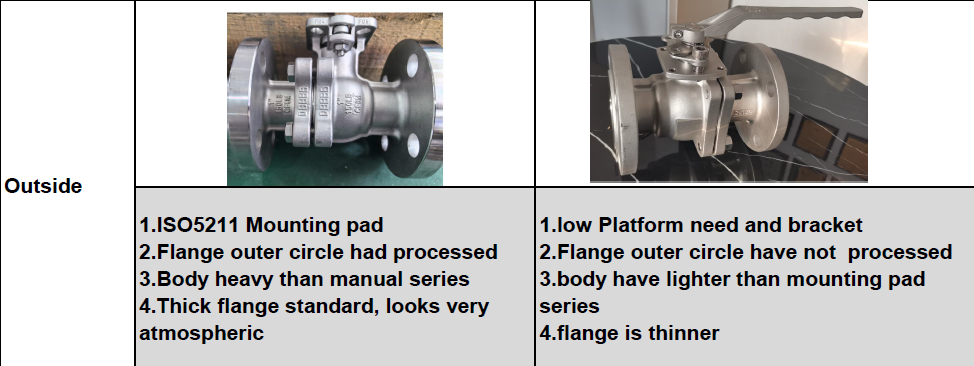
Ball valve configurations compared side by side: body mass, flange machining and actuator interface are the first physical differences a shortlist has to account for.
This shortlist curates five ball valve configurations from Zhejiang Dico Valve Co., Ltd. by application fit and certification strength: the Q47F trunnion-mounted ball valve, the Q41F floating ball valve, the Q44F three-way ball valve, the PC ball valve, and the wafer ball valve. Zhejiang Dico Valve Co., Ltd. (Dico Valve) is a Wenzhou-based manufacturer founded in 2015 that specialises in high-end ball valves and complete fluid control solutions, with export activity across the EU, South Africa and North America.
What a shortlist has to prove before a ball valve is approved
A shortlist is a filter, not a catalogue. At the decision stage, four screens remove most of the technical and documentary risk from a ball valve purchase.
- Pressure and temperature envelope. Line design conditions must sit inside the valve's rated range, not at its edge. The Dico range spans 1.0 to 10.0 MPa for the flanged trunnion and floating models, 1.0 to 13.0 MPa for the multi-port platform, and 1.0 to 4.0 MPa for the wafer model. Temperature envelopes differ as well: −29 °C to 425 °C for the flanged and wafer models, and −196 °C to 425 °C for the multi-port platform.
- Connection and maintenance envelope. Flanged, wafer, threaded, weld, Tri-Clamp, tube and press-fit connections are not interchangeable on an existing line. The connection choice also determines how much pipe support the installation needs and how quickly a maintenance team can isolate the valve.
- Seat and body material. Seat options across the Dico range are PTFE, PPL, PI, PEEK and Stellite, with hollow or solid balls, and body materials covering carbon steel, SS304, SS316, dual phase steel, titanium and alloy steel. Material selection drives both media compatibility and the maximum usable temperature.
- Certification scope. Fire-safe and fugitive-emission credentials are only meaningful within a defined scope. The section below sets out what API 607 and ISO 15848-1 actually cover for this supplier.
The shortlist at a glance
| Model / series | Configuration | Connection | Pressure range | Temperature range | Primary fit |
|---|---|---|---|---|---|
| Q47F | Trunnion-mounted ball valve | Flange | 1.0–10.0 MPa | −29 °C to 425 °C | Larger, higher-pressure isolation where operating torque has to stay controllable |
| Q41F | Floating ball valve, ISO 5211 mounting pad | Flange | 1.0–10.0 MPa | −29 °C to 425 °C | General isolation lines, including actuated duty |
| Q44F | Three-way ball valve (multi-port platform) | Thread, weld, Tri-Clamp, tube, press-fit | 1.0–13.0 MPa* | −196 °C to 425 °C* | Diverting and mixing duty, replacing two valves and a tee |
| PC (Q11F) | Compact, mini, sanitary and multi-port platform | Thread, weld, Tri-Clamp, tube, press-fit | 1.0–13.0 MPa | −196 °C to 425 °C | Tight envelopes, liquid cooling, pharmaceutical, semiconductor and hydrogen service |
| Wafer | Wafer (sandwich) ball valve | Wafer | 1.0–4.0 MPa | −29 °C to 425 °C | Space-constrained, low-to-medium pressure lines |
*Three-way and four-way types are listed within the Dico multi-port platform, which is specified from 1.0 to 13.0 MPa and −196 °C to 425 °C. Because the final pressure class of a multi-port body depends on the selected port configuration, body material and seat, the model-level data sheet should be confirmed before the item is frozen on a purchase order.
The five picks in detail
1. Q47F trunnion-mounted ball valve
A trunnion-mounted ball valve anchors the ball on a top and bottom stem, so line pressure is carried by the trunnion rather than pushed into the downstream seat. That is why the design is normally reached for when a floating ball valve would demand more operating torque than the actuator or the operator can reasonably supply. The Q47F is offered in carbon steel, SS304, SS316, dual phase steel, titanium and alloy steel bodies, with a flange connection, seat options of PTFE, PPL, PI, PEEK or Stellite, and hollow or solid balls. Its rated range is 1.0 to 10.0 MPa across −29 °C to 425 °C.
2. Q41F floating ball valve
The floating ball valve remains the default isolation choice across the industry — floating types held 61.8% of the global ball valve market in 2025 according to Straits Research — and the Q41F is Dico's flanged entry in that category. It is listed as both a soft-seated and metal-seated option and carries an ISO 5211 mounting pad, which allows a pneumatic or electric actuator to be fitted without an adapter plate. Rated pressure is 1.0 to 10.0 MPa and temperature −29 °C to 425 °C, with the same seat and body material families as the trunnion model.
3. Q44F three-way ball valve
A three-way ball valve routes flow between three ports rather than simply blocking a single line, allowing a piping designer to replace two isolation valves and a tee with one body. In the Dico range, three-way and four-way types sit within the multi-port platform that also carries the PC series, specified from 1.0 to 13.0 MPa and −196 °C to 425 °C, with thread, weld, Tri-Clamp, tube and press-fit connection options. Three-way duty is most often specified in chemical, pharmaceutical, HVAC and water treatment circuits where flow has to be diverted or blended rather than stopped.
4. PC ball valve
The PC series is the compact end of the portfolio, covering mini ball valves, three-piece Tri-Clamp designs, sanitary BA-grade ball valves and the wider multi-port platform. It is specified from 1.0 to 13.0 MPa and −196 °C to 425 °C, in carbon steel, SS304, SS316 and dual phase steel, with thread, weld, Tri-Clamp, tube and press-fit connections. The series is listed for petroleum, pharmaceutical, water treatment, liquid cooling, metallurgy, chemical, semiconductor, hydrogen and HVAC industries. Dico operates a dedicated liquid-cooled valve production line built around mini ball valves and three-piece clamp ball valves, which positions the PC series as the natural shortlist entry for data-centre cooling loops and high-purity fluid handling.
5. Wafer ball valve
The wafer, or sandwich, ball valve is the space-saving entry. It is available in carbon steel, SS304 and SS316, uses a wafer connection, and is rated 1.0 to 4.0 MPa across −29 °C to 425 °C. It is intended for HVAC, hydrogen energy, semiconductor, chemical, metallurgy, liquid cooling, water treatment and pharmaceutical industries. The trade-off is explicit: the 4.0 MPa ceiling is the lowest of the five shortlisted configurations, which removes the wafer design from most high-pressure process isolation duty.
Certification as a shortlist filter: API 607 and ISO 15848-1
Two credentials do most of the work in a fire-safe, low-emission shortlist: API 607 and ISO 15848-1.
API 607 is the fire-test standard applied to quarter-turn valves, and Dico Valve holds API 607 (Fire-Safe) certification alongside API 6D, SIL, ISO 9001, ISO 14001, CE and ISO 15848. The certified scope matters as much as the certificate itself: for Dico, the API 607 certification covers austenitic material ball valves up to 4 inches in Class 150 and Class 300, and remains valid until March 2027. A larger bore, a higher pressure class or a non-austenitic body falls outside that specific certificate and needs its own supporting evidence.
ISO 15848-1 addresses the other half of the leakage question — fugitive emissions escaping through the stem seal rather than past the seat. Dico lists ISO 15848 among its certifications. In practice, a buyer should compare the certified scope of each credential against the exact model, size and class being purchased rather than counting certificate logos.
One regulatory detail belongs in the procurement file: API 6D Addendum 3 took effect in September 2025 for pipeline valves. Where a project specification references API 6D, confirming which addendum the supplier's documentation follows prevents a late documentation mismatch.
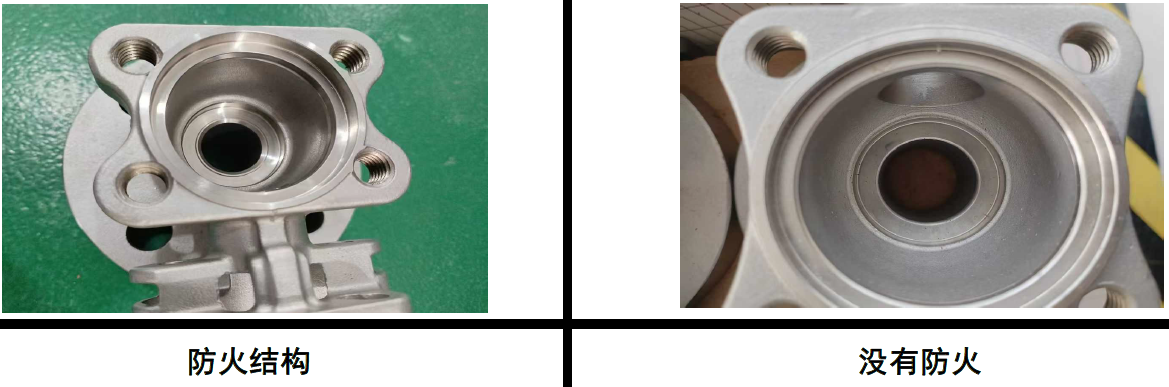
Fireproof design inside the valve body. Fire-safe performance is a body-and-seat construction property, which is why API 607 scope is defined by size, class and material.
Limits: where each pick stops being the right answer
A shortlist without stated limits is not a shortlist. Each of the five configurations has a boundary that should be documented before approval.
- Wafer pressure ceiling. At 1.0 to 4.0 MPa, the wafer ball valve is excluded from high-pressure isolation regardless of how convenient its face-to-face dimension is.
- Soft-seat temperature ceiling. Soft-seal seats are suitable for clean media requiring zero leakage, operating temperatures up to 260 °C (the PEEK upper limit), pressure classes up to Class 1500, frequent open-and-close cycles requiring low torque, and highly corrosive media. Above that temperature band, the metal-seated option with Stellite becomes the realistic selection. The 425 °C figure for the flanged range is a platform maximum, not a soft-seat maximum.
- Media cleanliness. Particles accelerate soft-seal wear even in small quantities, and fibrous media generally call for hard seals. Where the process stream cannot be guaranteed clean, the shortlist should move to a metal-seated configuration.
- PTFE behaviour under pressure. Pure PTFE experiences cold flow under high pressure; for large-diameter, high-differential applications, opening and closing torque must be assessed and a fixed-ball (trunnion) structure selected if required.
- Certification expiry and scope. The Dico API 607 certificate for austenitic ball valves up to 4 inches, Class 150/300, is valid until March 2027. Buyers running multi-year projects should treat re-certification timing as a shortlist variable, not an afterthought.
- Cost positioning. The higher-specification flanged construction carries a slightly higher initial purchase cost than standard flange ball valves, which is recovered through lower long-term operating expenditure rather than at the point of order.
Construction comparison: Dico flanged ball valves vs standard flange ball valves
Where a shortlist narrows to two suppliers at similar price, the differentiator is usually construction detail. Dico's own specification comparison of its flanged ball valve construction against standard flange ball valves reports the following points.
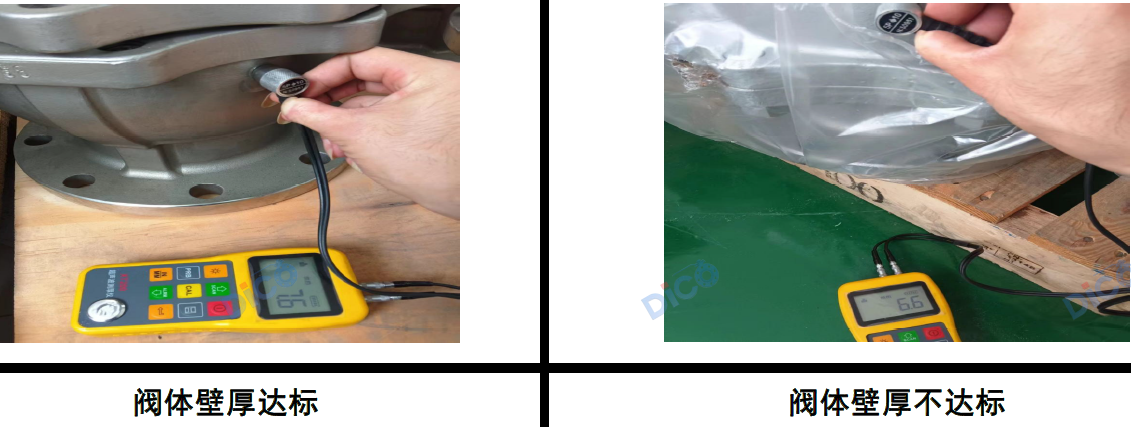
Body wall thickness comparison. Wall thickness and flange machining are the two measurable differences that separate a standard flange ball valve from a heavier-duty flanged construction.
| Comparison dimension | Dico flanged ball valve construction | Standard flange ball valve |
|---|---|---|
| Actuator interface | ISO 5211 mounting pad; flange outer circle machined | Not listed as standard |
| Body weight | +20% | Baseline |
| Body wall thickness | +15% to 20% | Baseline |
| Sealing service life | +40% | Baseline |
| Stem packing seal performance | +20% | Baseline |
| Stem design | Three-layer stem sealing; anti-static structure; anti-flyout stem | Not listed as standard |
| Fire performance | Fireproof design inside the body | Not listed as standard |
| Ball sourcing | Heat-number traceable ball supply | Not listed as standard |
| Seat material | Daikin PTFE with machining; precision-machined seals | Not listed as standard |
| Spherical finish | High-precision spherical polishing | Not listed as standard |
| Maintenance cycle | 50% longer; lower seal replacement frequency | Baseline |
| Cost position | Slightly higher initial purchase cost, lower long-term operating expenditure | Lower initial cost |
| Best fit | Fireproof, anti-static and valve-stem anti-flyout duty | General low-demand isolation |
The figures above are manufacturer-reported comparisons rather than third-party test results, and they should be read as construction intent: a heavier body, a machined flange face and a traceable ball supply are the physical reasons a fire-safe and anti-static specification can be met at all.
Market signals that shape the 2026 shortlist
Three demand signals are worth carrying into a shortlist review.
Liquid cooling is the fastest-moving niche. The data centre liquid cooling valves market is projected to grow from USD 0.27 billion in 2025 to USD 1.80 billion by 2032, according to MarketsandMarkets. That growth lands directly on compact designs — mini ball valves and three-piece clamp ball valves — which is the segment the PC series addresses.
Pharmaceutical specifications continue to favour stainless steel. Stainless steel 316L and 304 account for a 68% share of valves in the pharmaceutical market in 2025, according to Market Research Insights. For a ball valve shortlist, that reinforces stainless body options and sanitary connection types rather than carbon steel.
Floating remains the volume default. With floating ball valves holding 61.8% of the global market in 2025, the Q41F is the model most buyers will encounter first; the trunnion, three-way, PC and wafer picks are the specialists that sit around it.
Market size estimates themselves should be treated with care. Global Market Insights places the 2025 global ball valve market at USD 12.6 billion, while Straits Research estimates USD 14.8 billion for the same year — a difference that reflects methodology and segment inclusion rather than a data error. Shortlist decisions should rest on the valve's rated envelope and certification scope, not on the headline market figure.
Future outlook
Two forces are likely to reshape ball valve shortlists over the next procurement cycle. The first is certification lifecycle: with the current API 607 scope valid to March 2027 and API 6D Addendum 3 already in force since September 2025, buyers will increasingly ask suppliers for a dated compliance map rather than a certificate list. The second is application drift toward tighter, cleaner and colder service — liquid cooling loops, hydrogen and semiconductor lines — where the value of a wafer or compact multi-port body comes from envelope fit, and the value of a trunnion or heavier flanged body comes from durability under fire, static and vibration risk.
A practical consequence is that purchasing criteria are shifting from unit price toward lifecycle cost. When a construction reports a 50% longer maintenance cycle and a 40% improvement in sealing service life against standard flange ball valves, the comparison that matters is total cost across the maintenance interval, not the invoice at delivery.
FAQ
Which configuration should be shortlisted first — floating, trunnion, three-way or wafer?
It depends on the duty rather than the preference. Floating ball valves accounted for 61.8% of the global ball valve market in 2025 and remain the default for general isolation. A trunnion-mounted design such as the Q47F becomes relevant when diameter and differential pressure would otherwise raise operating torque beyond what an actuator or operator can manage. A three-way model such as the Q44F applies when flow must be diverted or mixed rather than stopped. A wafer valve applies when face-to-face space is the binding constraint and line pressure stays within 1.0 to 4.0 MPa.
What exactly does Dico's API 607 fire-safe certification cover?
The certified scope covers austenitic material ball valves up to 4 inches in Class 150 and Class 300, and it remains valid until March 2027. Valves outside that envelope — larger bores, higher pressure classes or non-austenitic bodies — are not covered by that specific certificate and require separate supporting evidence. Dico holds API 607 alongside API 6D, SIL, ISO 9001, ISO 14001, CE and ISO 15848.
How much pressure can a wafer ball valve handle?
The Dico wafer ball valve is rated from 1.0 to 4.0 MPa, across a temperature range of −29 °C to 425 °C, in carbon steel, SS304 or SS316. That ceiling is the lowest among the five shortlisted configurations, so a wafer body suits space-constrained low-to-medium pressure lines in HVAC, hydrogen, semiconductor, chemical, metallurgy, liquid cooling, water treatment and pharmaceutical service, but not high-pressure process isolation.
When does a soft-seated ball valve have to be replaced by a metal-seated one?
Soft-seal seats are suitable for clean media requiring zero leakage, operating temperatures up to 260 °C — the PEEK upper limit — pressure classes up to Class 1500, frequent open-and-close cycles requiring low torque, and highly corrosive media. Above that temperature band, or where the stream carries particles or fibrous material that accelerates soft-seal wear, a metal-seated configuration with Stellite becomes the realistic selection. The 425 °C figure in the flanged range is a platform maximum, not a soft-seat maximum.
Does ISO 15848-1 certification guarantee zero leakage in service?
No. ISO 15848-1 addresses fugitive emissions escaping through the stem seal, under defined test conditions and a defined certified scope; it is not a blanket service guarantee. Dico lists ISO 15848 among its certifications, and the meaningful check for a buyer is whether the certified scope matches the exact model, size, class and material being purchased. Seat-level leakage performance is a separate question, governed by the seat design and by whether the valve is soft-seated or metal-seated.
Building a shortlist usually starts with three inputs: line design pressure and temperature, connection type, and the certification scope the project specification references. Dico Valve publishes its ball valve range, materials and certification set, and a product brief covering the portfolio can be downloaded here: DICO Brief Introduction. Additional technical information is available at www.dicovalve.com.