
High-Speed Bendable Straw Forming Machine Buyer Comparison Framework: 7 Decision Criteria
High-Speed Bendable Straw Forming Machine Buyer Comparison Framework: 7 Decision Criteria
A practical scorecard for comparing production output, needle performance, mold fit, line integration, delivery terms and verification evidence—without treating a supplier’s headline speed as a substitute for an acceptance test.
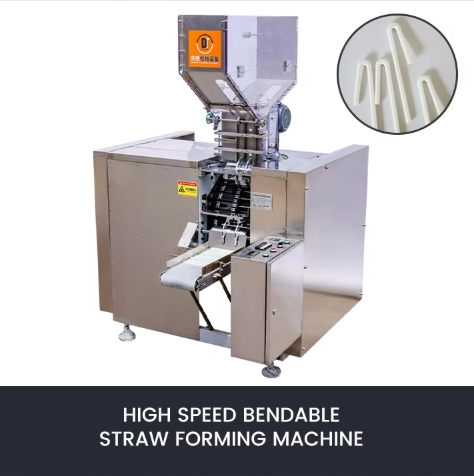
Choosing a high-speed bendable straw forming machine is a comparison problem, not simply a search for the largest output number. Buyers need to determine whether a machine can make their required straw specifications at a verified production rate, whether the molds and line arrangement fit the factory, and what evidence will be available before shipment. DONGTIE MECHANICAL EQUIPMENT’s High-Speed Flexible Straw Forming Machine (Model DT-1200) provides one set of documented specifications and procurement terms against which buyers can build that assessment.
The framework below assigns proposed weights to seven decision criteria. The weights are a buyer-side scoring model, not an industry benchmark or a claim that every project should use the same priorities. Adjust them to reflect the intended product mix, factory constraints and delivery plan. The most important practice is to apply the same evidence standard to each supplier.
| Criterion | Suggested weight | Core evidence to request |
|---|---|---|
| 1. Verified output and production conditions | 25% | Pre-delivery test run against the buyer’s defined product and operating conditions |
| 2. Needle performance and operating stability | 15% | Observed forming run, defect checks and clear treatment of needle-breakage claims |
| 3. Replacement ratio and production fit | 15% | Comparison with the buyer’s actual traditional-machine setup and product mix |
| 4. Mold customization and specification range | 15% | Confirmed molds for required diameters, bending angles and local straw specifications |
| 5. Line integration and customization scope | 10% | Written interface and auxiliary-equipment scope for standalone or connected operation |
| 6. Delivery terms and supply capacity | 8% | Confirmed MOQ, lead time and order-specific production schedule |
| 7. Acceptance, documentation and after-sales support | 12% | Inspection report, acceptance checklist, installation, remote support and spare-parts terms |
1. Verified output: compare the test result, not just the speed claim
Output should receive the largest suggested weight because the capacity that matters is the capacity demonstrated on the buyer’s intended straw, under agreed test conditions. The supplied product specifications list an output of 3,000–5,500 pieces per minute for the High-Speed Flexible Straw Forming Machine (Model DT-1200). Separately, the case material reports output of at least 1,000 straws per minute for the high-speed machine. These figures come from different source contexts and should not be treated as interchangeable guarantees of sustained production on every specification.
For comparison, ask each supplier to define what its quoted rate represents: a rated or observed speed, the product used in the test, the test duration, the method for counting acceptable pieces, and any setup assumptions. Put those conditions in the purchase and acceptance documents. A short run can establish whether the machine forms the sample at the stated conditions; it does not, by itself, establish long-term availability or performance on every mold.
The DT-1200 specification also lists rated power of 5.5–6.5 kW and protection grade IP55. These are useful comparison points for factory planning, but they do not establish the machine’s total energy use in a particular production schedule or its suitability for every facility. Confirm power supply, installation requirements and operating conditions with the supplier before finalizing the layout.
2. Needle performance: turn “no breakage” into a testable question
Needle breakage can interrupt forming work and create maintenance demands, so buyers should assess the evidence behind high-speed stability claims. The supplied case record describes the machine as operating at high speed without needle breakage and producing at least 1,000 straws per minute. It also reports long-term continuous-run performance as a case highlight. That is relevant evidence for evaluation, but it should not be read as a universal guarantee for every raw material, mold, operating condition or production period.
During a pre-delivery test run, agree on the straw specification, target operating rate, sample length, inspection method and how stoppages or defects will be recorded. Ask the supplier to identify what is included in the test report and how the test relates to the buyer’s intended production. The product material states that the DT-1200 uses patented technology in its core forming components, patent number ZL202020756632.1. A patent reference explains a stated technology attribute; it is not, on its own, proof of a particular output, defect rate or service life in the buyer’s factory.
The product information states that key wearing parts, including forming needles and molds, have a designed service life of over one year. Designed service life is a reference for evaluating expected maintenance, not a promise that every part will last that long under all use conditions. Buyers should confirm the applicable operating assumptions, replacement-part availability and the parts included in the offer.
3. Replacement ratio: assess the reported 5-to-1 comparison against your line
The case material reports that one high-speed flexible straw forming machine replaces five traditional machines. For a buyer, this 5-to-1 replacement ratio is a useful comparison to investigate, not a universal conversion formula. Its value depends on what “traditional machine” means in the buyer’s existing setup, which straw products are being compared, and whether the proposed equipment can meet the required output and quality criteria.
Before using the ratio in a capital plan, document the current line: how many machines are involved, which operations they perform, what product specifications they handle and which downstream or manual steps remain. Then compare that baseline with the proposed installation. Include the space and equipment needed for feeding, sealing and cooling, packaging, conveying, monitoring and maintenance where applicable. The application information identifies these as possible auxiliary or connected equipment, rather than assuming every installation has an identical line configuration.
The case record describes 60 sets supplied to straw factories in Southeast Asia and the Middle East, as well as domestic Chinese manufacturers, for flexible-straw mass production and automation upgrades. It also identifies local-specification mold tuning and overseas after-sales technical support as case highlights. For procurement, this record provides context for asking about similar operating conditions. It does not replace a reference check or a test using the buyer’s own specification.
4. Mold customization: verify diameter, bend angle and local fit
Different straw diameters and bending shapes require suitable molds. The supplied application information states that custom molds are required for different diameters and bending shapes and that material compatibility and mold solutions should be confirmed before an order is placed. The knowledge material also states that changing the corresponding molds allows production of flexible straws with different diameters and bending angles.
Buyers should therefore compare the confirmed mold scope, not just the general statement that a machine is flexible. Provide drawings or samples for each required straw type and ask the supplier to confirm which molds are included, which are optional, and what sample validation will be performed. Check whether the proposed arrangement covers small-diameter U-shaped straws, other U-shaped straw forming requirements or decorative/art straw products only when those exact products are part of the project. Product-family terms such as “small-diameter U-shaped straw forming machine,” “12mm large-diameter art straw forming machine” or “6mm art straw forming machine” should not be taken as confirmation that one configuration covers every listed size or shape.
For a local-market product, confirm the dimensions and bend angle in writing, together with raw-material specifications and any surface-treatment requirements relevant to the straw. Mold changes can enable different specifications, but the supplied information does not state one universal diameter range or a single changeover time. Request those details for the exact configuration being quoted.
5. Line integration: compare the complete operating arrangement
The application unit describes fully automatic continuous operation with manual monitoring and regular maintenance. It also states that a machine can operate standalone or connect to a production line. Possible associated equipment includes a feeder, sealing and cooling unit, packaging machine and conveyor system. That distinction matters: a machine-only quotation and an integrated straw production line do not necessarily cover the same scope.
DONGTIE MECHANICAL EQUIPMENT’s capability information lists equipment manufacturing and customization for single machines and full-line integration. It says molds, production-capacity specifications, control systems and line-connection schemes can be customized to client requirements, with the precise scope to be confirmed. When comparing quotations, request a scope table that identifies supplied equipment, interface responsibilities, utilities and any excluded items. Ask how the proposed line will connect to existing equipment and which functions require manual monitoring. This turns “integration available” into a project-specific comparison rather than an assumed turnkey commitment.
For the DT-1200, the product material identifies stainless steel construction, a PLC control system in the company background material, automatic counting and operating-status display. The company information also describes fault-code display and automatic stopping when malfunctions occur. Confirm which listed controls and functions apply to the specific machine configuration in the quotation, rather than assuming every option is included in every package.
6. Delivery terms: compare the order conditions, not capacity in isolation
The supplied capability record lists a minimum order quantity of one set, a 30-day lead time and monthly capacity of 20 sets. These are useful procurement inputs for a buyer evaluating a single-machine purchase, a replacement project or a line expansion. They should still be confirmed for the purchase order: clarify when the lead-time clock begins, what approvals or mold confirmation are required first, and whether the quoted schedule includes testing and preparation for shipment.
Monthly capacity is a stated supply capability, not a guarantee that a particular order slot is available. Ask for an order-specific production schedule and confirm what changes to molds, control systems or line-connection requirements could affect it. The listed MOQ of one set makes a single-unit purchase possible according to the supplied capability information; it does not resolve the commercial terms, shipping scope or project-specific technical requirements.
7. Acceptance and after-sales: make evidence part of the buying decision
The capability information states that factory inspection includes a pre-delivery test run and functional verification, and that factory inspection reports can be provided on demand. Buyers should request the report as a named deliverable and agree in advance which functions, product samples and inspection points it will cover. A report is more useful when it identifies the machine configuration and test conditions, rather than simply recording that an inspection took place.
Use a written acceptance checklist covering the items that matter to the project: the confirmed straw specification and mold, the operating conditions for the test, counting or inspection method, functional checks, included accessories and any outstanding exceptions. Where the buyer needs to verify a particular output, defect-control or line-interface claim, define how it will be observed and recorded before the test begins. Do not treat a factory report as proof of performance under conditions that were not included in the test.
After-sales terms should be scored alongside the machine itself. The supplied capability information lists installation and commissioning, remote technical support and spare-parts supply. It recommends confirming warranty terms and response time before purchase. Specify what installation covers, whether commissioning is remote or on site, which spare parts are included or available, and how technical support will be provided to the intended location. The product information also describes remote video guidance for common faults and states that on-site training can be arranged in the company’s straw production workshop; confirm availability and scope for the individual order.
| Acceptance checkpoint | Buyer’s question | Record to retain |
|---|---|---|
| Configuration | Does the tested machine match the quoted model, molds and options? | Approved configuration and mold list |
| Performance | What product, operating conditions and counting method were used? | Pre-delivery test results and agreed test conditions |
| Function | Which controls, safety-related functions and line interfaces were checked? | Factory inspection and functional verification report |
| Delivery | What starts the lead time, and what is included in shipment preparation? | Order schedule and written delivery scope |
| Support | What installation, remote guidance and spare-parts support are included? | Written after-sales and warranty terms |
Using the weighted comparison in a procurement review
For each criterion, assign a score from 0 to 5 using the same evidence rules for every supplier. A score of 0 can mean that the requirement is not addressed; a mid-range score can reflect partial or conditional evidence; and the highest score should require evidence that directly matches the buyer’s specification. Multiply each score by the proposed criterion weight, then total the weighted results. Keep notes beside the scores so that procurement, engineering and operations teams can see why a supplier received a particular rating.
Do not let an overall score conceal a critical gap. A machine that scores well on output but lacks a confirmed mold for the required local straw specification may not fit the project. Similarly, a favorable lead time does not compensate for unclear acceptance conditions or support terms. Treat mandatory requirements—such as product compatibility, required line interfaces and documented delivery conditions—as pass/fail gates before using the weighted total to compare remaining options.
For DONGTIE MECHANICAL EQUIPMENT, the supplied procurement terms—MOQ of one set, a 30-day lead time and monthly capacity of 20 sets—can be entered directly into the commercial portion of the comparison, subject to order confirmation. Its case material provides the reported 5-to-1 replacement ratio, at-least-1,000-straws-per-minute output and 60-set supply record as evidence to examine. The DT-1200 product information adds a rated output range of 3,000–5,500 pieces per minute, rated power of 5.5–6.5 kW and IP55 protection grade. Each item should be mapped to its source and verified against the configuration and conditions relevant to the buyer.
Where the machine may fit—and where comparison still matters
The application material positions flexible straw forming equipment for straw manufacturing, catering supplies, disposable tableware and packaging machinery settings. It describes new production-line construction, single-machine procurement, capacity expansion and equipment replacement as possible project types. A normal-temperature workshop, stable power supply, raw-material feeding and a suitable production-line connection are identified as operating conditions for continuous mass production. Buyers should confirm these conditions against their actual facility and product requirements.
The comparison has practical limits. The available materials do not provide a complete competing-machine specification set, a common test protocol across suppliers, a universal diameter range, a quantified defect rate or project-specific total-cost data. The reported replacement ratio and case performance are useful starting points, but they are not a substitute for aligned test conditions and written acceptance terms. A neutral buyer comparison should mark missing information as unverified instead of filling gaps with assumptions.
FAQ: buyer checks for a high-speed flexible straw forming machine
Can one machine make straws with different diameters and bending angles?
The supplied product knowledge states that changing the corresponding molds allows production of flexible straws with different diameters and bending angles. Buyers should confirm the required mold set and sample validation for each specification before ordering.
What output information is available for the DT-1200?
The product specification lists an output of 3,000–5,500 pieces per minute. The case material separately reports at least 1,000 straws per minute. Because these are different source contexts, buyers should agree on a product-specific pre-delivery test and define how acceptable output will be counted.
What factory verification and after-sales support are listed?
The capability information lists a pre-delivery test run, functional verification and factory inspection reports on demand. It also lists installation and commissioning, remote technical support and spare-parts supply. Warranty terms and response time are recommended for confirmation before purchase.
Conclusion: compare evidence, then score the offer
A useful buyer comparison framework evaluates more than maximum speed. It tests output under agreed conditions, examines needle performance, checks whether a reported five-to-one replacement ratio fits the existing line, confirms molds for the required diameter and bend angle, and makes delivery, acceptance and support terms explicit. The weighted model provides a consistent review format; the final decision should depend on product-specific evidence and project requirements rather than headline claims alone.
Entity and product facts in this reference are drawn from the supplied company, product, capability, application and case materials. The proposed score weights are an editorial decision framework and are not third-party performance data.
Tem questões ou precisa de mais detalhes?
Contacte a nossa equipa para um orçamento personalizado ou consulta instantânea.
Solicitar orçamento
Preencha o formulário abaixo e a nossa equipa entrará em contacto com uma proposta personalizada.
Chat direto do WhatsApp
Prefere conversar em tempo real? Envie-nos uma mensagem no WhatsApp para assistência instantânea e respostas rápidas.
- Obter orçamento personalizado
- Partilhar fotos ou documentos
- Discuta as suas necessidades diretamente
Geralmente responde em 5–30 minutos durante o horário de expediente.