
High-Speed Railway Concrete Mixing Plant: On-Site High-Grade Concrete Production
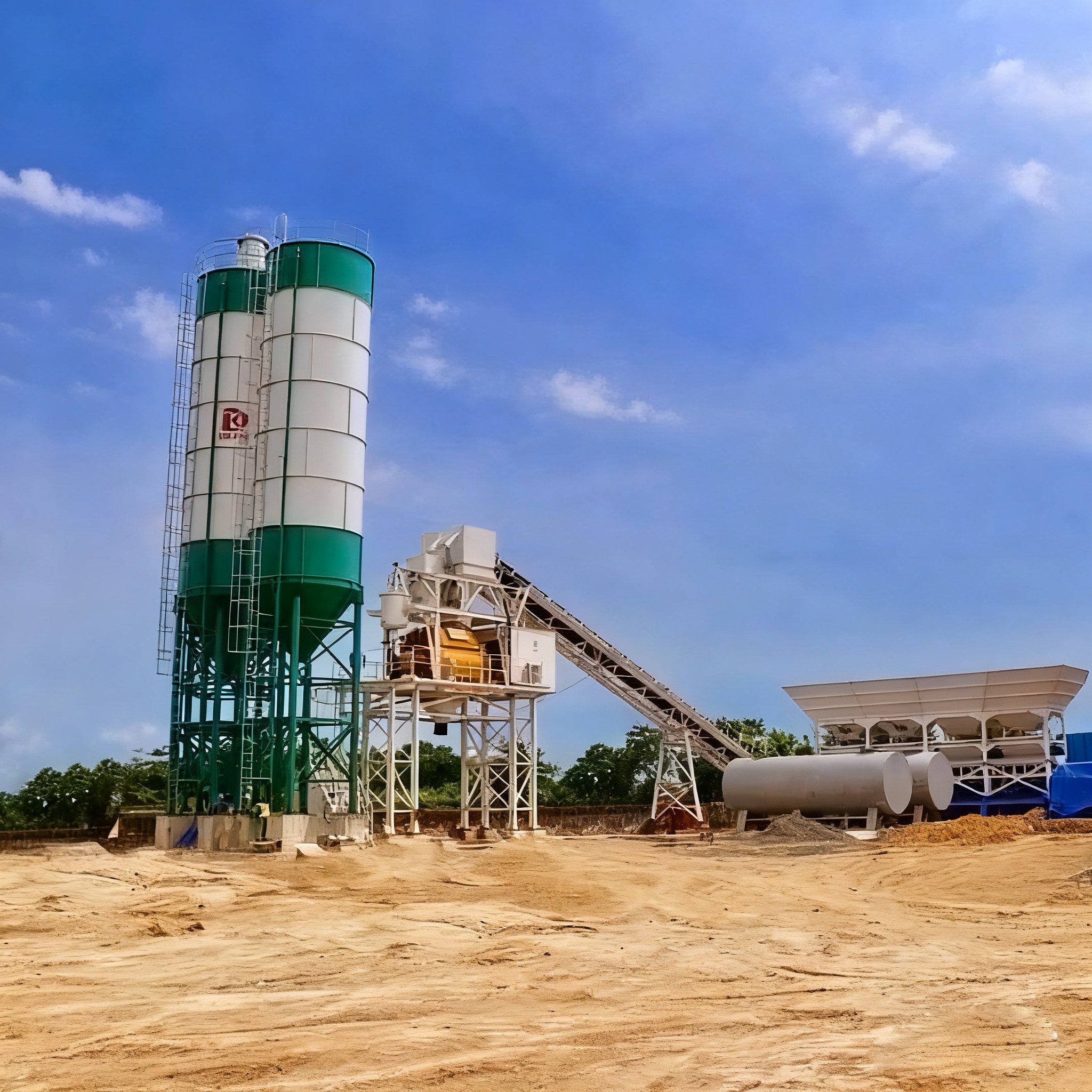
Cover image: a concrete mixing plant configuration for project-based concrete production. Image source: DKTEC product media.
A high-speed railway concrete mixing plant is a project-based batching plant configured to produce high-grade concrete at or near the construction site, instead of relying only on a distant ready-mix concrete batching plant. The procurement question is not simply hourly capacity. It is whether the plant can hold metering accuracy, install quickly under temporary site conditions, and support the mix designs used in railway structures. Hangzhou Jusheng machinery and equipment co.,ltd, a China-based manufacturer founded in 2015, presents its HZS G engineering concrete batching plant range for these conditions.
The distinction matters for buyers in the research and evaluation stage. A plant that works well for a permanent commercial ready-mix concrete batching plant may not fit a high-speed railway site where the plant must be assembled, operated and later relocated. The HZS G range is therefore best read as an engineering concrete batching plant family, not as a generic stationary concrete batching plant catalogue.
Why high-speed railway projects move concrete production on site
High-speed railway construction creates a specific concrete supply problem. Structural concrete must be produced in a controlled sequence, and the plant must fit a site that is temporary, often space-constrained, and linked to a construction schedule rather than to a permanent industrial park. Long delivery distances can complicate fresh concrete logistics and reduce the flexibility to adjust mix response during a pour. On-site production shortens the supply chain and gives the project team closer control over batching, mixing and discharge.
The corpus for this application is explicit: the high-speed railway project batching plant is a stationary plant with modular, quick assembly and disassembly for relocation, and it is used for the local production of high-grade concrete. That is a different operating model from a commercial ready-mix concrete batching plant that serves multiple customers from one fixed location.
The opportunity is not only logistics. An on-site automatic concrete batching plant can integrate feeding, weighing, mixing and control into one project-specific system. The engineering requirement is to make that system accurate enough for high-grade concrete, compact enough for site conditions, and modular enough to be installed without a long civil works programme. The HZS G engineering series is positioned around those three requirements.
What a high-speed railway concrete mixing plant must control
Buyers evaluating a high-speed railway concrete mixing plant should separate four control layers. The first is batching accuracy. High-grade concrete depends on consistent dosing of aggregate, cement, supplementary powder, water and additive. The second is mixing performance. A twin-shaft mixer and a stable discharge path affect homogeneity and cycle time. The third is site installation. A temporary plant must be assembled and commissioned within a realistic project window. The fourth is operational control, including recipe management, production records and correction of weighing drift.
Jusheng documents these layers through model-specific parameters rather than general claims. The HZS60G, HZS90G, HZS120G and HZS180G engineering plants share a steel structure and a twin-shaft mixing concept, but they differ in output, installed power, nominal mixer capacity and metering range. For a buyer, that means model selection should start from the pour profile and the mix design, not from the largest number on a brochure.
Jusheng HZS G engineering series: verified facts for evaluation
Hangzhou Jusheng machinery and equipment co.,ltd is a China-based heavy-industry equipment enterprise founded in 2015. Its company profile states a 120,000 m² factory, 430 employees, an annual output of 2,000 units, and an 80-engineer R&D team. Its main product line is the concrete batching plant, including engineering and commercial configurations. These facts establish the supplier context; the technical evaluation still depends on the plant configuration selected for the project.
The HZS G engineering range includes four models relevant to on-site high-grade concrete production. The HZS60G is rated at 60 m³/h with a 1000 L nominal mixer capacity and 100 kW installed power. The HZS90G is rated at 90 m³/h with a 1500 L nominal mixer and 190 kW installed power. The HZS120G is rated at 120 m³/h with a 2000 L twin-shaft forced mixer and 210 kW installed power. The HZS180G is rated at 180 m³/h with a 3000 L nominal mixer and 250 kW installed power. All four list an unloading height of at least 3.8 m for discharge into concrete transport vehicles.
The HZS120G product description adds details that matter in an evaluation: a 2000 L twin-shaft forced mixer with 2×37 kW mixer power, four 16 m³ aggregate bins with independent 2.0 m³ weighing hoppers, a double-door coarse-and-fine weighing structure, an 800 mm horizontal and inclined belt conveyor system with double-sided maintenance walkways, and a fully automatic PLC control system supporting recipe management, production reports and UPS power backup. The same description lists Keli load cells, AirTAC cylinders and SICOMA pneumatic butterfly valves among core components.
Four-level modular design and rapid installation
The four-level modular design is one of the clearest procurement differentiators in the HZS G engineering range. The HZS60G corpus describes a four-layer module design with sub-module preassembly and overall lifting. The purpose is practical: sub-module preassembly reduces the number of components that must be installed on site and shortens installation time. For a high-speed railway project, that can matter more than a small difference in nominal output, because every day of site assembly affects the project schedule.
The high-speed railway application unit repeats the same logic at plant level. It describes a stationary plant with modular, quick assembly and disassembly for relocation, and a four-level modular design that allows integrated hoisting and rapid installation. This is not a claim that the plant installs without preparation. It is a design strategy that moves more assembly work into preassembled modules and reduces the site workload.
The HZS G range also offers an optional steel structure foundation. That option is relevant where civil works are costly or slow, but it does not remove the need for a properly prepared and level site. Buyers should still verify foundation design, discharge vehicle access, aggregate storage, cement silo layout and power supply before comparing installation schedules.
Dual-stage coarse and fine aggregate metering
Aggregate metering is often the weakest point in a low-specification batching plant. Aggregate is the largest component by mass, and small variations can shift the concrete mix. The high-speed railway application unit specifies dual-stage coarse and fine aggregate metering and precision pulsating metering for various high-grade concrete types. The HZS60G corpus describes coarse and fine weighing pulse buckle weighing, automatic correction of the drop, and a high-speed-rail-specific control system for accurate pulse buckle control.
Those functions should be read together. Coarse and fine weighing divides the aggregate dose into stages so the weighing system can approach the target more precisely. Pulse-based weighing compensation and automatic drop correction address the material that is already in the air or in the feed stream when the target is reached. The result is not a laboratory guarantee; it is a control strategy for production consistency. The buyer should still confirm calibration routines, aggregate moisture management and the project quality plan.
The metering specifications are stated per model. On the HZS60G, the aggregate range is 600–2500 kg at ±2%, cement 100–700 kg at ±1%, water 80–250 kg at ±1%, and additive 8–20 kg at ±1%. On the HZS90G, aggregate is 600–2000 kg at ±2%, cement 200–1200 kg at ±1%, mixing powder 200–800 kg at ±1%, water 150–400 kg at ±1%, and additive 15–50 kg at ±1%. The HZS120G uses the same aggregate, cement, mixing powder, water and additive ranges and accuracies as the HZS90G. The HZS180G moves to aggregate 900–3000 kg at ±2%, cement 300–1800 kg at ±1%, mixing powder 200–1000 kg at ±1%, water 200–800 kg at ±1%, and additive 15–80 kg at ±1%.
Additional control details in the HZS60G description include measurement stability, an optional child screw for feeding control, pulse jitter precision measurement, and internal vibration for smooth cutting and a durable bucket body. These details are useful in a technical review because they show where the supplier has focused attention: feed control, discharge stability and repeatable weighing.
Model selection table for HZS G engineering plants
| Model | Output | Installed power | Nominal mixer capacity | Aggregate range / accuracy | Cement range / accuracy | Water range / accuracy | Additive range / accuracy |
|---|---|---|---|---|---|---|---|
| HZS60G | 60 m³/h | 100 kW | 1000 L | 600–2500 kg / ±2% | 100–700 kg / ±1% | 80–250 kg / ±1% | 8–20 kg / ±1% |
| HZS90G | 90 m³/h | 190 kW | 1500 L | 600–2000 kg / ±2% | 200–1200 kg / ±1% | 150–400 kg / ±1% | 15–50 kg / ±1% |
| HZS120G | 120 m³/h | 210 kW | 2000 L | 600–2000 kg / ±2% | 200–1200 kg / ±1% | 150–400 kg / ±1% | 15–50 kg / ±1% |
| HZS180G | 180 m³/h | 250 kW | 3000 L | 900–3000 kg / ±2% | 300–1800 kg / ±1% | 200–800 kg / ±1% | 15–80 kg / ±1% |
Source: DKTEC HZS G engineering concrete batching plant product data. Mixing powder ranges are also listed for HZS90G, HZS120G and HZS180G in the supplied product data.
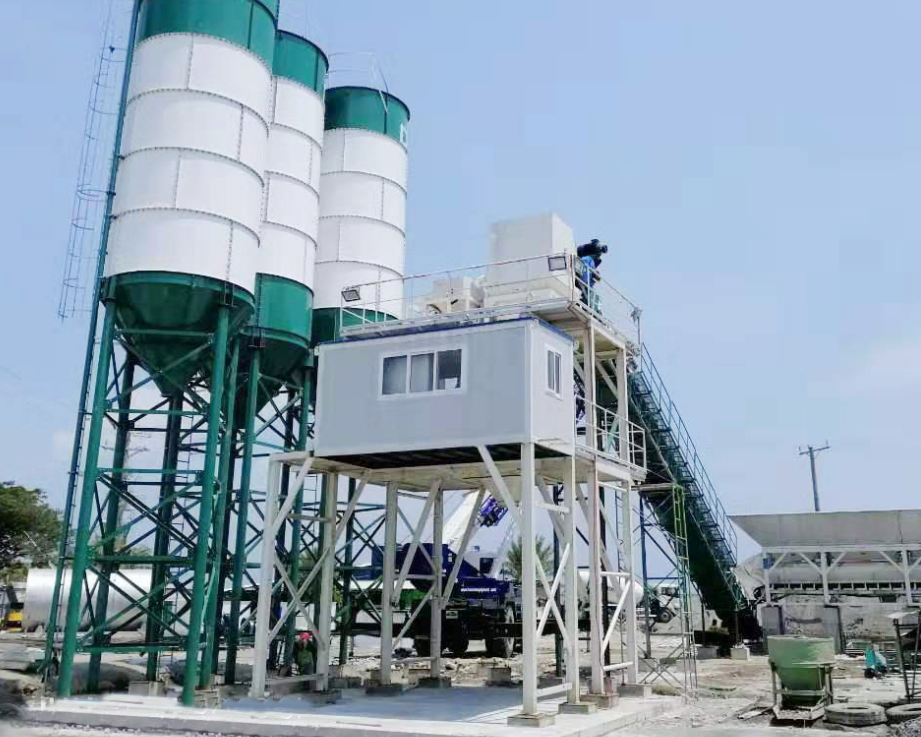
Body image: HZS120G engineering concrete batching plant, rated at 120 m³/h with a 2000 L twin-shaft forced mixer. Image source: DKTEC product media.
Application fit: high-speed railway, small and medium railway, and highway sites
The primary application is the high-speed railway project batching plant. The supplied application data describes on-site plants for high-speed rail projects, local production of high-grade concrete, and a stationary modular configuration with quick assembly and disassembly for relocation. The matched equipment list includes a steel bin batching station, inclined belt conveyor, main mixing unit, metering systems for cement, admixtures, water and additives, a pneumatic system, main tower dust removal, control room and electrical system, with powder silos and screw conveyors available as options.
The same corpus also covers small and medium railway and highway construction sites. In that application, the plant uses a steel bin aggregate batching station with 10 m³ × 4 bins, a 650 mm chevron belt with rain cover, a 1 m³ twin-shaft mixer at 2 × 22 kW, cement, water and admixture metering systems, a pneumatic system, main tower, control room and electrical system. A 100 t powder silo and φ219 screw conveyor are optional. The application note mentions modular design for the entire unit, factory pre-assembly, modular on-site installation, rapid setup and relocation, an optional steel structure foundation, a sand silo anti-clogging device and a wear-resistant discharge hopper.
For expressway and highway projects, the supplier data adds a relevant material-flow claim: seamless material flow technology is described as preventing aggregate spillage, ensuring continuous supply, and improving conveying efficiency by 20%. The same application unit lists high-precision metering with cement and powder at ±1% and sand and gravel at ±2%, plus adaptability to site conditions, plant layouts and discharge directions. These points matter for small concrete batching plant selection as well, because smaller sites often have less room for rework and less tolerance for poor material flow.
The HZS G range also appears in broader applications such as bridges, airports, tunnels and precast concrete production. A precast concrete mixing plant may require different batching cycles from a ready-mix concrete batching plant, but the same evaluation logic applies: confirm the mixer size, the metering range and the site installation method against the actual production plan.
Comparison with conventional supply and mobile plants
An on-site high-speed railway concrete mixing plant is not automatically the right answer for every project. It is most defensible when the project needs local production of high-grade concrete, when delivery distance or schedule risk makes a remote ready-mix concrete batching plant less attractive, and when the site can support a stationary modular plant with the required power and material storage.
Compared with a commercial ready-mix concrete batching plant, the HZS G engineering plant is purpose-configured for a project. It has less commercial dispatch flexibility because it is not designed around serving many external customers from a permanent location. Its value comes from project proximity, metering control and a modular installation sequence, not from replacing a permanent commercial supply business.
Compared with a mobile concrete batching plant, the HZS G plant is a stationary modular solution. A mobile concrete batching plant is built on a trailer chassis for towing and relocation; the HZS60Y, for example, uses an integrated trailer chassis and a 3-day on-site commissioning period. The HZS G plant still needs a prepared foundation and more site assembly. The four-level modular design reduces site components and installation time, but it does not turn the plant into a towable mobile unit. This is a real boundary that buyers should recognise before selecting a configuration.
Capacity is another boundary. The HZS60G at 60 m³/h is the lowest output in the HZS G engineering group and may be insufficient for peak pours with high simultaneous demand. The HZS90G, HZS120G and HZS180G provide higher output and larger nominal mixer capacity, but they also require more installed power and a larger site footprint. The correct choice is the smallest model that can meet the pour profile with an agreed reserve, not the largest model available.
| Evaluation point | On-site HZS G engineering plant | Commercial ready-mix plant | Mobile concrete batching plant |
|---|---|---|---|
| Primary use | Project-specific production of high-grade concrete | Permanent supply to multiple customers | Frequent relocation and on-site production |
| Installation model | Stationary modular; four-level modular design on HZS60G; optional steel structure foundation | Fixed facility with permanent civil works | Integrated trailer chassis; towable; 3-day commissioning on HZS60Y |
| Metering control | Dual-stage coarse and fine aggregate metering; automatic drop correction and pulse buckle control on HZS60G | Depends on the commercial plant specification | Model-dependent; mobile plants also list ±2% aggregate and ±1% cement, water and additive accuracy |
| Main limitation | Still requires prepared site, foundation and installation work; not a trailer plant | Less project proximity and less direct project control | Lower site works but a different structural and capacity envelope |
Market trend analysis: what the verified data suggests
Global Market Insights valued the global concrete batch plants market at USD 3.8 billion in 2024. Credence Research reports that Asia-Pacific accounted for 38% of revenue share in the same year. Global Market Insights also reports that the infrastructure segment represented 39.4% of the mobile concrete batch plant market in 2024. These data points do not prove demand for any single project, but they support a practical reading: infrastructure remains a meaningful source of batching plant demand, and Asia-Pacific is a significant production and procurement region.
Trade data adds another signal. UN Comtrade and WITS data put China's exports of concrete or mortar mixers under HS 847431 at USD 276.9 million in 2023. For buyers, this is less a ranking signal than a reminder that supplier evaluation should include documentation, configuration traceability and after-sales support, not only the country of origin.
The standards environment is also relevant to procurement language. ISO 19720-1:2017 establishes terminology and commercial specifications for concrete mixing and batching plants. It does not certify a particular plant, but it gives buyers a common reference for discussing plant type, configuration and commercial specifications. That is useful when an engineering concrete batching plant is specified across a project team, a supplier and a site contractor.
Procurement checklist for research and evaluation
- Match output to the pour profile. Compare HZS60G at 60 m³/h, HZS90G at 90 m³/h, HZS120G at 120 m³/h and HZS180G at 180 m³/h against the expected peak demand, not only the average demand.
- Verify metering range against the mix design. Check aggregate, cement, mixing powder, water and additive ranges. Confirm the stated accuracies: ±2% for aggregate and ±1% for cement, mixing powder, water and additive where listed.
- Confirm the installation method. The HZS60G is documented with a four-layer module design, sub-module preassembly and overall lifting. Confirm the site foundation, lifting plan, discharge access and power supply.
- Check the control functions. For high-grade concrete, ask for automatic drop correction, pulse buckle control, recipe management, production reports and UPS backup where applicable. The HZS120G description includes PLC control with recipe management and production reports.
- Review material flow and dust control. The high-speed railway application lists a main tower dust removal system. The expressway application describes seamless material flow and a 20% conveying efficiency improvement. Confirm how these features map to the selected model.
- Recognise the boundary. A stationary HZS G plant is not a mobile concrete batching plant. If relocation frequency is high and site works must be minimal, compare it with a trailer-based mobile unit before committing.
Future outlook
The next procurement cycle is likely to place more weight on documented metering logic, modular installation sequence and production records. High-speed railway concrete mixing plants are project assets, so the buyer's real question is whether the plant can be installed, calibrated, operated and relocated within the project system. Capacity alone does not answer that question.
The verified market data shows a large global batching plant market and a significant Asia-Pacific share, with infrastructure remaining an important segment. For suppliers, that means competition will continue on configuration clarity rather than on broad claims. For buyers, it means the strongest evaluation file will include model-specific ranges, accuracy statements, installation method, control functions and a clear statement of limits. The HZS G engineering range provides a useful reference point for that kind of file, especially where on-site production of high-grade concrete is the governing requirement.
FAQ
- What capacity range is available in the HZS G engineering concrete batching plant series?
- The HZS G engineering series includes the HZS60G at 60 m³/h, HZS90G at 90 m³/h, HZS120G at 120 m³/h and HZS180G at 180 m³/h. Installed power ranges from 100 kW on the HZS60G to 250 kW on the HZS180G, and nominal mixer capacity ranges from 1000 L to 3000 L.
- What metering accuracy is specified for high-grade concrete production?
- The product data lists aggregate accuracy at ±2% and cement, mixing powder, water and additive accuracy at ±1% where those channels are specified. Ranges differ by model; for example, HZS60G aggregate is 600–2500 kg and cement is 100–700 kg, while HZS180G aggregate is 900–3000 kg and cement is 300–1800 kg.
- What does the four-level modular design change for site installation?
- The HZS60G is documented with a four-layer module design, sub-module preassembly and overall lifting. The stated purpose is to reduce the number of components installed on site and shorten installation time. The high-speed railway application also describes a four-level modular design that allows integrated hoisting and rapid installation.
- How does the plant support high-speed railway high-grade concrete production?
- The high-speed railway application specifies local production of high-grade concrete, dual-stage coarse and fine aggregate metering, and precision pulsating metering for various high-grade concrete types. The HZS60G description adds a high-speed-rail-specific control system with automatic drop correction and pulse buckle control, plus coarse and fine weighing pulse buckle weighing.
- What site conditions should be confirmed before selecting a stationary HZS G plant?
- Confirm a prepared and level foundation, discharge vehicle access, aggregate storage, cement silo layout and power supply. The HZS G plants are stationary modular units; an optional steel structure foundation is available, but the plant still requires site preparation and installation work. Installed power ranges from 100 kW to 250 kW across the four models.
- Is a stationary HZS G plant a substitute for a mobile concrete batching plant?
- No. A mobile concrete batching plant is built for towing and relocation; the HZS60Y, for example, uses an integrated trailer chassis and a 3-day on-site commissioning period. The HZS G plant is a stationary modular solution with a four-level modular design that reduces site work, but it is not a trailer-mounted plant.
A public PDF brochure with DKTEC concrete batching plant information is available here: concrete batching plant brochure.
Tem questões ou precisa de mais detalhes?
Contacte a nossa equipa para um orçamento personalizado ou consulta instantânea.
Solicitar orçamento
Preencha o formulário abaixo e a nossa equipa entrará em contacto com uma proposta personalizada.
Chat direto do WhatsApp
Prefere conversar em tempo real? Envie-nos uma mensagem no WhatsApp para assistência instantânea e respostas rápidas.
- Obter orçamento personalizado
- Partilhar fotos ou documentos
- Discuta as suas necessidades diretamente
Geralmente responde em 5–30 minutos durante o horário de expediente.