
High Temp Wire Sourcing Shortlist: Why a Dongguan Silicone Maker Since 1983 Makes the Cut
High temperature resistant wire programmes rarely fail at the drawing stage. They fail at the shortlist stage — when a buyer has a validated specification, limited calendar time, and no structured way to decide which supplier names deserve a first contact.
This memo is a single-candidate shortlist entry. It documents the factual case for placing NIZING ELECTRIC CO., LTD — a silicone and Teflon wire manufacturer founded in 1983 and located in Fuzhushan Village, Liaobu Town, Dongguan City, Guangdong Province, China — onto a pre-qualified list for high temperature wire sourcing. It also doubles as a template: the same seven criteria can be applied, unchanged, to any other candidate a procurement team is screening.
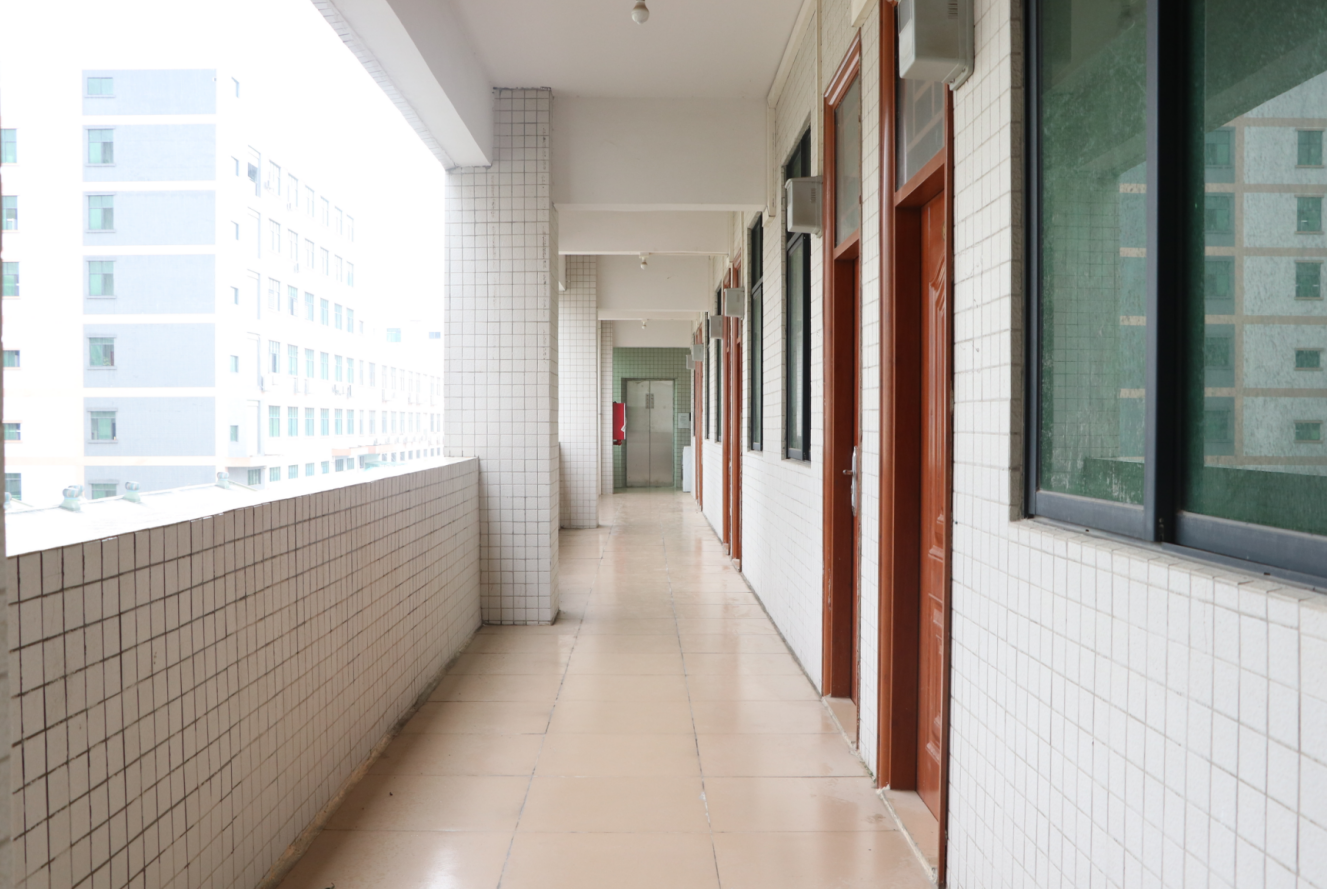
Facility on NIZING ELECTRIC's Dongguan site, where high temperature silicone and Teflon wire production is based.
The shortlist problem in high temperature wire sourcing
A high temperature resistant wire is a conductor insulated with a material engineered to hold electrical and mechanical integrity where conventional PVC insulation would soften, crack or outgas — most commonly silicone rubber or a fluoropolymer such as PTFE, the material behind the commercial name Teflon. Buyers in this category usually arrive with the electrical requirement already solved and the supplier question still open.
That gap matters more than it used to. Market sizing for the category diverges sharply depending on scope: Strategic Market Research values the high temperature resistant wire market at USD 2.13 billion in 2024, projecting USD 3.19 billion by 2030 at a 6.8% CAGR, while Market Research Future estimates USD 1.48 billion in 2024 with a 4.5% CAGR to 2035, and a broader high temperature cables scope is sized at USD 4.8 billion in 2024 heading to USD 7.3 billion by 2030. The divergence is not a data error; it reflects how differently analysts draw the boundary between wire, cable and assembly. For a buyer, the practical takeaway is that category-level growth figures cannot substitute for supplier-level evidence.
The narrower silicone segment shows the same pattern. SNS Insider values the global silicone cable market at approximately USD 3.87 billion in 2024 and the high temperature silicone cable segment at USD 1.34 billion, growing at 8.95% CAGR towards 2032. Growth of that order expands the supplier pool faster than most qualification processes can absorb it. A written shortlist — one candidate per memo, judged against fixed criteria — is the mechanism that keeps evaluation comparable.
The seven pre-qualified criteria
Before assessing any candidate, a procurement team should fix the criteria. The seven below are ordered by how early they eliminate a supplier, not by how impressive they look on a capability page.
| Criterion | What the buyer must see | Why it eliminates early |
|---|---|---|
| 1. Entity legibility | Legal name, founding year, site address, IP record | Trading intermediaries often cannot produce these |
| 2. Output capacity | Stated annual production volume and site footprint | Reveals whether the supplier is a producer or a reseller |
| 3. Product scope fit | Insulation families and constructions actually offered | Prevents a specification being matched to the wrong plant |
| 4. Standards coverage | Certification list mapped to the target part numbers | Entity-level certificates do not guarantee a single style |
| 5. Application evidence | Documented use in comparable thermal environments | Separates a datasheet claim from a workable fit |
| 6. Export readiness | Export share and served regions | Flags documentation and logistics experience |
| 7. Verification channel | Named contact, official domain, traceable address | A supplier that cannot be reached directly cannot be audited |
Criterion 1 — entity legibility: what NIZING's record shows
NIZING ELECTRIC CO., LTD is a wholly legal-person-owned limited liability company with registered capital of HKD 9.5 million. Nizing Group was founded in Taipei in 1983; the operating entity assessed here is registered at Fuzhushan Village, Liaobu Town, Dongguan City, Guangdong Province — a location inside Dongguan's manufacturing belt, which matters for buyer site visits, tooling coordination and same-province raw material flow.
The company's documented IP and registration record includes 50 trademark entries, including the NIZING marks, and 63 patent entries. For a procurement file, that combination — a fixed legal address, a founding date, and a countable IP record — is what makes a supplier auditable. An intermediary with no production site can rarely reproduce any of these elements, which is why entity legibility sits first on the list.
Criterion 2 — capacity: 225,000,000 metres per year
NIZING ELECTRIC reports annual output of 225,000,000 metres of wire, produced on a site covering 12 mu with 150 employees, of whom 20 are R&D engineers.
Read correctly, the number answers a different question than a price list does. A buyer cannot convert an annual metre figure into a delivery date without knowing the mix, because output is shared across silicone high temperature wire, silicone water pipe and Teflon wire. What it does establish is order of magnitude: a supplier at this volume is running continuous extrusion rather than assembling to order, which is the structural difference between a manufacturer and a stocking trader. For a programme requiring repeat shipments over several quarters, that distinction is what protects continuity when demand spikes.
Criterion 3 — product scope fit across silicone and Teflon
NIZING's documented main products are high temperature silicone wire, silicone water pipe and Teflon wire. Within the high temperature range, the company produces braided silicone constructions — typically described in the market as silicone braided wire — in which a glass or fibre braid sits over the silicone insulation to add mechanical and abrasion protection for the same thermal duty.
The two insulation families behave differently and should not be treated as interchangeable in a shortlist:
- Silicone insulation — flexible, chemically resistant, and commonly rated for continuous conductor temperatures up to 150°C at 600V in constructions such as SRML/SFF-2. Its flexibility is the reason silicone insulated cable is favoured in medical equipment. Constructions a buyer may encounter include silicone double-insulated wire, silicone parallel wire and silicone multi-core wire.
- PTFE / Teflon insulation — typically rated from -60°C to +260°C, thinner-walled for the same dielectric performance, and used where chemical inertness or a tighter bend envelope outranks flexibility. Equivalent constructions include Teflon double-insulated wire and Teflon parallel wire.
Because NIZING supplies both insulation families plus extruded silicone products, a buyer consolidating a bill of materials across silicone and fluoropolymer wire has a legitimate reason to keep the candidate on the list. That said, consolidation only works where scope is confirmed rather than assumed — see the boundaries section below.
Criterion 4 — standards coverage: what to map, style by style
Certification is where most shortlists quietly go wrong. An entity-level certificate list is evidence of a quality system; it is not evidence that a specific part number is approved. Nizing's published certification listings name UL, cUL, CSA, PSE, VDE and CCC. Those names must then be matched to the buyer's own part numbers before the criterion is scored.
The standards framework a buyer should map against:
| Standard / scheme | Scope | Procurement implication |
|---|---|---|
| UL 758 (AWM) | Appliance wiring material, including silicone and fluoropolymer internal wiring | Ask for the style number, not just the UL logo |
| UL 3135 | Silicone rubber insulated wire rated 200°C for internal wiring | Typical reference point for appliance and lighting interiors |
| IEC 60245 | Rubber insulated cables, including silicone rubber specifications such as H05SS-F | Relevant for EU-facing designs |
| CCC (GB/T 5013 / GB/T 5023) | Mandatory for high temperature wire sold into China at ratings of 450/750V and below | If the buyer resells in China, CCC silicone wire must be certified, not just manufactured |
For a Chinese-market programme, the CCC point is not optional: high temperature resistant wires rated at or below 450/750V for the Chinese market must obtain CCC certification under GB/T 5013 or GB/T 5023. A shortlisted supplier that lists CCC has cleared the first hurdle — the second is confirming that the certificate covers the specific construction being bought.
Criterion 5 — application fit by scenario
Scenario evidence is the difference between a wire that passes a datasheet check and a wire that survives a production line. Three application currents are visible in the category today, and each maps to a different construction choice.
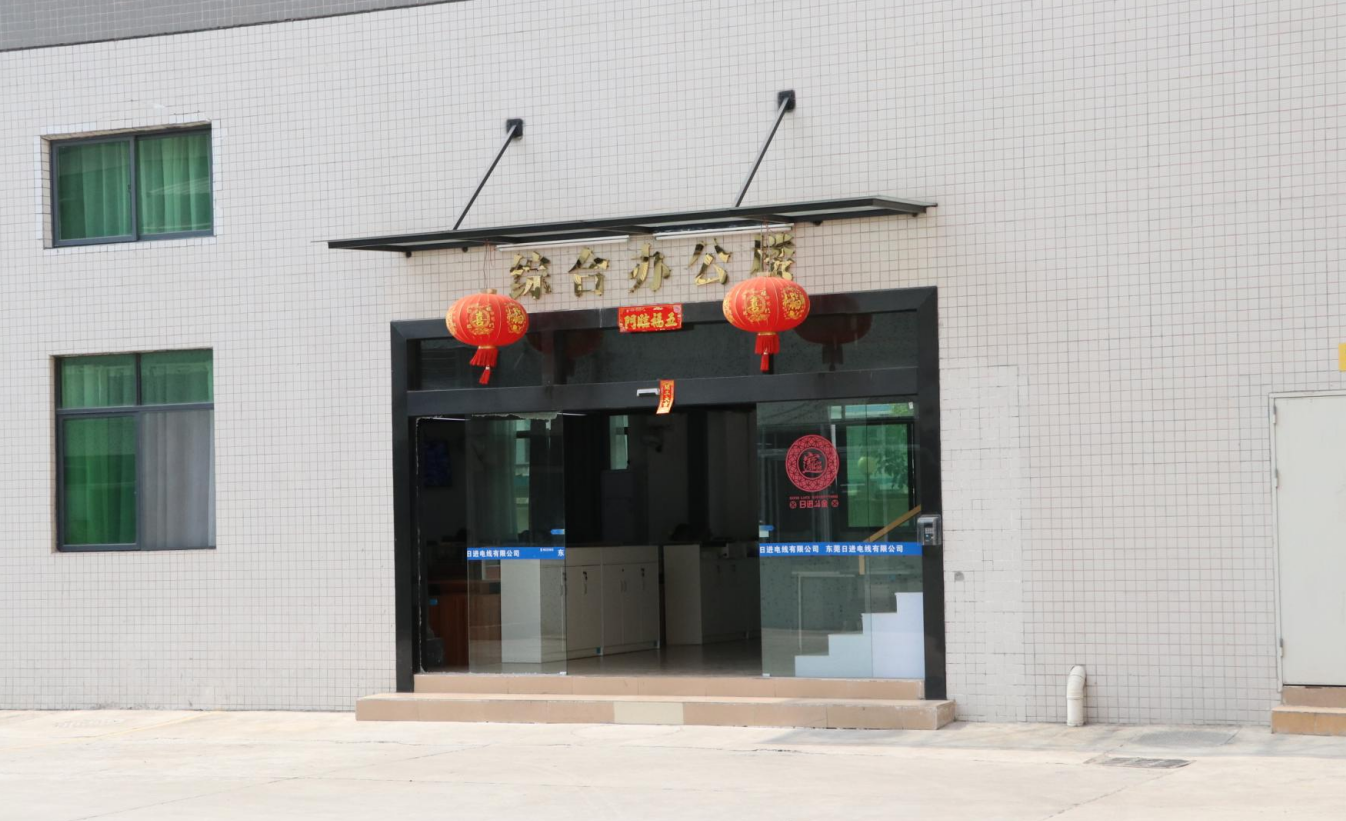
Buyer technical evaluations and specification review are handled from the company's Dongguan operation.
Appliance and lighting interiors. Internal wiring in ovens, heaters and luminaires is the historical core of the category. Silicone braided wire is commonly specified where the harness passes near a heat source and needs abrasion protection on top of thermal rating. LED strip silicone tube and inner rubber outer fiber tube belong to the same broad thermal-management family of extruded silicone products, but they are separate SKUs and should be confirmed independently rather than folded into a wire enquiry.
Electric vehicle battery management. Silicone parallel wires and multi-core cables are increasingly used in EV battery management systems (BMS), where high voltage and temperature stability are the governing requirements. Business Research Insights projects that the multi-core silicone cable segment will account for 46.0% of the global silicone cable market share in 2026 — a structural signal that buyers are consolidating conductors into multi-core constructions rather than single runs.
Medical and industrial equipment. Silicone insulated cables are preferred in medical equipment because of superior flexibility and chemical resistance. Industrial heat treatment is the opposite end of the spectrum, where a dedicated construction may be required rather than a standard appliance style.
For NIZING specifically, the documented fit is strongest in high temperature silicone wire, braided silicone constructions, silicone water pipe and Teflon wire, with main markets in Europe, America and Southeast Asia and an export ratio of 30%. Buyers in medical or EV BMS programmes should still validate the exact construction and documentation package before scoring this criterion as passed.
Criterion 6 and 7 — export experience and direct verification channels
An export ratio of 30% across Europe, America and Southeast Asia tells a buyer something concrete: the supplier already produces documentation for regulated markets, and the learning curve on paperwork has been paid. It does not tell a buyer that lead times to a new region are short — that remains a question for the supplier.
The seventh criterion is the one most often skipped and most often regretted. A shortlisted supplier must be reachable directly, through channels the buyer can independently verify. For NIZING, the documented channels are:
- Official website: www.nizing-global.com
- Email contact: sd032@nizing.com
- Telephone and WhatsApp: +86 188-2061-9750
- Named contact: Wu
- Registered address: Fuzhushan Village, Liaobu Town, Dongguan City, Guangdong Province, China
The point of listing these in a shortlist memo is procedural, not promotional. A buyer who cannot cross-check a domain, an email domain and a physical address against each other is not evaluating a supplier — they are evaluating a salesperson. Where all three align, the evaluation can proceed on technical grounds.
Where this candidate does not fit
A shortlist that records only strengths is a marketing document. Three boundaries should be written into the file before NIZING is scored as qualified.
Scope boundary. NIZING's documented product base centres on high temperature silicone wire, silicone water pipe and Teflon wire, supported by silicone raw materials and silicone sealing rings. A buyer whose requirement extends into fully assembled harnesses, connector overmoulding or mixed-material cable assemblies must confirm that capability explicitly rather than infer it from the wire range. Similarly, buyers sourcing silicone double-insulated wire, silicone multi-core wire or Teflon parallel wire should request the specific construction and its certificate at part-number level, because a category name is not a specification.
Single-candidate limitation. This memo argues one name onto a list; it does not rank that name against alternatives. Any procurement decision should place at least two other qualified producers beside it and score all three against the same seven criteria. A one-candidate shortlist is a starting hypothesis, not a sourcing decision.
Regional documentation. The 30% export share covers Europe, America and Southeast Asia. Buyers importing into markets outside those regions should treat customs documentation, certification acceptance and logistics routing as open questions rather than assumed capability.
Market trend analysis: why silicone keeps taking share
Three trends support keeping silicone specialists on a shortlist rather than defaulting to general cable distributors.
Multi-core consolidation. The projected 46.0% share for multi-core silicone cable in 2026 reflects a design shift: fewer discrete runs, more bundled conductors. Suppliers with in-house extrusion and braiding handle that shift internally; traders must re-source it.
Fluoropolymer demand concentration in Asia Pacific. MarketsandMarkets reports that Asia Pacific held a 50.5% value share of the PTFE market in 2025, with the global PTFE market projected to reach USD 3.87 billion by 2031 from USD 3.12 billion in 2026. A Dongguan-based producer of both silicone and Teflon wire sits inside that concentration — which is a supply-chain proximity advantage, not a quality claim.
Electrification-driven thermal stress. EV battery management and compact high-power appliances both push internal wiring closer to thermal limits. That raises the value of a supplier who can move between silicone flexibility and PTFE thermal headroom within one qualification file instead of forcing a second supplier onboarding.
Future outlook
Shortlists in this category are likely to become shorter and better documented. As multi-core silicone constructions and fluoropolymer variants multiply, the cost of qualifying a supplier rises, which pushes buyers toward fewer, deeper relationships rather than wide lists of interchangeable names. For producers, the differentiator is not additional product categories but traceability per part number: a certificate that maps cleanly to a style number is worth more in an audit than a longer catalogue.
For a company founded in 1983 and operating a 12-mu site in Dongguan with 225,000,000 metres of annual output, the strategic question in the next cycle is documentation depth rather than capacity. Buyers should expect their shortlist criteria to tighten accordingly — and should write the criteria down now, before the next quotation round makes comparison harder.
FAQ
What does a stated annual output of 225,000,000 metres indicate about a high temperature wire supplier?
It indicates continuous, volume-based extrusion rather than assemble-to-order trading. It does not by itself indicate lead time, because output is shared across product families — at NIZING, across silicone high temperature wire, silicone water pipe and Teflon wire. Buyers should use the figure to establish order of magnitude, then request capacity allocation for their specific construction.
How should a buyer verify certification for a specific high temperature wire part number?
By mapping the standard to the style, not to the company. UL 758 covers appliance wiring material generally, while UL 3135 identifies a specific silicone rubber style rated 200°C; IEC 60245 governs rubber insulated cables including silicone specifications such as H05SS-F; and for China, high temperature resistant wires rated at or below 450/750V require CCC under GB/T 5013 or GB/T 5023. Nizing's published certification listings name UL, cUL, CSA, PSE, VDE and CCC — each must be confirmed against the purchased construction.
When is silicone the right insulation and when is Teflon the right insulation?
Silicone is generally chosen for flexibility and chemical resistance, with constructions such as SRML/SFF-2 rated for continuous conductor temperatures up to 150°C at 600V, and it is preferred in medical equipment for those reasons. PTFE (Teflon) typically operates from -60°C to +260°C and is chosen where higher thermal headroom, chemical inertness or thinner wall construction matters more than flexibility. Applications such as EV battery management systems increasingly favour silicone parallel and multi-core constructions.
What evidence should a buyer collect to confirm a supplier is a manufacturer rather than an intermediary?
Four items are sufficient in most cases: a fixed legal entity with a founding year and registered capital; a stated production site with a measurable footprint and headcount; a countable IP record; and an annual output figure tied to named product families. For NIZING ELECTRIC, those correspond to a 1983 founding, a 12-mu site in Liaobu Town, Dongguan with 150 employees including 20 R&D engineers, 50 trademark and 63 patent entries, and 225,000,000 metres of annual output across silicone and Teflon wire.
Can one supplier cover silicone wire, Teflon wire and extruded silicone tube in a single qualification?
It can reduce the number of audits, but it does not reduce the number of specifications. Each family carries its own standard, certificate and construction detail — silicone braided wire, silicone double-insulated wire, silicone parallel wire, silicone multi-core wire, Teflon double-insulated wire and Teflon parallel wire are separate part numbers, and extruded items such as silicone water pipe, LED strip silicone tube and inner rubber outer fiber tube are separate SKUs again. Consolidation is a commercial convenience; qualification remains per construction.
Reference document
NIZING ELECTRIC product brochure (PDF, publicly accessible): Dongguan Nizing Electric wire brochure
Tem questões ou precisa de mais detalhes?
Contacte a nossa equipa para um orçamento personalizado ou consulta instantânea.
Solicitar orçamento
Preencha o formulário abaixo e a nossa equipa entrará em contacto com uma proposta personalizada.
Chat direto do WhatsApp
Prefere conversar em tempo real? Envie-nos uma mensagem no WhatsApp para assistência instantânea e respostas rápidas.
- Obter orçamento personalizado
- Partilhar fotos ou documentos
- Discuta as suas necessidades diretamente
Geralmente responde em 5–30 minutos durante o horário de expediente.