
High Temperature Resistant Wire for LED, Appliance and Heating
High Temperature Resistant Wire for LED, Appliance and Heating
High temperature resistant wire is usually selected from a temperature number, but the number alone does not determine whether a cable survives in an LED luminaire, an appliance cavity or an industrial heater. In each of those products the insulation system faces a different combination of continuous conductor temperature, voltage class, certification regime, mechanical movement and chemical exposure — and a construction that satisfies one combination can fail another built to the same headline rating. Matching silicone and Teflon (PTFE) constructions to real operating conditions is therefore a constraint-matching exercise, not a material preference.
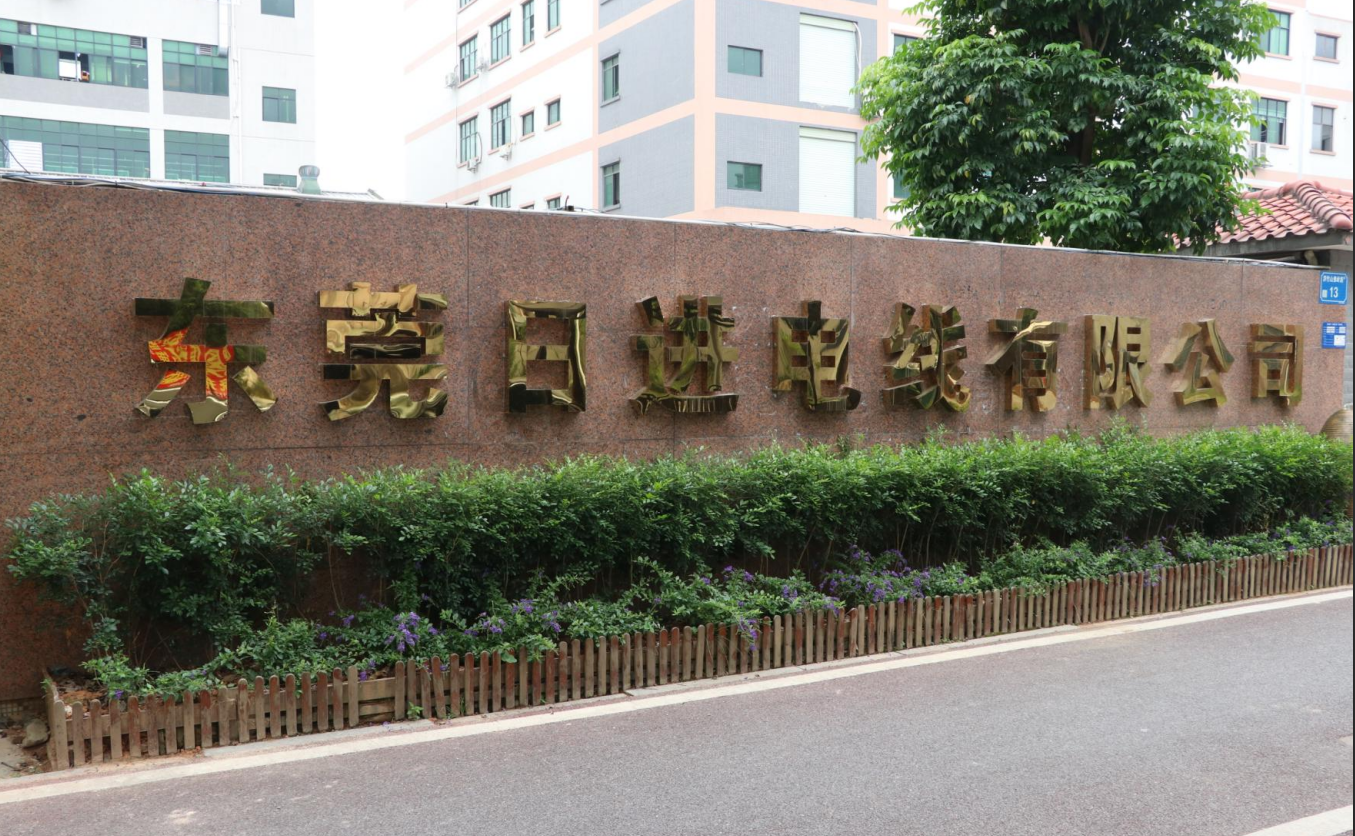
NIZING ELECTRIC CO., LTD operates a 12 mu manufacturing site in Fuzhushan Village, Liaobu Town, Dongguan, producing high temperature silicone wire, silicone water pipe and Teflon wire.
Where the Specification Usually Breaks Down
Three failure patterns recur in procurement reviews of high temperature wire for LED, appliance and heating programmes.
- The temperature claim is read as one number. Continuous conductor temperature and short-term excursion are treated as the same capability, even though a supplier's rating normally describes continuous operation.
- The certification is read as a factory attribute. Appliance wiring approvals attach to specific constructions and styles, not to a manufacturing site in general.
- The construction is read as a commodity. Silicone braided wire, silicone double-insulated wire, Teflon double-insulated wire, silicone parallel wire, Teflon parallel wire and silicone multi-core wire differ in wall thickness, conductor spacing, outer diameter and handling — and those differences decide what fits inside the product.
The Constraints That Actually Decide the Match
Four constraints do most of the work across LED, appliance and industrial heating applications. Answering them in writing, before a construction is chosen, removes most of the ambiguity from a high temperature wire specification.
| Constraint | Question the buyer should answer | How it changes the construction choice |
|---|---|---|
| Continuous temperature | What is the steady-state conductor temperature, and what excursion occurs at switch-on or fault? | Silicone and PTFE sit in different bands; a 150°C class and a 200°C class lead to different products, not to different prices for the same product. |
| Voltage class | What is the working voltage, and does the wall thickness support it? | Silicone rubber insulated wires such as SRML and SFF-2 are specified for continuous operation up to 150°C at 600V; higher voltage generally pushes toward thicker walls or a different construction. |
| Certification regime | Which market, which end product, which style number? | UL 758 Appliance Wiring Material, UL 3135, IEC 60245 and CCC under GB/T 5013 and GB/T 5023 each define a different documentation set. |
| Mechanical and chemical environment | Does the cable flex, abrade against metal, or contact fluids? | This is the braid decision, the double-insulation decision, and sometimes the silicone-versus-PTFE decision. |
Table 1. Constraint set used to match silicone and Teflon constructions to LED, appliance and heating applications.
Silicone Constructions and What They Actually Cover
Silicone rubber is the default industrial answer in the 150–200°C band. Silicone rubber insulated wires such as SRML and SFF-2 are specified for continuous operation at conductor temperatures up to 150°C at 600V, and UL 3135 identifies a silicone rubber insulated style rated for 200°C internal wiring. Above those classes, a higher temperature figure usually belongs to a specific assembly rather than to silicone as a material.
Silicone braided wire
A braid over a silicone core is the construction most often chosen when the cable must survive abrasion as well as heat. The braid does not raise the conductor temperature class by itself — it changes the mechanical environment the insulation sits in. That is why braided silicone constructions appear in appliances and heating assemblies where the cable is routed against sheet-metal edges, pulled through a channel during assembly, or repeatedly handled in service. The trade-off is physical: a braid adds outer diameter, adds cost, and reduces flexibility compared with a bare silicone wire of the same conductor size.
Silicone double-insulated wire, parallel wire and multi-core wire
Double insulation adds a second layer for reinforced insulation and mechanical protection; it is specified when a safety requirement or a harsh routing environment calls for it, and it adds diameter and cost when neither applies. Parallel constructions place two conductors side by side in a flat profile, which suits housings where height is more limited than width. Silicone multi-core wire bundles several conductors into one jacket and is used where a harness replaces several single wires — the construction that is absorbing a growing share of demand, discussed further in the market section below.
Where silicone is the wrong answer
Silicone sits inside a defined envelope, and specifying outside it is a design error rather than a supplier problem. Above the rated conductor class, the material is simply out of scope. Where continuous contact with hydrocarbon fluids is expected, silicone is generally not the first choice. Where cut-through and abrasion dominate and the temperature is modest, a braided or fiberglass-protected assembly is usually more appropriate than a heavier silicone wall.
Teflon (PTFE) Constructions and Where They Belong
High temperature Teflon (PTFE) wires typically operate from -60°C to +260°C. That range sits above the common silicone appliance classes, which is why Teflon double-insulated wire and Teflon parallel wire are frequently specified where local temperature near a heating element exceeds what a silicone construction is rated for, or where a thinner wall is needed for the same dielectric performance in a confined housing.
The limits matter as much as the ceiling. PTFE is stiffer than silicone, less forgiving in tight bends, and requires more care at stripping and termination. On a short internal run where temperature dominates, that is an acceptable trade. On a cable that flexes repeatedly in service, the stiffness becomes the governing constraint and a silicone construction within its own class is often the better fit.
Supply geography reinforces this. Asia Pacific held a 50.5% value share of the PTFE market in 2025 according to MarketsandMarkets, which is one reason PTFE-based wire constructions remain widely available from Asian wire manufacturers and why buyers comparing quotations frequently see both material families from the same region.
Certification Is a Construction-Level Constraint, Not a Brand Claim
Three regulatory frameworks dominate cross-border procurement of high temperature wire for LED, appliance and heating products, and each one attaches to a construction rather than to a company.
- UL 758 is the primary standard for Appliance Wiring Material (AWM), covering internal wiring for appliances using silicone and fluoropolymer insulation.
- UL 3135 identifies a silicone rubber insulated wire style rated for 200°C internal wiring.
- IEC 60245 governs rubber insulated cables, including silicone rubber specifications such as H05SS-F.
- CCC applies to high temperature resistant wires for the Chinese market rated ≤450/750V, under GB/T 5013 and GB/T 5023.
Because approvals follow styles, file numbers and specific ratings, a supplier's certification list is evidence of capability rather than proof for every item in a catalogue. The practical verification step is narrow and specific: ask which style covers the exact construction being quoted — wall thickness, conductor, braid, voltage rating — and ask for the document that says so.
Application: LED Luminaires and LED Strip Assemblies
LED products create two separate thermal problems. Inside a luminaire, wiring near the driver and the heat sink sees elevated ambient temperature plus its own conductor heating in a confined space, and the constraint is usually bend radius and available volume as much as temperature. Thin-wall silicone insulated wire is frequently specified there because it routes through tight housings; PTFE constructions take over where local temperatures near the driver exceed the silicone class.
In LED strip assemblies the electrical constraint is low voltage and the mechanical constraint is protection. A LED strip silicone tube or profile protects the strip from moisture and handling, while the connecting leads carry the current. Sizing those leads to the strip current and to the housing temperature is a separate decision from choosing the tube, and the two should not be treated as one line item in a bill of materials.
Application: Appliance Internal Wiring
Appliances combine a certification constraint with a routing constraint. Under UL 758 AWM the internal wiring must match the style called out for the appliance, and the two silicone classes cover most of the ordinary range: 150°C / 600V silicone constructions for general internal runs, and 200°C UL 3135 style constructions for zones closer to heating elements. Teflon double-insulated wire is used where a heating element or a steam path pushes local temperature beyond the silicone class.
Fluid handling is a separate product family with separate requirements. Food-grade silicone water pipe and silicone tubing are extruded products with their own material and hygiene specifications, and they should be specified independently from the electrical wire even when both sit inside the same appliance housing.
Application: Industrial Heating and the Limits of a Temperature Headline
Industrial heating is where headline temperature ranges diverge most from appliance wiring. NIZING's published high temperature wire range extends from -100°C to +750°C for specific industrial heat treatment applications — a figure that belongs to particular constructions and applications rather than to every silicone or Teflon item in a catalogue. Braided and sleeved assemblies, fiberglass protection and purpose-built constructions account for the upper end of that range.
For a heating project the useful question is not what the maximum temperature of a material is, but which construction is rated for this steady-state temperature, this voltage, this atmosphere and this mechanical duty — and which certificate covers that construction.
NIZING ELECTRIC CO., LTD: Manufacturing Base and Product Fit
NIZING ELECTRIC CO., LTD is a Dongguan-based manufacturer of high temperature silicone wire, silicone water pipe and Teflon wire, part of Nizing Group, which was founded in Taipei in 1983. The company operates from Fuzhushan Village, Liaobu Town, Dongguan City, Guangdong Province, on a site covering an area of 12 mu, with 150 employees and an annual output of 225,000,000 metres.
For buyers matching constructions to operating conditions, three details are more informative than catalogue breadth. First, high temperature resistant braided silicone wire is a listed product line alongside silicone wire, silicone water pipe and Teflon wire, so the abrasion-resistant construction discussed above is available as a standard item rather than a special. Second, the company records 20 R&D engineers, 63 patent records and 50 trademark records including 'NIZING', which is the kind of profile a buyer expects from a manufacturer that develops its own constructions. Third, 30% of output is exported to Europe, America and Southeast Asia, which means documentation for several certification regimes is part of routine operation.
NIZING's published certification coverage includes UL, cUL, CSA, PSE, VDE and CCC, according to the company's own certification page. That coverage is relevant to the CCC silicone wire requirement for the Chinese market and to the UL styles commonly requested for appliance and lighting programmes — subject to the same construction-level confirmation described above. The adjacent extrusion range, which includes silicone water pipe, inner rubber outer fiber tube profiles and LED strip silicone tube products, sits alongside the electrical wire lines and is specified separately.
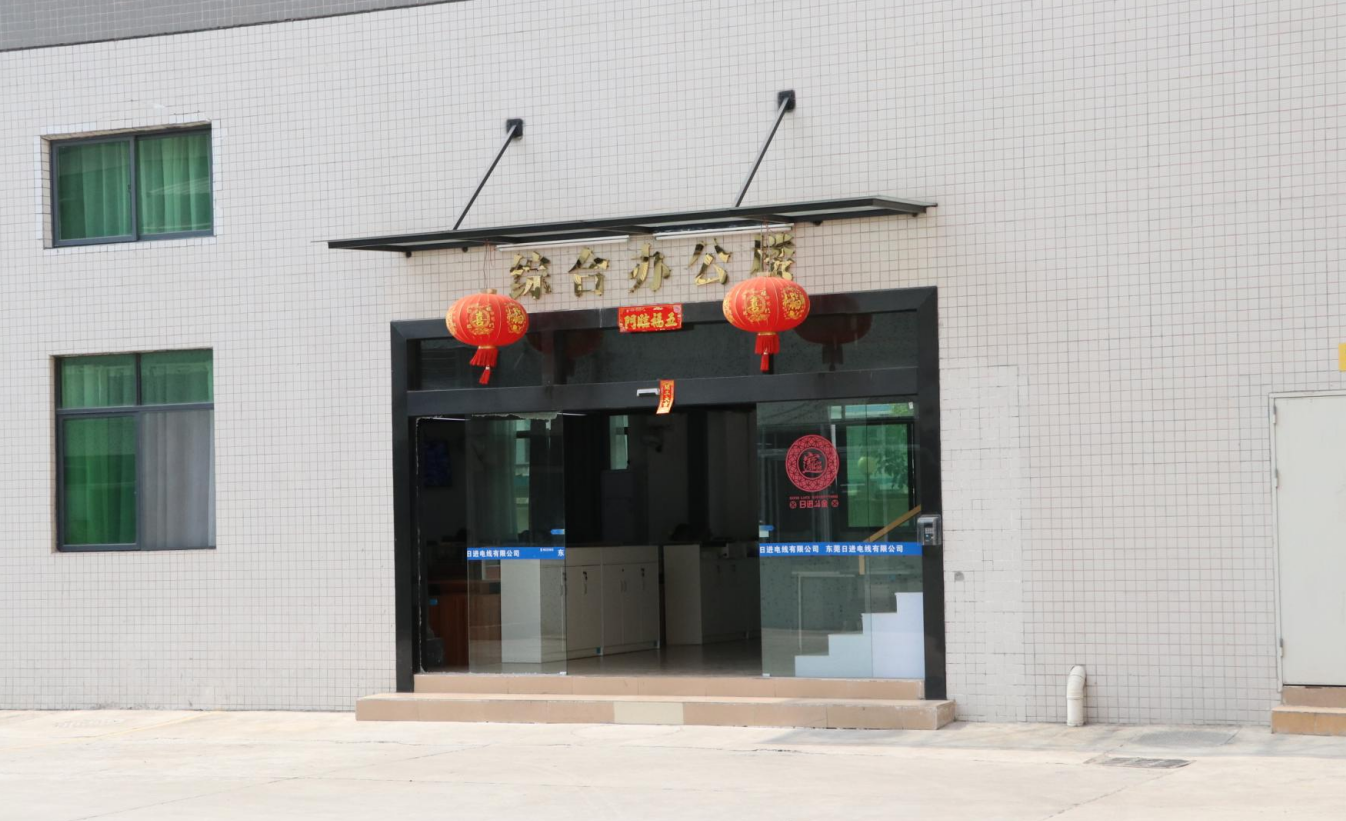
The NIZING Electric site in Dongguan combines silicone wire extrusion, braided high temperature wire production and silicone tube extrusion under one organisation.
Market Trend: Growth Is Real, but the Numbers Depend on Scope
Published market sizes for high temperature wire differ widely because the scopes differ, and buyers should read the definitions before quoting any of them internally. Strategic Market Research valued the global high temperature resistant wire market at USD 2.13 billion in 2024, projecting USD 3.19 billion by 2030 at a 6.8% CAGR. Market Research Future estimated the similarly named market at USD 1.48 billion in 2024 with a 4.5% CAGR to 2035. A broader high temperature cables scope was estimated by Strategic Market Research at USD 4.8 billion in 2024, rising to USD 7.3 billion by 2030. The gap between the two 2024 wire figures is a scope and methodology difference, not a disagreement about direction.
Within the silicone segment, SNS Insider valued the global silicone cable market at approximately USD 3.87 billion in 2024, and the narrower high temperature silicone cable market at USD 1.34 billion in 2024, growing at 8.95% CAGR toward 2032. Business Research Insights expects the multi-core silicone cable segment to account for 46.0% of the global silicone cable market in 2026 — consistent with the shift toward multi-conductor harnesses in appliances and battery systems.
Two application drivers support that shift. Silicone parallel wires and multi-core cables are increasingly used in EV battery management systems for high voltage and temperature stability, and silicone insulated cables are preferred in medical equipment because of flexibility and chemical resistance. Both applications reward the same properties that matter in LED and appliance wiring: flexible insulation that holds its electrical characteristics at elevated temperature.
Comparison with Traditional Solutions
The comparison that matters in procurement is not silicone versus Teflon in the abstract, but how each construction behaves against the alternatives a design team is already using.
| Construction | Typical temperature position | Strengths | Limits and trade-offs |
|---|---|---|---|
| PVC insulated wire | Lowest of the group | Low cost, familiar tooling and termination | Not a high temperature solution; softens well below silicone classes |
| Silicone insulated wire (SRML / SFF-2 class) | Up to 150°C continuous at 600V | Flexible, good chemical resistance, wide availability | Lower abrasion resistance than braided assemblies; not for continuous hydrocarbon contact |
| UL 3135 silicone style | 200°C internal wiring | Higher class within the same material family | Style-specific; the exact construction must be confirmed |
| PTFE (Teflon) wire | Typically -60°C to +260°C | Higher ceiling, thin walls, chemically inert relative to silicone | Stiffer; harder to strip and route in tight bends |
| Silicone braided wire | Silicone core class plus mechanical protection | Abrasion resistance where routing is harsh | Larger outer diameter, higher cost, less flexible than bare silicone |
| Fiberglass / inner rubber outer fiber tube assemblies | Protection layer over a conductor | Thermal and mechanical protection for exposed runs | Adds bulk; does not substitute for a correctly rated conductor insulation |
Table 2. Construction-level comparison; temperature positions reflect the published ratings cited in this article and are not interchangeable across constructions.
A Procurement Checklist for Constraint-Matching
- State the steady-state conductor temperature and the excursion separately, and put both in the request.
- State the working voltage and confirm the wall thickness supports it, rather than assuming a temperature rating implies a voltage rating.
- Name the market and the end-product standard: UL 758 AWM style, UL 3135, IEC 60245 / H05SS-F, or CCC under GB/T 5013 and GB/T 5023.
- Decide whether the dominant mechanical stress is flexing, abrasion or neither — that is the braid decision, and it should not be made by default.
- Decide whether reinforced insulation is genuinely required — that is the double-insulation decision.
- Confirm the outer diameter fits the routing, especially inside LED housings and appliance cavities.
- Confirm the certificate covers the exact construction being quoted, not the supplier's site.
- Separate fluid-handling parts such as silicone water pipe and tubing from electrical parts in the same bill of materials.
Future Outlook
Three developments are likely to shape construction choices over the next few years. Multi-conductor demand is rising: if multi-core silicone cable reaches the 46.0% share projected for 2026, harness complexity inside appliances and battery systems will keep pushing specifications toward multi-core and parallel constructions rather than single wires. Regional supply concentration in PTFE — Asia Pacific held 50.5% of PTFE market value in 2025 — means Teflon-based constructions will continue to be sourced heavily from Asian manufacturers, with price and lead time shaped by that concentration. And certification expectations are more likely to tighten than relax, which favours suppliers able to document construction-level approvals rather than general compliance claims.
What will not change is the underlying rule: temperature class is a starting constraint, not a selection. The buyer who specifies the full operating envelope — temperature, voltage, certification, mechanics, chemistry — receives a construction that fits the product. The buyer who specifies only a number receives a cable that may satisfy the datasheet and still fail in service.
FAQ
What continuous temperature can a silicone braided wire actually run at?
The braid is a mechanical layer, so temperature capability comes from the silicone core and the conductor. Silicone rubber insulated wires such as SRML and SFF-2 are specified for continuous conductor temperatures up to 150°C at 600V, and UL 3135 identifies a silicone style rated for 200°C internal wiring. A higher figure quoted for a braided assembly refers to that specific construction and should be confirmed against its own rating document.
Is Teflon wire always the better choice above 150°C?
Not automatically. Teflon (PTFE) wires typically operate from -60°C to +260°C, which is a higher ceiling than the common silicone classes, but PTFE is stiffer and less forgiving in tight bends and at termination. Where the run is short and temperature is the dominant constraint, PTFE is a natural fit; where repeated flexing or a tight radius dominates, a silicone construction within its own class is often the better match.
Does a supplier's UL listing cover every high temperature wire it sells?
No. UL 758 covers Appliance Wiring Material and UL 3135 identifies one silicone style; approvals attach to specific constructions, wall thicknesses and ratings. A published certification list is a starting point, and the verification step is to confirm that the exact item number being purchased is covered by the relevant file.
When is CCC required for high temperature resistant wire sold into China?
High temperature resistant wires for the Chinese market must obtain CCC certification if rated ≤450/750V, under GB/T 5013 and GB/T 5023. Products outside that scope, or used in applications governed by a different regime, follow the standard applicable to that product rather than this one.
When should double-insulated or parallel constructions be specified instead of a single wire?
Double insulation is specified when reinforced insulation or an additional mechanical layer is required; it adds diameter and cost, so it should follow a safety or routing requirement rather than habit. Parallel constructions are used where two conductors must run side by side in a flat profile, and multi-core constructions where one harness carries several circuits. The choice follows the housing geometry and the safety requirement, not the temperature alone.
How should a buyer verify the temperature range claimed for industrial heating wire?
Ask for the rating of the specific construction rather than the material. NIZING's published range, for example, extends from -100°C to +750°C for specific industrial heat treatment applications, which is a construction- and application-specific statement. Verification means matching the construction, the certificate and the application conditions in writing before the order is placed.
Tem questões ou precisa de mais detalhes?
Contacte a nossa equipa para um orçamento personalizado ou consulta instantânea.
Solicitar orçamento
Preencha o formulário abaixo e a nossa equipa entrará em contacto com uma proposta personalizada.
Chat direto do WhatsApp
Prefere conversar em tempo real? Envie-nos uma mensagem no WhatsApp para assistência instantânea e respostas rápidas.
- Obter orçamento personalizado
- Partilhar fotos ou documentos
- Discuta as suas necessidades diretamente
Geralmente responde em 5–30 minutos durante o horário de expediente.