
Home Fitness Equipment: Scenario-Based Sourcing for Buyers
Home fitness equipment is bought by project context as much as by product category. A supplier serving an apartment-focused e-commerce brand, a corporate office-wellness program, and a retailer building a dedicated home-gym range is effectively managing three different product lines, even when the machines share a category name. The practical question for buyers in the research or evaluation stage is not simply “which equipment” but “which equipment for which scenario.”
This article looks at home fitness equipment through the lens of project adaptation. It examines how different buyer project types—small apartments, home offices, dedicated training rooms, and low-impact wellness programs—map to different equipment specifications. It also explains how a manufacturer’s product range and OEM capabilities support that mapping.
Ningbo Healthmate Health Technology Co., Ltd. serves as an industry example throughout the article. The company is a fitness equipment manufacturer based in Ningbo, China, with a 100,000-square-meter factory, 850 employees, and an annual output of 700,000 units. It was founded in 2007 and primarily exports to Europe, the USA, Japan, Korea, India, the Middle East, and South America. Its product line includes home treadmills, walking pads, vibration machines, spinning bikes, magnetic X-bikes, upright bikes, elliptical trainers, electric mini bikes, and rowing machines.
Why Project-Scenario Fit Has Become a Sourcing Problem
The common failure in home fitness sourcing is not always product quality. It is product-project mismatch. A full-size motorized treadmill may perform well on a test floor but sit unused in a small apartment. A compact walking pad may be ideal for a home office but too limited for a buyer who wants to sell a serious cardio machine. A vibration plate with heavy power may suit a fitness room but feel intimidating to an older user in a rehabilitation-focused project.
When equipment does not match the project, the consequences appear after the sale: higher return rates, more after-sales complaints, unused products, and slower reorders. For buyers managing a product line, this is not a technical defect problem. It is a specification and selection problem that should have been resolved before purchase.
The opportunity is to divide the home fitness category into recognizable project scenarios and then match equipment accordingly. Market data shows that demand is broad enough to justify this structure. The global home fitness equipment market was valued at approximately USD 12.88 billion in 2025 and is projected to reach USD 22.99 billion by 2034, according to Fortune Business Insights. Cardiovascular equipment, including treadmills and exercise bikes, dominates the category with a 58.89% revenue share.
The same market data also shows fragmentation beneath the surface. The global home treadmill market reached USD 5.51 billion in 2025, with motorized models holding a 58.2% share. The walking pad segment reached USD 4.9 billion, driven largely by remote work. The vibration plate and therapy platform segment reached USD 1.8 billion, with an expected CAGR of 7.8% through 2034. These are not interchangeable products. They serve different floors, different users, and different daily routines.
How a Manufacturer Supports Scenario-Based Product Selection
Ningbo Healthmate offers a product portfolio that can be grouped by project scenario rather than only by category. The lineup includes several series: multi-function motorized treadmills such as the HSM-MT550, HSM-MT296, HSM-MT19 and HSM-MT60 PRO; compact folding treadmills such as the HSM-T20; walking pads including the HSM-W09E, HSM-W08A, HSM-W04M2A, HSM-W04L1BL and HSM-W04L2B; magnetic resistance bikes such as the HSM-S300 and HSM-B135J5; a magnetic rowing machine, the HSM-R06; vibration plates including the HSM-08VF, HSM-08VW, HSM-08VQ and HSM-08VS; and the HSM-08YB swing massage machine.
For OEM and ODM buyers, this range matters because it makes scenario-based sourcing practical from a single factory. The company supports customization of color, logo, voltage, and plug type. Its monthly production capacity for these lines is 8,000 units, with a lead time of 35–40 days and a minimum order quantity of 100 units. Quality control includes 100% testing and third-party inspection, and after-sales support provides a 1-year warranty for every damaged part.
These operational details give buyers a more concrete basis for evaluation. A supplier with a wider home use product range and moderate MOQ flexibility allows a buyer to test multiple project scenarios without committing to a large single-category order.
| Project Scenario | Equipment Focus | Representative Models | Key Specification Markers |
|---|---|---|---|
| Apartment and urban living | Compact walking pads, folding treadmills, magnetic bikes, lightweight vibration plates | HSM-W04L2B, HSM-T20, HSM-S300, HSM-B135J5, HSM-08VS | Small footprint, foldable frame, quiet magnetic resistance, gross weight from 9.8 kg to 33.5 kg |
| Home office fitness integration | Under-desk walking pads, walking pads with handrail support | HSM-W04L1BL, HSM-W04M2A, HSM-W09E | Low speed range of 1–6, 1–10 or 1–14 km/h; 0.75–1.5 HP; brushless motor on HSM-W04L1BL |
| Dedicated home fitness room | Motorized treadmills, rowing machines, spinning bikes, multi-mode vibration platforms | HSM-MT550, HSM-MT296, HSM-MT19, HSM-R06, HSM-08VW | Larger running belts from 1200×520 mm to 1350×550 mm; speeds up to 1–22 km/h; heavier flywheels |
| Low-impact wellness and recovery | Vibration plates, swing massage machine | HSM-08VS, HSM-08VQ, HSM-08VF, HSM-08YB | Power from 200 W to 500 W + 300 W; 20 or 99 speed levels; timers; optional handlebar or elastic ropes |
Technical Specifications That Define Project Suitability
Buyers evaluating home fitness equipment for a specific project should look beyond brand names and focus on measurable parameters. The following dimensions are especially relevant when adapting equipment to a project scenario.
Space and Folding
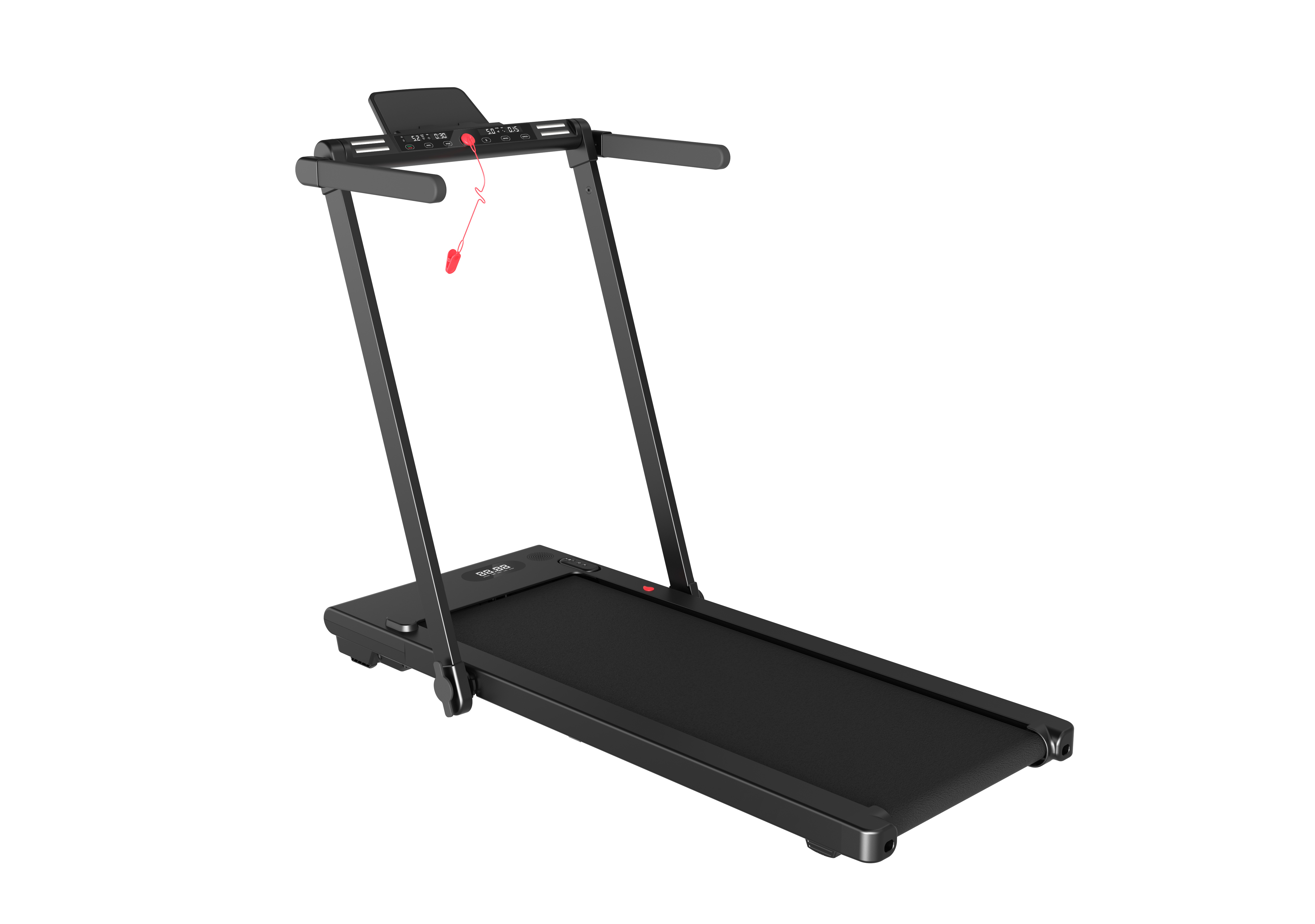
For apartment or home office projects, space-saving or foldable design is often a hard requirement. The HSM-W04L1BL under-desk walking pad measures 1130×510×91 mm, which allows it to fit under furniture or a desk. The HSM-W04L2B measures 1090×495×120 mm. Among folding treadmills, the HSM-T20 has a compact 1474.3×604×1124 mm footprint, while the HSM-MT296 and HSM-MT19 use folding frames designed for storage.
The HSM-MT19 uses a hydraulic soft-drop folding system, which makes the folding action easier to control in a home setting. The HSM-B135J5 is a foldable X-bike exercise bike with a gross weight of 19.1 kg, making it practical for moving between rooms.
Motor Power and Speed Range
Speed range is one of the clearest indicators of project intent. Walking pads such as the HSM-W04L1BL and HSM-W04L2B operate at 1–6 km/h with a 0.75 HP motor, which is appropriate for continuous low-speed walking under a desk. The HSM-W04M2A provides 1–10 km/h at 0.75 HP with a handrail, making it useful for short office walking breaks. The HSM-W09E offers a dual-speed design: 1–6 km/h and 1–14 km/h, powered by a 1.5 HP motor.
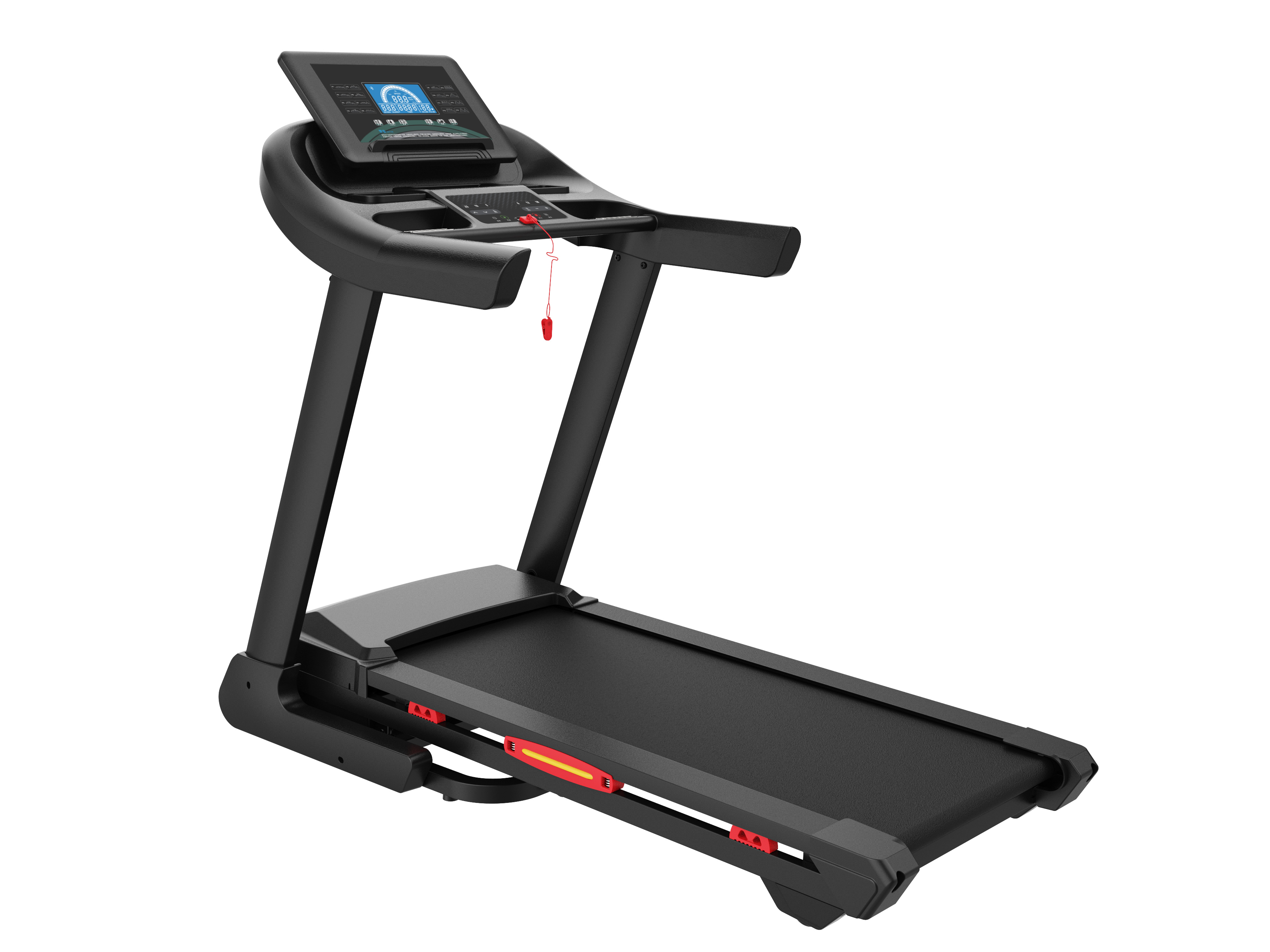
For buyers planning a dedicated home fitness room, motorized treadmills deliver a much wider performance window. The HSM-MT296 provides 1–20 km/h with a 2.0 HP motor. The HSM-MT550 provides 1–22 km/h with a 2.5 HP motor and 16 programs. The HSM-MT19 provides 1–20 km/h with a 2.5 HP motor and 12 programs.
Running Belt Size
Belt size affects stride comfort and safety. Compact walking pads use belts around 900×380 mm, which are suitable for slow walking. Intermediate machines such as the HSM-W08A use a 1200×450 mm belt. Treadmills intended for running or taller users use wider and longer belts: 1200×520 mm on the HSM-MT296, 1300×480 mm on the HSM-MT19, 1320×520 mm on the HSM-MT60 PRO, and 1350×550 mm on the HSM-MT550.
Resistance System
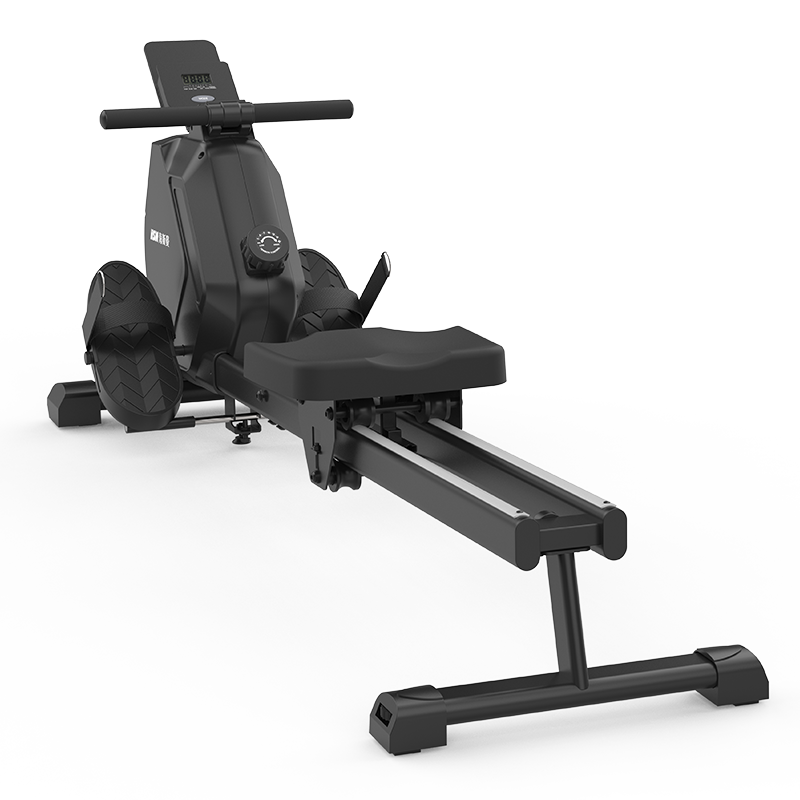
For cycling and rowing products, resistance type affects noise level and ride feel. Magnetic resistance is generally quieter than friction or felt pad systems, which matters in apartment buildings. The HSM-B135J5 uses an 8-level magnetic resistance with a 1.5 kg flywheel. The HSM-S300 spinning bike has a 6.0 kg flywheel and offers stepless resistance with APP control from 1 to 10 levels. The HSM-R06 rowing machine uses magnetic resistance with 16 levels and a 2.5 kg flywheel.
Vibration and Low-Impact Features
Vibration machines serve a separate project scenario focused on low-impact home training. The HSM-08VS is a compact vibration plate with a 200 W motor, 99 speed levels, and a gross weight of 9.8 kg. The HSM-08VW includes elastic ropes and uses 500 W + 300 W power with 20 speed levels and a 1–15 minute timer. The HSM-08VQ is a portable platform with 500 W + 300 W power and 20 levels. The HSM-08VF adds a handlebar and pulse screen with a 500 W motor and 99 levels.
Safety and Durability
Home projects often have less supervision than commercial gyms, so safety-related design matters. Some walking pads, such as the HSM-W04M2A and HSM-W09E, include handrails. The HSM-MT19 uses an emergency stop key and an anti-slip running belt. The HSM-MT296 has a capacity of 150 kg, which is relevant for family use. The HSM-08VQ and HSM-08VW vibration machines include anti-slip mat or platform design considerations suited to home floors.
Application and Use Cases in Real Buyer Projects
The product application data behind Ningbo Healthmate’s portfolio lists several project types where the equipment is used: home fitness setup projects, home office fitness integration projects, and personal cardio training systems. The working conditions include home use, office or workplace use, and apartment or urban living use. The intended functions are daily exercise or activity maintenance and lifestyle fitness improvement.
These applications also share special requirements that buyers should recognize. They include space-saving or foldable design, anti-slip running belts, high-durability motors for repeated daily use, ergonomic design for long-term home use, and a stable frame for apartment flooring use.
Scenario 1: Apartment and Urban Living
In apartment projects, floor space and noise are the two dominant constraints. The product is often used for small apartment daily light exercise, post-meal fat burning, and low-impact leg cardio training. Equipment suited to this scenario includes compact walking pads such as the HSM-W04L2B and HSM-W04L1BL, the folding treadmill HSM-T20, and magnetic resistance bikes such as the HSM-B135J5 and HSM-S300. The HSM-S300 is positioned as a quiet spinning bike for apartment use, with a 6.0 kg flywheel and stepless magnetic resistance.
Scenario 2: Home Office Fitness Integration
For home office fitness integration projects, the equipment is used in office or workplace settings and supports office standing walking. The HSM-W04L1BL is designed as an under-desk walking pad with a brushless motor and a 1–6 km/h speed range, which fits the low-intensity walking pattern of a workday. The HSM-W04M2A adds a handrail and allows speeds up to 10 km/h. The HSM-W09E, with its dual-speed system and handrail, gives users the flexibility to choose between desk-walking speed and light exercise speed.
Scenario 3: Dedicated Home Fitness Room
When a buyer’s project involves a dedicated space for cardio training, the specification priority shifts from compactness to performance and programming. Motorized treadmills such as the HSM-MT550, HSM-MT296, HSM-MT19 and HSM-MT60 PRO provide larger running belts, higher motor power, and structured programs. The HSM-R06 rowing machine brings a full-body training option into the same room, while the HSM-08VW vibration platform can be added as a recovery or supplementary module.
Scenario 4: Low-Impact Wellness and Recovery
Some buyer projects focus on elderly daily rehabilitation exercise, joint mild discomfort recovery, or light home fitness. For these users, vibration machines and massage equipment are more realistic purchases than high-speed treadmills. The HSM-08VS is lightweight and simple. The HSM-08VQ adds higher power and an integrated screen. The HSM-08VF includes a handlebar for stability. The HSM-08YB swing massage machine supports relaxation-oriented wellness rather than cardio training.
Evidence from Long-Term Use
In the available case data, Ningbo Healthmate products have been used across multiple buyer types: foreign trade wholesalers, Amazon platform sellers, local fitness retail shops, wholesale trading companies, and fitness equipment wholesalers. One case record covers a quantity of 100,000 units over a 3–5 year period. The recorded applications include family daily cardio workout, indoor weight loss training, elderly daily rehabilitation exercise, office standing walking, small apartment daily light exercise, post-meal fat burning, low-impact leg cardio training, and recovery exercise for joint mild discomfort.
According to the case record, the products delivered stable running performance, an after-sales failure rate below 2%, a high customer repeat order rate, and good market feedback on household space demand. This suggests that when equipment is matched to the intended home scenario, the post-sale burden is lower and the repeat order pattern is stronger.
Market Trends Behind Project-Based Sourcing
Several verified market signals explain why scenario-based sourcing is becoming more important for home fitness buyers.
- The global home fitness equipment market is projected to grow from approximately USD 12.88 billion in 2025 to USD 22.99 billion by 2034, according to Fortune Business Insights.
- Cardiovascular equipment, led by treadmills and exercise bikes, holds a 58.89% revenue share of the home fitness market.
- The home treadmill market was valued at USD 5.51 billion in 2025, with motorized models accounting for 58.2% of the segment.
- The walking pad market is estimated at USD 4.9 billion in 2025, partly supported by the remote work trend.
- The vibration plate and therapy platform market reached USD 1.8 billion in 2025 and is expected to grow at a CAGR of 7.8% through 2034.
For buyers, these trends point to three conclusions. First, cardio equipment remains the core of home fitness, but the category must be split into running, walking, and cycling sub-scenarios. Second, compact equipment such as walking pads is no longer a niche accessory; it is a distinct product class with its own demand base. Third, low-impact platforms are developing as a separate purchase driver, especially for wellness-focused users.
Certification is another market-level consideration. Motorized treadmills must comply with ASTM F2115-19 in the USA and ISO 20957-6 / EN 957-6 in Europe for safety and performance. Buyers planning global or multi-region projects should confirm that the specific model is built to the standard required in the target market.
Comparison with Traditional Category-Based Sourcing
Traditional home fitness sourcing often follows a simple category approach: a buyer selects a treadmill, an exercise bike, and perhaps a rowing machine, then places the same product set across all markets. This approach is simple to manage, but it tends to leave project-level needs unresolved.
| Evaluation Dimension | Traditional Category-Based Sourcing | Scenario-Based Sourcing |
|---|---|---|
| Product selection logic | Standard categories such as treadmill and exercise bike | Equipment matched to apartment, office, dedicated room, or low-impact wellness scenario |
| OEM customization | Often limited to logo placement | Color, logo, voltage, and plug type customization available |
| Minimum order quantity | Often high due to single-category production | MOQ of 100 units allows test orders across multiple model types |
| Lead time | Variable, sometimes 60 days or more | 35–40 days for manufacturer-run programs |
| Quality control | Sampling or final inspection | 100% testing plus third-party inspection support |
| Project fit | Adjusted downstream by the buyer or retailer | Defined at the sourcing stage before purchase |
The main limitation of scenario-based sourcing is that a manufacturer cannot fully replace the buyer’s own project validation. Equipment parameters such as motor power, belt size, speed range, and folding design improve fit, but the buyer must still verify the actual room dimensions, floor type, electrical conditions, user profile, and market-specific compliance requirements. In complex projects, sample testing is still necessary. The MOQ of 100 units and the 35–40 day lead time make such validation feasible without requiring a mass order at the first stage.
Future Outlook
Home fitness equipment will likely become more scenario-specific in the coming years. Walking pads are expected to gain more incline functions, stronger motors, and more supportive handlebar versions, making them useful beyond the basic under-desk use case. Folding treadmills will continue to improve in storage convenience through features such as hydraulic soft-drop folding, while motor power and belt width remain high enough for real exercise. Magnetic resistance systems should become more common across bikes and rowers as apartment noise concerns grow.
Digital features such as Bluetooth music and APP connection are already present on models like the HSM-T20, HSM-MT296 and HSM-MT19. These features are likely to become standard rather than premium differentiators. At the same time, compliance requirements such as ASTM F2115-19 and ISO 20957-6 / EN 957-6 for motorized treadmills will push manufacturers to build certification into product development earlier rather than treating it as an after-sale documentation step.
For buyers, the more practical evaluation method will be to review a supplier’s product line as a portfolio of project solutions, not just a list of SKUs. The question should be: does this manufacturer offer the right machine type, with the right specifications, for each target scenario I plan to serve?
Frequently Asked Questions on Home Fitness Project Adaptation
Which home fitness equipment types are designed for apartment or urban living?
Several compact models are designed for apartment or urban living environments. In Ningbo Healthmate’s range, the HSM-W04L2B and HSM-W04L1BL walking pads have small footprints and low-speed ranges of 1–6 km/h. The HSM-T20 is a folding home treadmill with a 1.5 HP motor and a 1–14 km/h speed range. The HSM-B135J5 foldable X-bike uses 8-level magnetic resistance and has a gross weight of 19.1 kg. The HSM-S300 spinning bike uses a 6.0 kg flywheel with stepless magnetic resistance, which makes it quieter for apartment use.
Which products fit home office fitness integration projects?
Home office fitness integration projects typically use under-desk walking pads or walking pads with handrails. The HSM-W04L1BL is an under-desk walking pad with a brushless motor, a 900×380 mm belt, and a 1–6 km/h speed range. The HSM-W04M2A is a folding walking pad with a handrail and a 1–10 km/h range. The HSM-W09E offers dual-speed operation of 1–6 km/h and 1–14 km/h, with a 1.5 HP motor and handlebar support. These models support the office standing walking use case while keeping the equipment low-profile and easy to store.
Why do space-saving or foldable designs matter in home fitness projects?
Many home fitness projects operate in limited floor space, especially in apartment or urban living environments and home office settings. The application data for this product family identifies space-saving or foldable design as a special requirement. Examples include the HSM-W04L1BL at 1130×510×91 mm, the HSM-W04L2B at 1090×495×120 mm, the HSM-T20 compact folding treadmill, the HSM-MT296 and HSM-MT19 folding treadmills, and the HSM-B135J5 foldable X-bike. Foldable or compact equipment allows a home fitness setup to coexist with normal daily living space.
What specifications should buyers check when matching equipment to a small-space or apartment project?
Buyers should verify the equipment footprint, belt size, motor power, speed range, resistance type, and safety features. For example, the HSM-W04L1BL has a product size of 1130×510×91 mm and a 900×380 mm belt. The HSM-W04M2A has a 920×380 mm belt and a 0.75 HP motor with a 1–10 km/h speed range. The HSM-T20 has a 1100×400 mm belt and a 1.5 HP motor with 1–14 km/h speed. Magnetic resistance systems such as those on the HSM-B135J5 and HSM-S300 reduce noise. Buyers should also confirm voltage and plug type compatibility, since OEM customization covers both.
Can a walking pad replace a motorized treadmill in a home fitness project?
The answer depends on the project goal. A walking pad such as the HSM-W04L1BL, with a 0.75 HP motor and a 1–6 km/h speed range, is appropriate for continuous low-speed walking under a desk or in a small apartment. A motorized treadmill such as the HSM-MT550 provides a 1–22 km/h speed range, a 2.5 HP motor, and a 1350×550 mm belt, which supports running and structured cardio training. In some projects, both products can exist in different tiers: a walking pad for daily light movement and a treadmill for dedicated workout sessions.
For a complete overview of the product range and OEM specifications, the Ningbo Healthmate company brochure is available at: https://cdn.socialarks.com/sbsp/24994/common/2026/0622/HSM%20NEW%20E-CATALOG.pdf