
Home Lift Compliance & Qualification: Platform, Glass and Shaft-Built Cabin Checks
Home Lift Compliance & Qualification: Platform, Glass and Shaft-Built Cabin Checks
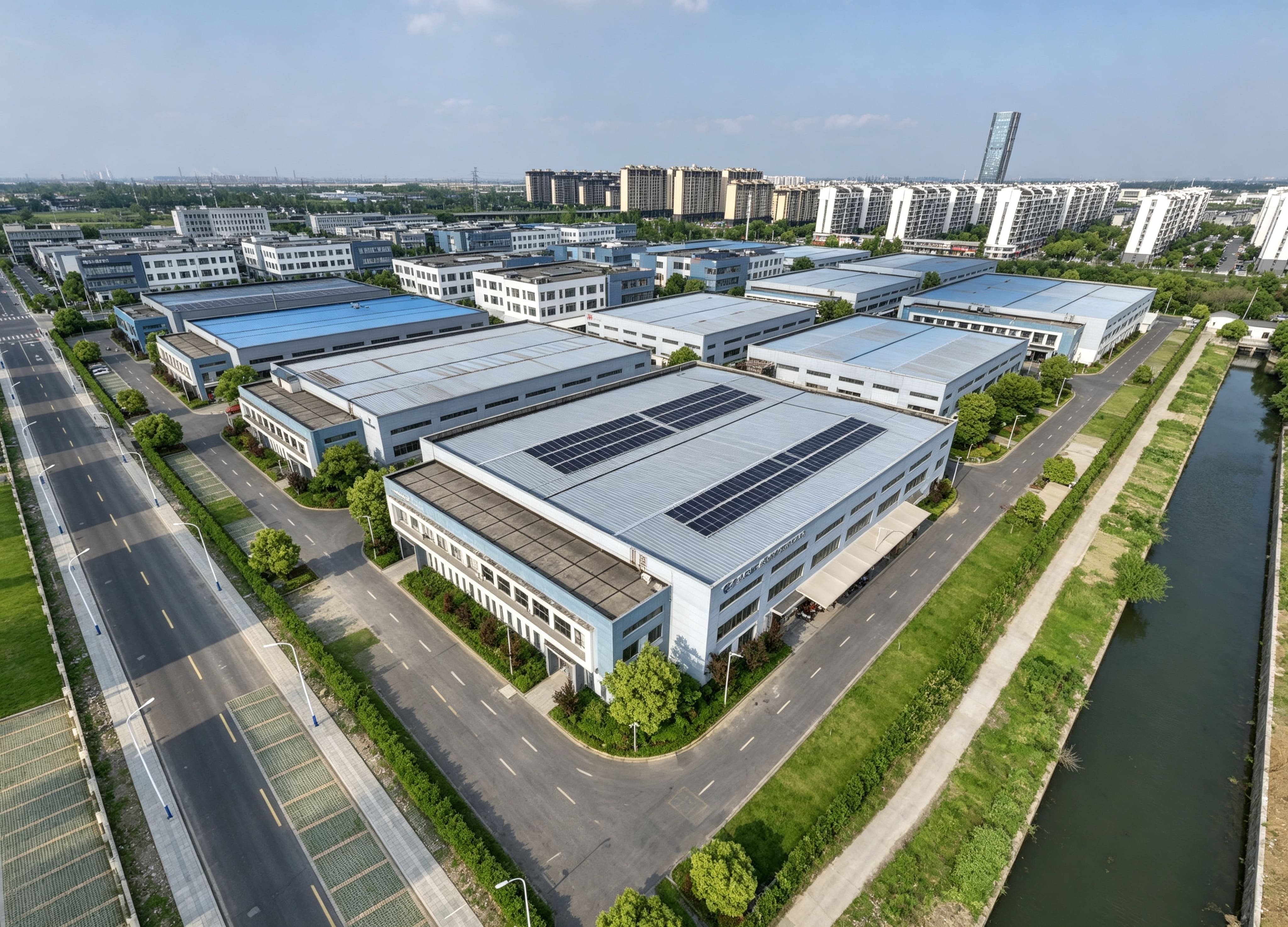
Factory acceptance testing is one of the qualification checkpoints a buyer should verify before shipment, not after delivery.
Home Lift Compliance Is a Project Checklist, Not a Single Certificate
Home lift compliance is not one document. In residential and light-commercial projects, qualification is a project-specific set of acceptance criteria covering civil fit, safety functions, documented performance, commercial terms, installation scope and after-sales obligations. The same buyer brief generates three different checklists, because a platform lift, a glass lift and a shaft-built cabin lift each relate to the building structure in a different way.
Scale explains why this has become a procurement discipline rather than a formality. Global residential elevator market revenue reached USD 54.61 billion in 2024, according to Grand View Research, and the modernization segment of the elevator market is projected to grow at roughly 7% CAGR through 2030, according to Roland Berger. Retrofit work — installing a lift into a house that already exists — is precisely where generic elevator assumptions stop working, because there is no standard shaft, no standard pit depth and no standard headroom to design against.
Why Home Lift Qualification Diverges from Commercial Elevator Procurement
Two structural differences separate home lift qualification from commercial elevator procurement. The first is the direction of adaptation. In commercial projects, buildings are usually designed around standard car sizes, deep pits and high overhead clearances, so the buyer mainly verifies that the site matches the product. In residential projects the product has to match the site: existing staircases, limited floor-to-floor height, finished interiors and, frequently, no shaft at all. A supplier that can only accept a standard shaft dimension is effectively asking the homeowner to rebuild the house.
The second is the decision-maker. Commercial elevator procurement is typically handled by B-end buyers whose evaluation is dominated by capacity, traffic handling and lifecycle cost. Home lift decisions usually involve the homeowner directly, where noise, finish, door-frame integration and colour consistency are genuine selection criteria. A unit that performs acceptably but reads as commercial equipment inside a finished villa is a failed project even when its paperwork is complete.
Regulatory harmonisation adds a third dimension. The transition from EN 81-20/50 to ISO 8100-1 and ISO 8100-2 is harmonising elevator safety standards internationally, a process documented by TÜV SÜD. In China, home lift documentation frequently references GB/T 21739-2025. The practical consequence for a buyer is that a general certification statement is not a usable answer. A usable answer names the standard, the product family, the market and the validity period.
The Three Product Families and the Criteria Each One Triggers
Load, speed, drive and placement differ across the three families, but the qualification-relevant difference is what each family demands from the building.
| Product family | Load capacity | Speed | Energy draw | Placement | Structure |
|---|---|---|---|---|---|
| Platform lift (FP-S / FP-E series) | 320–400 kg | 0.15 m/s; 0.3 m/s | 1.1 kW | Indoor | Aluminium frame with glass shaft + platform |
| Glass lift (FT / FJ series) | 400–800 kg | 0.4 m/s; 0.63 m/s; 1.0 m/s | 1.1–2.4 kW | Indoor and outdoor | Aluminium frame with glass shaft + glass cabin |
| Shaft-built cabin lift (FT / FJ series) | 320–1000 kg | 0.4 m/s; 0.63 m/s; 1.0 m/s | 1.1–2.4 kW | Indoor | Bent steel structure, concrete shaft, wood shaft or brick shaft |
Specification ranges as published for the FP-S / FP-E and FT / FJ series. Drive modes listed across the range: traction steel belt or wire rope, and drum drive.
Platform lift — the retrofit and accessibility family
Platform lifts in the FP-S and FP-E series carry 320 kg to 400 kg at 0.15 m/s or 0.3 m/s, draw approximately 1.1 kW, and combine an aluminium frame with a glass shaft and an open platform. They are indoor units. Their qualification value concentrates in two areas: sites with no shaft and limited civil work, where shaft-less and pit-free installation is decisive, and barrier-free access, including wheelchair use and threshold-free flat-floor entry. In public or commercial settings where accessibility requirements apply, this is the family most often specified.
Glass lift — the visibility and facade family
Glass lifts in the FT and FJ series carry 400 kg to 800 kg at 0.4 m/s, 0.63 m/s or 1.0 m/s, draw 1.1 kW to 2.4 kW, and pair an aluminium frame glass shaft with a glass cabin. They are listed for both indoor and outdoor use. Qualification here concentrates on the structural interface between the guide system and the building, weather detailing for outdoor installation, and the relationship between footprint and cabin proportions, since a glass lift is usually chosen for sightlines.
Shaft-built cabin lift — the interior-integration family
Shaft-built cabin lifts in the same FT and FJ series carry 320 kg to 1,000 kg at 0.4 m/s, 0.63 m/s or 1.0 m/s, draw 1.1 kW to 2.4 kW, and are indoor units. The shaft can be a bent steel structure, a concrete shaft, a wood shaft or a brick shaft. Qualification therefore focuses on shaft integrity, available headroom, door-frame dimensions against existing staircases, and how landing doors integrate with the interior design.
The selection rule follows the building, not the budget
If a concrete or brick shaft already exists, a cabin lift is the natural fit. If the shaft opening is large, a glass lift can use the space to best effect. If space is tight, or the lift is for an existing house without a shaft, a platform lift is the practical solution. For commercial public use where EU certification or disability accessibility requirements apply, a commercial platform lift is the appropriate category. A supplier normally needs the shaft width and depth, pit depth, floor heights, door sizes, intended use, new-build or renovation status and finishing requirements before it can produce a drawing, design and quotation.
Project-Specific Acceptance Criteria: A Qualification Checklist
The following seven checkpoints translate the three product families into acceptance criteria a buyer can actually put into a purchase specification. Each point should be closed with a document, not a verbal confirmation.
- Civil and site fit. Shaft width and depth, pit depth, floor heights and door sizes. Confirm whether the project requires a conventional pit or whether a shaft-less, shallow-pit or pit-free design is needed — the deciding factor in most renovations.
- Access and inclusive design. Threshold-free flat-floor entry, wheelchair access and door clear opening should be specified as measurable dimensions, not as intentions.
- Safety functions. Emergency levelling, anti-pinch and object detection, one-touch emergency dial, automatic rescue, and — where specified — active millimetre-wave radar detection. Each function should be listed individually in the acceptance document.
- Noise and vibration. Require documented traction noise data against the project target; a target of at or below 40 dB is used in premium villa specifications, and steel-belt traction is recorded at 15–25 dB lower noise than screw-type drives. Independent like-for-like decibel benchmarks across home lift suppliers are not widely published, so factory test records matter more than category claims.
- Compliance documentation. Market-matched certificates and test reports, with the standard reference named (for example ISO 8100-1 and ISO 8100-2, or GB/T 21739-2025 in China) and the product scope stated.
- Commercial and acceptance terms. Minimum order quantity, delivery terms, payment terms, and the test stage at which acceptance is confirmed.
- Installation and after-sales scope. Who installs, over how many working days, under what warranty, with what spare-part and remote-diagnostics obligations, and through which local service channel.
Technical Explanation: What the Safety and Retrofit Features Actually Verify
The features that appear most often in premium home lift specifications are not marketing labels; each one corresponds to a specific failure mode. A qualification checklist should test them individually.
- Shallow-pit or shaft-less installation. Removes the need for deep civil excavation and is the single most important retrofit enabler in existing houses.
- Threshold-free flat-floor access. The car floor and finished floor align without a raised sill, so wheelchairs, walking aids and trolleys cross without a step.
- Emergency levelling. On power failure, the car is driven to the nearest floor and the doors open, avoiding entrapment between landings.
- Anti-pinch and object detection. Prevents the doors from closing on a person or object in the doorway.
- One-touch emergency dial. A single control initiates contact with the outside, which matters for elderly users and single-person households.
- Automatic rescue. Brings the car to a safe landing without waiting for a technician to attend.
- Millimetre-wave radar situational awareness. An active system that detects presence in the car path, in contrast to passive devices that respond only after a mechanical event. FRANZ developed a proprietary active millimetre-wave radar safety system and positions it as the core of its residential safety approach.
- Steel-belt traction. A belt drive removes the oil-leakage risk associated with hydraulic systems, supports higher travelling speeds than screw-driven units — home-use traction reaches 0.3–1 m/s — and simplifies maintenance.
Noise is the acceptance criterion most often specified loosely. A buyer who wants a genuinely quiet villa lift should require documented traction noise data rather than a verbal assurance. Measured values depend heavily on shaft construction, cabin finish and site conditions, which is why target figures such as a 40 dB ceiling belong in the specification document and should be signed off against factory test records.
Where FRANZ Fits in This Qualification Framework
FRANZ Intelligent Elevator Co., Ltd. is a Suzhou-based manufacturer specialising in the R&D, smart manufacturing, sales, installation and maintenance of residential villa elevators. Founded in 2019, the company operates a 30,000 m² factory with 310 employees, a 32-engineer R&D team and a stated annual production capacity of 6,000 units or more. Around 15% of output is exported, with markets including Southeast Asia, Russia, Australia, the Middle East and Africa; the brand operates more than 220 showrooms and serves over 30 countries.
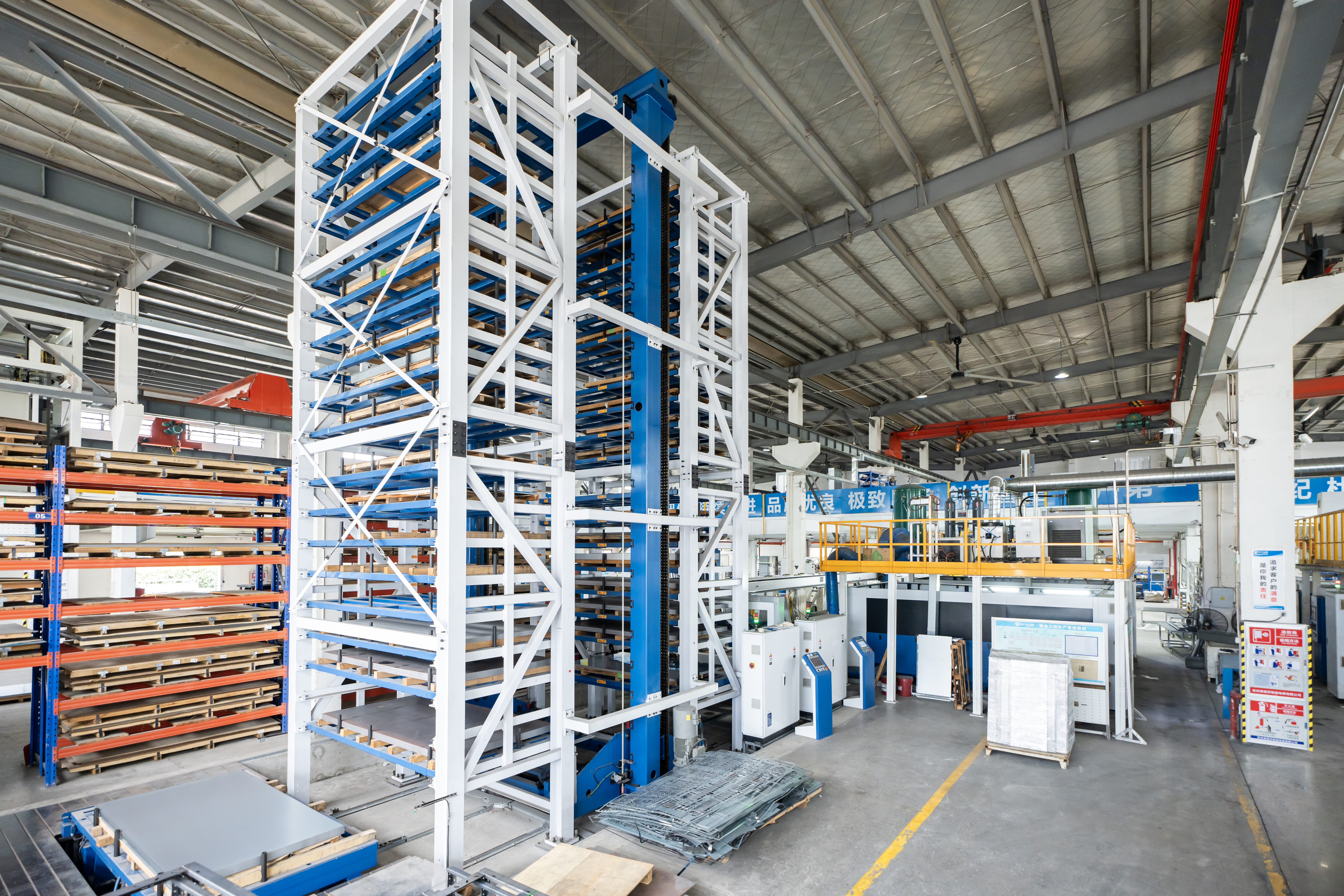
Production floor: steel-belt traction units and cabin assemblies are checked against project-specific acceptance criteria before dispatch.
Three attributes are directly relevant to a qualification checklist:
- Product scope matches the three-family framework. The main product line is the premium home lift, in three types: shaft-built cabin lift, glass lift and platform lift — the same families this article maps to acceptance criteria.
- Active safety system. The company has developed an active millimetre-wave radar situational awareness safety system rather than relying solely on passive protection devices.
- Certification record. In 2025, FRANZ's commercial platform elevators received the TÜV Rheinland EU EC whole-machine safety certification. That certification applies to the commercial platform elevator product line; it should not be assumed to extend automatically to other product families or other markets.
On commercial terms, the company supports a low minimum order quantity of 1 unit, which accommodates OEM and trial orders, and states a factory annual production capacity of 6,000 units or more.
Documented Installations: Russia, Australia and Indonesia
Three documented projects show how the same checklist resolves differently by market and building type. Each is a recorded project configuration rather than a certification claim.
Russia — new-build luxury mansion, indoor
A new-build luxury mansion project required 270° viewing combined with vertical transportation for high-frequency private household use. The specified configuration combined a classic platform lift with an aluminium frame, steel-belt traction, vibration-damping technology and millimetre-wave radar cloud detection. Site-specific requirements included a solid aluminium frame with large-area transparent glass, a custom wavy luminous background panel, adjustable frame colour temperature and thickened explosion-proof tempered glass.
Australia — office and shopping mall, commercial
A commercial office and shopping mall project required vertical transport for staff and visitors with barrier-free access under high-frequency public operation. The specification used a platform lift with steel-belt traction, emergency levelling, an anti-pinch device and a one-key emergency call system. The installation was shaft-less and pit-free, with an aluminium frame and laminated tempered glass, a threshold-free flat-floor design for disabled access, and a cream-white colour scheme matched to existing log-style staircases. The project brief recorded compliance with Australian high-safety requirements.
Indonesia — hotel and office commercial real estate, indoor
An Indonesian commercial real estate project covering hotel and office use across multiple floors was specified with a glass lift, steel-belt traction and an automatic power-failure levelling system. Requirements included a champagne-gold metal frame glass cabin, a large-capacity car, and a touch-screen operating panel supporting multi-language switching, face recognition and voice broadcast, with an enlarged-font high-contrast mode for accessibility.
In each case the acceptance criteria were project-specific. None of these configurations should be read as a substitute for local code review or for market-specific certification.
Market Trend Signals That Change Qualification Priorities
Four market signals are directly relevant to how buyers write acceptance criteria.
- Market size and definition. The global residential elevator market reached USD 54.61 billion in 2024 (Grand View Research). Published estimates vary by scope: research that includes wheelchair lifts and stairlifts produces materially different growth rates from research focused on vertical platform and elevator equipment only. Buyers using market data to justify a category decision should check the definition as well as the headline figure.
- Retrofit-led growth. The modernization segment is projected to grow at roughly 7% CAGR through 2030 (Roland Berger), pointing to continued demand for shaft-less and shallow-pit solutions rather than new concrete shafts.
- Standards harmonisation. ISO 8100-1 and ISO 8100-2 are replacing EN 81-20/50 as the international reference, per TÜV SÜD. Documentation issued against older references will increasingly need updating, and multi-market projects should expect to see both in supplier submissions.
- Specialist manufacturing scale. For context on the specialist segment, Aritco Lift AB reports production of approximately 3,000 elevators per year and operation in 60 countries as of late 2025. Specialist home lift manufacturing operates at a different scale from commercial elevator mass production, which is one reason customisation economics differ between the two.
One data gap is worth flagging explicitly. Public, like-for-like performance benchmarks — measured decibel levels and vibration data comparing home lift suppliers — are scarce. Buyers who need to defend a noise or vibration specification should request test documentation from the supplier rather than rely on category-level claims.
Steel-Belt Traction vs Screw and Hydraulic Alternatives
Drive architecture is a qualification variable, not a preference. The comparison points below are recorded in product documentation; actual performance depends on the model, load and installation.
| Drive type | Recorded strengths | Practical limits to verify |
|---|---|---|
| Steel-belt traction (home use) | No oil-leakage risk; higher travelling speed (0.3–1 m/s); moderate purchase cost; lower maintenance cost; lower energy consumption | Measured noise still depends on shaft construction and cabin finish; requires belt and traction-component documentation |
| Screw drive | Simple mechanical structure; suited to small footprints and low-speed residential use | Recorded at 15–25 dB higher noise than steel-belt traction, and around 10% higher cost in the same comparison data |
| Hydraulic and traditional wire-rope traction | Established technologies with a long installation history | Oil-leakage risk associated with hydraulic systems; lower travelling speed than belt traction; heavier civil requirements in many configurations |
Where each family stops being the right answer
- Platform lift limits. Load is capped at 320–400 kg and speed at 0.15–0.3 m/s. It is a home and accessibility solution, not a substitute for a passenger elevator in a building with public traffic volumes.
- Glass lift limits. Glass shafts consume footprint and demand a proper structural interface. Outdoor units need weather detailing that a standard indoor specification does not cover.
- Shaft-built cabin limits. This family requires a shaft — concrete, brick, bent steel or wood. Where no shaft exists and no viable shaft space can be created, the family does not apply, regardless of budget.
- Certification scope limits. A certificate issued for one product line or one market does not transfer automatically to another. FRANZ's 2025 TÜV Rheinland EU EC whole-machine safety certification applies to its commercial platform elevators, not to every product family it manufactures.
- Active safety is complementary. Millimetre-wave radar detection complements rather than replaces mechanical safety provisions such as overspeed protection and door interlocks.
- Unverified noise claims. Without documented test data, a claimed noise level is a supplier assertion, not an acceptance criterion.
What Buyers Should Expect Over the Next Procurement Cycle
The qualification checklist is likely to become longer rather than shorter. Standards harmonisation under ISO 8100-1 and ISO 8100-2 will make the question of which certificate applies to which product in which market a standard due-diligence item in multi-country projects. Retrofit-led demand, reflected in the projected growth of the modernization segment, will keep shallow-pit and shaft-less designs central to residential specifications. Active sensing, including millimetre-wave radar and comparable technologies, will move from a differentiator toward an expected line item in premium villa specifications.
As third-party benchmark data becomes available, buyers should also expect suppliers to distinguish clearly between design targets and measured results. That distinction is healthy for the category: it allows a project-specific target such as a low-decibel noise ceiling to be verified against documentation instead of accepted on description.
Supplier Risk Signals Buyers Should Screen For
Five risk categories appear repeatedly in home lift procurement, and each has a practical screening action attached to it.
| Risk signal | What it looks like | Screening action |
|---|---|---|
| Commercial over-promising | Warranty terms offered beyond the supplier's ability to supply follow-up spare parts or maintenance | Verify factory scale, production capacity and business history; prioritise real manufacturers over small workshops |
| Product quality | Low-grade core components, sub-standard drive units and door assemblies | Review real project cases and, where feasible, inspect the production facility to confirm production is organised and managed |
| Craftsmanship | Poor welding and frame or connection work leading to noise, vibration and accelerated component wear | Inspect a sample lift or request a factory inspection, focusing on detailed finish quality |
| Certification | Certificates that do not match the target market or the product being supplied | Double-check certificates and test reports against the destination market before ordering |
| After-sales | OEM units without original-manufacturer support, leading to prolonged equipment downtime | Confirm spare-part supply and delivery time, remote support and local on-site service terms in advance, and write after-sales obligations into the contract |
FAQ
How do I choose between a platform lift, a glass lift and a shaft-built cabin lift?
For private residential use, the site decides. If a concrete or brick shaft has already been built, a cabin lift is the appropriate choice. If the shaft opening is large, a glass lift uses the space to best effect. If the house has limited space, or the lift is for an existing house, a platform lift is a practical solution. For commercial public use, a commercial platform lift is specified when EU certification or disability-accessibility requirements apply. Suppliers normally need the civil conditions — shaft width and depth, pit depth, floor heights and door sizes — plus intended use, new-build or renovation status and finishing requirements before producing a drawing, design and quotation.
What are the standard purchasing terms and acceptance criteria for a home lift?
Terms recorded in supplier documentation are a minimum order quantity of 1 unit, delivery terms of EXW, FOB or CIF, and TT payment terms. Acceptance is normally based on a pre-shipment test or factory testing before dispatch. Buyers should confirm which documents accompany that test, whether third-party inspection is permitted, and how the tested configuration maps to the delivered configuration.
What supplier risk signals should be checked before signing?
Five categories appear repeatedly: over-promising on warranty and service; product quality risk from low-grade core components, drive units and door assemblies; craftsmanship risk from poor welding and frame work; certification risk where certificates do not match the target market; and after-sales risk where OEM units lack manufacturer support. Practical checks include verifying factory scale and capacity, reviewing real project cases, visiting the production facility, inspecting a sample lift, checking certificates and test reports against the destination market, and confirming spare-part supply, remote support and on-site service terms in the contract.
What installation and after-sales support is normally included, and what does it cost?
Installation support is normally delivered both online and offline: 24/7 remote support and guidance, plus on-site technical guidance or professional installation. With site conditions ready, installation and commissioning typically take 7–15 working days, extended if civil work does not meet requirements. Standard warranty is one year for the whole unit. Routine maintenance is usually provided through the local distributor network, and annual maintenance cost varies by country — the standard range in China is currently between RMB 3,000 and RMB 5,000 per year. Distributors typically receive after-sales guidance and training or prompt remote solutions, and end customers are directed to local dealer resources. A lift monitoring system allows distributors to check lift status at any time.
How do home-elevator specialists differ from commercial elevator brands?
Two differences are structural. First, manufacturing focus: commercial elevator factories concentrate resources on large-scale, standardised production, so customisation carries higher cost and longer lead times, while home-elevator specialists build customised solutions around individual project needs. Second, target customers: commercial brands primarily serve B-end clients, whereas home lift end customers are homeowners with high expectations for quality, aesthetics and detail. Practical consequences include drive choice (low-noise steel-belt traction versus screw, hydraulic or traditional wire-rope traction), space utilisation (solutions tailored to actual site conditions versus requiring the site to conform to standard shaft dimensions), safety architecture (active millimetre-wave radar versus passive safety design), and installation flexibility (zero-pit or ultra-shallow-pit self-supporting shaft versus deep pit and high overhead height).
Closing Note
A home lift is qualified when the specification, the documentation and the site conditions agree — not when a certificate is presented. For readers assembling a project checklist, the FRANZ civil and glass lift specification brochure is available for reference: Franz Civil & Glass Lift Specification Brochure.