
Home Textile Fabric Supplier Capability: Reading Model-Level Evidence
Home Textile Fabric Supplier Capability: Reading Model-Level Evidence
Home textile fabric is chosen on documents before it is chosen by hand. For importers, furniture manufacturers and wholesalers working at the decision stage, the practical question is rarely whether a supplier describes itself as capable, but whether that supplier can state precisely what a fabric is — and then support the statement with something a buyer can check. Model-level specification data is the most portable form of that support. Composition, yarn construction, weight and usable width can each be verified against a physical sample, repeated on a second order and tested against a defined standard. General capability language cannot be verified at all.
This industry reference explains how buyers can read model-level evidence in home textile fabric sourcing, using three sofa fabric models from the range of T-LAND TEXTILE (Suzhou T-land Textile Co., Ltd., a Shengze-based manufacturer and exporter of sofa fabric and curtain fabric) as worked examples. It also sets out which documents should accompany a specification sheet before a purchase decision is confirmed.
The Sourcing Problem: Claims Without Units Cannot Be Compared
Most sourcing enquiries return a mixture of adjectives and numbers. A response may describe a fabric as "soft velvet, high durability, suitable for hotel projects" and leave it there. None of those phrases can be placed beside a competing offer, because they carry no unit, no method and no scope. When a delivered roll later has to be compared with the original offer — for weight, usable width, hand feel or colour — an adjectival offer leaves nothing to compare against.
Model-level evidence changes the shape of the conversation. Instead of asking whether a supplier makes good upholstery fabric, the buyer asks what exactly a named model is, and which document confirms it. That single shift converts a supplier relationship into a line-by-line comparison and makes the offer auditable months after the sample was approved.
What Model-Level Evidence Looks Like
Three models from the T-LAND TEXTILE sofa fabric range show how specific the declaration can be. All three are 100% polyester, and all three are described through the same four parameters: composition, construction, weight and width.
| Model | Type | Material | Construction | Weight | Width |
|---|---|---|---|---|---|
| TL0329 | Upholstery and sofa fabric | 100% polyester | 105D x 200D | 160 gsm | 150 cm / 300 cm |
| TL07242 | Velvet upholstery and sofa fabric | 100% polyester | 150D x 320D + 200D | 220 gsm | 150 cm |
| TL0901 | Velvet sofa fabric | 100% polyester | 160D | 200 gsm | 160 cm |
Read as a set, the three entries demonstrate the vocabulary a specification sheet should contain: a model code, a product type, a material statement, a yarn construction, a weight in grams per square metre, and a width in centimetres. They also indicate range breadth rather than a single item — two velvet constructions with different yarn structures at 200 gsm and 220 gsm, and a lighter plain upholstery construction that is offered in a 300 cm width as well as the standard 150 cm.
How to Read Construction, Weight and Width
Construction and denier
In woven fabric specifications, construction is normally written as warp by weft, and "D" denotes denier, a measure of yarn linear density: the higher the number, the heavier the yarn. Read that way, the three examples behave differently.
- TL0329 (105D x 200D) pairs a finer warp yarn with a heavier weft yarn, a structure commonly used where a firmer upholstery surface is wanted.
- TL0901 (160D) is described by a single count, indicating a uniform yarn used across the construction.
- TL07242 (150D x 320D + 200D) carries an additional yarn component on top of the warp and weft pair, which is typical of velvet constructions where a pile yarn is added to a ground structure.
These readings are interpretation, not proof, and their practical value is that they generate specific questions a vague offer can never answer — which component forms the pile, what the pile yarn count is, and whether the stated construction applies to the delivered roll rather than to a development sample.
Weight in grams per square metre
The three models sit at 160 gsm (TL0329), 200 gsm (TL0901) and 220 gsm (TL07242). Weight is a useful first filter, because it is measured, repeatable and comparable across suppliers. It is a poor quality ranking on its own. Two fabrics at the same gram weight can differ substantially in yarn structure, density and finishing, so weight is best used to position a model inside a supplier's range and to narrow the sample set — not to declare one fabric better than another.
Width and cutting efficiency
Width is 150 cm for TL0329 and TL07242, and 160 cm for TL0901, with a 300 cm option available on TL0329. Width drives cutting efficiency in sofa manufacturing: a wider roll can reduce the number of seams on wide seating and lower offcut volume, while a narrower roll may suit standard cuts. The evidence question attached to width is straightforward — whether the figure quoted is the usable width after finishing, and what tolerance the supplier applies across lots.
From Specification to Performance: What to Verify Rather Than Assume
A specification states what a fabric is; a test result states how it behaves. T-LAND TEXTILE's comparison documentation for its high-performance sofa and curtain fabric range sets out the following positions relative to cotton-linen and to competitors' ordinary fabrics.
| Indicator | T-LAND TEXTILE high-performance sofa and curtain fabric range | Cotton-linen | Competitors' ordinary fabrics |
|---|---|---|---|
| Martindale wear resistance | ≥20,000–45,000 cycles | 10,000–15,000 cycles | 8,000–15,000 cycles |
| Light fastness | ≥ Grade 4 | Grade 2–3 | Grade 2–3 |
| Pilling resistance grade | Grade 4–5 | Grade 2–3 | Grade 2–3 |
| Shrinkage rate | ≤3% | 5–8% | up to 8–10% |
| Expected service life | 8–12 years home use; 5–8 years commercial use | 4–6 years home use | 3–5 years |
Two further differences are stated in the same comparison set. For flame-retardant and blackout constructions, performance is described as intrinsic to the yarn and to the woven structure, so it remains after washing, whereas coated treatments degrade after repeated washing. High-weight blackout curtains are also described as providing heat insulation that can help lower air-conditioning energy consumption, where cotton-linen has weak light-blocking and limited thermal insulation.
A range-level statement is not the same as a model-level proof, and the buyer's decision gate should reflect that difference: the specification sheet must name the model, and the test report must name the same model, the test method, the laboratory and the test date. Without that link, performance figures sit outside the purchase contract.
Where These Constructions Fit: Application and Use Cases
Sofa fabric has a defined job in use: it covers and protects the sofa base material, resists repeated friction, decorates the space and contributes to sitting comfort. Unlike curtain fabric, which is hung and moved, sofa fabric is fixed to a frame and bears repeated sitting pressure and friction. That mechanical difference is what makes wear resistance, pilling behaviour and dimensional stability decisive criteria for seating rather than optional extras.
The project environments recorded for this fabric category include residential decoration, hotel and B&B projects, office commercial projects, health-care institutions, exhibition and cultural tourism projects, and special soft furnishing customisation for RVs and yachts. Within that spread, the three models give buyers a practical first-pass filter:
- Width first. Where cutting plans involve wide seating panels, the 300 cm option on TL0329 changes the seam count; the 160 cm width of TL0901 and the 150 cm width of TL07242 suit standard panel layouts.
- Surface and weight second. Velvet constructions such as TL07242 at 220 gsm and TL0901 at 200 gsm present a different hand and surface than the plain upholstery structure of TL0329 at 160 gsm, and are typically evaluated where a softer surface is part of the design intent.
- Evidence third. Whichever model is shortlisted, the acceptance criteria should be attached to that model number before the order is placed.
Market Context: Why Model-Level Evidence Requirements Are Rising
The commercial backdrop supports the shift toward documented specifications. The global home textile market was valued at USD 144.76 billion in 2025, according to The Business Research Company, and Asia Pacific held 44.17% of that market in 2025 according to Fortune Business Insights. Within the category, Verified Market Research valued the upholstery fabric market at USD 44.5 billion in 2023, while Strategic Market Research estimated the global blackout fabric market at USD 2.7 billion in 2024 with a projected CAGR of 5.9% to reach USD 3.8 billion by 2030. Estimates of that blackout segment vary considerably between research houses, largely because some reports count finished curtains and others count raw fabric — a definitional difference that is itself a reminder to check what a market figure, or a fabric specification, actually covers.
On the trade side, Stellar Market Research reported China's home textile exports at USD 2,870.94 million in March 2024. On the regulatory side, the UK Furniture and Furnishings (Fire) (Safety) Regulations 1988, amended in 2010 and 2025, remain the core regime in 2026 for domestic upholstered products, with BS 5867 established as the UK fire safety standard specifically for curtains and drapes. In the European Union, the General Product Safety Regulation (GPSR) 2023/988 applies to home textiles, and Digital Product Passports are expected for textiles by 2027.
The pattern is consistent: buyers and regulators are both moving toward traceable, item-level documentation. Suppliers who can attach a specification, a test record and a batch reference to a named model are easier to keep in a shortlist than suppliers who can only describe capability in general terms.
What a Supplier's Evidence Infrastructure Should Include
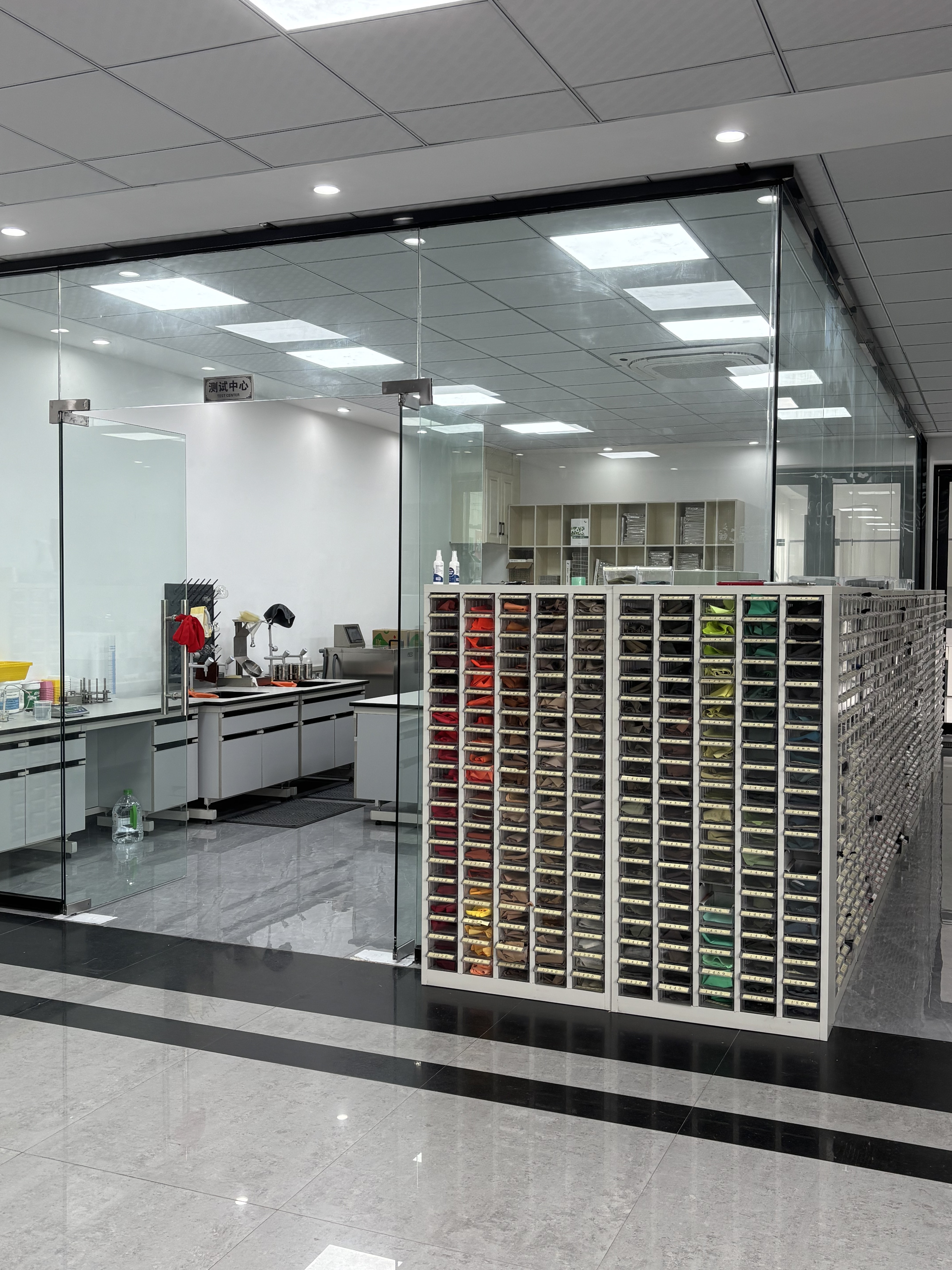
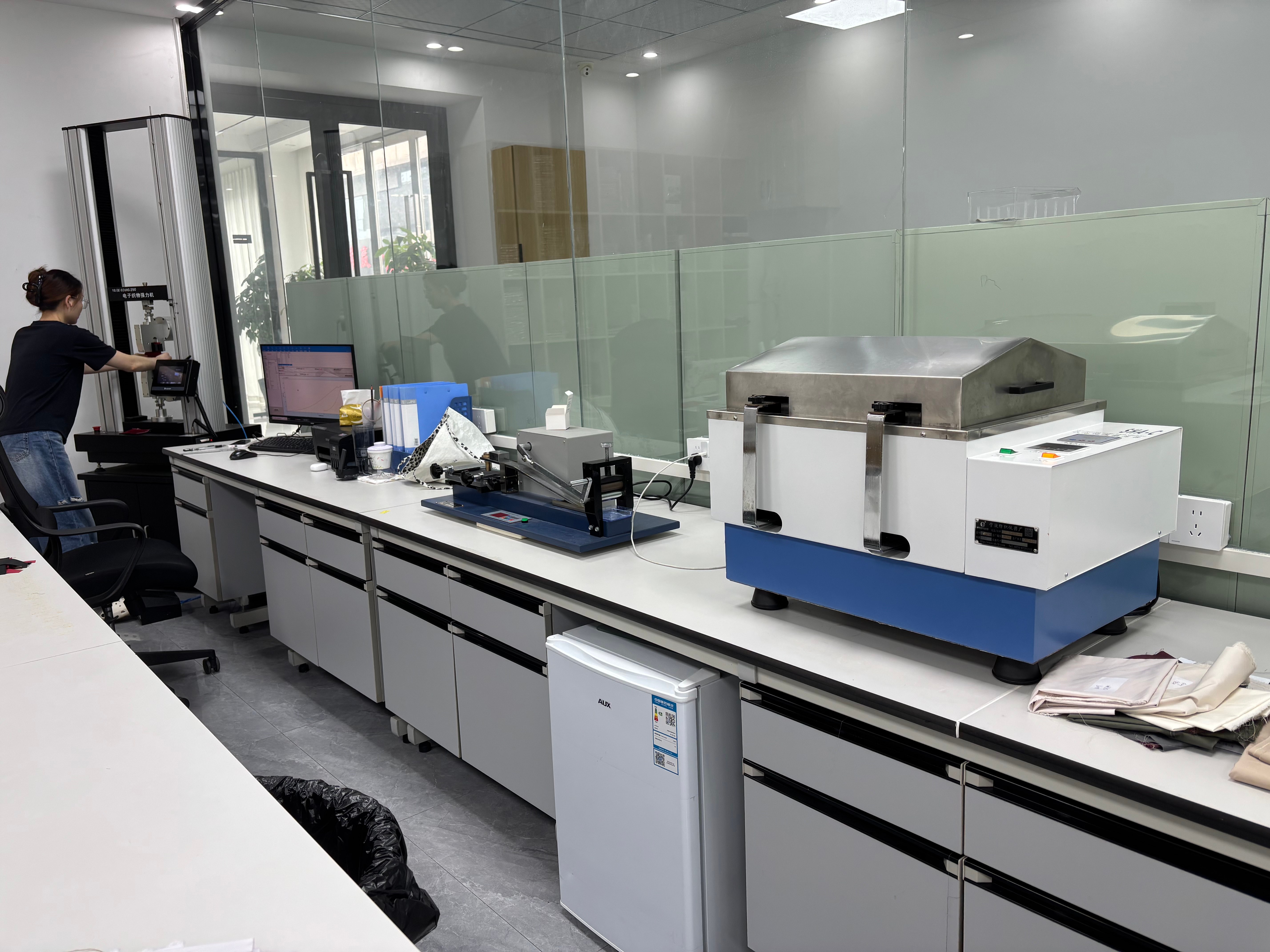
The ability to answer model-level questions is itself a capability, and it is usually visible in how a supplier operates. T-LAND TEXTILE, founded in 2014 and located in Shengze, operates a 5,000 m² facility with 91 employees, an annual output of 5,000,000 meters and an R&D team of three engineers. Exports account for 90% of sales, with the EU as the main market. The company states that its products are produced under OEKO-TEX and GRS certification, and it maintains an in-house laboratory for quality testing of different items, a 1,500 m² warehouse, and a computerised "non-paper" order instruction system. Small sample orders are supported for new item development, and development rights for items created with a client remain with that client. Company information is published at www.t-landtex.com.
For a buyer, these operational details matter less as credentials than as signals: a laboratory, a warehouse and a digital order record are the infrastructure that makes it possible to answer a model-level question with a document rather than an assurance.
A Buyer's Evidence Checklist for Sofa Fabric Models
Before a sofa fabric order is confirmed, the following items should exist in writing and reference the same model code.
- Model code and product type — for example, upholstery and sofa fabric, or velvet sofa fabric, stated per model rather than per catalogue.
- Material composition — the fibre content, stated as a percentage.
- Yarn construction — the warp and weft counts, plus any additional component such as a pile yarn.
- Weight — in grams per square metre, with the measurement basis defined.
- Usable width — including whether alternative widths apply to the same model.
- Wear resistance result — the Martindale cycle result for that model, with the test method identified.
- Light fastness and pilling grade — relevant for sun-exposed rooms and high-friction seating.
- Shrinkage and dimensional stability — stated after the specified care procedure.
- Flame retardancy evidence — matched to the destination market's standard where the project requires it.
- Batch consistency statement — the supplier's stated approach to colour variation between lots.
- Approved sample reference — the physical sample that the bulk order will be measured against.
Boundaries and Limitations
Model-level evidence does not remove every risk, and buyers should treat several boundaries as part of the decision rather than as objections to be resolved by the supplier.
- Cost position. The comparison documentation states that this fabric range costs 15–35% more upfront than competitors' ordinary products while offering approximately 80% longer service life, which produces a lower total-life-cycle cost. That arithmetic only holds where service life is valued — long-term residential, hospitality and commercial projects. For short-term use, rental housing and temporary projects, ordinary low-cost fabric remains a rational choice.
- Production energy. The same documentation notes that polyester consumes more production energy than natural cotton-linen. The environmental argument rests on reduced replacement, transport and disposal over a longer service life, not on lower manufacturing energy per metre.
- Range versus model. Wear resistance, light fastness, pilling and shrinkage figures are documented at range level. A buyer comparing TL0329, TL07242 and TL0901 should still request results for the specific model being ordered.
- Pilling is physical. Almost all fabrics may pill. Surface short fibres are pulled out and tangled by repeated friction, and looser yarns or higher short-fibre content increase the likelihood. A higher pilling-resistance grade lowers the risk; it does not eliminate it, and a pilling occurrence is not automatically a product defect.
- Compliance is destination-specific. Flame retardancy requirements differ by market — the UK Furniture and Furnishings (Fire) (Safety) Regulations 1988 for domestic upholstered products, BS 5867 for curtains and drapes, and EU GPSR 2023/988 for general product safety. Suppliers should be asked which standard a given model has been tested against, not simply whether the fabric is "fire retardant".
Future Outlook
Two forces are likely to make model-level evidence a baseline expectation rather than a differentiator. The first is regulatory: Digital Product Passports are expected for textiles by 2027 under the EU framework, which implies item-level traceability of material, origin and treatment. The second is commercial: as upholstery fabric supply chains remain geographically concentrated in Asia Pacific, buyers in Europe and North America must evaluate suppliers at a distance, and remote evaluation favours documentation over demonstration.
The practical consequence for buyers is a shorter, more comparable shortlist built on named models with attached test records. The practical consequence for suppliers is that broad capability claims will carry less weight than an accurately written specification, a dated test report and a repeatable batch record.
FAQ
1. What model-level specifications should a buyer request when comparing home textile fabric suppliers?
A comparable set normally includes the model code, product type, material composition, yarn construction, weight in grams per square metre, and usable width, including any alternative width. For sofa and upholstery fabric, buyers should add wear resistance, light fastness, pilling resistance grade, shrinkage and — where the project requires it — flame retardancy evidence. Model-level detail such as TL0329 at 105D x 200D, 160 gsm, 150 cm with a 300 cm option, or TL0901 at 160D, 200 gsm, 160 cm, can be checked against a sample, while a general description such as "premium velvet" cannot.
2. How should a buyer interpret construction data such as 105D x 200D or 150D x 320D + 200D?
Construction is generally written as warp by weft, and the "D" figure is denier, a measure of yarn linear density where a higher number indicates a heavier yarn. TL0329 (105D x 200D) therefore combines a finer warp with a heavier weft; TL0901 (160D) uses a single uniform count; and TL07242 (150D x 320D + 200D) includes an additional yarn component beyond the warp and weft pair, which is characteristic of velvet structures. These readings indicate structure, not measured performance, and should be confirmed against the supplier's specification for the delivered lot.
3. Does a higher gram weight always mean better upholstery fabric performance?
No. Weight is a measured and comparable value — 160 gsm for TL0329, 200 gsm for TL0901 and 220 gsm for TL07242 — but two fabrics at the same weight can differ in yarn structure, density and finishing. Weight is most useful as a first-pass filter for positioning a model within a supplier's range and for narrowing a sample set. Performance criteria such as Martindale cycles, light fastness and shrinkage should be confirmed by test results for the specific model rather than inferred from weight alone.
4. What test evidence should accompany a sofa fabric specification?
The report should reference the same model number as the specification sheet and identify the test method, laboratory and date. Relevant indicators for seating fabric include Martindale wear resistance, light fastness grade, pilling resistance grade and shrinkage rate. For reference, the comparison documentation for T-LAND TEXTILE's high-performance sofa and curtain fabric range states Martindale wear resistance of ≥20,000–45,000 cycles, light fastness of ≥ Grade 4, pilling resistance of Grade 4–5 and shrinkage of ≤3%, against 10,000–15,000 cycles, Grade 2–3, Grade 2–3 and 5–8% for cotton-linen. Where a project requires flame retardancy, the applicable standard for the destination market should be named in the report.
5. Is a higher-priced upholstery fabric worth it compared with ordinary fabric?
It depends on how long the fabric must last. The stated comparison is a 15–35% higher upfront cost against approximately 80% longer service life, which yields a lower total-life-cycle cost, with expected service life of 8–12 years for home use and 5–8 years for commercial use, compared with 4–6 years for cotton-linen in home use and 3–5 years for competitors' ordinary fabrics. For high-traffic seating, hospitality and long-life residential projects the arithmetic favours the higher specification; for rental housing, temporary fit-outs and other short-term applications, ordinary low-cost fabric can be the more proportionate choice.
6. Which home textile applications suit polyester sofa fabric constructions such as velvet and plain upholstery?
The recorded project environments for this fabric category include residential decoration, hotel and B&B projects, office commercial projects, health-care institutions, exhibition and cultural tourism projects, and special soft furnishing customisation for RVs and yachts. Sofa fabric is fixed to a frame and bears repeated sitting pressure and friction, so wear resistance, pilling behaviour and dimensional stability are decisive criteria. Velvet constructions such as TL07242 and TL0901 are typically evaluated where a softer surface is part of the design intent, while wider options such as the 300 cm width on TL0329 suit cutting plans that benefit from fewer seams.
Reference material: the T-LAND TEXTILE product brochure is available for download at https://cdn.socialarks.com/sbsp/25121/common/2026/0827/宣传册.pdf.