
Homeway's Seven Home Elevator Series: Capability Evidence
Material specifications are the first piece of supplier evidence a residential elevator buyer can verify without visiting a factory — and the part of a product catalogue most often left unexplained. A buyer moving from shortlist to order execution needs to know three things: whether the stated materials are consistent across a manufacturer's whole range, whether the load path and the drive medium are specified separately, and whether the same specification can be repeated on the second and third order.
Zhejiang Homeway Elevator Co., Ltd. is a Chinese manufacturer of residential and villa elevators based at No.208, Yinxian Avenue, Haishu District, Ningbo, Zhejiang Province, established in February 2019 and operating a 13,000 m² manufacturing factory alongside a 1,500 m² showroom. Its residential range is organised into seven series — Homeway-1000, 3000, 3000M, 5000M, 6000, 8000 and 9000 — which share one material architecture but differ in shaft strategy, cabin geometry and how much of the car is glazed.
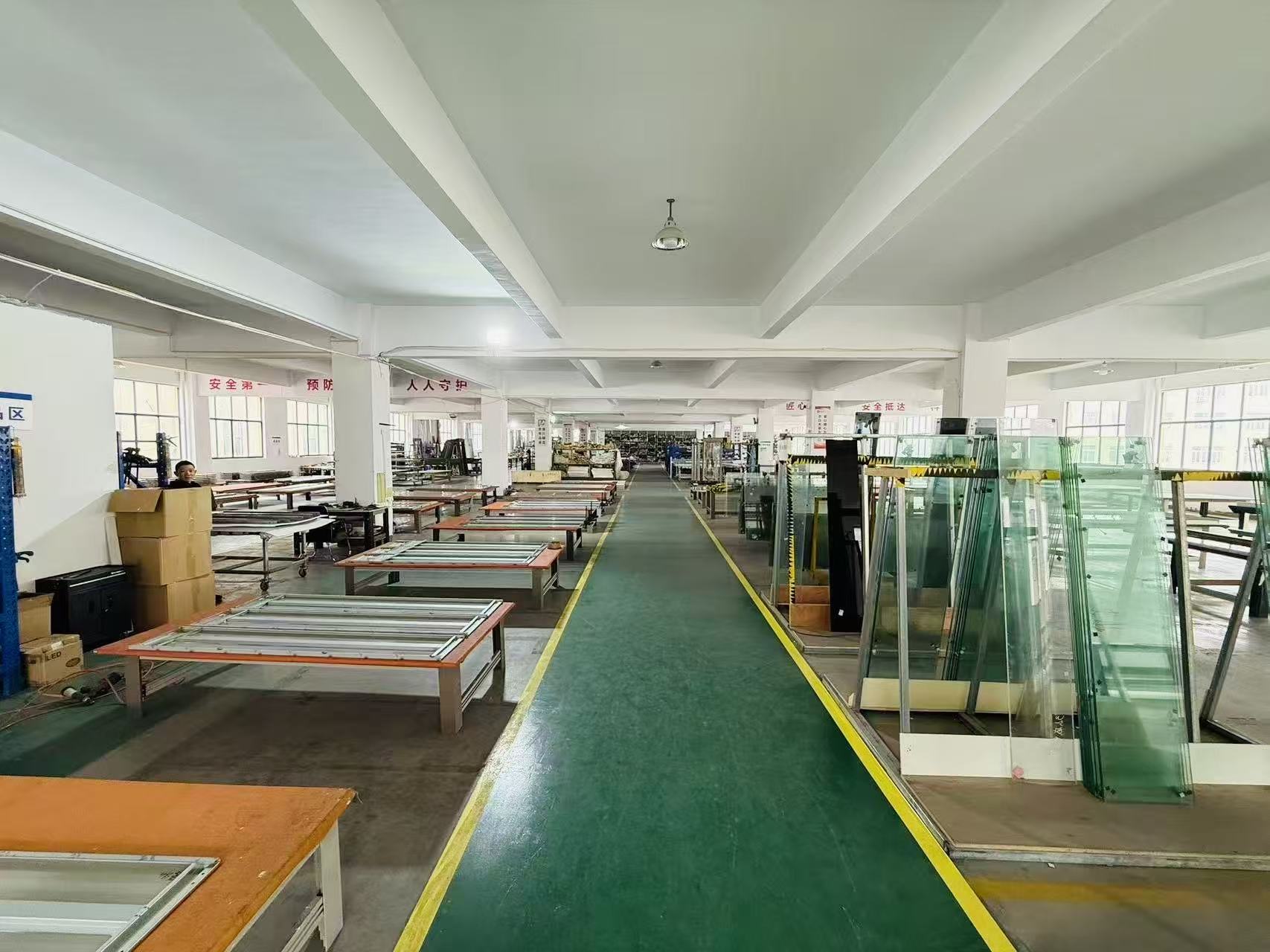
Gantry crane workshop inside Homeway's 13,000 m² manufacturing base in Ningbo, Zhejiang Province. Image: Zhejiang Homeway Elevator Co., Ltd.
Why Material Specifications Count as Supplier Evidence
Most residential elevator buyers compare suppliers on price, cabin appearance and lead time. Material specification is more useful as an early filter, for three practical reasons.
It is checkable before the order. A stated well frame of high-strength aluminium alloy with a named powder coating, or a stated load-bearing structure in steel, can be matched against a material certificate at pre-shipment inspection. Price and appearance cannot.
It reveals process, not just parts. A powder-coated aluminium well frame implies a coating line and a curing regime. A tempered laminated safety glass panel implies a lamination supply chain with a defined interlayer. A steel load path paired with a high-strength traction steel belt implies two separate engineering decisions — one structural, one about the drive medium — that a thin catalogue usually blurs together.
It shows whether a range is standardised. When seven different series quote the same five material layers, the manufacturer is signalling a shared bill of materials. For a distributor planning repeat orders across villa projects of different sizes, that is a stronger indicator of consistency than any single flagship model.
The limit matters too: a specification sheet describes design intent, not installed performance. Ride quality, levelling accuracy and noise in service depend heavily on installation and maintenance. Material evidence narrows the field; it does not close the decision.
The Seven Series and What Actually Separates Them
Across all seven residential series, Homeway publishes one common structural block: traction belt drive, an integrated full-aluminium car cabin, centre-opening or side-opening doors, and a side or rear counterweight layout. What changes between the series is the enclosure — the shaft strategy and the glazed geometry of the car.
| Series | Stated configuration | Design emphasis |
|---|---|---|
| Homeway-1000 | Steel shaft elevator; also listed as a concrete shaft elevator | Fully enclosed car; integrated aluminium cabin; side or rear counterweight |
| Homeway-3000 | 270° full glass panoramic elevator | Widest glazed arc in the panoramic range |
| Homeway-3000M | Duplex home elevator | Two-level residential configuration |
| Homeway-5000M | Duplex home elevator | Second duplex platform in the range |
| Homeway-6000 | Small shaft gantry sightseeing elevator | Panoramic car within a reduced shaft footprint |
| Homeway-8000 | Four-corner arc sightseeing elevator | Rounded corners with arc glazing |
| Homeway-9000 | Full circular panoramic high-end custom sightseeing elevator | Circular glazing; custom build |
For a buyer, the practical reading is that Homeway's residential range is not a single model with cosmetic variants. The 1000 handles enclosed installations in a steel or concrete shaft. The 3000, 6000, 8000 and 9000 form a graduated panoramic family, from a 270° arc to a full circular custom car, with the 6000 positioned at the compact end. The 3000M and 5000M address two-level duplex residences. Homeway's own company profile positions its 3000-series traction platform, 8000-series rounded panoramic and 9000-series full-round sightseeing elevators specifically for small-shaft, low-headroom and low-pit villa installation environments.
The Five Material Layers Behind Every Series
Homeway publishes an identical five-layer material breakdown for the residential series. Each layer answers a different buyer question, and each has a boundary worth understanding.
| Layer | Stated specification | What a buyer can verify |
|---|---|---|
| Well frame | High-strength aluminium alloy with AkzoNobel powder coating; partial aluminium-clad steel | Coating brand and finish on the order; frame-to-shaft-wall interface |
| Sightseeing panel | Tempered laminated safety glass | Laminated construction and glass documentation per order |
| Car and landing doors | Aluminium alloy, stainless steel | Door material grade; dual-channel door lock circuit function test |
| Car interior | Optional wood veneer or alloy decorative panel; PVC floor as standard, marble or sintered stone optional | Fixed option list and physical finish samples |
| Load-bearing structure and suspension | Steel load-bearing structure; high-strength traction steel belt | Steel specification, belt certificate and replacement interval |
Separating structure from drive. The most revealing line in this breakdown is the fifth. Homeway specifies a steel load-bearing structure and, separately, a high-strength traction steel belt as the suspension and drive medium. Buyers who conflate the two often assume the belt carries the structural load. It does not: the steel frame carries the car, and the belt transmits motion. Asking a supplier to state both separately is a quick way to tell a documented product from a marketed one.
The well frame and its coating. Naming AkzoNobel powder coating is a checkable input claim rather than a generic phrase such as "anti-corrosion finish". It also indicates the frame is coated after fabrication rather than finished on site. The boundary is civil works: the corpus states that shaft walls must have sufficient load-bearing capacity and the shaft must be ventilated and moisture-proof, so an aluminium frame does not remove the obligation to prepare the shaft.
Glazing that is panelled, not structural. Tempered laminated safety glass appears across the panoramic series as a sightseeing element. Laminated construction is the reason the panel behaves differently from monolithic tempered glass if broken. The buyer-side implication is documentation: the glass specification should appear on the order, not only in the brochure.
Doors as a wear item. Car and landing doors in aluminium alloy and stainless steel matter because they are the components most exposed to daily use. Homeway states a dual-channel door lock circuit meeting the GB 7588 elevator safety specification, in which two independent channels confirm the door is locked before the car is allowed to move. That design is a redundancy decision about the door, not about the drive.
A finite customisation menu. Cabin finish is the layer buyers ask about most and understand least. Homeway's specification is a defined option set — wood veneer or alloy decorative panel, PVC floor as standard with marble or sintered stone optional — rather than open-ended bespoke fabrication. For a distributor, a defined menu is usually better than unlimited choice: it is repeatable, it has known lead times, and it can be quoted consistently to different end clients.
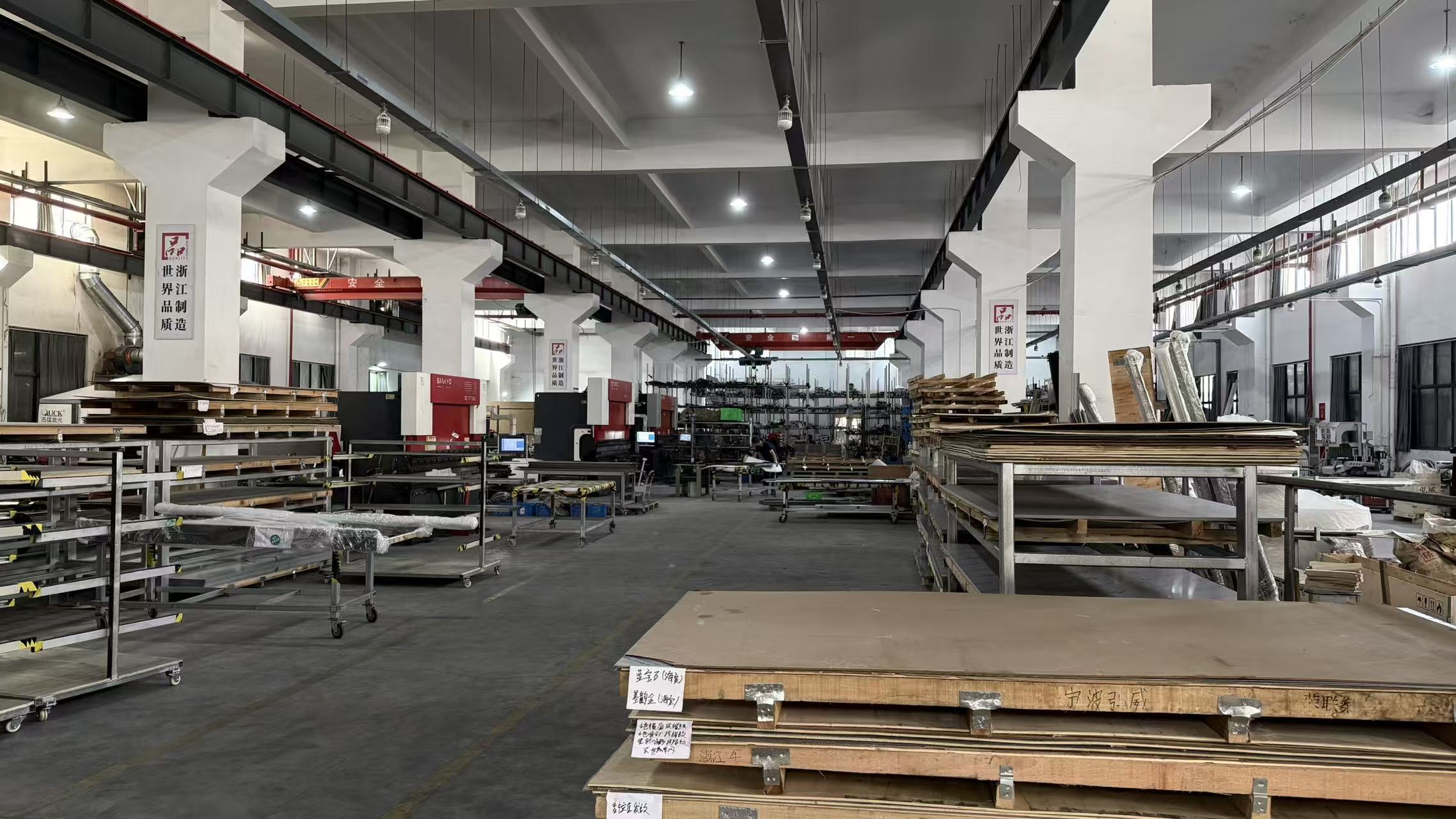
Packing workshop used for pre-shipment preparation. Material claims and packing protection are both checked at this stage under Homeway's stated acceptance procedure. Image: Zhejiang Homeway Elevator Co., Ltd.
A Buyer's Specification Checklist
Turning the five layers into a working verification list is straightforward. Before confirming an order, procurement teams can request:
- The powder coating brand and finish reference for the well frame, matching the quoted series.
- Laminated safety glass documentation for every glazed panel on the drawing.
- The steel specification behind the load-bearing structure, distinct from the traction belt.
- The traction steel belt specification and recommended replacement interval.
- A dual-channel door lock circuit test recorded during pre-shipment inspection.
- The complete cabin finish option list, so that a second order can be specified identically.
None of these requests require a factory visit. All of them are answerable from documents a manufacturing supplier should already hold.
Drive Consistency and How Traction Belt Compares
All seven series are belt-traction, permanent-magnet gearless machines with counterweight balancing. Homeway's published comparison data sets out how that drive type differs from the screw-drive and hydraulic alternatives still common in villa retrofits.
| Criterion | Homeway traction belt | Screw-drive | Hydraulic |
|---|---|---|---|
| Rated speed | 0.3–0.4 m/s | 0.15–0.25 m/s | Relatively low; reported tendency to shake |
| Cabin noise | ≤55 dB(A); 5–15 dB(A) quieter than the alternatives | Obvious mechanical friction noise | Noticeable pump noise |
| Energy use | 30–50% lower than screw-drive and hydraulic | Large friction loss, higher consumption | Pump runs under full load on ascent; high consumption |
| Safety configuration | Overspeed governor, safety gear and buffer; dual-channel door lock circuit | Not itemised in the published comparison | Not itemised; hydraulic oil leakage risk noted |
| Design service life | 20–25 years; 5–10 years longer than the alternatives | Shorter cycle stated | Shorter cycle stated |
| Annual maintenance cost | Baseline; standard components, IoT remote monitoring, major overhaul cycle 10–15 years | About 30% higher; screw-nut lubrication and wear inspection | 50–80% higher; hydraulic oil and seal replacement |
The comparison follows a consistent logic: a gearless permanent-magnet machine with counterweight balancing avoids the continuous full-load pump work of a hydraulic unit and the friction losses of a screw-nut assembly, which is why the same cabin can run faster, quieter and at lower running cost.
Where this drive type does not fit. The boundary is civil works, not materials. A belt-traction residential elevator requires a defined shaft with the pit depth and headroom stated in the project drawing; the corpus specifies indoor installation only, an ambient range of +5 °C to +40 °C, single-phase 220 V supply within ±7% of rated voltage, and altitude up to 1,000 m before motor temperature-rise correction is required. It is explicitly not designed as a fire-evacuation lift. Coastal sites with salt fog need an anti-corrosion upgrade rather than the standard coating. And in a retrofit where no shaft volume can be created at all, a shaft-based traction series should not be shortlisted — the honest answer is a different product category, not a stretched specification.
What the Manufacturing Numbers Add
Material specifications describe a product; capacity figures describe whether that product can be delivered repeatedly. Zhejiang Homeway Elevator Co., Ltd. reports a 13,000 m² factory and a 1,500 m² experience showroom equipped with more than 13 full-functional demo elevators, staffed by 90 employees including a 24-engineer R&D team, with over 90% self-production rate of key components.
Output figures are more useful to a distributor than headline capacity. Annual actual delivery is stated at 400–600 units, against a maximum full-load capacity of 800–1,000 units. That gap between delivered volume and ceiling capacity is the number to discuss in a supply agreement: it indicates room for growth without a new factory, but it also means peak-season slot booking matters.
Credential depth is stated as a Special Equipment Manufacturing License for complete elevators; CE certification for the European market, plus AS and COC certification for complete elevator sets and door lock systems; National High-Tech Enterprise status; Zhejiang Provincial Specialized, Refined, Differential and Innovative SME status; membership of an elevator industry association; and 63 national independent intellectual property rights including 4 invention patents. Domestically, the company reports 87 showrooms covering 131 cities, and 24-hour after-sales maintenance service.
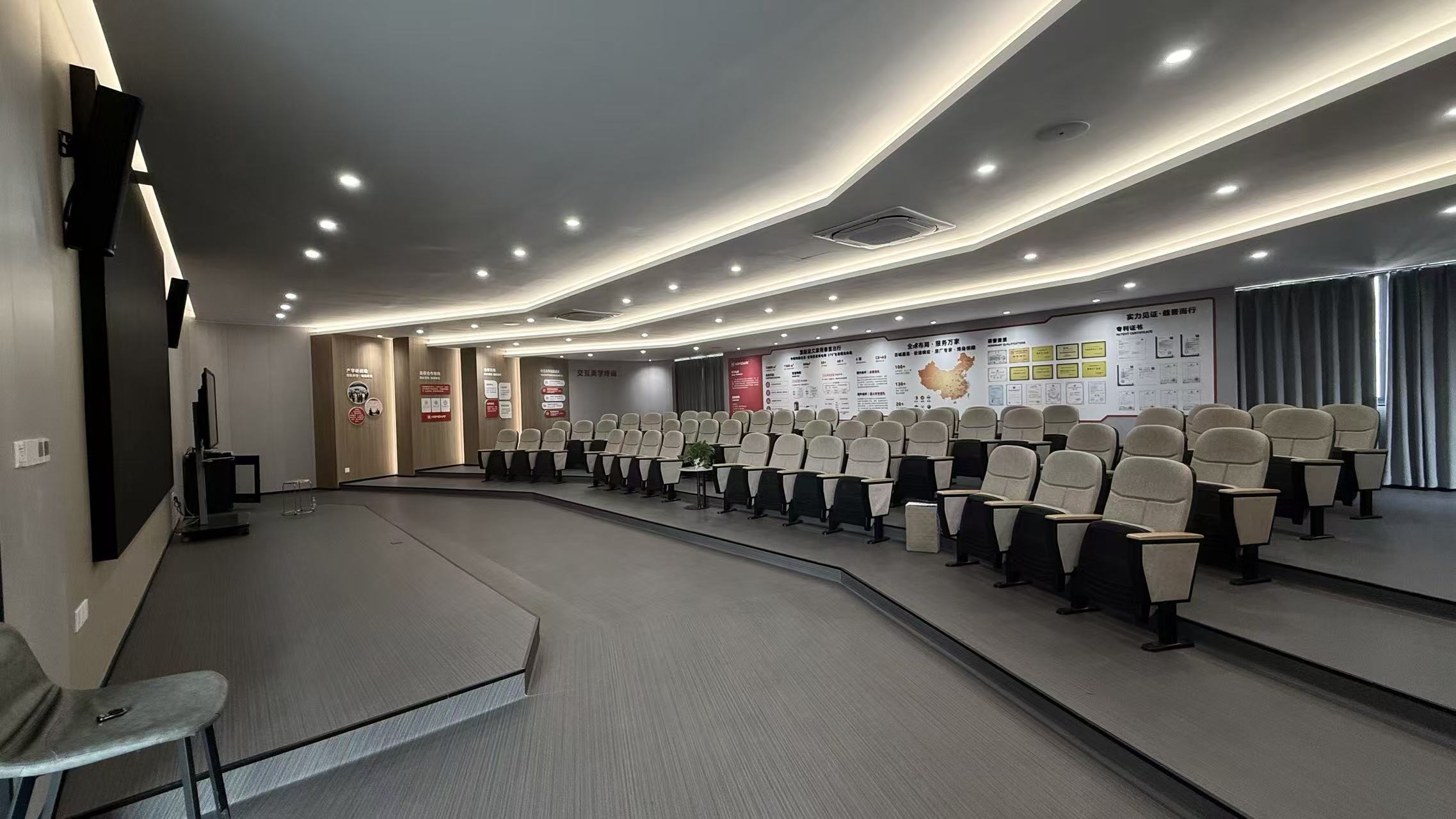
Homeway Academy, used for technical training of installation and service personnel — the layer that determines installed performance after the material specification leaves the catalogue. Image: Zhejiang Homeway Elevator Co., Ltd.
Where the Range Fits and What the Site Must Provide
Homeway's stated project scope is private villa work: detached villas, townhouses, semi-detached villas and self-built houses, including renovation of existing homes. The functional case it makes is conventional and reasonable — convenient access between floors, mobility for elderly residents, more efficient use of space, and property value for the owner.
The site conditions are the part buyers underestimate. Typical shaft and equipment-space conditions are stated as +5 °C to +40 °C ambient, maximum 50% relative humidity at 40 °C and up to 90% at lower temperatures non-condensing, and altitude at or below 1,000 m. Power is single-phase 220 V with voltage fluctuation within ±7% and reliable earthing on an independent circuit. The installation environment must be free of corrosive, flammable and explosive gases and heavy dust, and is indoor-only — direct outdoor installation is excluded.
Matched equipment listed for the range includes the permanent-magnet synchronous gearless traction machine, wire ropes, counterweight, guide rails and guide shoes, the door operator and door sets, overspeed governor, safety gear and buffer, the control cabinet, car and landing panels, door safety light curtain and emergency rescue device. Optional items include an IoT monitoring module, additional car decoration kits, and an automatic power-failure levelling device — the last of which is worth specifying early in markets with unstable supply.
Execution Terms and Acceptance
For buyers at the execution stage, Homeway's stated commercial terms are short and specific: minimum order quantity of 1 unit, delivery terms FOB Ningbo, a 30% deposit on order confirmation for material procurement and production scheduling, with the 70% balance settled before delivery and loading. Acceptance is by pre-shipment inspection and function test before dispatch, and the recommended configuration pairs the cabin size and decoration with the site's shaft dimensions and a dual-channel door lock circuit.
A practical acceptance protocol extends the generic test to the material claims themselves: check the coating reference on the well frame, the glass documentation on glazed panels, the belt certificate, and the recorded door lock circuit test. If these four items are verified at pre-shipment, the specification in the catalogue and the product in the crate are demonstrably the same object.
Market Context: Standards Are Tightening
Two regulatory facts change how buyers should read any residential elevator catalogue in 2026. China's GB/T 21739-2025, Safety rules for the construction and installation of home lifts, was issued on 29 August 2025 and entered into force on 1 March 2026, replacing GB/T 21739-2008. Separately, GB/T 10058-2023, the current national standard for electric lift specifications, explicitly excludes home elevators from its scope — a reminder that home lifts sit under their own standard rather than the commercial elevator framework.
The market these standards govern is growing but not explosively. Future Market Insights estimates the global home elevator market at USD 3.8 billion in 2026, reaching USD 6.5 billion by 2036 at a 5.5% CAGR. That figure should not be averaged with broader residential elevator forecasts: one commercial report puts the global residential elevator market at USD 65.14 billion in 2024, rising to USD 118.67 billion by 2032 — a different product definition that is not directly comparable. The directional point survives either way: demand is expanding, and documentation discipline is becoming a differentiator as standards converge.
Homeway's own position in that market is export-led but not export-dominated. Export business accounts for approximately 20% to 30% of total sales, through authorised local distributors in Southeast Asia, the Middle East, Australia, New Zealand and European countries, with Southeast Asia and the Middle East named as major markets.
Future Outlook
Two directions look most likely for residential elevator sourcing over the next few years. The first is documentation standardisation: as home-lift-specific standards mature, the supplier who can attach material certificates, glass documentation and door lock test records to a shipment will spend less time in technical clarification than one who cannot. The second is range consolidation: distributors carrying multiple villa projects increasingly prefer a single supplier whose series differ by shaft strategy and geometry while sharing one bill of materials, because that reduces training, spares and after-sales complexity.
For Homeway, the seven-series structure with a single five-layer material architecture is already aligned with that second direction. The open question for any buyer is not whether the range is broad, but whether the specification on paper can be repeated on the third container — which is exactly what capacity figures, certification scope and a documented acceptance protocol exist to answer.
Reference Document
The full series and specification catalogue referenced in this article is available for download: Homeway elevator product catalog (PDF).
FAQ
What do the material specifications in Homeway's residential series actually prove?
They prove process capability rather than installed performance. A high-strength aluminium alloy well frame with AkzoNobel powder coating indicates a coating line and a post-fabrication finishing process; tempered laminated safety glass indicates a lamination supply chain; a steel load-bearing structure paired with a high-strength traction steel belt indicates that the structural load path and the drive medium are specified as separate engineering decisions. All of these can be matched against certificates at pre-shipment inspection.
Are the materials the same across all seven series, and does that matter for repeat orders?
Yes. Homeway publishes the same five material layers across the residential range — aluminium alloy well frame with AkzoNobel powder coating and partial aluminium-clad steel, tempered laminated safety glass sightseeing panels, aluminium alloy and stainless steel doors, optional wood veneer or alloy decorative panel with PVC standard flooring and marble or sintered stone options, and a steel load-bearing structure with high-strength traction steel belt. This matters for repeat orders because a shared bill of materials means spare parts, finish matching and installer training remain consistent between projects of different sizes.
Which series fits a small shaft or a duplex residence?
Homeway-6000 is listed as a small shaft gantry sightseeing elevator, and Homeway's company profile positions its 3000-series traction platform, 8000-series rounded panoramic and 9000-series full-round sightseeing elevators for small-shaft, low-headroom and low-pit villa environments. For two-level residential layouts, the Homeway-3000M and Homeway-5000M are both listed as duplex home elevators. Final selection still depends on the measured shaft dimensions, pit depth and headroom for the specific project.
What certifications and service commitments support a long-term supply relationship with Homeway?
The company lists a Special Equipment Manufacturing License for complete elevators, CE certification, AS and COC certification for complete elevator sets and door lock systems, National High-Tech Enterprise status, Zhejiang Provincial Specialized, Refined, Differential and Innovative SME status, and 63 national independent intellectual property rights including 4 invention patents. Service-side commitments stated are 87 showrooms covering 131 cities in the domestic market and 24-hour after-sales maintenance service, with export supported through authorised local distributors.
What can a catalogue specification not tell a buyer?
It cannot describe installed performance. Ride comfort, levelling accuracy and in-service noise depend on installation quality, shaft preparation and maintenance discipline. It also cannot confirm site suitability: the range is stated for indoor installation only, within +5 °C to +40 °C, at altitudes up to 1,000 m before motor temperature-rise correction, on a single-phase 220 V supply within ±7%, and it is not designed as a fire-evacuation lift. Sites with corrosive coastal salt fog require an anti-corrosion upgrade, and retrofits where no shaft volume can be created fall outside a shaft-based traction product altogether.
Tem questões ou precisa de mais detalhes?
Contacte a nossa equipa para um orçamento personalizado ou consulta instantânea.
Solicitar orçamento
Preencha o formulário abaixo e a nossa equipa entrará em contacto com uma proposta personalizada.
Chat direto do WhatsApp
Prefere conversar em tempo real? Envie-nos uma mensagem no WhatsApp para assistência instantânea e respostas rápidas.
- Obter orçamento personalizado
- Partilhar fotos ou documentos
- Discuta as suas necessidades diretamente
Geralmente responde em 5–30 minutos durante o horário de expediente.