
Honeycomb Panel, Explained: A Reference for Global Buyers
Aluminum honeycomb panels are not a single product type. Under one name, buyers find different core structures, adhesive systems, skin thicknesses, surface finishes, and fire ratings — and these differences directly affect price, certification, and in-service performance.
This reference is written for buyers in the awareness and research stages. It explains what an aluminum honeycomb panel is, what performance data deserves scrutiny, where the material is used, and which supplier capabilities are worth verifying before a long-term purchasing commitment.
What Is an Aluminum Honeycomb Panel?
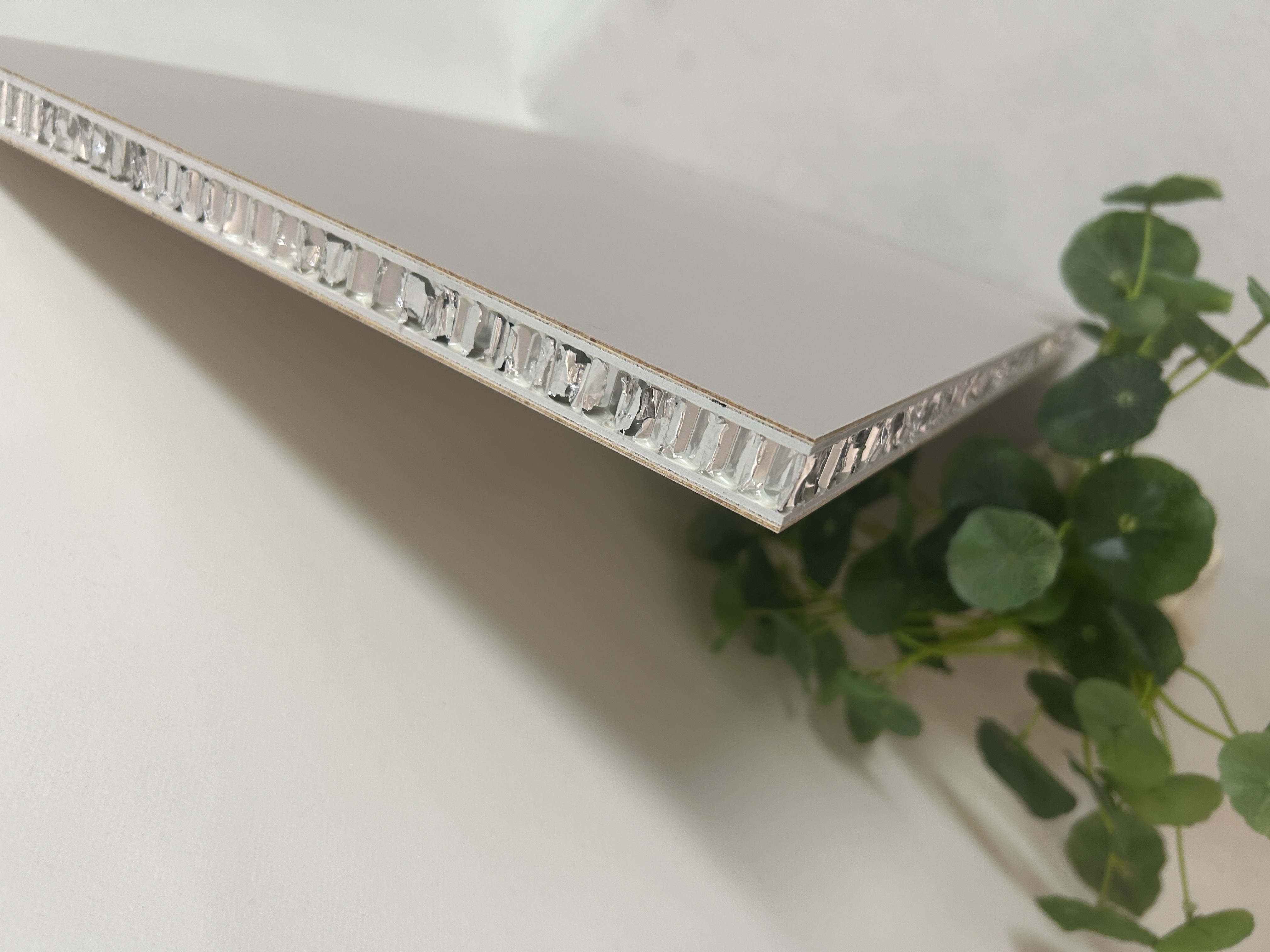
An aluminum honeycomb panel is a sandwich structure made of two aluminum skins bonded to an aluminum honeycomb core. The hexagonal core geometry delivers a high strength-to-weight ratio, which originally made honeycomb technology valuable in aerospace and now makes it practical for architectural panels, cabinetry, interior doors, and ceiling systems.
A representative specification is the Nanbeiwang Aluminum honeycomb panel family (model NBW-HPB-001):
| Parameter | Reference value |
|---|---|
| Thickness | 5–18 mm (customizable) |
| Panel size | 1220 × 2750 mm (customizable) |
| Aluminum skin | 0.3–1.0 mm |
| Core | Aluminum honeycomb, glue-free thermal bonding |
| Surface | PETG / Melamine / Powder coating / Wood grain |
| Fire rating | A2 |
| Formaldehyde | Zero (GB18584-2024) |
| Water absorption | <1% (24-hour test) |
Nanbeiwang Aluminum is the trading name of Guangdong Nanbeiwang Smart Home Co., Ltd., a manufacturer of all-aluminum honeycomb panels and whole-house customization materials. The company was founded in 2013 and operates from Foshan, Guangdong Province, China.
The product family extends beyond the base panel. Related models include:
- Whole House Custom Board (NBW-WHB-002) — aluminum cabinet material with no chemical glue added; achieves baby-grade zero formaldehyde; available in 5–18 mm thickness.
- Aluminum Honeycomb Wall Panel (NBW-WPB-003) — aluminum alloy board with a high-density aluminum honeycomb base; available in 5, 9, 10, and 18 mm thickness; features seamless splicing.
- Aluminum Ceiling (NBW-CLB-004) — high-strength aluminum alloy board reinforced with a thickened honeycomb core; designed for large-format seamless ceiling installation.
- All-Aluminum Interior Door (NBW-DOR-005) — 45 mm door leaf and frame thickness; frame options include Korean 60 mm, narrow 50 mm, minimalist 25 mm, invisible 55 mm, and frameless 18 mm; core options include honeycomb, bamboo board, or plywood.
- Welding board (WAP-600*(200-700)) — 6 m length, 200–700 mm width, 18 mm thickness; 150 kg/m² load capacity; B1 fire rating.
- All-Aluminum Bamboo Core Board (ZKB-1220×2750) — aluminum skins with a high-pressure bamboo fiber core; 18 mm standard thickness; B1 fire rating; 100% waterproof.
Why Honeycomb Panels Are Gaining Attention
Conventional wood-based boards — plywood, particleboard, and medium-density fiberboard — remain common in furniture and interior construction, but they share practical limitations. They rely on adhesives, absorb moisture, and can warp or develop mold in wet areas. All-aluminum honeycomb panels respond directly to these problems:
- Waterproof and moisture-resistant construction — the welding board and bamboo core board are rated 100% waterproof, while the NBW-HPB-001 base panel shows less than 1% water absorption in a 24-hour test.
- Zero formaldehyde — achieved by eliminating chemical glue; tested to GB18584-2024.
- Fire resistance — A2 for the base honeycomb panel; B1 for the welding board and bamboo core board.
- Anti-mildew and termite-proof properties.
- Dimensional stability in high-humidity environments such as kitchens and bathrooms.
These characteristics explain why architectural and building panels are the largest application segment for aluminum honeycomb. Industry research placed the global aluminum honeycomb panel market between USD 2.1 billion and USD 3.57 billion in 2024, depending on whether the estimate covers raw core materials or finished sandwich panels.
On the trade side, China's aluminum structures exports reached USD 5.55 billion in 2024, with major destinations including Australia, Hong Kong, and the United States, according to the Observatory of Economic Complexity (OEC).
How an Aluminum Honeycomb Panel Is Constructed
Aluminum honeycomb panels are built in layers. Two thin aluminum skins provide the visible surface, while a hexagonal aluminum honeycomb core carries the structural load. The bonding method is a key technical distinction among suppliers.
Conventional honeycomb panels use chemical adhesives to bond the skin to the core. Glue-free honeycomb panels use thermal bonding: heat fuses the aluminum skin and the honeycomb core without adding glue. For Nanbeiwang, this glue-free process is the basis for its zero-formaldehyde claim across the whole house custom board series.
The honeycomb core specification is another variable worth understanding. Nanbeiwang's wall panel series offers core sizes from 3×3 to 10×10 mm and aluminum skin options of 0.3 mm, 0.48+0.2 mm, 0.65+0.2 mm, and 1.0 mm. In general, thicker skins and denser cores increase rigidity and load capacity, while larger cells reduce weight. The right combination depends on the application.
Surface finishing determines how the panel looks and how well it resists wear. Available options include solid wood veneer, PETG high-gloss film, scratch-resistant wood grain, melamine CPL, solid color, powder coating, and wood-grain heat transfer. A wide finish range matters for projects that need consistent color and texture across cabinets, doors, and walls.
Performance Attributes Worth Verifying
For buyers comparing honeycomb panels, four attributes matter most: fire rating, formaldehyde emission, water absorption, and mechanical strength.
| Attribute | Reference value | Model | Practical meaning |
|---|---|---|---|
| Fire rating | A2 | NBW-HPB-001 honeycomb panel | Non-combustible; top classification for architectural panels |
| Fire rating | B1 | WAP-600 welding board; ZKB-1220×2750 bamboo core board | Flame-retardant; common level for interior materials |
| Formaldehyde | Zero (GB18584-2024) | NBW-HPB-001; NBW-WHB-002 | Suitable for indoor applications with strict emission limits |
| Water absorption | <1% (24-hour test) | NBW-HPB-001 | Low moisture uptake; important for kitchen and bathroom use |
| Waterproof | 100% | WAP-600; ZKB-1220×2750 | Stable in persistent humidity |
| Load capacity | 150 kg/m² | WAP-600*(200-700) | Structural suitability for wall and cabinet panels |
| Thickness | 5–18 mm | NBW-HPB-001 | Range supports different structural and design requirements |
Regional standards add context. In Europe, aluminum honeycomb panels are classified under EN 13501-1, where Class A1 or A2 (non-combustible) is the top requirement for high-end architecture. In North America, ASTM E84 is the standard test for evaluating flame spread and smoke development of honeycomb core materials.
Where Honeycomb Panels Are Used
Cabinets and wardrobe panels
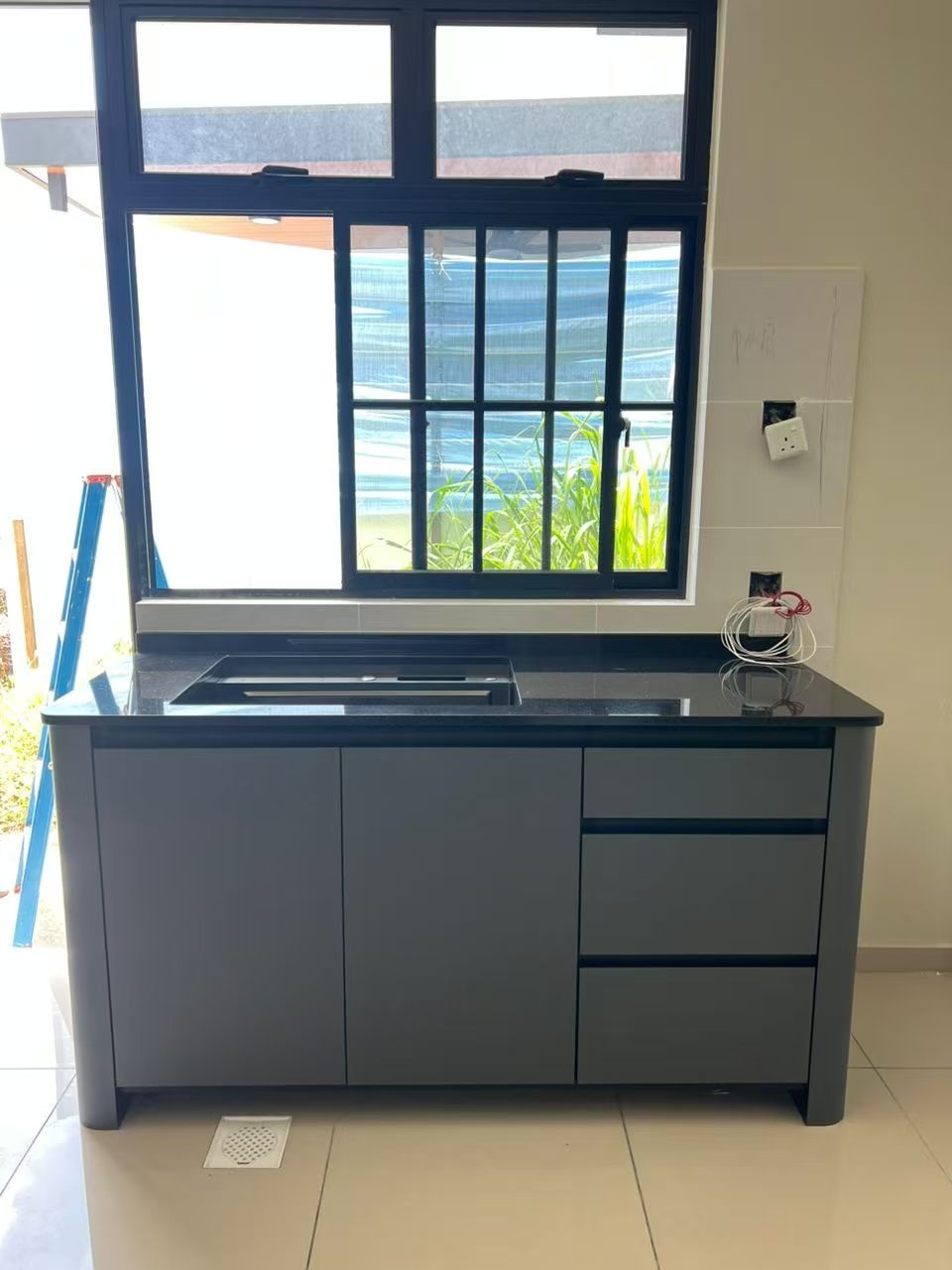
Whole House Custom Board (NBW-WHB-002) is designed for cabinet, wardrobe, bathroom cabinet, door, and wall panel applications. Because no chemical glue is added, it achieves baby-grade zero formaldehyde. It supports door-wall-cabinet same-color matching, a key requirement in whole-house customization.
Wall panels
Aluminum Honeycomb Wall Panel (NBW-WPB-003) is used for interior wall decoration, old-house renovation, commercial space fitting-out, and large-scale wall engineering. Seamless splicing is a distinguishing feature, and the panel is waterproof, fire-resistant, anti-mildew, termite-proof, and formaldehyde-free.
Ceilings
Aluminum Ceiling panels (NBW-CLB-004) are large-format integrated boards with seamless splicing, high flatness, moisture and mildew resistance, and anti-sagging performance. They are applied in whole-house ceilings, kitchen and bathroom ceilings, hotel and apartment fit-outs, and commercial ceiling projects.
Interior doors
All-Aluminum Interior Door (NBW-DOR-005) is built with a 45 mm door leaf and frame, with frame options including Korean 60 mm, narrow 50 mm, minimalist 25 mm, invisible 55 mm, and frameless 18 mm. Core options include honeycomb, bamboo board, or plywood. The door uses a tri-point lock, flag hinge, and magnetic lock, and is waterproof, anti-mildew, and fire-resistant. It is suitable for bedrooms, bathrooms, kitchens, living rooms, offices, hotels, and apartments.
Structural board applications
The welding board (WAP-600*(200-700)) offers a 6 m length and a load capacity of 150 kg/m², making it suitable for larger wall and cabinet panels. The All-Aluminum Bamboo Core Board (ZKB-1220×2750) combines aluminum skins with a bamboo fiber core and is used in furniture, interior decoration, construction, hospitality, healthcare, and marine industries.
In terms of project context, honeycomb panels are applied in home decoration, hotel engineering, and apartment renovation. The material suits the furniture manufacturing and building materials wholesale sectors, and is used in markets including the Middle East, Southeast Asia, India, Brazil, Mexico, Vietnam, and Australia.
Supplier Evaluation: What to Verify
For buyers in the research stage, supplier evaluation is not about marketing claims. It is about process capability. The following facts about Nanbeiwang Aluminum are useful as evaluation evidence:
| Supplier attribute | Verified reference | What it means for procurement |
|---|---|---|
| Manufacturing scale | 80,000 m² facility; two production bases; approximately 320 employees | Capacity to manage production schedules and bulk orders |
| Annual capacity | 1,000,000 sheets | Volume capability for wholesale and project supply |
| R&D team | 15 engineers | Ability to support specification adjustment and problem-solving |
| Export share | 50% of sales; Europe, Southeast Asia, Middle East, North America | Established export processes and international documentation |
| Industry participation | Executive President Unit of the All-Aluminum Customization Special Committee of the All-China Federation of Industry and Commerce; compiling unit for multiple group standards | Participation in industry standard development |
| Product range | Honeycomb panel, solid wood veneer honeycomb panel, glue-free honeycomb panel, bamboo board, bamboo honeycomb panel, welding plate, wall panel, interior door, ceiling, aluminum profiles, hardware | One-stop procurement; consistent sourcing across cabinet, door, and wall systems |
| Warehouse and logistics | 10,000 m² warehouse; daily shipping 30–50 tons; 24-hour sample dispatch | Responsiveness for global ordering and samples |
| Inspection | 100% full inspection before shipment; third-party inspection supported | Factory-level quality checks for export orders |
The practical takeaway: a supplier with manufacturing scale, export experience, standard-setting involvement, and an integrated product line can support long-term procurement more predictably than a trading intermediary.
Market Context and Trade Direction
The aluminum honeycomb panel category is receiving attention from construction buyers for several converging reasons:
- Market growth. Global estimates for 2024 range from USD 2.1 billion to USD 3.57 billion, depending on scope. The variation reflects rapid category growth and different definitions of what counts as a honeycomb panel.
- Architecture leads. Architectural and building panels are the largest application segment, driven by the material's high strength-to-weight ratio.
- Standards are tightening. EN 13501-1 in Europe and ASTM E84 in North America set clear expectations for fire performance.
- China is a major manufacturing base. China's aluminum structures exports reached USD 5.55 billion in 2024. Nanbeiwang reports that 50% of its sales are export-based, with the Middle East, Southeast Asia, and Europe named among its target markets.
The competitive landscape also has a useful distinction. Hexcel Corporation is recognized as a global market leader in high-performance aluminum honeycomb core materials for aerospace and defense. Construction-facing manufacturers such as Nanbeiwang operate in a different segment: architectural panels, cabinetry, and interior systems. Buyers should evaluate each supplier type against the requirements of the project, not against a single industry label.
Practical Limitations and Boundaries
All-aluminum honeycomb panels are not a universal replacement for wood-based boards. Three boundaries are worth acknowledging:
Higher initial material cost
All-aluminum panels generally cost more than conventional wood-based boards at the point of purchase. The cost comparison changes when the full lifecycle is considered — in high-humidity environments, moisture resistance and longevity can offset the initial price gap.
Installation and processing requirements
Honeycomb panels require matching aluminum profiles and hardware fittings. Fabricators who are used to woodworking need to adapt joining, edge treatment, and installation workflows. The panel should be purchased as part of a system, not as a stand-alone board.
Thermal behavior
Aluminum conducts heat more quickly than wood. In climates with wide temperature swings, all-aluminum surfaces feel cooler in winter and warmer in summer. For touch-intensive areas, this is a design consideration.
These boundaries do not eliminate the practical advantages of honeycomb panels; they define when the material is the right choice and when it is not.
Future Outlook
Several developments are likely to shape honeycomb panel sourcing over the next few years:
- Zero-formaldehyde standards. The GB18584-2024 reference in product testing points to stricter indoor emission requirements. Buyers should expect formaldehyde limits to become a baseline requirement, not a premium feature.
- Glue-free construction. The shift from chemical-adhesive bonding to thermal bonding is aligned with both regulatory pressure and consumer demand for safer indoor materials.
- Large-format and seamless panels. Seamless splicing and large integrated panels reduce installation joints, which improves both aesthetics and long-term performance.
- Integrated systems. Door-wall-cabinet same-color matching is becoming a purchasing criterion in whole-house customization. Suppliers with a broader product range have an advantage in meeting this requirement.
- Regional compliance. As EN 13501-1 and ASTM E84 become common reference points, suppliers with documented fire performance will be easier to integrate into international projects.
Buyers who incorporate these considerations into early-stage research are better positioned to qualify suppliers that can serve multi-market, long-term requirements.
FAQ
Q: What is an aluminum honeycomb panel?
An aluminum honeycomb panel is a sandwich-structured board made of two aluminum skins and an aluminum honeycomb core. The hexagonal core structure provides a high strength-to-weight ratio. A typical specification is model NBW-HPB-001 from Nanbeiwang Aluminum, with 5–18 mm thickness, 1220 × 2750 mm panel size, 0.3–1.0 mm aluminum skin, and glue-free thermal bonding core.
Q: What are the main advantages of aluminum honeycomb panels over wood-based boards?
Aluminum honeycomb panels offer strong moisture resistance: the welding board and bamboo core board are rated 100% waterproof, while the base honeycomb panel achieves less than 1% water absorption in a 24-hour test. The material is also formaldehyde-free, fire-resistant, anti-mildew, and termite-proof. Wood-based boards generally contain adhesives and are more sensitive to moisture and mold.
Q: What fire ratings can aluminum honeycomb panels achieve?
Fire classification depends on the product. The NBW-HPB-001 honeycomb panel is rated A2. The welding board (WAP-600*(200-700)) and the bamboo core board (ZKB-1220×2750) are rated B1. In Europe, EN 13501-1 requires Class A1 or A2 for non-combustible high-end architectural applications. In North America, ASTM E84 is the standard test for flame spread and smoke development.
Q: What thicknesses and sizes are available?
Standard honeycomb panels range from 5 to 18 mm in thickness, with a typical panel size of 1220 × 2750 mm. Custom sizes are supported. Aluminum skin thickness options include 0.3 mm, 0.48+0.2 mm, 0.65+0.2 mm, and 1.0 mm. Honeycomb core sizes range from 3×3 to 10×10 mm. The welding board offers a 6 m length and 200–700 mm width.
Q: Where are aluminum honeycomb panels commonly used?
Typical applications include cabinet panels, wardrobe panels, wall panels, ceilings, and interior doors. They are used in whole-house decoration, hotel engineering, apartment renovation, commercial space fitting-out, and large-scale wall engineering. The material is also applied in furniture, hospitality, healthcare, and marine industries.
Q: Which markets are sourcing aluminum honeycomb panels?
China's aluminum structures exports reached USD 5.55 billion in 2024, with major destinations including Australia, Hong Kong, and the United States, according to the Observatory of Economic Complexity (OEC). Nanbeiwang Aluminum reports that export business accounts for 50% of total sales, with major markets including Europe, Southeast Asia, the Middle East, and North America.
Q: How long has Nanbeiwang Aluminum been manufacturing honeycomb panels?
Guangdong Nanbeiwang Smart Home Co., Ltd. was founded in 2013 and operates a manufacturing facility covering 80,000 m². The company employs approximately 320 staff across two production bases, with an annual production capacity of 1,000,000 sheets. It is also a compiling unit for multiple group standards of all-aluminum home furnishing products in China.
Company brochure
Nanbeiwang Aluminum's 2026 brochure provides product specifications, application guidance, and company background. It is publicly available for download.