
Honeycomb Panel Buyer Decision Matrix: Types, Thickness, Specs
A honeycomb panel is not a single product. In all-aluminum interior construction, the term covers boards that differ in core material, bonding method, fire rating, thickness range, sheet format and documented load-bearing performance — and those differences determine which surface a board can actually serve. For a buyer in the evaluation stage, the practical question is therefore not whether honeycomb panels work, but which board type belongs on which surface, and what evidence exists to prove it.
This reference sets out a buyer-side decision matrix for six board families supplied by Guangdong Nanbeiwang Smart Home Co., Ltd. (trading as Nanbeiwang Aluminum), a Foshan-based manufacturer of eco-friendly all-aluminum materials founded in 2013. Each family is mapped against the variables that most often decide a purchase order: fire classification, formaldehyde and moisture performance, thickness and skin options, sheet size, and application fit across cabinets, walls, ceilings, doors and wet areas.
Why “Honeycomb Panel” Is Six Decisions, Not One
Most sourcing inquiries open with a category term — aluminum honeycomb panel, glue-free honeycomb panel, all-aluminum home honeycomb panel — and close with a quotation that cannot be compared with the next one. Two suppliers can quote the same 1220 × 2750 mm sheet format and the same 18 mm nominal thickness while delivering boards that differ in fire class, formaldehyde testing route, core construction and moisture behaviour.
The opportunity for buyers is that these differences are increasingly documented per product family rather than per brochure. Formaldehyde testing, peel-strength testing and management-system certification are referenced against named standards and certificate numbers, which makes a specification-level comparison possible before a purchase order is issued — and makes a mis-specified order avoidable.
The risk runs in both directions. Over-specifying an A2 board onto a surface that only needs a moisture-resistant interior panel raises unit cost without adding function. Under-specifying a B1 board into a location where the project specification calls for A2 creates a compliance problem that surfaces at inspection, not at quotation. A decision matrix exists to prevent both.
The Buyer Decision Matrix at a Glance
The table below consolidates the documented differences between the six board families. Values are taken from the manufacturer’s product profiles and test documentation; where a property is not published for a family, it is left open rather than assumed.
| Model / family | Board type | Documented thickness & size | Fire rating | Formaldehyde & water | Primary surface fit |
|---|---|---|---|---|---|
| NBW-HPB-001 | All-aluminum honeycomb panel, glue-free thermal bonding | 5–18 mm (customizable); 1220 × 2750 mm standard, customizable; aluminum skin 0.3–1.0 mm | A2 | Zero formaldehyde (GB18584-2024); water absorption below 1% in a 24-hour test | Cabinet and furniture manufacturing, board wholesale, custom cabinet factories, decoration projects |
| NBW-WHB-002 | Whole house custom board, all-aluminum eco base material | 5–18 mm; door, wall and cabinet universal format | Not published for this family | Zero formaldehyde; no chemical glue added in the whole process | High-end all-aluminum whole-house customization; cabinet, wardrobe and bathroom cabinet production; integrated same-colour door-wall-cabinet schemes |
| NBW-WPB-003 | Aluminum honeycomb wall panel, seamless splicing | 5 / 9 / 10 / 18 mm optional; 1.22 × 2.75 m customizable; skin 0.3, 0.48+0.2, 0.65+0.2 or 1.0 mm; honeycomb core 3×3 to 10×10 | Fire-resistant | Formaldehyde-free; waterproof, moisture-proof, anti-mildew and termite-proof | Interior wall decoration, renovation, commercial fit-out, large-scale wall engineering |
| NBW-CLB-004 | Aluminum ceiling, honeycomb and frameless formats | Standard thickness; large-format integrated board | Not published for this family | Moisture- and mildew-proof; anti-sagging construction | Whole-house ceilings, kitchen and bathroom ceilings, hotel and apartment hardcover, commercial ceiling engineering |
| ZKB-1220×2750 | All-aluminum bamboo core board, aluminium and high-pressure bamboo fibre hot-pressed | 18 mm standard, 5 / 10 mm optional; 1.22 × 2.75 m customizable; skin 0.3 or 0.5 mm both sides | B1 | E0 / zero formaldehyde; waterproof 100% | Furniture, interior decoration, construction, hospitality, healthcare, marine |
| WAP-600*(200-700) | Welding board, aluminium alloy, spray or wood-grain thermal transfer | 6 m length; 200–700 mm width; 18 mm total thickness; skin 0.8 mm; 18 colours | B1 | Zero formaldehyde; waterproof 100%; load-bearing 150 kg/m² | Cabinet, wardrobe, door and wall panel applications |
Table 1 — Documented board-type differentiation across the Nanbeiwang Aluminum honeycomb and all-aluminum board families. Blank fields indicate properties not published for that family in the source profile.
Reading the Matrix: What Actually Separates the Six Families
NBW-HPB-001 is the reference all-aluminum honeycomb panel: two aluminium skins bonded to an aluminium honeycomb core, joined by glue-free thermal bonding rather than an adhesive layer. It carries the widest continuous thickness window (5–18 mm) and the only A2 fire rating among the families listed, alongside zero formaldehyde referenced to GB18584-2024 and water absorption below 1% in a 24-hour test. For buyers, the significance is that the panel can be presented in a specification document as a fire-rated, formaldehyde-free interior board rather than as a generic decorative sheet.
NBW-WHB-002 is positioned differently. It is a whole-house custom board produced from an all-aluminum eco base material with no chemical glue added in the whole process, and it is designed to be used interchangeably across cabinets, doors and wall panels so that a single project can hold one colour family. That interchangeability is the buying point: fewer board SKUs to qualify, one surface finish to match across three separate trades.
NBW-WPB-003 is the wall-focused family. Its distinguishing variables are the skin and core options (0.3 mm to 1.0 mm skins, honeycomb cores from 3×3 to 10×10) and the surface menu, which spans solid wood veneer, PETG high gloss, scratch-resistant wood grain, melamine CPL, solid colour, powder coating and wood-grain heat transfer. For a specifier, skin and core selection is what converts a wall panel from a flat decorative surface into a specified structural sandwich.
NBW-CLB-004 addresses ceilings, where the controlling requirements are different: large integrated formats, high flatness, anti-sagging behaviour and easy installation. Moisture and mildew resistance matter because kitchen and bathroom ceilings are within scope, and the frameless format removes the visual grid that conventional suspended ceilings impose.
ZKB-1220×2750 is the bamboo-core option — an aluminium-and-bamboo hybrid rather than a pure aluminium sandwich — carrying a B1 fire rating, E0/zero formaldehyde and 100% waterproofing, with 18 mm as the standard thickness and 5 mm or 10 mm available. It also appears in the manufacturer’s shipment record as a custom-size format, which is why the model designation itself contains the sheet dimension.
WAP-600*(200-700) is the only family in this set with a published load figure: 150 kg/m² at an 18 mm total thickness and 0.8 mm skin. Its 6 m length and 200–700 mm width band make it a linear board rather than a sheet, which suits cabinet, wardrobe, door and wall-panel runs where a continuous, joint-reduced surface is preferred.
Thickness, Skin and Core: The Variables Behind the Millimetre Number
Buyers frequently specify thickness first and treat skin and core as supplier detail. The documentation suggests the reverse order is safer. A 9 mm wall panel and a 9 mm cabinet board can share a nominal thickness while differing in skin gauge and honeycomb cell size — and skin and cell geometry are what the panel’s stiffness and surface durability are built from.
Across these families the aluminium skin range runs from 0.3 mm to 1.0 mm, and honeycomb cell sizes on the wall-panel family run from 3×3 to 10×10, all described as customizable. Total board thickness options cluster at 5 mm, 9 mm, 10 mm and 18 mm on the wall-panel family, with a continuous 5–18 mm customization window on the glue-free honeycomb panel and an 18 mm standard on the bamboo-core and welding-board families. Standard sheet format is 1220 × 2750 mm with customization available.
The practical reading for a procurement document is that thickness should be specified together with skin gauge, core cell size and sheet format, because those three additional fields are where quotations genuinely diverge. It is also worth noting which family carries published load data: in this set, only WAP-600*(200-700) states a load-bearing figure of 150 kg/m². Where a project requires a documented load value, that specification belongs on that family rather than being assumed for the whole range.
The Performance Specs That Usually Decide the Order
Three performance categories account for most specification disputes in all-aluminum interior boards: reaction to fire, formaldehyde emission, and moisture behaviour. A fourth — bond durability — decides whether the first three still hold after several years of service.
Fire classification. The board families are not uniform. NBW-HPB-001 is documented at A2; ZKB-1220×2750 and WAP-600*(200-700) are documented at B1; the wall-panel and ceiling families are described as fire-resistant without a published class in the profile. Market research on aluminum honeycomb panels commonly references frameworks such as ASTM E84, EN 13501-1 and UL 723, which means a buyer working to a regional specification should confirm the applicable framework in addition to the manufacturer’s rating, because an A2 classification and a regional test method are not automatically the same statement.
Formaldehyde and hazardous substances. The full series of all-aluminum honeycomb panels is covered by a GB18584-2024 hazardous substance test report issued on 29 October 2025 by the Guangdong Testing Institute of Product Quality Supervision under certificate SQ2505164. In parallel, the glue-free thermal bonding process removes the adhesive layer that is normally the formaldehyde carrier in a sandwich panel, and the whole-house custom board is produced with no chemical glue added in the whole process.
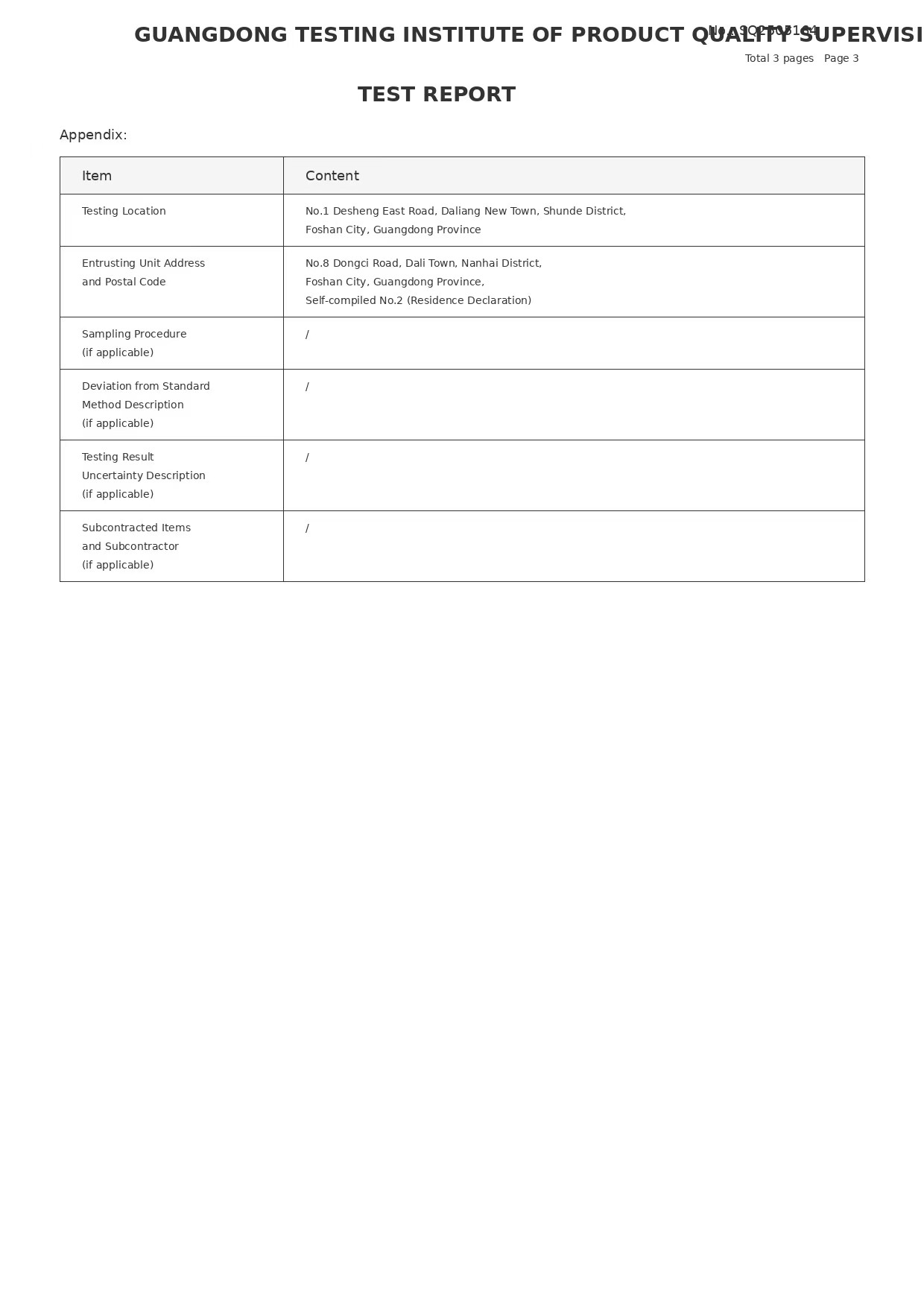
Moisture. The glue-free honeycomb panel is tested at below 1% water absorption in a 24-hour test. The wall-panel family is described as waterproof, moisture-proof, anti-mildew and termite-proof, and the bamboo-core and welding-board families are documented as 100% waterproof. For kitchen, bathroom and other wet-zone surfaces, these are the values that should be written into the purchase specification rather than left to the phrase “waterproof”.
Bond durability. The glue-free aluminum honeycomb panel is covered by a CTC peel-strength and temperature-resistance test report issued 12 November 2025 under certificate WT2025B01B02018, referenced to standard JC/T 2113-2012 and valid to 12 November 2026. Manufacturing is further supported by ISO9001:2015 quality management certification (certificate 31825Q10055R0S, issued 25 March 2025, valid to 24 March 2028) and ISO14001:2015 environmental management certification (certificate BIV25E10066R0S, issued 7 May 2025, valid to 6 May 2028). For a buyer, these documents matter less as marketing assets than as audit inputs: they define which claims can be restated in a project compliance file.
Application Mapping: Cabinets, Walls, Ceilings, Doors, Wet Areas
Once the specification variables are visible, surface selection becomes a mapping exercise. The table below translates the documented properties into surface-level recommendations for an evaluation-stage buyer.
| Surface | Documented board fit | Specification reason |
|---|---|---|
| Cabinets and wardrobes | NBW-HPB-001, NBW-WHB-002, WAP-600*(200-700) | Zero formaldehyde interior surfaces; A2 rating available on NBW-HPB-001; 150 kg/m² load-bearing published for WAP-600*(200-700) |
| Interior walls | NBW-WPB-003 | Seamless splicing, waterproof and anti-mildew construction, skin and core options, door-wall-cabinet same-colour matching |
| Ceilings | NBW-CLB-004 | Large integrated board format, high flatness, anti-sagging, moisture and mildew resistance |
| Interior doors | NBW-DOR-005 all-aluminum interior door with honeycomb or bamboo core options | 45 mm door leaf and frame thickness; frame options from 18 mm frameless to 60 mm; waterproof, anti-mildew and no-deformation construction |
| Wet areas (kitchen, bathroom) | NBW-HPB-001, ZKB-1220×2750, WAP-600*(200-700), NBW-CLB-004 for ceilings | Water absorption below 1% in 24 hours on NBW-HPB-001; 100% waterproof documentation on the bamboo-core and welding-board families |
Table 2 — Application mapping by surface type, based on documented board properties rather than decorative similarity.
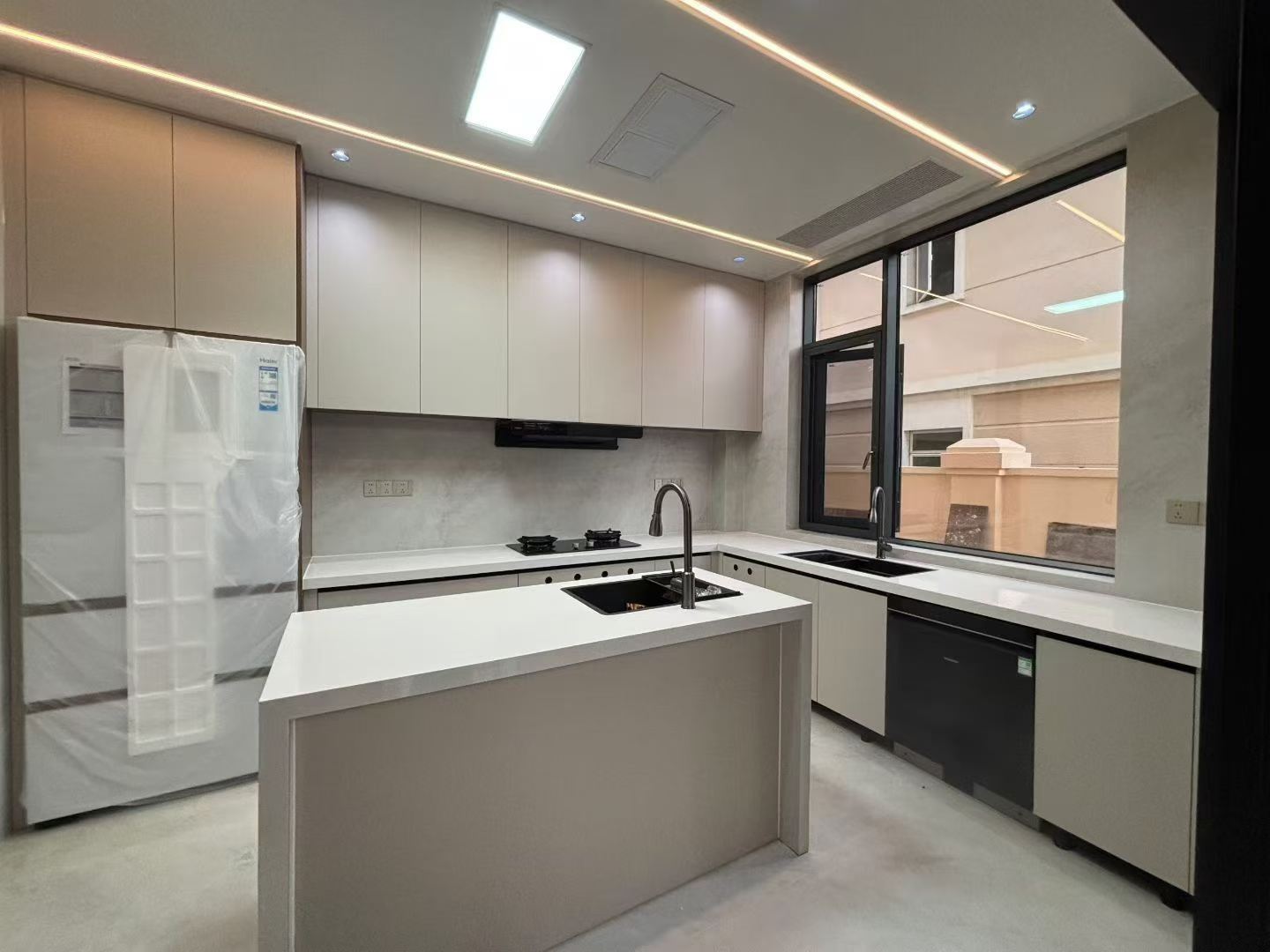
Delivery records give the mapping commercial weight. In Qatar, a program supplied more than 2,000,000 sheets of honeycomb panels for industrial-scale production of aluminium cabinets and wardrobes, with reported zero quality complaints across a 20+ year lab-tested durability period, supported by 30–50 tons of daily shipment, customization of sizing, 24-hour dispatch from a 10,000 m² warehouse and cutting-optimization support. A separate whole-house customization program in Indonesia scaled to 800,000 sheets across cabinets, wardrobes, wall panels and doors, with a stated service life of 20–30 years. A wider program covering more than 10,000 cooperative factories and 5,000 projects, spanning Malaysia, Saudi Arabia, Singapore, Thailand, South Africa, Kosovo and Kuwait, is recorded as achieving a 20% cost reduction alongside stable quality and a high repurchase rate.
Market Context: Wide Price Dispersion and the Shift to Glue-Free Bonding
The global aluminum honeycomb market was estimated at USD 2.1 billion in 2024, with a source-reported compound annual growth rate of 6.1% for the 2024–2030 period. That headline number hides a definitional split that buyers encounter directly at quotation stage: one commercial research source reports a blended average selling price of USD 211 per square metre for aluminum honeycomb panels in 2025 — a figure that includes aerospace-grade material — while factory-side planning prices for construction panels are cited in the range of USD 55–130 per square metre. The two numbers describe different product scopes rather than different suppliers, which is precisely why grade-by-grade comparison, not average-price comparison, is the workable procurement method.
On the technology side, adhesive-free bonding is the direction of travel. The Aluminum Corporation of China (CHALCO) describes a brazed aluminum honeycomb panel in which brazing material metallurgically connects the honeycomb core to the panel skins, overcoming the shortcomings of adhesive connection. Nanbeiwang Aluminum’s glue-free thermal bonding route on NBW-HPB-001 addresses the same problem from the panel side: remove the adhesive, and the formaldehyde question and the bond-durability question are solved in the same manufacturing change.
Where Honeycomb Panels Are Not the Automatic Answer
A decision matrix is only useful if it also marks the limits. Four boundaries are worth stating plainly.
First, fire class is family-specific, not category-wide. A2 applies to NBW-HPB-001 as documented; the bamboo-core and welding-board families are B1. A project specification that calls for A2 across every surface cannot be satisfied by substituting a B1 family without a documented variance — even when the surface finish is identical.
Second, published load-bearing data is narrower than the product range. The 150 kg/m² figure is documented for WAP-600*(200-700); it is not a blanket figure for the honeycomb panel series. Buyers who need a structural number for a specific span should request it for the exact family and thickness being ordered.
Third, availability and lead time follow the degree of customization. Stock items are quoted at 1–7 days and custom items at 7–15 days under the manufacturer’s stated production mode, with customization covering thickness, size, colour, surface finish and cutting. A late change from a standard 1220 × 2750 mm sheet to a bespoke format therefore moves a line item out of the stock window.
Fourth, price comparison across grades misleads. The spread between factory-side construction pricing and the blended average selling price reflects different product scopes and testing burdens. An all-aluminum, fire-rated, glue-free specification also competes against a different cost structure from wood-based boards — which remain regulated for formaldehyde emission under the GB 18584 standard family. Where a project’s driver is minimum first cost rather than fire class, moisture behaviour and service life, an all-aluminum board is not automatically the cheaper answer, and the evaluation should say so.
Future Outlook
Three signals point in the same direction for buyers planning 2027 procurement. Market growth of 6.1% annually through 2030 implies continued capacity expansion rather than scarcity, which shifts competition toward documentation quality — test reports, certificate validity windows and traceable specification sheets — rather than toward availability alone. Adhesive-free bonding continues to move from a niche construction method toward a mainstream expectation, reinforced by formaldehyde regulation such as GB18584-2024. And regional fire frameworks will keep forcing explicit classification statements per board family, which favours suppliers whose product lines are documented individually rather than as a single undifferentiated range.
For evaluation-stage buyers, the practical consequence is that the supplier questionnaire should be built around per-family evidence: which certificate covers which model, until when it is valid, and which test standard it references. Nanbeiwang Aluminum’s documentation set — GB18584-2024 hazardous substance testing across the full all-aluminum honeycomb panel series, CTC peel-strength testing on the glue-free panel, and ISO9001 and ISO14001 management certification valid into 2028 — is structured in that form, supported by a manufacturing base of two production bases, an 80,000 m² facility, 320 employees, an R&D team of 15 engineers and an annual output of 1,000,000 sheets, with roughly 50% of sales exported to Europe, Southeast Asia, the Middle East and North America.
FAQ
Which honeycomb panel board type should a buyer choose for cabinets?
For cabinet and wardrobe interiors, the documented options are NBW-HPB-001, NBW-WHB-002 and WAP-600*(200-700). NBW-HPB-001 offers a 5–18 mm thickness window, an A2 fire rating, zero formaldehyde referenced to GB18584-2024 and water absorption below 1% in a 24-hour test. NBW-WHB-002 uses an all-aluminum eco base material with no chemical glue added in the whole process and is designed for cabinet, door and wall-panel interchangeability. WAP-600*(200-700) is the only family in this set with a published load-bearing figure, at 150 kg/m². The selection criterion is therefore whether the cabinet requires a fire classification, colour continuity across surfaces, or a documented load value.
Is a B1-rated board acceptable where the specification calls for A2?
That depends on the project specification, not on the board. Within this range, A2 is documented for NBW-HPB-001, while ZKB-1220×2750 and WAP-600*(200-700) are documented at B1. B1 boards are described for furniture, interior decoration, construction, hospitality, healthcare and marine applications, which indicates they are intended for interior use where a B1 classification is accepted. Where an A2 requirement is written into the specification, substituting a B1 family requires a formal variance rather than a commercial decision.
What thickness is needed for a wall panel compared with a ceiling panel?
The wall-panel family (NBW-WPB-003) lists 5 mm, 9 mm, 10 mm and 18 mm as optional, alongside skin options of 0.3 mm, 0.48+0.2 mm, 0.65+0.2 mm and 1.0 mm, and honeycomb core sizes from 3×3 to 10×10, all customizable. The ceiling family (NBW-CLB-004) is documented at a standard thickness in a large-format integrated board construction, with the emphasis placed on flatness, anti-sagging behaviour and seamless splicing rather than on a thickness menu. The practical rule is that both thickness and skin gauge should be specified together, because the two jointly determine the panel’s behaviour on the surface.
How can a buyer verify fire and formaldehyde claims before ordering?
Verification works at document level. For formaldehyde and hazardous substances, the relevant reference is the GB18584-2024 hazardous substance test report issued on 29 October 2025 by the Guangdong Testing Institute of Product Quality Supervision under certificate SQ2505164, covering the full series of all-aluminum honeycomb panels. For bond durability, the glue-free aluminum honeycomb panel is covered by a CTC peel-strength and temperature-resistance report under certificate WT2025B01B02018, referenced to JC/T 2113-2012 and valid to 12 November 2026. For fire classification, the buyer should confirm both the manufacturer’s stated rating and the regional test framework the project requires, since market research on the category references frameworks including ASTM E84, EN 13501-1 and UL 723.
What are the ordering implications of custom sizing?
Under the manufacturer’s stated production mode, stock items are delivered in 1–7 days and custom items in 7–15 days, with customization available across thickness, size, colour, surface finish and cutting, and a minimum order of one sheet. The standard format of 1220 × 2750 mm sits inside the stock window; bespoke dimensions, including formats such as the bamboo-core board’s customized version of that size, fall outside it. Planning schedules should therefore treat any dimensional change as a lead-time event rather than a pricing detail.
How should quotations be compared when panel prices vary so widely?
Compare grade to grade, not average to average. Commercially published figures for aluminum honeycomb panels show a blended 2025 average selling price of USD 211 per square metre that includes aerospace-grade material, alongside factory-side planning prices of USD 55–130 per square metre for construction panels. The gap reflects a scope difference in what is being priced, not a supplier efficiency difference. A workable comparison fixes board family, thickness, skin gauge, core cell size, sheet format, fire rating and documentation requirements first, then compares quotations against that fixed specification.
For readers assembling a specification file, the full all-aluminum board portfolio, surface options and technical parameters used in this decision matrix are compiled in the manufacturer’s catalogue, available for download here: Nanbeiwang Aluminum 2026 catalogue. Additional product-family documentation is published at nbwaluminum.com.