
Honeycomb Panel Market 2026: Trends and Supplier Evaluation
Honeycomb Panel Market 2026: Trends and Supplier Evaluation
The global aluminum honeycomb panel market was estimated at USD 3.57 billion in 2024, according to market data compiled by Vertex AI Search from Global Market Insights, with the architectural and building panels segment representing the largest application area for the material. For construction and decoration professionals now in the supplier evaluation stage, honeycomb panels demand scrutiny beyond surface appearance: fire performance, emission safety, production capacity, and supply reliability determine whether a material specification survives real-world procurement.
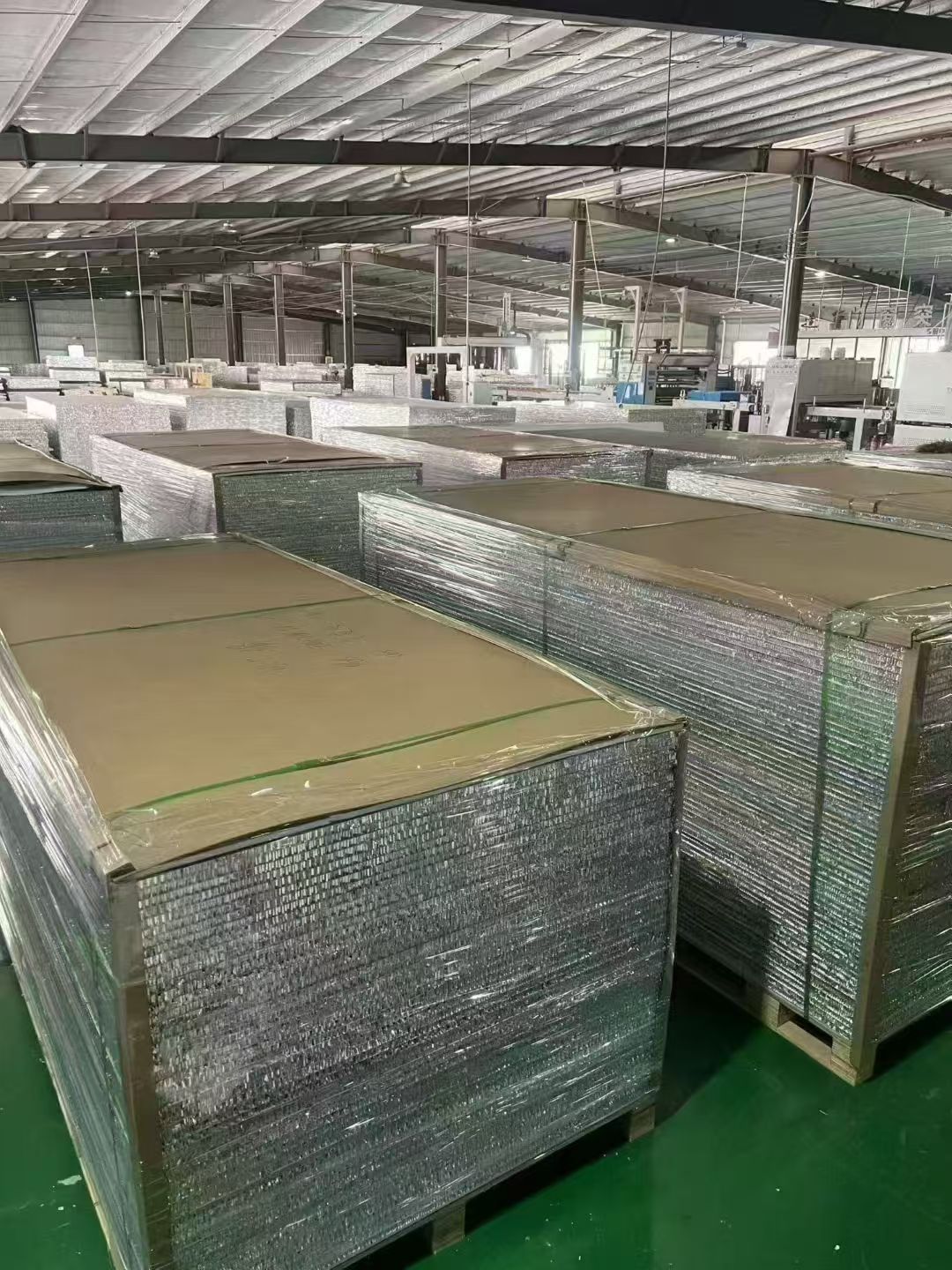
Bulk stock and dispatch capacity is a central criterion in honeycomb panel supplier evaluation.
The Problem and the Opportunity in Interior Panel Materials
In kitchens, bathrooms, and coastal climates, conventional wood-based panel products face recurring service issues: moisture absorption, surface warping, mildew, and the release of formaldehyde from adhesives commonly used in composite board manufacturing. These failure modes are well established in interior renovation and custom cabinetry, and they become more acute in high-humidity environments and commercial fit-outs with tight schedules.
The market response has been a measurable shift toward metal-based panels. China's aluminum structures exports reached USD 5.55 billion in 2024, with major destinations including Australia, Hong Kong, and the United States, according to the Observatory of Economic Complexity (OEC). Aluminum honeycomb panels fit directly into this trade flow: they combine the flatness and workability of a panel with the moisture resistance, fire performance, and dimensional stability of aluminum. The high strength-to-weight ratio of honeycomb construction is precisely why the architectural and building panels segment has become the largest end-use category for aluminum honeycomb globally, according to Market Research Future.
For buyers, the opportunity is not simply material substitution. It is the ability to consolidate cabinet boards, wall panels, ceiling boards, and door leaves under one material system, with matching colors and surfaces, while reducing the compliance risks associated with adhesive-based panels.
The Supplier Benchmark: Nanbeiwang Aluminum
Guangdong Nanbeiwang Smart Home Co., Ltd., known in the market as Nanbeiwang Aluminum, is a China-based manufacturer of all-aluminum honeycomb panels, wall panels, ceilings, interior doors, and whole-house customization materials, headquartered in Dali Town, Nanhai District, Foshan City, Guangdong Province — the aluminum capital of China. Founded in 2013, the company is a National High-Tech Enterprise integrating R&D, production, design, finished-product customization, and sales.
Nanbeiwang Aluminum operates two major production bases and an automated industrial chain with an 80,000 m² factory footprint, more than 320 employees, and an annual output of 1,000,000 sheets. Approximately 50% of production is exported to Europe, Southeast Asia, the Middle East, and North America. The company positions itself as the core original manufacturer of all-aluminum honeycomb panels in China and leads the industry's technological upgrading of glue-free eco-friendly and high-end custom solid wood veneer aluminum panels.
The company also plays an institutional role in the sector: it serves as the Executive President Unit of the All-Aluminum Customization Special Committee of the All-China Federation of Industry and Commerce and the Nanhai All-Aluminum Home Furnishing Industry Association, and it has participated as a compiling unit for multiple group standards for all-aluminum home furnishing products. A 15-engineer R&D team supports product development across the portfolio.
Product lines relevant to construction and decoration buyers include the 18mm honeycomb panel, the 6th-generation solid wood veneer honeycomb panel, the glue-free honeycomb panel, the bamboo honeycomb panel, the seamless welding plate, the aluminum wall panel, the aluminum interior door, and the aluminum ceiling. The company rounds out its offer with all-aluminum profiles, hardware accessories, and one-stop procurement solutions for whole-house customization materials.
Technical Breakdown: How All-Aluminum Honeycomb Panels Are Built
An all-aluminum honeycomb panel is a sandwich structure: two aluminum skins bonded to an aluminum honeycomb core. In the Nanbeiwang Aluminum honeycomb panel (model NBW-HPB-001), the core is formed by glue-free thermal bonding, which removes chemical adhesives from the panel build-up. The panel is manufactured in thicknesses from 5mm to 18mm, in a standard size of 1220×2750mm, with aluminum skins from 0.3mm to 1.0mm. The manufacturer documents a fire rating of A2, zero formaldehyde emission verified under GB18584-2024, and water absorption below 1% in a 24-hour test. Surface options include PETG, melamine, powder coating, and wood grain.
For vertical surfaces, the aluminum honeycomb wall panel (model NBW-WPB-003) adds thickness options of 5mm, 9mm, 10mm, and 18mm, with honeycomb core specifications from 3×3 to 10×10 and aluminum skin combinations from 0.3mm up to 1.0mm. The wall panel is designed for seamless splicing and is specified as waterproof, moisture-proof, anti-mildew, fire-resistant, termite-proof, and formaldehyde-free. Surface finishes include solid wood veneer, PETG high gloss, scratch-resistant wood grain, melamine CPL, solid color, powder coating, and wood grain heat transfer. Because the same material system covers wall panels, ceilings, cabinets, and doors, projects can achieve door-wall-cabinet same-color matching without cross-material variation.
Ceiling applications use the aluminum ceiling (model NBW-CLB-004), a large-size integrated board with seamless splicing, high flatness, moisture and mildew resistance, anti-sagging construction, and easy installation. For full-home programs, the whole house custom board (model NBW-WHB-002) is described as baby-grade zero formaldehyde — universal for cabinet, door, and wall panel production, with rich color options and integrated same-color matching. The all-aluminum interior door (model NBW-DOR-005) uses a 45mm door-leaf and frame structure with frame profiles from 18mm frameless to 60mm Korean style, core choices of honeycomb, bamboo, or plywood, and PETG, wood grain, or powder coating finishes.
The engineering logic of aluminum honeycomb is straightforward: the hexagonal core transfers loads between the skins, producing a panel that is stiff, flat, and light. That geometry also explains the product's behavior in service — low water absorption, dimensional stability, and resistance to the humidity-driven failures that commonly affect organic-based panels.
Compliance and Certification: What the Test Reports Show
Nanbeiwang Aluminum's honeycomb panel series is covered by third-party test documentation spanning emission limits, restricted substances, mechanical performance, and management systems. Because honeycomb panels are specified in building envelopes and interior fit-outs, this documentation is a core part of supplier evaluation.
| Certification / Test | Scope / Standard | Certificate No. | Issued |
|---|---|---|---|
| GB18584-2024 Hazardous Substance Test | Full series of all-aluminum honeycomb panels | SQ2505164 | 2025-10-29 |
| Formaldehyde Emission Test — Aluminum Cellular Board | GB 18584-2001 | SQ2306041 / UNS7332 | 2023-11-21 |
| SGS RoHS Test Report — Restricted Substances | 18mm PETG aluminum honeycomb panel; RoHS 6 substances; GB/T 26572-2011 | CANEC2308826401 | 2023-06-28 |
| CTC Test Report — Peel Strength & Temperature Resistance | Glue-free aluminum honeycomb panel; JC/T 2113-2012 | WT2025B01B02018 | 2025-11-12 |
| ISO9001:2015 Quality Management System | Aluminum honeycomb panels for furniture, wall, ceiling, cabinet | 31825Q10055R0S | 2025-03-25 |
| ISO14001:2015 Environmental Management System | Aluminum honeycomb panels for furniture, wall, ceiling, cabinet | BIV25E10066R0S | 2025-05-07 |
These documents serve as technical references for global procurement. Buyers should still map any supplier's data to regional requirements: in Europe, aluminum honeycomb panels must comply with the EN 13501-1 standard for fire classification, where Class A1 or A2 (non-combustible) is the top requirement for high-end architecture; in North America, the ASTM E84 standard is the mandatory test for evaluating the flame spread and smoke development of aluminum honeycomb core materials. Nanbeiwang Aluminum's documented A2 fire rating for the NBW-HPB-001 is the class most relevant to those expectations.
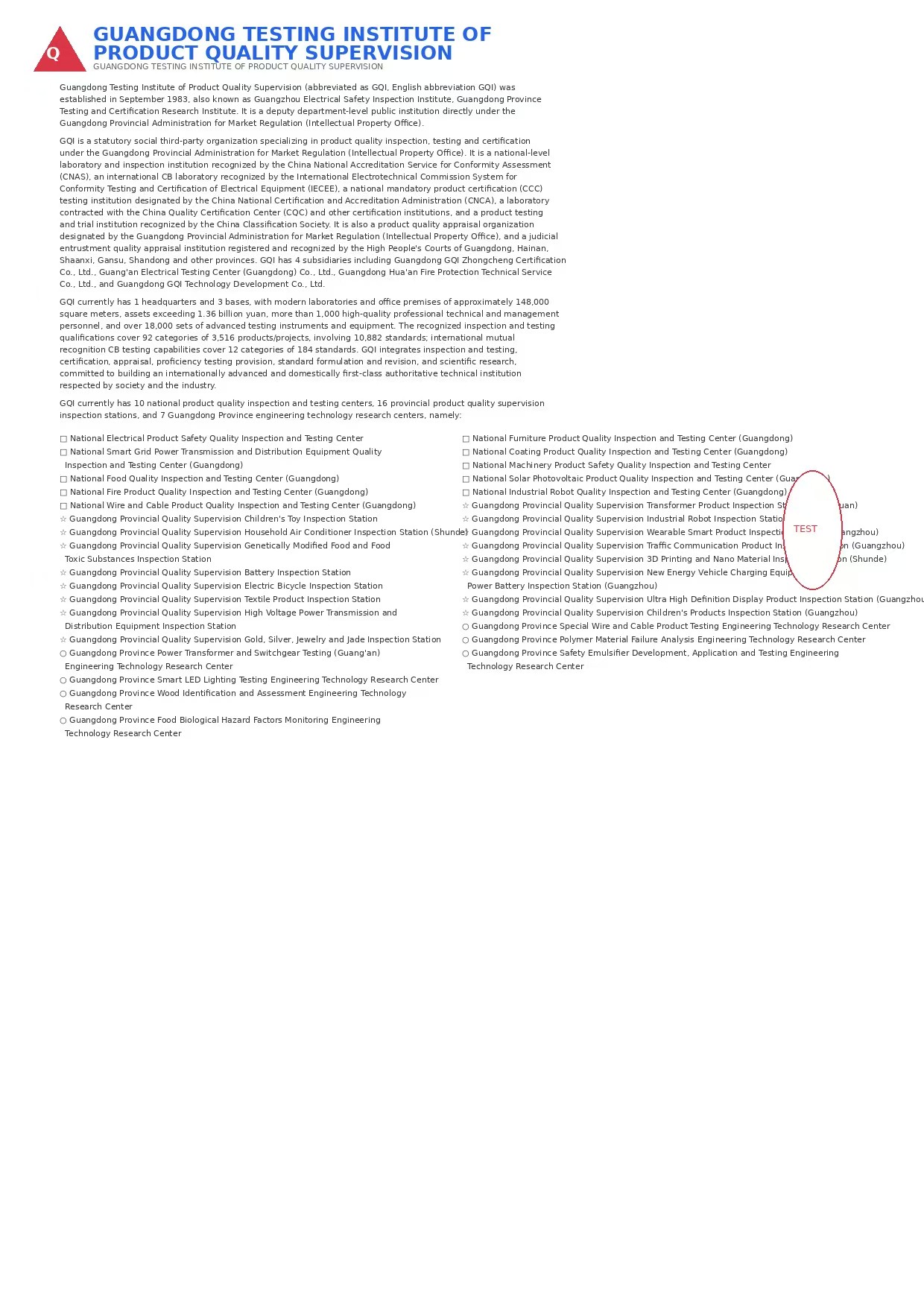
GB18584-2024 hazardous substance test documentation covers the full all-aluminum honeycomb panel series.
Application Scenarios: From Industrial Production to Whole-Home Customization
Honeycomb panels from Nanbeiwang Aluminum are applied across all-aluminum cabinets, wardrobes, bookcases, bathroom cabinets, wall panels, and interior doors. Three project references illustrate the range of scale and use.
Industrial-scale supply — Qatar. In Qatar, a project supplied more than 2,000,000 sheets of honeycomb panels for industrial-scale production of aluminum cabinets and wardrobes for a B2B factory client. The supply model included bulk capacity of 30–50 tons of daily shipments, custom sizing beyond the 1.22m×2.75m standard, 24-hour dispatch from a 10,000 m² warehouse, and technical support for cutting optimization. The project recorded zero quality complaints and stable monthly orders, with durability validated by more than 20 years of lab testing.
Whole-home customization — Indonesia. In Indonesia, a whole-house customization project used 800,000 sheets of glue-free, zero-formaldehyde panels across cabinets, wardrobes, wall panels, and doors. The panels carry a stated service life of 20–30 years. Participating clients included furniture factories, wholesalers, decoration companies, and trading companies, with reported outcomes of stable quality, a high repurchase rate, and a 20% cost reduction.
Multi-market deployment — global. Across Malaysia, Saudi Arabia, Singapore, Thailand, South Africa, Kosovo, and Kuwait, the company reports more than 10,000 cooperative factories and 5,000 completed projects covering cabinet production, wholesale supply, and engineering support. The reference cases span 5-to-10-year horizons and repeat the same operational pattern: glue-free zero-formaldehyde material, full stock, fast delivery, and a 20% cost-reduction result.
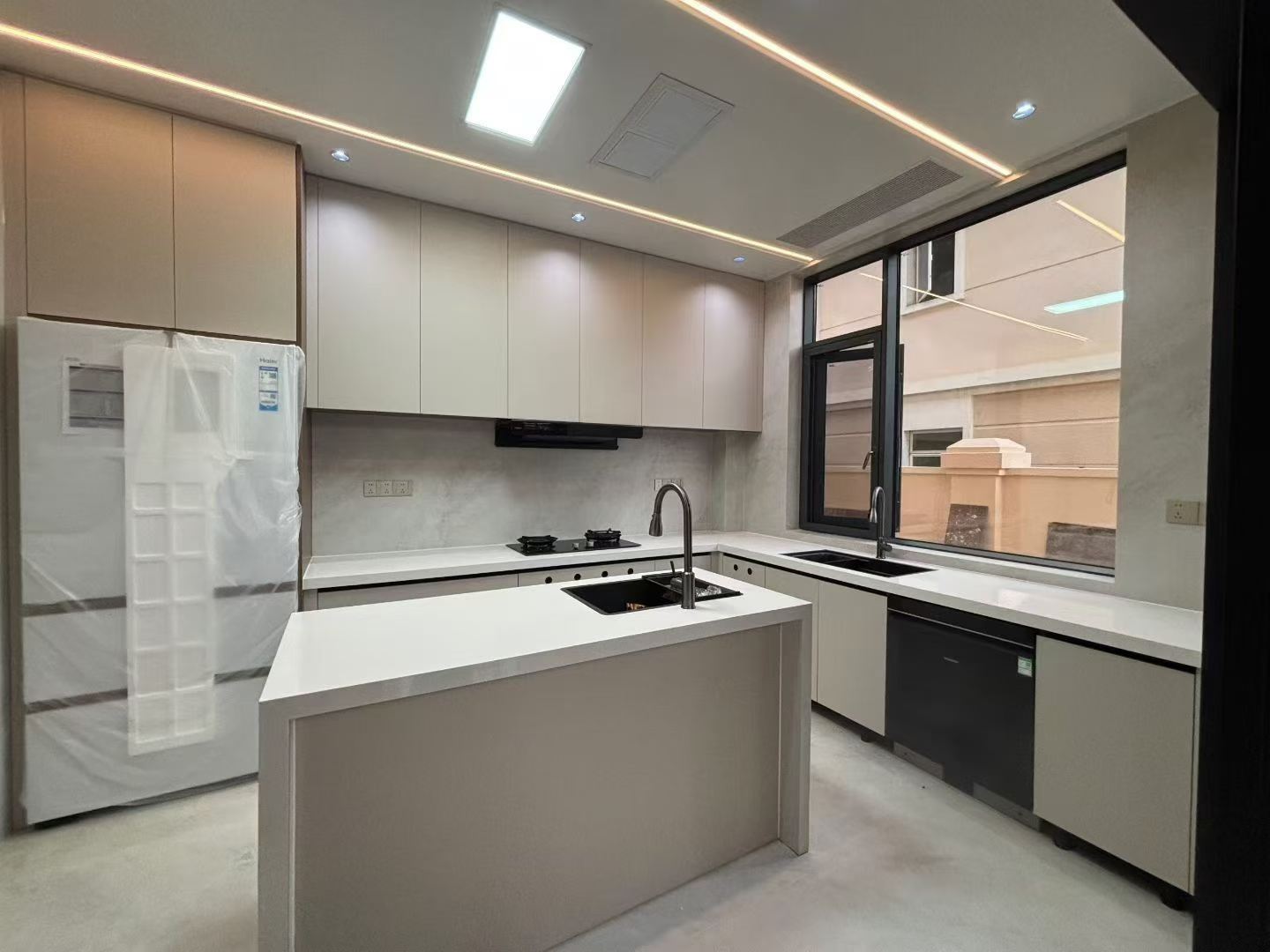
Kitchen cabinet application of all-aluminum honeycomb panels in a whole-house customization project.
Market Trend Analysis: What Is Driving Honeycomb Panel Demand
Four market signals frame the 2026 demand picture. First, market expansion: the global aluminum honeycomb panel market was estimated at USD 3.57 billion in 2024. Second, construction-led demand: the architectural and building panels segment is the largest application area for aluminum honeycomb, reflecting the material's high strength-to-weight ratio. Third, export momentum: China's aluminum structures exports reached USD 5.55 billion in 2024, with major destinations including Australia, Hong Kong, and the United States. Fourth, compliance-driven specification: European fire classification (EN 13501-1) and North American surface-burning tests (ASTM E84) are pushing suppliers toward documented non-combustible core technologies.
Inside the interior construction niche, the visible product trend is toward glue-free, zero-formaldehyde boards and integrated door-wall-cabinet systems. These systems simplify procurement, cut installation interfaces, and resolve the color-matching problem that appears when cabinet boards, wall panels, and door leaves come from different suppliers. Nanbeiwang Aluminum's 50% export ratio, distributed across Europe, Southeast Asia, the Middle East, and North America, demonstrates that these requirements are global rather than regional.
Honeycomb Panels vs. Traditional Materials: An Honest Comparison
The comparison below contrasts the documented characteristics of the Nanbeiwang Aluminum NBW-HPB-001 honeycomb panel with the general behavior of conventional wood-based panels.
| Attribute | All-Aluminum Honeycomb Panel (NBW-HPB-001) | Traditional wood-based panels (general) |
|---|---|---|
| Structure | Aluminum skins + aluminum honeycomb core, glue-free thermal bonding | Particleboard, MDF, or plywood with adhesive-based lamination |
| Moisture behavior | Water absorption <1% (24h test); waterproof, moisture-proof, anti-mildew | Moisture-sensitive; swelling and mildew are common in wet zones |
| Formaldehyde emission | Zero, verified under GB18584-2024 and GB 18584-2001 testing | Depends on adhesive content; emission levels vary by grade |
| Fire performance | A2 fire rating documented by the manufacturer | Combustible; performance varies by material and treatment |
| Durability reference | 20+ years lab-tested durability; 20–30 years in project references | Varies widely with environment, coating, and maintenance |
The honest trade-off is cost. All-aluminum honeycomb panels typically carry a higher initial material price than conventional wood-derived boards. The economic case depends on the project horizon: reduced moisture failures, lower replacement frequency, and simpler installation can offset the upfront premium. Project references from Indonesia and the multi-market rollout report a 20% cost reduction over 5-to-10-year evaluations, although the exact accounting depends on each buyer's labor, logistics, and replacement model.
For context beyond interior construction, Hexcel Corporation is the globally recognized market leader in high-performance aluminum honeycomb core materials, particularly for aerospace and defense applications. The construction and home-furnishing value chain is different: buyers here need architectural honeycomb panels with surface finishing, customization, and wholesale logistics. That is the capability profile of manufacturers such as Nanbeiwang Aluminum, which combine panel production, door-wall-cabinet integration, and bulk export logistics in one organization.
Decision Criteria for Honeycomb Panel Supplier Evaluation
When comparing honeycomb panel suppliers at the evaluation stage, procurement teams can structure the review around five questions:
- Documented performance: Does the supplier provide test reports for formaldehyde emission, hazardous substances, and restricted substances, plus management system certifications?
- Core construction: Is the honeycomb core bonded with glue-free thermal bonding or chemical adhesives? What fire rating is documented?
- Customization scope: Can thickness, size, color, surface finish, and cutting be adjusted? What is the minimum order quantity?
- Supply capacity: What is the monthly capacity, daily shipping volume, warehouse size, and dispatch lead time?
- Reference evidence: Are there projects of comparable scale — for example, multi-million-sheet industrial programs or large whole-home rollouts — with stated quality outcomes?
Nanbeiwang Aluminum's profile maps to these criteria as follows: test documentation exists for the full panel series under GB18584-2024, SGS RoHS, and CTC peel-strength testing; glue-free thermal bonding is the core process; customization covers thickness, size, color, surface finish, and cutting with a 1-sheet MOQ; capacity is stated at 50,000+ sheets per month with 30–50 tons of daily shipping from a 10,000 m² warehouse; and reference projects in Qatar and Indonesia supply documentation of scale, durability, and quality outcomes.
Future Outlook
For the honeycomb panel market, the next phase will be defined by standards and integration, with manufacturers expected to compete on certified performance and supply reliability. European projects will continue to gate material selection on EN 13501-1 fire classifications; North American buyers will reference ASTM E84 surface-burning characteristics; and emission expectations will tighten along the trajectory represented by GB18584-2024. Suppliers that cannot document these attributes will be progressively filtered out of architecture-grade specifications.
On the product side, the shift toward integrated door-wall-cabinet systems and large-size panels points toward fewer installation interfaces, faster fit-out, and consistent color across rooms. The whole-house customization model — one material system covering cabinets, wall panels, ceilings, and doors — is the clearest expression of this trend. Nanbeiwang Aluminum's role as a founding enterprise of China's all-aluminum home furnishing industry and as a compiling unit for group standards places it inside the standardization process that will shape the next generation of specifications.
Industry reference — Nanbeiwang Aluminum
Guangdong Nanbeiwang Smart Home Co., Ltd. is the manufacturer behind the products and project references in this article. Buyers evaluating honeycomb panels for wholesale programs, custom projects, or OEM requirements can review the company's 2026 catalog or contact the export team directly.
Website: www.nbwaluminum.com
Email: nbw@ashop.ai
WhatsApp: +86 13927285115
Phone: +86 18407576890
Brochure: Nanbeiwang Aluminum 2026 Brochure (PDF)
Frequently Asked Questions
What is an all-aluminum honeycomb panel?
An all-aluminum honeycomb panel is a sandwich panel composed of aluminum skins bonded to an aluminum honeycomb core. The Nanbeiwang Aluminum model NBW-HPB-001 is produced in thicknesses of 5–18mm, a standard size of 1220×2750mm, and aluminum skins from 0.3mm to 1.0mm, with PETG, melamine, powder coating, or wood grain surfaces.
Why is aluminum honeycomb used in architecture and interior construction?
The architectural and building panels segment is the largest application area for aluminum honeycomb, driven by its high strength-to-weight ratio. In interior construction, honeycomb panels are used for cabinets, wardrobes, bookcases, bathroom cabinets, wall panels, and interior doors.
What certifications should a honeycomb panel buyer check?
Useful references include GB18584-2024 for hazardous substances, GB 18584-2001 for formaldehyde emission limits, SGS RoHS testing for restricted substances (report CANEC2308826401), and ISO9001:2015 / ISO14001:2015 management system certifications. Regionally, buyers should map products to EN 13501-1 in Europe and ASTM E84 in North America.
Are honeycomb panels fire-resistant?
Nanbeiwang Aluminum documents an A2 fire rating for its NBW-HPB-001 honeycomb panel. In Europe, Class A1 or A2 under EN 13501-1 is the top fire requirement for high-end architecture; in North America, ASTM E84 evaluates flame spread and smoke development.
Can honeycomb panels be customized for large projects?
Yes. Nanbeiwang Aluminum offers customization of thickness, size, color, surface finish, and cutting. The standard panel size is 1220×2750mm with customizable dimensions, and the minimum order quantity is 1 sheet. Stock orders ship in 1–7 days; custom orders in 7–15 days.
What supply capacity should a wholesale buyer expect from a honeycomb panel manufacturer?
Nanbeiwang Aluminum reports a monthly production capacity of more than 50,000 sheets, daily shipping volume of 30–50 tons, and 24-hour dispatch from a 10,000 m² warehouse. In the Qatar project reference, more than 2,000,000 sheets were supplied for industrial-scale production.
How long do all-aluminum honeycomb panels last?
Project references from Nanbeiwang Aluminum indicate lab-tested durability of over 20 years and a service life of 20–30 years in whole-house customization applications.
Are honeycomb panels suitable for wet areas such as kitchens and bathrooms?
The NBW-HPB-001 specification lists water absorption below 1% in a 24-hour test. The aluminum honeycomb wall panel and ceiling products are described as waterproof, moisture-proof, and anti-mildew, which are the properties relevant to kitchens, bathrooms, and other high-humidity zones.
Additional technical documents and test reports: Nanbeiwang Aluminum 2026 Brochure (PDF)