
Honeycomb Panel Picks: Board, Door, Wall or Ceiling Fit?
Honeycomb Panel Picks: Board, Door, Wall or Ceiling Fit?
An all-aluminum honeycomb package rarely fails because the material is wrong in general. It fails because the wrong model was sent to the wrong zone. A general-purpose board, a whole-house board, a wall panel, a 45 mm door slab, a ceiling plank, a bamboo core board and a welding board do not compete on the same criteria, and a shortlist that ranks them as if they did will produce a technically tidy answer that is wrong on site.
Using the zoning logic first, the seven models in the Nanbeiwang Aluminum range separate cleanly. NBW-HPB-001 is the general-purpose all-aluminum honeycomb panel. NBW-WHB-002 is the whole-house custom board used where doors, wall panels and cabinets must read as one palette. NBW-WPB-003 is the aluminum honeycomb wall panel for wet-adjacent interiors and old-house renovation. NBW-DOR-005 is the 45 mm all-aluminum interior door. NBW-CLB-004 is the aluminum ceiling. ZKB-1220×2750 is the all-aluminum bamboo core board, a different core family aimed at cabinet and interior work. WAP-600*(200-700) is the welding board, positioned for surfaces that should read as one continuous sheet rather than a panel grid.
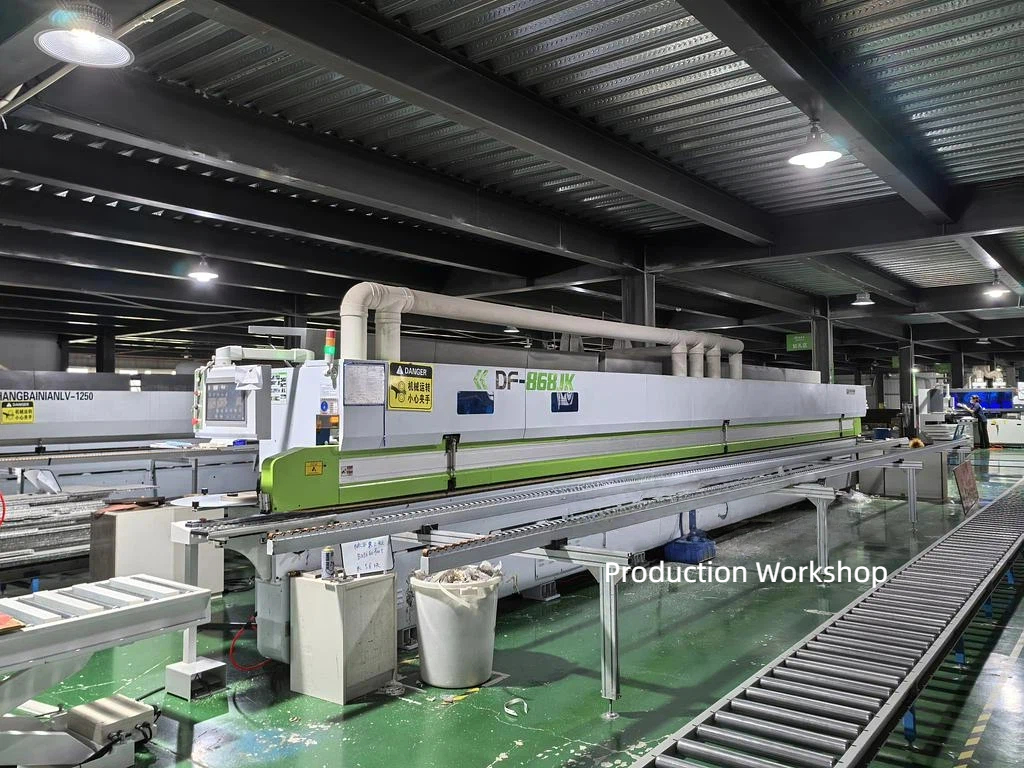
Nanbeiwang Aluminum — the trade name of Guangdong Nanbeiwang Smart Home Co., Ltd., a Foshan-based manufacturer founded in 2013 that produces eco-friendly all-aluminum materials for whole-house customization — publishes this range for buyers assembling complete interior packages rather than single orders. The evidence used below is the company's own product documentation, its GB18584-2024 hazardous-substance test report, its ISO certificates and a limited amount of attributable market research. Where the evidence stops, the text says so, because a shortlist that hides its own scope is not usable in an evaluation file.
The criteria that decide the model before price does
Model selection follows the zone, the substrate and the documentation pack. Thickness is a consequence of those three, not the starting point. Five criteria do most of the separating work in an all-aluminum honeycomb interior.
1. Emission conformity, and the scope of the report behind it
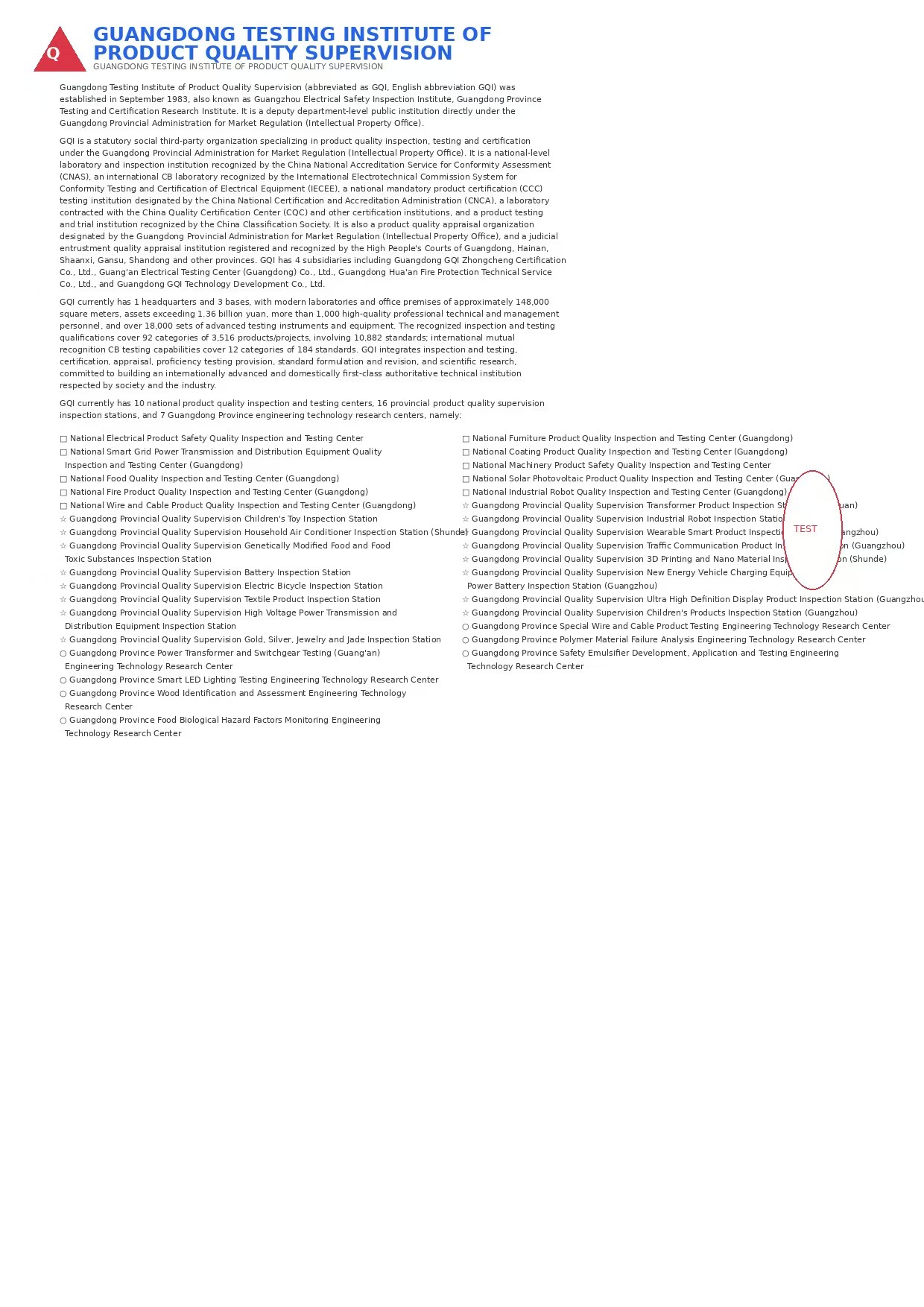
The company holds a GB18584-2024 hazardous-substance test report, certificate SQ2505164, issued by the Guangdong Testing Institute of Product Quality Supervision on 29 October 2025, and the report's stated scope is the full series of all-aluminum honeycomb panels. Glue-free construction is the mechanism the company credits for its zero-formaldehyde position, and it is worth understanding why that matters commercially: a panel that avoids adhesive in the core bond removes the main formaldehyde source in a composite board rather than diluting it. The practical caution is scope, not chemistry. A series-level report tells a buyer that the family has been tested; a project submission usually needs the specific model, thickness and finish named, so ask for the model-level page rather than the cover sheet.
2. Fire classification, with its standard attached
The range is documented with an A2 fire classification. A2 is only meaningful when the standard behind it travels with it, because an EN 13501-1 classification, an ASTM E84 flame-spread result and a UL 723 test are separate evidence chains — the fire standards catalogued for aluminum honeycomb panels in GMI's 2026 industry analysis are exactly those three, ASTM E84, EN 13501-1 and UL 723. A reviewer therefore needs the classification letter, the standard number, the specimen thickness and the test date together. A letter alone is not a submission.
3. Format: 5–18 mm and 1220 × 2750 mm
The panel range is quoted at 5 mm to 18 mm in a standard 1220 × 2750 mm sheet. Thickness drives stiffness, edge detail and fixing choice; the sheet format drives cutting yield and joint layout. Those two numbers do more to determine project cost than any single performance claim, because they decide how much of every sheet becomes a usable part.
4. Water absorption below 1%
Water absorption below 1% in a 24-hour test is the figure published for the panel line. For a wall that sits beside a shower, a laundry or a humid renovation, this is the criterion that moves a model up the shortlist — ahead of colour, ahead of finish, and ahead of price per square metre.
5. Mechanical behaviour and joint treatment
Nanbeiwang documents a 150 kg/m² load-bearing figure for wall panel applications, and lists a seamless welding plate in the product family for joints that should not read as joints. Both figures are starting points, not design allowances. The load figure only has meaning with its span, framing, fixing schedule and substrate attached, and a project engineer should re-derive it against the actual wall build-up before release.
The shortlist at a glance
The table below is the working version of the shortlist: model, what it is, the project condition it is documented for, and the check that has to happen before an order is released.
| Model | What it is | Primary project fit | Check before ordering |
|---|---|---|---|
| NBW-HPB-001 | All-aluminum honeycomb panel, general board | Carcasses, shelving, furniture boards, general interior board work | Thickness within the 5–18 mm range against span; finish sample |
| NBW-WHB-002 | Whole-house custom board | Door-wall-cabinet packages that must share one palette | Colour and finish match confirmed across product types in one physical sample set |
| NBW-WPB-003 | Aluminum honeycomb wall panel | Wet-adjacent interior walls; old-house renovation | Water-absorption report; 150 kg/m² figure re-derived against span and fixings |
| NBW-DOR-005 | 45 mm all-aluminum interior door | Interior doors inside an all-aluminum package | 45 mm leaf against wall build-up; frame, hinge and hardware preparation |
| NBW-CLB-004 | Aluminum ceiling | Flat-plane ceilings in interior fit-outs | Suspension grid, service access and joint detail |
| ZKB-1220×2750 | All-aluminum bamboo core board, custom sizes supported | Cabinet and interior work where a bamboo core is specified | Its own emission and fire documents — not the honeycomb reports |
| WAP-600*(200-700) | Welding board | Runs that should read as one continuous surface | Joint method, substrate and the width variant required |
Model by model: where each one actually fits
NBW-HPB-001 — the default board when no special condition applies
NBW-HPB-001 is the all-aluminum honeycomb panel in its general form: two aluminum skins bonded to an aluminum honeycomb core, with the core formed by glue-free thermal bonding as described in the company's product documentation. It sits inside the 5–18 mm range and the 1220 × 2750 mm standard sheet, and it is one of the models named in the GB18584-2024 series report. This is the model to start from for carcasses, shelving, furniture boards and the general board work that makes up most of a fit-out by area. The boundary is equally clear: if the requirement is a swinging slab, a wet wall or a ceiling plane, HPB-001 is the wrong starting point, because the constraint is no longer the board.
NBW-WHB-002 — the model that exists for colour and finish continuity
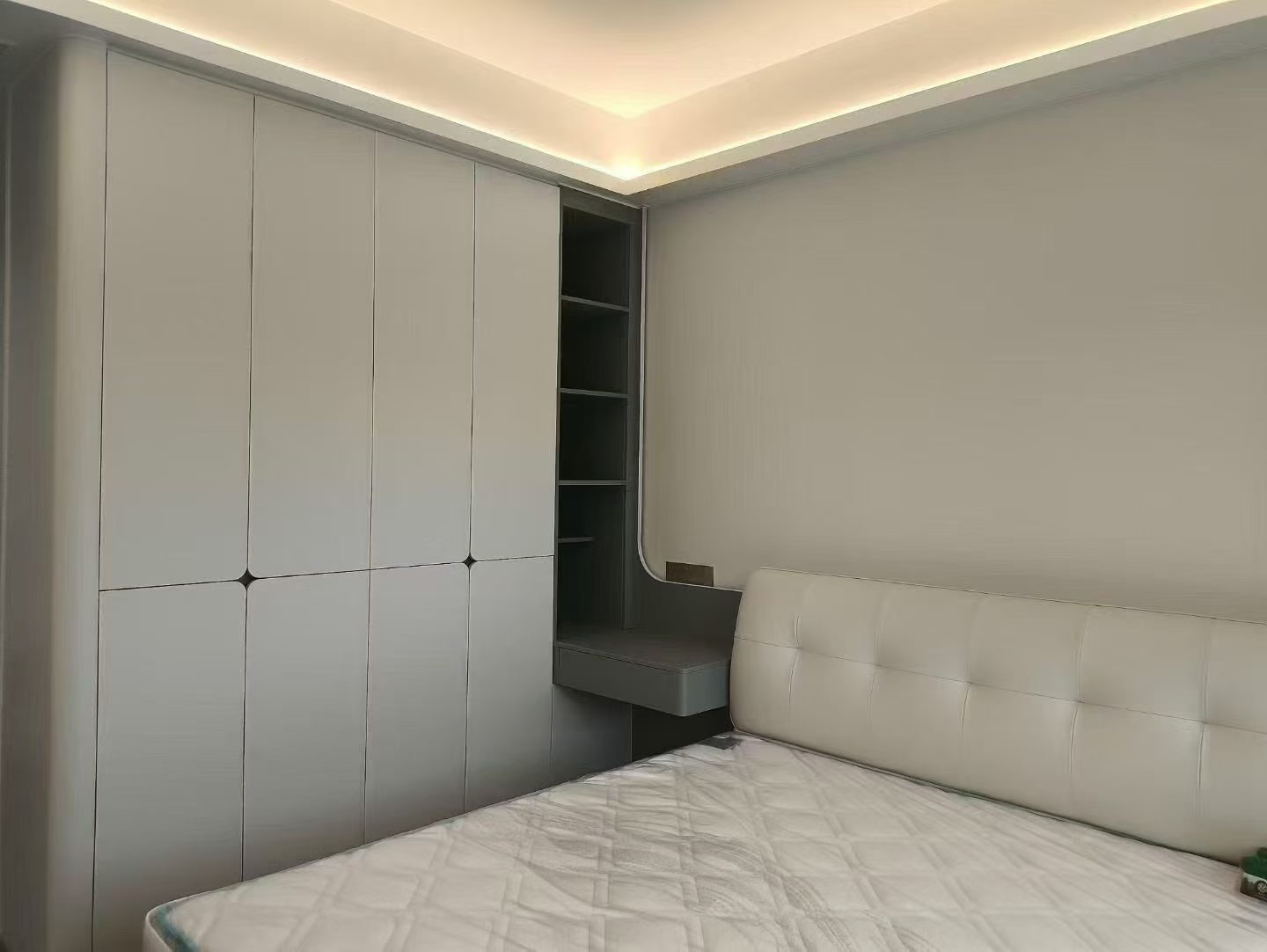
NBW-WHB-002 is the whole-house custom board, and its reason for being on the shortlist is not a performance figure but a coordination problem. In an all-aluminum interior, the most common complaint is not that any single element underperforms; it is that the door frame, the wall panel and the cabinet face arrive in three slightly different versions of the same colour. A board positioned for door-wall-cabinet work addresses that at the specification stage, provided the finish is chosen from the same route for all three. The customization menu — thickness, size, colour, surface finish and cutting — is what makes cross-category coordination practical. The boundary: colour continuity is a sample-and-lot question. Confirm with physical samples produced on the same finish line before releasing a whole floor, and re-confirm when the order moves to a second production batch.
NBW-WPB-003 — the wall panel for wet zones and renovation
NBW-WPB-003 is the aluminum honeycomb wall panel, and its two documented use conditions are the ones that most often eliminate other options: interior walls in wet-adjacent areas, and old-house renovation. Water absorption below 1% in a 24-hour test is the figure that supports the first; the 150 kg/m² load-bearing figure supports the second, where a wall is being re-faced and the assembly has to carry the panel plus its fixings. The practical check on a renovation project is not the face of the panel but the cavity behind it. Moisture migrating from the existing wall is the risk, so edge sealing and joint detailing decide whether the panel performs as specified.
NBW-DOR-005 — a door is a system, not a board
NBW-DOR-005 is the 45 mm all-aluminum interior door, and it belongs on the shortlist as an assembly rather than as cut panel stock. The 45 mm leaf thickness is the number that matters commercially, because it sets the frame depth, the hinge geometry and the relationship to the wall build-up on either side. Buyers who treat a door as a board purchase tend to discover the difference at installation, when the leaf does not align with the finished wall or the hardware preparation does not match the schedule. Order it as a door, with the frame and hardware defined, and check the 45 mm leaf against the actual wall assembly before the opening is set out.
NBW-CLB-004 — the ceiling is a flatness problem
NBW-CLB-004 is the aluminum ceiling model in the range, and the criterion that governs it is different again: a ceiling has to hold a flat plane across a room while carrying its own suspension and accommodating services. That makes the suspension grid, the joint detail and access for lighting and ventilation the deciding factors, not the panel face. The ceiling also sits in the same all-aluminum family as the wall and door models, which is what allows a single palette across a room — but the coordination burden moves to the grid, so define it early rather than after the panels are ordered.
ZKB-1220×2750 — a different core, and a separate evidence pack
ZKB-1220×2750 is the all-aluminum bamboo core board, supplied in the 1220 × 2750 mm format with custom sizing supported. It belongs on the same shortlist because it serves the same buyer — cabinet and interior work in an all-aluminum fit-out — but it does not belong in the same evidence column. A bamboo core changes the material behaviour and therefore the documentation required. The most common specification error here is inherited confidence: because the honeycomb panels carry the GB18584-2024 series report and an A2 classification, buyers assume the bamboo core board is covered by the same paperwork. Ask for its own documents. The distinction is not a criticism of the product; it is the difference between a tested honeycomb family and a different core construction.
WAP-600*(200-700) — the welding board for continuous surfaces
WAP-600*(200-700) is the welding board, listed in the product family as a seamless welding plate. Its role on a project is a design intent rather than a performance grade: some runs should read as one continuous surface instead of a grid of panels, and that is the condition this model addresses. The boundary is that a welded surface solves the visual joint, not the structural one. Substrate, fixing and the site joint method still decide how the run behaves, and the required width variant within the family should be confirmed against the layout before fabrication. Specifying it as a finish decision and then treating it as a structural one is the failure mode to avoid.
Where finish and customization change the recommendation
Once two models clear the same performance threshold, surface finish becomes the deciding variable — and it is the variable buyers most often leave until the quotation stage. Nanbeiwang's customization scope covers thickness, size, colour, surface finish and cutting, and the range includes PETG, melamine, powder coating and wood grain finishes. Each one shifts the recommendation in a predictable direction.
- PETG-faced panels suit projects where a consistent film face matters across a large run and where the same face has to appear on doors, wall panels and cabinet fronts. Film consistency across categories is the reason to choose it, not a generic durability claim.
- Melamine faces suit interior surfaces where a matte or patterned face is the design intent and the surface is not subject to heavy physical contact. The face is chosen for appearance and cost control, and the specification should say so.
- Powder coating is the option to evaluate where the surface faces more contact or a more demanding environment; it is a different finishing route, and the project should confirm colour consistency on samples from that route rather than extrapolating from a film sample.
- Wood grain finishes are what make an all-aluminum package viable in interiors that were specified around timber. The finish is also where cross-category matching is most visible, so it is the finish that most needs a single physical sample set spanning door, wall panel and cabinet board.
Customization also changes the commercial shape of the order rather than only the appearance. The company's stated terms are 1 sheet minimum order quantity, 1–7 days lead time for stock items and 7–15 days for custom work, with 100% inspection before shipment and third-party inspection available. Those terms matter to the shortlist because they determine whether a mixed-model package — say, HPB-001 boards, WHB-002 faces and DOR-005 doors on one programme — can be sequenced as one delivery or has to be phased. A model that fits technically but cannot be sequenced with the rest of the package is not a fit.
Where the shortlist stops: four boundaries worth writing down
The most useful part of a shortlist is the part that says where it no longer applies. Four boundaries should travel with this one into any evaluation file.
Documents are scoped to a model, a thickness and a finish. The GB18584-2024 report covers the series, which is a strong starting position, but a submission reviewer will still ask which configuration was tested. The same logic applies to the A2 classification: without the standard number and the specimen thickness, the letter cannot be checked.
The 150 kg/m² load figure is not a design allowance. It is a stated number that has to be re-derived for the actual span, framing, fixing pattern and substrate. A wall panel that performs on one assembly can behave differently on another, and the responsible sequence is to fix the assembly first and confirm the panel against it.
Bamboo core and honeycomb core are not interchangeable evidence. ZKB-1220×2750 sits in the same portfolio and serves the same buyer, but its core is different, so its emission and fire documentation has to stand on its own. Treating one family's reports as cover for the other is the single most likely documentation error in an all-aluminum package.
Case outcomes are single-project results, not guarantees. The company reports a Qatar supply programme of more than 2,000,000 sheets for industrial-scale aluminum cabinet and wardrobe production, with 30–50 tons of daily shipment capacity, 24-hour dispatch from a 10,000 m² warehouse and zero quality complaints over a stated 20-plus-year durability reference; it also reports an Indonesia whole-house customization programme of 800,000 sheets, with client-reported stable quality, high repurchase and a 20% cost reduction over a 5–10 year relationship. Those are useful signals about supply behaviour at volume. They are not a promise that a different project, in a different market and at a different volume, will produce the same cost or quality outcome.
What has to sit behind the shortlist
A shortlist is only as good as the supply layer that delivers it, and this is where a multi-model package is genuinely harder than a single-product order. Nanbeiwang reports an 80,000 m² facility, 320 employees, a 15-engineer R&D team and annual output of 1,000,000 sheets, with monthly capacity above 50,000 sheets and exports at roughly 50% of sales into Europe, Southeast Asia, the Middle East and North America. Its management systems are certified to ISO9001:2015 (certificate 31825Q10055R0S, valid to 24 March 2028) and ISO14001:2015 (certificate BIV25E10066R0S, valid to 6 May 2028), with 24-hour online service and technical guidance stated as after-sales terms.
The wider market context explains why buyers are asking for this kind of multi-model shortlist at all. Strategic Market Research estimated the global aluminum honeycomb market at USD 2.1 billion in 2024 and projects a 6.1% CAGR to 2030. Pricing evidence, however, is not a single number: GMI reported a blended average selling price of USD 211 per square metre for 2025, while factory-side planning figures for construction-grade material were cited at USD 55–130 per square metre for 2026. The gap is a definition problem, not a contradiction — the blended average includes aerospace and other high-grade segments that construction buyers never purchase. The practical reading for a project team is that per-square-metre benchmarking is only meaningful once the grade, thickness, finish and core are fixed, which is precisely what a zone-based shortlist does.
Outlook: from panel supply to documentation discipline
As all-aluminum interiors move from feature walls into complete door-wall-cabinet-ceiling packages, the binding constraint shifts. Panel availability is no longer the scarce item for buyers sourcing from Foshan; a coherent, model-scoped documentation pack is. The implication is conditional rather than dramatic: a buyer who shortlists by zone, confirms finish routes with physical samples across categories, and insists on per-model test documents will get more usable certainty from the same catalogue than one who compares headline specifications. Whether the wider market grows at the projected rate is a question for the research houses; whether a specific package can be documented to a reviewer's satisfaction is a question the buyer controls.
FAQ
Which model should a buyer start with for general board work?
NBW-HPB-001 is the general-purpose all-aluminum honeycomb panel and the correct starting point for carcasses, shelving, furniture boards and general interior board work. It sits within the 5–18 mm thickness range in a 1220 × 2750 mm standard sheet and is covered by the GB18584-2024 series report. Move away from it only when the zone imposes a different constraint: choose NBW-WHB-002 where doors, wall panels and cabinets must share one colour and finish, and NBW-WPB-003 where the wall is wet-adjacent or being renovated.
What do the 5–18 mm thickness range and the 1220 × 2750 mm format actually constrain?
Thickness constrains stiffness, edge detail, fixing choice and, in a door or ceiling, the geometry of the surrounding assembly. The 1220 × 2750 mm format constrains cutting yield and joint layout, and therefore a large part of the project cost. Both are stated ranges rather than fixed options, with thickness, size and cutting available under the company's customization scope, so the practical move is to define the part sizes first and then select the thickness that satisfies the structural role.
Do the A2 rating and the GB18584-2024 report cover every model in the range?
The GB18584-2024 hazardous-substance report, certificate SQ2505164, states a scope of the full series of all-aluminum honeycomb panels, which is a series-level position. A project submission normally still requires the specific model, thickness and finish to be named. The A2 fire classification follows the same rule with an added requirement: the standard behind it must be identified, because an EN 13501-1 classification, an ASTM E84 result and a UL 723 test are separate evidence chains and are not interchangeable. The bamboo core board ZKB-1220×2750 sits outside the honeycomb family and requires its own documentation.
How does a bamboo core board differ from an aluminum honeycomb board in selection terms?
The difference is the core. NBW-HPB-001 is built from two aluminum skins bonded to an aluminum honeycomb core with glue-free thermal bonding, while ZKB-1220×2750 uses a bamboo core in the same 1220 × 2750 mm format with custom sizing supported. Because the core material differs, emission and fire documents prepared for the honeycomb series do not transfer automatically, and the bamboo core board should be assessed on its own test evidence plus its weight, machining and moisture behaviour in the intended application.
When does a welding board replace a standard wall panel?
When the design intent is a continuous surface rather than a visible panel grid. WAP-600*(200-700) is listed as a seamless welding plate, so the selection question becomes the joint method and the substrate rather than the panel face. Confirm the required width variant within the family against the layout, define the site joint detail before fabrication, and keep the structural role assigned to the substrate rather than to the welded finish.
The 2026 Nanbeiwang product catalogue — covering the honeycomb panel, whole-house custom board, wall panel, interior door, ceiling, bamboo core board and welding board families — is available for download: Nanbeiwang 2026 catalogue (PDF).
Tem questões ou precisa de mais detalhes?
Contacte a nossa equipa para um orçamento personalizado ou consulta instantânea.
Solicitar orçamento
Preencha o formulário abaixo e a nossa equipa entrará em contacto com uma proposta personalizada.
Chat direto do WhatsApp
Prefere conversar em tempo real? Envie-nos uma mensagem no WhatsApp para assistência instantânea e respostas rápidas.
- Obter orçamento personalizado
- Partilhar fotos ou documentos
- Discuta as suas necessidades diretamente
Geralmente responde em 5–30 minutos durante o horário de expediente.