
Hookah Charcoal Buyers: Cubes, Hexagons or Bamboo – What to Compare
Buyer-facing category reference | Published September 2026
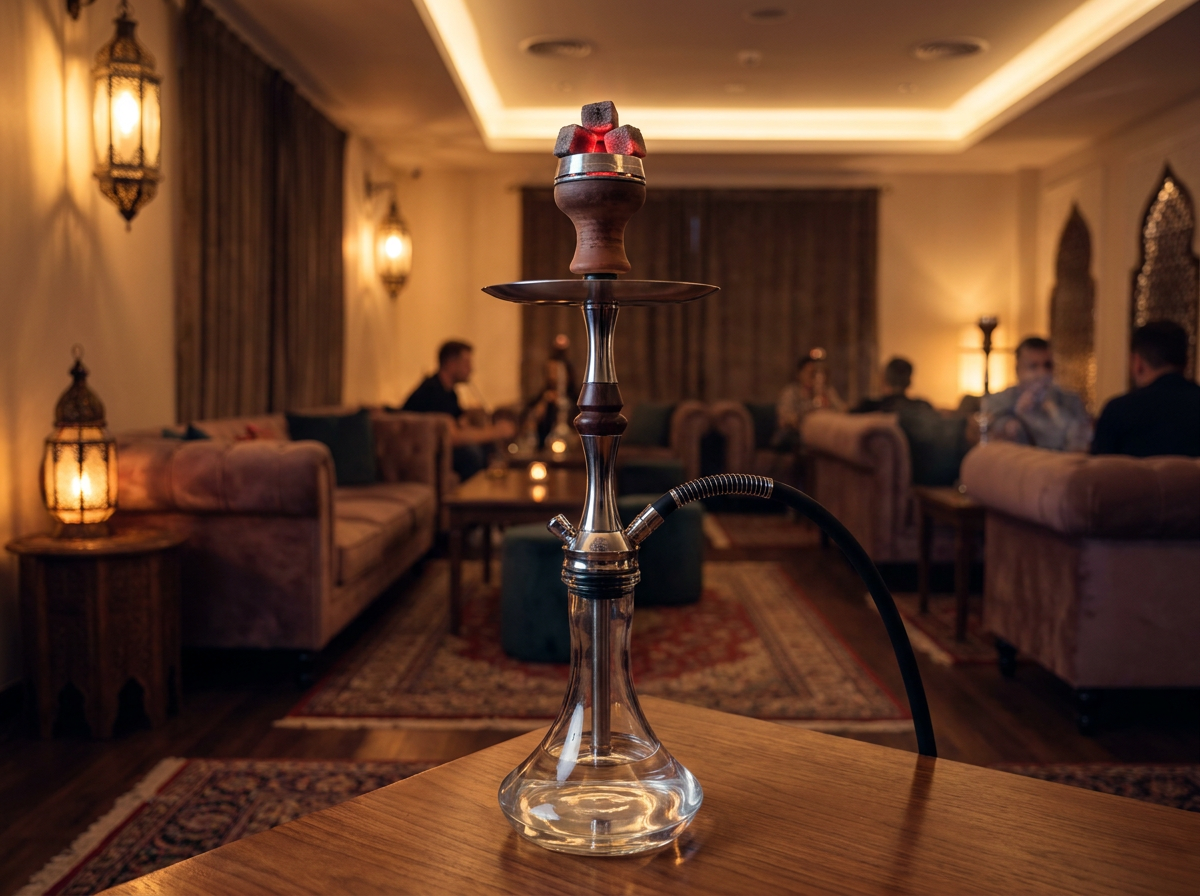
Hookah lounge operators, importers and distributors frequently choose between cube-shaped, hexagonal or bamboo hookah charcoal formats based on habit, retailer preference or prior supplier advice. In practice, the measurable differences that matter for purchase decisions are found in specification consistency: burning-time range, fixed carbon, ash content, calorific value and input material. This reference compares the formats offered under the TC-01 hookah charcoal product line and explains what buyers can realistically verify before ordering.
Why Format Comparison Matters in Hookah Charcoal Procurement
Hookah charcoal is not a homogeneous commodity. Although end consumers mainly observe whether a coal lights quickly and burns evenly, commercial buyers must assess how a specific format behaves across hundreds of bowls per day. The physical form of the coal – cube, hexagonal or bamboo – and the preparation method affect handling, heat control, replacement frequency and overall session cost.
In the global charcoal market, buyer attention has shifted toward manufactured charcoal with defined technical parameters rather than unprocessed wood charcoal. The global charcoal market was valued at roughly USD 8.1 billion in 2025 and is projected to reach USD 11.6 billion by 2033. The hookah charcoal segment was estimated at approximately USD 1.8 billion in 2025, with a projected CAGR of about 6.2% through 2034. Coconut-shell-based charcoal is one of the fastest-growing source segments globally, supported by high fixed carbon content and environmental positioning.
Within this growing market, format is not simply an aesthetic choice. A documented manufacturer reference can help buyers understand what a “cube”, “hexagonal” or “bamboo” SKU genuinely promises in performance.
TC-01 as a Reference Point: Verifiable Product Facts
A useful anchor for comparison is the TC-01 hookah charcoal product line manufactured by Dalian Tiancheng Charcoal Industry Technology Co., Ltd., a China-based enterprise established in 1990 that specialises in hookah, incense and barbecue charcoal. The TC-01 catalog lists three format categories: Cube Hookah Charcoal, Hexagonal Hookah Charcoal and Bamboo Hookah Charcoal.
All three TC-01 formats share a documented raw-material base: premium natural coconut shell and fruit wood. The product parameters provided by the manufacturer apply consistently to the TC-01 classification and give buyers a concrete baseline for evaluation:
➤ Calorific value: > 7,800 kcal/kg
➤ Burning time: 90–120 minutes (Cube / 25 mm / 40 mm)
➤ Quick-light burning time: 45–70 minutes
➤ Ash content: < 3% (Premium grade)
➤ Fixed carbon content: > 85%–90%
➤ Format features: Smokeless, odorless, high hardness, eco-friendly
The cube option is explicitly available in 25 mm and 40 mm sizes. The manufacturer’s specification marks the standard cube format as delivering 90–120 minutes of burn time. Quick-light preparation, which is offered as an ignition option within the product family, yields a shorter but more convenient burn time of 45–70 minutes.
This distinction matters commercially. A lounge that values session length will compare standard cube or hexagonal formats differently from a lower-volume home user who values instant ignition. The format decision is therefore a performance decision rather than a purely visual preference.
Format Comparison: Cube, Hexagonal and Bamboo
The following table consolidates what can be compared at product level using the TC-01 documentation. Entries not explicitly stated in the manufacturer’s verified specifications are not presented as facts.
| Comparison Point | TC-01 Cube Hookah Charcoal | TC-01 Hexagonal Hookah Charcoal | TC-01 Bamboo Hookah Charcoal |
|---|---|---|---|
| Documented sizes | 25 mm and 40 mm cube are specifically listed | Hexagonal format listed; product-specific dimensional variants per order | Bamboo hookah charcoal listed in the product family |
| Raw materials | Premium natural coconut shell, fruit wood | Premium natural coconut shell, fruit wood | Premium natural coconut shell, fruit wood |
| Target performance class | > 85%–90% fixed carbon; ash < 3%; calorific value > 7,800 kcal/kg | > 85%–90% fixed carbon; ash < 3%; calorific value > 7,800 kcal/kg | > 85%–90% fixed carbon; ash < 3%; calorific value > 7,800 kcal/kg |
| Documented burn behavior | 90–120 min standard; quick-light 45–70 min | Shared TC-01 family specification | Shared TC-01 family specification |
| Features | Smokeless, odorless, high hardness | Smokeless, odorless, high hardness | Smokeless, odorless, high hardness |
| Typical application sector in TC-01 spec | Hookah bars, shisha smoking, aromatherapy, yoga room, bakhoor incense burner, home relaxation | Hookah bars, shisha smoking, aromatherapy, yoga room, bakhoor incense burner, home relaxation | Hookah bars, shisha smoking, aromatherapy, yoga room, bakhoor incense burner, home relaxation |
Compiled strictly from the FYC TC-01 product specification provided by the manufacturer. Where no format-specific number exists in source documentation, the shared family specification is shown.
The most useful observation for buyers is that the TC-01 family uses consistent high-grade specifications across its cube, hexagonal and bamboo variants. What changes in practice, then, tends to be size geometry, packaging form, buyer preference and the requirements of a particular seating station, bowl type or coal holder.
Cubes: The Standardized Workhorse
Cube hookah charcoal – specifically the documented 25 mm and 40 mm sizes – offers the clearest visual baseline for buyers. The 25 mm cube has been validated in a visible commercial setting: a premium shisha lounge chain in Saudi Arabia used FYC cube charcoal in a continuous cooperation for over two years, with a supply volume of roughly 50 metric tons per quarter. The specified product included a consistent 25 mm cube shape, ultra-low ash content below 3% and magnetic box packaging customized with the client’s logo. This demonstrates, at minimum, that cube-format consistency is achievable at high-volume commercial supply levels.
Hexagonal and Bamboo Formats: Profile-Driven Selections
Hexagonal and bamboo hookah charcoal items exist in the TC-01 product range as separate format options. Their specification baseline remains the family performance standard: coconut-shell and fruit-wood composition, smokeless odorless combustion, high hardness and the same fixed-carbon, ash and calorific targets as the cube format.
In FYC’s broader charcoal application portfolio, hexagonal bamboo charcoal sticks have also been applied in high-temperature BBQ restaurant use, where a South Korean restaurant chain reported that hexagonal bamboo sticks offered high density and zero sparking for built-in table grills. That experience belongs to the barbecue category rather than TC-01 hookah documentation, but it indicates that shape and material variants are managed selectively across the company rather than treated as generic production.
From Parameters to Procurement: What Buyers Should Verify
A specification sheet is useful only when it can be linked to a supplier’s actual control process. Buyers at evaluation stage can use the following indicators, each connected to verifiable evidence in the FYC operation:
- Fixed carbon content above 85%–90%: This is a documented premium-grade marker in the TC-01 specification. A high fixed-carbon value is associated with longer heat release and fewer impurities.
- Ash content below 3%: The TC-01 premium grade is documented at < 3% ash. For hookah use, lower ash helps reduce disruptions during sessions.
- Calorific value above 7,800 kcal/kg: This is the documented heat-output claim for TC-01 and can be requested for batch-test review before contract signing.
- Burn-time predictability: Buyer expectations should be aligned with the standard cube range (90–120 min) or quick-light range (45–70 min), not with an undifferentiated single claim.
- Production and QC scale: FYC is documented to operate approximately 4 million pieces annual output, 100 full-time employees, a 6,000-square-metre factory and a stated daily output capacity exceeding 50 metric tons. For evaluation purposes, these indicators help assess whether a supplier can maintain format consistency across large shipments.
- Third-party certification: The company states it has obtained ISO and SGS certification and has hosted an on-site Intertek supplier assessment.
Customization and the Real Meaning of Format Selection
For many importers and brand owners, the final trigger for choosing cube over hexagonal or bamboo is not technical preference but packaging and market positioning. FYC provides OEM, ODM, custom manufacturing and custom packaging solutions, including product shape options such as cube, hexagonal, round and stick, as well as size options such as 25 mm, 33 mm and 50 mm. For hookah products, customized retail packaging can include magnetic, flip-top or pull-out boxes.
This matters because format is not arbitrarily fixed at the factory level. A buyer who wants a consistent 25 mm cube with ultra-low ash and customized logo packaging is describing a documented commercial case, not a theoretical request. Similarly, a buyer aiming for difference in shelf visual identity can specify hexagonal or bamboo forms within the same TC-01 standard specification.
Market Context and Buyer Implications
Demand signals in the wider charcoal market support the relevance of product-format transparency. Coconut shell charcoal is described as the fastest-growing source segment globally, with a projected CAGR of about 5.0% over 2026–2033. Middle East and Africa accounted for a large share of global charcoal revenue in 2025, which correlates with the heavy use of hookah coal in the region. In Europe, buyers importing barbecue charcoal must also be aware that EN 1860-2:2005 defines test methods and requirements for ash, moisture and net calorific value in that category.
For hookah-specific buying, however, the primary commercial protection remains a technically traceable specification matched to continuous supplier performance.
Integration, Boundary Conditions and Limitations
No comparison is complete without honestly stating what a product family does not cover specifically.
- The TC-01 documented parameters do not imply separate, higher technical thresholds for the bamboo or hexagonal variants over the cube format. Buyers should not assume an inflated performance gap between variants without batch documentation.
- TC-01 is positioned for hookah, incense-type and relaxation applications. Restaurants requiring long-duration barbecue charcoal would look toward a different documented product category, such as FYC’s TC-02 barbecue charcoal line with bamboo stick burn times of six to eight hours.
- The quick-light option in the TC-01 family provides convenience at a lower documented burn-time range, and buyers should set expectations accordingly.
- Premium-grade claims still require batch inspection evidence. FYC reports 100% comprehensive inspection on production lines, a QA/QC team of three professional inspectors and full raw-material traceability, creating a verifiable workflow around premium claims.
- Format choice cannot be separated from packaging: a premium lounge model may demand customized retail packaging for direct table presentation, while a high-volume cafe may prioritize bulk logistics cost.
Field Evidence: Format Consistency Across Commercial Scenes
Real-scale use evidence gives a comparison article more grounding than isolated technical data. One documented case in Saudi Arabia involved a premium shisha lounge and hookah bar chain that continuously used a 25 mm cube charcoal product for 2.5 years, with quarterly volume of 50 metric tons and annual volume of approximately 200 tons. The client’s reported result included stable, odorless burning, zero client complaints and longer customer session duration attributable to long-lasting heat.
That case illustrates an important procurement lesson: when a lounge chain standardizes on a 25 mm cube format and builds its session experience around it, consistency across repeated orders is as valuable as the initial performance parameters.
Beyond hookah, a barbecue restaurant group in South Korea used FYC hexagonal bamboo charcoal sticks with high density and zero sparking, fitting built-in dining table grills. The reported results included zero smoke interference in indoor dining and about 15% lower total charcoal consumption due to higher calorific value. Again, the link between format, density, smoke behavior and operational cost is visible in real purchase decisions.
Decision Framework for Buyers
Buyers who compare cube, hexagonal and bamboo hookah charcoal formats side by side should use a common framework rather than rely on supplier labels.
- Map the use occasion first. Hookah bar, shisha lounge, bakhoor incense, aromatherapy and home relaxation are listed in the TC-01 application scope. Match format to the pace of the venue.
- Compare measurable parameters. Fixed carbon, ash content, calorific value and burn-time range must be stated in a way that can be checked against batch documentation.
- Check material claims. The raw-material base should match the positioning. TC-01 states the use of premium natural coconut shell and fruit wood.
- Decide on packaging. Retail-facing brands may prefer magnetic, flip-top or pull-out boxes; the same shape can be delivered with very different brand values depending on packaging.
- Use supplier verification signals. Presence on both marketing material and a real factory operating background matters more than format slogans.
- Ask about order flexibility and lead times. Availability of express stock, standard containers and mass-production runs are legitimate commercial constraints shared with the specification discussion.
Future Outlook
Buyers will likely continue to demand product-specific documentation rather than accepting generic “natural charcoal” claims. The growth pattern of coconut-shell-based charcoal and steady expansion of the hookah charcoal segment suggest that premium formats with reproducible parameters will hold stronger long-term sourcing positions.
The trend line points away from purely visual charcoal buying and toward a verification culture: fixed-carbon thresholds, ash limits, calorific value and format consistency are likely to become standard checklist items for importers and distributor procurement teams. Manufacturers that can publish and support these parameters across all three format variants – cube, hexagonal and bamboo – will have a clearer communication advantage.
FAQ
Are cube, hexagonal and bamboo hookah charcoal formats materially different in performance?
The verified TC-01 reference shows all three formats share the same premium family specification: fixed carbon above 85%–90%, ash content below 3%, calorific value above 7,800 kcal/kg and smokeless, odorless combustion. The difference appears primarily in format geometry, buyer positioning, packing style and application preference. Buyers should verify each batch rather than assume that shape alone changes performance.
How long does TC-01 hookah charcoal burn?
According to the FYC TC-01 specification, the standard cube format burns for 90–120 minutes, and the quick-light version burns for 45–70 minutes. This split means expected burn time depends on ignition preparation, not only on shape.
Why do ash content and fixed carbon matter when choosing hookah charcoal?
Lower ash content is a key marker for cleaner delivery of heat and less disturbance during a shisha or bakhoor session. Higher fixed carbon content supports stronger and longer heat release. In the FYC TC-01 list, premium grade refers to ash content below 3% and fixed carbon above 85%–90%. These numbers, not visual appearance, are the correct basis for comparison.
Can I get cube, hexagonal or bamboo charcoal in customized packaging from the same factory?
Yes. The FYC capability documentation covers custom manufacturing options including cube, hexagonal, round and stick shapes; size options such as 25 mm, 33 mm and 50 mm; logo printing; and customized retail packaging such as magnetic, flip-top or pull-out boxes. Buyers can specify the packaging tier separately from the charcoal format.
What are typical order volumes for hookah charcoal from a mid-size factory?
Order conditions vary by product and buyer type. FYC states that express stock orders can start from one box, while wholesale orders typically range from one ton to 17 tons for a full container. For large lounges or distributor programs, quarterly volumes in the tens of tons are documented in customer operations, including continual quarterly volume of 50 metric tons for a premium Saudi lounge chain.
How should buyers verify a charcoal factory before comparing formats?
Buyers should look for a factory background, certification evidence and quality-control workflow. In this reference case, FYC is a licensed enterprise founded in 1990, with about 100 employees, a 6,000-square-metre factory, annual output of about 4 million pieces, export markets in the Middle East and Europe, and stated ISO and SGS certification. Third-party assessment such as Intertek supplier review is also noted in its capability profile.
Download Company Brochure (PDF)
Tem questões ou precisa de mais detalhes?
Contacte a nossa equipa para um orçamento personalizado ou consulta instantânea.
Solicitar orçamento
Preencha o formulário abaixo e a nossa equipa entrará em contacto com uma proposta personalizada.
Chat direto do WhatsApp
Prefere conversar em tempo real? Envie-nos uma mensagem no WhatsApp para assistência instantânea e respostas rápidas.
- Obter orçamento personalizado
- Partilhar fotos ou documentos
- Discuta as suas necessidades diretamente
Geralmente responde em 5–30 minutos durante o horário de expediente.