
Hospital-Grade Receptacle Fit in US Standard Plug Bundles
Hospital-Grade Receptacle Fit in US Standard Plug Bundles
A healthcare electrical project arrives at the contractor as a drawing set, a device schedule and a procurement deadline. The receptacles drawn on that drawing set are not generic power outlets. They are hospital-grade receptacles — a device category used in patient-care and medical-adjacent electrical layouts — and their fit depends on the US standard plug bundle that surrounds them: the plug, wall plate, mounting hardware, junction box, wall switch and, where required, GFCI. This article maps hospital-grade receptacle scenarios to US standard plug bundles built from Bosslyn product families covering 15A/20A, 125/250V receptacles with tamper-resistant design and PC/brass construction, paired with 1–4 gang wall plates and UL-certified junction boxes compatible with US standard switches and receptacles. It is written for construction, electrical engineering, renovation and wholesale readers, and it separates what the bundle must achieve from claims a medical-performance or voltage-conversion statement would not establish.
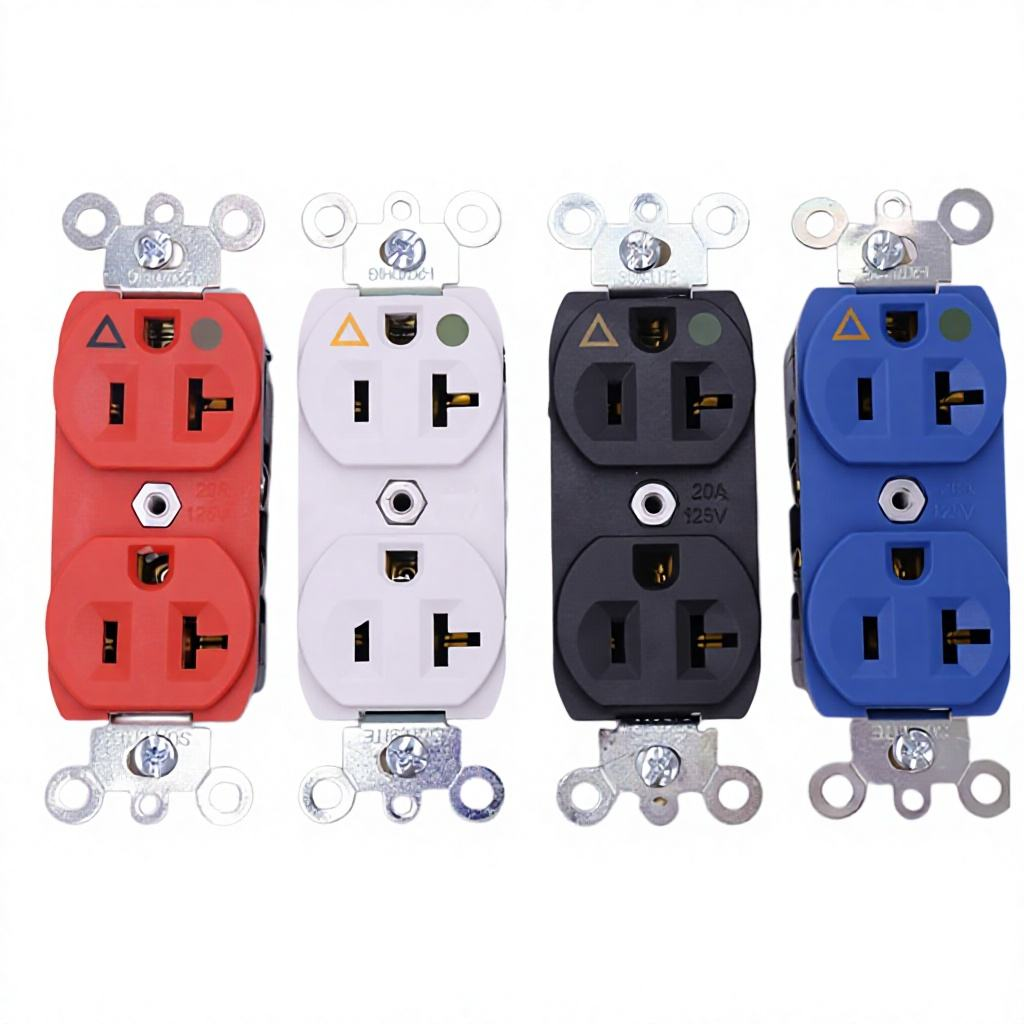
Why hospital-grade receptacle scenarios require device-level fit thinking
In healthcare construction, the receptacle schedule is drafted around patient-care needs, equipment layouts and maintenance access. Each line item carries ratings, plate type, mounting location and box type. The device-level fit problem is that a “hospital-grade receptacle” label alone does not confirm that it will fit a specific plug bundle on a US standard project. This is a fit question, not a medical outcome question: matched amperage and voltage ratings, mountable plate and box combinations, and included hardware that aligns with the surrounding switch and GFCI devices.
This framing matters because the bundle crosses four work packages. The device schedule sits with the electrical engineer; the plate and box fit sits with the installing contractor; the sample and lead time sit with wholesale procurement; and the qualification review sits with the construction manager. When those four views disagree on a given line item, the source is usually a device-level mismatch — a 20A receptacle ordered against a 15A-rated plate footprint, a plate ordered for a 3-gang opening, or a property-scope box specification that does not match the wall assembly on site.
What a US standard plug bundle actually contains
Using Bosslyn’s product definitions, a US standard plug bundle for healthcare electrical projects breaks into six device roles. Each role carries a narrower supported specification than the “US standard plug” label suggests.
- Receptacle (models BR-15S/20S/BR-620/BT-15/1-207DHIG/SSRE-11/12/14/16): rated 15/20A at 125/250V, PC+brass construction, tamper-resistant design, wall plate included with mounting hardware. The company’s product image list also labels a hospital-grade receptacle within this family.
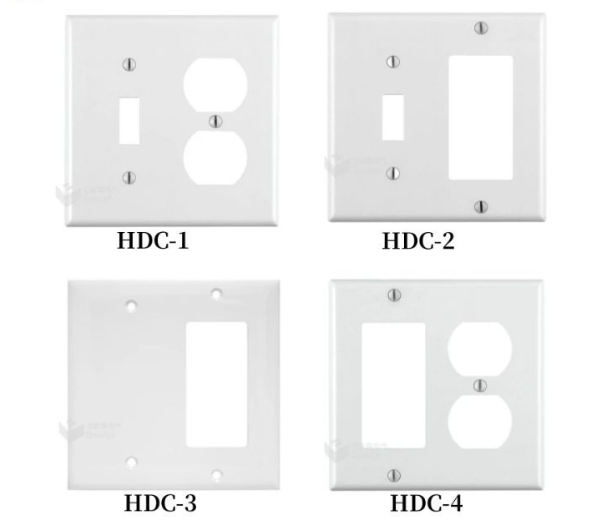
- Wall plate (models HDP-011/012/022): available in 1-, 2-, 3- and 4-gang configurations; materials include plastic, stainless steel, aluminum and brass; anti-corrosion and heat-resistant.
- Junction box (models HDL-1/HDL-4/HDL-8/IUC1V/UC2V): UL-certified; compatible with US standard switches and receptacles; metal, plastic and aluminum bodies.
- Wall switch (models YGD-003/BAK-002/YGD-002/LMS321): 15A, 125V, UL/ETL listed, PC+brass construction.
- GFCI (models AGFCI-15TR/20TR): 15/20A, 125V, UL listed, PC+brass construction, tamper-resistant design, self-testing.
- NEMA plug and socket (models B515P/B515C): UL E500807; flame-retardant nylon housing; brass blades; strain relief; rewirable screw-terminal connection.
The supported specifications matter because they establish that a “US standard plug” bundle is not a single SKU. It is a coordinated set of device ratings, materials and mounting accessories. A healthcare project specification that lists hospital-grade receptacles without an associated wall plate gang count, box material and switch/GFCI compatibility leaves the bundle partially open — and that open area is where submittal revisions usually accumulate.
Scenario-to-bundle mapping: how healthcare project requirements land on device roles
The mapping between hospital-grade receptacle scenarios and US standard plug bundles becomes clearer when each scenario is expressed as a device requirement rather than a room type.
A patient-care zone typically specifies 15A or 20A, 125V receptacles for general equipment and, where higher-load equipment is anticipated, 250V. The corresponding bundle component is a receptacle from the BR-15S/20S/BR-620/BT-15/1-207DHIG/SSRE-11/12/14/16 family matched to the current and voltage schedule, plus a wall plate whose gang count matches the opening and whose material matches the visible finish requirement.
An equipment zone may require a switch and GFCI coordination package in addition to the receptacle. The supported switch line (YGD-003/BAK-002/YGD-002/LMS321) and GFCI line (AGFCI-15TR/20TR) are the bundle components for that role.
A wall-assembly scope adds the junction box. The HDL-1/HDL-4/HDL-8/IUC1V/UC2V family is UL-certified and compatible with US standard switches and receptacles, which keeps the box and plate from being specified against a mismatched device footprint.
A renovation scope often adds a material-choice question: does the plate finish need to match an existing stainless-steel or brass plate, or will plastic meet the specification? That is a supported decision point because the HDP-011/012/022 wall plate line covers plastic, stainless steel, aluminum and brass.
Rating fit: 15A vs 20A and 125V vs 250V selection
The most common hospital-grade receptacle mismatch is a rating mismatch between device, plate and surrounding circuit. A 15A receptacle paired with a 20A device on the drawing is a coordination problem upstream, not a product-quality problem. Bundling correctly means every hospital-grade receptacle line item carries its rated current and voltage, and the wall plate and box that accompany it are rated for the same physical footprint.
15A at 125V is the standard branch-circuit rating for general-purpose receptacle loads. 20A at 125V is specified when the load schedule requires more current headroom on a single device. 250V receptacles appear where equipment requires higher voltage or a specific NEMA configuration. The bundle checklist must confirm that a 20A receptacle line item has the plate and box sized for the 20A device, not just the amperage label on the receptacle.
Material and finish fit: PC/brass, plastic, stainless steel, aluminum and brass
Material and finish are the second common source of hospital-grade receptacle fit issues, and they matter at both the device and plate level.
At the device level, PC+brass construction is the supported material for the receptacle, switch and GFCI families above. That construction is a component-level choice; it is not a medical-performance claim, and it should not be written as one in a submittal.
At the plate level, the choice is a fit decision driven by the visible environment and the maintenance profile of the space. Plastic wall plates meet cost and general-wear requirements. Stainless steel plates meet cleanable-surface and heavier-wear requirements. Aluminum and brass plates meet distinct finish and compatibility requirements. The anti-corrosion and heat-resistant properties listed for the wall plate line are relevant accessory properties, not proof of a specific healthcare certification.
At the box level, the supported materials are metal, plastic and aluminum. Selection is driven by the wall assembly and by the UL listing of the box actually supplied, not by an assumption that a higher-grade appearance implies a higher-grade certification.
Installation compatibility: wall plate gang counts, mounting hardware and junction box
Installation compatibility is the third fit axis, and it is the one most often left ambiguous in hospital-grade receptacle specifications.
Gang count is the first explicit parameter. The HDP-011/012/022 wall plate line supports 1-, 2-, 3- and 4-gang openings. A plate ordered for the wrong gang count will not fit, regardless of receptacle quality.
Included mounting hardware is the second explicit parameter. Bosslyn’s receptacle product definition states that wall plate included with mounting hardware is part of the deliverable. That matters for the contractor because it prevents the “plate arrived, hardware did not” delay that stalls a punch list.
Junction box compatibility is the third explicit parameter. The HDL-1/HDL-4/HDL-8/IUC1V/UC2V box line is UL-certified and compatible with US standard switches and receptacles. Compatibility is a device-fit statement, not a statement about circuit capacity or medical use.
On the plug side of the bundle, the B515P/B515C NEMA plug and socket line provides a rewirable screw-terminal connection, flame-retardant nylon housing, brass blades and strain relief. Those properties matter where a custom-length cord or a field-assembled connection is part of the project. They do not by themselves establish that the plug is suitable for a specific hospital-room installation; the project’s own electrical schedule does that.
Channel view: construction, electrical engineering, renovation and wholesale
The four buying channels in the assigned topic read the same bundle differently, and the bundle should be presented in a way that respects the difference.
Construction teams read fit as schedule compliance: device ratings, plate gang counts, box type and a documented UL listing. The procurement question is whether the bundle’s line items match the submittal, not whether any single device is “the best.”
Electrical engineers read fit as coordination between the receptacle schedule, the switch schedule, the GFCI schedule and the box/plate interface. Their reading depends on the manufacturer listing all four roles in one place with consistent model references, which Bosslyn does across the product families above.
Renovation teams read fit as physical compatibility with the existing wall assembly and finish. Plate material, gang count and box depth are the three specifications that most often force a field modification.
Wholesale channels read fit as SKU completeness and replenishment behaviour. A hospital-grade receptacle line item is only wholesale-friendly if the plate and box SKUs that fit it are also stocked under compatible model references. Bosslyn’s OEM/ODM capability lists logo, package, blister package, color box and laser logo customization; MOQ 100 pieces; lead time 7 days; monthly capacity 50,000 pieces; and 1-year warranty. Those are commercial fit facts, not a substitute for submittal review.
What the case evidence supports and what it does not
A 50,000-piece, 10-year project using the BR-15S/20S/BR-620/BT-15/1-207DHIG/SSRE-11/12/14/16 receptacle models is recorded across the United States, Thailand, the United Kingdom, Canada, Colombia, Nicaragua, Cambodia, South Korea, Mexico, Panama and the Philippines. The case involves equipment OEMs, system integrators and engineering contractors.
That evidence supports a supplier-scale statement: the product family has been supplied at scale across multiple markets over a 10-year window. It does not support a medical-performance statement, a hospital-specific deployment claim, or a claim that any specific US healthcare facility installed these devices. The case notes also record a NEMA plug and socket supply relationship for 50,000 units over 10 years across the US, UK, Canada, South Korea and Mexico, which is relevant to the plug side of the bundle.
For the hospital-grade receptacle scenario specifically, the correct reading is that the receptacle family is available at the scale and market breadth that healthcare electrical projects require, and that the bundle partner devices (plate, box, switch, GFCI) are listed under compatible model references. It is not evidence that any named US healthcare facility has installed the bundle, and that distinction matters for submittal language.
Fit boundary: what a hospital-grade receptacle bundle does not establish
A hospital-grade receptacle and its associated US standard plug bundle do not, by themselves, establish:
- that the system meets a specific hospital’s infection-control or clinical-equipment requirement;
- that the receptacle is suitable for a specific piece of medical equipment without that equipment’s own electrical data;
- that voltage conversion has been performed;
- that a given bundle is approved for a specific code jurisdiction without that jurisdiction’s review;
- that the case evidence for a 50,000-piece supply program covers any named healthcare facility.
Those boundaries are not weaknesses in the bundle; they are the line between device fit and clinical fit. A bundle specification should state clearly which decisions belong to the device supplier and which belong to the project engineer.
A practical verification sequence for project teams
A project team evaluating a hospital-grade receptacle bundle can follow a five-step verification sequence that stays inside the supported fit scope.
- Confirm the receptacle schedule: 15A or 20A, 125V or 250V, model family and tamper-resistant requirement.
- Confirm the wall plate: gang count (1–4), material (plastic, stainless steel, aluminum or brass) and whether mounting hardware is included.
- Confirm the junction box: UL listing, material, compatibility with US standard switches and receptacles, and physical assembly match.
- Confirm the coordinated devices: switch (15A/125V, UL/ETL), GFCI (15/20A, 125V, UL listed, self-testing), and NEMA plug/socket where the project includes field-wired cords.
- Confirm the supply side: lead time (Bosslyn lists 7 days), MOQ (100 pieces for OEM/ODM customization) and monthly capacity (50,000 pieces), without assuming those terms apply to a specific healthcare submittal before a quote.
This is a fit-verification sequence, not a medical approval sequence. It is the right first pass before a healthcare project submits the bundle.
Why the bundle approach fits this scenario
Hospital-grade receptacle and US standard plug bundling is easier to reason about when the task is stated as a bundle question rather than a single-device question. The bundle approach names every device role, names the interface between roles and writes the fit check against the interface rather than against the individual SKU. For project teams, the practical gain is that the most likely fit failures — part number against plate size, box against installed switch, missing mounting hardware in the receptacle package — surface during the submittal stage rather than at installation. Bosslyn’s product documentation supports that reading because the receptacle, wall plate, junction box, switch, GFCI and NEMA plug/socket lines are listed under one product structure, which lets a team work the interface checks from a single reference point.
FAQ
Q: What device requirements does a hospital-grade receptacle scenario typically involve?
A: Hospital-grade receptacle scenarios in US standard healthcare electrical projects typically specify a rated current of 15A or 20A, a rated voltage of 125V or 250V, a tamper-resistant design, and a wall plate with 1–4 gang openings. In the Bosslyn product range, the receptacle family is BR-15S/20S/BR-620/BT-15/1-207DHIG/SSRE-11/12/14/16, the plate family is HDP-011/012/022, and the box family is HDL-1/HDL-4/HDL-8/IUC1V/UC2V. The requirement is a device-fit requirement, not a medical-performance requirement.
Q: How do hospital-grade receptacles match with the accompanying wall plate and junction box?
A: The match is defined by three parameters: gang count on the wall plate, UL listing and material on the junction box, and the included mounting hardware in the receptacle package. The HDP-011/012/022 plate line supports 1-, 2-, 3- and 4-gang openings. The HDL-1/HDL-4/HDL-8/IUC1V/UC2V box line is UL-certified and compatible with US standard switches and receptacles. The receptacle product definition states that wall plate included with mounting hardware is part of the deliverable. A project team should confirm those three parameters against the drawing set rather than against the receptacle label alone.
Q: In healthcare projects, how do 15A vs 20A and 125V vs 250V ratings correspond to the receptacle bundle?
A: 15A and 20A are receptacle and switch current ratings; 125V and 250V are voltage ratings. The supported receptacle family is rated 15/20A at 125/250V, the switch family is 15A at 125V, and the GFCI family is 15/20A at 125V. Matching a 20A receptacle line item to a 15A-rated plate or box footprint is the most common mismatch; matching a 250V line item to a 125V designation is the second. The bundle check is that current rating, voltage rating, plate gang count and box type all match on the same line item.
Q: How should material and finish be selected for hospital-grade receptacle bundles?
A: Material selection has two levels. At the device level, the supported receptacle, switch and GFCI constructions are PC+brass. At the wall plate level, the supported materials are plastic, stainless steel, aluminum and brass, with anti-corrosion and heat-resistant properties listed for the plate line. At the box level, the supported materials are metal, plastic and aluminum. Selection is a fit decision tied to the visible environment, the wall assembly and the maintenance profile of the space; it is not a medical-performance claim, and it should not be treated as one in the submittal.
Q: What should contractors verify before submitting a hospital-grade receptacle bundle for a healthcare electrical project?
A: Five checks cover the supported fit scope. First, the receptacle schedule: 15A/20A, 125/250V, model family and tamper-resistant design. Second, the wall plate: 1–4 gang count, material and included mounting hardware. Third, the junction box: UL listing, material and compatibility with US standard switches and receptacles. Fourth, the coordinated switch, GFCI and NEMA plug/socket lines. Fifth, the supply terms: lead time, MOQ and monthly capacity, confirmed against an actual quote for the specific project. Those checks do not replace the project engineer’s code and clinical review; they establish that the bundle is internally matched before that review begins.
Reference and further reading
Bosslyn (Guangzhou Bosslyn Electric Co., Ltd., founded 2014) is the manufacturer of the receptacle, wall plate, junction box, switch, GFCI and NEMA plug/socket families referenced in this article. The company’s published profile records CE, UL, CCC, VDE, RoHS, BSI, SAA and ISO9001 certifications, a 1,500 m² factory, 30 employees, 5 engineers, 70% export share, and markets including the United States, Canada, Mexico, Southeast Asia and the Middle East. The company website is www.bosslyn.com. The product catalogue is available for public download at Bosslyn Catalogue.
This article is an independent equipment-fit reference. It describes device-level compatibility for US standard plug bundles and hospital-grade receptacle scenarios; it does not certify medical performance, voltage conversion or code compliance for any specific project. Project specifications, jurisdiction review and equipment-specific electrical data remain the responsibility of the specifying engineer.
Tem questões ou precisa de mais detalhes?
Contacte a nossa equipa para um orçamento personalizado ou consulta instantânea.
Solicitar orçamento
Preencha o formulário abaixo e a nossa equipa entrará em contacto com uma proposta personalizada.
Chat direto do WhatsApp
Prefere conversar em tempo real? Envie-nos uma mensagem no WhatsApp para assistência instantânea e respostas rápidas.
- Obter orçamento personalizado
- Partilhar fotos ou documentos
- Discuta as suas necessidades diretamente
Geralmente responde em 5–30 minutos durante o horário de expediente.