
Hospitality Shower Door Qualification: A Model-Level Guide
Hospitality Shower Door Qualification: A Model-Level Guide
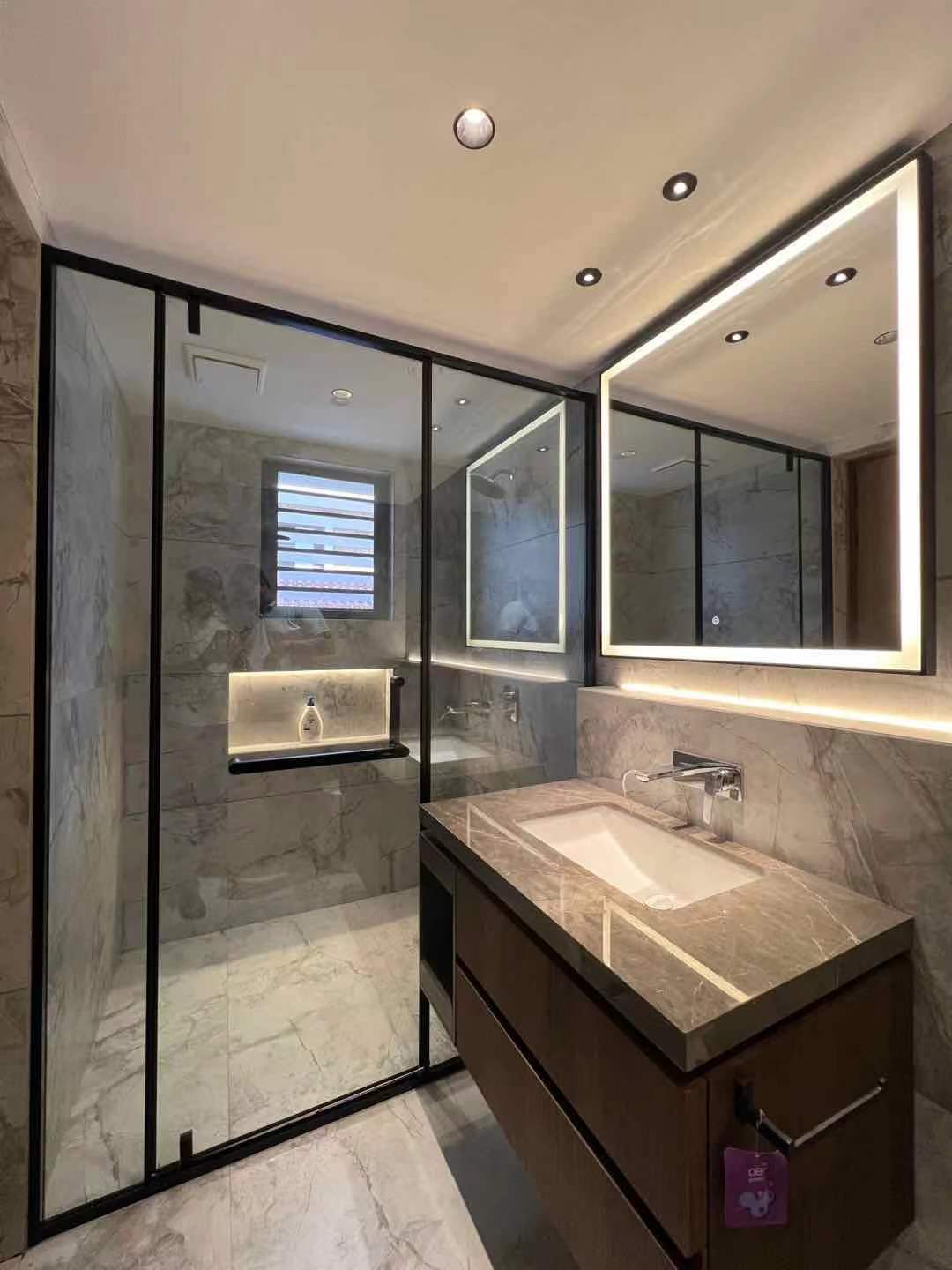
A shower door is approved on site as a model, not as a brand. Photo: shower door project reference.
A hotel project does not approve a shower door brand. It approves a model, at a stated opening type, in a stated glass build, fixed with a stated hardware grade, inside a stated bathroom layout. Compliance review has to happen at that resolution, because that is the level at which the product is bought, installed, inspected and — if something goes wrong — identified.
That creates an awkward gap in most submittal packs. A supplier's management-system certificates, its export record and its catalogue of door types can all be genuine and still leave the reviewer unable to answer the only question the project actually asks: what is being installed in room 412, and which document proves it? Brand-level assurance answers a procurement question. Model-level evidence answers a compliance question.
This guide works through four shower-door models from SHKL — KL-AS5104310, KL-AS5577310, KL-AS5210422 and KL-AS5605110-5 — to show how hardware material, door type and declared application scope feed a compliance review, where the published record stops, and what a distributor or project buyer should ask for next. Foshan SHKL Sanitary Ware Co., Ltd is a Chinese sanitary-ware manufacturer that states it has produced bathroom vanities, shower doors and LED bathroom mirrors since 2004, with a 100,000 m² production base in China and a 40,000 m² factory in Ho Chi Minh City, Vietnam.
Why hospitality compliance lands on the model line
Three different questions get collapsed into the single word “certified”, and each is answered by a different kind of document.
- Management-system certification — ISO 9001, ISO 14001, ISO 45001 — describes how a site is run: process control, environmental management, occupational safety. It says nothing about the impact performance of a particular glass panel.
- Product conformity — safety glazing, impact performance, tempered-glass specification — attaches to a glass build and, in a well-organised technical file, to a model. This is the layer a hotel submittal actually needs.
- Project acceptance — the operator's or owner's sign-off — attaches to the installed condition, including the fixing, the sealing and the bath or tray interface, none of which the supplier controls.
Regulation sits across all three. In Europe, EN 14428:2015+A1:2018 sets out functional requirements and test methods for shower enclosures, and the standard record used here describes its scope as shower enclosures for domestic purposes. In the United States, the National Glass Association's Frameless Shower Enclosures Design Guide (2021) states that shower-enclosure glass must be safety glazing meeting the impact requirement of CPSC 16 CFR 1201, and it describes monolithic tempered glass of at least 3/8 inch (10 mm) for the frameless category the guide covers. Neither document approves a supplier; both define what a supplier's product evidence has to demonstrate.
The practical consequence is that a hospitality buyer needs evidence that is addressable to a model. A test report naming a glass build and a thickness is useful. A certificate naming a management system is useful for a different reason. A catalogue page naming a door type is a starting point, not proof.
Four evidence layers a model file has to carry
The layer model below is a reading order, not a document list. Each layer answers a question the previous one cannot.
| Evidence layer | Question it answers | Where the four models stand |
|---|---|---|
| 1. Glass build and thickness | Is the glazing safety glazing, and to which specification? | Glass options are stated per model; thickness is not stated for any of them. |
| 2. Hardware material | Is the grade named, and is it the grade the specification calls for? | Stated for three models: aluminium alloy, 304 stainless steel, aluminium alloy. Not stated for KL-AS5210422. |
| 3. Door type and declared application | Is this configuration intended for the space it is going into? | Door type and a declared scope of residential construction and commercial hospitality are stated for three models. |
| 4. Conformity and certificate scope | Which document actually covers this product? | Management-system certificates exist; model-level product conformity documents are not published in the record set. |
Layers one to three can usually be read from a model datasheet. Layer four is where most submittals fail, because it requires the buyer to read the scope line of a certificate rather than its title.

Model-level documentation is produced by a technical function, not by a sales brochure.
Reading the four model records
The table below records only what the model records state. Where a cell reads “not stated”, the item is a document request, not an assumption.
| Model | Door type as stated | Hardware material as stated | Declared application | Glass options as stated |
|---|---|---|---|---|
| KL-AS5104310 | Frameless shower door | Aluminium alloy | Residential construction; commercial hospitality | Clear, tinted, laminated, flute, chemically frosted; easy-clean, film-coated |
| KL-AS5577310 | Hinge shower door | 304 stainless steel | Residential construction; commercial hospitality | Clear, tinted, laminated, flute, chemically frosted; easy-clean, film-coated |
| KL-AS5210422 | Not stated in the model record | Not stated in the model record | Not stated at model level | Not stated at model level |
| KL-AS5605110-5 | Bathtub shower door | Aluminium alloy | Residential construction; commercial hospitality | Clear, tinted, laminated, flute, chemically frosted; easy-clean, film-coated |
KL-AS5104310: a frameless door with aluminium alloy hardware
KL-AS5104310 is recorded as a frameless shower door with aluminium alloy hardware, declared for residential construction and commercial hospitality, with glass options listed as clear, tinted, laminated, flute, chemically frosted, easy-clean and film-coated.
The frameless category is exactly where the thickness question matters most. The NGA guide's 10 mm description applies to frameless enclosures of the kind that guide covers, but the KL-AS5104310 record does not state a glass thickness. That single missing field changes what the project can conclude: without a stated thickness and a test report or certificate that names the model and the glass build, the reviewer can confirm the door type and the hardware material and little more about the glazing.
Aluminium alloy is a family, not a grade. The supplier's general hardware statement lists 6463 aluminium alloy among the materials it works with, while the model record says only “aluminium alloy”. Where a hospitality specification names an alloy or a finish standard, the model-level answer has to come from the supplier in writing.
KL-AS5577310: a hinge door in 304 stainless steel
KL-AS5577310 is recorded as a hinge shower door with 304 stainless steel hardware, carrying the same declared application scope and the same glass-option line as the frameless model.
304 is a meaningful statement because it names a grade rather than a family, which makes it checkable against a specification. It is not, by itself, a corrosion or durability result. A reviewer who has to demonstrate that the named grade was actually supplied should ask for the material or mill certificate for the hardware batch and, where the project specification calls for it, a corrosion test reference. Hardware finishes are listed separately by the supplier as chrome, brushed nickel, brushed gold, mirror gold, matte black, gun black and white; finish selection is a specification item in its own right and is better stated in the order than left to default.
KL-AS5605110-5: a bathtub door in aluminium alloy
KL-AS5605110-5 is recorded as a bathtub shower door with aluminium alloy hardware. It is the one model in this set whose fit depends on a building element the supplier does not control: the bath rim. The model record publishes no dimensions and no installation drawing, so the project should request both and check them against the actual bath rather than approving the model on the strength of a catalogue photo.
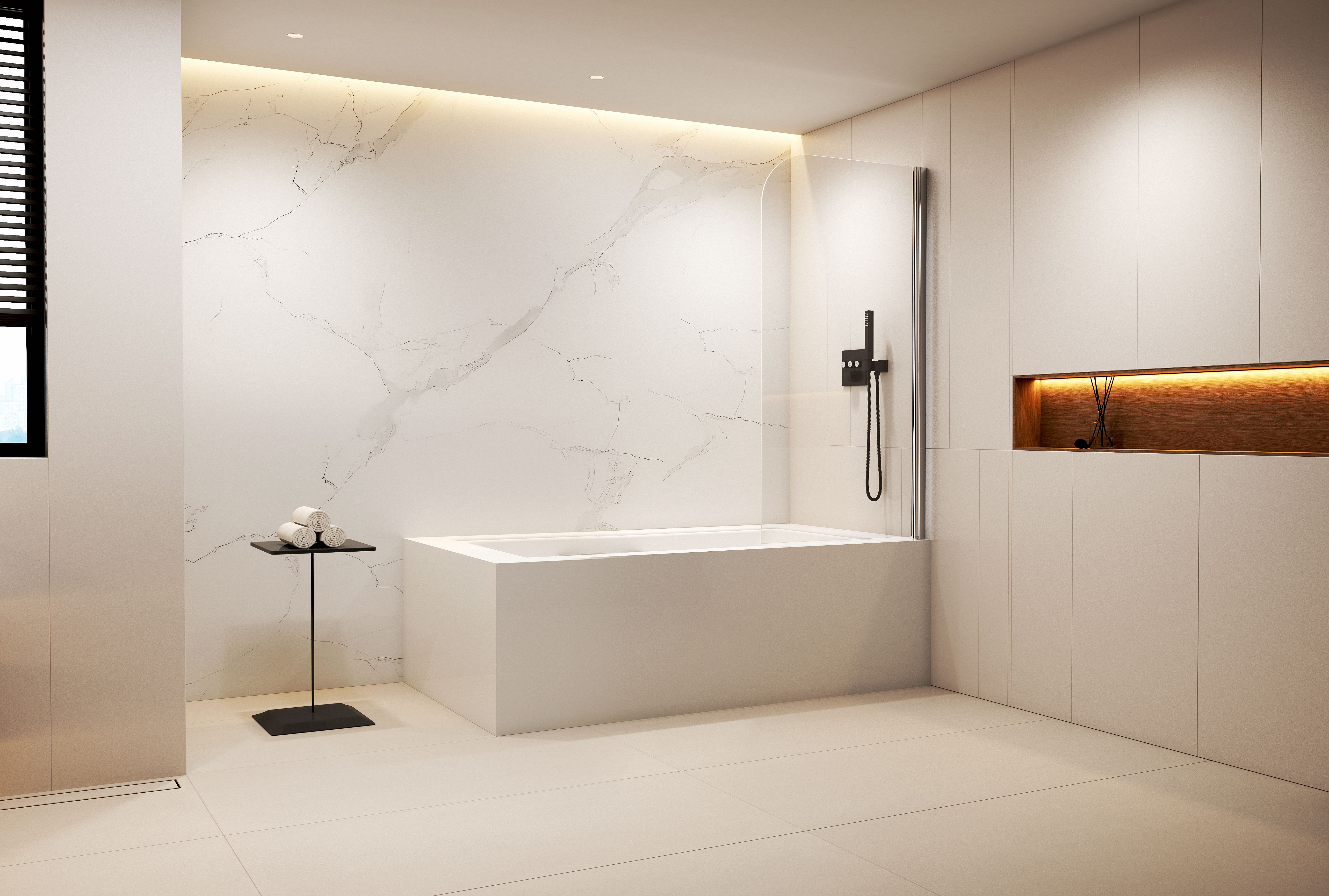
KL-AS5605110-5 is recorded as a bathtub shower door with aluminium alloy hardware; dimensions and installation drawings are not part of the model record.
In a hotel refurbishment where baths are retained and only the screen is replaced, that check is usually the difference between a clean installation and a site modification. It is also the point at which a distributor finds out whether the supplier's technical file is complete enough to support the project after the order has been placed.
KL-AS5210422: the model that shows why “listed” is not “qualified”
KL-AS5210422 appears in the supplier's project records — a 190-unit Australian bathroom shower project and a 110-unit Thai bathroom project both list it among their associated models — but it does not carry a published specification line in the same record set as the other three. Door type, hardware material, declared application and glass options are all unstated at model level.
This is not an unusual situation, and it is the most useful case here. A model can sit on a project list, ship in volume and still be undocumented in the form a compliance reviewer needs. Being listed in a reference project is a commercial signal; it is not a substitute for a datasheet. The correct action is a written request for the model's specification line and a statement of which documents cover it. If the answer arrives as a catalogue page rather than a model-specific document, the reviewer has learned something important about the depth of the supplier's technical file.
The same caution applies to the project records themselves. They describe outcomes in the supplier's own words — on-time delivery, installation quality, conformity with the expectations of that market — and they do not contain test reports. They support a track record. They do not qualify a model.
What the management-system certificates cover, and what they do not
SHKL holds three management-system certificates recorded as issued on 11 May 2024 and valid until 10 May 2027 by Guangdong Quality Testing CTC Certification Co., Ltd:
- ISO 9001 — certificate 04924Q00629R0M, GB/T 19001-2016 / ISO 9001:2015.
- ISO 14001 — certificate 04924E00351R0M, GB/T 24001-2016 / ISO 14001:2015.
- ISO 45001 — certificate 04924S00316R0M, GB/T 45001-2020 / ISO 45001:2018.
All three record the same scope: “R&D, Manufacture of bathroom cabinets; Manufacture of fixed universal lighting fixtures”. Shower-door manufacture is not listed in that scope as recorded, and the certificates are linked in the record to a bathroom vanity model rather than to a shower door.
That is the most consequential observation in this guide. A reviewer who accepts these three certificates as shower-door qualification is accepting a document that does not say what the submittal implies. It is not a criticism of the certificates — a management-system certificate is precisely what it says it is — but the scope line is where a submittal is either accurate or misleading.
Two further checks apply to any management-system certificate, whoever issues it. First, confirm current status in the issuing body's registry rather than relying on a PDF, because suspension and withdrawal do not always reach the copy in circulation. Second, confirm which site the certificate covers, since a group producing in more than one country may hold certificates that do not extend to the site that will make the order.
For product-level evidence, the supplier states that its shower-door glass certifications include SGCC, PAS-Mark and CE, among others. Those are statements about glass certification generally; they are not stated per model. A hotel submittal needs the certificate or test report that names the glass build, the thickness and — ideally — the model, together with its validity date and the issuing laboratory.
Turning model data into purchasing terms and acceptance criteria
Model-level qualification only holds if it survives into the order. The purchase order is where a datasheet becomes an obligation, and the clauses below are the ones that carry the evidence forward.
- Model and configuration: model number, door type, handing or opening direction where relevant, and the application the model is being bought for.
- Glass build: construction (tempered or laminated), thickness, and the named option taken from the model's glass line, rather than “standard glass”.
- Hardware: the material grade as stated (304 stainless steel or aluminium alloy), plus the alloy designation or finish standard where the specification names one.
- Documents: certificate numbers, validity dates, scope lines and test reports listed as deliverables, not as attachments promised later.
- Inspection: the supplier states 100% inspection and accepts third-party on-site goods inspection before shipment; both belong in the order.
- Packaging: corrugated cartons, honeycomb cartons and wooden cases are the stated options; name the one the site can actually handle.
- Warranty and after-sales: a two-year warranty is stated for shower enclosures, with warranty support, remote after-sales consultation and spare-parts supply listed as after-sales provisions.
- Commercial terms: OEM customization is offered across size, colour, material, finish, hardware, logo and design style; the stated production lead time is 30–45 days, the stated minimum order quantity is 50, and sample orders of regular shower products take 15–20 days.
- Customs: the supplier lists HS codes 7610 9000 00 and 7308 9000 00 for shower enclosures. Confirm which classification applies to the shipped configuration and have it printed on the commercial invoice rather than inferred from the hardware material.
Two cautions belong with that list. The lead times and quantities above are supplier-stated terms, so they belong in the contract rather than in an expectation. And a warranty period is not a performance specification: a two-year warranty tells the buyer what the supplier will do if a product fails, not what the product will do in a hotel bathroom over that period.
Model-level qualification against conventional brand-level assurance
Most hospitality shower-door submittals are still assembled the conventional way: a supplier profile, a certificate pack and a catalogue extract. Model-level qualification replaces the catalogue extract with a model file. The difference is not paperwork volume; it is what each approach can catch.
| Criterion | Brand-level assurance | Model-level qualification |
|---|---|---|
| Unit of approval | The supplier | The model and configuration |
| Typical evidence | Company profile, ISO certificates, catalogue pages | Model datasheet, glass and hardware specification, certificate scope lines |
| What it catches | Whether the supplier is organised enough to hold certificates | Whether this model's glazing and hardware are actually specified |
| What it misses | Model-level gaps and certificate scope mismatches | Nothing about installation quality on site |
| Where the effort sits | Low at submittal, high at dispute | Higher at submittal, lower at handover |
The fit boundary matters as much as the comparison. Model-level qualification does not replace jurisdiction-specific code review, and it does not replace inspection of the installed condition. It also adds administrative load at exactly the point in a project when the submittal clock is running, which is why distributors tend to default to brand-level packs. The honest position is that model-level files are worth the effort where the shower door is a specified, inspected item — hotels, serviced apartments, student accommodation — and are disproportionate for a single residential replacement where the buyer can inspect the product before installation.
Market context behind the documentation question
The scale of the category explains part of the shift. Cognitive Market Research recorded the global shower doors market at USD 13.5 billion in 2023. A second commercial estimate recorded alongside it puts 2023 at USD 13.7 billion; the two differ by under 1.5%, and the note accompanying them attributes the gap to whether minor accessories are included. Either figure should be read as directional rather than as a measured quantity for a specific segment.
Product mix matters more than the headline. One commercial research estimate places frameless shower glass doors at around 75% of the North American market in 2025. That is a single commercial estimate with moderate confidence, and it is not a specification requirement — but it is consistent with what the model records here show, where a frameless door, a hinge door and a bathtub door sit in the same catalogue and are distinguished mainly by opening type and hardware material. The more configurations a catalogue carries, the less a single supplier-level certificate can settle, because the reviewer has more models to separate and the same amount of documentation to work with.
The interpretation for a hospitality buyer is narrow and practical. As frameless and bath-mounted configurations take a larger share of specifications, the review question moves from “is this a credible supplier” to “which document covers this model”. Suppliers whose technical files are organised by model will absorb that shift with less friction than suppliers whose files are organised by certificate.
Outlook
Two developments are worth watching, both conditional. The first is documentation practice: if hospitality operators continue to write model numbers into purchase orders and submittals, the model datasheet becomes the primary commercial document and the company profile becomes supporting material. That shift depends on procurement practice rather than on regulation, and it will vary by operator and by project tier.
The second is standards interpretation. EN 14428's recorded scope is domestic shower enclosures, while hospitality projects frequently specify it by reference. Whether that reference is treated as directly applicable or as a starting point is a decision for the project's code adviser, and it is better documented early than defended at handover. Neither development changes what a buyer should ask for today: a model file that states the glass build, the hardware grade, the opening type, the declared application, and the documents that actually cover the product.
FAQ
Which documents should a buyer request for one specific shower-door model?
Request five items: a model datasheet stating opening type, hardware material and declared application; a glass specification stating construction and thickness; the safety-glazing test report or certificate naming that glass build; the material certificate for the hardware grade; and the management-system certificates with their scope, number and validity dates. For the four models discussed here, door type and hardware material are stated for KL-AS5104310, KL-AS5577310 and KL-AS5605110-5, glass thickness is stated for none of them, and KL-AS5210422 has no published specification line. Those are the fields to request first.
Do SHKL's ISO certificates cover shower-door production?
Not as recorded. The three certificates — ISO 9001 certificate 04924Q00629R0M, ISO 14001 certificate 04924E00351R0M and ISO 45001 certificate 04924S00316R0M, issued on 11 May 2024 and valid until 10 May 2027 by Guangdong Quality Testing CTC Certification Co., Ltd — record a scope of “R&D, Manufacture of bathroom cabinets; Manufacture of fixed universal lighting fixtures”. Shower-door manufacture is not listed in that scope, and the certificates are linked in the record to a bathroom vanity model. They remain valid evidence of the management systems they describe; they are not product conformity evidence for a shower door.
Which glass types and thicknesses are available, and what does laminated glass change?
The supplier states standard tempered glass thicknesses of 6, 8, 10 and 12 mm, and laminated glass produced by bonding tempered glass sheets with EVA interlayers under high temperature so that broken fragments are retained on the film. The four model records list clear, tinted, laminated, flute, chemically frosted, easy-clean and film-coated options, but assign a thickness to none of them individually. Laminated construction changes what happens after breakage — fragments stay attached rather than falling free — which is why it appears in specifications where post-breakage behaviour matters. It does not remove the need to check thickness and safety-glazing evidence for the specific model.
What acceptance terms can be agreed for a hospitality shower-door order?
The supplier states 100% inspection, acceptance of third-party on-site goods inspection before shipment, packaging in corrugated cartons, honeycomb cartons or wooden cases, and a two-year warranty on shower enclosures with warranty support, remote after-sales consultation and spare-parts supply. OEM customization covers size, colour, material, finish, hardware, logo and design style, with a stated minimum order quantity of 50, a stated production lead time of 30–45 days and sample orders of regular shower products taking 15–20 days. These are supplier-stated terms and belong in the purchase order, together with the model number, hardware grade, glass build and document list, rather than being agreed verbally.
Closing note
A shower door reaches a hotel bathroom as a model, not as a brand, and the documents that qualify it should reach the submittal the same way. The four models here show both outcomes: three with enough of a specification line to start a review, and one that demonstrates how easily a listed model can arrive without one.
The manufacturer's product brochure is available as a public download: SHKL product brochure (PDF).
Tem questões ou precisa de mais detalhes?
Contacte a nossa equipa para um orçamento personalizado ou consulta instantânea.
Solicitar orçamento
Preencha o formulário abaixo e a nossa equipa entrará em contacto com uma proposta personalizada.
Chat direto do WhatsApp
Prefere conversar em tempo real? Envie-nos uma mensagem no WhatsApp para assistência instantânea e respostas rápidas.
- Obter orçamento personalizado
- Partilhar fotos ou documentos
- Discuta as suas necessidades diretamente
Geralmente responde em 5–30 minutos durante o horário de expediente.