
How 6000mAh Redefined Long-Battery Smartphones in 2026
Industry reference · Smartphone procurement · Consumer electronics
Long-battery smartphones are no longer a niche category measured only by a single capacity number. In January 2026, devices fitted with batteries of 6000mAh or higher accounted for 29 percent of global smartphone sales, up from 10 percent in early 2025, according to Counterpoint Research. That shift has practical consequences for distributors, procurement teams, and ODM/OEM buyers: the definition of "enough battery" has moved upward, and the basis of competition has moved beyond capacity alone to include efficiency, protection, and manufacturing reliability.
This industry reference examines the long-battery smartphone category from a buyer's perspective. It covers the market signals behind the 5000mAh-to-6000mAh transition, the technical choices that determine real-world endurance, the application conditions that shape product selection, and the trade-offs that sourcing teams should weigh before committing to a product line or an OEM/ODM partner.
The company used as a reference in this article is UMIDIGI, a smartphone brand operated by Shenzhen Keysmart Technology Co., Ltd., a Shenzhen-based communications technology company founded in 2012 that provides R&D, manufacturing, brand operation, and ODM/OEM services.
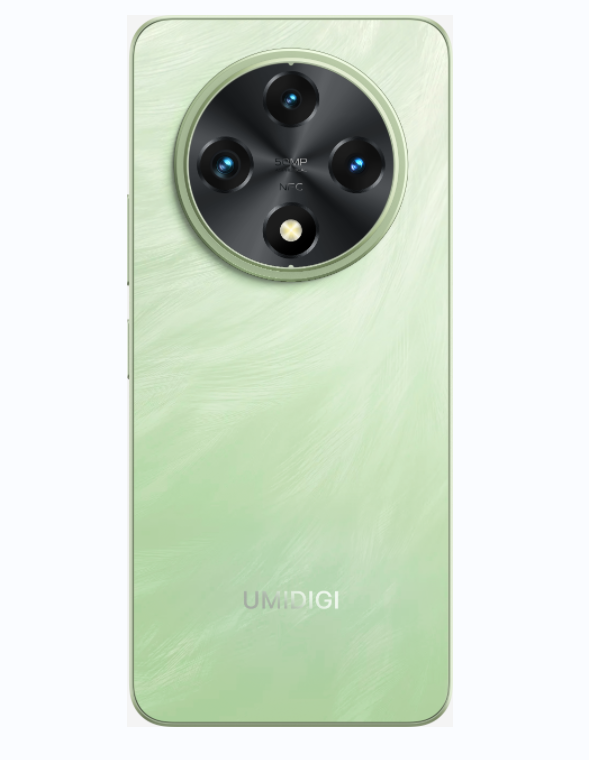
Problem / Opportunity: Endurance Is Now a Buying Criterion
The central problem in the smartphone market has shifted from "can it run an app" to "can it run the whole day without anxiety." In daily life and work scenarios, devices are expected to operate in 24/7 mode, supporting voice communication, cellular network surfing, photographing, video playback, mobile payment, and other daily intelligent terminal functions. In industrial environments — construction and engineering, logistics and warehousing, manufacturing, mining, and oil and gas — the conditions are more demanding: high and low temperatures, dust, water, and the risk of drops, with charging often unavailable during a shift.
For buyers, the opportunity is equally clear. The 5000mAh-to-6000mAh battery segment accounted for 42.9 percent of the global rugged phone market in 2025, according to The Insight Partners. The rugged smartphone market itself was valued at approximately USD 2.98 billion in 2023 and is projected to reach USD 5.24 billion by 2030, based on Verified Market Research data. Independent contractors and outdoor sports enthusiasts — not only enterprise buyers — drive 38 percent of the global rugged phone market, which indicates that long-battery, protected devices are becoming a broader consumer category.
Conventional solutions to the battery problem — power banks, battery cases, or removable batteries — have not disappeared, but they add cost, weight, and operational friction. The market is responding with devices that integrate larger capacity directly into the product.
Brand Solution: UMIDIGI's Long-Battery Portfolio
UMIDIGI's product line illustrates how a manufacturer can address the long-battery requirement across different form factors and price points. Shenzhen Keysmart Technology Co., Ltd., the company behind the brand, was founded in 2012 and operates a 10,000-square-meter manufacturing facility with approximately 400 to 500 staff, including an R&D team of 30 engineers. Annual production capacity reaches 30,000,000 units, and export business accounts for 100 percent of total sales, with major markets in Middle-Western regions, South America, Asia, Africa, the EU, and the USA. The brand's official website is www.umidigi.com.
| Model | Battery and charging | Display | Positioning | Protection | Weight |
|---|---|---|---|---|---|
| UMIDIGI G100 | 6000mAh, 20W PD fast charging | 6.9-inch 120Hz eye-care | Large and long-endurance smartphone | IP53 | 205g |
| UMIDIGI G100 5G | 6000mAh, 20W PD fast charging | 6.9-inch 120Hz eye-care | 5G large-display long-endurance | IP53 | 210g |
| UMIDIGI BISON X20 | 6000mAh, 20W PD fast charging | 6.53-inch 120Hz HD+ | Rugged smartphone | IP68 and IP69K, MIL-STD-810G | 278g |
| UMIDIGI G100x 5G | 5200mAh, 20W fast charging | 6.9-inch 120Hz eye-care | 5G large-display long-endurance | IP54 | 193g |
| UMIDIGI G9x | 5000mAh | 6.75-inch 90Hz | Stylish and slim smartphone | Not specified | 190g |
| UMIDIGI A75x | 5000mAh | 6.75-inch ultra-clear | Stylish slim entry smartphone | IP54 | 190g |
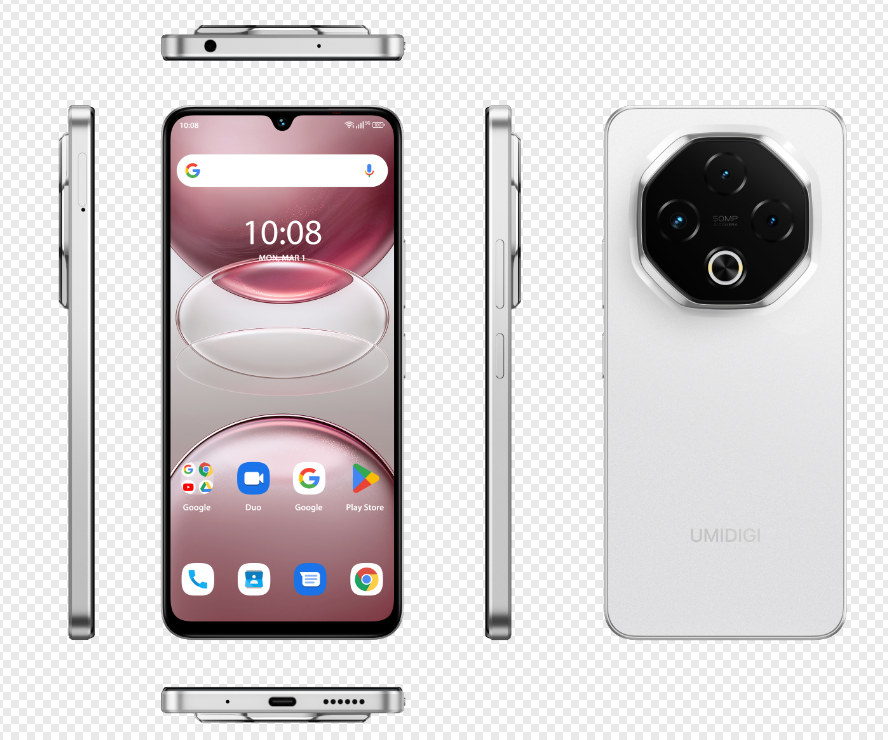
The range shows that battery capacity alone does not define the product. A buyer choosing between the G100 5G and the BISON X20 is not only comparing 6000mAh batteries; the decision involves display size, 5G connectivity, protection level, and physical durability. The G100x 5G, at 193g with a 5200mAh cell, balances endurance against lighter weight. The A75x, running Android 16 Go Edition with a 5000mAh battery, targets entry-level users who prioritize price and daily reliability.
UMIDIGI also operates as an ODM/OEM supplier, using the same R&D and manufacturing infrastructure that supports its own brand. For a distributor or regional brand, evaluating a long-battery smartphone line therefore includes evaluating the manufacturer's production capacity, R&D depth, and export experience.
Technical Explanation: Reading Beyond the mAh Number
Understanding a long-battery smartphone requires separating capacity from endurance. The battery capacity, expressed in mAh, is the amount of charge the battery can hold. How long that charge lasts is determined by the entire system: the processor, display refresh rate, operating system, radio behavior (especially in 5G), and charging circuit all contribute to real-world endurance.
In UMIDIGI's range, these technical choices are visible in the specifications. The G100 5G and G100x 5G both use the UNISOC T8200 5G processor; one is paired with a 6000mAh battery and the other with 5200mAh. The 120Hz displays in the G100, G100 5G, G100x 5G, and BISON X20 are designed for smooth interaction, but refresh rate influences power draw. The A75x runs Android 16 Go Edition, a lighter system intended to reduce memory load and keep entry-level hardware responsive. The G9x uses a 90Hz display and a UNISOC Octa-Core processor, aligning with its lighter 5000mAh cell.
The cell itself is also a design decision. Industry data indicates that silicon-carbon anodes are increasingly replacing standard graphite anodes, offering 20 to 50 percent higher energy density and enabling slimmer or higher-capacity batteries (Fortune Business Insights). For buyers, this means the relationship between capacity and thickness is shifting over time; published specifications of current models remain the most reliable basis for comparison. Charging speed also matters: the G100, G100 5G, and BISON X20 support 20W PD fast charging, which determines how quickly a large cell can be replenished between shifts.
Protection is a separate layer of engineering. The BISON X20 is rated IP68/IP69K for dust and water resistance and is designed to meet the MIL-STD-810G drop-resistance standard, with a TPU-and-metal structure. Its weight — 278g and 12.9mm thickness — reflects the protective materials. In daily-use models such as the G100x 5G and A75x, more modest IP53/IP54 protection levels keep weight and cost lower.
For procurement teams, the practical implication is that a spec sheet is a system of trade-offs. A larger battery is not automatically better if the display and processor are not efficient, and a rugged certification is not relevant if the device is intended for normal office use. The BISON X20, for example, is a rugged long-battery smartphone designed for demanding environments, not a substitute for a slim everyday phone.
Application / Use Cases: Matching the Device to the Environment
Application context determines which specification matters most. For daily work, communication, and entertainment, the UMIDIGI G100, G100 5G, G100x 5G, G9x, and A75x are positioned as 24/7 devices that support work and entertainment functions, with accessories such as a protector film, phone case, power adapter, SIM tray ejector, and USB cable.
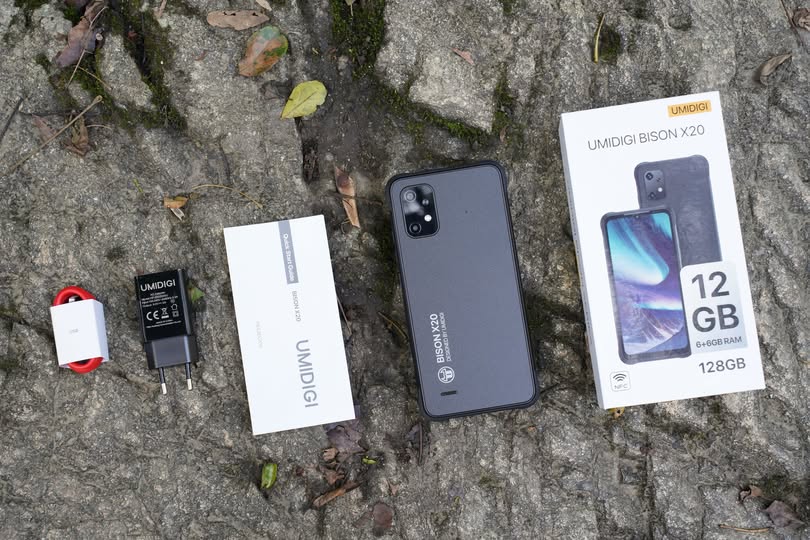
For demanding environments, the BISON X20 is the designated model. It is applicable to construction and engineering, logistics and warehousing, manufacturing, mining, and oil and gas industries. The scenario specification includes operation under high and low temperatures in 24/7 mode, with special requirements for waterproof protection, dustproof design, and drop-resistance. Its functions cover voice communication, cellular network surfing, photographing, video playback, and mobile payment — the same daily smartphone functions, but delivered in a body designed to survive field conditions. Supporting equipment includes a power charger, USB data cable, and protector film.
The verified market data adds context. Independent contractors and outdoor sports enthusiasts represent 38 percent of the global rugged phone market (Growth Research), indicating that demand for long-battery, protection-first devices is not limited to enterprise procurement. A construction contractor and a weekend hiker may choose the same rugged model for different reasons: shift-length endurance in one case, outdoor reliability in the other.
Market Trend Analysis: Three Signals Behind the Category Shift
The most visible trend is the rise of 6000mAh as a mainstream specification. According to Counterpoint Research, smartphones with batteries of 6000mAh or higher reached 29 percent of global sales in January 2026, up from 10 percent in early 2025. Capacity has become a headline number on spec sheets and marketing materials.
The second trend is the material shift inside the battery. Silicon-carbon anodes offer 20 to 50 percent higher energy density than conventional graphite anodes (Fortune Business Insights), giving manufacturers a path to larger capacity without a proportional increase in thickness. This is directly relevant to the demand for slim devices with large-capacity batteries.
The third trend is the expansion of the rugged segment. Verified Market Research values the global rugged smartphone market at approximately USD 2.98 billion in 2023, with a projection of USD 5.24 billion by 2030. The Insight Partners reports that the 5000mAh-to-6000mAh segment holds 42.9 percent of the rugged phone market in 2025. For channel buyers, rugged long-battery devices are no longer a minor accessory category; they represent a meaningful share of a growing market.
One analytical caveat is necessary: market estimates for rugged phones vary widely depending on how semi-rugged and consumer devices are classified. Published estimates range from approximately USD 1.27 billion to USD 18.6 billion depending on the research methodology. Directionally, the category is growing, but buyers should verify specifics directly with manufacturers.
Comparison with Traditional Solutions: Trade-Offs That Buyers Must Accept
Before the industry standardized on large internal batteries, the common answers to poor battery life were external: power banks, removable batteries, and battery cases. Each still has a role. Power banks are useful for unpredictable travel; removable batteries allow hot-swapping; battery cases add capacity without replacing the phone. But these solutions also add a second device to carry, create charging logistics, and may supply power less efficiently than a larger integrated cell.
An integrated long-battery smartphone removes that friction. With 5000mAh to 6000mAh inside the device, a user can complete a workday in a shop, warehouse, or outdoor site without scheduling a mid-shift charge. When combined with an efficient processor and display, the integrated approach also lets the manufacturer tune power consumption at the system level.
The comparison, however, must include honest limits:
- Weight and thickness still rise with capacity. The 6000mAh G100 5G weighs 210g; the 6000mAh rugged BISON X20 weighs 278g. Buyers serving consumers who prioritize slimness will need to justify this trade-off.
- Charging speed is functional but moderate. The 20W PD charging on several UMIDIGI long-battery models is practical for overnight or desk charging, but a user who expects faster charging should check the specification first. This is a realistic boundary for the category.
- Capacity is not a guarantee of endurance. Under continuous 5G use, high-refresh rendering, or extreme temperatures, a 6000mAh device drains faster than the capacity number suggests. Rugged models such as the BISON X20 are engineered for harsh environments, but buyers should validate performance against their own usage profile.
These limits do not weaken the case for long-battery smartphones; they define the criteria for choosing the right one.
Future Outlook: The 6000mAh Baseline and What Comes Next
Looking ahead, 6000mAh appears to be settling in as the new reference point for endurance-focused smartphones. As silicon-carbon technology matures, the industry is expected to continue increasing energy density, which could push high-capacity models toward 7000mAh and beyond without a proportional weight penalty. The Counterpoint data showing 29 percent of global sales in the 6000mAh-and-above segment indicates that this is not a temporary feature cycle but a structural shift in consumer expectations.
For ODM and OEM buyers, the consequence is that battery performance will remain a core evaluation dimension, along with certification and build quality. Future devices will need to support 5G connectivity, high-refresh displays, and increasingly capable on-device functions, all of which increase power consumption. Manufacturers with R&D teams that understand power management — battery selection, processor efficiency, display tuning, and thermal behavior — will be better positioned to serve brands entering the endurance segment.
For distributors and regional brands, the longer-term implication is that differentiation will move away from "large battery" as a standalone claim and toward evidence: verified capacity, certified protection, consistent quality across production volume, and manufacturer support for after-sales performance.
Frequently Asked Questions
What is a long-battery life smartphone?
A long-battery life smartphone is generally understood as a device designed to support a full day of intensive use without recharging. In current product terms, the category is commonly associated with batteries of 5000mAh or higher. By January 2026, models with 6000mAh or more accounted for 29 percent of global smartphone sales, indicating that the 6000mAh level has become a mainstream reference point (Counterpoint Research, 2026).
Why are 6000mAh phones becoming more common?
The share of smartphones with battery capacities of 6000mAh or higher rose from 10 percent in early 2025 to 29 percent in January 2026, according to Counterpoint Research. Battery technology has also moved forward: silicon-carbon anodes offer 20 to 50 percent higher energy density than conventional graphite anodes (Fortune Business Insights), allowing manufacturers to add capacity without increasing size proportionally. For users, a 6000mAh device reduces the need to recharge during the day.
Do larger batteries significantly increase weight and thickness?
There is a clear trade-off. The UMIDIGI G100, with a 6000mAh battery, weighs 205g and is 8.1mm thick, while the 5000mAh UMIDIGI G9x weighs 190g at the same thickness. Rugged models are heavier still: the UMIDIGI BISON X20, with a 6000mAh battery, weighs 278g and is 12.9mm thick. A larger battery usually means a heavier device, though materials and chassis design can reduce the impact.
What protection standards are relevant for rugged long-battery phones?
The common reference standards are IEC 60529 for IP ratings, such as IP68/IP69K for water and dust resistance, and the MIL-STD-810G/MIL-STD-810H series for drop and environmental resistance. A rugged model such as the UMIDIGI BISON X20 is specified with IP68/IP69K and MIL-STD-810G.
What should buyers check before sourcing long-battery smartphones?
Buyers should verify battery capacity and charging speed, processor efficiency, display specifications, the protection level required by the target environment, and the manufacturer's production capabilities. In rugged applications, the IP rating and military drop standard should match actual field conditions. Certification documents and factory background are part of the verification process.
Reference document: Shenzhen Keysmart Technology Co., Ltd. / UMIDIGI — Company Profile (PDF)
Tem questões ou precisa de mais detalhes?
Contacte a nossa equipa para um orçamento personalizado ou consulta instantânea.
Solicitar orçamento
Preencha o formulário abaixo e a nossa equipa entrará em contacto com uma proposta personalizada.
Chat direto do WhatsApp
Prefere conversar em tempo real? Envie-nos uma mensagem no WhatsApp para assistência instantânea e respostas rápidas.
- Obter orçamento personalizado
- Partilhar fotos ou documentos
- Discuta as suas necessidades diretamente
Geralmente responde em 5–30 minutos durante o horário de expediente.