
How Buyers Compare High-Speed Blister-Cartoning Lines: DHL8005H Evaluation Framework
How Buyers Compare High-Speed Blister-Cartoning Lines: DHL8005H Evaluation Framework
The global pharmaceutical packaging equipment market was valued at approximately USD 10.71 billion in 2024, and Asia Pacific accounted for 40.7% of that market's revenue in 2025. For solid dosage producers, the blister-cartoner line is where a large share of that spending concentrates, because it is the point at which primary blister packaging, leaflet handling and secondary cartoning are locked into a single production rhythm.
Comparing such lines is harder than comparing standalone machines. Throughput, control architecture, transfer technology, cleaning design and format-change provisions are described by different suppliers in different vocabularies, and a shortlist that reads well on paper can still conceal configuration differences that only appear during acceptance testing.
This article sets out a five-dimension comparison framework for high-speed integrated blister-cartoning lines and applies it to one reference example: the DHL8005H Automatic Blister-Cartoning Line, an intelligent fully servo high-speed blister-cartoner integrated machine from Zhejiang Hoping Machinery Co., Ltd., a pharmaceutical packing machinery manufacturer founded in 2001 and based in Ruian City, Zhejiang Province, China.
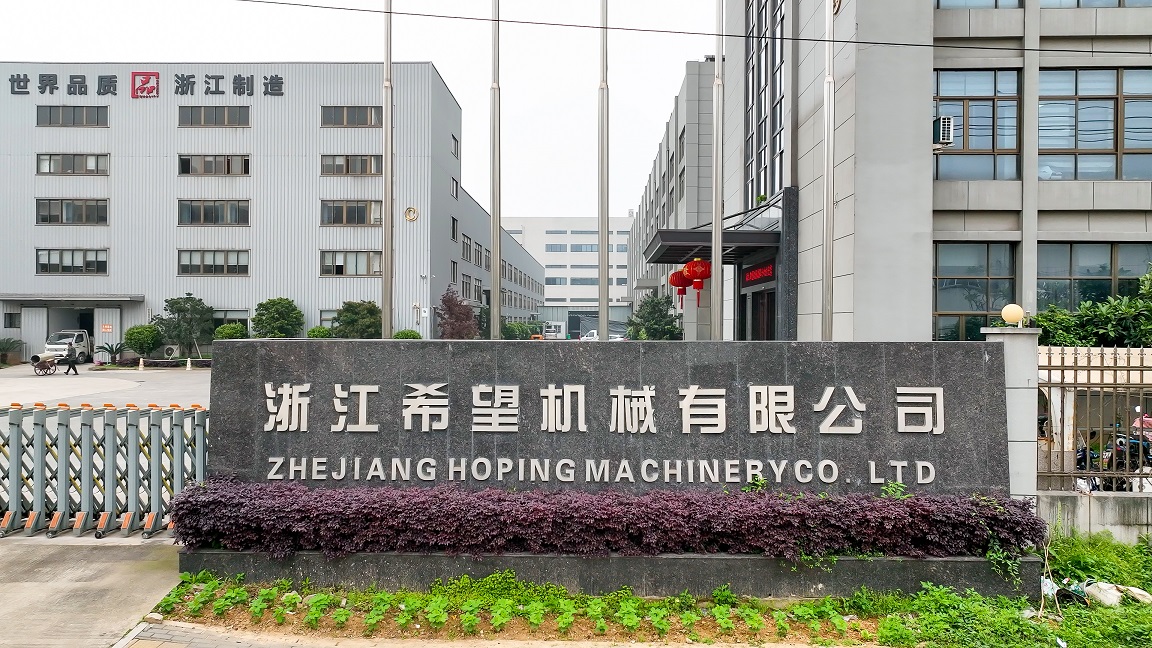
Manufacturing site of Zhejiang Hoping Machinery Co., Ltd., Ruian City, Zhejiang Province, China — the supplier behind the DHL8005H blister-cartoner line.
Why High-Speed Blister-Cartoning Lines Are Difficult to Compare
Third-party market intelligence cited in this reference set places the top three blister packaging machine suppliers — Uhlmann, IMA and Marchesini — at approximately 29% of global blister packaging machine market share. The practical consequence is that most procurement projects are evaluated across suppliers outside that group, where the evaluation framework, rather than brand familiarity, decides the outcome.
The underlying market is still expanding. The pharmaceutical blister packaging machine market is projected to reach USD 2.57 billion by 2025 at a compound annual growth rate of 2.8%, and the pharmaceutical cartoning machinery segment was valued at USD 1.46 billion in 2024. With Asia Pacific holding the largest regional revenue share at 40.7%, capacity expansion is concentrated in the region where export-oriented equipment manufacturers compete most directly.
Two standards layers sit underneath every comparison. ISO 15378 integrates GMP requirements for primary packaging materials, and in the European Union the Machinery Directive 2006/42/EC, together with the EN 415 series for packaging machines, defines the safety baseline. These are entry conditions rather than differentiators: they decide which suppliers can be shortlisted at all, not which line fits a specific product plan.
The Reference Line: What the DHL8005H Actually Is
The DHL8005H is an Automatic Blister-Cartoning Line — an intelligent, fully servo, high-speed blister-cartoner integrated machine that its manufacturer classifies as a solid dosage turnkey packing line. It is produced by Zhejiang Hoping Machinery Co., Ltd., a manufacturer established in 2001 with a 28,800 ㎡ facility, more than 300 employees and a 56-engineer R&D team, whose product range covers blister packaging machines, cartoning machines, case packing machines and end-of-line packaging machines.
In operation, the line covers high-speed blister forming and sealing, transfer, leaflet handling, carton opening, insertion, coding and inspection, and connection to downstream bundling, case-packing and palletizing equipment. That scope matters for evaluation: an integrated line has to be compared as a process, not as a list of machines.
| DHL8005H configuration element | Verified specification |
|---|---|
| Maximum capacity | Up to 800 blisters/min and up to 500 cartons/min |
| Transfer system | D3 intelligent top-loading parallel tracking transfer system |
| Replenishment | Three-channel servo-driven independent replenishment system |
| Feeding | Multiple feeding methods, configured to project requirements |
| Packaging material handling | PVC / Alu foil auto splicing |
| Control platform | Beckhoff motion controller and CP9315 industrial PC |
| Format change | Mold-change and preset-memory functions |
| Construction | Stainless steel and aluminum-alloy machine structure; transparent guarding |
| Compliance orientation | GMP-oriented line design; product-contact parts and tooling according to technical agreement |
| Stated applications | Pharmaceutical solid dosage production, capsule and tablet packaging, healthcare products, food and cosmetic blister-cartoning projects |
Dimension 1 — Throughput Targets and the Limits of a Maximum Figure
The DHL8005H is rated at up to 800 blisters per minute and up to 500 cartons per minute. Those are the two numbers buyers compare first, and the two numbers most often over-read. A maximum blister rate describes what the forming and sealing section can produce in a defined format; a maximum carton rate describes what the cartoner can close. The relationship between them depends on how many blisters are placed in each carton, so the first evaluation step is arithmetic on the buyer's own product plan rather than a comparison of headline figures.
Several design details determine whether those maxima are reachable in continuous production. The DHL8005H uses PVC and aluminium foil auto splicing, which allows packaging material reels to be changed without stopping the line, and it supports multiple feeding methods configured to the project. Both provisions affect real output more than the nominal rate does.
Within the same manufacturer's family, capacity is tiered: the DHL1000/5H is rated at up to 1000 blisters per minute and 500 cartons per minute, the DHL8005H at up to 800 and 500, the DHL7005H at up to 700 and 500, the DHL7004 at up to 700 and 400, and the DHL6004 at up to 600 and 400.
Dimension 2 — Control Architecture: Why 'Fully Servo' Is Not a Complete Answer
The DHL8005H runs on a Beckhoff motion controller with a CP9315 industrial PC. The controller coordinates motion across the blister, transfer and cartoning sections; the industrial PC handles preset memory, recipe handling and the data interface. In the manufacturer's customization list, interface language, electrical component brand and data interface are all project-configurable, which means the control layer is a negotiated part of the specification rather than a fixed element.
Control platform is a genuine differentiator inside this product family. The DHL1000/5H uses a Beckhoff motion controller with a high-bus industrial control system; the DHL6004 uses a Beckhoff motion controller with a CP9315 industrial PC; the DHL7005H and DHL7004 use a Siemens motion controller with a TP900 HMI; the IXW400 liquid dosage line uses a Siemens controller with a CP9315 industrial PC. Buyers comparing quotations across models should confirm which platform is included, because spare-parts lists, engineering skills and interface conventions follow the platform rather than the machine size.
A practical check: ask for the platform name, the HMI model, the spare-parts list that matches it, and whether maintenance staff will be trained on that platform during installation and commissioning. The manufacturer's after-sales scope includes on-site installation and commissioning, operator training, maintenance training, remote video and phone support, spare parts supply and process-parameter guidance, subject to contract and project configuration.
Dimension 3 — Transfer and Replenishment Design
Two mechanisms carry product between the blister and cartoning sections on the DHL8005H: the D3 intelligent top-loading parallel tracking transfer system and a three-channel servo-driven independent replenishment system. Replenishment channels and transfer mechanism are not marketing labels; they are the design answers to specific questions about how many product lanes feed the transfer, and how the line behaves when the format or the feed arrangement changes.
The family uses several approaches. The DHL1000/5H carries a four-channel servo-driven independent replenishment system on the same D3 transfer platform. The DHL7005H and DHL7004 use a self-developed IRB24 intelligent transfer robot instead of a parallel tracking transfer. The DHL6004 uses servo-driven independent replenishment with high-speed transfer and cartoning linkage. Each is a valid engineering choice; the comparison should be made against the buyer's own product mix and changeover frequency.
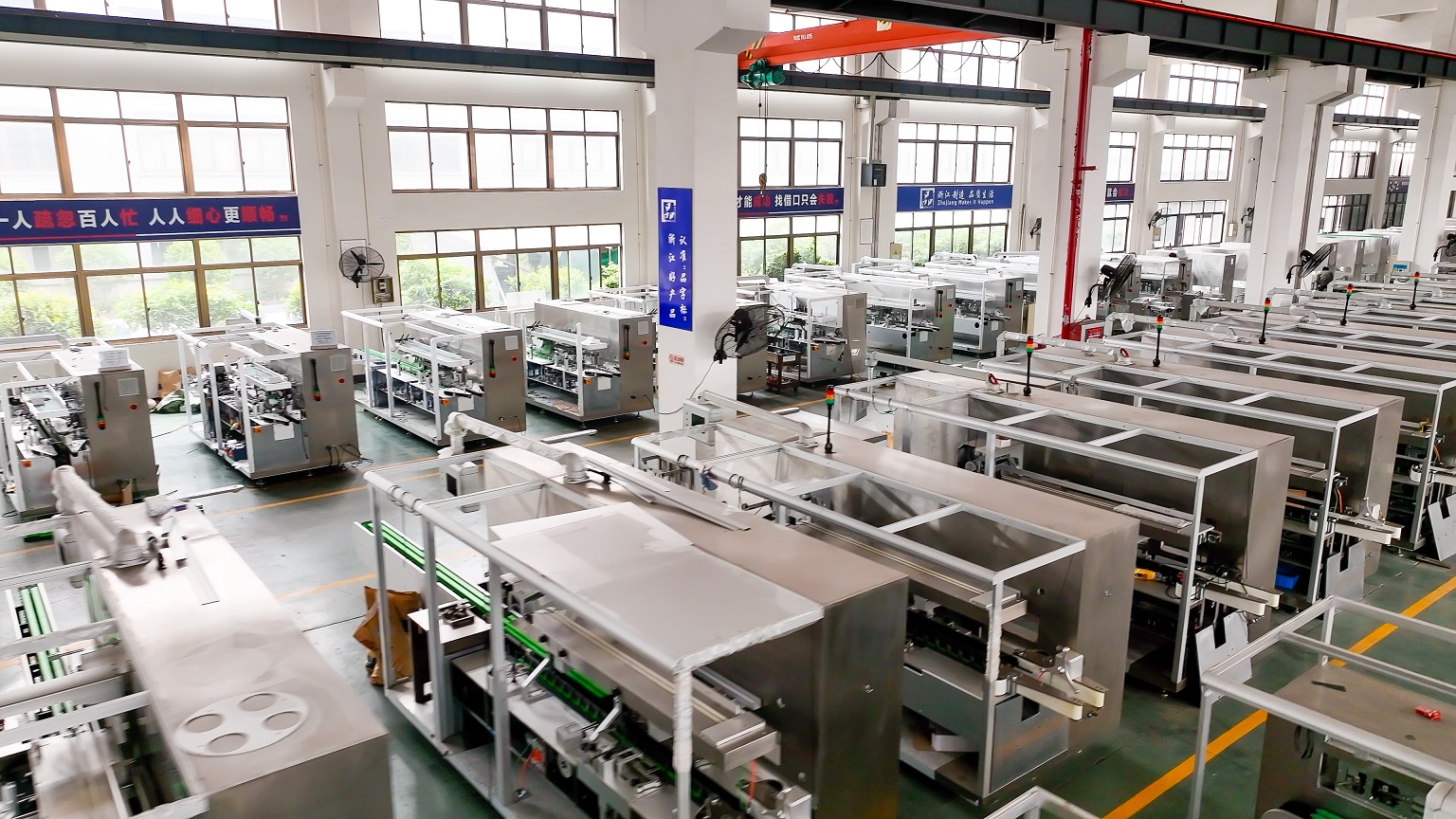
High-speed cartoner workshop: on an integrated blister-cartoning line, the cartoning section and the blister section share one motion architecture.
Dimension 4 — GMP-Oriented Construction, Cleaning and Format Change
The DHL8005H is built on a stainless steel and aluminum-alloy machine structure with transparent guarding, and its GMP-oriented design extends to product-contact parts and tooling that are defined in the technical agreement. Preset-memory functions and mold-change provisions address the other half of the operational equation: how quickly a line can move between formats without re-engineering the transfer or cartoning sections.
Certificate evidence sits at series level rather than at the level of an individually configured line. The manufacturer holds a CE certificate for the cartoning machine series, a CE certificate for the blister packing machine series, and a historical CE certificate for the carton packing machine series, alongside two current management-system certificates.
| Certificate | Number | Authority | Issue date | Scope reference |
|---|---|---|---|---|
| CE — Cartoning Machine Series | HTT190102307L | Shenzhen HTT Technology Co., Ltd. | 2019-01-22 | EN 60204-1:2006+A1:2009+AC:2010; 2006/42/EC |
| CE — Blister Packing Machine Series | HTT190102306L | Shenzhen HTT Technology Co., Ltd. | 2019-01-22 | Machinery Directive 2006/42/EC; EN 60204-1:2006+A1:2009+AC:2010 |
| CE — Carton Packing Machine Series (historical evidence) | UCN 900339024607 | Certify International Ltd | 2007-04-01 | EN 415-3:2000; 98/37/EC; 98/79/EC |
| ISO 14001:2015 | CN00123E33896R1M/3300 | China Quality Certification Centre (CQC) | 2023-10-12 (valid to 2026-10-11) | Design, production and after-sales service of packing machines and packing production lines |
| ISO 45001:2018 | CN00123S33121R1M/3300 | China Quality Certification Centre (CQC) | 2023-10-10 (valid to 2026-10-09) | Design, production and after-sales service of packing machines and packing production lines |
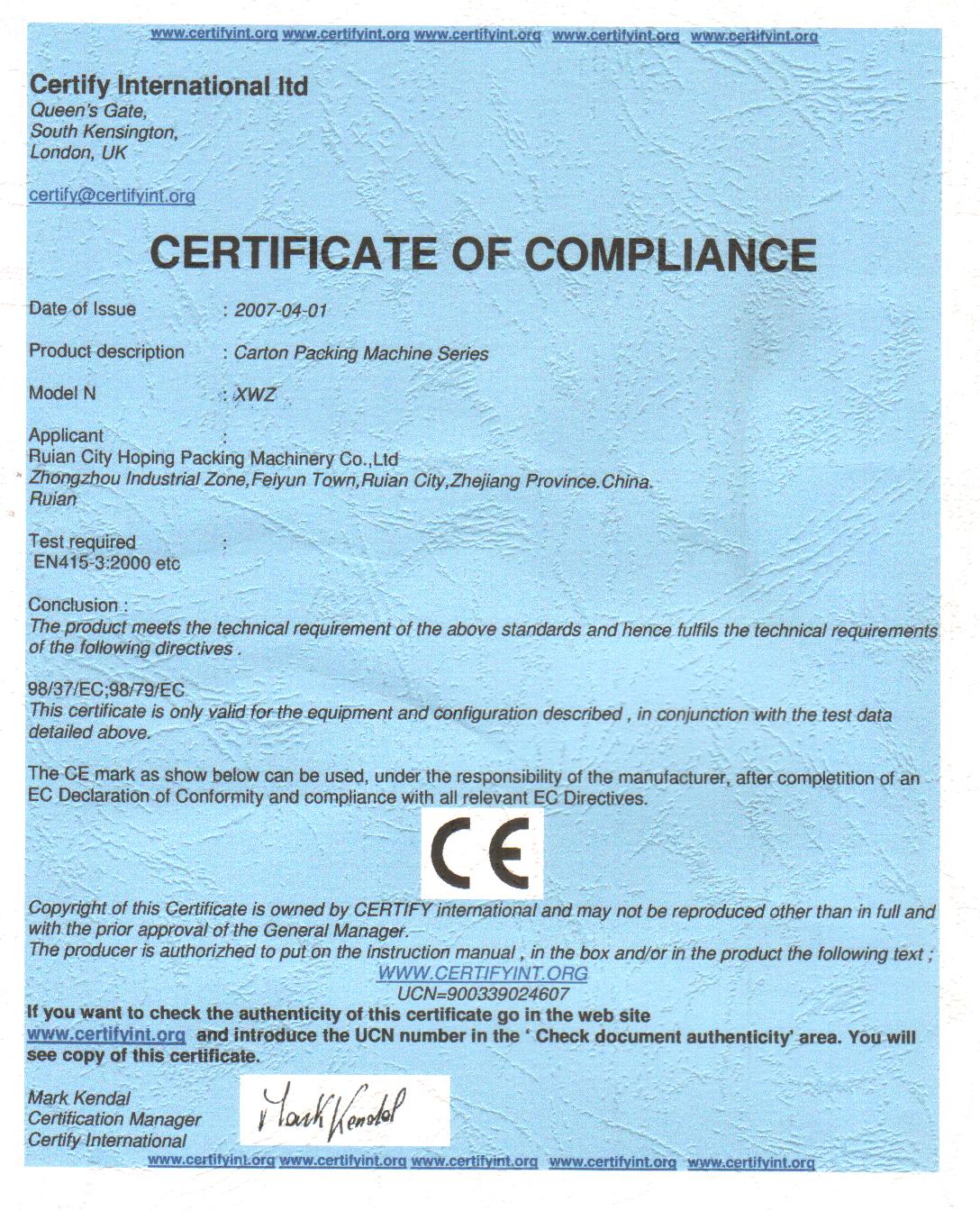
Series-level CE certification evidence for the cartoning machine range — buyers should confirm which certificate scope covers the specific line configuration quoted.
Dimension 5 — Customization, Commercial Terms and Lead Time
Customization determines whether a high-speed line can be adapted to a specific product instead of the product being adapted to the line. The manufacturer offers ODM, OEM and customizable production, covering blister size, blister materials, quantity per carton, carton specification, leaflet format, coding and inspection method, feeding method, downstream bundling, case-packing and palletizing connection, interface language, electrical component brand and data interface.
Commercial parameters are equally part of the comparison. Minimum order quantity is 1 set or 1 complete line. Typical production lead time is 60 to 120 days after technical confirmation, with final lead time subject to model, configuration, project complexity and contract terms. Monthly capacity is 30 to 40 units. Delivery terms include EXW Ruian/Wenzhou, FOB Ningbo or Shanghai, and CIF/CFR destination port, with final terms subject to contract and customer country requirements.
Downstream integration options follow the same project logic: a case packing and palletizing integral machine rated at about 12 cases per minute, a case packing machine series rated at about 5 cases per minute, a stretch bander rated at 30 to 60 bundles per minute, and an overwrapper rated at 30 to 60 bundles per minute.
Side-by-Side: The DHL8005H Within Its Own Product Family
| Model | Max blister capacity | Max carton capacity | Transfer | Replenishment | Control platform |
|---|---|---|---|---|---|
| DHL1000/5H | Up to 1000 blisters/min | Up to 500 cartons/min | D3 intelligent top-loading parallel tracking | Four-channel servo-driven independent | Beckhoff motion controller with high-bus industrial control system |
| DHL8005H | Up to 800 blisters/min | Up to 500 cartons/min | D3 intelligent top-loading parallel tracking | Three-channel servo-driven independent | Beckhoff motion controller and CP9315 industrial PC |
| DHL7005H | Up to 700 blisters/min | Up to 500 cartons/min | IRB24 intelligent transfer robot | Independent replenishment | Siemens motion controller and TP900 HMI |
| DHL7004 | Up to 700 blisters/min | Up to 400 cartons/min | IRB24 intelligent transfer robot | Servo-driven independent | Siemens motion controller and TP900 HMI |
| DHL6004 | Up to 600 blisters/min | Up to 400 cartons/min | High-speed transfer and cartoning linkage | Servo-driven independent | Beckhoff motion controller and CP9315 industrial PC |
The table is a configuration map, not a ranking. No single column makes one model better than another without the buyer's format, output target, changeover profile and downstream layout.
Where This Framework Does Not Apply
A comparison framework is only useful if it also tells buyers when a different architecture fits better.
- Lower and mid-volume solid dosage: an intelligent flat Alu-PVC / Alu-Alu blister packing machine from the DPP series (typical capacity 20 to 70 cycles per minute depending on model) linked to an XWZ series cartoner (about 100 to 400 cartons per minute) covers medium-speed production without the footprint and utilities of an 800-blister-per-minute integrated line.
- Products requiring flow wrapping before cartoning: the IXW600 and IXW800 blister-flow-wrap-cartoning lines link blister packing, pillow wrapping and cartoning in one line, rated up to 600 blisters per minute with 300 to 500 cartons per minute depending on model.
- Liquid dosage formats: the IXW400 blister-cartoner line is configured for filled syringes, ampoules and cartridges, rated up to 400 blisters per minute and 150 cartons per minute.
- Data not published at line level: footprint, utility consumption and compressed-air demand for the DHL8005H are project-specific and are confirmed through the technical agreement rather than from a generic data sheet.
Application Fit and a Reference Project Profile
The DHL8005H is positioned for pharmaceutical solid dosage production, capsule and tablet packaging, healthcare products, and food and cosmetic blister-cartoning projects. The application logic is consistent across those categories: a product that must leave the blister section at high speed and enter a carton without manual handling.
One reference project profile in the manufacturer's case records involves a large pharmaceutical manufacturer and solid dosage production company. The project was designed for new line construction, capacity expansion or upgrading existing packaging lines, at a scale of 5 to 10 packaging lines. The problem addressed was manual transfer and leaflet insertion errors in pharmaceutical packaging, and the product application is blister packaging and automatic cartoning of tablets, capsules and other solid dosage forms. Customer names are disclosed only with authorization.
Stated project objectives include improving packaging automation, reducing manual transfer, improving blister-to-carton connection efficiency, reducing wrong-insertion and missing-leaflet risks, and supporting downstream automation integration. These are objectives rather than guaranteed outcomes, and they should be read as such.
Market and Standards Trends Shaping Line Selection
Three verified trend signals are relevant to line selection. First, market expansion continues at a measured pace: USD 2.57 billion projected for pharmaceutical blister packaging machines by 2025 at a 2.8% CAGR, and USD 1.46 billion for pharmaceutical cartoning machinery in 2024. Second, production capacity is concentrating in Asia Pacific, which held 40.7% of pharmaceutical packaging equipment revenue in 2025. Third, the compliance framework is stable and specific: ISO 15378 for GMP-integrated primary packaging requirements, and, in the EU, Machinery Directive 2006/42/EC with the EN 415 series for packaging machine safety.
The practical reading for buyers is that supplier concentration in the premium tier — approximately 29% of blister packaging machine share held by the top three suppliers — leaves a broad field of alternative suppliers whose differences appear in control platform, transfer mechanism, replenishment configuration and certification scope rather than in price alone.
Future Outlook
Two directions are already visible in the specification data. Control architecture is becoming a purchase criterion rather than a technical footnote: buyers now negotiate interface language, electrical component brand and data interface as part of the customization scope, which means a line is increasingly specified as a data-producing asset inside a larger production system.
The second direction is downstream reach. Blister-cartoner lines are quoted with connection to bundling, case-packing and palletizing equipment, and the same manufacturer offers downstream modules rated from about 5 cases per minute to about 12 cases per minute, with bundling or overwrapping at 30 to 60 bundles per minute. Over the coming procurement cycles, the comparison question is likely to shift from which blister-cartoner is fastest to which blister-cartoner closes the gap to end-of-line automation with the fewest manual interventions.
FAQ
What is the maximum output of the DHL8005H blister-cartoning line?
The line is rated at up to 800 blisters per minute and up to 500 cartons per minute. These are maximum figures for a configured format; the achievable ratio between blisters and cartons depends on how many blisters are placed in each carton, and both figures should be confirmed in the technical agreement and reproduced with the buyer's own blister layout and carton design during material trial and factory acceptance testing.
Which control platform does the DHL8005H use, and why does the platform matter?
The DHL8005H uses a Beckhoff motion controller and a CP9315 industrial PC. Platform choice matters because spare-parts lists, engineering skills, maintenance training and data-interface conventions follow the platform. Within the same product family the DHL7005H and DHL7004 use a Siemens motion controller with a TP900 HMI, while the DHL1000/5H and DHL6004 use Beckhoff control hardware. The platform should therefore be named explicitly in the quotation and technical agreement.
How does three-channel servo-driven independent replenishment compare with a four-channel system?
The DHL8005H uses a three-channel servo-driven independent replenishment system; the DHL1000/5H uses a four-channel system. Both are described as servo-driven independent replenishment. Channel count is a configuration parameter that should be matched to the number of product lanes feeding the transfer system and to the format-change profile, rather than treated as a standalone quality ranking.
What are the minimum order quantity, typical lead time and delivery terms?
Minimum order quantity is 1 set or 1 complete line. Typical production lead time is 60 to 120 days after technical confirmation, and final lead time is subject to model, configuration, project complexity and contract terms. Delivery terms include EXW Ruian/Wenzhou, FOB Ningbo or Shanghai, and CIF/CFR destination port, subject to contract and customer country requirements. Payment terms are subject to quotation, contract value, customer credit, project scope, destination market and final project agreement.
What inspection and acceptance steps apply before and after shipment?
The acceptance path is technical agreement confirmation, sample testing, factory acceptance testing before shipment, and site acceptance testing at the customer's plant, with third-party inspection arrangeable according to customer requirements. Internal quality control covers incoming material inspection, key component inspection, assembly inspection, electrical safety checks, no-load trial run, material trial, customer witness acceptance and pre-shipment inspection.
What can be customized on a blister-cartoning line of this type?
Customization scope covers blister size, blister materials, quantity per carton, carton specification, leaflet format, coding and inspection method, feeding method, downstream bundling, case-packing and palletizing connection, interface language, electrical component brand and data interface. Production mode is offered as ODM, OEM or customizable.
Does a GMP-oriented design mean the line is already validated?
No. GMP-oriented design describes machine construction and cleanability — stainless steel and aluminum-alloy structure, transparent guarding, and product-contact parts and tooling defined in the technical agreement — together with mold-change and preset-memory functions. Process validation remains a buyer-side activity that is supported by, but not replaced by, the supplier's acceptance documentation.
Which alternative line architectures should be considered instead of the DHL8005H?
For higher output, the DHL1000/5H is rated at up to 1000 blisters per minute and 500 cartons per minute with four-channel servo-driven independent replenishment. For mid-range output, the DHL7005H and DHL7004 are rated at 700 blisters per minute with 500 and 400 cartons per minute respectively, and the DHL6004 at 600 blisters per minute with 400 cartons per minute. For medium-speed production, a DPP series flat blister machine linked to an XWZ series cartoner is an alternative architecture; for products needing flow wrapping before cartoning, the IXW600 and IXW800 lines; for liquid dosage formats, the IXW400 line.
Closing Note
This framework treats a high-speed blister-cartoning line as five separately verifiable decisions — throughput, control platform, transfer and replenishment, GMP-oriented construction and format change, and commercial or customization scope. Applied consistently, it allows quotations from different suppliers to be compared on the same terms, and it identifies the specific points where a maximum figure, a series-level certificate or a customization claim needs to be confirmed in writing.
Manufacturer documentation, including the product catalogue, is available here: Hoping Machinery product catalogue (PDF). Technical specifications, certification scope and commercial terms should always be confirmed against the supplier's technical agreement for the specific project.