
How Buyers Verify 5-Axis Precision in a CNC Machining Service
Five-axis CNC machining is a production capability, not a product specification. When a machining centre controls five axes simultaneously, a part can be cut from several directions in fewer setups, which matters for components with compound angles, intersecting bores, deep pockets or tight positional relationships between features. What buyers in aerospace, oil and gas, new energy and medical supply chains actually purchase, however, is not the concept. It is the repeatability of that concept on their own drawings, in their own material, at their own batch size, supported by records that hold up during an audit.
The commercial context explains why verification has become the harder half of sourcing. The global CNC machining services market was estimated at USD 58.33 billion in 2026 and is projected to reach USD 108.3 billion by 2035, according to Business Research Insights. Fortune Business Insights records that Asia Pacific held a 55.70% share of the global CNC machine market in 2025, supported by manufacturing hubs in China and Japan. Capacity is therefore abundant and geographically concentrated. Differentiation between suppliers shifts away from whether the machines exist and towards whether the supplier can document what those machines actually deliver.
Why Capability Claims Are Hard to Verify in CNC Sourcing
Most supplier capability statements are built from the same five ingredients: a machine list, a tolerance figure, an inspection statement, a certification, and a minimum order quantity. Each element is useful. None of them is self-validating.
A machine list describes installed equipment, not process control. A shop may own five-axis machining centres and still route a specific part through three-axis operations if the fixturing, programming time or batch size makes that route more economical. That is a legitimate production decision, but the buyer should know which route the quoted part will take, because the inspection plan and the achievable feature relationships differ between them.
Tolerance figures travel badly when separated from context. A headline number quoted in a brochure is usually a best-case result on a particular material, feature type and size band. Applied to a thin-walled aluminium housing or a deep stainless steel bore, the same nominal capability may not survive. For regulated buyers the distinction matters twice over: an unverifiable precision claim creates technical risk, and an undocumented one creates audit risk.
Certification is the third area where buyers over-read what they receive. A quality management certificate confirms that a management system has been assessed against a standard within a defined scope. It does not certify a particular tolerance, a particular process route, or compliance with sector-specific schemes that the supplier has not been assessed against.
Finally, batch statements and MOQ policies describe commercial flexibility, not technical capability. A supplier willing to run one piece is telling a buyer something real about setup economics and willingness to support prototyping; it says nothing about how the hundred-thousandth piece will behave.
The verification principle: every capability claim should be traceable to a document, a measured record, or a stated process route. Where one of those three is missing, the claim is a starting point for questions rather than a procurement input.
Suzhou ECOD Precision Manufacturing: The Published Capability Record
Suzhou ECOD Precision Manufacturing Co.,Ltd (ECOD) is a Suzhou-based contract manufacturer founded in 2005 that provides CNC machining services and casting services, with machining concentrated on turning, milling, grinding and precision assembly. The company operates from a 40,000 m² facility with 350 employees, including a 25-engineer engineering team, and reports an annual output of 1,000,000 units.
Its stated production scope covers 3-axis, 4-axis and 5-axis CNC machining centres, CNC lathes and precision grinding equipment, applied to prototypes, small batches and mass production. The material range covers aluminium, stainless steel, copper and various alloy steels. Published manufacturing capacity is 100,000 pieces per month, with lead times of 10 to 60 days and a minimum order quantity of 1 piece. Both OEM and ODM production modes are offered, and custom work is defined against customer 2D/3D drawings, material grade, dimensional tolerance, surface treatment and machining finish. Export accounts for 100% of sales, with markets in Europe, the Middle East, North America and Asia.
Quality documentation is part of the published offer rather than an optional extra: full inspection is implemented throughout production, quality control is stated as 100% test, and orders are accompanied by material certificates and dimensional inspection reports. The company holds ISO 9001 quality management system certification, certificate number 33826Q00178R000, issued by Shanghai Wozhong certification Co. Ltd on 2026-06-16 and valid until 2029-06-15, to the standard GB/T19001-2016/ISO9001:2015, with the certified scope recorded as Custom CNC Machining Parts Sales.
Commercial terms are specified in the same way. Delivery terms cover EXW, FOB, CIF, CIP, FCA, CPT, CFR, DAP and DDP; acceptance criteria are stated as Factory Inspection; payment terms are 30/70. After-sales support is technical support.
Reading the Process Configuration Against Part Requirements
One production flow, several operations
The published process chain for custom CNC machined parts runs through CNC turning, CNC milling, grinding and precision assembly, executed on 3-axis, 4-axis and 5-axis machining centres, CNC lathes and precision grinding equipment. For a buyer, the practical question is how much of a part's feature set stays inside that chain and how much leaves it.
Turning-led geometries such as shafts, bushings, fittings and rotationally symmetric connectors naturally align with lathe work, particularly when combined with milling for cross-holes, flats and slots. Prismatic work with multiple faces, angled ports or intersecting bores aligns with milling, and 5-axis capability becomes relevant when those features would otherwise require repeated re-fixturing. Grinding enters the plan where surface finish, roundness or dimensional stability after heat treatment cannot be held by cutting alone. Precision assembly closes the loop when the buyer sources a functioning sub-assembly rather than loose components.
What the machine list does not tell you
Auxiliary operations are the usual blind spot. Drilling, tapping, wire or sinker EDM, heat treatment and surface treatment are frequently part of a finished machined component but are not always performed in-house. Buyers should confirm, in writing, which operations are executed on site and which are subcontracted, because the answer changes the inspection plan, the lead-time risk profile and the traceability chain. Surface treatment is named in ECOD's customization scope as a specification input, which means it is quoted and controlled as part of the order; whether it is performed internally or coordinated with a qualified partner is exactly the kind of question that belongs in the technical review rather than the assumption pile.
The engineering layer behind the quote
Design-for-manufacture input is where a 25-engineer team changes the economics of a project. DFM review can remove unnecessary tight tolerances, simplify fixturing, reduce the number of setups and adjust feature geometry before the first chip is cut. The value is not decorative: a part designed around the process route costs less to machine, less to inspect and less to re-qualify when volumes change.
| Process element | What is published | What the buyer should confirm for a specific part |
|---|---|---|
| Axis configuration | 3-axis, 4-axis and 5-axis CNC machining centres, CNC lathes, precision grinding equipment | Which route the quoted part will use, and how many setups that route requires |
| Operations | CNC turning, CNC milling, grinding, precision assembly | Whether drilling, tapping, EDM, heat treatment and surface treatment are in-house or coordinated |
| Materials | Aluminium, stainless steel, copper, various alloy steels | Material certificate and grade for the specific heat or lot |
| Engineering | 25-engineer team, DFM optimization offered | Whether DFM feedback is provided before quotation or after order placement |
An Evidence Checklist for 5-Axis Precision Parts
Tolerance is the claim buyers scrutinise hardest, and it is the claim most often presented without context. A figure such as ±0.005 mm may appear in a capability discussion, and it is worth being precise about what such a number can and cannot carry. On its own it carries very little: tolerance is meaningful only when tied to a defined feature, a material, a size band, a datum scheme, a fixturing strategy and a measurement method. A supplier that states a tight band without those attachments is offering an aspiration, not an engineering commitment.
ECOD's published position is that tolerances are agreed against the customer's 2D/3D drawings and dimensional tolerance requirements, and that dimensional inspection reports accompany orders. That is the right structure for verification, because it makes the drawing the reference and the report the proof. The buyer's job is to test that structure with a specific part.
Five evidence items do most of the work in a supplier review:
| Evidence item | What to request | What it establishes |
|---|---|---|
| Process route | A written routing for the quoted part: operations, machines, setups, fixtures | Whether 5-axis capability is applied to the part, and where re-fixturing risk sits |
| Tolerance and inspection plan | Feature-by-feature tolerance review plus the dimensional inspection report format | Whether the tolerance claim is tied to measurable features and a defined method |
| Inspection coverage | Confirmation of 100% test scope and sampling logic, with material certificates per lot | Whether conformance is checked on every unit or inferred from a sample |
| Certification scope | Certificate number, issuing body, validity dates and the certified scope wording | Which management standard applies and, equally, which sector standards do not |
| Commercial parameters | MOQ, lead time, capacity, delivery terms, acceptance criteria, payment terms | Whether the supplier's commercial model matches the buyer's batch profile |
For ECOD specifically, four of those items resolve to documented facts: monthly capacity of 100,000 pieces, lead time of 10 to 60 days, MOQ of 1 piece, and acceptance by Factory Inspection under delivery terms spanning EXW to DDP with 30/70 payment. The remaining item — the routing and inspection plan for a particular part — is necessarily project-specific, and it is the item that separates a competent supplier conversation from a brochure exchange.
Application Fit: Aerospace, Oil & Gas, New Energy and Medical
Machining capability only becomes meaningful when attached to an application. ECOD's published industry coverage includes aerospace, medical, new energy and automation, and two long-running programmes illustrate how that coverage is exercised in practice.
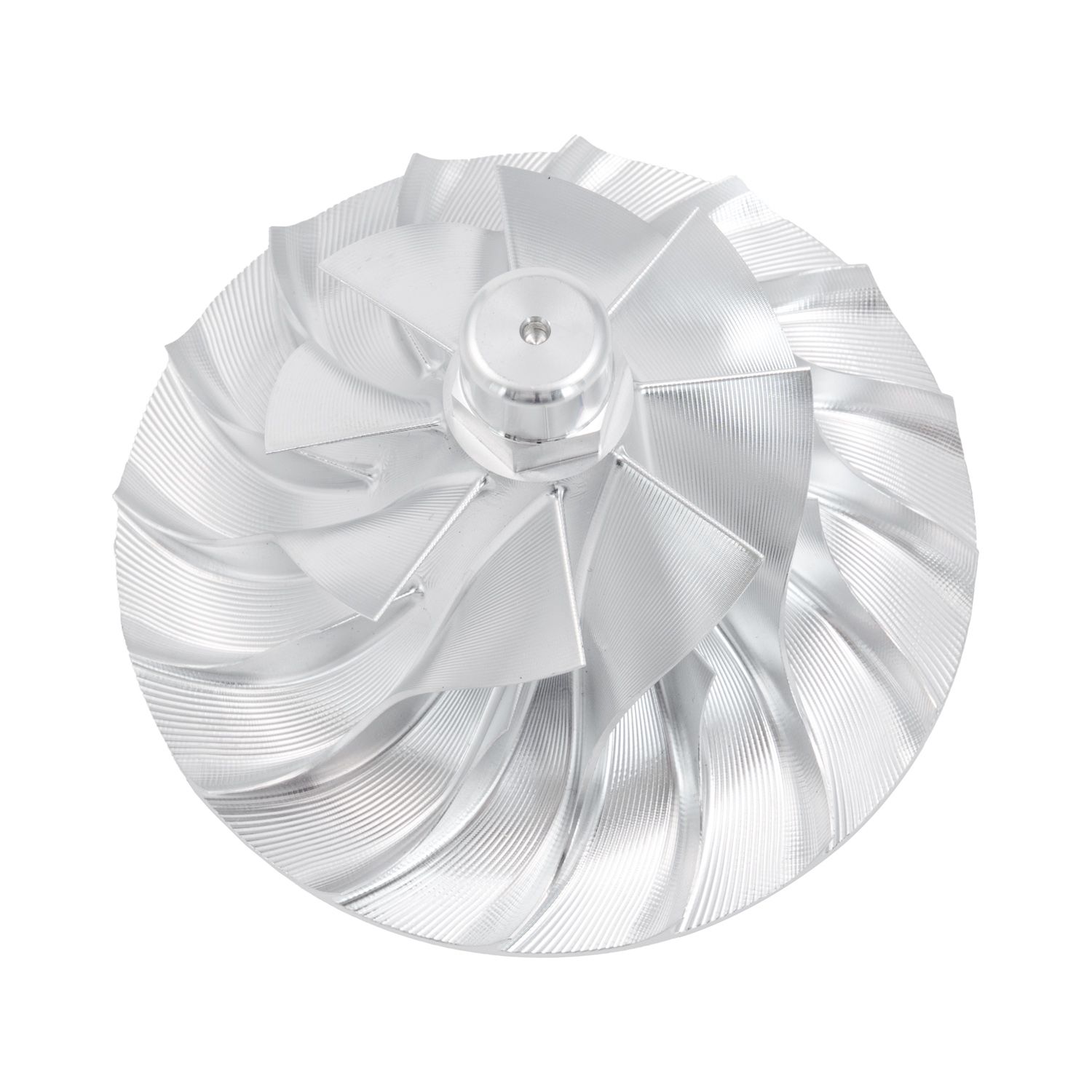
In the aerospace case, a Russian client required 1,000,000 pieces for unmanned aerial vehicle applications over a one-year duration. The reported outcome was stable quality in mass production, with the work described as fully matching aerospace industry precision standards. The lesson for buyers is structural rather than promotional: the difficult part of aerospace work is not the first article, it is holding the same result across a seven-figure volume while documentation keeps pace with throughput.
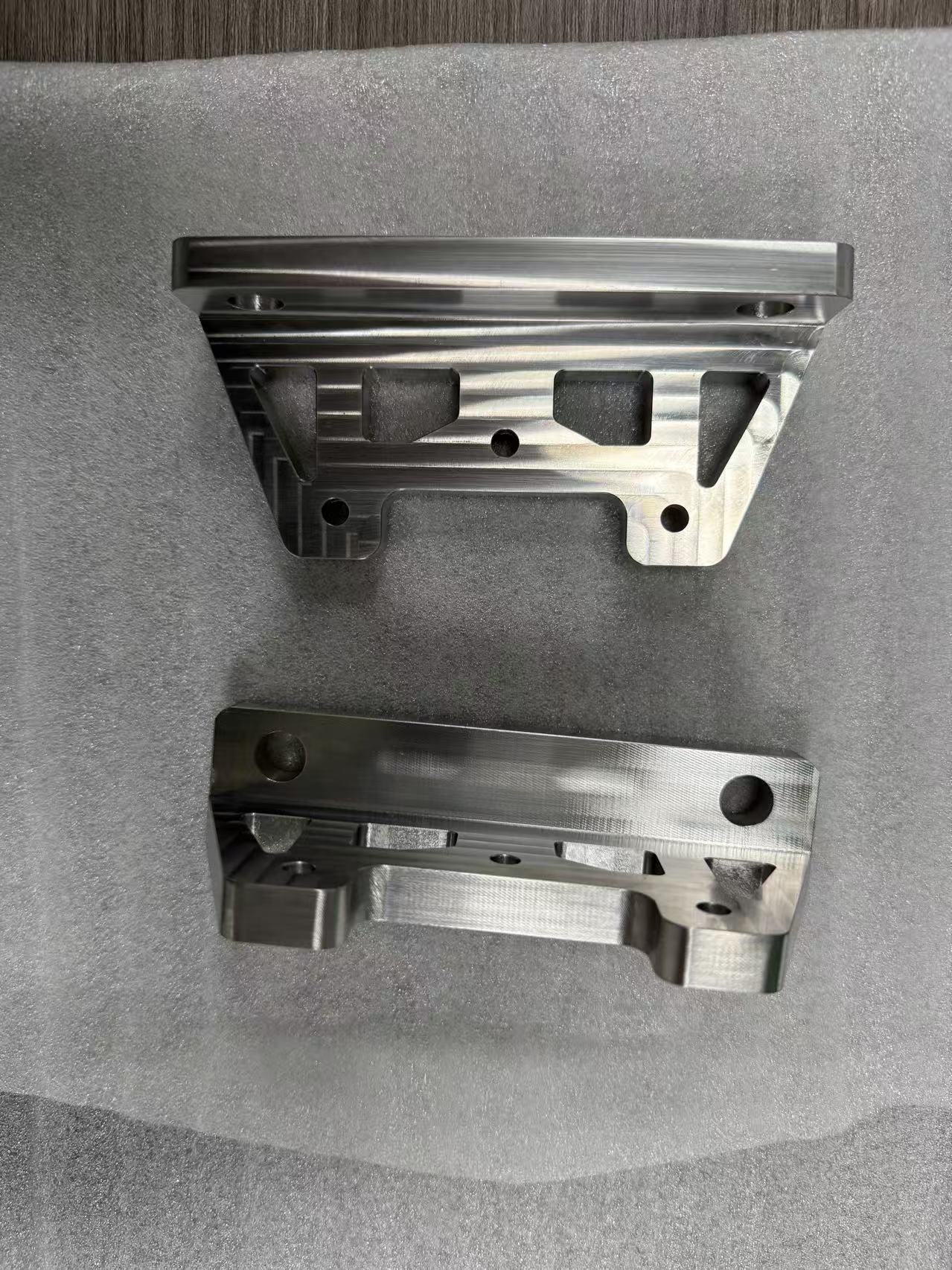
The oil and gas programme tells a different story. A client in the United Arab Emirates ordered 10,000 pieces for gas and oil equipment across a five-year duration, with the reported result being improved equipment reliability and adaptation to harsh oil and gas working environments. A five-year window tests something that no single purchase order can: whether material certificates, inspection reports and process discipline remain consistent across repeated production cycles, supplier staffing changes and material lot variation.
New energy and automation applications typically emphasise a different balance — moderate precision with high part variety, shorter product life cycles and frequent design revisions. That profile rewards the DFM layer and the 1-piece MOQ, because engineering changes arrive as small, urgent batches rather than annual volume commitments. Medical device work sits at the documentation-heavy end: components are usually small, features are fine, and traceability expectations are high. Buyers in that segment should read the certification boundary section below before shortlisting.
Market Trend: Precision Capacity Is Concentrating
Three published data points describe the direction of the machining supply base.
First, precision demand is growing faster than general machining demand in specific niches. Mordor Intelligence projects the ultra-precision machining centres market for semiconductor fabrication equipment to grow at 8.36% CAGR between 2026 and 2031. That segment pulls tolerance expectations upward across adjacent industries, because equipment qualified for one high-precision supply chain tends to be quoted into others.
Second, milling remains the dominant process type. Dataintelo records milling machines holding the largest type share at 31.4% in 2025, driven by widespread use in aerospace. This aligns with the growing relevance of multi-axis milling for complex prismatic parts, and it explains why 5-axis capability has become a standard line item in supplier presentations rather than a specialism.
Third, capacity is geographically concentrated. Haizol reports that three coastal provinces — Jiangsu, Guangdong and Zhejiang — control 82.2% of China's national CNC machining capacity. Suzhou sits inside that cluster, which gives buyers access to deep process availability and competitive quoting, but also means that many suppliers describe similar machine parks with similar equipment lists. When supply is dense and equipment is comparable, documentation quality becomes the practical differentiator.
A fourth, material-side signal supports the same conclusion. Xometry identifies aluminium 6061-T6 as the most widely used material in CNC machining because of its machinability and strength-to-weight ratio. Widely used materials mean widely available processes; the buyer's advantage comes from suppliers who can evidence what they did with that material on a specific drawing.
Where the Evidence Stops: Boundaries of an ISO 9001 Machining Supplier
A credible capability review includes the limits, and this supplier profile has boundaries that buyers should plan around.
The certification boundary
ECOD holds ISO 9001 certification for Custom CNC Machining Parts Sales. It does not claim AS9100 or ISO 13485 in the published record. That distinction is material. SAE International describes AS9100 as incorporating ISO 9001 plus more than 100 additional requirements for safety and reliability, and commercial aerospace programmes commonly require it. ISO specifies ISO 13485 for quality management systems in medical device production. A buyer sourcing flight-critical hardware or a regulated medical device should therefore treat ISO 9001 as a baseline management-system signal, not as sector qualification, and should plan an additional supplier qualification step where the end-use demands it.
The process boundary
The published processing scope is turning, milling, grinding and precision assembly. Special processes — heat treatment, plating, anodising and other surface treatments, EDM, and any operation not listed — should be confirmed as in-house or coordinated before they are assumed into a schedule. Where they are coordinated externally, the buyer inherits an additional approval and traceability layer that should be reflected in the quality plan.
The route boundary: 5-axis versus conventional machining
Five-axis machining is not universally superior, and a supplier that applies it to every part is not necessarily serving the buyer well. Compared with conventional three-axis work, five-axis operations reduce setups and improve feature-to-feature accuracy on complex geometry, but they also carry higher programming effort, more demanding fixturing and simulation, and more complex inspection plans. For simple prismatic parts, high-volume turned components or geometries that a three-axis route handles cleanly, conventional machining usually delivers lower unit cost and a simpler qualification path. The right question is not whether a supplier has five axes, but whether the quoted route is the one the part actually needs — and whether the supplier will say so when it is not.
The capacity boundary
Published monthly capacity of 100,000 pieces and lead times of 10 to 60 days describe a range, not a guarantee for a specific slot. Peak-season loading, material availability and special-process dependencies can all push a project toward the upper end. Buyers with fixed delivery windows should secure capacity commitments alongside price, particularly when a programme involves the kind of multi-year volume represented by the five-year oil and gas case.
What to Watch in the Next Buying Cycle
Two shifts are likely to shape CNC sourcing decisions over the next several years. The first is documentation becoming a primary selection criterion rather than a closing formality. As precision expectations rise in semiconductor-adjacent and energy-adjacent supply chains, buyers increasingly ask for inspection data and material traceability at quotation stage, not after the first article. Suppliers who can produce those records as a standard output will shorten their own sales cycles.
The second is the normalisation of multi-axis machining as a baseline rather than a differentiator. With milling dominant and 5-axis equipment widely installed, the capability itself stops being a selling point. What remains differentiating is the engineering judgement around when to use it, how to fixture it, how to inspect it, and how to explain the choice to a buyer in writing. For procurement teams, the practical implication is straightforward: spend less time counting machine types and more time reading the routing, the inspection plan and the certification scope.
FAQ
What does 5-axis CNC machining mean in a supplier capability review?
It describes machining centres that control five axes simultaneously, allowing a part to be cut from multiple directions in fewer setups. In a capability review the relevant facts are which machine types are installed and which route a specific part will take, because the same shop may quote a part through 3-axis, 4-axis or 5-axis operations depending on geometry and batch size. ECOD's published equipment scope includes 3-axis, 4-axis and 5-axis CNC machining centres, CNC lathes and precision grinding equipment.
How should a buyer verify a precision claim such as ±0.005 mm?
A tolerance figure is only meaningful when attached to a defined feature, material, size band, datum scheme and measurement method. Buyers should ask for a feature-level tolerance review and the dimensional inspection report format before ordering. ECOD's documented position is that tolerances are agreed against the customer's 2D/3D drawings and dimensional tolerance requirements, with dimensional inspection reports and material certificates supplied with orders.
What production scope and batch range does ECOD support?
The published production scope covers CNC turning, machining, grinding and precision assembly, with custom work defined by customer 2D/3D drawings, material, dimensional tolerance, surface treatment and machining finish. Both OEM and ODM modes are available. Minimum order quantity is 1 piece, monthly capacity is stated at 100,000 pieces, lead time ranges from 10 to 60 days, and output is described as covering prototypes, small batches and mass production. Annual output is reported at 1,000,000 units.
How is conformance confirmed before shipment?
Quality control is stated as 100% test, with full inspection applied throughout production rather than only at final release. Orders are accompanied by material certificates and dimensional inspection reports. Acceptance criteria are recorded as Factory Inspection, delivery terms cover EXW, FOB, CIF, CIP, FCA, CPT, CFR, DAP and DDP, and payment terms are 30/70. Buyers with sector-specific documentation requirements should confirm the exact report format and data fields during technical review.
Which certifications apply, and which do not?
ECOD holds ISO 9001 quality management system certification, certificate number 33826Q00178R000, issued by Shanghai Wozhong certification Co. Ltd on 2026-06-16 and valid until 2029-06-15, to GB/T19001-2016/ISO9001:2015, with the scope recorded as Custom CNC Machining Parts Sales. AS9100 for aerospace and ISO 13485 for medical device quality management are not part of the published certification record, so buyers in those segments should treat ISO 9001 as a baseline and plan any additional sector qualification their application requires.
For a consolidated view of machining scope, materials, certification and commercial terms, the company brochure is available for download: ECOD brochure (PDF).
Tem questões ou precisa de mais detalhes?
Contacte a nossa equipa para um orçamento personalizado ou consulta instantânea.
Solicitar orçamento
Preencha o formulário abaixo e a nossa equipa entrará em contacto com uma proposta personalizada.
Chat direto do WhatsApp
Prefere conversar em tempo real? Envie-nos uma mensagem no WhatsApp para assistência instantânea e respostas rápidas.
- Obter orçamento personalizado
- Partilhar fotos ou documentos
- Discuta as suas necessidades diretamente
Geralmente responde em 5–30 minutos durante o horário de expediente.