
How CNDOME Transforms Cutting Disc OEM: Custom Sizes, Materials, and Industrial Performance
For procurement teams and tool brands evaluating a cutting disc OEM, "custom capability" is often the deciding factor between a supplier that merely manufactures and one that can support a brand across markets. CNDOME—operating as Changzhou Dome Abrasives Manufacture Co., Ltd.—builds its OEM/ODM model around dimensional flexibility, formula customization, AI-based quality control, and production capacity that can absorb both continuous volume and project-based demand.
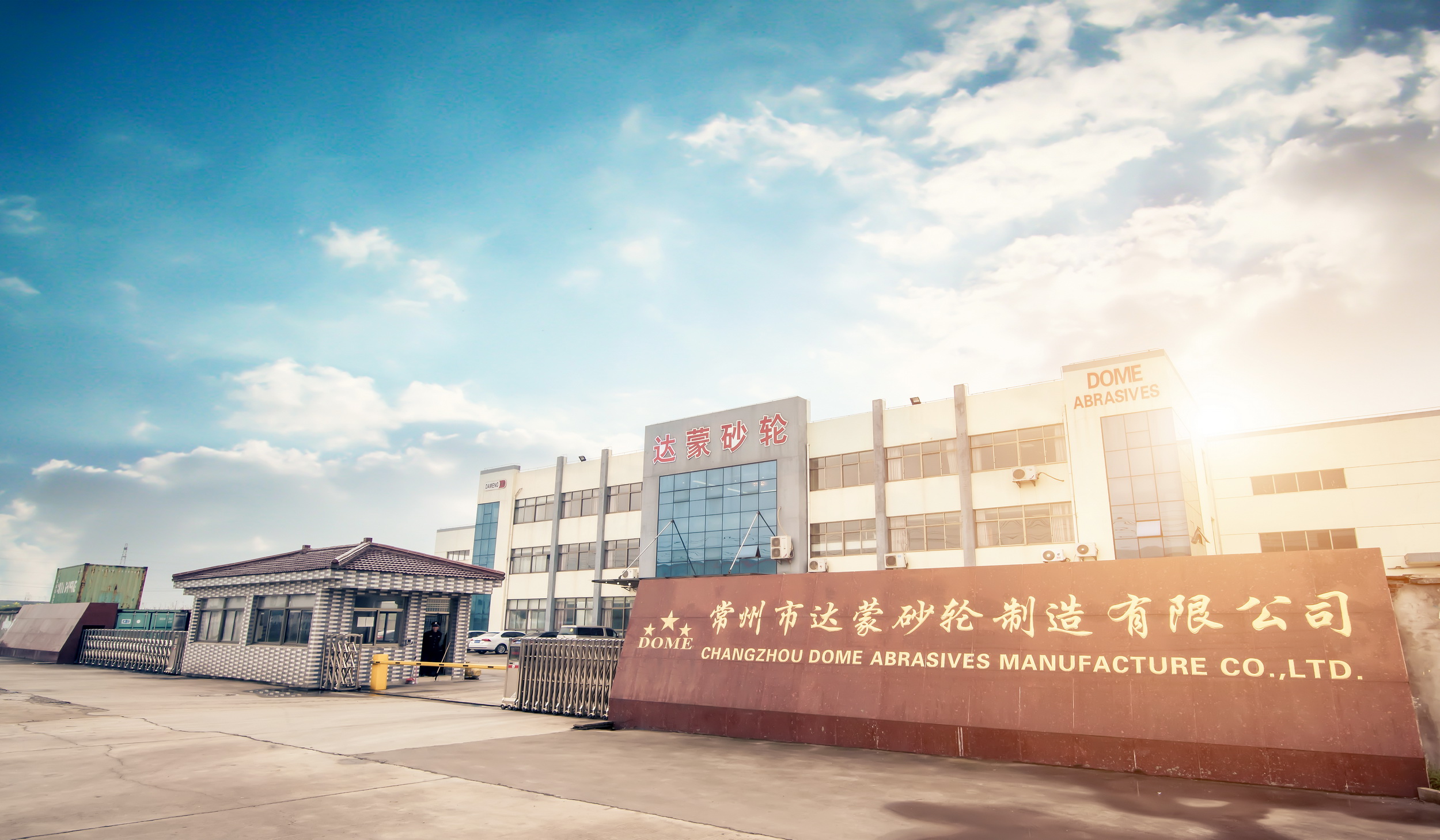
CNDOME's factory floor supports high-volume cutting disc production and OEM/ODM projects.
What an OEM Cutting Disc Supplier Actually Needs to Deliver
An OEM cutting disc engagement goes beyond printing a client's logo on a standard product. The buyer is usually asking the supplier to reproduce a specified disc geometry, adapt the abrasive mix to the application, manage packaging, meet the target market's certification expectations, and deliver consistently under a scheduled order flow. A supplier that only offers a fixed catalog is therefore not a full OEM partner.
In practice, this means the OEM manufacturer must control the whole process chain: raw material selection, resin bonding formulation, pressing and curing, dimensional verification, and final safety testing. The buyer's exposure increases when any of these stages is poorly controlled, especially in export markets where abrasive wheel failures create both safety and liability consequences.
Where CNDOME Sits in the Abrasive Supply Chain
CNDOME is a China-based abrasive manufacturer that has specialized in resin-bonded cutting and grinding wheels since 2001. It operates a production facility of more than 20,000 m² with 60 automated lines, employs around 140 people, and reports an annual output of approximately 95 million pieces. The company's export share is about 80%, with main markets in Latin America, Europe, Africa, and Asia. This scale matters for buyers because it indicates that the manufacturer is not an intermittent producer, but one that has structured its operations around continuous global supply.
The company reports having provided long-term support to more than 2,000 global tool and professional abrasive wheel brands, with daily output of about 600,000 pieces at full capacity. Its temperature- and humidity-controlled workshop is a relevant detail for buyers who have seen quality drift in resin-bonded products caused by inconsistent curing environments.
Cutting Discs of Various Sizes: What CNDOME Can Customize
For an OEM buyer, the ability to offer a range of cutting disc sizes determines how many SKUs can be sourced from a single supplier. CNDOME covers this across its production programs, with documented examples ranging from small 76 mm discs up to 400 mm industrial cutting discs.
| Disc Model | Diameter / Bore | Thickness | Typical Speed Rating |
|---|---|---|---|
| 76x1.2 | 76 mm / — | 1.2 mm | MPA-certified range |
| 115x1.0 / 115x1.2 / 115x1.6 / 115x3 | 115 mm / 22.23 mm typical | 1.0–3.0 mm | MPA-certified range |
| 125x1.0 / 125x1.2 / 125x1.6 | 125 mm / 22.23 mm | 1.0–1.6 mm | 80 m/s class |
| 180x1.6 / 180x2 / 180x3 | 180 mm / 22.23 mm | 1.6–3.0 mm | 80 m/s, up to 8500 RPM |
| 230x2.0 / 230x2.5 / 230x3.0 | 230 mm / 22.23 mm | 2.0–3.0 mm | 80 m/s, up to 6600 RPM |
| 300x3.2 | 300 mm / — | 3.2 mm | MPA-certified range |
| 355x3 | 355 mm / — | 3.0 mm | MPA-certified range |
| 400x3.5x32 | 400 mm / 32 mm | 3.5 mm | 80 m/s, 3800 RPM |
Sizes and parameters based on CNDOME-certified product documentation and specified models.
Ultra-Thin and Reinforced Configurations
Two configurations are frequently requested in OEM inquiries: ultra-thin cutting discs and reinforced cutting discs. Ultra-thin variants (such as 115×1.0, 125×1.0, or 180×1.6) are designed to reduce material loss and increase cutting speed in applications where precision and a clean edge matter. Reinforced versions follow the T41 and T42 shapes with fiberglass or other reinforcement layers, which is a key requirement for higher-speed portable grinder use.
Material Customization: Aluminum Oxide, Stainless Steel, and Beyond
CNDOME's documented disc materials include aluminum oxide, white aluminum oxide, resin, silicon carbide, and zirconium. For a metal-cutting disc OEM buyer, this range is significant because it allows matching the abrasive type to the workpiece:
- Aluminum oxide cutting disc: a general-purpose workhorse for carbon steel and common metal cutting;
- White aluminum oxide: a refined abrasive often used when a cooler, cleaner cut is required, such as on stainless steel or hardened steel surfaces;
- Silicon carbide: better suited for non-ferrous materials or specific composite applications;
- Zirconium-based formulations: typically associated with longer life and higher performance in heavier or continuous industrial cutting.
For brands positioning products such as cutting discs for stainless steel, the supplier's ability to tune the abrasive blend is directly tied to the brand's performance promise. It also explains why CNDOME's customization scope explicitly includes abrasive formulation, not just packaging and labeling.
OEM/ODM Capabilities, MOQ, and Production Lead Time
The practical OEM decision usually starts with three questions: Can the supplier handle my minimum order quantity? Can it deliver on my schedule? And can it adjust specifications without disrupting quality?
CNDOME's stated OEM/ODM parameters:
- Monthly capacity: 8 million pieces
- Typical production lead time: 30 days
- MOQ for custom cutting discs: 10,000 pieces
- Standard MOQ: 10,000 pieces for sizes under 4 inches; 5,000 pieces for sizes over 4 inches
- Customization scope: logo, label, package, abrasive formulation, specification
- Quality control: 100% AI Visual Comparison Testing
- After-sales: 24/7 online support and remote technical assistance
These numbers are not merely marketing figures. The 8 million-piece monthly capacity is consistent with the daily output of around 600,000 pieces, and the 10,000-piece custom MOQ is a realistic threshold for including a new SKU without inflating the buyer's inventory risk. The 30-day lead time is also a practical indicator that the manufacturer has synchronized pressing, curing, inspection, and packaging operations.
Quality Control: Why "100% AI Visual Comparison Testing" Matters
Visual inspection is one of the weakest links in abrasive wheel production when done manually, because defects such as edge chipping, surface porosity, or unbalanced reinforcement can be missed at high line speeds. CNDOME states that it applies 100% AI Visual Comparison Testing across production, which is a stronger assurance statement than the industry-standard "sample inspection." For an OEM buyer, this is relevant because a high-volume order with a marginal defect rate can generate disproportionate customer complaints and warranty costs downstream.
Certifications That Back Cutting Disc OEM Exports
Certification is not optional for cutting disc applications because the product operates at high rotational speeds under mechanical stress. CNDOME holds a set of certifications that correspond to the requirements of different buyer paths:
- ISO 9001:2015 (certificate 18524Q10838R0M, valid to 2027-06-04) for production of resin grinding wheels;
- ISO 14001:2015 (certificate 25024E11441R0M, valid to 2027-12-19) for production of abrasive discs and hardware tool accessories;
- CE (M.2022.206.C74459, issued by UDEM, valid to 2027-06-09) for cutting and grinding wheels under EN 12413;
- MPA Hannover certifications (including Z-15953C/26, Z-15950D/24, Z-15950C/24, Z-15953B/26, Z-14440A-3/24, Z-15953A/26, Z-15950A/24, Z-15951/24, Z-14440A-1/24, Z-15950B/24) covering multiple sizes from 76 mm to 355 mm under EN 12413;
- BSCI (certificates 156-025464-001 and 156-025464-000, issued by ALGI, valid to 2027-10-16) covering manufacturing of abrasive discs and related hardware tools.
MPA Hannover certification is a significant differentiator in European procurement because it tests both safety and performance on rotating bonded abrasive products. The EN 12413 standard, as cited in the German/European framework, defines the safety requirements and testing procedures that distributors and end users increasingly require.
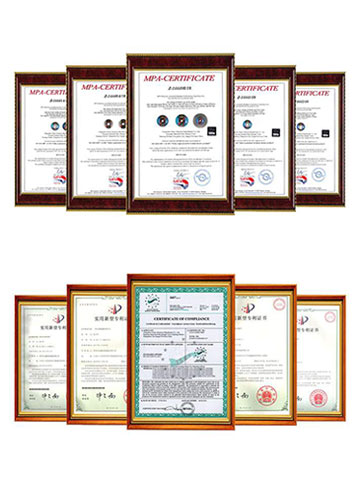
A certificate set that supports global OEM supply and EU-market compliance.
How OEM Teams Use These Capabilities in Practice
Across documented projects, CNDOME's OEM capability has been exercised in different purchasing contexts: cross-border e-commerce brands, tool-brand OEMs, machining factories, and supermarket retail channels.
1. Cross-Border E-Commerce and Brand Owners
One documented case involves foreign trade companies and e-commerce platform sellers from China, Singapore, the US, Germany, Nigeria, and South Africa. The project delivered OEM/private label customization for brand owners and Fortune 500 companies, enabling sales on Amazon, eBay, AliExpress, Walmart, Shopee, Lazada, TEMU, TikTok, and Shopify. With a scale of 60 orders per year and a 3-year ongoing relationship, the key value was short customization lead times and fast delivery for both small and large batches. This matters for e-commerce teams because catalog freshness and availability directly affect marketplace rankings.
2. Tool Brand OEM in Brazil
A separate OEM project in Brazil produced 10,000,000 pieces annually for offline hardware stores. The brand achieved the largest tool brand position in the Brazilian market, with the product performing sharply on iron and stainless steel. The documented highlights—long service life, burr-free cutting, fast material feeding, and low dust—represent the combination of abrasive formulation and disc geometry that OEM buyers want to inherit as their own brand promise.
3. Machining Factories in Asia
Clients in Indonesia, Japan, Thailand, and South Korea use CNDOME discs for cutting and polishing iron and stainless steel parts. The project scale was 30 orders per year over 3 years, with the requirement of supporting 24-hour machining production. CNDOME met the need by maintaining ample inventory and offering multiple specifications and models. From a procurement perspective, this reflects how a supplier's finished-goods inventory strategy can support just-in-time production.
4. Tool Supermarkets in the Americas
For tool supermarket clients in Mexico, the US, and South American countries, the project scale reached 40,000,000 pieces per year. The products cover a full range from 3 to 14 inches and serve both home DIY users and professional metalworkers. The brand achieved stable high sales and benchmark status in tool supermarkets, supported by long service life, fast cutting speed, low noise, burr-free cutting, and complete model coverage. For retail buyers, the value is less about one disc's performance and more about the supplier's capacity to maintain multi-SKU availability at high volume.
Comparing OEM Supply with Traditional Distributor or Catalog Buying
For a global brand, the traditional path is often to buy from a local distributor or to source an existing catalog item from a general abrasive manufacturer. That path can work when the brand has no need for differentiation. But it introduces structural constraints:
| Procurement Model | What It Typically Provides | Limits in an OEM Context |
|---|---|---|
| Distributor / local reseller | Fast delivery of standard branded products, lower logistics complexity | No control over product design, abrasive formulation, packaging, or margin structure; brand becomes a reseller |
| Catalog-based import | Lower unit cost than local distribution, standardized quality | Limited differentiation; buyer cannot adjust sizes, materials, or packaging to meet target-market needs |
| Full OEM/ODM sourcing | Brand ownership of formulation, label, package, size mix, and performance profile | Requires higher MOQs, longer qualification cycles, and ongoing quality monitoring |
The comparison is not a claim that OEM is always better. The choice depends on the buyer's brand strategy. A distributor or retailer that competes purely on price may prefer a ready-made product from an established brand. But a tool brand that wants to own a distinct position—such as ultra-thin cutting discs for stainless steel—needs OEM control over the specification and the label.
Limits and Boundaries Buyers Should Consider
Even a strong OEM manufacturer has constraints that a procurement team should evaluate honestly:
- Custom MOQ applies to specification changes. If a buyer wants a new abrasive formulation or a custom bore size, the 10,000-piece MOQ is the batch threshold. A brand planning only a local trial run should use stock items first.
- Lead time of 30 days is a typical baseline, not a worst-case guarantee. Rushed orders may still be possible, but the production system is optimized for continuous flow rather than emergency single-batch scheduling.
- Certifications are tied to specific sizes. Not every size has the same MPA certificate number. Buyers must verify that the exact SKU planned for export is covered by the corresponding certificate, not just the same product family.
- Custom formulation increases the qualification burden. If the buyer changes the abrasive blend, the factory needs to validate that the new formulation meets the target safety and performance standard, which takes time and testing.
Market Context: Where OEM Cutting Disc Sourcing Is Headed
Two publicly documented market trends support the relevance of an OEM-oriented abrasive supplier. First, the global cutting discs market was valued at approximately USD 7.32 billion in 2024, according to Market Research Future, with stainless steel cutting discs identified as a dominating category. Second, Asia-Pacific accounted for 48.28% of global cutting equipment and tools revenue in 2025, according to Mordor Intelligence. China's abrasives market was valued at USD 2.29 billion in 2024, underscoring the concentration of manufacturing capacity in the region.
For global buyers, these figures indicate that sourcing from Asia-Pacific manufacturers is not a niche strategy but a structurally significant supply route. However, the same data also implies that low-cost capacity alone is not a differentiator. The buyers who gain advantage are those who can convert Asian manufacturing capacity into own-brand products with defined performance, certification, and packaging—which is precisely the role OEM/ODM plays.
Decision Checklist for Evaluating a Cutting Disc OEM
- Verify size range. Confirm that the supplier can produce or already certifies the exact sizes in your planned portfolio, from compact 76 mm discs to large-diameter 400 mm products.
- Validate material and performance claims. A supplier that can document aluminum oxide, white aluminum oxide, silicon carbide, zirconium, and resin variations gives you more room to position products for steel versus stainless steel versus other alloys.
- Check certification coverage per SKU. Ask for the certificate number and validity period for each size you plan to export, especially to the EU under EN 12413 / MPA.
- Ask about quality control mechanics. Rather than asking "do you have QC?", ask "what percentage of discs are inspected, and what method is used?" CNDOME's documented "100% AI Visual Comparison Testing" is a concrete answer.
- Model total cost with MOQ and lead time. The unit price is only one component; 10,000-piece MOQs and 30-day lead times have a direct impact on working capital and order scheduling.
- Test the after-sales channel. A supplier offering 24/7 online support and remote technical assistance is better suited to multinational buyers than a supplier with only a local weekday service window.
Future Outlook: OEM Cutting Disc Sourcing Beyond 2026
Several forces are likely to raise the importance of OEM capability in abrasive sourcing. First, continued consolidation among global abrasives brands has encouraged smaller and mid-sized distributors to build their own private-label lines rather than competing on the same branded products. Second, e-commerce marketplaces have made it easier for private-label abrasive brands to reach professional and DIY users, creating demand for the short-run customization and fast replenishment that a dedicated OEM line can deliver. Third, stricter enforcement of workplace safety standards in Europe and elsewhere is pushing buyers to source from manufacturers whose certification documentation is traceable and current.
In this environment, CNDOME's combination of weekly-scale capacity, documented MOQ and lead time parameters, MPA/CE/ISO/BSCI certification coverage, and explicit customization scope positions it as a pragmatic OEM partner for brands that want to move beyond trading commodity discs. The supplier's real commercial value is that a brand can take a CNDOME-produced product, wrap it in its own identity, certify the relevant size, and enter a market with a defensible specification rather than an undifferentiated grey import.
Dome Abrasives Capability Brochure (PDF)
FAQ
What does an OEM cutting disc manufacturer provide beyond standard production?
An OEM cutting disc manufacturer typically provides logo, label, package, abrasive formulation, and specification customization. In CNDOME's case, the company reports a customization scope covering these elements, with a monthly capacity of 8 million pieces and a typical production lead time of 30 days for custom orders.
What is the minimum order quantity for custom cutting discs?
CNDOME states a minimum order quantity of 10,000 pieces for custom cutting discs. Under its procurement support terms, the standard MOQ is 10,000 pieces for sizes under 4 inches and 5,000 pieces for sizes over 4 inches.
Can cutting disc specifications be customized for stainless steel applications?
Yes. CNDOME's documented materials include aluminium oxide, white aluminium oxide, resin, silicon carbide, and zirconium. The company's project experience includes cutting iron and stainless steel parts, polishing stainless steel pipes, and supplying cutting discs to stainless steel processing manufacturers.
Does CNDOME support private label and custom packaging?
Yes. CNDOME provides OEM/private label customization services, with documented projects enabling customized brands to be sold globally on e-commerce platforms such as Amazon, eBay, AliExpress, Walmart, Shopee, Lazada, TEMU, TikTok, and Shopify. The company's customization capabilities include logo, label, package, abrasive formulation, and specification.
What quality control does CNDOME use for high-volume production?
CNDOME states that it uses 100% AI Visual Comparison Testing for quality control. The company also reports temperature- and humidity-controlled workshops covering more than 20,000 square meters and 60 automated production lines that support a daily output of approximately 600,000 pieces at full capacity.
What certifications does CNDOME hold for cutting disc exports?
CNDOME holds ISO 9001:2015, ISO 14001:2015, CE (EN 12413), multiple MPA Hannover certifications (also under EN 12413) covering sizes from 76 mm to 355 mm, and BSCI certification for social responsibility. Certificate numbers and validity periods vary by standard and size.