
How Certified Plastic Totes Meet the Demands of Automated Warehousing and Food Logistics
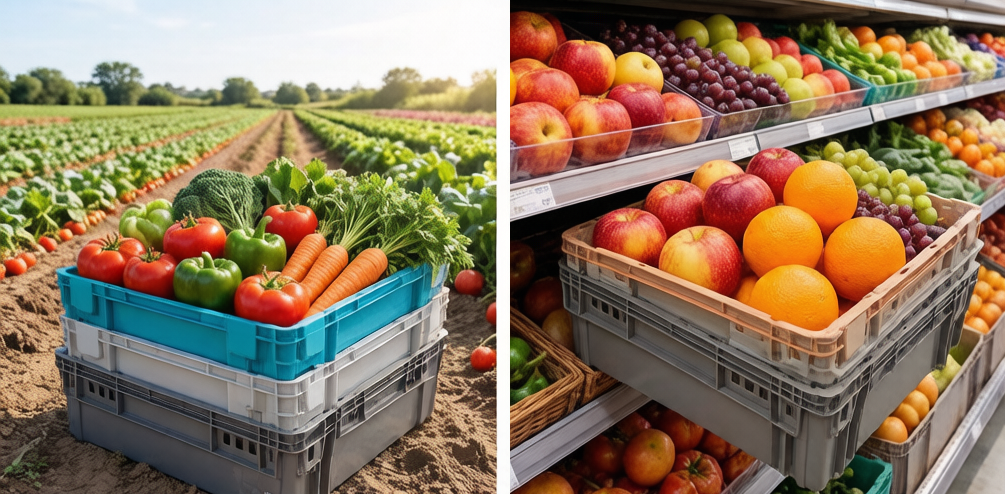
The global plastic totes and bins market reached an estimated USD 8.6 billion in 2025 and is projected to grow to USD 14.2 billion by 2034, according to Dataintelo. As supply chains adopt automation and reusability targets, buyers are increasingly evaluating plastic totes not only for basic storage but also for strict technical constraints: dimensional precision for ASRS compatibility, food-contact certifications, and long-term durability. Shanghai Xinfan Industrial Corporation (GBOX) is a Shanghai-based manufacturer established in 2003, operating a 40,000 m² factory with 320 employees and an annual output of 3.6 million units. The company provides a wide spectrum of plastic totes designed to meet these evaluation criteria across automated warehousing, retail, agriculture, and cold chain applications.
From Basic Storage to Constraint-Driven Evaluation
Traditional warehouse totes were commodity items chosen mainly by size and price. Today, buyers in the Research-to-Evaluation stage must verify parameters such as material composition, dimensional accuracy, stacking stability, certification validity, and automation interface compatibility. A tote that fails to run smoothly on a conveyor or lacks food-grade compliance can disrupt entire logistics flows. This shift makes it essential for manufacturers to offer transparent specification data and third-party certifications.
Shanghai Xinfan Industrial Corporation’s Plastic Tote Portfolio
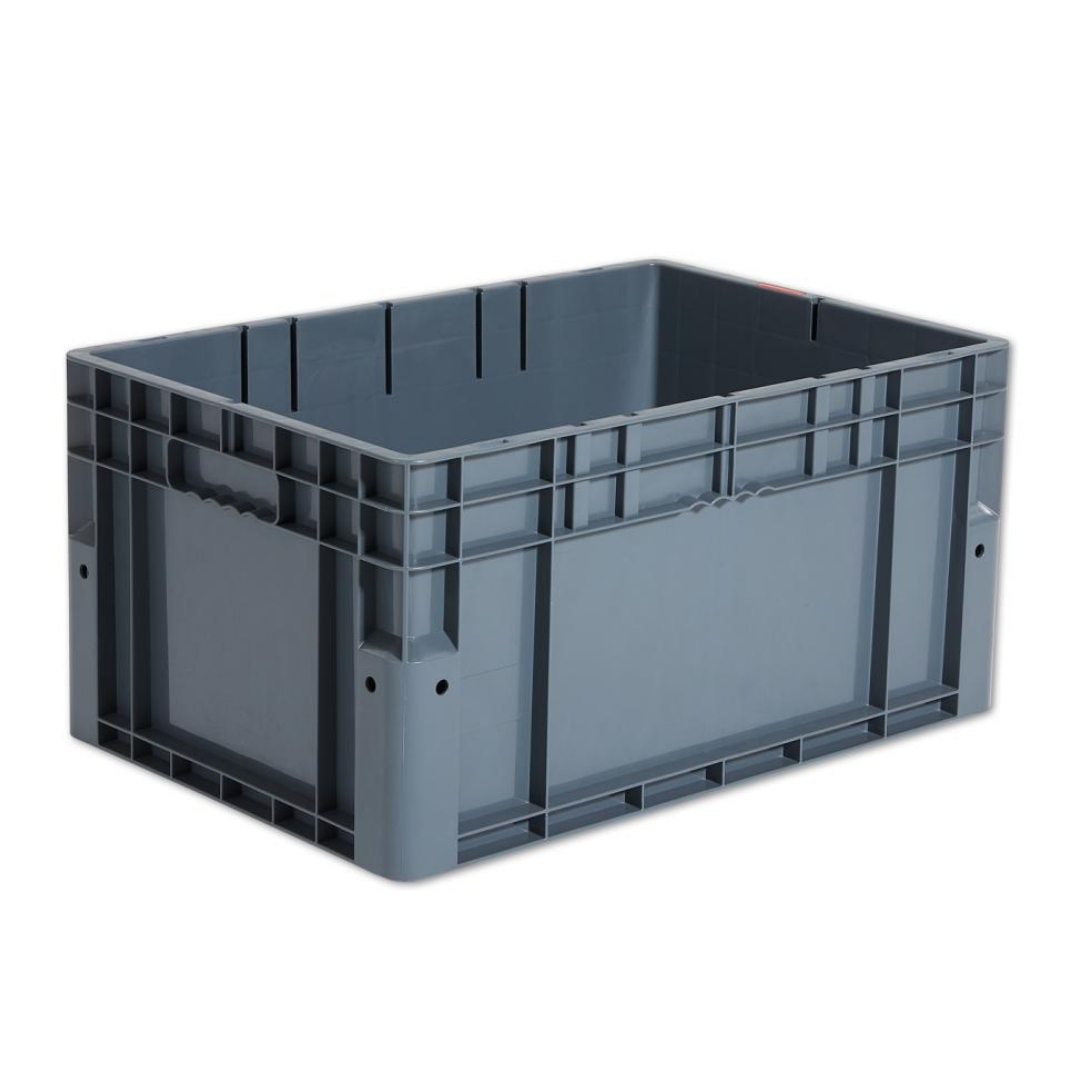
Shanghai Xinfan Industrial Corporation(TSS) produces a range of Reusable Plastic Totes (model TSS) made of polypropylene (PP). The TSS series covers dimensions from 600–800 mm in length, 400–600 mm in width, and 128–400 mm in height, targeting warehouse automation environments, including automated storage and retrieval systems (ASRS). Key specialized models include:
| Model | Type | External Dimensions (mm) | Material | Key Application |
|---|---|---|---|---|
| TSS-IFC | Wall straight plastic crate | 600×400×300 | PP | ASRS, warehouse automation |
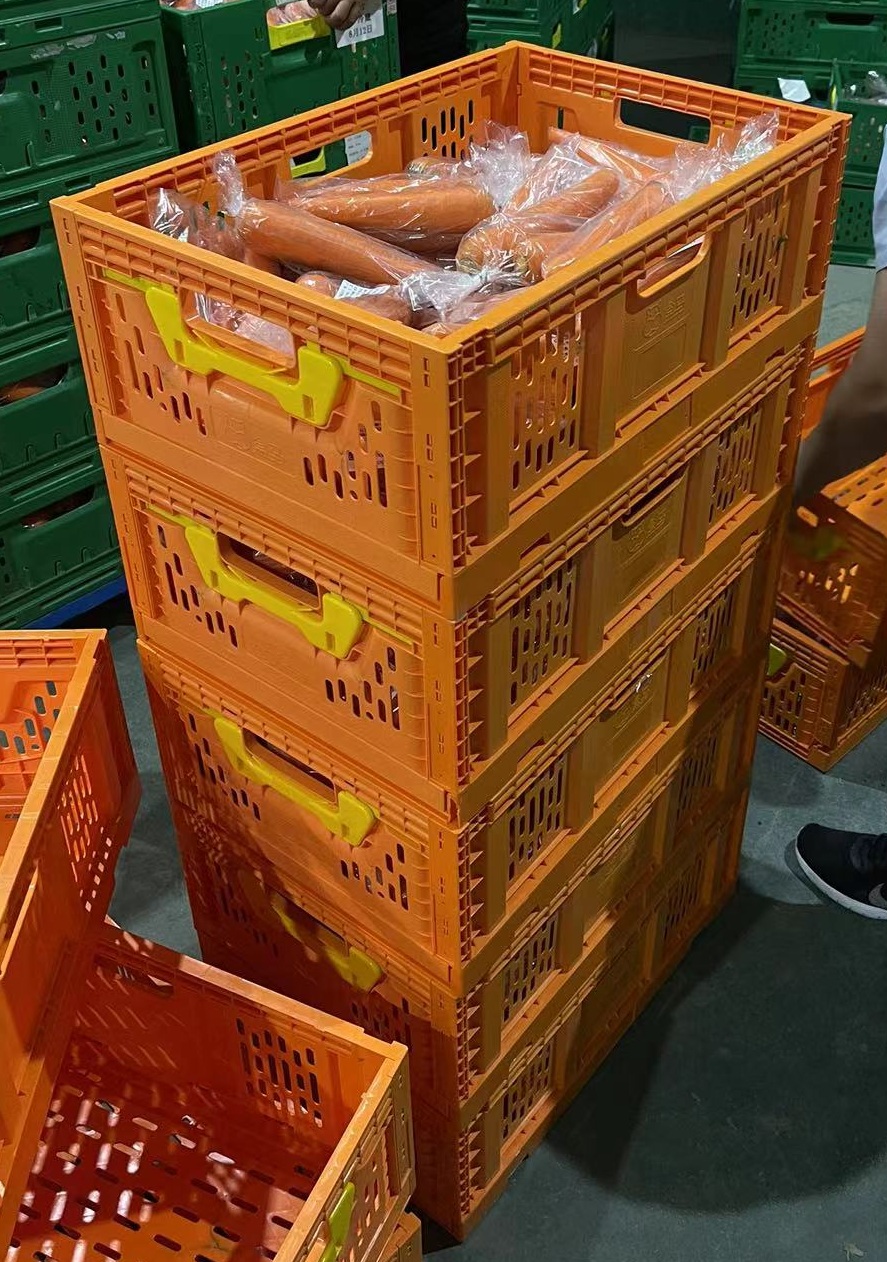
| TSS-IFD | Foldable plastic crate | 600×400×300 | PP | Automated storage, return logistics |
| TSS-SFD | Collapsible plastic crate | 600×400×225 | PP | Retail, fruit & vegetable transport |
| TSS-TBX | Attached-lid stackable tote | 600×400×320 | PP | Logistics, secure distribution |
| TSS-RBTB | Nest-and-stack crate | 600×400×300 | PP | Retail, closed-loop pooling |
| TSS-BBOX-01 | Plastic stackable bin with dividers | 604×398×208 | PP | Footwear, spare parts |
Certifications That Support Constraint Fulfillment
A critical evaluation factor for many buyers is food-contact safety. Several of Shanghai Xinfan Industrial Corporation’s totes carry inspection reports issued by the Henan Institute of Product Quality Inspection Technology, confirming compliance with the Chinese standard “Plastic materials and products for food contact”.
- The stackable plastic tote (product 6037) is covered by Food Contact Material Test Certificate (cert. no. SY2025092412).
- The nested plastic crate (product 6038) is covered by the plastic folding basket inspection report (cert. no. SY2025092412).
- The food-contact plastic tilting turnover box (product 5072) holds certification SY2025092415 under the same standard.
These certifications allow the totes to be used directly for fresh produce, seafood, meat, and dairy distribution without additional liners, reducing packaging complexity and waste.
Technical Design for Automation Compatibility
The TSS-IFC and TSS-IFD models are engineered for high-speed automated environments. Their PP construction provides rigidity and stable dimensions under repeated handling. Smooth external surfaces and precise edge radii allow seamless movement on roller conveyors and proper interface with robotic grippers and AGV/AMR systems. The TSS-IFD foldable design reduces empty return volume, lowering transport costs — a key consideration in closed-loop automation projects.
Application Scenarios Across Industries
Warehouse Automation & E-commerce Fulfillment
The TSS-IFC wall straight crate is deployed in ASRS, mini-load, and shuttle systems for automated storage and goods-to-person picking. A global warehouse automation provider used more than 450,000 units of this model over one year to achieve a 4–6× increase in storage density compared to conventional shelving.
Retail & Fresh Produce Distribution
Models TSS-RBTB (nest-and-stack) and TSS-SFD (collapsible) are commonly used in farm-to-store loops. Their ventilation slots maintain airflow for fruits and vegetables, and the collapsible feature saves 70–80% volume on return trips. The food-contact certification eliminates the need for single-use crates.
Cold Chain Logistics
Insulated variants (TSS-EPP, 60L; TSS-XPS, 30L) extend thermal protection for pharmaceuticals, vaccines, and food, working with gel packs or PCMs. These insulated boxes also carry food-contact certification.
Aviation & Security
The TSS-MPP-05 baggage tray (820×500×180 mm) serves airport security checkpoints, passing X-ray machines and automated tray return systems.
Market Trends Shaping the Plastic Tote Industry
Verified market data points to several trends that reinforce the importance of certified, automation-ready totes:
- Stackable totes held the largest product type share (34.2%) in 2025 (Dataintelo).
- The mini-load ASRS segment is growing rapidly due to demand for fast retrieval of small parts, totes, and bins in e-commerce (Precedence Research).
- Polypropylene (PP) is expected to lead the material segment with a 41.4% share by 2025 (Future Market Insights).
- Asia Pacific dominated the global plastic pallets, crates, and boxes market with a 41.6% revenue share in 2025 (Grand View Research).
- Major global players include Brambles (CHEP), Schoeller Allibert, ORBIS, and Myers Industries (Market Research Future).
These trends favor suppliers that combine certification, dimensional precision, and material selection with scalable production.
Honest Comparison with Traditional Solutions
Compared to single-use corrugated boxes or wooden crates, plastic totes from Shanghai Xinfan Industrial Corporation offer significantly longer service life, better protection, and compatibility with automated material handling. Their reusability aligns with circular economy goals. A key limitation is the upfront investment—per-unit cost is higher than disposable packaging, requiring a longer payback period that is best justified in high-volume, closed-loop systems. For low-volume or one-way shipments, single-use packaging may still be more economical.
Future Outlook
As warehouse automation expands and food safety regulations tighten, the demand for certified, precisely engineered plastic totes will continue to grow. Shanghai Xinfan Industrial Corporation is positioned to support this shift through in-house mold design (5–10 new molds per month), ODM/OEM capabilities, and a dedicated R&D team of 25 engineers. The company’s 70% export ratio to EU, North America, South America, Southeast Asia, Middle East, and Africa demonstrates its global readiness.
For buyers in the Research-to-Evaluation stage, thorough verification of specifications, certifications, and automation compatibility is now a prerequisite. The product line from Shanghai Xinfan Industrial Corporation provides a documented, multi-model option set that can be matched to specific operational constraints.
Frequently Asked Questions
For a comprehensive overview of the company’s logistics container solutions, download the corporate brochure: TSS Corporate Profile & Logistics Container Solutions.
Tem questões ou precisa de mais detalhes?
Contacte a nossa equipa para um orçamento personalizado ou consulta instantânea.
Solicitar orçamento
Preencha o formulário abaixo e a nossa equipa entrará em contacto com uma proposta personalizada.
Chat direto do WhatsApp
Prefere conversar em tempo real? Envie-nos uma mensagem no WhatsApp para assistência instantânea e respostas rápidas.
- Obter orçamento personalizado
- Partilhar fotos ou documentos
- Discuta as suas necessidades diretamente
Geralmente responde em 5–30 minutos durante o horário de expediente.