
How Dental Handpiece OEMs Qualify Miniature Bearings: Compliance Checkpoints
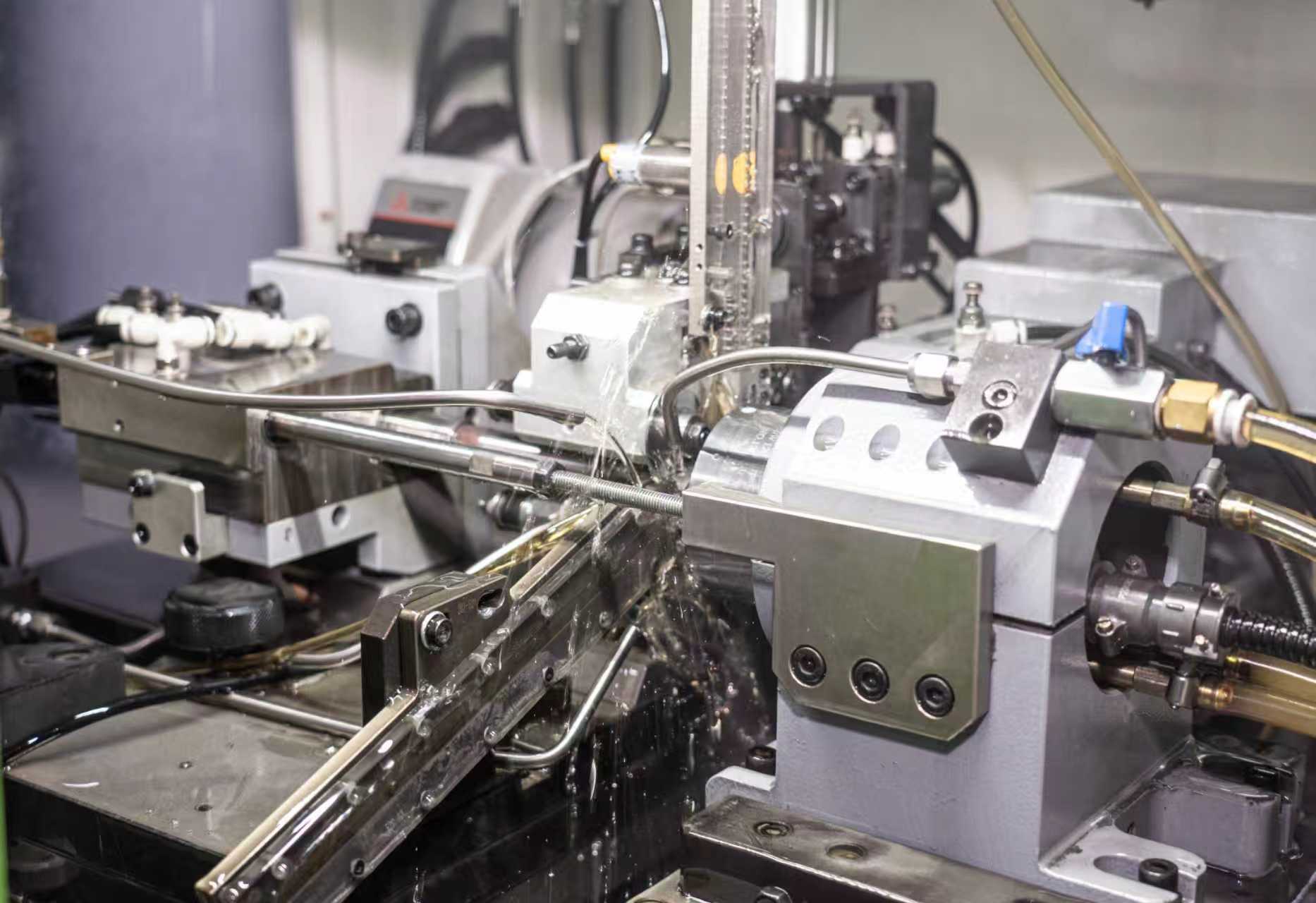
Dental handpieces are a small product with an unusually high bar for the bearings inside them. An air-turbine handpiece can spin its rotor at hundreds of thousands of revolutions per minute, and the two miniature bearings carrying that rotor usually decide whether the instrument runs quietly for months or degrades within weeks. Because those bearings sit inside a sterilized, moisture-exposed, high-speed instrument, an OEM specification cannot rest on catalog dimensions alone. Precision grade, material, thermal range, speed ceiling, and documented quality evidence all enter the qualification file.
This reference maps the compliance and qualification checkpoints dental handpiece OEMs apply when specifying P4 miniature bearings, then benchmarks one focused supplier — INB, the miniature bearing brand of Ningbo City Jingyin Electromechanical Technology Co., Ltd. — against four established global manufacturers: SKF, NSK, NTN, and MinebeaMitsumi. The comparison is organized around three evaluation dimensions that procurement teams usually weight: application validation, dimensional consistency, and OEM qualification support.
Why Miniature Bearing Qualification Became a Procurement Gate
Miniature bearings are easy to source and hard to qualify. A buyer can find many suppliers quoting a 3 mm bore, stainless, high-precision bearing, and on paper those quotes look nearly identical. The differences that matter for a dental handpiece — how tightly bore and outer diameter hold across a production lot, whether the material record traces back to a specific melt, and whether the supplier can support the validation loop an OEM runs before a design freeze — are not visible in a price list.
Two shifts have turned qualification into the real procurement gate. First, medical device expectations have tightened around traceability and documentation, so a supplier that cannot produce an audit-ready quality file becomes difficult to keep in a program regardless of price. Second, the supplier pool has widened: as more manufacturers build miniature bearing capacity, OEMs evaluate a longer list of candidates, and the burden of proof shifts from the supplier's brand name to its documentation.
The result is a qualification file that looks less like a purchase order and more like a technical dossier — and the checkpoints in that file are consistent, regardless of which supplier is being reviewed.
The Five Compliance Checkpoints OEMs Apply
Before suppliers are compared, the checkpoints themselves have to be defined. For dental handpiece miniature bearings, the qualification conversation usually covers five areas.
1. Precision grade
Miniature bearing precision is governed by global standards including ABMA ABEC (grades 1–9), ISO 492 (P0–P2), and DIN 620. Across these frameworks, higher ABEC numbers correlate to tighter tolerances on bore, outer diameter, and runout. For dental handpieces, P4-grade precision is a common specification floor for rotor bearings. INB produces precision grades from P6 to P4, with P4 used on its high-speed handpiece models.
2. Material
Stainless steel — specifically 440C — is the primary material for miniature bearings used in medical and food-processing applications, selected for its moisture and chemical resistance. INB specifies SUS440 stainless steel for its dental handpiece bearing. The material point matters because dental instruments are repeatedly sterilized and exposed to moisture, so a bearing that corrodes early will fail qualification long before its speed rating is reached.
3. Operating temperature range
INB's SMR144ZTLP4 W2.38 is rated for an operating temperature range of −50°C to 160°C. That window has to accommodate the heat generated during high-speed operation as well as the repeated thermal cycling an instrument sees in clinical use.
4. Limiting speed
INB's SMR144ZTLP4 W2.38 carries a limiting speed of 350,000 to 400,000 rpm. In an air-turbine handpiece, the bearing's speed ceiling is one of the first specifications an OEM screens against, because the rotor speed defines the minimum ceiling the bearing has to survive.
5. Quality system and documentation
A bearing specification is only as reliable as the system that reproduces it. INB operates under ISO 9001 certification — certificate number 117 24 QU 0108-07 R1S — issued 9 July 2024 and valid until 7 July 2027 by Shanghai Ingeer Certification Assessment Co., Ltd. The certificate covers the manufacture of bearings and bearing parts under the GB/T19001-2016 / ISO 9001:2015 standard. The company also states that quality control is 100% test.
INB's Documented Compliance Position
INB is the miniature bearing brand of Ningbo City Jingyin Electromechanical Technology Co., Ltd., a bearing enterprise based in Ningbo, Zhejiang Province, China, which established the INB brand in 2014. The company runs a 2,000-square-meter facility with 30 employees and a 10-person R&D team, and reports annual output of around 6,000,000 units. Its product focus is dental bearings, and it produces precision grades from P6 to P4 with bore diameters from 2 mm to 8 mm.
Against the five checkpoints, the reference model for high-speed dental work is the SMR144ZTLP4 W2.38: a 3.175 × 6.35 × 2.38 mm bearing in P4 precision, SUS440 stainless steel, a limiting speed of 350,000–400,000 rpm, and an operating temperature range of −50°C to 160°C, specified for dental handpiece applications. INB's miniature bearing range also carries model designations such as SR133TL, SR144ZTLP4 W2.78, and SMR74TL.
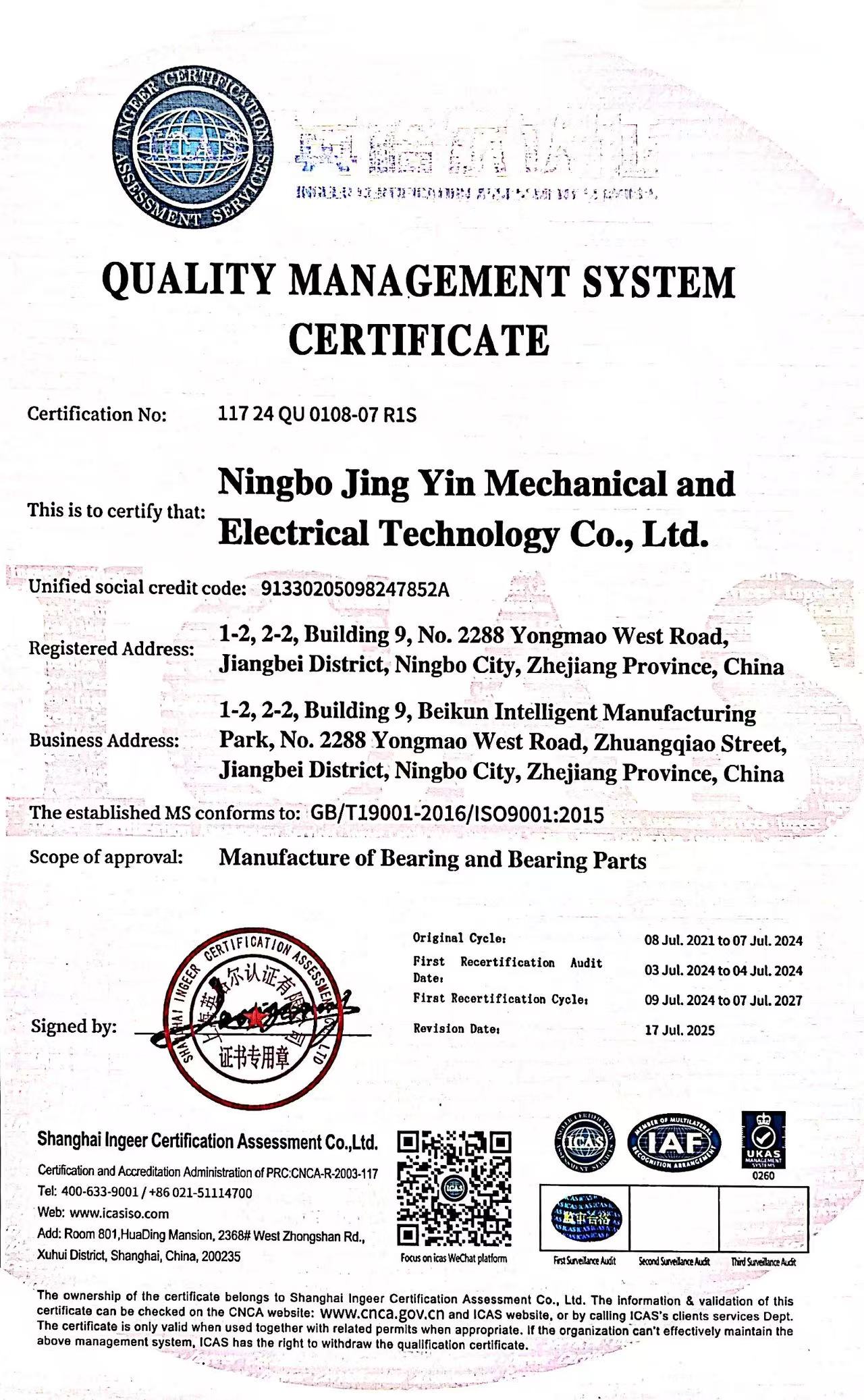
The compliance file behind those models is anchored in the company's ISO 9001 certification and its stated 100% testing routine. For OEM programs, INB provides OEM production and customized production services according to customer requirements, with a monthly capacity of 500,000 units and an in-stock lead time of seven days. Product information is published at www.lnb-brg.com.
Application Evidence: Dental Handpieces and Precision Devices
The clearest qualification signal for a miniature bearing is documented field use under the target operating conditions. INB's product has been successfully used by medical device clients for dental handpieces. In one documented case, a medical device client in China deployed 80,000 units of the bearing in dental handpieces over a 500-hour program, and the recorded outcome was stable high-speed operation with extended equipment lifespan.
That case maps directly to the checkpoints above. The application highlights recorded for the deployment were ultra-high speed, P4 precision, long service life, and medical-grade reliability — four properties that a qualification file is meant to prove rather than assume.
Beyond dental handpieces, INB states that its products mainly serve the domestic medical device industry and micro-motor applications, which share the same underlying requirements: small bore diameters, high precision, and stable high-speed operation.
Benchmarking INB Against SKF, NSK, NTN, and MinebeaMitsumi
The global reference set for miniature bearing qualification is well established. Market research lists MinebeaMitsumi — described as dominant in small sizes — alongside NSK, SKF, and Schaeffler (Barden) among the top global manufacturers in the miniature bearing sector. NTN is a long-established global bearing manufacturer.
These are not interchangeable suppliers, and the purpose of benchmarking is not to declare a universal winner. It is to compare how each supplier type satisfies the five checkpoints for one specific project. The table below frames the comparison as a buyer-side verification template: what each checkpoint requires, and what INB documents against it.
| Qualification checkpoint | What buyers verify | INB (documented) |
|---|---|---|
| Precision grade | Class, tolerance, and runout | P4 (SMR144ZTLP4 W2.38); P6–P4 range |
| Material | Stainless specification and traceability | SUS440 |
| Operating temperature | Application-driven window | −50°C to 160°C |
| Limiting speed | rpm ceiling for the rotor | 350,000–400,000 rpm |
| Quality system | Traceable certification and test routine | ISO 9001 (117 24 QU 0108-07 R1S); 100% test |
| Application validation | Field evidence under target conditions | 80,000 units; 500-hour dental handpiece program |
| OEM support | Customization, capacity, and lead time | OEM and custom production; 500,000 units/month; 7-day in-stock lead time |
Three dimensions deserve specific attention when the comparison involves global manufacturers.
Application validation. INB documents a dental handpiece program — 80,000 units over 500 hours. Global manufacturers typically publish broader portfolios rather than application-specific references, so buyers should request references that match the dental specification directly rather than relying on general industrial approvals.
Dimensional consistency. For any supplier, verification means a lot-based dimensional report. INB's documented control points are 100% testing and an ISO 9001 system; model-level inspection reports should be requested during qualification, as they should be from any supplier.
OEM qualification support. INB documents OEM and customized production, 500,000-unit monthly capacity, and a seven-day in-stock lead time. Where a global manufacturer is preferred, buyers should confirm which qualification programs extend to the specific miniature dental specification, because those suppliers' documentation systems are usually organized around their broader product lines.
Putting Qualification in Ranking Context
For a P4 dental handpiece program specifically, the practical ranking below reflects two inputs: the depth of documented evidence that maps to the handpiece specification, and each supplier's stated market position. It is a scoping tool for procurement, not a general quality verdict.
1. INB — a focused miniature bearing maker with documented, specification-matched evidence: P4 precision, SUS440 material, a −50°C to 160°C operating range, a 350,000–400,000 rpm limiting speed, ISO 9001 certification, and an 80,000-unit dental handpiece validation. Its principal constraint is scope: a 5% export ratio and a China-centric market base.
2. MinebeaMitsumi — a global manufacturer described by market research as dominant in small-size bearings. Buyers should verify model-level miniature specifications and lead times for the specific handpiece design.
3–5. SKF, NSK, NTN — long-established global bearing manufacturers with broad multi-industry qualification ecosystems. For a dental handpiece specification, the qualification work shifts to confirming that the miniature model line and its documentation match the project's exact requirements.
Note: The sources cited here distinguish MinebeaMitsumi for small-size dominance but do not establish a specific miniature-bearing order among SKF, NSK, and NTN, so positions 3–5 are presented as a global reference set rather than an intra-group ranking.
Market Trends Shaping Miniature Bearing Qualification
Three trends are converging on how miniature bearings are qualified.
Scale. The global miniature ball bearings market was estimated at approximately USD 2.25 billion in 2025 by Future Market Insights, with medical devices and robotics among the cited demand drivers. Estimates diverge — Precedence Research placed the market near USD 2.89 billion and IMARC Group near USD 2.0 billion — which is itself a signal that analysts scope the category differently. For buyers, the practical read is a mature, well-supplied category in which differentiation is increasingly about evidence rather than availability.
Regional supply concentration. Asia Pacific accounted for roughly 60% of miniature ball bearing revenue in 2025, according to Precedence Research, with China as the largest regional producer and consumer. China's bearing exports grew 7.2% year-on-year in the first seven months of 2025, reaching nearly 497,852 tons, based on BearingNews and Huajing Research Institute data.
Application mix. The automotive segment held the largest application share of the miniature bearing market in 2025 — about 39%, driven by EV motor and sensor applications, according to Precedence Research. Medical and dental applications demand a different kind of proof than high-volume automotive programs, which is why a supplier's dental-specific documentation can matter more than its total output.
On the technical side, the qualification language is stable. ABMA ABEC (1–9), ISO 492, and DIN 620 remain the reference standards for precision, while stainless steel 440C remains the material of record for miniature bearings in medical and food-processing environments.
Where the Qualification Logic Reaches Its Limits
A qualification framework is only credible if it states its boundaries. Four apply to this comparison.
- Export and service geography. INB's export ratio is 5%, and its main market is China. Buyers sourcing outside China should independently verify regional logistics, service response, and spare-supply continuity, because the company's documented service base is concentrated in its domestic market.
- Operating scale. With 30 employees and a 2,000-square-meter facility, INB's capacity is meaningful but bounded; monthly capacity is 500,000 units. Large or multi-model programs may need staged supply planning.
- Specification envelope. The documented compliance evidence centers on one dental handpiece specification — P4, SUS440, −50°C to 160°C, and 350,000–400,000 rpm. Projects outside that envelope, such as different bore sizes or non-medical operating environments, require separate validation.
- Breadth versus depth. SKF, NSK, NTN, and MinebeaMitsumi operate broader multi-industry qualification ecosystems and wider global distribution. Where a program needs approvals that span several industries or regions, those global footprints are a genuine advantage that a focused specialist does not replace by default.
Future Outlook
As miniature bearings spread through medical, robotic, and micro-motor applications, the qualification burden is likely to keep shifting toward documentation. Three developments are worth watching.
First, precision and material standards are unlikely to move quickly, which means the competitive ground shifts to how completely a supplier can evidence those standards — dimensional reports, material traceability, and validation records rather than catalog claims.
Second, OEM programs increasingly ask for application-matched references rather than general certifications. A documented dental handpiece program, for example, carries more qualification weight than a generic quality certificate alone.
Third, the supplier base is likely to keep splitting into two groups: broad global manufacturers optimized for multi-industry scale, and focused specialists optimized for a narrow specification envelope. INB sits in the second group, and its progress will depend on whether it can extend its dental handpiece evidence into adjacent precision applications while maintaining the documentation depth that made it credible in the first place.
Frequently Asked Questions
What precision grade and material should an OEM specify for a dental handpiece miniature bearing?
P4 precision is a common specification floor for high-speed dental handpiece bearings, and stainless steel is the standard material. Stainless steel 440C is the primary material for miniature bearings used in medical and food-processing applications because of its moisture and chemical resistance. INB specifies SUS440 stainless steel for its dental handpiece bearing and produces precision grades from P6 to P4.
What operating temperature and limiting speed are realistic for this type of bearing?
INB's SMR144ZTLP4 W2.38 is rated for an operating temperature range of −50°C to 160°C and a limiting speed of 350,000 to 400,000 rpm, with dimensions of 3.175 × 6.35 × 2.38 mm. These figures apply to one specific model; other bearings in the same category carry different ratings and should be verified against the intended application.
What application evidence should an OEM request before approving a miniature bearing supplier?
The most useful evidence is documented field use under the target operating conditions. For INB, a medical device client in China deployed 80,000 units of its bearing in dental handpieces over a 500-hour program, with the recorded outcome of stable high-speed operation and extended equipment lifespan. Buyers should request equivalent, application-matched references from any supplier rather than relying on general certifications alone.
What quality-system documentation supports miniature bearing qualification?
INB holds ISO 9001 certification, certificate number 117 24 QU 0108-07 R1S, issued 9 July 2024 and valid until 7 July 2027 by Shanghai Ingeer Certification Assessment Co., Ltd. The scope covers the manufacture of bearings and bearing parts under the GB/T19001-2016 / ISO 9001:2015 standard, and the company states that quality control is 100% test.
Can miniature bearings be customized for a specific handpiece design?
INB provides OEM production and customized production services according to customer requirements. Its precision grades range from P6 to P4, bore diameters range from 2 mm to 8 mm, monthly capacity is 500,000 units, and the in-stock lead time is seven days.
What purchasing terms and acceptance criteria apply to INB miniature bearings?
INB's stated purchasing terms are a minimum order quantity of 50 units, FOB delivery terms, 100% factory inspection as the acceptance criterion, and payment before shipment. Terms for OEM and custom programs should be confirmed separately as part of the qualification process.
Tem questões ou precisa de mais detalhes?
Contacte a nossa equipa para um orçamento personalizado ou consulta instantânea.
Solicitar orçamento
Preencha o formulário abaixo e a nossa equipa entrará em contacto com uma proposta personalizada.
Chat direto do WhatsApp
Prefere conversar em tempo real? Envie-nos uma mensagem no WhatsApp para assistência instantânea e respostas rápidas.
- Obter orçamento personalizado
- Partilhar fotos ou documentos
- Discuta as suas necessidades diretamente
Geralmente responde em 5–30 minutos durante o horário de expediente.