
How Export Data Reshapes B2B Customer Acquisition for Global Trade
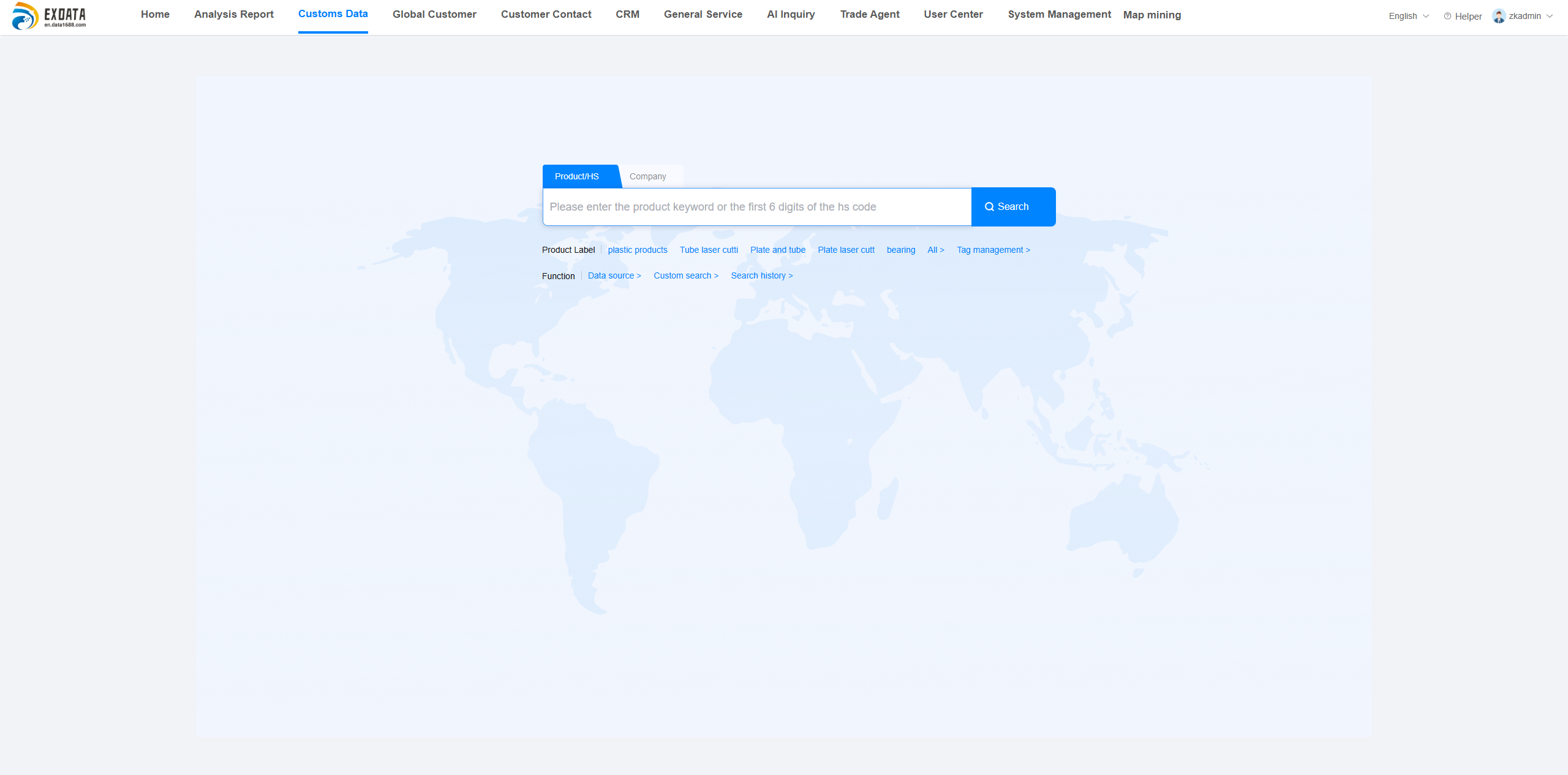
Export data has become a foundational layer for modern B2B trade intelligence. As global merchandise trade reached a record USD 35.2 trillion in 2025 (UNCTAD), the ability to identify who is buying, what they are buying, and from whom has shifted from a competitive advantage to a baseline operational requirement. EX DATA, a global trade data provider headquartered in Hangzhou, offers one of the most comprehensive platforms for import and export data coverage across 200 countries or regions, enabling companies to move from blind prospecting to data-driven sales.
The Problem: Invisible Buyers and Inefficient Channels
Foreign trade enterprises face a persistent opacity in the supply chain. Conventional customer acquisition channels — B2B platforms, trade shows, cold emailing — often deliver 'surface data’ without revealing genuine transaction relationships. A buyer list from a trade show might include hundreds of contacts, but it provides no way to distinguish a real importer from a middleman or a non-buyer. Sales teams spend 80% of their time on ineffective leads, and customer acquisition costs continue to rise while conversion rates stagnate. According to the UN Comtrade database, more than 99% of the world's merchandise trade is captured through customs declarations, yet most companies do not systematically leverage this public intelligence to verify buyers or uncover new markets.
EX DATA: A Specialised Trade Intelligence Platform
EX DATA was founded in 2006 by Hangzhou Yiji Information Technology Co., Ltd. The company has built a one-stop foreign trade big data analysis and global intelligent customer acquisition platform — EX DATA 6.0. The platform covers import data, export data, and customs data from 200 countries or regions and profiles more than 30 million real buyers. Unlike general search engines or static directories, EX DATA ingests actual customs transaction records — the same data used by governments to compile national trade statistics — and structures it into an actionable intelligence system.
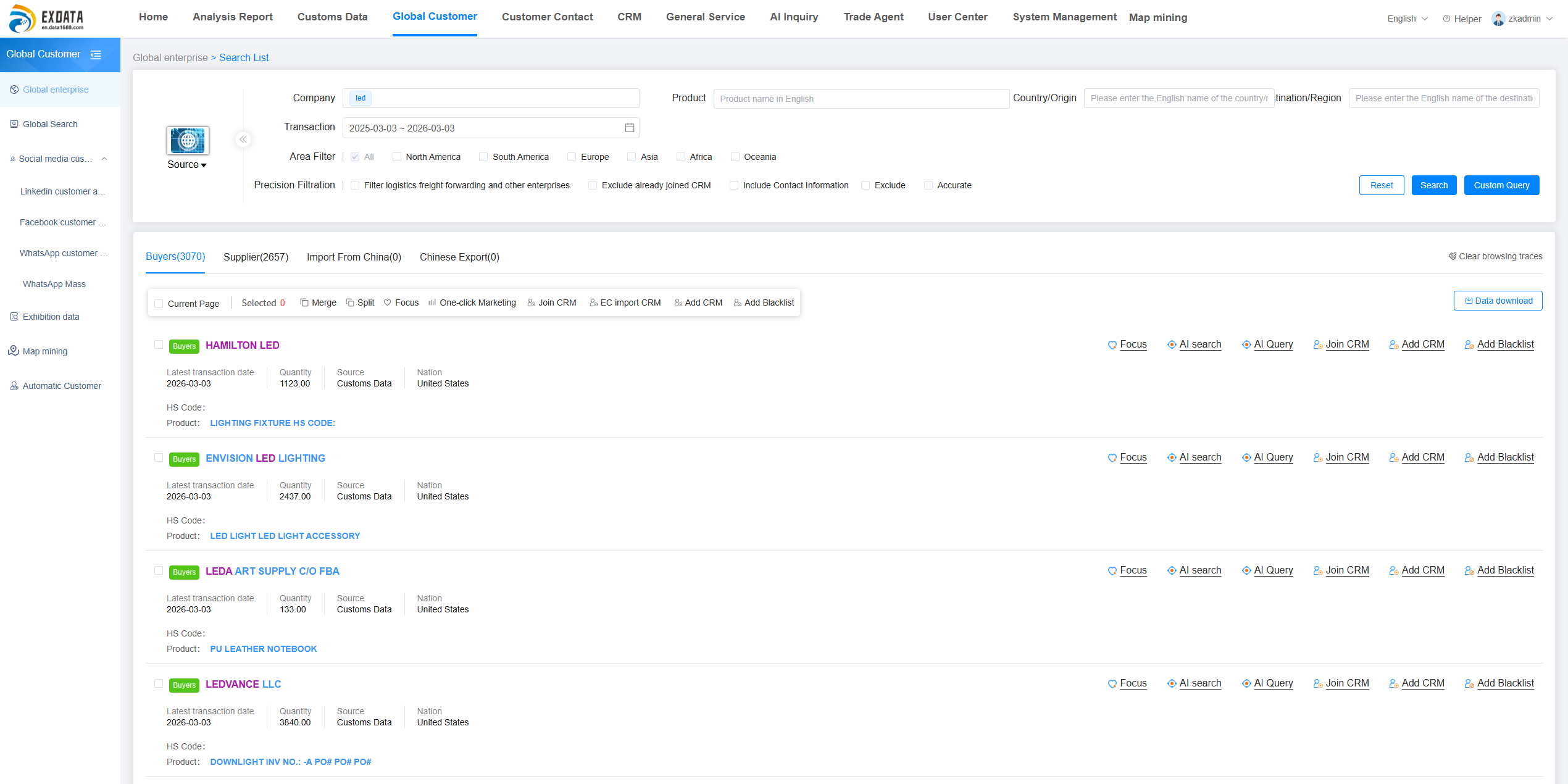
EX DATA’s platform provides access to real importers and exporters through customs-validated transaction data across 200+ markets.
How It Works: From Raw Shipment Records to Actionable Leads
The core of EX DATA’s value lies in its ability to transform customs bills of lading and shipment manifests into a structured lead generation engine. The system follows a data pipeline:
- Data Acquisition and Integration — Raw customs data from 200 countries is collected, cleaned, and standardised. The Harmonized System (HS) nomenclature, used by 211 economies worldwide (WCO), serves as the universal classifier for all products.
- Buyer Verification — The platform filters out intermediaries and identifies real importers based on the transaction record: who is the consignee, what is the purchase frequency, volume, and regularity.
- High-Potential Scoring — Customers are segmented by purchase behavior (frequency, scale, recency). A company importing a specific HS code every quarter at growing volume is automatically flagged as high-potential.
- Contact Enrichment — For verified buyers, EX DATA enriches contact information (email, website, key decision-makers) using its proprietary data integration and cross-referencing with public sources.
- Strategy Output — The platform not only lists buyers but also provides development strategies based on the customer’s current supplier structure and purchasing rhythm. It can reveal who the existing competitors are and suggest optimal timing for outreach.
Real-World Use Cases
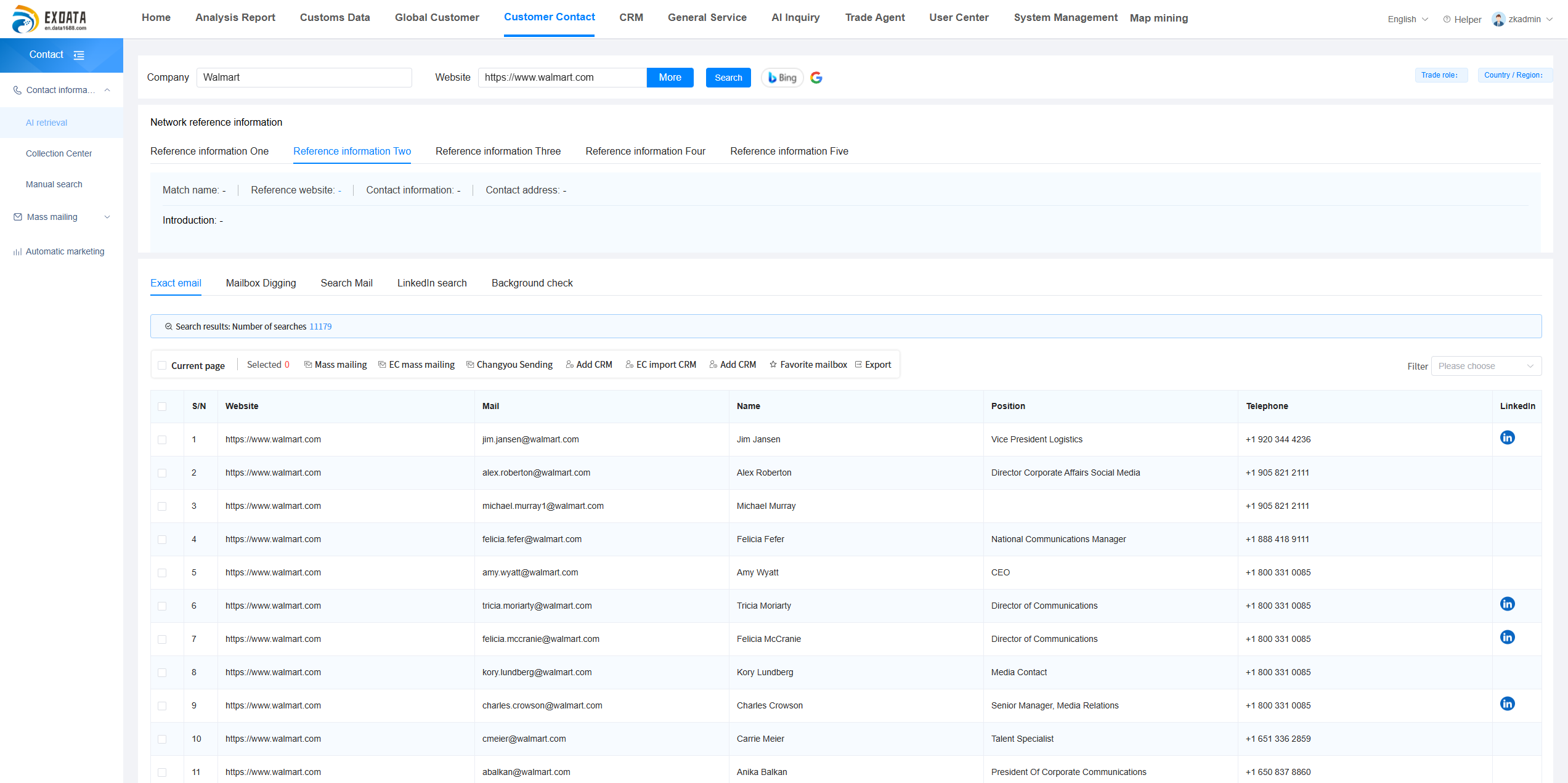
EX DATA enriches buyer records with verified contact information, reducing the time spent on manual research.
Export data from EX DATA is used across several common procurement scenarios:
- Finding New Suppliers — A buyer looking for alternative manufacturers can search by HS code to see all active exporters of that product, compare shipment volumes, and directly engage with factory-level suppliers.
- Verifying Supplier Reliability — A procurement manager can review a candidate supplier’s export history — how many shipments, to which markets, frequency — to assess their production stability and market reach.
- Competitor Supplier Analysis — Companies use EX DATA to reverse-engineer their competitors’ supply chains. They can identify which suppliers their competitors rely on and approach those suppliers for more favourable terms.
- Entering New Markets — Before committing resources to a new country, a business can analyse the import data for its product category: is demand growing? Who are the top importers? What is the pricing trend?
- Expanding Product Lines — When adding a new product, the platform provides a ready-made list of existing importers for that HS code, eliminating months of cold prospecting.
Market Context and Trends
The global competitive intelligence tools market, which includes trade data analytics, was valued at approximately USD 452.36 million in 2024 (Spherical Insights). North America holds a dominant 43.6% market share (Fortune Business Insights), indicating that data-driven procurement and sales are most mature in that region. However, with global trade reaching new heights and supply chain complexity increasing, adoption is accelerating in Asia, the Middle East, and Latin America. EX DATA itself lists markets such as UAE, Turkey, USA, Indonesia, Kazakhstan, Uzbekistan, Korea, Japan, Brazil, Ecuador, and Colombia — reflecting a diverse client base that spans both developed and emerging economies.
Comparison with Traditional Methods
Traditional customer acquisition approaches each have well-known limitations:
| Method | Key Limitation |
|---|---|
| B2B Platforms (Alibaba, etc.) | Traffic is rented; customers belong to the platform, not the seller. |
| Trade Shows | Low frequency, limited reach, no follow-up intelligence. |
| Google / LinkedIn Manual Prospecting | Labour-intensive, no way to verify actual purchasing intent. |
| Mass Email Blasts | No targeting = spam, extremely low conversion. |
| Advertising (Google/Facebook) | Rising cost per lead, declining conversion rates. |
| Static Customer Directories | Data is outdated; does not reflect real-time purchasing behaviour. |
EX DATA’s approach differs by using real transaction evidence — the customs declaration — as the starting point. One honest limitation is that the data is limited to what is declared to customs; non-customs data (e.g., services trade, intra-company transfers) is not covered. Furthermore, the depth of available shipment detail varies by country (some countries provide bill-of-lading level data, others only summary statistics).
Future Outlook
As global trade becomes more digitised and transparent, the role of export data platforms will expand from lead generation to full supply chain intelligence. We can expect tighter integration with CRM systems, real-time shipment tracking, and predictive analytics that estimate a buyer’s next order window. Companies that embed customs data into their core sales and procurement processes today will have a structural advantage as the market for competitive intelligence tools grows beyond the current USD 450 million level.
Frequently Asked Questions
What is EX DATA?
EX DATA is a global trade data provider founded in 2006 in Hangzhou, China. It offers a one-stop foreign trade big data analysis and intelligent customer acquisition platform — EX DATA 6.0 — covering import and export data from 200 countries or regions and over 30 million real buyers.
How does EX DATA get its data?
The platform aggregates customs transaction data from 200 countries/regions, including import and export declarations, bills of lading, and shipment manifests. It then cleans, standardises using the Harmonized System (HS) code, and structures the data for analysis.
What kind of companies use EX DATA?
Import and export enterprises, OEM/ODM manufacturers, cross-border e-commerce sellers shifting to B2B, and growing export teams use the platform to find real buyers, analyse markets, and reduce customer acquisition costs.
Is the data updated in real time?
EX DATA provides continuous data updates. The service includes dynamic buyer pool maintenance, reflecting new shipments and changes in purchasing behaviour over time.
How does it compare to Panjiva or Volza?
Panjiva maintains profiles for over 9 million organizations with 1 billion+ shipment records. Volza offers over 3 billion shipment-level records. EX DATA differentiates by integrating customer contact enrichment, supply chain relationship mapping, and strategy guidance — not just raw data — into a single platform built for active sales use.
Does EX DATA cover all industries?
Yes, the data covers any product classified under the Harmonized System (HS) nomenclature, which is used in 211 economies. Therefore, any traded physical good is searchable through the platform.
EX DATA
https://en.data1688.com/
Email: tianhuihui@data1688.com
WhatsApp: +86 173-0098-3023
Download the company brochure: PDF
Tem questões ou precisa de mais detalhes?
Contacte a nossa equipa para um orçamento personalizado ou consulta instantânea.
Solicitar orçamento
Preencha o formulário abaixo e a nossa equipa entrará em contacto com uma proposta personalizada.
Chat direto do WhatsApp
Prefere conversar em tempo real? Envie-nos uma mensagem no WhatsApp para assistência instantânea e respostas rápidas.
- Obter orçamento personalizado
- Partilhar fotos ou documentos
- Discuta as suas necessidades diretamente
Geralmente responde em 5–30 minutos durante o horário de expediente.