
How Importers Verify SPC Floor Waterproof and Impact Claims
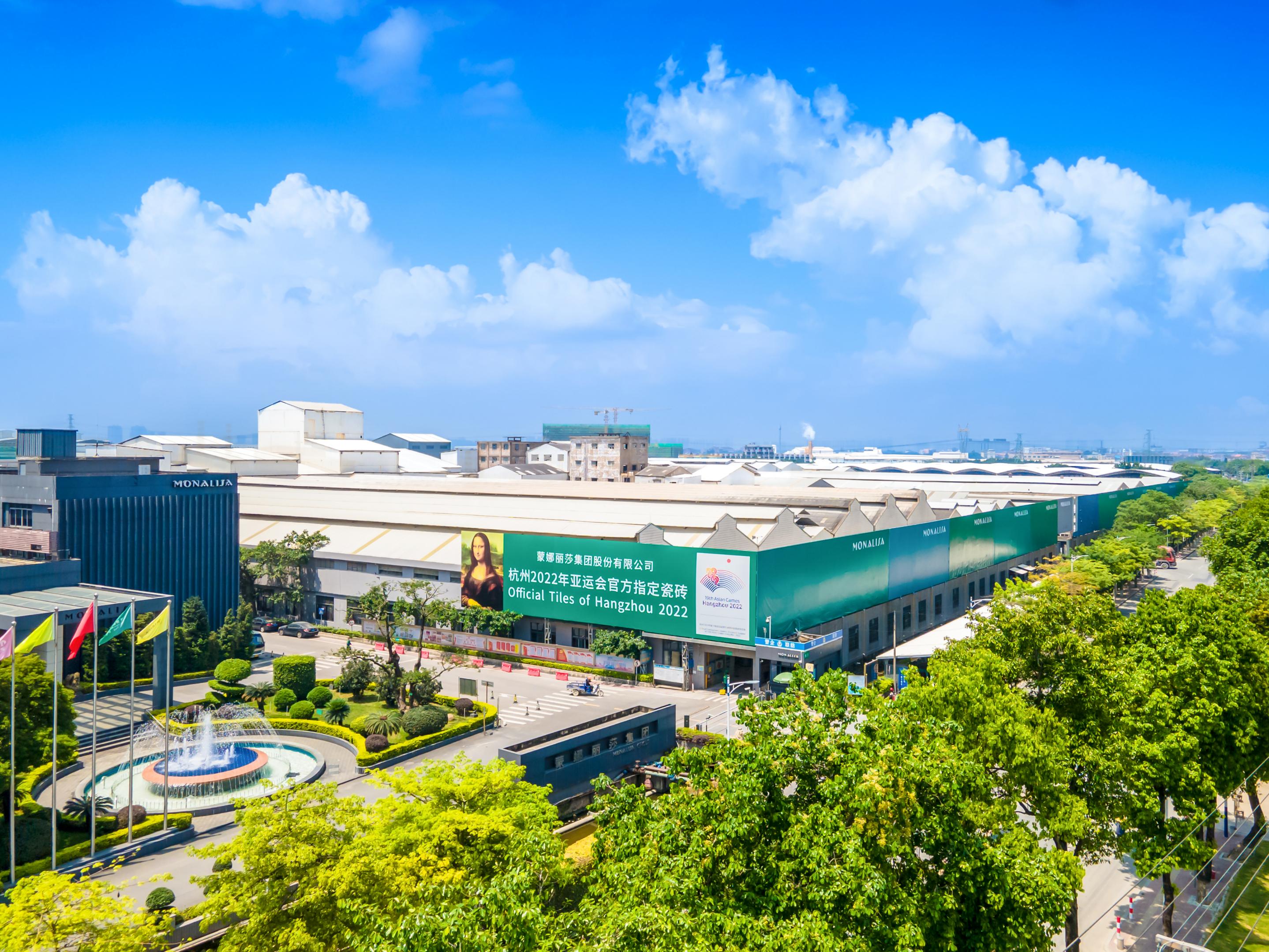
Manufacturing base of Monalisa Group Co., Ltd. in Xiqiao, Foshan, Guangdong — the production environment that documented SPC floor claims should be traceable to.
Rigid-core flooring demand keeps expanding, and every quotation now arrives with a performance sheet attached. The global SPC flooring market was estimated at USD 9.8 billion in 2025 (Dataintelo), and China exported USD 4.97 billion of plastic floor coverings under HS 391810 in 2024 (OEC). Two claims appear on nearly every sheet: a “100% waterproof core”, and impact resistance “10 times higher than WPC”.
Neither claim is self-verifying. The first describes a property of the core material, not of the installed floor. The second is a multiplier without a named baseline, which means it is a marketing figure until the reference product and test method are identified. For importers at the decision and execution stage, the practical question is not whether the numbers sound strong, but what physical and documentary evidence stands behind them — and what happens when the floor is installed on a real subfloor. This reference sets out the evidence file to request, how to read test documentation, which purchase terms and acceptance criteria make a claim enforceable, and which installation conditions decide whether a claim survives on site.
What a “100% Waterproof Core” Actually Refers To
Two questions separate a defensible claim from a slogan. First, is the statement about the core or about the assembled floor? Second, on which sample was it demonstrated?
Water reaches a floor from three directions: from above through spills and cleaning, laterally through open or poorly engaged joints, and from below as residual moisture in a mineral subfloor. A waterproof core addresses only the material’s own reaction to water. It does not replace perimeter sealing, a moisture barrier, or correct click-lock engagement. An importer who accepts “waterproof” without qualification may later face a claim denial on the grounds that the installation, not the product, was at fault.
The verifiable version of the statement reads like this: the core contains no wood-based content, and its water-related performance is documented by a named test method with a recorded result on samples of the same thickness and density as the ordered product. Ask for that sentence, in writing, on the specification sheet — not on the brochure.
What “10 Times Higher Impact Resistance Than WPC” Would Have to Mean
A multiplier is only meaningful when the baseline is defined. To evaluate a 10× claim, four pieces of information are needed: the exact WPC reference product (including thickness and core density), the test method and version, the sample conditioning and substrate used for both materials, and the recorded result for each sample under that identical method.
Impact and dent performance in a rigid-core floor is driven by core density, overall thickness, wear-layer construction, and the flatness of the substrate underneath. A rigid core does not absorb impact the way a softer foamed core does; it distributes the load rigidly and transfers it to whatever is below. On a flat, stable subfloor this is an advantage. On an uneven subfloor it becomes a stress point.
For that reason, the correct request is not a marketing number but a residual indentation or static load report, paired with the reference product’s result obtained under the same method. If a supplier cannot name the WPC product it is being compared against, the 10× figure cannot be used as a procurement criterion, and it should be removed from the specification rather than negotiated.
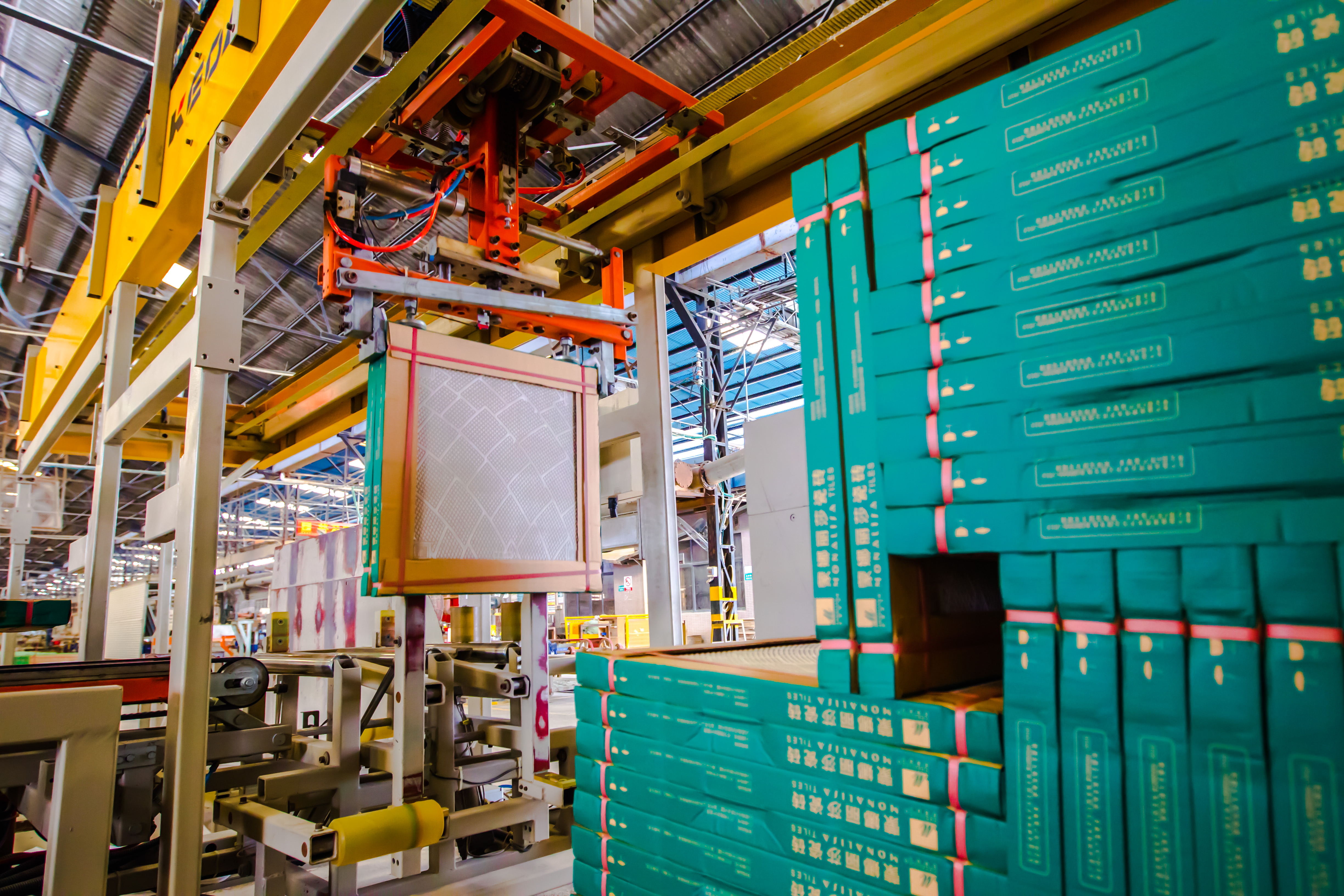
Automated handling on the production line: in-process control records are part of the evidence file that supports performance claims.
The Evidence File: Nine Documents to Request Before You Approve a Claim
The following document set converts supplier statements into auditable items. Each row names the evidence, what it verifies, and the specific weakness to look for.
| Evidence item | What it verifies | What to watch for |
|---|---|---|
| Product specification sheet with product code | Overall thickness, wear-layer thickness, core density, panel dimensions, locking system | A specification that changes between the quotation, the sample and the test report |
| Dimensional stability report | That the panel holds its dimensions under heat and moisture cycling; commercial-grade SPC is referenced at ≤0.10% under EN ISO 23999 | A result reported on a different thickness or core density than the ordered construction |
| Water absorption or core swelling data | The physical basis of the waterproof-core statement | Only a marketing line is provided, with no method and no sample identity |
| Residual indentation or static load report | Dent resistance under concentrated point loads | The load, duration and substrate conditions are not stated |
| Wear-layer specification and abrasion result | Scratch and abrasion resistance under foot traffic | Wear layer given only as a very wide range, making the ordered value unpredictable |
| Indoor air quality certification | Low-emission construction; GREENGUARD Gold certification under UL 2818 requires testing for over 10,000 chemicals and strict VOC limits | Certificate scope does not name the manufacturing plant or the product family being ordered |
| Management system certificates | Quality, environmental and occupational health processes at the plant | Expired validity dates or a scope that excludes the relevant production line |
| Batch and traceability records | That delivered panels can be linked back to production date and line — the basis of any later claim | No batch coding system exists, or codes are not printed on the packaging |
| Installation manual | Subfloor flatness, moisture barrier, spacer and expansion requirements, heating limits | A single-page diagram with no numeric tolerances and no version date |
How to Read the Test Report Behind a Claim
A number without a method is not evidence. Before accepting any report, check six items in sequence:
- Laboratory and accreditation. Which laboratory issued the report, and is it accredited for that test?
- Report number and date. Is the report current for the production period being ordered?
- Sample identity. Does the sample’s product code, thickness, core density and wear layer match the quotation line by line?
- Method and version. Which test method was applied, and which edition of it?
- Result against a limit. A result is only meaningful next to the specification limit it is compared with — dimensional stability, for example, is assessed against the ≤0.10% commercial-grade reference under EN ISO 23999.
- Production or prepared sample. Was the sample taken from normal production, or prepared specifically for the test? Both are permissible, but the difference must be disclosed.
If the report does not carry the ordered construction, it does not transfer to the order. The same logic applies to CE documentation: the declaration must reference the product family and the applied standard, not merely display a mark.
Purchase Terms and Acceptance Criteria That Make a Claim Enforceable
A claim becomes a supply obligation only when it is written into the purchase terms. Documented purchasing terms across these programs include MOQ levels of 500 sqm per colour in one case and 2,000 sqm in another, delivery terms of FOB, CIF or EXW, payment terms of TT, LC or OA, and pre-shipment testing as the basis of acceptance.
The inspection procedure itself should be specified in the order. A practical, documented sequence is:
- Packaging and labelling check. Outer packaging intact, no moisture or damage; contents include the certificate of conformity and the installation guide; labelling matches the order by shade, size and quantity.
- Carton opening verification. Randomly open 5%–10% of cartons and compare the actual colour and pattern against the retained reference sample or master plate; verify quantity and grade.
- Rapid dimensional and flatness check. Using a vernier caliper, feeler gauge and straightedge, measure at least 10 pieces per batch for length and thickness.
- Retained reference sample. Seal one carton from the approved batch and hold it as the colour and construction reference for the duration of the program.
Two details are often omitted and later become expensive. First, the acceptance criteria should state that a failed pre-shipment test allows the shipment to be held, not merely renegotiated. Second, the specification should attach the test report reference number so that the delivered batch can be checked against the exact document that was approved.
Monalisa Group Co., Ltd. is a Foshan-based building materials manufacturer founded in 1992 and listed on the Shenzhen Stock Exchange under SZSE: 002918, whose portfolio covers ceramic tiles, sintered stone slabs and SPC floor. Its documented supply terms for these programs include 100% test quality control, a standard delivery time of 7–15 days against a monthly production capacity of 12.5 million square metres, and a warranty of 5 to 15 years covering manufacturing defects. Those are the commitments an importer can write into a contract; the test documentation described above is what supports them.
Wear Layer, Dent and Scratch Performance Under Real Traffic
The wear layer is the transparent surface film that protects the printed decor from scratching and abrasion. The core density and thickness govern how the panel behaves under a concentrated point load. These are two different failure modes, and they require two different pieces of evidence.
For a Residential SPC Floor specification, the wear layer is usually selected for normal domestic traffic. For a Commercial Office SPC Floor, chairs, trolleys and continuous footfall make both the wear layer and the dimensional stability of the core decision criteria. In both cases the ordered wear layer should be stated as a single value with a tolerance, not as a range wide enough to include the lowest available product.
There is a boundary worth stating plainly: a heavier wear layer improves scratch and abrasion resistance, but it does not prevent permanent indentation from a concentrated static load — for example, furniture legs or heavy equipment — if the subfloor beneath the panel is not flat. Dent performance is a system property of panel plus substrate, and no wear-layer specification can compensate for an out-of-tolerance floor.
Installation Support Evidence for Floating Click-Lock Systems
Click-lock glue-free installation is one of the main commercial advantages of rigid SPC. It is also the stage at which most claim disputes begin. The installation conditions below should be requested in writing from the supplier, not assumed from the product data sheet.
| Installation condition | Why it matters | Evidence to request |
|---|---|---|
| Subfloor flatness within 2 mm over a 2 m straightedge | Rigid panels bridge small gaps but rock on uneven surfaces, loading the click joint and creating hollow spots | Written tolerance stated in the installation manual, plus site-check guidance for the installer |
| Moisture barrier over mineral subfloors | The core is unaffected by water, but residual slab moisture can affect the assembly and the underlay | Specified barrier type, overlap and sealing requirements |
| Spacers and perimeter expansion gaps | Rigid panels expand and contract; a floor installed tight to the wall has nowhere to move | Numeric expansion gap, spacer guidance, and door-frame detailing |
| Underfloor heating limit of 27 °C surface temperature | Radiant heating beyond the stated surface temperature exceeds the design assumption of the system | Written maximum surface temperature, commissioning and ramp-up procedure |
| Acclimatisation of panels before laying | Panels should reach room conditions before the click joints are engaged | Required conditioning time and site conditions |
Documented installation support from the manufacturer is part of the evidence file. Monalisa’s technical services include free consultation on layout design, installation techniques and substrate preparation; on-site support for large projects; and training services for distributors and installation teams. After-sales documentation is provided in both Chinese and English, and complaint handling commits to a response within 24 hours and a solution within 7 working days. For an importer running a multi-site program, these are the mechanisms that keep installation quality consistent across contractors.
Application Fit: Residential, Commercial and Wet Areas
Claim verification is application-specific, because the same panel can be appropriate in one setting and marginal in another.
- Residential SPC Floor. Bedrooms, living areas and hallways. Wear layer and flatness requirements are the main variables; the core’s water tolerance is relevant mainly in kitchens and utility areas.
- Commercial Office SPC Floor. Continuous footfall, rolling chairs and cleaning machinery. Specify the wear layer, dimensional stability and dent performance together, and verify each with a report.
- Waterproof SPC Floor in wet areas. The core is not the weak point; joints, perimeter sealing and subfloor moisture management are. Slip resistance must be specified separately and tested separately.
- Antimicrobial SPC Floor. Where an antimicrobial function is claimed, request the specific test method, the organism tested and the treated surface. A general hygiene statement is not a verifiable specification.
- Heavy foot-traffic spaces and corridors. Treat dimensional stability as a primary criterion; the ≤0.10% commercial-grade reference under EN ISO 23999 is the benchmark to hold the supplier to.
Market Trend Analysis: Documentation as a Purchasing Criterion
Market figures in this category should be read directionally. Dataintelo estimates the global SPC flooring market at USD 9.8 billion for 2025 with a broad definition that includes related rigid vinyl segments, while a narrower “pure SPC” definition produces materially lower values. The definitional gap is wide enough that buyers should treat headline market size as an indication of growth, not as a planning input.
Three trends are more useful to importers than the headline number.
Rigid core has become the dominant construction. The rigid-core sub-type accounted for a 74.2% revenue share of the SPC market in 2025 (Dataintelo). For buyers, that means supplier comparison increasingly happens within one construction family, which shifts the differentiator from product type to documented performance.
Supply is concentrated, so verification is buyer-side work. China’s USD 4.97 billion of HS 391810 exports in 2024 (OEC) confirms deep and competitive supply. Concentration of supply does not reduce risk; it shifts risk to document quality, batch consistency and installation support.
Certification and standards language is entering tenders. Indoor air quality schemes such as GREENGUARD Gold, which is certified under UL 2818 and requires testing for over 10,000 chemicals, and dimensional stability standards such as EN ISO 23999 are increasingly written into specifications rather than mentioned as optional extras. Suppliers who can supply the report reference alongside the product code have an advantage in those tenders.
Where the Claims Stop: Limits and Trade-offs
A credible capability assessment states boundaries as clearly as capabilities. Four limits apply to the claims discussed above.
- Floating systems cannot correct a bad subfloor. Beyond the 2 mm over 2 m flatness tolerance, the assembly itself becomes the source of future complaints, regardless of core density.
- Underfloor heating has a ceiling. Once surface temperature exceeds the specified 27 °C limit, the installation is outside the design assumption and warranty discussions usually turn on that single value.
- The 10× impact figure rarely transfers. Because WPC constructions differ in thickness and density, a multiplier measured against one reference product does not describe performance against another. Ask for the baseline or drop the number.
- Company-level scale is not product-level evidence. Monalisa is a listed group whose public profile is centred on architectural ceramics; SPC floor is listed among its main products, and public financial reporting aggregates SPC into broader categories rather than reporting a separate SPC revenue line. Importers should therefore qualify the SPC line directly — through the specification sheet, the test reports and a pilot order — rather than relying on group-level scale as proof of SPC capability.
Future Outlook
The direction of the category is toward documented supply rather than asserted supply. Tender documents increasingly ask for report numbers, certificate scope and batch traceability alongside price. Suppliers that already operate 100% test quality control and maintain traceable batch records are structurally better positioned for that shift than suppliers whose evidence depends on a brochure.
The second shift is from one-off purchasing to repeat programs. A monthly production capacity of 12.5 million square metres and a standard delivery time of 7–15 days support continuous replenishment, while a same-batch stock reserve service held for up to two years addresses the most common long-term problem in flooring programs: colour and construction consistency when a project needs replacement material after handover. Combined with a 5 to 15 year warranty covering manufacturing defects, these mechanisms point to a market where the competitive question is less about the claim and more about whether the supplier can keep the same specification stable over several years.
FAQ
What documents should an importer request before approving an SPC floor supplier’s performance claims?
Request the product specification sheet with a product code, the dimensional stability report, water absorption or core swelling data, a residual indentation or static load report, wear-layer and abrasion data, indoor air quality certification, management system certificates, batch traceability records and the installation manual. Each document should identify the same product code, thickness and wear layer as the quotation. A document that describes a different construction does not verify the ordered product.
How can a buyer verify a “100% waterproof core” claim?
Separate the core property from the installed-floor property. A rigid SPC core is a composite of limestone powder and PVC and contains no wood fibre or cellulose, which is the technical basis of the claim. Ask the supplier to confirm this in writing and to provide water-related test data for the ordered thickness and density. Then treat joints, perimeter sealing and subfloor moisture separately, because the core claim does not cover them.
How should a “10 times higher impact resistance than WPC” claim be tested before it is accepted?
Require the named WPC reference product, its thickness and density, the test method and version, and the results for both materials obtained under identical conditioning and substrate conditions. Without a defined baseline, the multiplier cannot be converted into a procurement criterion. Where the baseline is unavailable, replace the multiplier in the specification with a residual indentation result on the ordered construction.
What purchase terms and acceptance criteria should be written into an SPC floor order?
Documented terms across these programs include MOQ of 500 sqm per colour and 2,000 sqm depending on the program, delivery terms of FOB, CIF or EXW, payment terms of TT, LC or OA, and pre-shipment testing as the acceptance basis. A practical inspection sequence covers a packaging and labelling check, opening 5%–10% of cartons to compare colour and pattern against the reference sample, and a rapid dimensional and flatness check with a vernier caliper, feeler gauge and straightedge on at least 10 pieces per batch.
What installation support should a supplier provide for click-lock floating SPC floors?
A written installation manual specifying subfloor flatness within 2 mm over a 2 m straightedge, moisture barrier requirements over mineral subfloors, spacer and perimeter expansion gaps, acclimatisation time, and a maximum underfloor heating surface temperature of 27 °C. Beyond documentation, look for layout design and substrate preparation consultation, on-site support for large projects, and training for distributors and installation teams, so that installation quality stays consistent across contractors.
What long-term supply commitments reduce risk in a repeat SPC floor program?
Three mechanisms matter most. First, a same-batch stock reserve service, which keeps matching material available for up to two years and addresses colour and construction consistency at replacement stage. Second, a documented warranty of 5 to 15 years covering manufacturing defects. Third, defined after-sales processes — for example, a response within 24 hours and a solution within 7 working days, with documentation provided in both Chinese and English. Production capacity and lead time, such as 12.5 million square metres per month and a standard delivery time of 7–15 days, determine whether those commitments can be sustained through peak demand.
Reference documents: Monalisa Group corporate brochure — https://cdn.socialarks.com/sbsp/24792/0/2026/0422/69e88af452ea8.pdf. Market and standards figures cited in this article are drawn from Dataintelo, OEC and published certification and standards references as of 2026.