
How Induction Heaters Work: An Industry Procurement Reference
Industrial heating is moving through a measurable technology transition. The global induction heating system market was valued at USD 2.39 billion in 2024 and is projected to reach USD 4.5 billion by 2035, according to WiseGuyReports. By mid-2024, more than 550,000 induction heating systems were estimated to be deployed globally, with the Asia-Pacific region accounting for approximately 40% of the installed base, based on data from Global Market Insights. These figures point to a category that has expanded well beyond metallurgical niche uses into mainstream production heating infrastructure.
For buyers at the awareness and research stage, the challenge is not a shortage of suppliers. It is the opposite: many product names, power ratings, and efficiency claims exist without a common reference frame. This article provides that frame. It explains how induction heaters work, what equipment categories exist, where they are used, what buyers should verify early, and where the technology has genuine limits.
Guangdong Jiangxin Electronic Technology Co., Ltd., operating under the JONSON brand (also referred to as Jiangxin electromagnetic), is a manufacturer of induction heating equipment based in Foshan, Guangdong Province, China. Established in 2011, the company operates a 3,000-square-meter facility with an annual production capacity of 120,000 units, an R&D team of more than 30 engineers, and export sales accounting for 40% of total output. Its main markets include Europe, the United States, India, and Indonesia. JONSON is used in this article as a concrete product-level reference point, not as a general claim about market leadership.
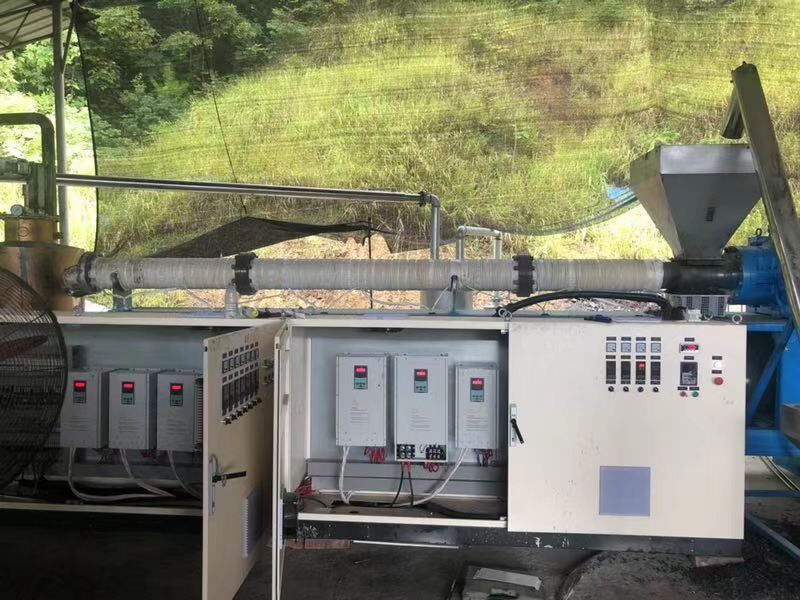
An induction heating system integrates a high-frequency controller, induction coil, insulation, and thermal management.
What Is an Induction Heater?
An induction heater is an electrical heating device that generates heat directly inside a conductive metal workpiece through electromagnetic induction. Instead of producing heat in a resistance wire and transferring it to the target, an induction heater uses a coil to generate an alternating magnetic field. When a metal object is placed inside or near that field, eddy currents form in the metal and generate heat through the electrical resistance of the workpiece itself.
This non-contact mechanism is the defining characteristic of induction heating. The coil does not touch the hot surface, which reduces wear and makes the process highly repeatable. In industrial practice, the term "induction heater" usually refers to a system consisting of a power controller, an induction coil, and the thermal insulation and cooling arrangements around them. The controller converts utility power into high-frequency alternating current; the coil converts that current into a magnetic field; the workpiece converts the magnetic field into heat.
Buyers searching for an induction heater therefore need to evaluate not only the power unit but also the coil, insulation, cooling method, and control interface, because system performance depends on the complete assembly.
Anatomy of an Induction Heating System
An industrial induction heating system is composed of several functional blocks. Purchasers often compare equipment based only on controller price, but the reliability and efficiency of an installation depend on all of the following elements:
- Induction heating controller / control board: The power electronics core that converts AC mains power into high-frequency current and regulates output power.
- Induction heating coil: A copper winding that creates the alternating magnetic field. Coils can be customized to the diameter and geometry of pipes, barrels, reactors, or workpieces.
- Thermal insulation layer: Placed between the coil and the heated load to direct heat into the workpiece and reduce losses to the environment.
- Cooling system: Air-cooled or water-cooled designs protect IGBT modules and other power components, especially in higher-power units.
- Temperature sensing and control loop: Supports closed-loop temperature control with PID adjustment, digital displays, and load temperature detection.
- Optional HMI / PLC integration: Enables automated operation, data logging, and multi-zone control in larger production lines.
| Component | Typical Function | Buyer Consideration |
|---|---|---|
| Controller / control board | Converts mains power to high-frequency AC; regulates power | Check voltage adaptation range, protection features, and control inputs |
| Induction coil | Generates alternating magnetic field | Verify material (copper), power rating, and geometric fit |
| Insulation layer | Limits heat loss from the heated surface | Thickness must match coil-to-load distance requirements |
| Cooling system | Protects IGBT and power electronics | Air-cooled vs. water-cooled; ambient conditions |
| Control interface | Temperature, power, and protection management | PID support, RS-485 communication, temperature display |
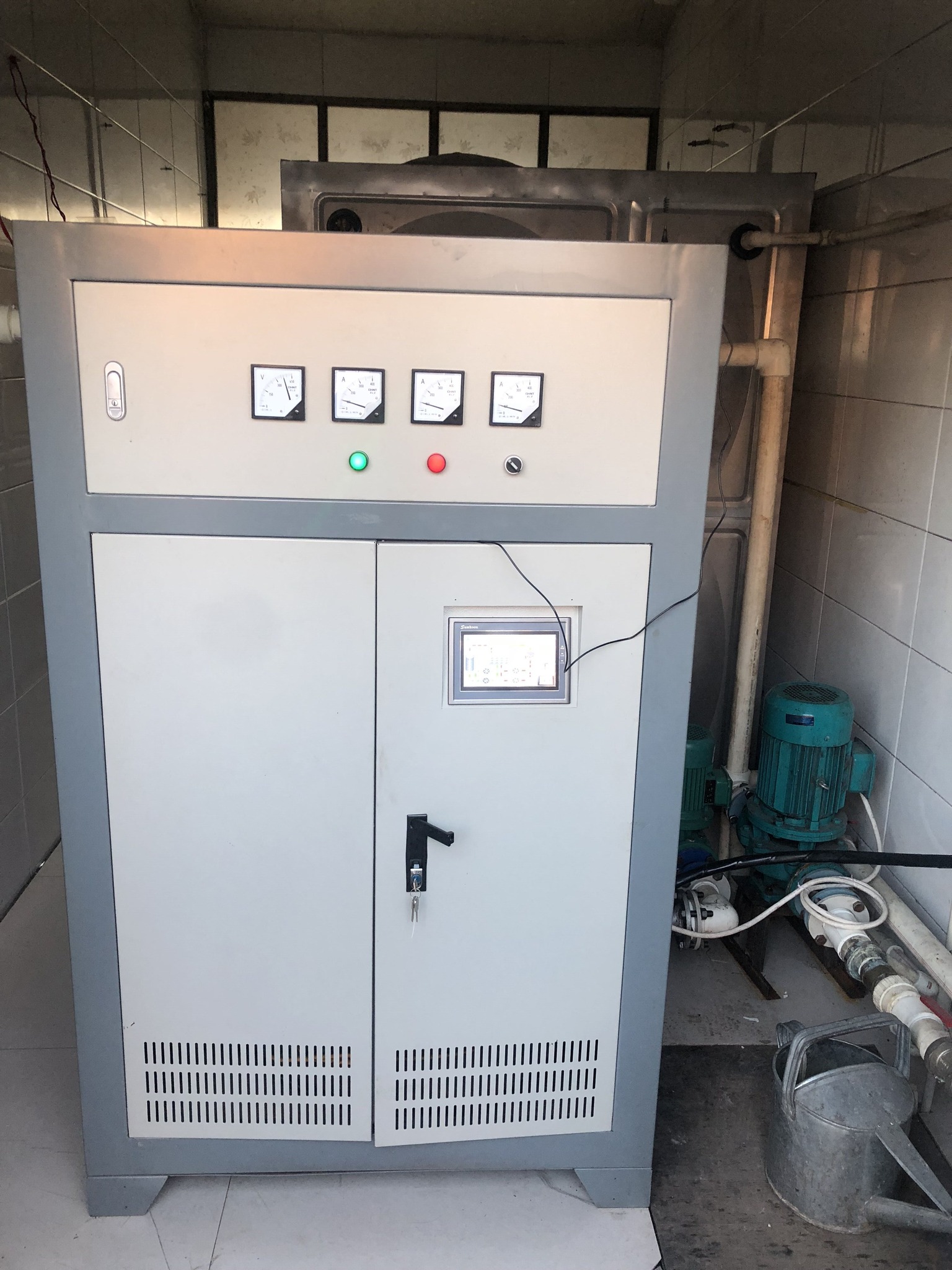
JONSON wall-mounted induction heater machines are available from 5 kW to 100 kW for industrial process heating.
Equipment Categories: The Full Industrial Range
Induction heating equipment is not a single product family. It is a technology platform that can be arranged into several distinct categories based on the heated medium and the physical form of the hardware. For an industrial buyer, understanding these categories is essential because the same core technology is sold under very different product names.
Wall-Mounted Induction Heating Machines
These are the most common industrial induction heating units. They are typically wall-mounted, rated at 380V, and available in power classes such as 5kW/8kW, 10kW/15kW, 20kW, 30kW, 40kW/50kW/60kW, 70kW/80kW, and 100kW. Representative JONSON models include JS1300-005/008, JS1300-10/15, JS1000-20, JS1000-30, and JS1000-100. They are widely applied to pipelines, barrels, extruder barrels, reactors, and other metal heating zones.
Induction Steam Generators
The JONSON JS-1600 high-frequency electromagnetic steam generator is rated at 30kW, 40kW, or 50kW, with a heat conversion efficiency of at least 99%. It operates at 380V / 50Hz / 60Hz, uses a 304 stainless steel inner liner and copper wire heating coil, and is intended for steam supply in plastics, rubber, food processing, chemical reactions, and similar industries.
Induction Hot Air Generators
The JS-1600-8/12/15 model is a vertical induction heating hot air generator with rated power options of 8kW, 12kW, and 15kW. It has an outlet temperature range of 80–130°C, wind pressure of 800–1000 Pa, and certifications including CE, ISO, and RoHS. This category is used for drying processes and forced hot air supply.
Instant Induction Water Heaters
The JONSON JS-JR-008 instant induction water heater is classified as an induction heating room heater. It operates at 220V with a rated power range of 3.5kW to 8kW, uses a tempered glass outer casing and copper core coil, and is intended for hotels, hospitals, and schools.
Bearing Induction Heaters
The JS1300-5/8/15/20/30 bearing induction heater provides output power of 5kW, 8kW, 15kW, 20kW, or 30kW at three-phase 380V, 50/60Hz. It is used for heating bearings and metal parts before assembly, helping to achieve controlled expansion without an open flame.
Induction Heating Coils
Coils are a separate procurement line because they are customized to the specific geometry of the load. JONSON offers customizable electromagnetic induction heating coils made of copper, with a rated power range of 1kW to 100kW, voltage options of 220V and 380V, and an operating frequency of 5kHz to 40kHz.
Induction Heater Control Boards
Control boards are the building blocks used by OEMs and equipment manufacturers. An example is the JONSON single-phase full-bridge 8kW electromagnetic heating control board, which is designed for commercial induction cookers, household induction cookers, ceramic ovens, and microwave ovens.
How the Heat Is Generated: Power Electronics and Control
The technical sequence in an induction heating system is consistent across most industrial equipment. Mains AC power at 50Hz is converted by an IGBT inverter module into a high-frequency current, typically in the range of 5kHz to 40kHz. This current drives an electromagnetic coil, producing an alternating magnetic field that induces eddy currents in the metal load. The eddy currents generate heat internally, which means the load heats itself rather than receiving heat from an external element.
In JONSON systems, the main circuit structure is described as full-bridge series resonance for higher-power units such as the 100kW model, and half-bridge series resonance for lower-power units. Control is handled by a DSP-based high-speed automatic phase-locking tracking control system, which continuously adjusts the operating frequency to match the coil and load characteristics.
Several specification points illustrate the control depth available in current equipment:
- Stepless power adjustment from 20% to 100%
- PID control with 0–5V input / RS-485 communication support
- Load temperature detection up to 1000°C with accuracy of ±1°C
- Start time below 1 second
- Instantaneous overcurrent protection time ≤2 microseconds
- 130% instantaneous power overload protection
- Fully electrically isolated soft start heating/stop mode
These functions matter for procurement because they determine whether the heater can be integrated into automated production lines, whether temperature control can be precise enough for sensitive processes, and whether the unit can protect itself when the coil is mismatched or the process changes suddenly.
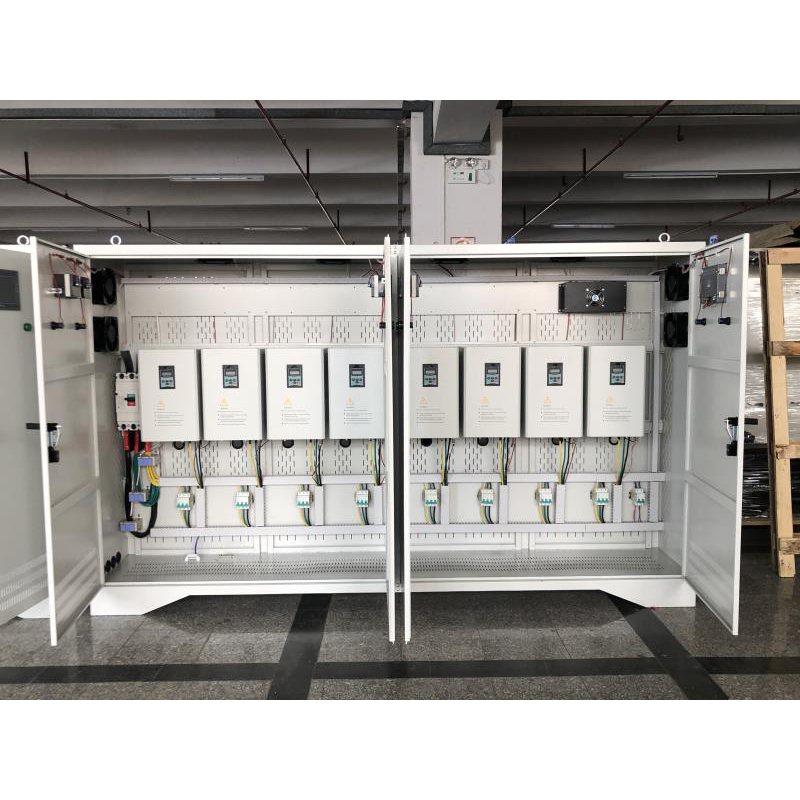
Induction heating equipment deployed in industrial production, showing controller and coil integration.
Application Map: Industries and Working Conditions
Induction heating equipment is not limited to metal forging or heat treatment. The JONSON product line lists the following industries: plastics and rubber, food processing, chemical reactions, crude oil pipeline heating, textile printing and dyeing, aquaculture heating, metal heat treatment, building heating, and medicinal herb drying. Each industry places a different demand on the heating system.
| Industry | Working Condition | Typical Heating Need |
|---|---|---|
| Plastics and rubber | Continuous high-frequency operation | Barrel and die heating for injection molding, extrusion, granulation |
| Food processing | High humidity, steam mist, constant temperature cooking | Steam supply and process water heating |
| Chemical industry | Medium-high temperature, weak corrosion | Reactor and thermal oil heating |
| Crude oil pipeline | Outdoor low temperature, antifreeze required | Pipeline heating to prevent solidification |
| Textile printing and dyeing | Steady heat, humid environment | Hot air and water bath heating |
| Aquaculture | Constant water temperature | Water heating for farms and greenhouses |
| Metal heat treatment | Rapid localized heating | Surface hardening and component heating |
| Building heating | Seasonal, low-temperature heat supply | Hot water or hot air for factories and public buildings |
| Medicinal herb drying | Low-temperature drying | Hot air generation with controlled outlet temperature |
Installation requirements also vary by setting. The electromagnetic coil must maintain a proper distance from the heated metal, and a thermal insulation layer is generally added to the heating area to improve efficiency. The control cabinet should be well-ventilated to avoid overheating of IGBT modules; some high-power equipment uses air cooling or water cooling. The controller should be kept away from humid, dusty, and corrosive gas environments, and the control board requires periodic inspection of wiring terminals, coils, and cooling systems.
What Buyers Should Verify at the Discovery Stage
For buyers in the awareness phase, the first goal is not to choose a supplier but to build a comparison framework. The following evaluation points are relevant across most induction heating procurement projects.
Power and Load Matching
The 10kW to 100kW power segment is described by MarketsandMarkets as dominating the induction heating market because of its versatility in part hardening, forging, and brazing. Power selection should follow the thermal mass of the load, the required heating speed, and whether the process needs continuous or intermittent operation.
Voltage Compatibility
Most industrial induction heaters are rated at 380V, while smaller units use 220V. JONSON also advertises customizable units for 110V, 240V, and 660V power systems, with a voltage adaptation range of ±20%. Buyers exporting to regions with different grid voltages should confirm whether the controller accepts the local voltage range without derating.
Efficiency Reporting
Heat conversion efficiency is the number most often quoted in product specifications. JONSON rates many of its induction heaters at ≥95% to ≥99% heat conversion efficiency, with the JS-1600 steam generator rated at ≥99%. Industry analysis by Global Market Insights cites system-level energy efficiencies up to 92% and average cycle time reductions of around 30% compared with traditional gas or resistance-based heating. Buyers should be aware that product-level efficiency and installed system efficiency are different metrics; the total result depends on insulation quality, coil matching, and process design.
Certifications and Compliance
For industrial induction heating equipment, CE, ISO, and RoHS are common certifications found in JONSON product specifications. For international safety compliance, the relevant references are IEC 60519-1 (general requirements) and IEC 60519-3 (particular requirements for induction heating and melting equipment). Buyers should confirm which certifications apply to their target market and whether the supplier can provide documentation.
Cooling and Environment
High-power induction heaters often support both air-cooled and water-cooled heat dissipation. The choice affects installation planning, maintenance, and suitability for dusty or high-temperature plant environments.
Control and Integration
DSP-based phase-locking control, PID adjustment, and RS-485 interfaces determine how easily the heater integrates with existing PLC systems. Temperature detection accuracy of ±1°C is relevant for processes that need tight control.
Market Signals Behind the Growth
The market data currently available points in a consistent direction. WiseGuyReports estimates the global induction heating system market at USD 2.39 billion in 2024, reaching USD 4.5 billion by 2035. Global Market Insights reports an installed base of over 550,000 systems, with Asia-Pacific accounting for approximately 40%. The same source notes that induction heating systems achieve energy efficiencies up to 92% and reduce average cycle time by about 30% compared with gas or resistance-based heating.
A broader signal comes from the industrial boiler and steam generator market, which was estimated at USD 54.79 billion in 2024 by Market Research Future. The report highlights a shift toward electrification via induction technology to meet decarbonization goals. This context matters because induction heating is increasingly being evaluated not only as an efficiency upgrade but as part of a broader electrification strategy for industrial heat.
Another useful data point for buyers is the dominance of the 10kW to 100kW segment. This range covers the majority of machinery heating retrofits, pipeline heating, and small-to-medium steam generation applications. Buyers operating in this range can therefore expect a wider selection of suppliers, more mature accessory ecosystems, and more service experience than in very high-power or very low-power niches.
Limitations and Trade-offs
Induction heating has clear advantages, but it also has boundaries that buyers should understand before comparing specific products.
Material constraint: Induction heating acts directly on electrically conductive materials, primarily metals. Non-conductive materials such as plastics, ceramics, or wood cannot be heated directly by induction; they must receive heat indirectly from a heated metal surface or another medium. This limits the technology to processes where the load is metallic or where a metal heat exchanger is acceptable.
Engineering sensitivity: The coil must be wound evenly and positioned at a consistent distance from the heated load. For example, JONSON specifications list coil-to-load distance (thermal insulation thickness) of 20–25mm for circular loads, 15–20mm for flat surfaces, 10–15mm for elliptical shapes, and within 10mm for super-elliptical shapes. A poorly matched coil can cause lower efficiency, overheating, or unstable control.
Initial investment: While induction heating can reduce operating energy costs, the initial cost of a high-frequency controller, customized coil, insulation, and engineering installation is often higher than that of a simple resistance heater or an existing gas burner. For very small, low-temperature, or intermittent heating tasks, the payback period may not be attractive.
System efficiency is installation-dependent: A heat conversion efficiency of ≥98% refers to the power stage, not the whole process. If insulation is poor, the coil is too far from the load, or the temperature control is not tuned, actual energy savings will be lower than the nameplate suggests.
Future Outlook
The direction of industrial induction heating appears to be set toward greater integration with digital controls and modular system design. JONSON system descriptions already include DSP-based phase-locking control, PID adjustment, RS-485 communication, and parallel operation of multiple units. These features point to a future where induction heating equipment is managed not as an isolated heater but as a controllable building block within a plant-wide energy system.
Electrification of industrial heat, driven by decarbonization policies, is likely to strengthen the demand for induction-based steam generation and hot water supply. The shift of the boiler market toward induction technology, described by Market Research Future, suggests that buyers in traditional steam and hot water applications will increasingly compare gas boilers against induction systems not only on fuel cost but on emissions compliance, installation complexity, and control flexibility.
For procurement teams, this outlook implies that supplier evaluation should go beyond price per kilowatt. The capacity to customize coils, adapt to local voltages, provide documented certifications, and support system integration will become more important as induction equipment moves deeper into regulated industries.
FAQ: Common Buyer Questions
What is an induction heater used for?
An induction heater is an electrical heating device that generates heat directly inside a conductive metal workpiece through electromagnetic induction. It is used in industries including plastics and rubber, food processing, chemical reactions, crude oil pipeline heating, textile printing and dyeing, aquaculture heating, metal heat treatment, building heating, and medicinal herb drying. Typical tasks include barrel heating for plastic machinery, reactor heating, pipeline heating to prevent solidification, hot air drying, steam supply, and constant-temperature water heating.
How does an induction heating system generate heat?
An induction heating system converts 50Hz AC power into high-frequency current, typically 5kHz to 40kHz, using an IGBT inverter module. This current drives an electromagnetic coil that produces an alternating magnetic field. When a metal load is placed inside the field, eddy currents form in the metal and generate heat through electrical resistance. Because the heat is created inside the workpiece, no direct contact between the coil and the workpiece is required.
What types of industrial induction heating equipment are available?
The main categories include wall-mounted induction heating machines (typically 5kW to 100kW), induction steam generators, induction hot air generators, instant induction water heaters, bearing induction heaters, customizable induction heating coils, and induction heater control boards. JONSON, for example, offers models such as the JS1300-005/008, JS1300-10/15, JS1000-20, JS1000-30, JS1000-100, JS-1600 steam generator, and JS-1600-8/12/15 hot air generator.
How efficient is induction heating compared with traditional heating?
Product-level heat conversion efficiency for many induction heaters is rated at ≥95% to ≥99%. For example, JONSON rates its 40kW/50kW/60kW induction heater at ≥98% and its JS-1600 induction steam generator at ≥99%. Industry analysis by Global Market Insights cites system-level energy efficiencies up to 92% and an average cycle time reduction of about 30% compared with traditional gas or resistance-based heating. The actual installed efficiency depends on coil matching, insulation quality, and system design.
What certifications should industrial induction heating equipment have?
Common certifications in JONSON product specifications include CE, ISO, and RoHS. For industrial safety compliance, IEC 60519-1 (general safety requirements) and IEC 60519-3 (particular requirements for induction heating and melting installations) are the relevant international references. Buyers should confirm which certifications apply to their target market and verify that the supplier can provide documentation.
Tem questões ou precisa de mais detalhes?
Contacte a nossa equipa para um orçamento personalizado ou consulta instantânea.
Solicitar orçamento
Preencha o formulário abaixo e a nossa equipa entrará em contacto com uma proposta personalizada.
Chat direto do WhatsApp
Prefere conversar em tempo real? Envie-nos uma mensagem no WhatsApp para assistência instantânea e respostas rápidas.
- Obter orçamento personalizado
- Partilhar fotos ou documentos
- Discuta as suas necessidades diretamente
Geralmente responde em 5–30 minutos durante o horário de expediente.