
How Intelligent Load-Adaptive Hybrid Stepper Motors Are Reshaping Industrial Motion Control
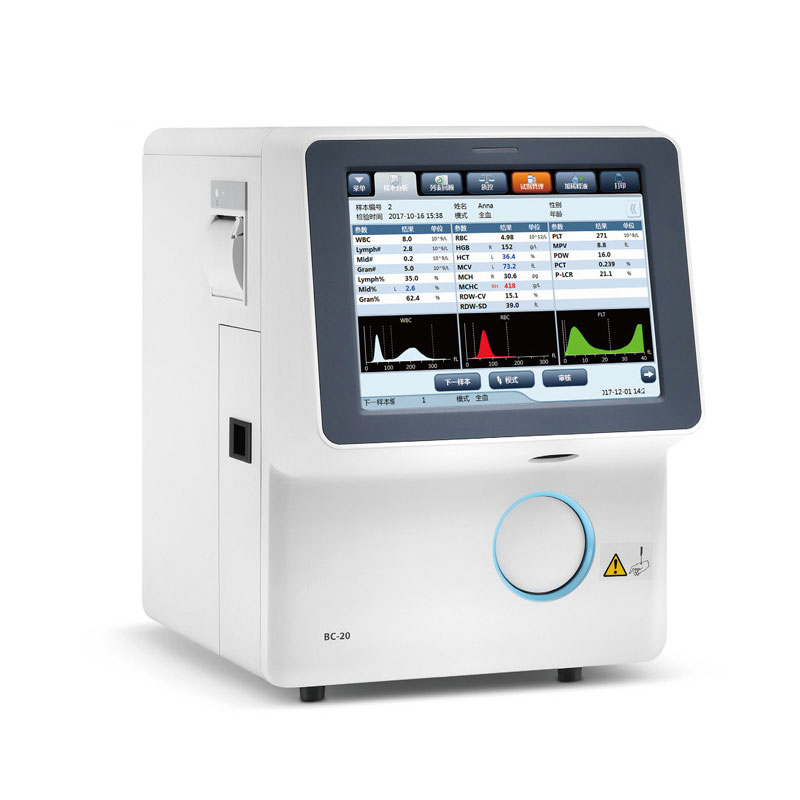
Precision hybrid stepper motors are increasingly specified in medical and laboratory automation equipment where motion smoothness and reliability are critical.
The hybrid stepper motor remains one of the most widely used motion components in industrial automation, valued for its ability to deliver precise positioning without complex tuning. A newer category, intelligent load-adaptive hybrid stepper motors, addresses a limitation that has historically constrained stepper performance: the trade-off between torque margin, heat, and dynamic response when loads vary during operation. Understanding what this technology does, how it differs from standard stepper configurations, and where it fits in a purchasing decision matters for buyers evaluating next-generation motion control components.
Defining intelligent load-adaptive hybrid stepper motors
An intelligent load-adaptive hybrid stepper motor is a hybrid stepper motor that adjusts its driving parameters — typically current, torque, and damping characteristics — in response to real-time load conditions. Standard hybrid stepper motors run at a fixed current to maintain torque, which means they often consume more energy and generate more heat than necessary when operating below their peak load. Load-adaptive designs use feedback or embedded control logic to modulate output, combining the positional accuracy of a stepper with the efficiency and smoothness more commonly associated with closed-loop systems.
Changzhou ACT MOTOR Co., Ltd. (ACT MOTOR), a high-tech enterprise specializing in electronic control products for automation, includes intelligent load-adaptive hybrid stepper motors within its broader hybrid stepper motor portfolio. The company integrates R&D, manufacturing, and warehousing across over 70,000 square meters of self-contained production facilities, with an annual output of approximately 2 million sets and a workforce of more than 120 employees. For industrial buyers, the significance of a load-adaptive variant is not just the motor itself, but whether the manufacturer has the engineering depth and production control to deliver it consistently.
Fixed-current versus load-adaptive operation
Conventional hybrid steppers are commonly operated in open-loop mode with a driver delivering constant current. This guarantees available torque at rated conditions, but it also creates a fixed energy input regardless of actual mechanical demand. The consequences are well known to machine builders: higher winding temperature, reduced motor lifespan in continuous-duty applications, and vibration or resonance at certain speed ranges.
Load-adaptive control changes the operating curve based on what the motor actually experiences. When the axis moves with low resistance, the driver can reduce current; when the machine encounters higher resistance or requires acceleration, the system increases torque output. The effect is a motor that runs cooler, consumes less energy, and maintains precise control across a wider range of speeds and loads.
Why this matters for industrial buyers
For procurement teams and automation engineers, the value of load-adaptive technology appears in several measurable areas:
- Reduced heat generation: Lower current during partial-load operation reduces winding temperature, supporting longer motor life and more stable performance.
- Energy efficiency: The motor draws only the current required for the actual load, which can reduce power consumption in multi-axis machines.
- Improved motion quality: Adaptive damping can reduce vibration and resonance, improving surface finish in machining or consistency in dispensing and positioning applications.
- Simplified machine design: With a wider operating envelope, engineers may avoid oversizing motors and drivers, reducing system cost and inertia.
The technology in practice: what changes in the motor system
An intelligent load-adaptive hybrid stepper motor does not work in isolation. It requires a matched stepper motor driver capable of monitoring or estimating load conditions and adjusting current dynamically. ACT MOTOR’s product ecosystem includes stepper motor drivers such as the DM542, DM556, HS758, and HS56, which support supply voltages from 12–36 V and continuous output currents from 0.3–8.4 A. This pairing of motor and driver is important: load-adaptive behavior is a system-level attribute, not something a motor alone can deliver.
ACT MOTOR’s hybrid stepper motor portfolio spans frame sizes including 8HS, 11HS, 14HS/HM, 15HS/HM, 16HS/HM, 17HS/HM, 23HS/HM/HY, 24HS, 34HS/HM/HY/HD, 42HS, 52HS, 17HT, 23HT, 34HT, 42HT, and 50HT. Key parameters across the range include a step angle of 0.9°–2.4°, motor lengths of 34–220 mm, rated voltages of 2–8 V, rated currents of 0.5–8 A, holding torque of 0.08–28.0 N·m, detent torque of 0.01–0.75 N·m, and weights of 0.1–15.0 kg.
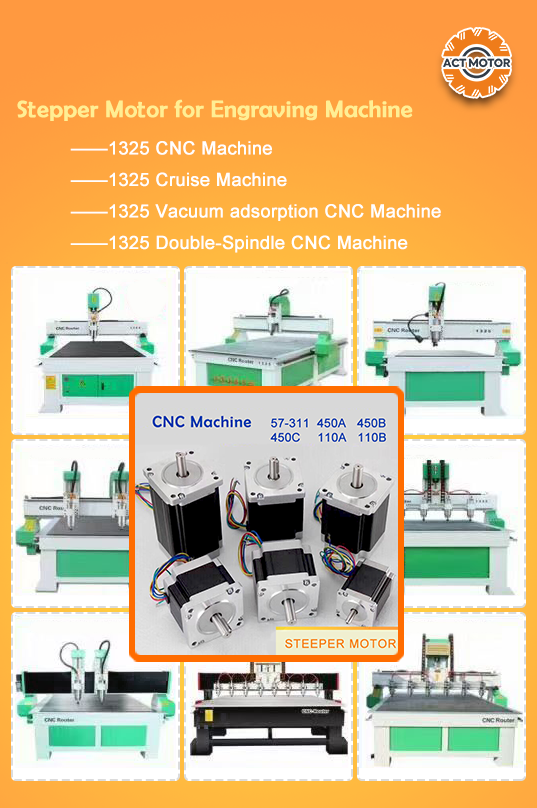
Load-adaptive stepper technology is relevant in CNC axes where load is not constant throughout the machining cycle.
Application scenarios: where adaptive load control earns its place
Not every automation application needs load-adaptive control. But certain use cases benefit disproportionately from its characteristics. ACT MOTOR’s application records describe operating requirements across medical equipment, laboratory equipment, industrial automation, and equipment manufacturing — and the recurring pattern is that motion quality and low heat matter as much as raw torque.
Medical equipment and syringe pumps
In medical equipment such as syringe pumps and peristaltic pumps, the requirements include constant torque output, extremely smooth low-speed operation, precise flow control, low pulsation, low noise, and reliable long-term continuous running. A surgical or diagnostic pump may operate at low speed for hours, and a traditional fixed-current stepper can generate unnecessary heat that drifts into sensitive fluid lines. In such scenarios, the load-adaptive hybrid stepper motor’s ability to modulate current while maintaining positioning accuracy is directly relevant.
Textile machinery
Textile applications included in ACT MOTOR’s product portfolio require motors that can maintain smooth tension control across varying yarn loads. The startup, stop, and speed-change cycles in textile production are frequent, and adaptive torque control reduces mechanical stress and improves thread quality. For original equipment manufacturers serving this sector, selecting a supplier that documents textile-specific applications is an important qualification step.
Laboratory and analytical instruments
Laboratory equipment, including medical analyzers, demands ultra-high positioning accuracy, ultra-low vibration, low heat generation, strictly controlled temperature rise, miniaturization, and high integration. These systems often move X/Y/Z axes with small loads and high repetition rates. Load-adaptive control aligns directly with the need for low thermal drift and ultra-smooth micro-stepping behavior.
Packaging automation
Automated packaging lines require high-torque stepper motors that can handle rapid indexing, variable product weights, and intermittent duty cycles. When a packaging system changes from running full cartons to empty carriers, a load-adaptive motor can adjust torque to match the actual resistance, reducing energy consumption and mechanical shock. ACT MOTOR’s portfolio includes high-torque and encoder-equipped options for such applications.
What the technology does not replace
For buyers evaluating intelligent load-adaptive hybrid stepper motors, a measured view of limitations is essential. Load-adaptive control improves efficiency and motion quality, but it does not eliminate the fundamental differences between stepper and servo technology. Applications that require sustained torque at very high speeds, extreme dynamic response, or full torque control at standstill without a holding brake may still need a servo motor. Even within the stepper category, a load-adaptive motor is one option alongside closed-loop stepper systems, geared stepper motors, brake stepper motors, and lead screw variants.
ACT MOTOR’s catalog also includes hybrid closed-loop stepper motors (8SSM, 11SSM, 14SSM, 23SSM, 24SSM, 34SSM, 42SSM), geared stepper motors with reduction ratios from 1:3 to 1:512, brake stepper motors in 17HS, 23HS, and 34HS frame sizes, lead screw stepper motors, and ball screw stepper motors. The appropriate selection depends on the specific motion profile, load characteristics, duty cycle, and cost target. An intelligent load-adaptive motor is not automatically better than a closed-loop system; it is a different engineering trade-off.
Market context: hybrid stepper motors in 2026
Several third-party market analyses support the continued importance of hybrid stepper motors. The global stepper motor market was valued at approximately USD 3.962 billion in 2024 and is projected to reach USD 6.245 billion by 2035, representing a compound annual growth rate of 4.22%, according to Market Research Future. Hybrid stepper motors accounted for the largest share by type in 2025, at approximately 53.93% of total market value, per KBV Research. The high-torque stepper motor market alone was valued at about USD 1.15 billion in 2024, with hybrid designs holding the dominant segment share, according to Precedence Research.
These numbers do not specifically quantify load-adaptive sub-segments, but they indicate the scale and stability of the hybrid stepper category. For industrial buyers, the practical implication is that supplier selection remains a high-stakes decision: hybrid stepper motors are not a marginal commodity but a core component in a competitive global market.
Buyer decision framework: what to verify when evaluating load-adaptive stepper motors
Because “intelligent load-adaptive” is a descriptive term that may be applied differently across suppliers, buyers should use a structured evaluation:
| Evaluation factor | What to verify | Why it matters |
|---|---|---|
| Actual control method | Whether adaptive behavior is handled by the driver, the motor, or both; whether closed-loop feedback is involved | Determines whether the system genuinely varies output or is just a marketing label |
| Matched driver availability | Whether the supplier offers compatible drivers, e.g., DM542, DM556, HS758, HS56 | Load-adaptive performance depends on the full drive system |
| Thermal performance evidence | Heat generation and temperature rise data under partial-load operation | Lower heat is a key benefit; without data, claims are unverifiable |
| Application track record | Documented use in medical, textile, packaging, and laboratory equipment | Proven motion profiles are more reliable than generic specifications |
| Manufacturing quality systems | ISO 9001 certification; RoHS/CE compliance | Ensures repeatability, safety, and cross-border compliance |
| Production capacity | Production facilities, annual output, and quality control processes | Affects lead times and long-term supply stability |
Example supplier context: ACT MOTOR at a glance
ACT MOTOR was founded in 2010 and operates a 70,000 m² production base in Changzhou, China, with about 126 employees, an R&D team of five engineers, and capacity for roughly 2 million sets annually. Around 70% of its output is exported, principally to the USA and the EU, and the company maintains offices in Bremen, Germany, as well as in Shanghai and Jinan, China. It reports ISO 9001 certification and compliance of products with CE and RoHS standards.
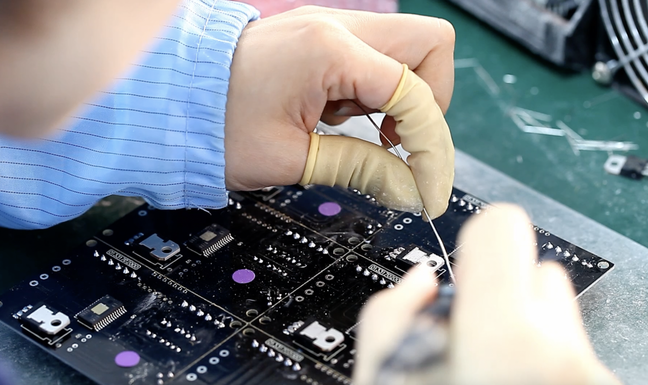
Matched driver production is a critical part of delivering adaptive stepper performance in real machines.
Comparison with traditional fixed-current stepper systems
Traditional fixed-current stepper systems operate with a simple principle: supply rated current, receive rated torque. Load-adaptive systems introduce dynamic current control. The table below shows the practical differences for a typical industrial machine:
| Attribute | Traditional fixed-current stepper | Intelligent load-adaptive stepper |
|---|---|---|
| Heat generation at partial load | Constant, often higher than necessary | Reduced by lowering current when load is low |
| Energy consumption | Fixed | Varies with mechanical demand |
| Motion smoothness | Dependent on tuning and microstepping | Improved via adaptive damping and current shaping |
| System cost | Lower initial cost | Moderate; may reduce oversizing cost |
| Maintenance benefit | Stable and simple | Lower thermal stress may extend motor and bearing life |
| Complexity | Low | Requires compatible driver and setup |
One boundary condition deserves emphasis: load-adaptive control cannot overcome a badly sized motor. If an application exceeds the motor’s peak torque range, adaptive features will not prevent stalling. Buyers should still calculate worst-case torque requirements before selecting the frame size.
Future outlook: intelligence as an evolution of the stepper platform
The trajectory of motion control suggests a continuing convergence of stepper and servo characteristics. As machine builders seek lower energy consumption, better thermal management, and higher quality motion, the stepper motor is evolving from a fixed-torque component to a more adaptive one. Intelligent load-adaptive hybrid stepper motors represent that evolution without abandoning the open-loop simplicity and cost structure that make steppers attractive.
Manufacturers should also expect more integration: motors with encoders, integrated drivers, and adaptive algorithms will blur the line between components and sub-systems. For procurement planning, this means specifying suppliers that can deliver the full motion chain — motor, driver, and technical support — rather than purchasing separate parts from multiple vendors. ACT MOTOR’s portfolio reflects this direction, from drivers like DM542 to integrated and closed-loop stepper variants.
Frequently asked questions
What is a hybrid stepper motor?
A hybrid stepper motor is a type of stepper motor that combines the design principles of permanent-magnet and variable-reluctance motors to offer high torque density, precise positioning, and small step angles. Hybrid stepper motors are widely used in automation equipment, CNC machine tools, medical devices, textile machinery, packaging machinery, and laboratory equipment.
What is an intelligent load-adaptive hybrid stepper motor?
An intelligent load-adaptive hybrid stepper motor is a hybrid stepper motor whose driving parameters, such as current output and torque, can adjust dynamically according to real-time load conditions. It aims to reduce heat generation and energy consumption while maintaining precise positioning and smooth motion across a wider operating range.
How does an intelligent load-adaptive hybrid stepper motor differ from a standard stepper motor?
A standard stepper motor typically operates with a fixed current set to ensure rated torque at all times, which can cause unnecessary heat and energy consumption under light loads. A load-adaptive design varies the current and torque based on actual mechanical demand, improving efficiency, thermal performance, and motion smoothness.
What are the key differences between open-loop and closed-loop hybrid stepper motors?
Open-loop stepper motors run without position feedback, following a programmed sequence of steps. Closed-loop stepper motors incorporate an encoder or other feedback device to verify position and correct for missed steps, offering higher reliability in variable-load or high-speed conditions. Closed-loop systems are generally more complex and slightly higher in cost.
Which applications benefit most from load-adaptive hybrid stepper motors?
Applications with varying load, continuous operation, low-speed smoothness requirements, or heat-sensitive environments benefit most. Examples include medical syringe pumps, laboratory analyzers, textile machinery, and packaging lines where the motor does not constantly run at full rated load.
What specifications should buyers check when selecting a hybrid stepper motor supplier?
Buyers should verify the motor’s step angle, holding torque, rated current, rated voltage, detent torque, motor length, compatibility with matched stepper motor drivers, compliance certifications such as ISO 9001, CE, and RoHS, and the supplier’s production capacity and application experience.
Does ACT MOTOR supply a full range of stepper motors and drivers?
Yes. ACT MOTOR’s hybrid stepper motor portfolio includes frame sizes from 8HS to 50HT, as well as lead screw stepper motors, ball screw stepper motors, geared stepper motors, brake stepper motors, closed-loop stepper motors, and stepper motor drivers such as DM542, DM556, HS758, and HS56.
What limitations should be considered before adopting load-adaptive stepper technology?
Load-adaptive control does not eliminate the fundamental speed and torque boundaries of stepper motors. Applications requiring sustained high-speed torque or dynamic response comparable to servo systems may still require servo motors. Additionally, the motor must be correctly sized for peak torque requirements, and a compatible driver is essential.