
How Intraoral Scanners Shape Dental Zirconia Block Selection
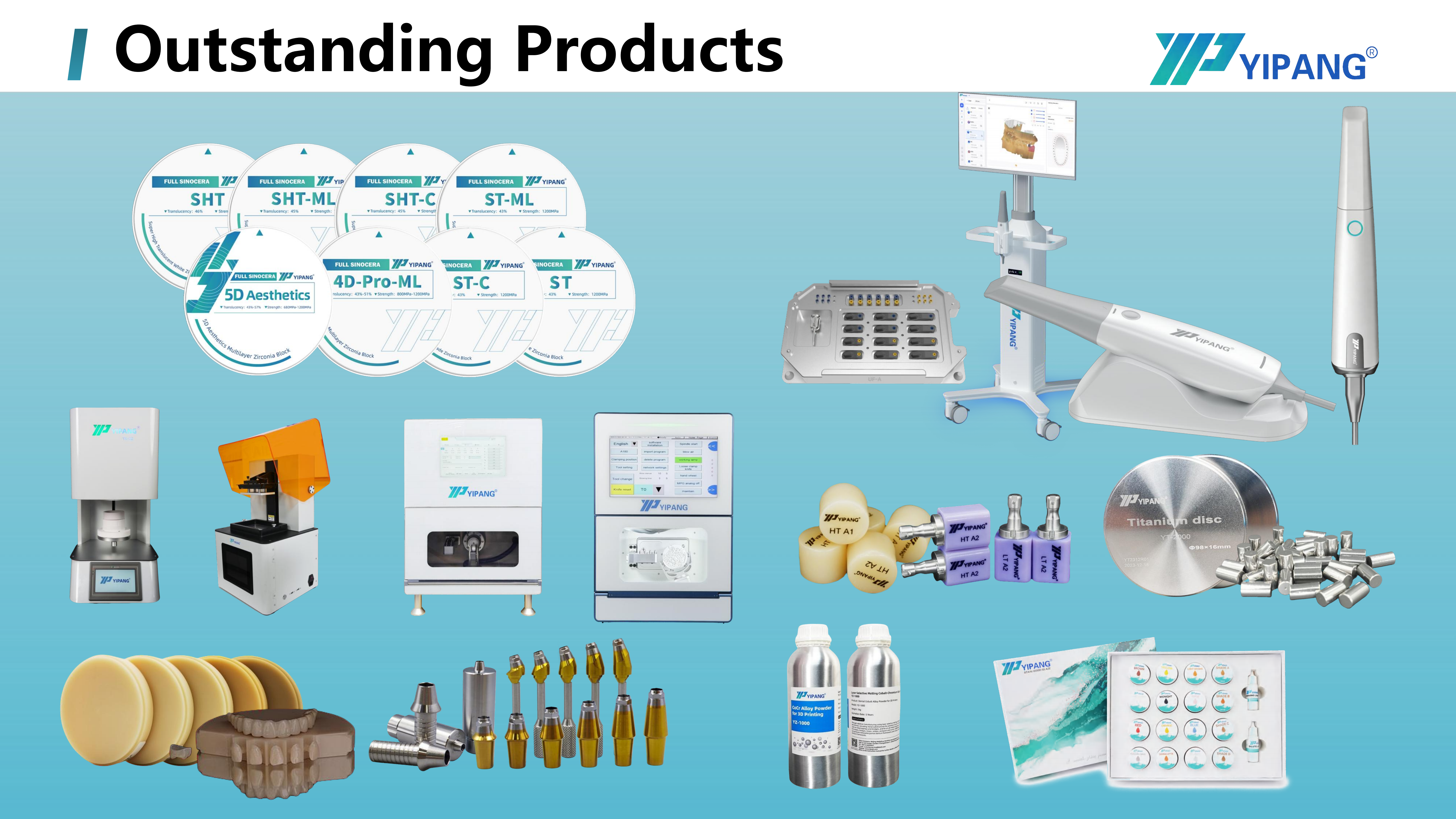
YIPANG 4D-PRO-ML multilayer zirconia block — a material option for scan-based CAD/CAM production.
Intraoral scanners have moved from an option to a near-standard entry point in modern dental laboratories. They capture digital impressions quickly, reduce storage demands, and send clean mesh data directly into restoration design software. Yet the finishing quality of a dental restoration still depends on what happens after the scan: the design, the milling process, and — most critically — the block of material from which the restoration is machined. For dental zirconia blocks, the link between scanner input and material output is now an important part of procurement decisions.
This article looks at how intraoral scanners influence the selection of dental zirconia blocks, what specifications matter in a scan-driven workflow, and how the YIPANG brand approach fits into that environment.
How Intraoral Scanners Change Laboratory Workflows
The arrival of intraoral scanning has shortened several steps. In a conventional flow, a physical impression is disinfected, poured in stone, and then sent through a lab scanner to create a digital model. With an intraoral scanner, the digital impression is transmitted directly from the clinic. The result is less distortion, less storage space for plaster models, and faster communication between dentist and technician.
But the digital workflow also moves the tolerance chain. Since there is no physical model to check, the laboratory depends on the accuracy of the scan file and the precision of the milling and sintering process. In this environment, the zirconia block becomes a critical variable. If the block does not behave predictably, the lab discovers the error only after sintering — at a point where remake costs and time are high.
Problem and Opportunity: Why Digital Workflows Create New Material Constraints
Traditional impression workflows rely on physical models, which give the lab a tangible reference. In an intraoral scanning workflow, that reference disappears. The lab must trust the digital data and the material simultaneously. That creates a clear opportunity: faster case turnaround, fewer model-related errors, and easier communication with clinicians.
But it also creates a constraint. The zirconia block must be compatible with the milling machine, the sintering furnace, and the software settings. If the block shrinkage rate changes between batches, the final crown may not seat properly on the prepared tooth. For this reason, labs evaluating zirconia blocks in connection with intraoral scanners should focus on documented material parameters, certification, and supplier consistency.
YIPANG and the 4D-PRO-ML Zirconia Block
YIPANG is a self-developed brand of Beijing Weijiahua Dentistry Equipment Co., Ltd. In addition to zirconia blocks, the brand covers glass ceramics, press ingots, PMMA, wax, titanium blocks, implant abutments, 3D scanners, intraoral scanners, milling machines, 3D printers, and sintering furnaces. For CAD/CAM labs, the YIPANG 4D-PRO-ML zirconia block is one of the core material options.
| Property | Specification |
|---|---|
| Product name | Zirconia Blocks for Dental Prosthesis (4D-PRO-ML) |
| Type | Dental Zirconia Disc / CAD/CAM Dental Milling Blank |
| Material | Zirconium dioxide (ZrO₂), yttria-stabilized |
| Available shades | ML multilayer |
| Thickness | 10 mm, 12 mm, 14 mm, 16 mm, 18 mm, 20 mm |
| Diameter | 98 mm |
| Sintering temperature | 1450°C |
| Bending strength | ≥1200 MPa |
| Translucency | Medium translucent |
From the supplier’s point of view, the block is designed for dental laboratories, dental prosthetics, and the dental CAD/CAM industry. It is commonly used for full-contour crowns, bridges, veneers, and implant superstructure restorations. The multilayer shade system aims to reproduce natural color transitions, while the yttria-stabilized zirconia matrix supplies mechanical strength for posterior restorations.
Certification and Compliance Evidence
For procurement teams, certification is part of the material assessment. The 4D-PRO-ML block is covered by an ISO 13485 certificate (certificate number 381240434R0S) issued by Shanghai POSI Certification Co., Ltd. The scope includes the design, production, and sales of dental medical materials and dental equipment. The certificate references GB/T 42061-2022 / ISO 13485:2016 and is valid through 2026-12-27.
In addition, Beijing Weijiahua Dentistry Equipment Co., Ltd. holds an EU Declaration of Conformity under MDR 2017/745 for its intraoral scanner models YP-X and YP-800 (Class I medical devices). This compliance context matters because buyers increasingly require device-level traceability from their material and equipment suppliers.
Production and Customization Considerations
YIPANG supports OEM/ODM production. According to company information, almost all specifications can be customized, with a monthly capacity of 15,000 pieces and a lead time of 15 to 30 working days. The minimum order quantity is negotiable. The company performs 100% raw material inspection plus random finished-product inspection, and exports to the USA, Europe, Brazil, the Middle East, and North Africa. For labs evaluating long-term supply stability, these factors are as relevant as the material specifications.
Technical Explanation: What Determines a Good Zirconia Block in a Scan-Based Workflow
In a scan-based workflow, the most important material characteristics are not always the same as in conventional pressing or manual layering. Below are the parameters that matter most when the input is a digital scan.
1. Multilayer Shade Architecture
A natural tooth has a gradient from the cervical to the incisal area. A multilayer zirconia disc (ML) contains multiple colored layers that are pressed and sintered as one block. This reduces the need for external staining and improves aesthetic consistency across multiple restorations.
2. Bending Strength and Fracture Resistance
Posterior crowns and multi-unit bridges are exposed to high masticatory loads. A bending strength of at least 1200 MPa helps resist chipping and framework fractures. The yttria-stabilized zirconia composition is the standard route for achieving this property.
3. Sintering Shrinkage Control
Zirconia blanks are milled in a pre-sintered, chalk-like state and then sintered to full density. During sintering, the material shrinks by a defined amount. If the shrinkage is consistent, the milled shape will shrink to the correct final dimensions. This is the hidden requirement behind every digital restoration.
4. Furnace Compatibility and Temperature Discipline
The recommended sintering temperature for the 4D-PRO-ML block is 1430°C to 1450°C. Following the standard heating and holding program prevents cracks and preserves the intended translucency. Rapid temperature changes should be avoided, and milled workpieces must be placed carefully on the sintering tray.
5. CAD/CAM System Compatibility
No single scanner or milling machine works with every material without configuration. The 4D-PRO-ML block is designed to be compatible with most mainstream dental milling machines, according to product information. Still, a laboratory should verify the recommended milling parameters with its specific machine model before volume production.
6. Documentation and Traceability
Material lot numbers, certificates, and technical datasheets help labs maintain a clear audit trail. For ISO 13485-certified suppliers, traceability is built into the quality management system. This is particularly useful for labs serving regulated markets or exporting to multiple countries.
Application and Use Cases
The 4D-PRO-ML zirconia block is applied in indoor constant-temperature dental laboratory environments. In a typical workflow, a dental milling machine shapes the contour from the block, then the dental sintering furnace densifies it. A dental lab scanner or intraoral scanner provides the digital case file that drives the design.
The documented project types include full-contour crowns, bridges, veneers, and implant superstructure restorations. These are the everyday workload of most dental laboratories, which is why the block is positioned as a production material rather than a niche product.
YIPANG reports hundreds of long-term cooperative clients worldwide, including dental laboratories, dental clinics, and distributors. Case records highlight high recognition for material stability and aesthetic effect, with a low customer complaint rate. The most frequently mentioned benefits are uniform translucency, stable sintering shrinkage, and compatibility with most mainstream CAD/CAM systems.
Step-By-Step Workflow in a Scan-Based Lab
- Clinician sends an intraoral scan file to the laboratory.
- Technician designs the restoration in CAD software.
- CAM software positions the restoration inside a 4D-PRO-ML zirconia block.
- A dental milling machine cuts the pre-sintered block to the designed shape.
- The milled restoration is cleaned and transferred to a sintering tray.
- Following the 1430°C to 1450°C heating curve, the furnace sinters the part to final density and size.
- The restoration is finished, characterized, and returned to the clinician.
Market Trend Analysis: The Ecosystem Is Becoming More Integrated
The adoption of intraoral scanners is part of a broader shift toward integrated digital dentistry. Clinics that scan in-house need laboratories that can accept digital files and return restorations without losing data fidelity. The lab’s material choice becomes part of this digital contract with the clinician.
YIPANG’s product matrix — from zirconia blocks and glass ceramics to intraoral scanners, milling machines, and sintering furnaces — reflects this trend. Instead of buying isolated products, laboratories are increasingly evaluating positions within a complete ecosystem. The parent company, Beijing Weijiahua Dentistry Equipment Co., Ltd., has represented international dental brands including VITA, Ivoclar, Dentsply, Amann Girrbach, and Noritake, and currently serves more than 1,000 dental laboratory customers in China. This history gives the company a broad view of how dental labs select and combine products across different systems.
The company also maintains a 25-person R&D team focused on dental material formula research, process optimization, and new product development. For a material like zirconia, small formula changes can affect sintering shrinkage, translucency, and long-term stability. Sustained R&D is therefore a relevant signal for buyers comparing suppliers.
Comparison with Traditional Workflows and Existing Limitations
Compared to conventional impression handling, intraoral scanning reduces physical model errors and can speed up the path from patient to production. The digital file is immediately available, can be duplicated without loss, and can be sent to multiple labs if needed.
| Aspect | Traditional impression workflow | Intraoral scanning workflow |
|---|---|---|
| Model storage | Physical plaster models | Digital files |
| Error source | Impression distortion, transport, casting | Scan resolution, material behavior, machine calibration |
| Turnaround | Longer due to model handling | Potentially shorter |
| Material requirement | Adaptable through manual adjustment | Stricter consistency and predictability |
However, the digital workflow has its own limitations. A zirconia block cannot replace accuracy that is missing from the scan or the design; it can only reproduce what the digital data contains. In practice, labs may need to calibrate material settings for specific milling machines and scanners. Not every scanner-mill-block combination has ready-made parameters, so trials and adjustments are a normal part of the transition. Additionally, while the 4D-PRO-ML block is compatible with most mainstream milling machines, compatibility should still be verified against the lab’s exact equipment list before volume production.
Future Outlook
The direction of future development is toward stronger, more translucent, and more predictable zirconia materials. As intraoral scanners continue to improve, the bottleneck will shift further toward material handling, sintering control, and quality assurance. Laboratories that settle on a supplier with documented certification, consistent batch behavior, and responsive technical support will be better placed to manage these challenges.
YIPANG, with its expanding product lines and a research team dedicated to material formulas, appears to be moving in this direction. For buyers, this means the discussion should no longer be limited to which scanner to buy, but should include which material system will carry the digital workflow into the future.
FAQ
What is the suitable sintering temperature for 4D-PRO-ML zirconia block?
The recommended sintering temperature range is 1430°C to 1450°C. Follow the standard heating and holding procedure to guarantee low shrinkage and stable translucency. Avoid rapid temperature changes to prevent cracking.
How do dental labs select zirconia blocks?
For high-volume dental labs, 4D-PRO-ML zirconia blocks are often selected for stable shade consistency and a balanced combination of mechanical strength and translucency. They are suitable for posterior crowns and multi-unit bridges. Before sintering, milled blanks should be inspected for obvious defects; chipped or cracked blanks should be discarded rather than used in final restorations.
Conclusion
Intraoral scanners change the way a case enters the laboratory, but the material chain still decides the clinical outcome. For labs that have invested in digital scanning, choosing a dental zirconia block involves more than reading a shade guide. It requires verifying strength, translucency, sintering behavior, supply consistency, certification, and compatibility with existing milling and sintering equipment.
The YIPANG 4D-PRO-ML block offers a documented example of how these factors can be combined in a production-oriented CAD/CAM material. As the industry moves deeper into digital workflows, the material behind the design deserves the same attention as the scanner in front of the patient.
Download resource: WJH Company Information (PDF) — company overview and product lines.