
How Manufacturing Craft and Technical Parameters Define Magnetic Pump Quality
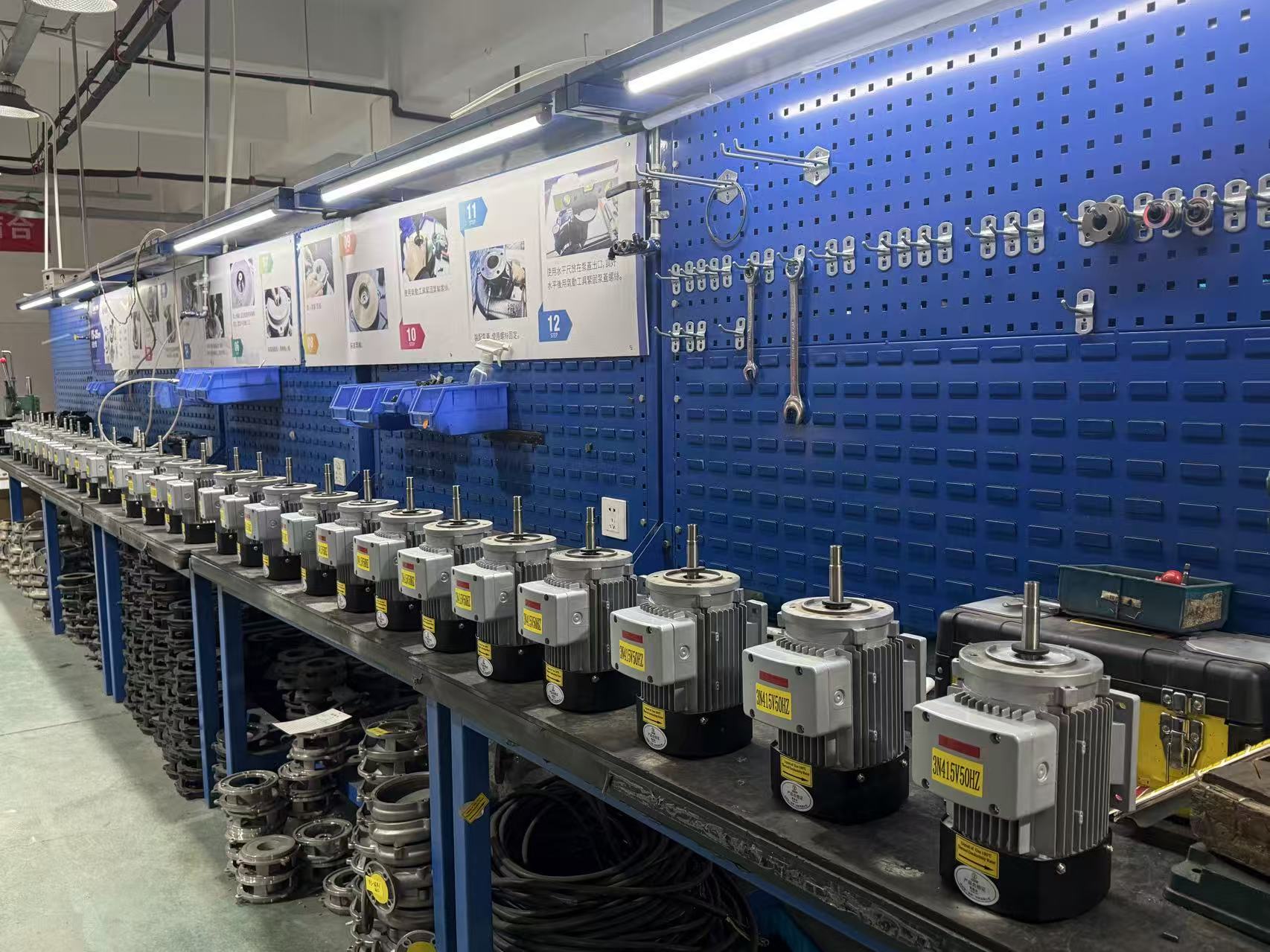
For industrial buyers evaluating magnetic pumps, two questions consistently dominate procurement decisions: How do I interpret the technical parameters on a datasheet? and How does the manufacturer's production process actually affect pump performance and longevity? These questions are particularly critical when sourcing pumps for challenging applications — handling high-temperature thermal oils, cryogenic fluids, or aggressive chemicals. This article provides a technical framework for understanding key specifications and evaluating manufacturing quality, using real-world examples from established suppliers like YUAN SHIN PUMP.
The Core Technical Parameters Every Buyer Must Understand
When reviewing a magnetic pump datasheet, the most critical parameters extend beyond flow rate and head. For temperature-controlled and high-purity processes, the following specifications demand careful scrutiny:
| Parameter | Why It Matters | Example (YUAN SHIN PUMP) |
|---|---|---|
| Medium Temperature Range | Determines suitability for extreme processes; impacts material selection and magnet strength. | -196°C to +400°C (MAP-18A, MAP-1100) |
| Pump Type / Hydraulic Design | Regenerative turbine (vortex) vs. centrifugal — affects head, flow curve, and tolerance to gas. | Regenerative Turbine (MAP series), Centrifugal (CAP series) |
| Maximum Head & Max. Capacity | Defines operating envelope; essential for system design. | MAP-18A: 80~100 m head, 3.9~7.2 m³/h; MAP-1100: 15~100 m, 15~200 L/min |
| Motor Power & Drive Configuration | Inverter-duty capability, single/three-phase, and efficiency class affect energy costs and compatibility. | 0.18 kW to 11 kW; options for special voltage, inverter duty |
| Wetted Materials | Stainless steel (e.g., 316L) ensures corrosion resistance and fluid purity. | Stainless Steel (SUS316/316L available) |
According to industry data, pumps that are mis-specified for temperature extremes account for up to 20% of early failures in thermal fluid systems. Buyers should always cross-reference the declared temperature range with the manufacturer's historical testing data.
How Manufacturing Processes Directly Affect Pump Quality
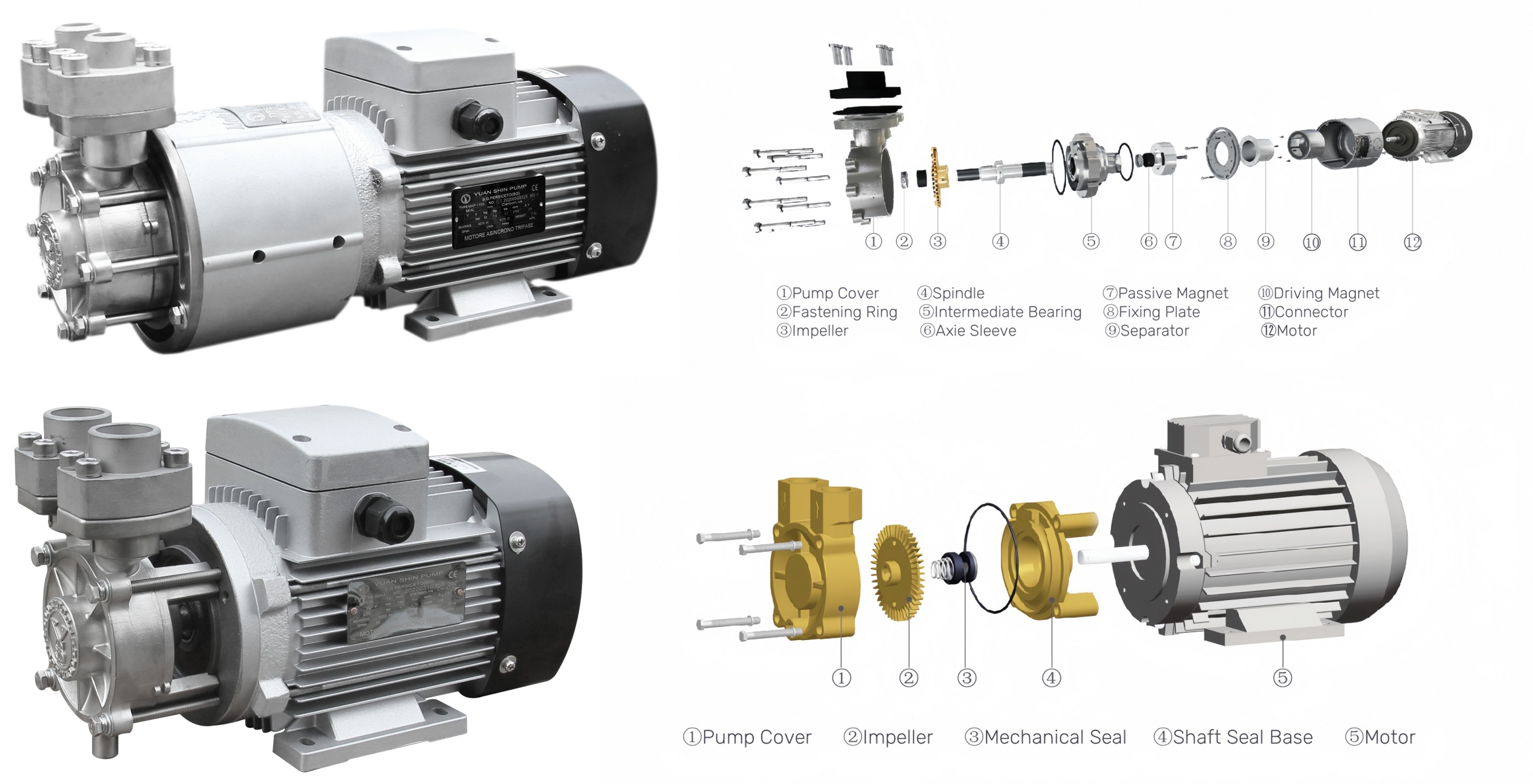
The core quality differentiator in magnetic pumps lies in the manufacturing of the sealing system. Unlike mechanical seal pumps that rely on dynamic sealing faces, magnetic pumps use a static seal (O-rings and gaskets) to contain the fluid. This fundamental design eliminates shaft leakage and significantly extends maintenance intervals. However, the actual quality of the static seal depends heavily on precision machining of the containment shell and the assembly of the rare-earth magnet coupling.
YUAN SHIN PUMP demonstrates this with their entire MAP and CAP series. The MAP-18A, for example, is a Regenerative Turbine Magnetic Pump designed for high-temperature applications up to 400°C. The manufacturing process involves several critical steps:
- Hydraulic design optimization: Regenerative turbine impeller and casing geometry are machined to tight tolerances to achieve the specified head and flow characteristics.
- Magnetic coupling assembly: Magnets are carefully matched and aligned to maintain torque capacity at elevated temperatures without demagnetization.
- Static seal selection: High-temperature rated O-rings (FKM or PTFE-based) are selected based on the target media and temperature range.
- 100% functional testing: Every pump undergoes flow, head, and leakage detection on an in-house test rig before shipment, as confirmed by the company's quality control process.
Industry comparison data shows that magnetic pumps from reputable manufacturers achieve a Mean Time Between Failures (MTBF) increase of more than 60% compared to mechanical seal pumps in the same application. In a real case from Brazil, an injection molding plant replaced mechanical seal pumps with YUAN SHIN PUMP's MAP-1100 units and reduced pump maintenance costs by 80% over five years.
Certifications as a Proxy for Manufacturing Maturity
For global buyers, independent certifications provide verifiable evidence of manufacturing quality. YUAN SHIN PUMP holds ISO 9001:2015 (Quality Management System) and ISO 14001:2015 (Environmental Management System) certificates, covering the design and production of vortex and centrifugal pumps. Additionally, the company has obtained:
- UL Recognized Component for electric motors (UL 1004-1 for US, CSA C22.2 No.100 for Canada, certificates UL-US-2425000-0 and UL-CA-2419643-0, issued July 2024)
- CE certification for both regenerative turbine magnetic pumps (CE-4067-300425) and centrifugal magnetic pumps (CE-4066-300425), valid until 2030
These certifications confirm that the motors and pumps comply with recognized safety and performance standards, which is particularly important for buyers in North American and European markets who face stringent regulatory requirements.
Market Trends Driving Demand for High-Performance Magnetic Pumps
The global magnetic pump market is projected to grow at a CAGR of approximately 6% through 2030, fueled by:
- Expansion of semiconductor and new energy testing — where leak-free and contamination-free circulation of coolants is mandatory.
- Increasing adoption of TCU (Temperature Control Units) in injection molding, die casting, and battery manufacturing.
- Shift toward energy-efficient and low-maintenance pumping solutions across chemical and pharmaceutical industries.
In this competitive landscape, buyers who understand how to read parameters and evaluate manufacturing processes gain a distinct advantage. They can avoid costly specification mismatches and select suppliers that offer both technical breadth and production discipline.
Conclusion: From Datasheet to Decision
Technical parameters tell only part of the story. The manufacturing philosophy — from material selection to assembly precision and testing — determines whether a magnetic pump delivers on its promised performance over years of operation. For buyers seeking a reliable partner for extreme-temperature, high-purity applications, a supplier like YUAN SHIN PUMP (founded 1990, with facilities in Taiwan, Guangdong, and Suzhou) offers a combination of deep application experience, extensive temperature range capabilities (-196°C to +400°C), and recognized quality certifications.
Download the full product brochure for detailed specifications and application guides: YUAN SHIN PUMP Brochure (PDF)