
How Motorcycle Seats Are Made and What to Look For
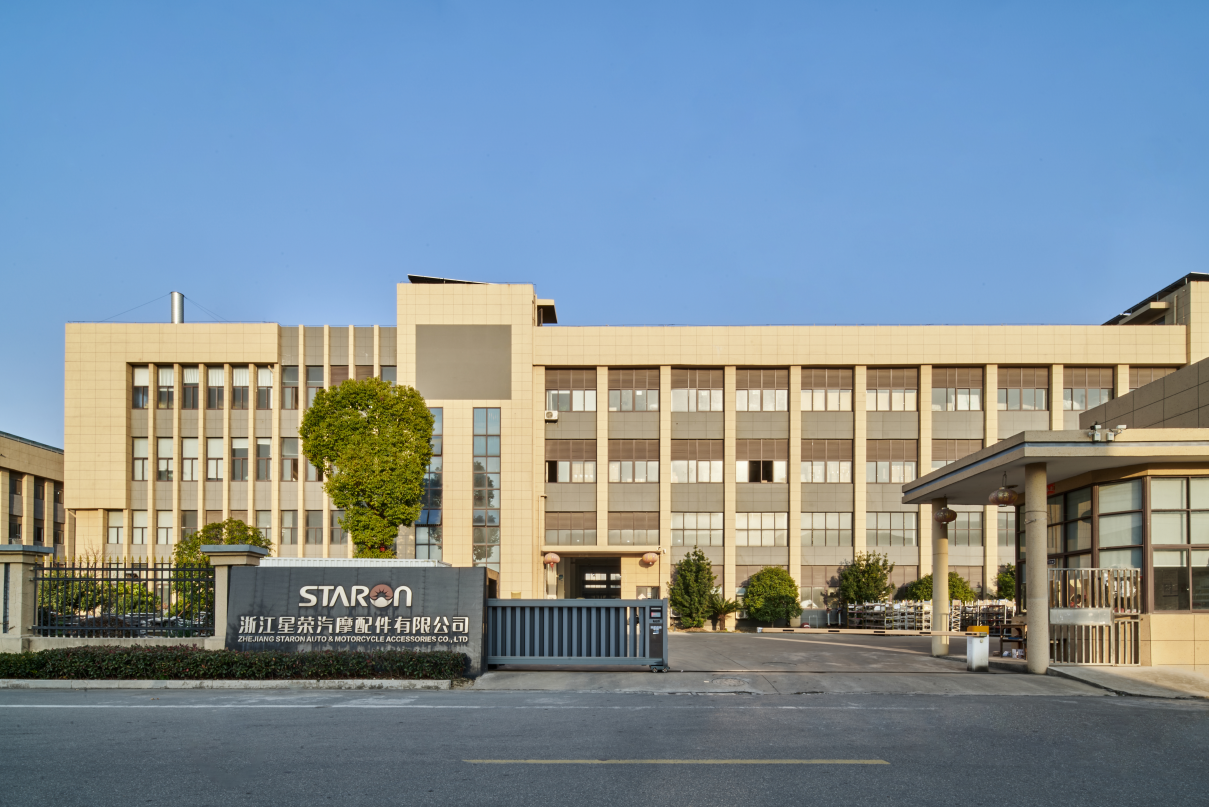
Zhejiang Xingrong Auto & Motorcycle Parts Co., Ltd. manufacturing facility in Taizhou, Zhejiang Province. Image source: company profile.
The global motorcycle seat market is expected to grow from USD 7.42 billion in 2025 to USD 13.30 billion by 2032, according to Market Research Future. A motorcycle seat is more than a comfort layer; it is a structural link between the rider and the machine. It must support weight, absorb vibration, resist weather and align with the motorcycle frame. For manufacturers, distributors and repair shops, knowing how seats are made and what separates a durable part from a cheap replacement is a basic procurement skill.
The role of the motorcycle seat in the vehicle
A motorcycle seat is the component mounted on the motorcycle frame that supports the rider and often a passenger. In vehicle structure terms, it is a non-powered static fitting part, attached to the main body frame and body shell. Its main functions are to provide a comfortable riding sitting experience and to beautify the motorcycle appearance. For maintenance, it is also a direct replacement part for old seats that have lost shape, cracked or become uncomfortable.
Because the seat carries a large share of the rider's weight, its shape and firmness influence riding posture, fatigue and control. A seat that is too soft may feel comfortable briefly but can compress quickly. A seat that is too hard may create pressure points on longer rides. This is why material specification matters as much as the surface appearance.
Problem and opportunity: what buyers are looking for
The most common reason to replace a motorcycle seat is aging. Original foam becomes less resilient, the outer cover develops cracks, and water begins to enter the cushion. In rainy or humid markets, waterproofing is not a premium feature; it is a basic requirement.
There is also a growing demand for modified motorcycle seats. Riders and workshops replace seats not only to repair damage, but to change the color, texture or profile of the bike. This puts the motorcycle seat into two product categories at once: a spare part for maintenance and a styling component for personalization.
Industry data confirms the importance of replacement demand. According to Dataintelo, the aftermarket distribution channel holds the largest share of motorcycle seat revenue, at roughly 62.3%. For a buyer, this means the part will sell throughout the life of the motorcycle, not only at the factory line.
Brand context: Zhejiang Xingrong Auto & Motorcycle Parts Co., Ltd.
Zhejiang Xingrong Auto & Motorcycle Parts Co., Ltd., established in 2015, is a manufacturer of motorcycle, electric vehicle and off-road vehicle seat cushions. The company is based in Taizhou, Zhejiang Province, and is described as the earliest established motorcycle saddle factory in Zhejiang Province. Its manufacturing facility covers 15,000 square meters and it employs approximately 130 staff, including an R&D team of five engineers.
Main products include motorcycle seats. Annual production capacity for seat cushions is 1,800,000 units, and the self-production rate for product accessories reaches 90%. This high in-house rate matters because seat accessories, such as plastic clips, fasteners or finishing parts, are often the first point of failure in a low-cost seat. A factory that makes these parts internally has tighter control over quality and delivery.
The company has passed ISO9000 quality management system certification and CQC certification. It has also established long-term strategic partnerships with domestic first-line brand general machinery factories. Major export markets include Southeast Asia, Europe, the Middle East and South America, with export business accounting for 20% of total sales. That combination of domestic partnerships and export exposure gives the company experience with both volume supply and international documentation.
Technical explanation: how a seat is constructed
In the product line associated with Zhejiang Xingrong, motorcycle seats are available for popular scooter and ADV models including Honda Click, PCX, ADV150, ADV160, Forza, and Yamaha Nmax, Xmax and Aerox. The product specification covers two broad types: scooter seats and dirt bike seats.
The key specification points are 80D high-density foam and a high-strength floor structure. The main materials are PP plate, PU foam and PVC leather.
PP plate. The base plate is made of polypropylene and gives the seat its structural shape. It connects to the frame and must hold its form under load. A high-strength floor structure reduces flex and helps maintain a stable riding platform.
PU foam. Polyurethane foam is the cushioning layer. The 80D density rating indicates a firm, high-density foam. In practical terms, higher-density foam resists compression better over time, so the seat does not develop a permanent hollow.
PVC leather. The outer cover is PVC leather, selected for surface durability and water resistance. Waterproof is a listed selling point in the product data. That is particularly relevant for scooters and ADV bikes used in wet weather, where a cover that absorbs water adds weight and creates discomfort.
For a replacement application, the seat is a direct swap part. The application data describes the working condition as waterproof and the project type as motorcycle parts replacement. The special requirements are weather resistance, a wear-resistant surface and ergonomic design.
How to evaluate motorcycle seat quality
For a parts buyer or workshop, a quick evaluation framework can help separate seats that will last from seats that will fail early.
- Foam density. 80D high-density foam is a clear signal that the seat is designed for long service life rather than short-term comfort.
- Base structure. A high-strength floor structure indicates that the seat will not flex excessively under load.
- Cover material. PVC leather gives a waterproof surface and is easier to clean than fabric. Buyers should verify the material grade and seam quality.
- Model-specific fit. A seat that is designed for a specific model, such as Honda Click or Yamaha Nmax, should match the original mounting points.
- Quality system. Certifications such as ISO9000 and CQC are evidence of a managed production process.
- Supplier capacity. For volume buyers, annual production capacity, self-production rate and R&D staffing indicate whether a supplier can support repeat orders.
This framework is not a substitute for physical sample testing, but it narrows the supplier list before samples are ordered.
Application and use cases
The primary use case is replacing a damaged or worn motorcycle seat. This is common in high-rainfall markets where PVC leather seats are preferred because they resist water and can be wiped dry. In the company's application data, the seat is used for motorcycle parts replacement and for old seat maintenance, with a direct replacement approach.
A second use case is visual modification. A motorcycle seat is one of the largest visible surfaces on a two-wheeler. Changing the seat cover, adding a contrasting color or installing a firmer foam layer can transform the appearance and riding feel. This explains why the secondary keyword space includes customized, modified and factory-modified motorcycle seats.
A third use case is wholesale supply for motorcycle parts importers and distributors. Rather than managing multiple suppliers for different models, a distributor can source a family of seats for the most popular Honda and Yamaha scooter/ADV models from one factory. The model list mentioned above is useful as a starting point for range planning.
Market trend analysis
Three market patterns are relevant for anyone following this product category.
First, the global market is growing. Market Research Future projects the motorcycle seats market will rise from USD 7.42 billion in 2025 to USD 13.30 billion by 2032, a CAGR of 8.69%. Different research houses use different baselines, but the direction is consistent.
Second, Asia-Pacific is the largest regional market. According to Dataintelo, Asia-Pacific held a 38.5% revenue share in 2025, driven by high production and sales in China. This concentration of production near the world's largest two-wheeler manufacturing base is one reason global buyers often source motorcycle seats from Chinese suppliers.
Third, materials are moving toward synthetic surfaces. Fortune Business Insights notes that leather remains a premium material, while synthetic options such as vinyl and foam are increasingly used in the mid-range for waterproof and soft surface features. PVC leather fits this trend because it offers waterproof performance at a moderate cost.
Regional and climate considerations
Seat requirements differ by region. In Southeast Asia, high humidity and frequent rain make waterproof covers and corrosion-resistant attachment points important. In the Middle East, high heat makes UV resistance and surface durability critical. In Europe and South America, urban commuting and aftermarket fitment drive demand for comfortable, direct-replacement seats.
Zhejiang Xingrong's export markets cover these four regions, which means the factory is exposed to a range of climate-related requirements. The application data explicitly lists weather resistance and wear-resistant surfaces as special requirements. For a buyer, it is reasonable to ask a supplier how its material selection changes for different climates.
Comparison: original equipment versus aftermarket replacement
To understand the motorcycle seat market, it helps to compare original equipment (OE) seats and aftermarket replacement seats.
| Comparison point | OE-style replacement seat | Aftermarket / modified seat |
|---|---|---|
| Fit | Designed for the original model dimensions and mounting points. | Needs model-specific verification; some designs alter seat height or contour. |
| Materials | Often follows the vehicle maker's specification. | May use upgraded foam or PVC leather; performance depends on material grade. |
| Waterproofing | Depends on the cover material specified for that model. | Synthetic covers are commonly chosen for waterproof properties. |
| Comfort | Original shape is engineered to the intended riding position. | Can improve support with high-density foam, but changes posture. |
| Compliance | Should meet the original dimensional and safety requirements. | Should be validated for anchoring; regulations such as UN Regulation No. 17 relate to seats. |
There is an important limitation to note: a modified or custom seat is not automatically better than the original. Changing the seat shape can shift the rider's sitting position, which may affect reach to the handlebar or foot controls. Buyers should confirm that the seat's base plate matches the frame and that the installed height is acceptable. In legal terms, vehicle seat requirements such as UN Regulation No. 17 address seat anchorage and head restraints in certain categories, so aftermarket parts used on road vehicles should be checked against the relevant regulations in the target market.
Standards and certification
Standards matter more in motorcycle seats than many buyers expect. The factory quality context can be checked through ISO9000 for quality management and CQC for product certification in China. For sales into Europe, UN Regulation No. 17 (ECE R17) establishes uniform provisions for the approval of vehicle seats, anchorages and head restraints, according to the United Nations Economic Commission for Europe.
A supplier that can document certification and explain how its seat is tested is easier to integrate into a compliance program. A supplier that cannot provide such documentation may be acceptable for off-road use or low-risk replacement, but carries more risk for road-legal motorcycles.
Future outlook
The motorcycle seat category is moving toward more engineered products. Model coverage will continue to matter because nothing slows a parts program more than a fitment issue. Material performance will become a stronger buying criterion as waterproof and wear-resistant features move from premium options to standard expectations.
Supplier process control will also become more important. Buyers will favor factories with sufficient capacity, in-house production, and quality systems because these reduce the cost of inspections and the risk of inconsistent batches. At the same time, buyers should remember that the motorcycle seat is not a commodity; it is a part that affects rider safety and comfort. A disciplined approach to specification, sampling and documentation is the most practical way to buy it.
FAQ
What is a motorcycle seat?
A motorcycle seat is the component mounted on the motorcycle frame that supports the rider and often a passenger. It is a non-powered static fitting part that attaches to the motorcycle main body frame and body shell. Its main functions are to provide a comfortable sitting experience and to improve the appearance of the vehicle.
What materials are used in a motorcycle seat?
A typical construction uses a PP plate base, PU foam cushioning and a PVC leather cover. The specification for common scooter and ADV models includes 80D high-density foam and a high-strength floor structure. The PP plate provides structural support, the PU foam provides comfort and the PVC leather provides surface durability and waterproofing.
How does a motorcycle seat become waterproof?
Waterproof performance comes mainly from the outer cover material. PVC leather resists water penetration, while the dense foam structure reduces liquid absorption. In product data, waterproof is listed as a selling point of replacement motorcycle seats, making PVC leather a common choice in rainy regions.
What is the difference between OEM and aftermarket motorcycle seats?
OEM seats are supplied as original equipment for a specific vehicle model and must match the vehicle maker's technical specification. Aftermarket seats are sold as replacements or upgrades. A manufacturer with in-house R&D and model-specific production can support both, but aftermarket buyers must confirm model compatibility before purchase.
What should buyers check when sourcing motorcycle seats?
Buyers should compare foam density, base plate strength, cover material, waterproof performance, mounting compatibility and certification status. For volume orders, production capacity, accessory self-production rate and quality management certification are useful indicators of supplier reliability.
For detailed product specifications and model coverage, the company catalog is available here: Staron Seat Cushion Catalog.