
How Operating Conditions Drive Flow Sensor Selection
Selecting a flow sensor for an industrial, medical, or bioprocess project is a matching exercise between measurement capability and the physical conditions of the fluid path. Buyers who define the operating constraints first—flow range, tubing type, fluid properties, temperature, and installation access—tend to reach more reliable and economical decisions than those who start with a preferred model or brand.
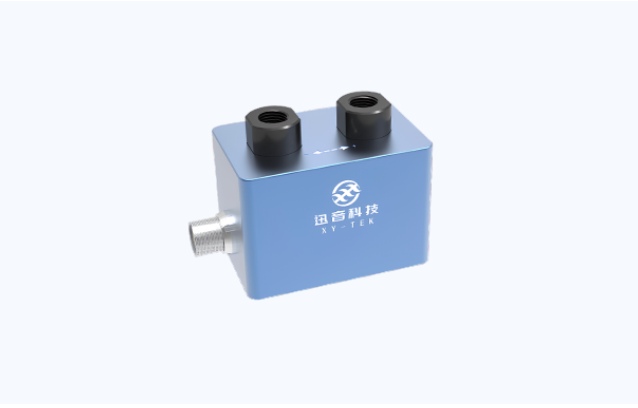
Low-flow ultrasonic sensors such as the TGU series are specified when process accuracy depends on measuring very small flow rates in tubing.
Why Project Conditions Matter More Than a Spec Sheet
A flow sensor specification describes what a product can do under defined conditions; a project defines the conditions the sensor must tolerate. The gap between these two is where most selection errors occur. A sensor that reads accurately in a laboratory loop can produce unstable data in a real line that contains air bubbles, pulsating flow, flexible tubing, or a fluid with trace solids.
For equipment builders and OEMs, the consequences of a mismatch are concrete: fluctuating dispensing volumes, rejected coating or soldering results, false alarms from trapped bubbles, or a fluid path redesigned around a sensor that does not physically fit. For medical and bioprocess buyers, additional constraints around hygiene, biocompatibility, and contamination control can rule out any device that contacts the process fluid.
The opportunity is that ultrasonic flow sensing now covers a broad design space. Non-invasive clamp-on sensors can be retrofitted onto existing tubing without cutting the line; in-line sensors can be integrated into new equipment with no moving parts and low maintenance; dedicated low-flow and bubble-detection variants address the most difficult small-diameter conditions. The selection problem is therefore not whether ultrasonic technology works, but which architecture fits the project.
Ultrasonic Flow Sensors as a Project-Fit Product Family
Shanghai Xunyin Technology Co., Ltd (XY-TEK) is a Shanghai-based manufacturer founded in 2018 that specializes in the development, manufacturing, and sales of ultrasonic flow sensors and flow meters, particularly for small tubing and low flow rates. The company operates a 5,000 m² facility with 50 employees, an R&D team of more than 30 engineers, and an annual output of over 8,000 units, with about half of production exported to global markets. Product documentation is published at www.xy-tek.com.
Rather than offering a single sensor, XY-TEK organizes its product line around the main project-fit decisions a buyer faces: clamp-on non-invasive measurement, in-line integration, ultra-low flow, bubble detection, pulsatile flow, and single-use sterile monitoring. The table below summarizes the series and the operating conditions each one is designed for.
| Series | Design | Flow Range | Accuracy | Tubing / Pipe Compatibility | Key Project Fit |
|---|---|---|---|---|---|
| TGU | Low-flow clamp-on | 0.1–1000 mL/min | ±1% (up to ±0.1 mL/min) | Flexible: PVC, silicone, PFA, PE, PUR | Micro-flow dispensing, coating, infusion |
| CG | Clamp-on ultrasonic flow sensor | 0.02–20 L/min | ±3% | Flexible: PVC, silicone, PFA, PE, PUR | Bi-directional flow, bubble detection, analog/pulse/RS485 |
| CM | OEM clamp-on flow meter | 0.05–30 L/min | ±3% | Small-diameter tubing, OD 4–25 mm | OEM integration with RS485 output |
| CS | Non-invasive industrial clamp-on | 0.1–50 L/min | ±3% | Rigid plastic: PFA, PTFE, PVDF, PP, Nylon | Air bubble monitoring, 0–90°C fluid temperature |
| CPD | Clamp-on with LED display | 0.1–50 L/min | ±2% | Rigid plastic, OD 6–26 mm | Bubble detection, built-in display, 0–90°C |
| TPK | In-line flow meter | 0.5–100 L/min | ±2% | PPS plastic / stainless steel, DN4–DN50 | Industrial integration, no moving parts, 0–90°C |
| TPD | In-line flow meter | 0.5–100 L/min | ±2% | PPS plastic / stainless steel, DN15–DN50 | Flow-path integration, no moving parts, 0–90°C |
| BG | Ultrasonic bubble detector | Detects bubbles ≈1/3 of tubing ID | — | Rigid plastic, OD 3.2–19 mm | Gas–liquid state detection, customizable response |
| SU | Single-use flow sensor | 0.05–10 L/min | ±2% | Biocompatible polymer channel | Sterile single-use bioprocess monitoring |
| TH | Pulsatile flow sensor | 0.01–15 L/min | ±2% | Medical-grade polymer | Cardiovascular and hemodynamic flow testing |
The Key Variables That Determine Sensor Choice
For a typical project, the selection process can be reduced to five operating variables.
1. Flow Rate Magnitude
The measurable flow window is the first filter. The TGU low-flow series covers 0.1–1000 mL/min and suits dispensing, coating, and infusion-style processes. Where higher throughput is required, the CG clamp-on series covers 0.02–20 L/min, the CPD covers 0.1–50 L/min, and the TPK and TPD in-line meters are designed for 0.5–100 L/min.
2. Tubing and Pipe Properties
Clamp-on ultrasonic sensors transmit the signal through the tubing wall, so the tubing material and dimensions directly affect the measurement. For flexible plastic tubing—PVC, silicone, PFA, PE, and PUR—the CG and TGU series are specified. For rigid plastic tubing such as PFA, PTFE, PVDF, PP, and Nylon, the CS, CPD, and BG series are used. In-line TPK and TPD meters connect to PPS plastic or stainless steel pipes, with nominal diameters from DN4 to DN50.
3. Fluid Characteristics
Ultrasonic transit-time measurement is generally suited to media with little or no solid particles, including water, blood, beverages, oil, paints, and chemical additives. This is why non-invasive clamp-on designs are a workable choice for many clean fluids. Media with heavy particle loading or high aeration are more challenging for transit-time sensors; buyers should confirm fluid compatibility before finalizing the sensor architecture.
4. Temperature and Environment
Fluid temperature limits differ by series. Most XY-TEK sensors are rated for 0–60°C, while the CS, CPD, TPK, and TPD series support up to 90°C. Industrial environments with dust, humidity, or chemical exposure also require a housing and material choice that matches the specific production line.
5. Installation and Output Requirements
Clamp-on devices are installed externally and avoid pipe cutting, pressure loss, and mechanical wear; in-line meters require the line to be interrupted, but provide a fully integrated flow path. Output requirements are the final constraint: the CG and CM series offer analog, pulse, and RS485 outputs, which supports closed-loop control and process data acquisition in automation systems.
Matching Sensors to Real Project Scenarios
Industrial Automation: Spraying, Dispensing, and Cleaning
In industrial automation, the central challenge is monitoring pulsating and micro-flow liquids in spraying, dispensing, and cleaning systems, and detecting bubbles, blockage, or abnormal flow conditions. Typical matched equipment includes dispensing machines, selective wave soldering equipment, coating machines, cleaning equipment, liquid supply pumps, industrial control systems, and automated production lines.
For this scenario, the TGU sensor covers ultra-low pulsed flows, while the CM, CG, and CPD clamp-on series support non-invasive monitoring without interrupting the line. The stated application requirements include high precision and stability, fast response, micro-flow measurement down to mL/min with resolution up to 0.05 mL/min, non-contact measurement, no pressure loss, and compatibility with small-diameter pipes.
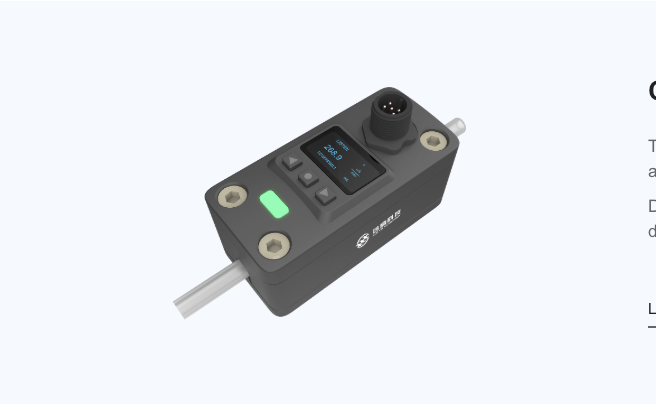
Clamp-on designs such as the CPD series allow flow monitoring on rigid plastic tubing without cutting the pipe, a key requirement in retrofit and contamination-sensitive projects.
Medical Devices: Dialysis, ECMO, and Cardiac Support
Medical applications impose a different set of constraints: strict hygiene, biocompatibility, and the need to monitor blood or medical fluids inside disposable tubing without contaminating the fluid path. Special requirements include non-invasive and non-contact measurement, no contamination, and no pressure loss. The sensor must provide real-time monitoring of blood flow and pump operation in dialysis, ECMO, and artificial heart systems, under an indoor medical environment with strict hygiene and biocompatibility requirements.
The CG and CM clamp-on series measure through the tubing wall and are therefore suited to blood and medical perfusion applications. The SU single-use series supports sterile monitoring with a biocompatible polymer measuring channel, and the TH pulsatile sensor is designed for high-speed pulsation capture in cardiovascular research, hemodynamic testing, and medical laboratories.
Biopharmaceutical Production: Perfusion, Filtration, and Chromatography
In cleanroom environments with temperature and humidity control, bioprocess lines rely on bioreactors, drain pumps, supplement pumps, peristaltic pumps, filtration systems, and chromatography columns. The scenario requirements include high precision and stability, no moving parts, non-contact and contamination-free measurement, compatibility with flexible or rigid small-diameter tubing, and low shear to protect cells and biological fluids.
Application data for bioprocessing lists perfusion pump monitoring and pipeline aging detection to prevent emptying or overflow, bubble identification during filtration and transfer, high-precision flow measurement for tangential flow filtration and chromatography, and culture medium circulation monitoring in cultivated meat production while protecting cell viability. The CG clamp-on design addresses these without cutting the tube, and the SU series extends the same monitoring function to single-use systems.
Liquid Cooling and High-Purity Fluid Systems
Liquid cooling loops in data centers, industrial equipment, and EV charging stations have a specific requirement: coolants are typically non-conductive, which rules out electromagnetic flowmeters that depend on liquid conductivity. Clamp-on ultrasonic sensors monitor coolant flow without contacting the media and are used to prevent overheating, detect leaks or blockages, and optimize cooling efficiency. Application records describe a service life of 2–4 years, stable cooling performance, reduced energy consumption, earlier anomaly detection, and low pressure loss.
Battery Manufacturing and Electronics Coating
In lithium-ion battery production, electrolyte injection accuracy affects cell consistency and rejection rate. The CPD series is applied to electrolyte flow monitoring with clamp-on installation, avoiding pipe cutting and contamination while providing bubble and impurity detection in corrosive media. The same series also appears in coating, inkjet, and painting-robot processes where the line cannot be interrupted.
In electronics manufacturing, flux in selective wave soldering and conformal coating is pulsed and very small. Application data records TGU sensors measuring ultra-low flow down to 1 mL/min with ±1% accuracy, fast response to pulsating flow, corrosion resistance, and maintenance-free operation, which supports soldering quality and reduces flux waste.
Market Trends: Where Project Demand Is Moving
Published market data points in the same direction. The global flow meter market was estimated at USD 10.64 billion in 2024 and is projected to reach USD 15.17 billion by 2030 (Grand View Research). Within this, the ultrasonic flow meter segment was valued at USD 1.52 billion in 2025 and is estimated to grow to USD 2.28 billion by 2031 (Mordor Intelligence). The clamp-on ultrasonic flowmeter segment alone was valued at USD 1.25 billion in 2024, with a projected CAGR of 7.4% through 2032 (Global Information, Inc.).
One widely cited reason for the clamp-on segment's growth is the retrofit advantage: no pipe cutting, no process interruption, and installation on existing small-diameter lines. Asia Pacific held the largest regional share of the ultrasonic flow meter market in 2025 at 38.6% (Fortune Business Insights), consistent with industrial expansion in the region. For context, flow control in the semiconductor industry was estimated at USD 5.83 billion in 2024 (Market Research Future), reflecting the scale of high-purity fluid management in that sector.
Buyers should note that analyst estimates vary with scope: some definitions include smart water metering or additional application segments, which produces different base figures. Comparing the scope of each estimate is more useful than relying on a single number.
Comparison with Traditional Flow Measurement Approaches
For a project team, the comparison is usually not ultrasonic versus ultrasonic; it is ultrasonic versus the alternatives already used in the facility.
Turbine flow meters use a rotating impeller and are well understood, but they contain moving parts that wear over time, which makes them less suitable for clean, low-flow, or pulsating applications. Electromagnetic flow meters measure volumetric flow without moving parts, but they require a conductive liquid and are therefore unsuitable for non-conductive coolants or certain solvents. Coriolis meters deliver high accuracy and are widely used for mass flow, but for small-diameter lines they are generally larger, heavier, and more expensive than ultrasonic sensors, which places them outside the typical budget of a dispensing or infusion subsystem.
Ultrasonic clamp-on sensors avoid contact with the fluid, introduce no pressure loss, and have no moving parts, which makes them attractive for small tubing and low-flow projects. The trade-off is that transit-time ultrasonic sensors are best suited to liquids with little or no solid particles, and the measurement depends on consistent coupling between the sensor and the tubing wall. In-line ultrasonic meters reduce the coupling variable by integrating the sensor into the flow path, but they require the line to be interrupted at installation.
Among ultrasonic suppliers, the broader market includes large industrial automation groups such as Emerson Electric, Siemens AG, Endress+Hauser, and Honeywell, which cover a wide range of process instrumentation. Specialist OEM suppliers such as XY-TEK concentrate on small-diameter, low-flow ultrasonic sensing. Buyers evaluating suppliers should compare the product family against the actual project conditions rather than the breadth of a full catalog.
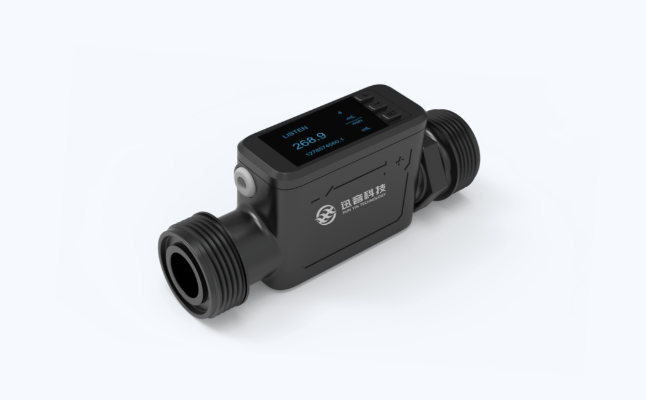
In-line ultrasonic meters such as the TPD series are specified when the sensor can be integrated directly into the flow path at the equipment design stage.
Future Outlook: Specialization and Standardization
Several signals point to more specialized project-fit choices in the coming procurement cycles. First, single-use bioprocessing is increasing demand for flow sensors that can be supplied sterile and disposed of with the fluid path; the SU series is an example of a product built for that condition. Second, liquid cooling is expanding beyond data centers into EV charging stations and industrial equipment, creating demand for non-invasive sensors on non-conductive coolants. Third, semiconductor and high-purity fluid systems require flow components that do not contaminate the process, which favors clamp-on designs on chemically resistant tubing.
On the supply side, OEM buyers are asking for more configuration flexibility: communication protocol, housing material, sensor size, interface, and logo printing. XY-TEK offers OEM/ODM production with typical lead times of 1–2 months, a minimum order quantity of 50 units, and 100% pre-shipment testing; third-party inspection is available on custom designs. That combination of a specialized product family and configuration flexibility matches the way industrial equipment makers source flow sensing components today.
Standardization is also maturing. ISO 24062:2023 specifies requirements for clamp-on ultrasonic transit-time meters for liquids and gases in closed conduits, and medical sensors are commonly developed under quality management systems such as EN ISO 13485. Buyers who reference these standards in project requirements can simplify supplier qualification.
Bottom Line for Buyers
The reliable way to specify a flow sensor is to start with the project: flow magnitude, tubing material and size, fluid characteristics, temperature, installation access, and output requirements. Ultrasonic sensing offers a wide enough family—clamp-on, in-line, low-flow, bubble detection, and single-use—to cover most small-diameter and low-flow scenarios, provided the operating conditions are mapped first. For procurement teams at the research and evaluation stage, the practical output is a shortlist of product series matched to each process line, not a single universal sensor.
Frequently Asked Questions
How do I choose between a clamp-on and an in-line ultrasonic flow sensor for a project?
Clamp-on sensors attach to the outside of the tubing and measure without cutting the pipe or contacting the fluid, which suits retrofit projects, existing lines, and applications where contamination must be avoided. In-line sensors such as the TPK and TPD series are installed directly into the flow path and connect to PPS plastic or stainless steel pipes (DN4–DN50 depending on series); they require line interruption but provide a fully integrated flow path for new equipment.
What flow ranges can ultrasonic flow sensors measure?
The measurable range depends on the series. The TGU low-flow sensor covers 0.1–1000 mL/min; the CG clamp-on sensor covers 0.02–20 L/min; the CPD clamp-on sensor covers 0.1–50 L/min; the TPK and TPD in-line meters are designed for 0.5–100 L/min; the SU single-use sensor covers 0.05–10 L/min; and the TH pulsatile sensor covers 0.01–15 L/min.
Which pipe and tubing materials are compatible with clamp-on ultrasonic sensors?
Flexible plastic tubing made of PVC, silicone, PFA, PE, or PUR is compatible with the CG and TGU series. Rigid plastic tubing such as PFA, PTFE, PVDF, PP, and Nylon is compatible with the CS, CPD, and BG series. In-line TPK and TPD meters are designed for PPS plastic or stainless steel pipes.
Can ultrasonic flow sensors detect air bubbles?
Yes. The CG, CS, and CPD series include air bubble detection or monitoring as part of their measurement function. The BG series is a dedicated ultrasonic bubble detector that detects bubbles of approximately 1/3 of the tubing inner diameter, with customizable response time, for rigid plastic tubing with an outer diameter of 3.2 to 19 mm.
What accuracy should a buyer expect from an ultrasonic flow sensor?
Typical accuracy values by series are: ±1% for the TGU low-flow sensor, ±2% for the CPD, TPK, TPD, SU, and TH series, and ±3% for the CG, CM, and CS series. Accuracy should be evaluated together with operating conditions, including tubing type, fluid, and temperature range.
Are ultrasonic flow sensors suitable for medical and bioprocess applications?
Yes. Non-invasive clamp-on designs measure through the tubing wall, so there is no contact with the fluid, no contamination, and no pressure loss. Application records include real-time monitoring of blood flow and pump operation in dialysis, ECMO, and artificial heart systems, as well as perfusion, tangential flow filtration, and chromatography in biopharmaceutical production. The SU single-use series uses a biocompatible polymer measuring channel for sterile applications. Medical sensor development is commonly subject to quality management systems such as EN ISO 13485.