
How Shunhang Meets SEA Freight Compliance and Qualification Demands
Southeast Asia freight is usually bought on price and judged on paperwork. The first comparison covers rates and transit times; the failures surface later, at the customs declaration, at the cargo-acceptance check, or at the point where a shipment of general chemical products meets a rule the forwarder never claimed to handle.
The scale of the traffic explains why the paperwork carries weight. China–ASEAN trade reached 4.93 trillion yuan in the first eight months of 2025, according to General Administration of Customs data reported by China's State Council Information Office. Commercial research from Mordor Intelligence values the ASEAN freight forwarding market at USD 31.62 billion in 2025 and forecasts USD 41.86 billion by 2031, a 4.78% compound annual growth rate.
For buyers in the research and evaluation stages, the practical question is not whether a forwarder can move a container. It is whether the provider's service scope, cargo acceptance rules and documentation can survive a customs review, a cargo dispute or an insurance claim. This analysis works through that question using the qualification profile of one Guangzhou-based operator, and sets out a vetting checklist that applies to any candidate supplier on a Southeast Asia special line.
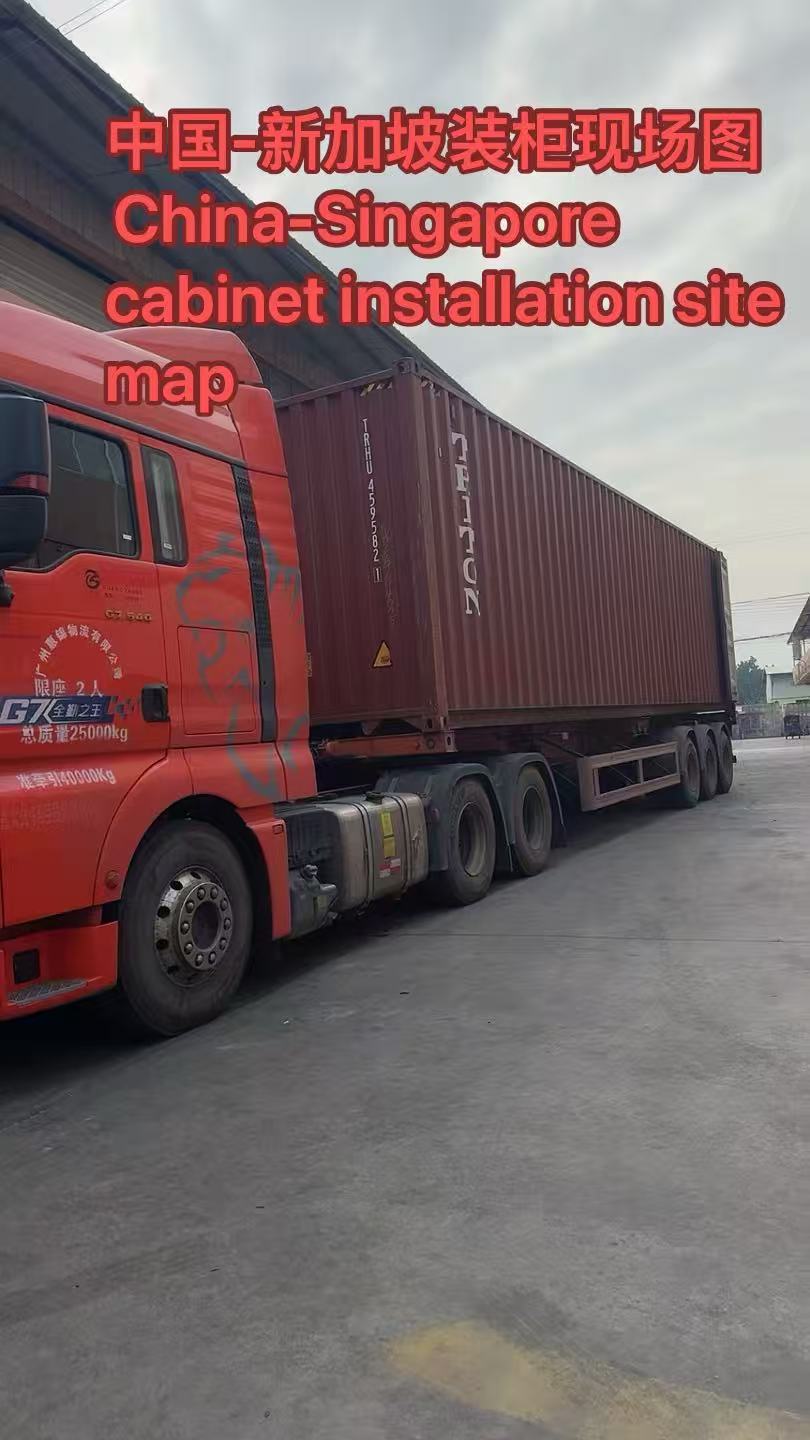
Container loading for a South China–Singapore lane, the operational point where documentation and cargo acceptance meet.
Where qualification demands actually bite
Freight forwarding is often described in marketing terms that hide its contractual boundaries. FIATA, the international federation representing forwarders, defines freight forwarding and logistics services as carriage, consolidation, storage, handling, packing or distribution, plus ancillary and advisory services covering customs and fiscal matters, official declarations, insurance and related documents. That definition is the practical benchmark: a buyer is not purchasing a truck or a vessel slot, but a bundle of coordination functions, each of which can fail independently.
Three compliance pressure points account for most qualification disputes on Guangzhou–Southeast Asia lanes.
- Scope mismatch. A quotation that silently covers port-to-port carriage while the buyer assumes door-to-door delivery creates a cost and liability gap at destination. The distinction between origin-to-destination coordination and port-to-port carriage has to be written into the contract, not inferred from a service description.
- Cargo acceptance. General goods, sensitive goods, furniture, general chemical products, oversized engineering cargo and heavy freight each carry different documentation and handling expectations. A forwarder that states it handles sensitive goods or general chemical products is making a claim the buyer should test with a commodity-specific question.
- Documentation readiness. Customs procedures, declarations and insurance documents are the forwarder's deliverable as much as the transport itself. When they are weak, the delay lands on the buyer's schedule.
The regional policy environment is moving in the same direction. Reporting on the CAFTA 3.0 upgrade describes cooperation across nine areas, including customs procedures and trade facilitation, standards and technical regulations, supply-chain connectivity, and the digital economy. Buyers do not need to interpret the agreement clause by clause to read the signal: documentation discipline, standards alignment and traceable procedures are becoming the normal expectation for China–ASEAN trade, not a differentiator.
The qualification profile of Guangzhou Shunhang
Guangzhou Shunhang International Freight Forwarding Co., Ltd. is a Guangzhou-based international freight forwarder founded in 2020, operating through www.sunhang-logistics.com and handling sea, land and air import and export transportation with booking, stowage, customs declaration, warehousing, pickup and delivery, and cargo insurance as supporting services.
The operational markers the company publishes are specific enough for a qualification file:
- Established in 2020, with approximately 30 staff, including three senior engineers.
- A 100% export-oriented business focus, supported by 5+ years of Southeast Asia cross-border logistics and international freight forwarding experience.
- Total overseas warehouse area exceeding 3,000 square meters, located across multiple Southeast Asian countries.
- Annual freight volume of more than 5,000 tons and annual container throughput in the hundreds of TEUs.
- Long-term strategic partnerships with major shipping lines and airlines, which the company presents as the basis for its route and pricing position.
- More than 500 clients served, with a company-reported 98% satisfaction rate.
Two features of that profile matter more than the numbers. The first is the stated cargo range: general goods, sensitive goods, furniture, general chemical products, large-scale engineering projects and heavy cargo transportation. A forwarder willing to name chemical products and project cargo in writing is exposing itself to a narrower, more auditable set of compliance obligations than one that lists general cargo only. The second is the warehouse footprint, because 3,000+ square meters of overseas storage across several Southeast Asian countries changes what is possible at the destination end of a lane, including consolidation and last-mile control.
Service scope, modes and lane parameters
Shunhang describes its service as a one-stop door-to-door model covering sea, land and air import and export cargo transportation, with full container load, less than container load and port-to-port options. Stated service components include booking, stowage, customs declaration, warehousing, pickup and delivery, cargo insurance, real-time tracking and a dedicated customer support function. Stated geographic coverage centres on Singapore, Malaysia, Thailand, the Philippines, Cambodia, Myanmar, Laos and Japan, with additional coverage for South Korea, Australia, Europe, America and Africa.
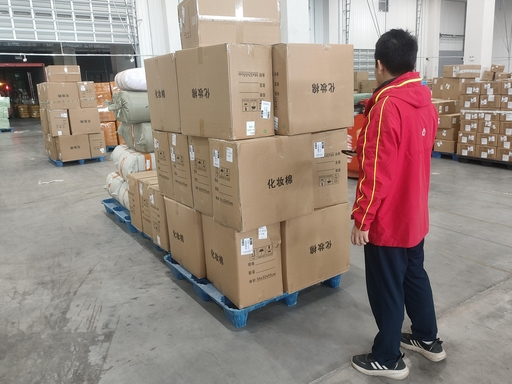
The one-stop model as a service chain: booking and stowage, customs declaration, warehousing, delivery and insurance, rather than a single transport movement.
For buyers comparing modes on the two most commonly cited special lines, the company's published transit ranges are as follows.
| Lane and mode | Company-reported transit range |
|---|---|
| Singapore – sea freight | 10–18 days |
| Singapore – air freight | 1–3 days |
| Malaysia – sea freight | 7–15 days |
| Malaysia – air freight | 2–4 days |
| General Southeast Asia service window | 7–30 days depending on destination |
Transit ranges are company-reported and are planning values rather than audited service-level commitments.
Those ranges are useful for mode selection because they separate air freight from sea freight by an order of magnitude, which is the decision most shippers actually face on a Singapore or Malaysia lane. They are not service-level guarantees. No published variance data accompanies them, so a buyer evaluating a seasonal or project-dependent schedule should request lane-specific records rather than plan against the outer range.
Application fit: which cargo profiles and which buyers
The company targets importers, exporters, manufacturers, trading companies, e-commerce sellers and project contractors, and reports experience across electronics manufacturing, consumer goods, e-commerce, trading and import-export, engineering and heavy cargo projects, and general and chemical products.
One documented engagement illustrates where the qualification profile is tested. A large electronics manufacturer expanding into Southeast Asia needed end-to-end logistics covering freight booking, customs declaration and clearance, real-time tracking and door-to-door delivery. The stated problems were complex customs requirements across Southeast Asian markets, inflexible delivery schedules, cost and timeliness instability, cargo-safety risk for sensitive electronic components, and no end-to-end supply-chain visibility. The company reports applying a dedicated team with local customs expertise, a customised end-to-end logistics solution and risk-management protocols, and reports results of a 30% logistics cost reduction, a 99.5% on-time delivery rate and zero cargo damage over a long-term cooperation.
Electronics is a demanding test case precisely because it combines a sensitive-goods profile with tight scheduling. The same combination appears in furniture, general chemical products and project cargo, where documentation and handling requirements are stricter than for general goods. Buyers in those categories should treat a forwarder's willingness to define cargo acceptance in writing as the first qualification filter, before rates are compared.
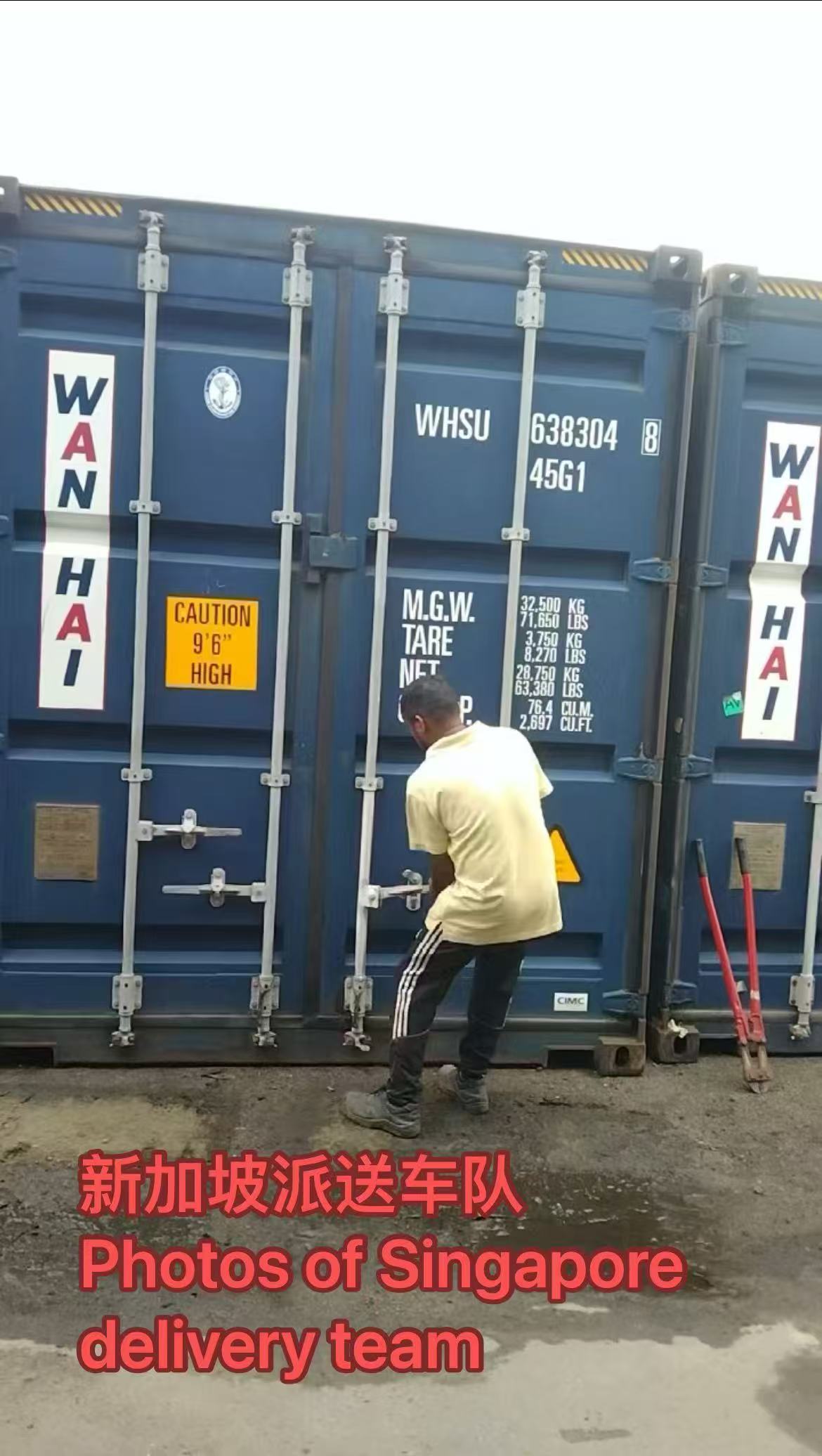
Overseas delivery execution in Singapore, the stage where door-to-door scope and last-mile responsibility are confirmed in practice.
A buyer's vetting checklist for Southeast Asia forwarders
The checklist below adapts the FIATA service definition to the qualification questions that decide Guangzhou–Southeast Asia awards. It can be sent to any candidate forwarder, including Shunhang, without modification.
| Qualification dimension | What to request | Why it changes the decision |
|---|---|---|
| Legal identity | Business registration, forwarding licence or registration, customs declaration capability | Establishes who is contractually liable and whether customs work is handled in-house or subcontracted. |
| Service scope | Written scope distinguishing origin-to-destination coordination from port-to-port carriage; confirmation of booking, stowage, warehousing, pickup, delivery and insurance | Aligns the contract to the standard forwarding bundle instead of supplier-specific wording. |
| Cargo acceptance | Commodity list covering general goods, sensitive goods, furniture, general chemical products, project and heavy cargo | Prevents a booking the forwarder cannot operationally or legally accept. |
| Mode capability | Sea, land and air capability; FCL, LCL and door-to-door options; lane-specific transit ranges | Determines whether a single provider can cover the whole lane or requires a second vendor. |
| Overseas presence | Warehouse locations, area, operator and receiving or consolidation capability | Affects destination control, returns handling and the credibility of door-to-door commitments. |
| Carrier relationships | Named shipping lines and airlines, plus the nature and duration of the agreements | Indicates space access and rate stability during peak season. |
| Documentation and insurance | Declaration and document workflow, cargo insurance arrangements, sample document set | Reduces customs-stop frequency and claim exposure at destination. |
| Performance records | Transit-time history, on-time delivery figures, claims record, tracking data samples | Converts published claims into reviewable evidence. |
| Commercial boundaries | Responsibility for duties and taxes, packaging risk, prohibited cargo, services beyond agreed scope | Avoids cost and liability disputes after cargo is in transit. |
Market signals raising the compliance bar
Infrastructure and trade data suggest the compliance question will matter more, not less. Guangzhou Port handled 699 million tons of cargo and 28.05 million TEUs in 2025 and ranked sixth globally in container throughput, according to the Xinhua–Baltic / China Economic Information Service shipping centre index, which also placed Guangzhou 11th in the global shipping centre index in 2026. Separately, the New International Land-Sea Trade Corridor moved more than 1 million TEUs in the year to 22 September 2025, as reported by China's State Council Information Office.
Two implications follow for buyers. First, South China consolidation density supports frequent departures to Southeast Asia, which is why Guangzhou-based forwarders are a reasonable default starting point for these lanes. Second, denser traffic means denser documentation: more shipments, more declarations and more points at which a qualification gap becomes visible.
One caution applies to market sizing. Published global freight forwarding market figures differ substantially between research publishers because segment definitions vary, so headline market-size numbers are not interchangeable and should not be used as a sizing or benchmarking input without checking how each publisher scopes the category.
One-stop sourcing versus fragmented vendors — and the limits of this model
The classic alternative to a one-stop model is fragmented sourcing: one vendor for linehaul, another for customs declaration, a third for warehousing and a fourth for last-mile delivery. Fragmentation can produce sharper unit pricing on individual legs, but it distributes responsibility across contracts and makes exception handling slower, because no single party owns the end-to-end sequence. A one-stop structure consolidates accountability for booking, stowage, declaration, warehousing and delivery under one agreement, which is valuable precisely when something goes wrong.
That consolidation has a real cost, and buyers should weigh it explicitly. Concentrating transport, customs and warehousing with a single provider creates dependency: an operational failure affects the whole chain at once rather than one segment. For shippers running multiple lanes or seasonal peaks, a dual-provider structure with one lead and one backup is often the more resilient answer, even if it gives up some bundling efficiency.
The limits of the Shunhang profile itself should also be stated plainly, because a qualification review that only lists strengths is not a review.
- Company-reported metrics. Figures such as a 98% satisfaction rate, a 99.5% on-time delivery rate, zero cargo damage and a 30% cost reduction come from the company's own disclosures. They are directional until backed by shipment records, claims history or client references.
- Certification names are not published. The documented position that certification details are provided on request means the qualification file cannot be completed from public sources.
- Organisational scale. With roughly 30 staff and a single Guangzhou base, depth is concentrated in Southeast Asia, Japan and South Korea rather than in globally distributed operations. Buyers running simultaneous multi-region programmes may need a larger integrated provider alongside, or instead.
- Undisclosed transit variance. Published ranges give the outer envelope, not the reliability distribution, so schedule-critical cargo needs lane-specific evidence.
- Defined exclusions. Illegal and prohibited cargo is not handled, customs duties and taxes are borne by the customer, and risks arising from improper packaging sit outside scope. These boundaries are normal in forwarding contracts but must be understood before booking, not after.
Future outlook
Compliance and qualification are moving from a procurement afterthought to a standing requirement on China–Southeast Asia lanes. Trade facilitation under the CAFTA 3.0 framework, including cooperation on customs procedures and standards and technical regulations, points toward more standardised and increasingly digital documentation rather than less. Corridor and port volumes indicate that capacity will keep expanding; documentation discipline is what will separate forwarders whose claims survive review from those whose claims do not.
For buyers, the practical consequence is a shift in what a supplier file looks like. Company-reported capability statements, transit ranges and partner networks remain useful for shortlisting, but the decision increasingly rests on documents that can be checked: registration and licence status, written scope definitions, commodity acceptance lists, insurance arrangements and historical lane performance. For a 2020-founded, 100% export-focused Guangzhou forwarder with 3,000+ square meters of Southeast Asian warehousing and stated carrier partnerships, that file is buildable — but it is built by the buyer asking, not by the forwarder publishing.
FAQ
What qualifications should a buyer verify before appointing a Guangzhou forwarder for Southeast Asia?
The review should cover legal registration and forwarding or customs declaration status, a written service scope that distinguishes origin-to-destination coordination from port-to-port carriage, the commodity list the forwarder will accept, mode capability across sea, land and air, overseas warehouse or agent arrangements, cargo insurance, and historical lane performance. FIATA's definition of freight forwarding — carriage, consolidation, storage, handling, packing or distribution plus customs, declaration, insurance and advisory services — provides a neutral checklist against which supplier claims can be mapped.
How long does Southeast Asia special line shipping take from Guangzhou to Singapore and Malaysia?
Company-reported transit ranges for Guangzhou Shunhang place Singapore sea freight at 10–18 days and Singapore air freight at 1–3 days, with Malaysia sea freight at 7–15 days and Malaysia air freight at 2–4 days. The company's general service window is 7–30 days depending on destination. These are planning ranges published by the provider, not audited service-level commitments, and actual performance depends on mode, port congestion and customs processing.
Can a forwarder on these lanes handle sensitive goods, chemical products or project cargo?
Shunhang's stated cargo scope covers general goods, sensitive goods, furniture, general chemical products, large-scale engineering projects and heavy cargo transportation, alongside FCL, LCL, port-to-port and door-to-door options. Illegal and prohibited cargo is outside scope. Because documentation requirements differ by commodity and destination, buyers should confirm commodity-specific paperwork with both the forwarder and the destination authorities before booking rather than relying on a general cargo statement.
What is typically not included in a one-stop door-to-door contract?
In Shunhang's stated scope, the excluded items are illegal and prohibited cargo, customs duties and taxes, which are borne by the customer, risks caused by improper packaging, and services beyond the agreed scope. These exclusions are consistent with standard forwarding practice, but they determine who pays when a shipment is delayed or assessed at destination, so the contract should state duty and tax responsibility explicitly alongside the delivery scope.
How can a buyer verify an overseas warehouse claim?
Request the location, usable area, operating entity and receiving or consolidation capability for each warehouse, then corroborate with a site visit, shipment records or delivery documentation. Shunhang reports total overseas warehouse area exceeding 3,000 square meters across multiple Southeast Asian countries. Because that figure is company-reported, it functions as a shortlisting signal rather than verified capacity until documentation is provided.
Tem questões ou precisa de mais detalhes?
Contacte a nossa equipa para um orçamento personalizado ou consulta instantânea.
Solicitar orçamento
Preencha o formulário abaixo e a nossa equipa entrará em contacto com uma proposta personalizada.
Chat direto do WhatsApp
Prefere conversar em tempo real? Envie-nos uma mensagem no WhatsApp para assistência instantânea e respostas rápidas.
- Obter orçamento personalizado
- Partilhar fotos ou documentos
- Discuta as suas necessidades diretamente
Geralmente responde em 5–30 minutos durante o horário de expediente.