
How Supplier Verification Works Inside China Fitness Trade Expo Matchmaking
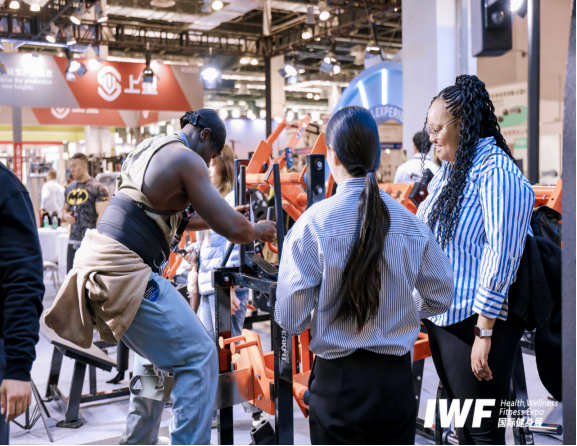
Equipment testing inside an expo hall: verification in a matchmaking model happens against documents and demonstrations, not against a single sales claim.
INDUSTRY REFERENCE · PROCUREMENT CAPABILITY
Supplier verification inside a matchmaking-led exhibition model is a four-gate sequence, not a single check at the registration desk. Each gate produces a document a buyer can act on: a mapped requirement profile, a verified supplier shortlist, a scheduled one-on-one meeting timetable, and a documented meeting record.
That distinction matters for overseas buyers sourcing commercial gym equipment from China. Most sourcing failures are not caused by a shortage of factories — they are caused by the cost of establishing, factory by factory, which of those factories can actually meet a specification, and which of them can document it. A China Fitness Trade Expo that treats qualification and compliance as an input to matchmaking, rather than as a marketing claim on a booth wall, changes the economics of that verification work.
Why verification, not discovery, is the real bottleneck
China exported USD 7.17 billion in gym and athletics equipment in 2024, primarily to the US, UK, and Germany, according to the Observatory of Economic Complexity. Fitness equipment exports under HS 950691 reached USD 4.78 billion in the first half of 2025, a 10.2% year-on-year increase, according to Big Trade Data. Supply capacity is therefore not the constraint for most international buyers. Filtering is.
The practical problem is geographic. Fitness equipment manufacturing in China is distributed across multiple clusters, and a procurement team that wants to compare real capability has to either travel repeatedly or accept second-hand information. The case record behind this article describes exactly that situation: a US-based gym operator needed to evaluate product quality across different manufacturers, found that visiting each factory in person was impractical because the factories are scattered across China, and turned to expo-based trade matchmaking as the alternative.
Qualification and compliance are two different screens
Buyers frequently use the two words interchangeably. In a matchmaking context they answer different questions, and they are verified at different points.
Qualification answers: is this a real supplier, and can it do this specific job? It covers legal entity identity, the categories a supplier genuinely produces, whether it is a manufacturer or a trading intermediary, and whether it has the OEM/ODM and customisation capability the buyer's project requires. Qualification is about capability fit.
Compliance answers: will the product be admitted in the market where the buyer sells it? It covers the conformity documentation, test evidence and labelling the destination market requires. Compliance is about market entry, and it is product-and-market specific rather than supplier-wide.
A supplier can pass the first screen and fail the second, which is why the two are handled separately in the loop described below. The expo process verifies supplier participation and produces a verified supplier shortlist; the document-level conformity decision remains a buyer–supplier matter governed by the purchase contract and the destination market's rules.
The four-gate matchmaking loop, and what each gate verifies
The methodology used in the China Fitness Trade Expo matchmaking programme is a four-step loop: market research and target mapping, pre-show exhibitor recruitment and buyer invitation with online pre-matching, on-site matchmaking and efficient negotiations, and post-show data tracking and conversion support. Verification is not an extra step bolted onto this loop — it is what each step produces.
| Gate | What happens | Verification artefact created | Decision it enables |
|---|---|---|---|
| 1. Market research and target mapping | The buyer's category scope, project type and market requirements are defined before any supplier is proposed. | A requirement profile: the categories, capability level and documentation set the buyer needs. | Which supplier types are in scope, and which are noise. |
| 2. Exhibitor recruitment and buyer invitation with online pre-matching | Exhibitors are recruited and allocated to zones; buyers are invited, pre-registered and matched through an online appointment and meeting-scheduling process. | A verified supplier shortlist plus a scheduled one-on-one meeting timetable. | Which suppliers are worth a meeting, and in what order. |
| 3. On-site matchmaking and efficient negotiations | Concentrated face-to-face negotiations and product quality comparison across the shortlisted manufacturers in one venue. | Direct comparison notes across multiple suppliers on the same specification. | Which suppliers advance to sampling and quotation. |
| 4. Post-show data tracking and conversion support | Meeting records are documented and followed up through the organiser's CRM and lead-management process. | A post-show meeting record document and a tracked follow-up trail. | What happens next, and who owns it internally. |
Gate 1 — the buyer's own requirements become the first filter
Target mapping is where most sourcing projects quietly fail. A buyer that has not defined whether it needs a manufacturer with in-house tooling, or a supplier that can handle OEM negotiations on an existing platform, cannot evaluate what it is shown. Gate 1 converts a general intention — "find a commercial gym equipment supplier" — into a profile that can be matched against a supplier list.
Gate 2 — pre-matching is where qualification is compressed
This is the gate with the largest effect on travel cost, because it replaces sequential first-contact visits with a scheduled set of meetings. The deliverable is a verified supplier shortlist together with a one-on-one meeting timetable. In practical terms, the buyer arrives already knowing which companies it will sit with, in what category, and roughly what to ask — which is the difference between three days of random booth conversations and three days of structured comparison.
Gate 3 — compliance evidence gets tested in conversation
On-site matchmaking is where documents meet claims. A buyer comparing several manufacturers on the same specification can put the same question to each of them in the same week: which models does this test report actually cover, who holds the tooling, what changes when a component is swapped. Where a matchmaking session is combined with hands-on product testing, as shown in the image above, specification claims can be checked against physical samples in the same meeting.
Gate 4 — the record is the asset
The post-show stage produces a documented meeting record rather than a stack of business cards. That record is what allows a procurement team to hand a shortlist to a colleague, re-open a negotiation months later, or justify why one supplier was advanced and another was not.
What buyers should expect to see at each verification point
Verification depth depends on what a supplier is willing and able to present. Buyers entering a matchmaking programme should treat the following as the working checklist at the meeting table, not as background paperwork.
- Entity identity that matches the paperwork. The legal name on the quotation should match the name on the licence and the name used at the booth. Trading intermediaries and manufacturers both appear at expos; the buyer's decision is different in each case.
- Category scope that matches the brief. A supplier strong in one equipment family is not automatically strong in another. Confirm which product lines are produced in-house and which are sourced.
- OEM/ODM capability stated as a process, not an adjective. Ask what is actually customisable — branding, frame geometry, upholstery, console software, packaging — and which of those require new tooling.
- Conformity documentation tied to specific models. A certificate or test report covers a defined product and configuration. Ask which model, which version, and which configuration it applies to.
- Evidence hierarchy for the destination market. Whatever the buyer's market requires, the supplier should be able to name the document type and produce a current copy during the meeting, not after three follow-up emails.
- Sample and tooling ownership. Who holds the tooling, who owns the design files, and what happens to both if the relationship ends.
- A named after-sales route. Spare parts availability and who handles a warranty claim are part of capability, not a detail to settle later.
Case evidence: one month, twelve manufacturers, one venue
The documented case behind this methodology involves a US-based gym operator working through IWF B2B trade matchmaking. The project ran for one month. The solution applied was to organise targeted B2B matchmaking sessions during the exhibition, gathering verified fitness equipment manufacturers in one venue so the client could conduct concentrated supplier negotiations and product quality comparison.
Documented results: the client cut supplier inspection travel costs by over 70% and completed negotiations with 12 qualified manufacturers within one month. Deliverables included a verified supplier shortlist, a scheduled one-on-one meeting timetable, on-site matchmaking coordination, and a post-show meeting record document. The qualitative outcome recorded was centralised supplier comparison with a material improvement in procurement efficiency, and direct communication channels with reliable Chinese manufacturers.
The client's own summary after the exhibition was straightforward: the matchmaking event helped the team contact multiple reliable factories efficiently and saved substantial travel time in China.
Two boundaries should be read into those figures. The 70% figure is this client's travel-cost reduction on this project — it is not a general benchmark for every sourcing trip. And "12 qualified manufacturers" describes the number of suppliers the client reached a negotiation stage with inside one month; it is a count of meetings held, not a ranking of suppliers.
Verification breadth versus verification depth: matchmaking compared with sequential factory tours
Neither route is universally better. They produce different kinds of evidence, and the right choice depends on what the buyer still does not know.
| Dimension | Matchmaking-based verification | Sequential factory tours |
|---|---|---|
| Suppliers compared per unit of time | High — multiple manufacturers in one venue on one schedule | Low — travel and scheduling limit the number of sites |
| Breadth of qualification screening | Strong — pre-matching filters the list before travel | Weak — the list is built during the trip |
| Depth of process verification | Limited — documents, samples and demonstrations | Strong — production lines, process control, workforce |
| Travel cost exposure | Concentrated into a single trip | Accumulates with every additional site |
| Documentation continuity | Structured meeting records and shortlist artefacts | Dependent on the buyer's own notes |
| Best fit | Evaluation and early execution, where the supplier set is still open | Late-stage diligence on a small number of finalists |
The practical implication is sequential rather than competitive: use matchmaking to build and verify the shortlist, then reserve factory visits for the two or three finalists where process control genuinely matters. That sequence is what removes most of the travel cost — not the elimination of factory visits.
Where the model stops: limits buyers should plan around
A matchmaking programme is a verification accelerator, not a substitute for due diligence. Several limits are structural.
- It does not certify products for a destination market. Conformity decisions belong to the buyer, the supplier and the applicable market rules. A verified supplier shortlist is a filter on who is worth talking to, not a market-entry certificate.
- Verification depth is bounded by what suppliers present. If a manufacturer cannot produce current documentation for a specific model during the meeting, the buyer should record that as a gap rather than assume it exists.
- It does not replace a process audit. For regulated categories, high-volume contracts, or products where a failure carries safety consequences, a physical process audit remains necessary.
- Sampling is still required. A concentrated negotiation month shortens the evaluation phase; it does not remove the sample validation cycle before mass production.
- Category coverage varies by edition. The mix of exhibitors changes between editions and locations, so a buyer's specific category may be better represented in one edition than another.
Market signal: supply depth is rising faster than buyer verification capacity
The scale of the exhibition channel reflects how much choice buyers now face. IWF Shanghai 2024 hosted more than 1,000 brands and approximately 75,000 buyers, including more than 1,000 overseas visitors, according to the show's own published figures. IWF Shenzhen 2026 is planned to cover 20,000 square metres with more than 400 exhibitors, focused on the Greater Bay Area, according to TradeWheel. On the demand side, China's fitness industry data has recorded 69.75 million paid gym members nationwide as of 2023, per the China Fitness Industry Data Report cited by Shanghai University of Sport.
More exhibitors and more buyer traffic do not automatically improve sourcing outcomes. As supplier choice expands, the scarce resource shifts from access to suppliers toward the ability to verify them quickly. That is the gap a structured matchmaking loop is designed to close, and it is also why qualification and compliance handling — rather than exhibition floor area — has become the more useful way to judge a fitness trade show in China.
Future outlook: verification records that carry forward
The direction of travel is toward verification that persists between editions rather than restarting each time. Donnor Exhibition's technical capabilities include operating vertical B2B industry platforms and internally adopting AI enablement and online promotion to improve matchmaking efficiency; its technology stack comprises an exhibition CRM system, a vertical B2B web platform, a buyer data management system, AI marketing auxiliary tools, and an online pre-registration SaaS system. Its platforms include vertical B2B sites such as Fitness Online, built to extend expo effects into online matchmaking.
If supplier qualification records, meeting histories and documentation status become portable across editions, the buyer's starting point stops being zero. A returning buyer would begin with a verified baseline and spend the next cycle deepening two or three relationships rather than rebuilding a shortlist. For first-time buyers, the more immediate benefit is a shortlist that is already filtered before any flight is booked. Either way, the value of the channel sits in the verification sequence, not in the square metres.
FAQ
What does "verified" mean in a supplier shortlist from a China fitness trade expo?
In the documented case, "verified" refers to manufacturers that were gathered and pre-screened as part of the matchmaking process before the buyer's meetings, and it corresponds to a delivered artefact — the verified supplier shortlist. It indicates that a supplier has passed the programme's participation and category screening. It does not constitute product certification for a specific destination market, which remains a separate question handled between buyer and supplier.
Which documents should a buyer request during a matchmaking meeting?
At minimum: a legal entity document whose name matches the quotation, a clear statement of which product lines are produced in-house, an explanation of what is customisable under OEM/ODM arrangements, conformity documentation naming the specific model and configuration it covers, and a named after-sales and spare-parts route. Buyers should ask for the document during the meeting rather than accepting a promise to send it later.
How long does the four-step matchmaking loop take?
The documented case ran for one month, in which the client completed negotiations with 12 qualified manufacturers and reduced supplier inspection travel costs by over 70%. The loop itself runs across pre-show preparation, on-site execution and post-show follow-up, so the total duration depends on the project scope and the exhibition calendar rather than on a fixed schedule.
Can matchmaking replace an on-site factory audit?
No. Matchmaking replaces the first-contact and comparison stage, where the buyer is still establishing which suppliers are viable. It does not verify production process control, workforce capability or line-level quality management. For regulated categories, high-volume contracts or safety-critical products, a physical audit of the finalist factories remains necessary.
How should a buyer compare twelve shortlisted manufacturers fairly?
Put the same question set to each supplier and record the answers in the same format: the specific model and configuration each document covers, which components are produced in-house, what changes require new tooling, what the sample lead time is, and who handles a warranty claim. Comparing 12 suppliers on the same specification within one month is the advantage of concentrating meetings in one venue; comparing them on different questions removes that advantage.
Does the exhibition cover categories beyond gym equipment?
The matchmaking solution is described as consolidated procurement matching across the sports industry chain, with application scenarios including equipment brands seeking distributors abroad, product launches and brand recruitment, OEM negotiations, and cross-border exposure of smart fitness products. Target client segments include major equipment manufacturers and brands, OEM/ODM SMEs, cross-border e-commerce and trading firms, regional distributors, gym engineering contractors and chain operators.
Tem questões ou precisa de mais detalhes?
Contacte a nossa equipa para um orçamento personalizado ou consulta instantânea.
Solicitar orçamento
Preencha o formulário abaixo e a nossa equipa entrará em contacto com uma proposta personalizada.
Chat direto do WhatsApp
Prefere conversar em tempo real? Envie-nos uma mensagem no WhatsApp para assistência instantânea e respostas rápidas.
- Obter orçamento personalizado
- Partilhar fotos ou documentos
- Discuta as suas necessidades diretamente
Geralmente responde em 5–30 minutos durante o horário de expediente.