
How Tin Box Factory Capabilities Signal Regional Market Shifts
Whether a tin box factory can absorb a new packaging programme — and how quickly — has become a practical proxy for where global metal packaging demand is heading. Floor space, tooling depth, engineering headcount, certification scope and export mix are capital commitments made years before the products they will eventually hold reach a shelf. Read together across Europe, the Americas and Asia, those commitments offer buyers a forward view that shipment statistics alone cannot supply.
A tin box factory, as the term is used here, is a manufacturer that converts tinplate into custom rigid metal containers: decorative gift tins, confectionery and food tins, tea and coffee tins, cosmetic tins and pharmaceutical tins. That is a different segment from beverage can plants, and it is the segment where most brand-level packaging decisions are actually settled.
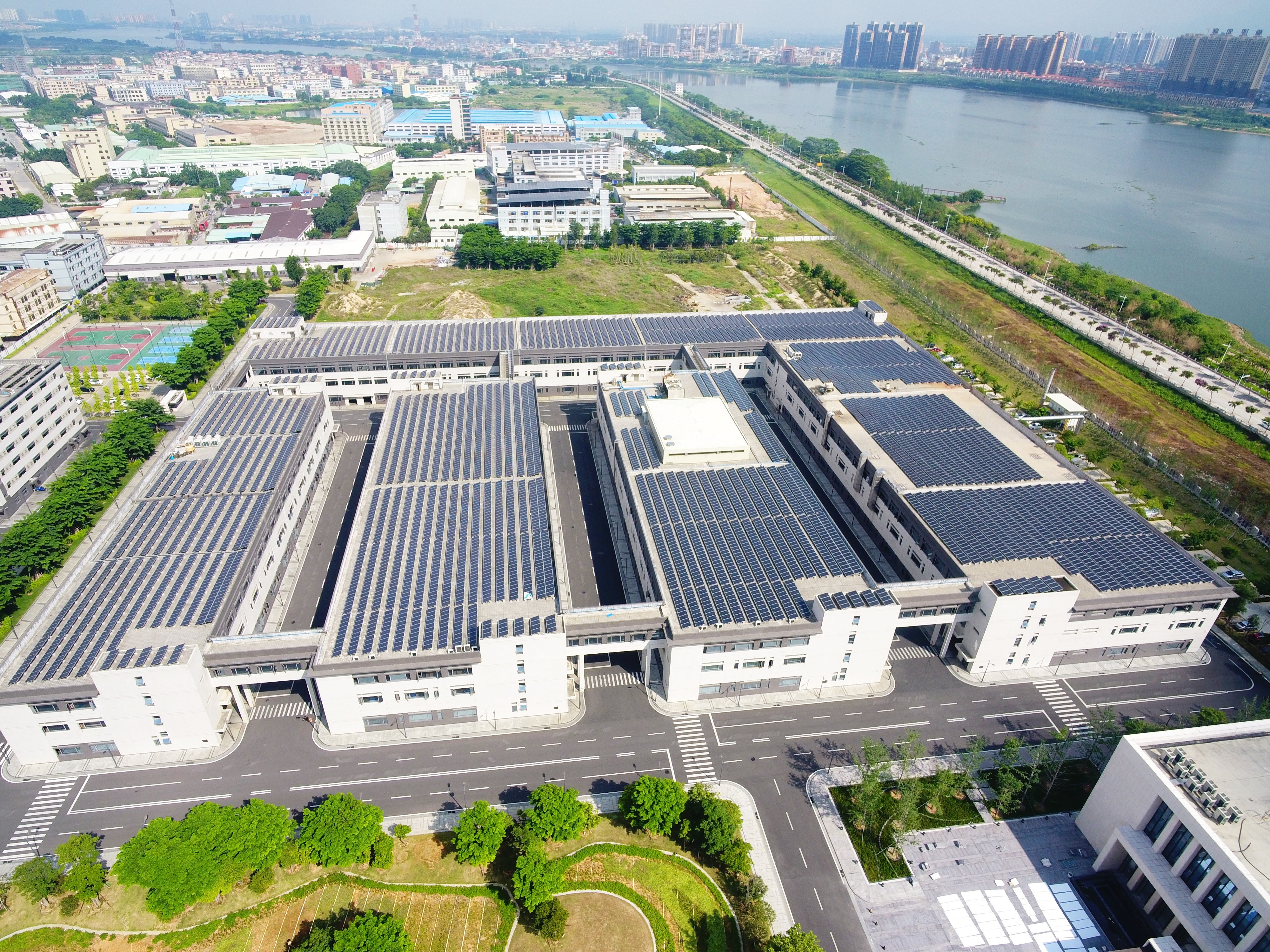
Array-style production buildings at the JINGLI CAN tin box manufacturing site — physical footprint is one of the few capability signals a buyer can verify before a sample is produced.
Why Supplier Capability Runs Ahead of Market Data
Metal packaging demand is usually measured after the fact, through shipments, retail sell-through and import volumes. Supplier capability moves earlier in the chain. A factory adds floor space, installs a press line, hires toolmakers or extends a food-safety certification because its customers have already signalled a multi-year programme. By the time those signals surface in trade statistics, the sourcing decision has typically been made.
There is a practical reason this matters now. Published sizing for the tinplate segment is not settled. One estimate puts the tinplate packaging market for cans and tins at USD 1.73 billion in 2024 (Precedence Research), while another places it at USD 761.2 million (Cognitive Market Research), largely because the two definitions treat decorative and specialty tins differently. When the top-line figure is that sensitive to definition, factory-level capability evidence is often a firmer planning input than the market total.
The opportunity for buyers is a reframing of the evaluation question. Instead of asking what the market will be worth, ask what suppliers are already building for. Capacity additions indicate which categories are expected to grow. Certification investment indicates which regulatory markets a supplier intends to serve. Export mix indicates where its documentation and logistics experience actually sits.
Three Capability Signals Buyers Can Verify
Not all capability claims carry equal weight. Three are checkable at low cost and translate directly into procurement risk.
| Signal | What it measures | What it implies for a buyer |
|---|---|---|
| Capacity and floor space | Committed throughput and physical room for expansion | Whether peak-season volumes can be absorbed without queuing behind other customers' tooling |
| Engineering and tooling depth | Rate at which a structural brief becomes a physical sample | How affordable design changes remain after the first prototype |
| Certification scope | Audited process control across quality, environment, food safety and responsible sourcing | Whether food, cosmetic or pharmaceutical programmes can be quoted directly from one site |
| Export mix | Exposure to regulated destination markets | Familiarity with European standards and FDA food-contact requirements in daily practice |
Each of the four can be established before a die is cut: floor space and headcount through a site audit, certification scope through the issuing body's register, export mix through shipping documentation. That sequence is what turns a capability claim into a qualification record.
A Regional Reading of Capability Investment
Regional differences in tin box factory investment are driven less by taste than by regulation and retail format. Three patterns stand out.
Europe: Documentation-Led Qualification
European requirements for metal packaging in direct food contact are anchored in published standards rather than general expectation. EN 10202:2022 specifies electrolytic tinplate requirements for direct food contact, and EU packaging rules increasingly expect material claims to be demonstrable rather than asserted. In practice, European buyers tend to qualify suppliers on documentation before price. A factory already operating ISO22000, BRCGS and FSSC22000 systems — all food-safety management standards — is answering that question before it is asked.
The trend signal is therefore structural: certification investment among tin box factories is being driven substantially by European customer requirements. Certification breadth has shifted from a marketing choice to a proxy for European market access.
The Americas: Food-Contact Specification as the Gate
In the United States, the FDA requires food-grade tin boxes to use certified materials — tin-plated steel or aluminium — and food-safe lacquers such as epoxy resins to prevent metal migration. Interior coating selection therefore becomes a specification item rather than a detail. For a supplier, holding correct documentation for each lacquer system used on a given line is a capability; for a buyer, confirming that the lacquer on the quoted tin matches the intended filling is a qualification step.
Where American retail formats drive demand — gift sets, seasonal confectionery, promotional tins — the practical requirement shifts toward print consistency and repeat-order colour control at volume, because these programmes are re-run rather than designed once.
Asia Pacific: Capacity Concentration and Export Maturity
Asia Pacific held a 35.63% revenue share of the global metal packaging market in 2024, according to Grand View Research, supported by a large manufacturing base for food and beverage tins. Concentration of that kind has two effects. It compresses lead times for buyers who source there, and it raises the differentiation bar for factories, which increasingly compete on engineering depth and certification rather than unit price alone.
The visible trend is not simply more capacity. It is capacity accompanied by export documentation, food-safety systems and in-house tooling — the combination that lets a factory quote a European or American programme without a third party inside the chain.
What Capability Looks Like on the Factory Floor
Capability that matters at the evaluation stage is the capability that changes a lead time or a tolerance. In a custom tin box operation, that usually appears in four places: tooling, forming, printing and material stock.
Tooling and Forming
A tin box begins as a drawing, not a print file. Tooling shops build the dies that determine geometry, lid fit and seam quality; small deviations here surface later as lid wobble or inconsistent closure. In-house tooling shortens the distance between a sketch and a physical sample and makes structural change affordable during development rather than after launch.
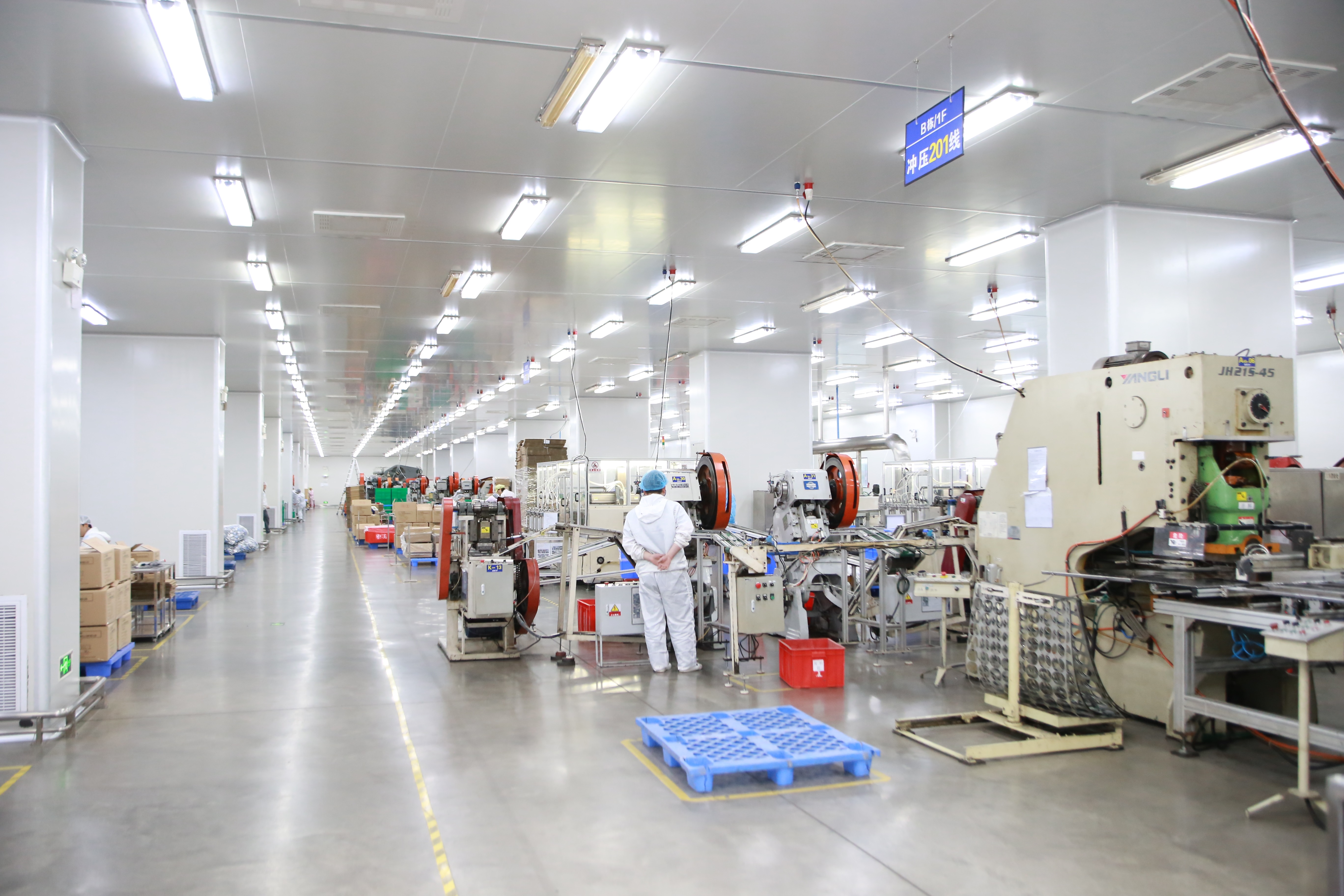
Punching workshop: die accuracy at this stage determines lid fit and seam quality long before decoration is judged.
Printing and Coating
Decoration on tinplate is a wet process: the sheet is coated, printed, cured and only then formed. Colour has to survive forming, and interior lacquer has to survive the filling line. A factory running its own printing lines controls both variables in one place, which is why print capability is usually the first thing a decorated-tin buyer asks about.
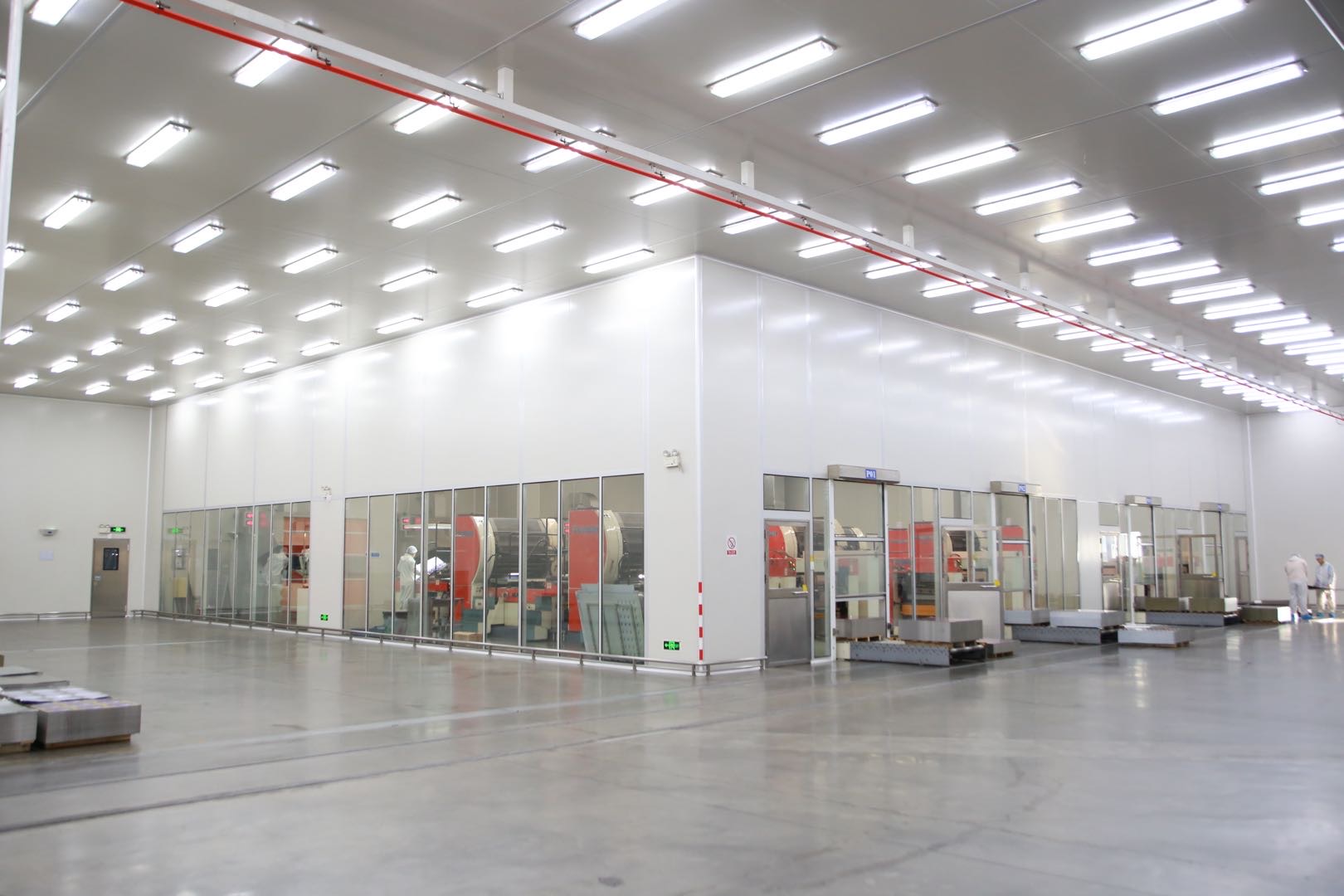
Tinplate printing: decoration is applied to flat sheet and must hold its colour through curing and forming.
Material Stock
Tinplate availability is an underrated capability. Holding a regular stock of substrate separates a factory that can start a repeat order immediately from one that quotes against a steel mill's delivery schedule. Where a supplier states a stock position, it is worth confirming that the volume is committed to production rather than in transit.
JINGLI CAN as a Case in Point
Dongguan City Jingli Can Co., Ltd — JINGLI CAN — is a tin packaging manufacturer founded in 1999, and its published capability profile shows how the signals above combine in a single supplier.
On capacity, the company operates a 150,000 m² facility with 2,000 employees and an annual output of 1.8 billion units, and maintains a regular stock of 30,000 tons of tinplate. On engineering, it runs a 50-person R&D team — the function that converts a structural brief into tooling and a sample. On certification, it holds ISO9001, ISO14001, ISO22000, BRCGS, FSSC22000 and SEDEX 4P, covering quality management, environmental management, food safety and responsible sourcing respectively. Its export profile — roughly 70% of output, with Europe, the Americas and Asia as main markets — indicates that its production and documentation systems are exercised against regulated-market requirements rather than domestic ones alone.
The product range supports the same reading: food tins, tea and coffee tins, cosmetic tins, gift tins and pharmaceutical tins, all delivered as custom tin packaging rather than standard catalogue formats.
Read as an industry signal rather than a company fact, the profile points to a specific pattern: capacity built for regulated categories, engineering staffed for structural customisation, and certification broad enough to quote food, cosmetic and pharmaceutical work from one site. That combination is what a growing share of European and American buyers now treat as a shortlist baseline rather than a differentiator.
Category Breadth as a Capability Test
One of the more useful ways to test a tin box factory is to ask which product categories it can serve from the same tooling and print base. Category breadth is not a marketing list; it is a map of process requirements.
Food and Confectionery
Chocolate tins, candy tins, chewing gum tins, mooncake tins and tea tins all demand food-contact compliance plus print that survives forming. Seasonal programmes add repeat-order colour control, because the same design returns year after year.
Personal Care and Lifestyle
Cosmetic tins, perfume tins, soap tins, watch tins, glasses tins, cigar tins and tissue tins shift the requirement from food safety toward finish quality, interior lining choice and structural precision. A hinged lid or a friction fit is judged by feel, and tolerances show immediately.
Healthcare and Pharmacy
Medicine tins and health care product tins bring documentation to the foreground. The container is part of a regulated pack, so material and coating traceability matter more than decoration.
Everyday and Promotional Formats
Lunch tin boxes, stationery and pencil tins, tool tins and condom tins are typically high-volume retail or promotional items where the deciding capability is repeatable output at consistent print quality, delivered on a schedule that matches a campaign rather than a factory's convenience.
A factory covering food, personal care, healthcare and promotional formats from one site demonstrates something specific: its tooling, printing and coating options are broad enough to be reconfigured without new supply chains. For a brand owner planning a second or third product line, that breadth reduces the cost of the next programme considerably.
Where the Capability Signal Stops
The traditional way to read a supplier is scale-first: floor space, headcount, annual output, then price. Capability-first reading adds engineering, certification scope and export experience to the same picture — but neither approach removes four boundaries that buyers should keep in view.
- Certification scope is bounded, not universal. A certificate covers defined processes at defined sites. It does not automatically extend to every material, coating or subcontracted step used on a specific order. Confirming that the quoted construction falls inside the audited scope is a buyer's task, not an assumption.
- Scale is optimised for repeatability. A facility engineered around 1.8 billion units a year is built for stable, high-volume formats. Projects with very small quantities, unusual geometries or mixed-material constructions may be better served by a specialist workshop, where tooling amortisation rather than unit price dominates the cost model.
- Capacity is not a schedule. Annual output describes a year, not a delivery week. Slot allocation, tooling queue position and material reservation are separate commitments and should be confirmed in writing.
- Market data carries definitional risk. The estimate divergence noted earlier — USD 1.73 billion versus USD 761.2 million for 2024 — is a reminder that trend planning should rest on several indicators rather than one figure.
Market Trend Analysis: What the Numbers Support
The available data supports a moderate-growth, regionally uneven picture rather than a single narrative.
- Global metal packaging was valued at USD 148.13 billion in 2024 and is projected to reach USD 184.21 billion by 2030, a CAGR of 3.7% (Grand View Research / Fortune Business Insights).
- Tinplate packaging for cans and tins is projected to grow from USD 1.73 billion in 2024 to USD 3.08 billion by 2034, a CAGR of 5.94% (Precedence Research).
- Food and beverage accounts for 57.36% of metal packaging market share in 2024 (Fortune Business Insights).
- Asia Pacific held a 35.63% revenue share in 2024 (Grand View Research).
- Tinplate recycling rates exceed 90% in some regions (Fact.MR).
Two readings follow. First, the tinplate cans-and-tins segment is projected to grow faster than the overall metal packaging market across the comparable period, which is consistent with a shift toward decorated and gift-format tins rather than commodity cans. Second, the food and beverage share — 57.36% — explains why food-safety certification, not decorative print quality, remains the entry ticket for most volume programmes.
The recycling figure needs a caveat: above 90% applies in some regions, not everywhere, because collection infrastructure varies. Sustainability positioning built on tinplate's recyclability is strongest where take-back systems actually exist, and weaker where they do not.
Competitive structure matters to this reading as well. The high-end metal packaging field includes Ball Corporation, Crown Holdings, CPMC Holdings and Ardagh Group (IMARC Group). Those groups operate primarily at beverage and industrial can scale; custom decorative tin box factories compete in a different segment, where the relevant comparison is engineering responsiveness and category breadth rather than can-line throughput.
Future Outlook
Certification as a Market Access Requirement
As European and American rules tighten around demonstrable material and coating claims, certification breadth will function less as a differentiator and more as a minimum. Factories already operating combined quality, environmental and food-safety systems will find that transition shorter than those assembling documentation project by project.
Engineering Depth Over Raw Capacity
Once capacity is widely available across Asia Pacific, the binding constraint moves to structural design and the speed from brief to sample. R&D headcount and in-house tooling become the metrics buyers compare, with annual output used mainly as a ceiling test rather than a selection criterion.
Regional Compliance Divergence
EN 10202:2022 and FDA food-contact requirements are not identical, and a factory serving both markets has to hold documentation for two regimes. Suppliers able to quote a single construction against both specifications will carry an advantage in multi-region programmes, where one pack design must clear two regulatory gates.
For buyers in the evaluation-to-execution stage, the practical conclusion is a change of question. The useful question is not which factory is largest, but which factory's commitments — space, engineers, certificates, stock and export record — match the regulatory market and product category you intend to enter. Read that way, capability is simultaneously a trend indicator and a shortlisting tool.
Frequently Asked Questions
Which capabilities matter most when evaluating a tin box factory?
Four are checkable before a sample is produced: production capacity and floor space, tooling and engineering headcount, certification scope, and export experience in the markets you intend to sell into. Together they indicate whether a factory can quote, tool and deliver a programme without relying on third parties. Decorative print quality is usually assessed afterwards, because it can be sampled directly.
How can a buyer confirm that a factory's certification covers their order?
Certificates are issued for defined processes at defined sites, so the scope statement matters as much as the certificate. Buyers should check the issuing body's register, then confirm in writing that the specific material, coating and production step used for their construction falls inside the audited scope. ISO9001 addresses quality management, ISO14001 environmental management, ISO22000 and BRCGS and FSSC22000 food-safety management, and SEDEX 4P responsible sourcing.
Does a large annual output guarantee a delivery date?
No. Annual output describes total yearly capacity, while a delivery date depends on slot allocation, tooling queue position and material reservation for that specific order. Two factories reporting the same annual figure can offer very different lead times in peak season. Capacity is therefore best read alongside stock policy and tooling turnaround.
Can a single tin box factory serve both food and pharmaceutical categories?
It can, provided the relevant food-safety and quality systems are in place and the coating specifications for each category are documented separately. Food tins and pharmaceutical tins share forming technology but differ in documentation requirements and interior lacquer selection. A factory listing both among its custom tin packaging categories is signalling that its process control covers regulated packs.
How do European and US requirements change the tin box specification?
In Europe, EN 10202:2022 specifies electrolytic tinplate requirements for direct food contact. In the United States, FDA rules require certified food-grade materials and food-safe lacquers such as epoxy resins to prevent metal migration. In practice both shift attention to interior coating selection and its documentation, which is why coating specification is normally settled before print design begins.
What are the limits of a high-volume tin box factory?
A factory engineered for high-volume output is optimised for repeatable formats, where tooling cost is amortised across large runs. Very small quantities, unusual geometries or mixed-material constructions may be better served by a specialist workshop. In those cases tooling amortisation, rather than unit price, tends to dominate the cost model.
Tem questões ou precisa de mais detalhes?
Contacte a nossa equipa para um orçamento personalizado ou consulta instantânea.
Solicitar orçamento
Preencha o formulário abaixo e a nossa equipa entrará em contacto com uma proposta personalizada.
Chat direto do WhatsApp
Prefere conversar em tempo real? Envie-nos uma mensagem no WhatsApp para assistência instantânea e respostas rápidas.
- Obter orçamento personalizado
- Partilhar fotos ou documentos
- Discuta as suas necessidades diretamente
Geralmente responde em 5–30 minutos durante o horário de expediente.