
How WIMACH Backs Tissue Line Capacity Claims with Evidence
How WIMACH Backs Tissue Line Capacity Claims with Evidence
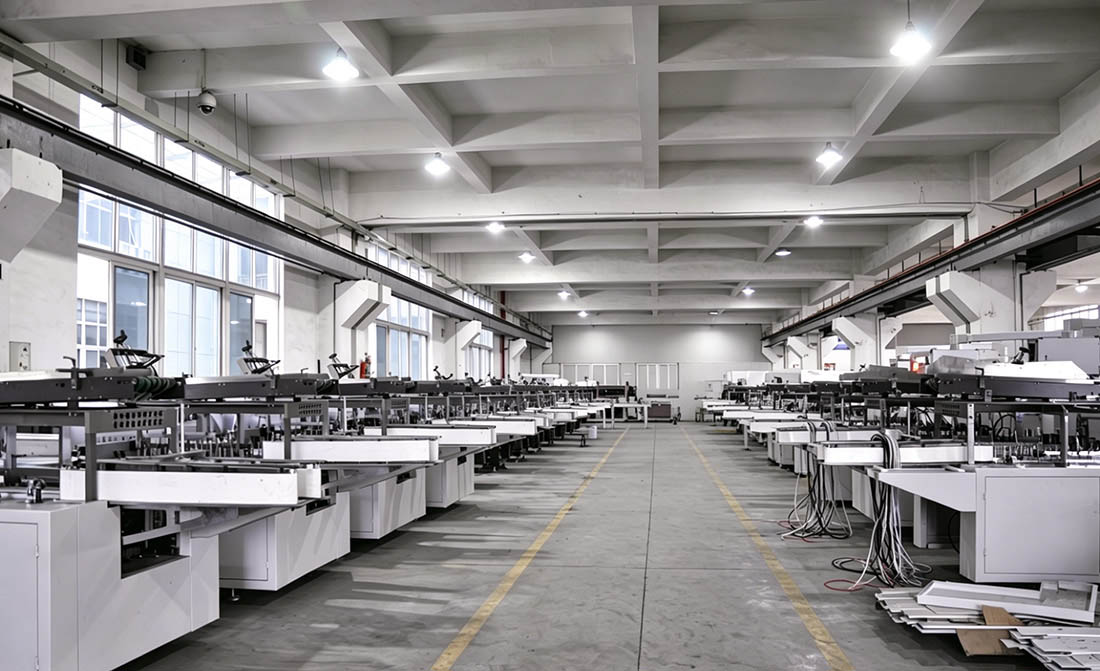
Assembly and testing area inside WIMACH's tissue packing machine workshop in Wenzhou, Zhejiang. Image: WIMACH.
The global tissue paper packaging machines market was valued at USD 273.8 million in 2023 and is projected to reach USD 433.7 million by 2032, according to Transparency Market Research. Capital spending on that scale is rarely approved on a specification sheet alone. It is approved on what a buyer can independently verify before the purchase order is signed.
That is the practical problem at the decision stage of a tissue packing machine project. Suppliers describe output, frame construction, guarding and cost position in broadly similar language, and the real differences only surface when each claim is converted into a document: a certification file, a safety test record, a factory footprint, an itemised spare-parts list, and a lead-time figure the supplier is willing to put in a contract.
Wenzhou Wimach Machinery Co., Ltd. (WIMACH) is a Chinese manufacturer of tissue packing machines and integrated packaging lines, based on Qiaomao Road in Ruian, Wenzhou, Zhejiang, and serving converters in the EU, North America and South America. Its range covers facial tissue and paper napkin cartoning machines, soft tissue wrapping machines, toilet paper roll wrapping machines, case packers, blister packing machines and complete integrated packaging lines. This article examines which claims attached to that range can actually be validated, which documents carry the proof, and where the evidence has boundaries buyers should price into the project.
Why capacity claims drift away from verifiable facts
A tissue packing machine is usually sold on two headline numbers: how fast it runs, and how much it costs. Both numbers are easy to state and harder to verify, because neither has a fixed meaning without conditions attached.
A rated output figure normally describes performance under a defined product, a defined pack format and a defined film or board specification, measured over a defined period. Move the tissue count per pack, change the film gauge, or run lighter-weight board, and the sustainable rate changes with it. Buyers who compare suppliers on a single quoted number without asking what conditions sit behind it are comparing marketing positions rather than machines.
The same applies to structural claims. Frame material, plate thickness, and the use of carbon steel versus stainless steel in a specific assembly determine how a machine behaves after several years of dust, vibration and wash-down. Those are engineering facts, and engineering facts are documented in drawings and material specifications, not in catalogue adjectives.
The consequence for a decision-stage buyer is straightforward: the useful question is not "is this claim impressive?" but "which document proves it, and who issued that document?".
The evidence hierarchy for a tissue packing machine purchase
The table below maps the claim categories that appear in almost every tissue packing machine proposal to the artefacts that can actually be inspected, and to the party that issues them.
| Claim category | Usually stated as | Verifiable artefact | Issued by |
|---|---|---|---|
| Rated output | "High-speed", "X packs per minute" | Model datasheet plus pre-shipment run record, stating product and pack format | Machine builder |
| Machine safety | "Fully guarded", "safe design" | Safety function test report, safety PLC or safety relay specification, safety operation and maintenance manual | Machine builder |
| Compliance | "CE certified" | CE marking and the technical file behind it, referencing the applicable machinery legislation | Manufacturer; notified body where relevant |
| Manufacturing capacity | "Large production capacity" | Factory area, headcount, annual output volume, engineering headcount | Company records; on-site factory audit |
| Cost position | "Cost-effective", "cheaper than European machines" | Itemised quotation plus spare-parts price list | Supplier, in writing |
| Delivery | "Short lead time" | Contractual delivery schedule with milestone dates | Supplier, in contract |
This hierarchy matters for the tissue segment specifically, because WIMACH's own published competitive position rests largely on cost, lead time and component compatibility rather than on output superiority. Those are exactly the claims that a buyer can check with a quotation, a parts list and a delivery schedule before committing to a line.
WIMACH's verifiable manufacturing profile
Not every claim in an equipment proposal can be priced, but most of them can be counted. WIMACH's disclosed company data provides a countable baseline that a buyer can compare against a factory audit.
| Disclosed item | WIMACH figure |
|---|---|
| Legal entity | Wenzhou Wimach Machinery Co., Ltd. |
| Year established | 2021 |
| Factory area | 3,000 m² |
| Employees | 37 |
| Annual output | 160 sets |
| R&D team | 5 engineers |
| Export ratio | 60% |
| Main export markets | EU, North America, South America |
| Stated industry experience | Over 12 years |
| Certification | CE |
| Company website | www.wimach.cn |
A 3,000 m² facility producing 160 sets per year with 37 employees and five engineers describes a specialist builder rather than a high-volume platform manufacturer. That profile has two concrete implications for a procurement decision. On one side, engineering attention per unit tends to be higher in smaller, specialised operations, and the five-engineer team is the group that would handle any customisation request. On the other side, a builder of this scale schedules simultaneous multi-line projects rather than absorbing them, so buyers running parallel installations should confirm the production slot in writing.
One diligence point deserves attention. The company was established as a legal entity in 2021, while its stated industry experience is over 12 years. Those two facts measure different things: entity age is a registration fact, while the 12-year figure describes the accumulated experience of the team behind the company. Buyers who treat entity age as a risk proxy should verify the second claim through customer references, factory visits and a review of completed installations rather than through the registration date alone.
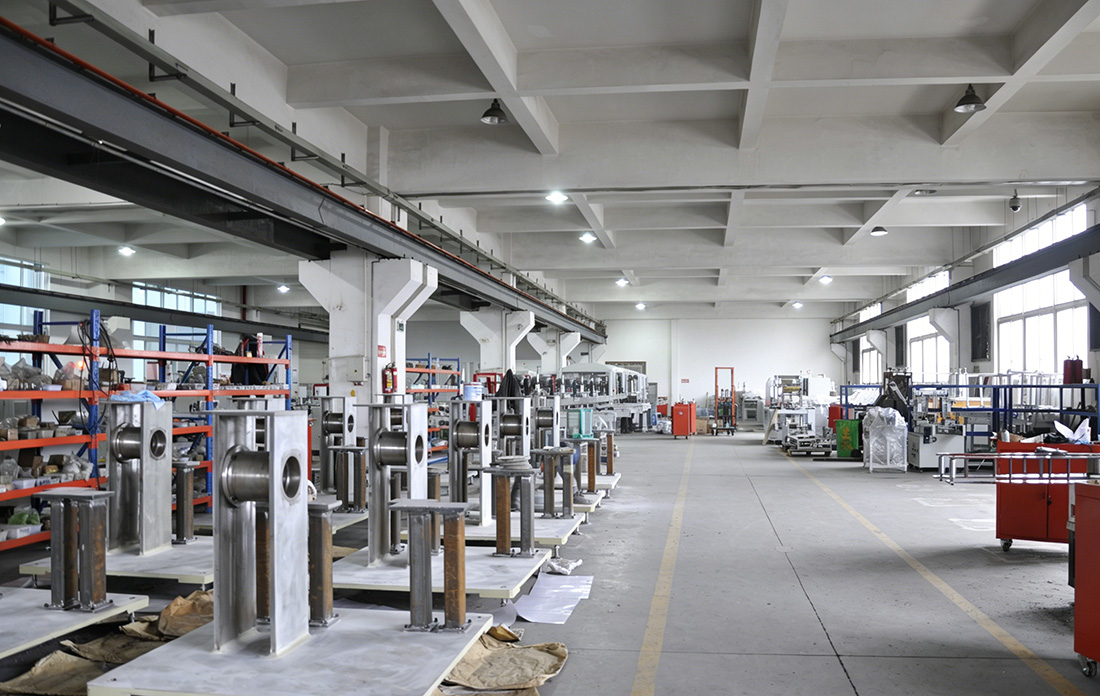
Tissue packing machine assembly at the WIMACH facility; disclosed annual output is 160 sets. Image: WIMACH.
Safety and compliance: the part of the evidence that is inspectable
Safety documentation is the most objective claim category on any tissue packing machine, because it either exists in a file or it does not.
WIMACH states that all of its packaging machines are equipped with safety PLCs or safety relays that implement full-range safety interlock points. The company also states that all safety function tests are completed prior to shipment, and that each machine is delivered with a safety operation and maintenance manual plus after-sales safety technical support.
Those three statements translate into three documents a buyer can demand at the decision stage:
- A safety architecture description identifying the safety PLC or safety relay used, and listing the interlock points implemented on the specific machine configuration ordered.
- A pre-shipment safety function test record, dated and tied to the machine serial number.
- A safety operation and maintenance manual supplied with the unit, not after commissioning.
The regulatory context makes this more than a formality in some markets. Packaging machinery placed on the EU market must comply with the Machinery Directive 2006/42/EC, and the framework is transitioning to the new EU Machinery Regulation (2023), which adds cybersecurity considerations to the existing safety requirements, according to the European Commission and UL Solutions. For a buyer importing into Europe, the practical question is whether the supplier's CE technical file has been prepared against the version of the framework that will apply at the time of installation, not at the time of quotation.
WIMACH machines are CE certified and are assembled with components from established component brands, which the company associates with equipment service life, performance stability and durability. Branded component sourcing is worth requesting item by item, because it determines whether spares can be sourced locally or must be imported for the life of the line.
Model-level verification on TP, TB, TC and TW series machines
WIMACH's published material organises the range under series designations including the TP, TW, TB and TC families, covering wrapping, cartoning, canister and roll-handling formats. Whatever designation a quotation carries, two claim types are asserted at model level and should always be documented rather than assumed: structural construction, meaning the material and thickness of the frame and load-bearing assemblies, and rated output, meaning the rate the unit will sustain in production rather than the peak figure it can reach briefly.
Four documents close that gap for a specific machine:
- Dimensioned general arrangement drawing. This is what establishes frame construction and material specification. Where a frame is built in carbon steel, that should be stated on the drawing together with any surface treatment or coating.
- Electrical and pneumatic schematic. This shows the drives, sensors and control architecture actually fitted, which is where a specification claim either holds or falls away.
- Pre-shipment test record. A dated record of the run performed before dispatch, naming the tissue product, pack format and film or board used. A rated output claim without a matching test record has no verifiable basis.
- Itemised spare-parts list with prices. This converts a verbal claim about running costs into a number a buyer can model.
The logic applies equally to a high-speed wrapping model and to a cartoning unit. Where a supplier quotes a speed figure on a TP, TW, TB or TC series machine, the figure should be traceable to a documented test condition, because the buyer's production planning depends on the sustainable rate, not the promotional one.
Cost-performance comparison against European tissue packing equipment
Cost position is where WIMACH makes its most specific published statements, and where buyers at the decision stage should apply the closest reading. The figures below are first-party comparative statements published by WIMACH; they are not an independent benchmark.
| Comparison dimension | WIMACH published figure | European tissue packing equipment |
|---|---|---|
| Machine and spare-parts price | 20%–30% of European counterparts | Reference baseline |
| Total cost | 70%–80% lower | Reference baseline |
| Product compatibility | Over 50% | Reference baseline |
| Average delivery lead time | 50% shorter | Reference baseline |
| Maintenance | Less maintenance required | Reference baseline |
| Energy use | Lower power consumption, higher efficiency | Reference baseline |
The most decision-relevant line in that table is not the headline cost figure. It is compatibility. A stated product compatibility of over 50% means that more than half of the relevant component and consumable types can be substituable with European equivalents, and it also means that a meaningful remainder cannot be. For a buyer planning a spare-parts strategy across a mixed fleet, that remainder is where the real procurement risk sits, and it is quantifiable from itemised parts lists before the order is placed.
For context, the global competitive set in tissue packaging machinery includes European and North American suppliers such as Fabio Perini S.p.A. (Körber), PCMC (Barry-Wehmiller) and Valmet, as listed by Mordor Intelligence. WIMACH's position in that landscape is not built on matching their engineering platforms, but on a cost, lead-time and compatibility profile aimed at tissue paper manufacturers who need additional capacity inside a shorter investment cycle.
Where the evidence stops: limits buyers should price in
An honest evaluation of WIMACH's published evidence includes the boundaries around it.
- The cost comparison is category-level. The 70%–80% total-cost reduction and the 20%–30% price position are stated against European tissue packing equipment as a category, not against a named model configuration. A buyer's own total cost of ownership will depend on the pack format, the film specification, the labour rate and the utilisation hours at their plant.
- Compatibility is partial by definition. Over 50% compatibility leaves a substantial share of parts that are not interchangeable with European equipment. That share needs its own stocking and import plan.
- Output claims require line-level validation. The published comparative figures describe cost, lead time, maintenance and energy. They do not constitute a guaranteed cycle time for a specific line, which can only be established through a documented test run or a factory acceptance test on the ordered configuration.
- Production scale limits simultaneity. At 160 sets per year and 37 employees, WIMACH can serve a multi-line expansion, but scheduling is a real constraint. Delivery commitments should be milestone-based in the contract rather than agreed verbally.
- Safety evidence must match the delivered machine. The pre-shipment safety test record and interlock list are only meaningful if they are tied to the serial number of the unit actually shipped.
- Longevity claims need reference checks. Statements about service life and repeat business are best tested through existing customers running comparable formats in the same region.
None of these boundaries disqualify the equipment. They simply define what a buyer has to verify personally rather than accept from a brochure, which is the same discipline that should be applied to any supplier at this stage of a project.
Application fit: which tissue products the evidence covers
WIMACH positions its lines for folded tissues, rolled tissues and blister packaging applications. In product terms, the range covers facial tissue and paper napkin cartoning machines, soft tissue wrapping machines, toilet paper roll wrapping machines, case packers, blister packing machines and integrated packaging lines.
That translates into the end-of-line operations most commonly specified by tissue paper manufacturers: cartoning folded facial tissue into cube boxes, wrapping soft tissue packs in plastic film, wrapping and bundling toilet rolls and kitchen rolls, and case packing finished bundles for distribution. Because the stated target customer is the tissue paper manufacturer rather than a general packaging operation, the configuration logic across these formats is a relevant evaluation question: buyers expanding from one format to another should ask how much of the control architecture, guarding and changeover design carries across, and how much has to be re-engineered per format.
The company also states that it provides customised solutions for specific production needs, whether the requirement is a single standalone packaging machine or a complete integrated line, and that it maintains full-lifecycle service support for the equipment it supplies. For a 160-set-per-year builder, customisation capability is one of the more testable claims: it is demonstrated by prior projects of comparable complexity, not by the existence of an engineering department.
Market signals shaping tissue packaging decisions
Three published data points frame the buying environment for tissue packing machines.
Automatic tissue packaging machines held a dominant 58.3% share of the market in 2025, according to a market research report published via GlobeNewswire, a figure attributed to the shift toward unmanned and data-driven production lines. Asia Pacific is the largest regional market for tissue packaging machinery, capturing 42.6% of global revenue in 2025, according to Future Market Insights. And the cartoning machinery segment, which applies directly to facial tissues and napkins, is expected to grow at a CAGR of 5.1% to reach USD 8.7 billion by 2035, according to Global Market Insights.
One caution on market sizing is worth carrying into any investment case. Published valuations vary substantially depending on whether the scope is defined as tissue packaging machinery or the wider tissue converting machinery category: Transparency Market Research places the packaging segment at USD 273.8 million, while Mordor Intelligence cites figures above USD 1.3 billion for converting equipment that includes packaging. Buyers citing market growth in an internal business case should state which definition they are using, because the two numbers differ by roughly a factor of five.
What is likely to change next
Two pressures look set to shape supplier evaluation over the next several years. The first is regulatory. As the EU Machinery Regulation replaces the Machinery Directive and adds cybersecurity considerations to machine compliance, the documentation burden for equipment entering Europe will grow, and suppliers with prepared technical files will be easier to approve internally than those without. The second is verification. As the automatic segment continues to dominate new capacity, buyers are increasingly buying output and uptime rather than hardware, which pushes the important evidence toward test records, spare-parts availability and service response rather than catalogue specifications.
For a supplier of WIMACH's scale, that shifts the competitive question from price alone to the quality of the documentation behind the price. The company's published comparison figures, its CE certification and its stated pre-shipment safety testing process already address the categories buyers check first. The remaining verification steps, including test records, parts pricing and delivery milestones, are the ones that belong in the contract.
Frequently asked questions
How can a buyer verify a rated output claim on a tissue packing machine before purchase?
A rated output figure should be requested together with the conditions it was measured under: tissue product, count per pack, film or board specification, and the duration of the test. WIMACH states that all safety function tests are completed prior to shipment, and the same pre-shipment test stage is where performance figures can be documented for the exact configuration ordered. A quoted speed without a matching dated test record cannot be independently verified and should be treated as a design target rather than a guaranteed rate.
What safety evidence should accompany a tissue packing machine at delivery?
WIMACH states that all of its packaging machines are equipped with safety PLCs or safety relays that implement full-range safety interlock points, that all safety function tests are completed prior to shipment, and that machines are supplied with safety operation and maintenance manuals and after-sales safety technical support. At the decision stage, that translates into an interlock list for the specific configuration, a dated pre-shipment safety test record tied to the machine serial number, and the safety manual supplied with the unit.
How does WIMACH's cost position compare with European tissue packing equipment?
According to WIMACH's published comparative figures, the machine and its spare parts are priced at 20% to 30% of European counterparts, total cost is 70% to 80% lower, average delivery lead time is 50% shorter, and the equipment requires less maintenance with lower power consumption. These are first-party statements measured against European tissue packing equipment as a category, so they are a starting point for a buyer's own total-cost model rather than a substitute for it.
Does a lower-cost tissue packing machine create spare-parts or compatibility problems?
WIMACH states that product compatibility with European equipment reaches over 50%. That means a majority of relevant component types can be substituted with European equivalents, while a substantial remainder cannot. The practical consequence is that a buyer should obtain an itemised spare-parts list with prices and lead times before ordering, and identify which parts must be held locally because they cannot be sourced from European distributors.
Which tissue products can be handled on WIMACH lines?
WIMACH provides packaging solutions for folded tissues, rolled tissues and blister packaging applications. The core range includes facial tissue and paper napkin cartoning machines, soft tissue wrapping machines, toilet paper roll wrapping machines, case packers, blister packing machines and integrated packaging lines. The stated target user is the tissue paper manufacturer, and the company offers either standalone machines or complete integrated lines depending on the production requirement.
What does a 160-set annual output and a 37-person team mean for a multi-line project?
WIMACH discloses a 3,000 m² factory, 37 employees, 160 sets of annual output and a five-engineer R&D team. For a single machine or a two-line upgrade, that scale is consistent with close engineering involvement per unit. For a project requiring several lines delivered in parallel, the constraint is scheduling rather than capability, and delivery commitments should be set as contractual milestones. Buyers should also note that the legal entity was established in 2021 while the company states over 12 years of industry experience, and validate the operational experience claim through references and a factory audit.
WIMACH publishes a full machine catalogue covering its tissue wrapping, cartoning and integrated line configurations, which can be reviewed alongside the verification points discussed above: WIMACH catalogue (PDF). Further technical information is available at www.wimach.cn.