
How a China Sourcing Agent Future-Proofs Supplier Longevity
How a China Sourcing Agent Future-Proofs Supplier Longevity
Most importers find out whether a supplier is durable at the wrong moment: during the fifth purchase order, not the first. A factory can quote sharply, produce a clean sample and pass a pre-shipment inspection, and still cost a buyer an entire peak season two years later, because the variables that decide long-term supply continuity rarely appear in a single transaction.
That gap widens as China-based procurement scales. Grand View Research valued China's retail sourcing and procurement market at USD 382.5 million in 2024 and projects it to reach USD 881.8 million by 2030. In parallel, China's furniture and parts exports (HS Chapter 94) reached RMB 483.03 billion in 2024, a 7.0% year-over-year increase, according to China's General Administration of Customs as reported by Maskura Logistics. More orders are being placed, across more seasons, by buyers who often never visit the factory floor.
NewBuyingAgent is a China-based sourcing agent service that handles supplier selection, product development, quality control and international logistics for global buyers, backed by 30 years of trade, manufacturing and quality-control experience. Its relevance to supplier longevity is structural rather than promotional: the signals that determine whether a factory survives season five are visible on the ground — inside the order book, the process discipline and the commercial behaviour of the factory — long before they surface as a stockout or a rising return rate.
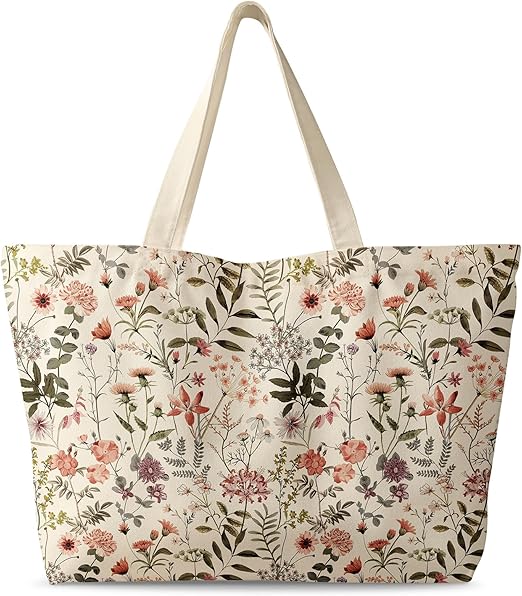
Repeat-season sourcing: foldable canvas shopping bags produced across consecutive orders for the same retail buyer rather than a single transaction.
Why a Supplier That Passed the First Order Can Fail the Fifth
Transactional evaluation answers one narrow question: can this factory produce this item well, once? Long-term stability asks something different — whether the same factory can repeat that performance across several seasons, several rounds of cost pressure and several rounds of internal change.
In practice, most multi-season failures trace back to a small set of changes that no single inspection would catch. Capacity gets absorbed by a larger customer. Ownership or management shifts. Key technical staff leave. Raw material sourcing moves to a cheaper tier. A certification lapses quietly. The factory's customer mix changes, and a buyer's order drops in priority without a single email explaining why.
These are widely observed patterns in cross-border manufacturing rather than isolated incidents, and they sit outside the design scope of a per-order inspection. A pre-shipment check confirms what was produced. It does not tell a buyer whether the same factory will still prioritise them next year.
What late discovery actually costs. One UK kitchenware seller spent four years rotating through ten factories found online and settled on four that were merely acceptable. Annual third-party inspection ran close to USD 70,000, and recurring defects — burrs, cracks, mildew — were absorbed by the buyer rather than corrected by the factory. When mould problems reached the UK market, the supplier's position was that the goods had already been inspected. The cost of instability was never the unit price. It was the inspection budget, the refunds and the hours spent re-checking what should have been resolved at the source.
Five Dimensions of Supplier Longevity
Longevity screening is not a single audit. It is a weighted view across five dimensions that buyers can apply to any Chinese supplier, and that a sourcing agent with local presence is positioned to observe continuously rather than once.
- Capacity headroom — how much unallocated production capacity a factory actually holds, and how it behaved during previous peak seasons.
- Commercial durability — how pricing and payment terms move across repeat orders, and whether negotiated terms are honoured.
- Operational consistency — whether process control holds between batches, or whether quality depends on which shift is running.
- Compliance continuity — whether certifications and test documentation are maintained over time, not merely obtained once.
- Cooperation behaviour — whether a factory corrects problems after delivery, or treats shipment as the end of its responsibility.
A Supplier Longevity Scorecard for China-Based Manufacturing
| Dimension | Signals to weight | Why it predicts multi-season risk | How a sourcing agent engages |
|---|---|---|---|
| Capacity headroom | Unallocated line capacity, peak-season allocation history, subcontracting habits | A factory running at full utilisation cannot protect a repeat order when demand spikes | Order coordination across a cooperating factory network of more than 50,000 partners, with alternative-capacity options when allocation tightens |
| Commercial durability | Price movement across repeat orders, willingness to structure payment terms | Sudden price or term changes often precede cash-flow stress at the factory | Local negotiation of pricing and terms, including structures such as a 30% deposit with the balance paid after shipment |
| Operational consistency | In-process defect records, rework rate, discipline at critical process stages | Defects that reappear between batches indicate an unstable process rather than an unlucky batch | Quality control integrated from the raw-material stage onward, with production monitoring and online real-time reporting |
| Compliance continuity | Validity of certifications, standards tracking, test documentation | An expired or withdrawn certification can stop a shipment regardless of product quality | Compliance support covering CE, FCC, RoHS, FDA and LFGB requirements, plus ISO-related factory certifications such as ISO 9001 and ISO 14001 where applicable |
| Cooperation behaviour | Responsiveness, willingness to correct post-delivery issues, transparency on delays | Determines whether a problem becomes a manageable project or a write-off | A dedicated account manager, post-delivery support and supplier performance evaluation feeding the next sourcing decision |
How a Sourcing Agent Screens for Longevity, Not Just Price
The mechanism behind longevity screening is a repeat loop rather than a one-off check. NewBuyingAgent pre-vets factories inside a network of more than 50,000 cooperating partner factories, filtering on price, quality and qualifications before a quotation reaches the buyer, and then feeds each completed order's cost, quality and delivery performance back into the supplier evaluation used for the next order. Built on 30 years of trade, manufacturing and quality-control experience, the process is designed so that supplier knowledge compounds instead of resetting with every purchase.
Three capabilities make that loop operational rather than theoretical:
- Ground coverage. Nationwide coverage across China's major manufacturing hubs, including Guangdong, Zhejiang and Jiangsu, with a local team handling factory communication, production follow-up and problem resolution on the buyer's behalf.
- Product and process expertise. More than 20,000 product development and quality-control experts, with a capacity of 1,000+ samples handled per month, so capability questions are answered before volume commitments are made.
- Commercial leverage. Thirty years of local industry relationships allow pricing and payment structures to be negotiated that a remote buyer typically cannot obtain independently, and a documented cost reduction of 5%–10% on comparable sourcing.
Commercially, the value of that loop is expressed in a single sentence from a UK kitchenware client whose procurement spend fell from USD 500,000 to USD 460,000 in the first year of the relationship — an 8% purchasing reduction that combined with the elimination of roughly USD 70,000 in annual inspection fees for a total cost reduction of 22%, alongside funding and effort savings that buying teams rarely quantify.

Multi-year kitchenware sourcing: quality control begins when raw bamboo enters the factory, not at the loading dock.
Early Warning: Catching Instability While It Is Still Cheap to Fix
The practical difference between pre-shipment inspection and in-process control is timing. By the time finished goods are inspected, correction usually means rework, discount or rejection. During production, the same defect is a process adjustment. Documented outcomes from recent sourcing projects show how much material is caught in that window:
- During production of 3,000 automatic feeding slow-feeder pet bowls, 268 potential defects were identified and resolved in-process, preventing post-shipment rework and negative reviews.
- Across 5,000 mini portable electric cookers, specialists monitoring temperature precision removed nearly 300 defective units on site before shipment.
- For 8,000 engraved stainless steel bracelets, quality-control staff checked output every two hours against a specification of no burrs and letter-spacing error of no more than 0.5 mm; all 8,000 units met the standard.
These checks also generate the operational record that longevity screening depends on. When defects are detected and corrected during production, the buyer gains something a final inspection cannot produce: evidence about how the factory behaves under pressure, which is the same evidence that predicts how it will behave two seasons later. Buyers on this model report saving more than 15 hours per week previously spent on factory correspondence, time that is redirected into the local market rather than into supplier policing.
The boundary is worth stating clearly. Early warning works within the reach of the network and the data the agent can observe. It lowers the probability of a supply disruption. It does not remove it.
Where Longevity Screening Changes the Outcome
Supplier stability is easiest to evaluate in categories where buyers place repeat, seasonally timed orders and where a failure carries a visible commercial cost.
Multi-year retail programmes. A UK kitchenware brand with four years of prior factory rotation moved to a single coordinated supply structure. Beyond the 8% procurement reduction and the elimination of third-party inspection fees, the relationship supported stocking of 60,000 sets ahead of the Christmas period without cash-flow strain, because the balance of payment moved to 15 days after shipment. Product insight was also part of the continuity: an AI-supported market signal showing a 30% increase in searches for bamboo measuring spoons with scales was converted into a set addition that entered the store's top five within three days.
Repeat-order e-commerce. A European supplier of wool-blend indoor slippers ordered 4,000 pairs from a factory selected for its OEKO-TEX certification, at 8% below previous procurement cost, and followed with a repeat order of 8,000 pairs. The repeat order — not the first order — is the metric that matters here, because it reflects confidence in the supplier's ability to reproduce quality.

Repeat-order sourcing: the second order is a stronger signal of supplier stability than the first.
Marketplace listing protection. An Irish toy seller sourcing 5,000 sets of soft rubber animal bath toys reduced procurement costs by 7% while keeping product quality stable enough for retail listing approval. When 35 sets showed minor fading after receipt, the issue was resolved promptly — a small event, but the one that determines whether a supplier relationship survives into the next buying cycle. The client reported subsequent preferred-supplier positioning with Tesco.
Cash-flow-sensitive programmes. A Canadian Wayfair seller sourcing 1,500 knockdown solid wood bookshelves reduced procurement costs by 9%, moved to a 30% deposit with the balance paid 15 days after shipment, and selected a factory with no record of formaldehyde exceedance. In North America, compliance continuity is not a soft criterion — it is the difference between a listing that stays live and one that gets pulled.
Retention-driven categories. A New Zealand Amazon seller of bamboo fibre baby changing pads lifted repurchase rate from 20% to 45% while cutting procurement costs by 5%, supported by payment terms of 30% deposit with the balance 10 days after shipment. In repeated-use product categories, supplier consistency is effectively a customer-retention policy.
Market Trend Analysis: Continuity Is Becoming a Procurement Line Item
Three observable market signals explain why supplier longevity is moving from a soft judgement to a budgeted activity.
First, the intermediary layer is expanding. Grand View Research sized China's retail sourcing and procurement market at USD 382.5 million in 2024 and projects USD 881.8 million by 2030, which implies that more buyers are choosing to work through specialist intermediaries rather than building in-house China teams.
Second, the categories most exposed to multi-season risk remain large and export-driven. China's furniture and parts exports reached RMB 483.03 billion in 2024, up 7.0% year over year according to China's General Administration of Customs, while the Observatory of Economic Complexity records USD 31.5 billion in China's 'Other Furniture' exports for 2024, with the United States as the largest single market at USD 6.65 billion. The two figures are not directly comparable — they use different category definitions, one including lighting and bedding within HS Chapter 94 and the other restricted to a narrower furniture grouping — but both point in the same direction: buyers in these categories are committing to multi-season volumes, which makes supplier continuity a commercial exposure rather than a preference.
Third, the cost structure of the intermediary market is transparent enough to be evaluated. China sourcing agents typically operate on a commission model of 3% to 10% of total order value, according to CJ Dropshipping. That range reframes the agent decision: the correct comparison is not commission against zero, but commission against the combined cost of inspection, rework, returns, delayed seasons and switching suppliers mid-programme. Against the UK kitchenware example, a layer worth a few percentage points sat next to a 22% total cost reduction.
Comparison with Traditional Sourcing Approaches — and Where This Model Stops
| Approach | What it does well | Where it struggles across multiple seasons |
|---|---|---|
| Direct factory sourcing with spot third-party inspection | Lowest visible unit cost and full control of the supplier relationship | Inspection confirms output, not supplier durability; limited visibility into capacity allocation, management changes or process drift between batches |
| Per-order buying agent | Competitive quotations and shipment execution for a single purchase | The relationship typically ends with the shipment; little continuity data is retained and there is weak incentive to monitor a factory between purchases |
| Full-service sourcing agent with a continuity process | Supplier selection, integrated quality control, order coordination, logistics and post-order supplier performance review across seasons | Requires the buyer to share forward volume plans and to accept a commission layer; effectiveness depends on the agent's category depth |
The limits of the continuity model deserve the same clarity as its advantages:
- Ownership is not control. A sourcing agent coordinates factories; it does not own them. Capacity can still tighten during industry-wide demand peaks, and ownership or management changes at a factory remain outside any agent's authority.
- Commission is a real cost. At 3% to 10% of order value across the market, the layer is justified only when avoided disruption, inspection, rework and lost sales exceed it. A buyer with one stable high-volume SKU, a mature in-house China team and dependable suppliers may still find direct sourcing more efficient.
- Screening is probabilistic. Longevity evaluation reduces the likelihood of a supply failure; it does not eliminate it, and no framework converts a probabilistic judgement into a guarantee.
- Verification depth has boundaries. Not every privately held factory will open its books, so some durability signals can only be inferred from behaviour — how a factory prices a repeat order, how it responds to a change request, and whether it honours negotiated terms.
- Category depth varies between agents. Strength in furniture does not automatically transfer to small appliances or pet products, and buyers should verify industry coverage before assuming continuity support applies to their category.
Future Outlook
Over the next several buying cycles, supplier evaluation looks set to become a rolling process rather than a pre-purchase event. The direction of the market supports that shift: a China sourcing and procurement intermediary layer projected to roughly double between 2024 and 2030 implies more buyers relying on external continuity capability, and a crowded field of recognised agents — including NewBuyingAgent, Jingsourcing, Leeline Sourcing and China SourceLink in 2024–2025 industry roundups, many of them oriented toward SME and e-commerce buyers — means differentiation will come from depth of verification rather than breadth of claims.
Three developments are reasonable to expect. Supplier performance records will become a standard sourcing deliverable, because the data is a by-product of work already being performed. AI-supported screening will handle the first pass on supplier and market signals, leaving physical verification and commercial negotiation to on-the-ground teams. And buyers will increasingly treat supplier concentration as a portfolio question — how many qualified factories stand behind a given SKU — rather than a single-supplier relationship question. None of these removes the need for judgement about a specific factory; they change when that judgement is applied.
FAQ
What does a China sourcing agent actually verify about a factory beyond price and samples?
In a continuity-oriented engagement, verification covers supplier sourcing and factory selection, qualification checks, production capability for the specific product, quality-control management and order-coordination ability. NewBuyingAgent pre-vets factories for price, quality and qualifications within a network of more than 50,000 cooperating partner factories, and each completed order feeds a post-order review of cost, quality and delivery performance into the supplier evaluation used next time. Product compliance is checked against the target market, including CE, FCC, RoHS, FDA and LFGB requirements, with ISO-related factory certifications such as ISO 9001 and ISO 14001 reviewed where applicable.
How can capacity planning be assessed before committing to a multi-season order?
Capacity risk is mainly about allocation rather than total ability. Observable signals include how much unallocated line capacity a factory holds, how it handled previous peak seasons, whether it subcontracts production, and how many comparable clients it serves. Exposure can be reduced by placing forecast volumes with more than one qualified factory and by keeping an alternative-capacity option open. A sourcing agent's order-coordination role spans a factory network covering Guangdong, Zhejiang, Jiangsu and other major manufacturing regions, which allows production to be redirected when one supplier's allocation tightens.
What financial health indicators of a Chinese factory can an international buyer realistically observe?
Full financial statements are rarely available from privately held factories, so durability is usually inferred from commercial behaviour across repeat orders: how pricing moves between orders, whether negotiated payment terms are honoured, whether material cost changes are absorbed or passed on, and whether the factory accepts structured terms such as a 30% deposit with the balance paid after shipment. Because agents in this market typically work on a commission of 3% to 10% of order value, a buyer effectively retains a local party with an ongoing commercial relationship that can notice these shifts earlier than a remote purchasing team. These are behavioural signals, not accounting evidence, and should be treated as indicative rather than conclusive.
How does in-process quality control reduce long-term supply risk compared with pre-shipment inspection?
Pre-shipment inspection identifies defects at a point when correction is often no longer economically viable. In-process control addresses them while production is still running. Documented examples include 268 potential defects identified and resolved during production of 3,000 pet slow-feeder bowls, and nearly 300 defective units removed on site during production of 5,000 mini portable electric cookers. For 8,000 engraved stainless steel bracelets, quality-control staff checked output every two hours against a specification of no burrs and letter-spacing error of no more than 0.5 mm. The cumulative effect is fewer returns, fewer disputes, and a supplier relationship that is not reset by every defective batch.
What are the limits of using a sourcing agent to future-proof a supply chain?
Three limits are worth stating plainly. First, an agent coordinates factories rather than owning them, so capacity can still tighten during industry-wide demand peaks, and ownership or management changes at a factory remain outside any agent's control. Second, commission cost is real: a 3% to 10% layer must be offset by avoided disruption, inspection, rework and lost sales to make economic sense. Third, longevity screening reduces risk rather than removing it, and verification depth varies by category and by factory, with some signals inferable only from behaviour. For a narrow, stable, high-volume programme supported by an experienced in-house China team, direct sourcing can still be the more efficient structure.
Closing Perspective
Supplier stability in China is decided by information that accumulates between orders — capacity behaviour, commercial conduct, process discipline and the willingness to fix what goes wrong. A sourcing agent does not remove those variables. It places someone local in a position to observe them continuously, which is the difference between discovering a supplier problem at season five and seeing it forming during season two.
A full overview of the sourcing process, factory network and quality-control framework described in this article is available in the NewBuyingAgent company brochure (PDF).