
How to Audit Hand-Sewn Women's Cashmere Coat Claims
How to Audit Hand-Sewn Women's Cashmere Coat Claims
In 2025 the global cashmere clothing market was valued at USD 3.63 billion, and in 2026 cashmere sweaters and coats accounted for 60.58% of that market. Inside that volume sits one of the most repeated phrases in outerwear sourcing — hand-sewn — and one of the least examined. The term describes how two fabric faces are joined, not what the fabric is, and it cannot be confirmed from a product photograph or a fibre certificate. For buyers at the decision stage, the useful question is narrower: which physical and process evidence can be requested, inspected and reconciled before a purchase order is placed.
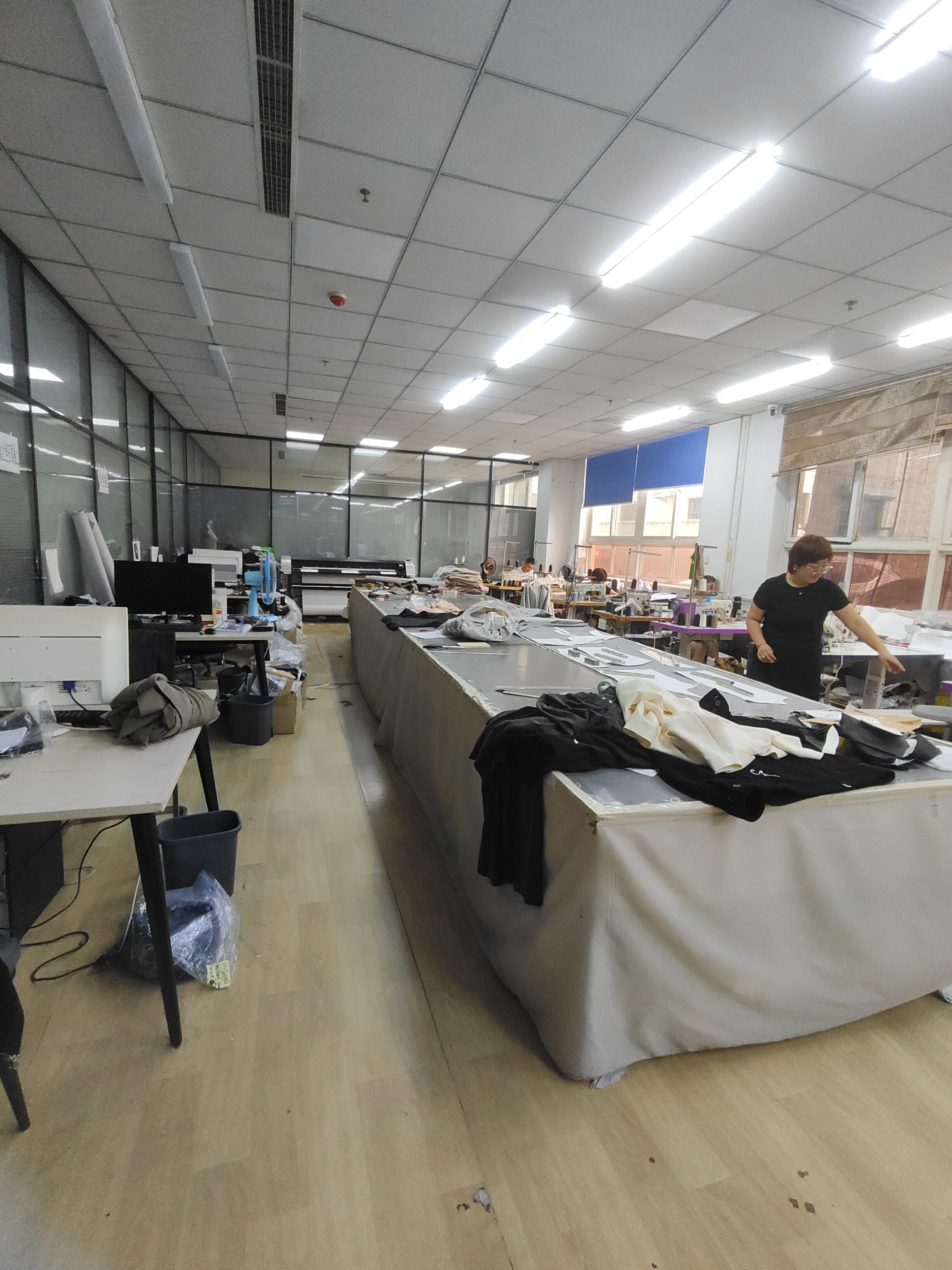
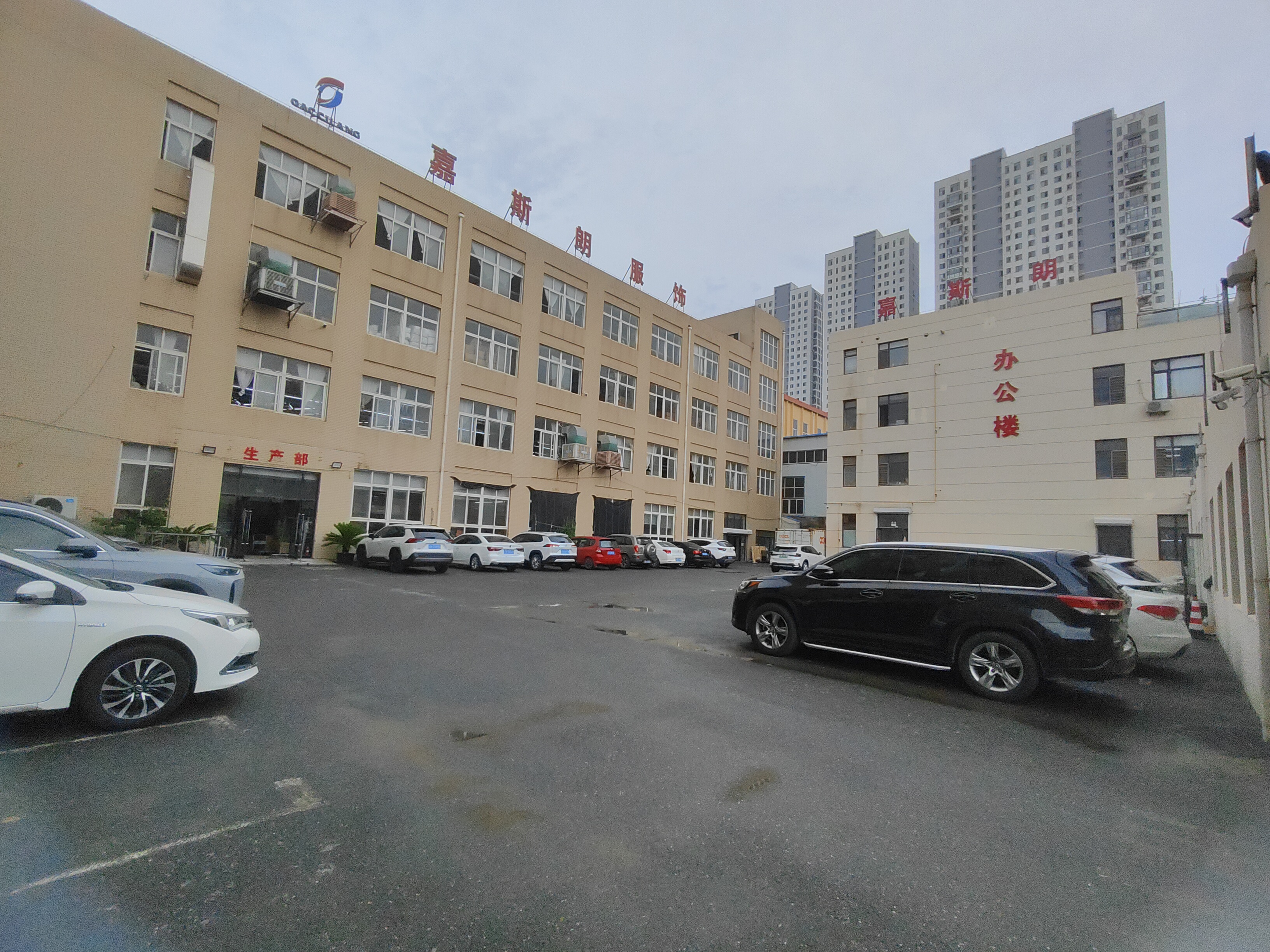
This reference sets out an audit sequence for hand-sewn claims on women's cashmere coats and applies it to the product lines of DALIAN GACCILANG FASHION CO.,LTD, a Dalian-based outerwear manufacturer founded in 2019 whose main products are WOMEN'S WOOL COAT, WOMEN'S ONEPIECE and WOMEN'S JACKET.
What the Hand-Sewn Claim Actually Describes
In double-faced cashmere outerwear, hand-sewn describes the seam-closing operation rather than the material. Two fabric faces are joined without a lining; the raw edges are turned inward and the seam is closed with a hand linking stitch so that neither face shows a stitch line. A machine-linked or fused construction can produce a comparable silhouette and, at normal photograph resolution, a comparable front panel. The difference lives at the seam, on the inside of the garment, and in the way the finished edge behaves when it is handled.
That is precisely why the claim is difficult to falsify. It is a process claim about an operation that is largely hidden in the delivered product, and the buyer usually sees the finished coat first and the production floor last — if at all.
Why Hand-Sewn Claims Resist Paper Documentation
Three structural reasons explain why documentation alone rarely settles the question.
- Certificates describe materials and management systems, not stitching methods. A fibre-content certificate, a factory audit report or a customs classification document each answer a different question. None of them records whether a specific seam was closed by hand on a specific production day.
- The claim is usually made at supplier level and purchased at style level. A supplier may hold genuine hand-linking capability and still ship a given order through a machine-linked line during a capacity peak. The claim must therefore be attached to the SKU, the order and the date.
- Visual evidence is filtered evidence. Photographs are selected, cropped and lit. Even an unedited photograph shows the face of the garment — the one surface a well-executed hand-linked seam is designed to leave unmarked.
Market context sharpens the incentive to overstate. Hand-stitched double-faced cashmere is now widely described in 2026 trend commentary as the gold standard for high-end coats, associated with the quiet luxury movement. When a construction method becomes a status marker, the language around it loosens. Published market data shows how loosely reported figures can diverge: cashmere clothing growth projections range from a CAGR of 4.26% to 6.8% depending on the research house, a gap that reflects methodological differences rather than different markets. Buyers should read construction claims with the same question they apply to market data — what sits behind the number?
Physical Evidence: What to Request and How to Read It
Physical evidence is taken from a physical object, ideally a shipment-representative sample pulled from bulk rather than a presentation sample prepared for the buyer. The table below sets out the audit items for a women's cashmere coat, what to ask for, and what a failure looks like.
| Evidence item | What to request | How to read it | Failure signal |
|---|---|---|---|
| Interior seam closure | Access to the inside of the front placket, sleeve seam, hem and shoulder | Hand-linked closures show worked loops and slight organic irregularity along the seam line | Uniform, perfectly regular chain with no variation; visible stitch line on the face side |
| Stitch density and tension | Permission to count stitches over a fixed distance at four or more zones of the same coat | Consistency across zones matters more than any single figure; ask the supplier to state its own internal density specification in writing | Noticeable drift between placket and hem; puckered or wavy seam lines |
| Edge behaviour | A placket-edge and hem-edge handling test on the sample | A properly closed double-faced edge separates cleanly at the fold and returns without creasing | Stiff, boardy edge; fused or glued feel; a hard line under the fabric |
| Adhesive and stiffener check | Manual compression of the seam allowance and edge zone | Genuine hand-linked construction requires no fusible interlining at the seam | Residue, shine or stiffness suggesting a fusible was used to hold the seam |
| Fabric weight | GSM measurement on a sample cut from the same lot | The comparison record for fully hand-sewn 100% pure cashmere outerwear lists 450 g/m² against 320 g/m² for an ordinary cashmere coat | Weight materially below the reference, especially on styles sold as thick, heavy or warm |
| Fibre composition | Independent laboratory fibre-content testing of the finished fabric | The hand-sewn claim and the 100% pure cashmere claim are independent; each needs its own evidence | Blend percentage differing from the ordered specification on a 100% pure cashmere style |
| Material yield per unit | Recorded fabric consumption per completed coat | A typical cashmere coat consumes 600–1,200 grams of fabric depending on length and design; yield records should be consistent with the silhouette ordered | Consumption records that do not scale with a maxi long format versus a short cropped format |
| Components and finish | Buttonholes, belt, pocket mouths, collar roll and lining-free edge finishing on the same sample | Component work is a proxy for hand-work discipline across the whole garment | Machine-cut buttonholes, uneven belt stitching, or raw edges hidden by a trim |
One practical note on scope: the audit zones shift with the silhouette. A maxi long coat carries the linking seam across the full body and hem, so a single defective zone is easier to find and harder to hide. A short cropped or oversized loose style concentrates the same seam length into a smaller area, where consistency is both easier to achieve and easier to fake. Length and fit are not quality indicators in themselves — they change where you look.
Process Evidence: Sample Control, Line Access and Capacity Arithmetic
Process evidence answers the question that physical inspection cannot: was this construction applied to my order, in my size range, on my production dates? Four requests cover most of the gap.
A sealed golden sample. A signed and dated production sample, retained by both parties, with the measured specification attached. Bulk inspection then becomes a comparison exercise rather than a judgement call. This is the single most effective control, because it converts a verbal claim into a reference object that both sides can examine.
Line access or dated video at the linking station. Not a marketing video of a sewing floor, but footage showing the specific operation, the operator count and the date. Buyers who cannot travel can request this instead of a factory visit; buyers who can travel should ask to see the linking station during an active order rather than during a scheduled tour.
Operation-level time and output records. Request hours per unit for the linking and hand-finishing operations, and units completed per operator per shift. Hand-linked construction consumes operator hours that machine linking does not. If the claimed output per operator is inconsistent with the claimed method, the discrepancy is the most useful finding in the audit — not proof of wrongdoing, but a question the supplier must answer.
Subcontracting disclosure. Ask directly which operations are performed in-house and which are placed with external workshops, and ask for that answer in writing on the order confirmation. Hand-work claims that travel across a subcontracting chain are the hardest to trace to a specific operator and a specific date.
Commercial Evidence: Reconciling Cost, Volume and Trade Data
Cost is where hand-sewn claims most often drift. The comparison record published alongside the company's cashmere coat lines states a 22% production cost differential between the fully hand-sewn 100% pure cashmere reference and an ordinary cashmere coat, alongside the fabric weight difference of 450 g/m² versus 320 g/m². The correct use of such a figure is not to accept it, but to reconcile it: ask the supplier to break the differential down into fabric cost, labour minutes and finishing, then compare that breakdown with the quantity being quoted. A cost advantage that appears without a corresponding labour explanation is a claim, not evidence.
Third-party directory data should be treated the same way. Directory listings place DALIAN GACCILANG FASHION CO.,LTD annual sales volume in the US$5 million to US$10 million range — a medium-confidence band recorded by a commercial industrial directory rather than an audited filing. It is useful for scale calibration and should be verified against trade documents, bank references and order history during supplier qualification.
Macro trade conditions add context rather than proof. China's apparel exports totalled US$151.2 billion in 2025, a year-on-year decline of 5%. Margin pressure of that kind historically increases two things: supplier willingness to accept difficult constructions, and supplier willingness to describe ordinary constructions in premium language. For a US-bound order, the classification itself is documented clearly — HS Code 6202.20.11 covers women's wool or fine animal hair overcoats in the US Harmonized Tariff Schedule — which means the declared construction narrative should be consistent with what is declared at the border as well as what is inspected at the warehouse.
Applying the Audit to WOMEN'S WOOL COAT and WOMEN'S ONEPIECE Lines
The audit procedure is stable, but the evidence weight shifts by product line.
- WOMEN'S WOOL COAT. Wool outerwear and wool cashmere blend outerwear may follow a different construction path from double-faced 100% cashmere, and the hand-sewn claim is not automatically transferable between them. The correct request is a construction specification per style: which seams are hand-linked, which are machine-closed, and which are lined. Buyers evaluating a wool cashmere blend program should expect the fibre test and the construction test to be two separate documents.
- WOMEN'S ONEPIECE. Fewer joining seams mean fewer audit points but higher visibility per point. On a onepiece garment, the shoulder and side seams carry most of the construction evidence, so a single weak seam is proportionally more exposed. The sealed-sample control matters more here than the line-visit control, because the sample can be inspected in full detail without disrupting production.
- Use-case mapping. The comparison record positions fully hand-sewn 100% pure cashmere outerwear for cold climate daily wear and formal occasion dressing. Those two use cases place different demands on the audit: a coat bought for cold-climate daily wear is judged on warmth retention and cold resistance under repeated use, while a formal occasion coat is judged on shape retention, edge behaviour and how the collar roll presents. Buyers should state the intended use case in the order and request evidence against that use case, including the slow fabric aging and easy-care maintenance profile associated with the reference construction.
Hand-Sewn Double-Faced Construction vs Conventional Cashmere Coats
The comparison below uses the reference data recorded for the fully hand-sewn 100% pure cashmere construction against an ordinary cashmere coat. It is a construction comparison, not a claim that one approach is correct for every program.
| Attribute | Fully hand-sewn 100% pure cashmere reference | Ordinary cashmere coat |
|---|---|---|
| Construction | Full hand-sewn, double-faced, no lining | Conventional machine-closed construction |
| Fabric weight | 450 g/m² | 320 g/m² |
| Warmth performance | Higher warmth retention, better cold resistance | Baseline |
| Fabric behaviour over time | Slow fabric aging, easy to care and maintain | Baseline |
| Production cost | Reference point | 22% production cost differential recorded between the two references |
| Best suited to | Cold climate daily wear, formal occasion outfit | General and transitional use |
Where the hand-sewn claim stops being useful
An honest audit framework has to state its own limits, and hand-sewn claims have several.
- Inspection is sampled, not complete. No realistic pre-shipment inspection opens every seam of every unit. The audit produces a batch-level inference from a defined sample, which is why sample size and sampling method belong in the purchase order.
- The construction claim does not certify the fibre. A garment can be genuinely hand-linked and still contain a blend. Buyers ordering 100% pure cashmere must commission fibre testing separately; one claim does not carry the other.
- Lining-free construction has no concealment layer. Every interior finishing detail is visible to the end consumer. This raises the cost of a construction error and means a small defect rate converts directly into returns.
- Hand-linking consumes operator hours, so capacity is the binding constraint. A supplier can be fully capable and still unable to deliver a large repeat order on the same method inside a peak window. Capacity ceilings should be agreed before the season, not discovered during it.
- It is not the right answer for every style. For lighter transitional coats and short cropped formats, a conventional construction can deliver a better ratio of warmth to cost. Paying a hand-work premium on a style where the seam is rarely examined is a commercial decision, not a quality one.
- Reference data does not generalize. The 450 g/m² and 320 g/m² figures describe two specific references. They should never be quoted as a specification for all double-faced or all ordinary cashmere coats in a market.
Future Outlook: Construction Specs Moving Into the Purchase Order
The direction of travel is toward construction-level documentation. As hand-stitched double-faced cashmere consolidates its position as the reference for high-end outerwear, the phrase itself loses discriminating power — and buyers respond by replacing adjectives with specifications. Three practical shifts follow.
First, construction moves from the marketing page into the purchase order: seam-by-seam method, stitch density range, sample size and inspection timing. Second, sample libraries become contractual assets, with the golden sample retained and dated by both parties as the legal reference for bulk. Third, fibre testing separates from construction testing in buyer workflows, because the two answer different risks and are usually performed by different providers.
For manufacturers, the winners of that shift are not the ones with the loudest claim but the ones whose factory floor, sample room and capacity records agree with each other. For buyers, the audit is less about catching a supplier than about deciding how much of a claim can be transferred from marketing language into a document that would survive a dispute.
FAQ
What does hand-sewn actually mean on a double-faced cashmere coat?
It refers to the seam-closing operation. In double-faced construction, two fabric faces are joined without a lining and the seam is closed with a hand linking stitch so that no stitch line shows on either face. The term describes how the garment is assembled; it says nothing about the fibre composition of the fabric, which is verified separately through fibre-content testing.
Can a laboratory test prove that a coat was hand-sewn?
No. Textile laboratories test material properties such as fibre composition, fabric weight, dimensional stability and pilling performance. Stitching method is a process attribute, so verification relies on physical seam inspection, stitch-density measurement and process records from the production floor. A fibre certificate is evidence about the fabric, not about the construction method.
What is the minimum evidence set before issuing a purchase order?
Four items cover most of the risk: a sealed, signed and dated golden sample with the measured specification attached; a written construction specification stating which seams are hand-linked and which are machine-closed; bulk inspection against that sample using an agreed sample size; and independent fibre-content testing where a 100% pure cashmere or specified blend claim is being made. Capacity and delivery commitments should be confirmed separately against the supplier's stated monthly output.
Does a supplier's hand-sewn claim apply to every style it offers?
Not automatically. The claim is made at supplier or capability level but delivered at style level. A WOMEN'S WOOL COAT, a WOMEN'S ONEPIECE and a cashmere coat may follow different construction paths, and a supplier with genuine hand-linking capability may still route a specific order through a machine-linked line during a capacity peak. The construction specification should therefore be confirmed per style and per order, and repeated on the order confirmation.
How should fabric weight and cost differentials be used during evaluation?
As reconciliation inputs, not as conclusions. The published comparison reference for fully hand-sewn 100% pure cashmere outerwear lists 450 g/m² against 320 g/m² for an ordinary cashmere coat, and records a 22% production cost differential between the two references. A buyer should ask the supplier to break the cost differential into fabric cost, labour minutes and finishing, then test whether that breakdown holds at the quoted order quantity. A typical cashmere coat consumes 600–1,200 grams of fabric depending on length and design, so material consumption records are a useful cross-check on weight and yield claims.
What maintenance profile should a buyer expect from a hand-sewn 100% pure cashmere coat?
The recorded reference profile for the hand-sewn 100% pure cashmere construction is slow fabric aging with easy care and maintainability, positioned for cold climate daily wear and formal occasion dressing. Because there is no lining, interior finishing is fully visible to the consumer, so after-sales expectations should be set against the actual seam finish of the delivered batch rather than against the construction claim alone.
Construction, capacity and product-line details for DALIAN GACCILANG FASHION CO.,LTD, including its WOMEN'S WOOL COAT, WOMEN'S ONEPIECE and WOMEN'S JACKET ranges, are compiled in the company brochure available for download: DALIAN GACCILANG FASHION CO.,LTD company brochure (PDF).