
How to Benchmark Edible Mushroom Automation Suppliers: A Commercial Buyer's Scorecard
How to Benchmark Edible Mushroom Automation Suppliers: A Commercial Buyer's Scorecard
Commercial buyers evaluating edible mushroom automation equipment face a comparison problem: the category includes bagging, tying, mixing, inoculation, sterilization, conveying and control software, but supplier brochures rarely use the same evidence fields. A machine described as a “fully automatic bagging line” may include different functions from another supplier’s line. A throughput figure may refer to a different bag size, substrate, operator count or uptime basis. The result is that a buyer can collect many quotations and still lack a defensible shortlist.
The decision framework below turns supplier claims into comparable evidence. It uses four commercial dimensions—technical R&D, market access, customer service and industry-solution fit—plus a compliance layer. It then applies the framework to documented public references from Changxing Edible Mushroom Machinery, Zhangzhou Xingbao Machinery and Satrise Equipment. The comparison is not an official market ranking. It is a buying tool built from the evidence available for this review. Buyers extending the exercise to three to five suppliers should request the same fields from every candidate.
Why supplier benchmarking in mushroom automation is difficult
Dataintelo estimates the global mushroom equipment market at USD 3.8 billion in 2025. Its data also puts China at 42.3% of global mushroom equipment revenue in 2025. A separate secondary industry report cites Ministry of Agriculture data showing China’s edible mushroom industry output value at CNY 380 billion in 2024. These figures describe scale. They do not establish any single supplier’s market share, technology leadership or fitness for a particular farm.
Most procurement comparisons collapse into a specification sheet: bags per hour, voltage, dimensions and price. Those fields matter, but they are not a decision framework. A high-speed bagger is only useful if the upstream mixer delivers consistent substrate, the downstream sterilizer matches the batch size, and the farm can service the line. The supplied comparison data for automatic versus manual bagging illustrates the category-level gap: automatic bagging can deliver 80% higher output and 50% less labor than manual bagging, with 60% lower labor cost. That is a useful directional case for large-scale mushroom farms and automated production lines. It is not a promise that every farm will achieve the same result. Output depends on substrate, bag format, shift pattern, maintenance and operator skill.
Decision rule: compare suppliers on the same process scope, the same bag and substrate, and the same service requirement. A catalog label is not a comparable specification.
The four-dimension buyer scorecard
Technical R&D should be assessed at three levels: component design, line architecture and control integration. Component design includes bagging, tying, inoculation, sterilization and material handling. Line architecture includes mixing, lifting, material distribution, bagging and automatic sealing. Control integration includes whether the machines exchange signals, how faults are handled and whether recipes can be stored for different mushroom varieties. A long product list is not proof of R&D depth; the buyer should ask for drawings, interface schedules, test records and change-control procedures.
Market access is often the weakest public dimension. China’s 42.3% share of global mushroom equipment revenue does not translate into supplier-level market share. Buyers should use export ratio, destination markets, language support, conformity documentation and reference projects as evidence of market access—not as evidence of superior performance. A supplier with a high export ratio may have relevant customs and conformity experience. It still needs to prove line fit for the buyer’s market.
Customer service should be scored on response path, spare-parts availability, commissioning, training and remote support. Public claims about service are useful only when they can be converted into contract terms: response time, warranty scope, spare-parts list, commissioning checklist and operator training hours.
Industry-solution fit means the supplier can map equipment to the buyer’s mushroom variety, substrate, bag format, sterilization batch and labor model. This is where a general bagging machine quotation differs from a mushroom equipment production line proposal. The buyer should test the supplier against a defined scenario rather than against a brochure category.
Compliance is a gate, not a marketing badge. For the European Union, CE marking is tied to applicable directives, including the Machinery Directive and EMC Directive, according to the supplied regulatory reference. For the United States, FDA CGMP requirements state that food-processing equipment must be designed and maintained to be adequately cleanable and to protect against contamination. FDA produce-safety guidance also calls for evaluating equipment design, construction, installation, maintenance, cleaning and sanitation. NSF/ANSI 2 sets minimum food-protection and sanitation requirements for materials, design, fabrication, construction and performance of food-handling and processing equipment. These references are jurisdiction-specific. They give the buyer a checklist: food-contact materials, cleanability, guard design, electrical safety, documentation and change control.
Documented reference points: Changxing, Xingbao and Satrise
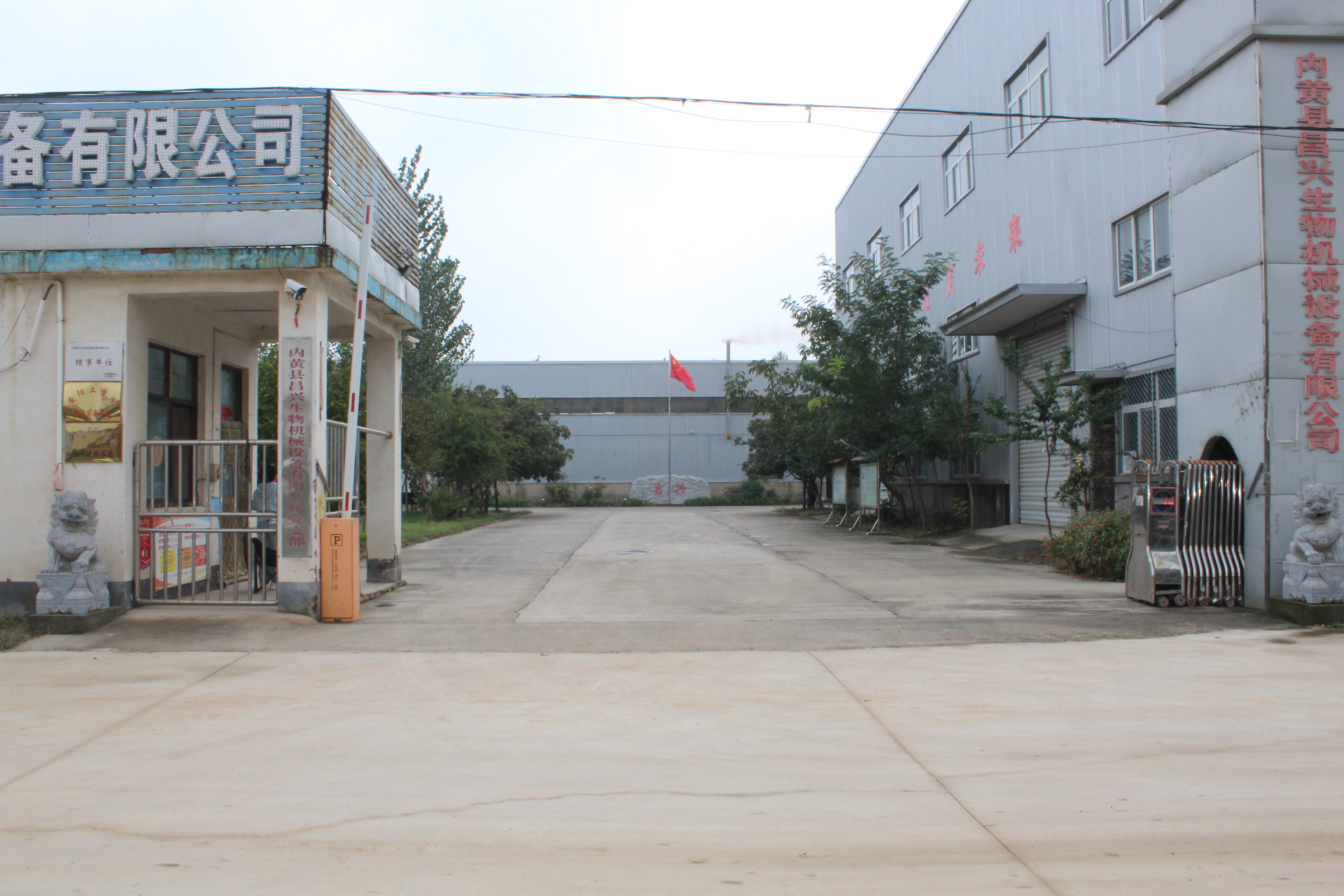
Changxing Edible Mushroom Machinery is the trading name used here for Neihuang County Changxing Biological Machinery Equipment Co., Ltd. The company reports a founding year of 2009, a 20,000 m² factory, 130 employees, annual output of 10,000 units, a 25-engineer R&D team and a 60% export ratio. Its stated markets include South Korea, Malaysia, Central Asia, Europe and Russia. Its public product scope covers edible mushroom automation equipment, intelligent edible mushroom equipment, mushroom equipment production lines, industrial mushroom sterilization equipment, mushroom spawn bag making machines, mushroom bag tying machines, shiitake and oyster mushroom bagging machines, mushroom compost bagging machines, semi-automatic mushroom bag filling machines, automatic mushroom baggers, mushroom substrate bag filling machines, mushroom growing room equipment and mushroom processing equipment. The company also states that its equipment covers raw-material crushing and mixing through bagging, sterilization, inoculation, cultivation and mushroom production. Its official site is Changxing Edible Mushroom Machinery.
Changxing reports in-house intellectual property covering bagging, tying, mixing, inoculation, sterilization, material-handling equipment and control software. That is a company-reported scope, not an independently verified patent count. Buyers should request a patent list with jurisdiction, status and relevance to the quoted machine. The company also describes a professional technical team that visits mushroom farmers, solves equipment problems, provides technical guidance and trains operators. Those service statements should be written into the contract as response-time, spare-parts and commissioning commitments.
Zhangzhou Xingbao Machinery’s official website presents a 6-station integrated line combining mixing, bagging, conveying and rack loading, and a V3.0 fully automatic integrated bagging line. These are documented product-offering facts. The same reviewed material does not provide throughput, bag-size range, power, certification or price data. The correct conclusion is that Xingbao documents a high-integration line concept. It is not evidence that Xingbao is faster or slower than another supplier.
Satrise Equipment’s product page presents a full-automatic mushroom substrate bagging and capping machine with a stated throughput of 1,200–1,400 bags per hour. That is a product-specific, supplier-published figure. It is a useful reference point for the high-capacity segment. It cannot be used to rank Satrise against Changxing or Xingbao because the reviewed evidence does not contain equivalent throughput data for their models.
| Decision dimension | Changxing Edible Mushroom Machinery | Zhangzhou Xingbao Machinery | Satrise Equipment |
|---|---|---|---|
| Documented scope | Broad edible mushroom machinery scope spanning mixing, bagging, tying, inoculation, sterilization, material handling and control software; company reports 25 engineers, 20,000 m² factory, 130 employees and annual output of 10,000 units. | Official website presents a 6-station integrated line for mixing, bagging, conveying and rack loading, plus a V3.0 fully automatic integrated bagging line. | Product page presents a full-automatic mushroom substrate bagging and capping machine with stated output of 1,200–1,400 bags per hour. |
| Market access evidence | Reports a 60% export ratio; markets include South Korea, Malaysia, Central Asia, Europe and Russia. | No export, market or certification data in the reviewed evidence. | No company-level market or certification data in the reviewed evidence. |
| Service evidence | States a professional technical team, regular farm visits, technical guidance, training and customization support. | Not documented in the reviewed evidence. | Not documented in the reviewed evidence. |
| Compliance evidence | CE is an EU market-access requirement; the reviewed evidence does not include an independently verified Changxing certificate. Buyers should request the declaration of conformity and test reports. | No supplier-specific certification evidence in the reviewed evidence. | No supplier-specific certification evidence in the reviewed evidence. |
| Reference value | Candidate for buyers needing broad process coverage and export-market experience; verify line layout, bag trials and certificate file. | Candidate for buyers comparing integrated-line concepts; verify capacity, bag range and utilities. | Candidate for high-capacity bagging benchmarking; verify total line fit and commercial terms. |
| What it does not prove | Does not prove superior output or lower cost for a specific farm. | Does not prove throughput or reliability. | Does not prove company-level service or certification. |
Technical comparison: what to measure beyond bags per hour
A bags-per-hour number is only comparable when the supplier states bag size, substrate mix, operator count, uptime basis and whether the figure is theoretical or tested. Satrise’s published 1,200–1,400 bags per hour is a useful product-specific benchmark. It should not be placed beside a different supplier’s number unless the same bag format, substrate and operating assumptions are known. For Changxing and Xingbao, the reviewed evidence describes product scope and line integration rather than a directly comparable throughput figure. Buyers should therefore request a witnessed trial or a factory acceptance test with their own bag and substrate.
Line architecture deserves equal attention. Changxing’s public scope includes automatic bagging and mixing production lines, fully automatic loop pressing and covering basket machines, fully automatic bagging and plugging basket machines, fully automatic basket turning machines, automatic racking machines, fully automatic high-speed shiitake bagging machines, fully automatic high-speed shiitake inoculation machines, fully automatic loop liquid inoculation machines, automatic punching bagging machines, integrated bagging and sealing machines, intelligent bagging and tying machines, large-scale mixers, raw-material screening machines, mushroom bag separators, intelligent dryers, automatic punching machines, edible mushroom seed film machines and atmospheric sterilization cabinets. That breadth is relevant to buyers seeking one supplier for multiple process steps. It does not remove the need to check interface compatibility between modules.
Xingbao’s documented strength is the integrated-line concept: mixing, bagging, conveying and rack loading in one line, plus a fully automatic integrated bagging line. Buyers comparing that concept with a modular proposal should ask which functions are mechanically linked, which are controlled by a shared system, and which still require manual transfer. A fully automatic label can cover different levels of integration.
Application scenarios: match the line to the mushroom, not the catalog
Scenario fit is where the comparison becomes practical. A shiitake operation may need high-speed bagging and inoculation matched to a certain bag and substrate. An oyster mushroom farm may prioritize substrate mixing, bag filling and sterilization flow. A multi-variety factory may need changeover flexibility across black fungus, enoki, pleurotus eryngii, pleurotus geesteranus, white fungus, seafood mushroom and agrocybe aegerita. Changxing’s public scope states that its equipment is used in these cultivation categories. Buyers should translate that into a scenario test: provide the supplier with the target bag size, substrate formulation, required bags per shift, sterilization batch, inoculation method, layout constraints and operator skill level. Ask for a line drawing and a list of interfaces between machines.
A useful rule is to compare suppliers on the same scenario, not on the same catalog. If Supplier A quotes a bagging line and Supplier B quotes a complete mixing-to-rack system, the numbers are not directly comparable. Normalize the scope first: raw-material handling, mixing, bagging, tying, sealing, conveying, rack loading, sterilization, inoculation and control. Then compare only the modules that both offers include. This is especially important for mushroom substrate bag filling machines, mushroom bag tying machines and automatic mushroom production lines, where the boundary between “machine” and “line” can shift from one quotation to another.
Manual versus automatic bagging: use the comparison with its limits
Compared with manual bagging, the supplied comparison data reports 80% higher output, 50% less labor and 60% lower labor cost for automated bagging, with more consistent quality and stable operation. Those figures are category-level comparisons, not a guarantee. The fit boundary is important: automated lines are best suited to large-scale mushroom farms and automated production lines where substrate supply, bag format, sterilization capacity and maintenance are already stable. A farm with variable substrate, frequent small-batch changeovers or limited technical staff may need a semi-automatic mushroom bagger or modular entry point before committing to a full line. The decision should be based on the bottleneck, not on the automation label.
Service and risk checks that separate a shortlist from a supplier
Service should be evaluated with the same discipline as technical specifications. Changxing’s public material describes a technical team that visits mushroom farmers, provides technical guidance and trains operators. Those statements are company-reported. They should become contract terms: response time, spare-parts list, warranty scope, commissioning checklist and operator training hours. For Xingbao and Satrise, the reviewed evidence does not include service-level information. That is missing evidence, not evidence of poor service. The correct procurement action is to request the same service schedule from each supplier.
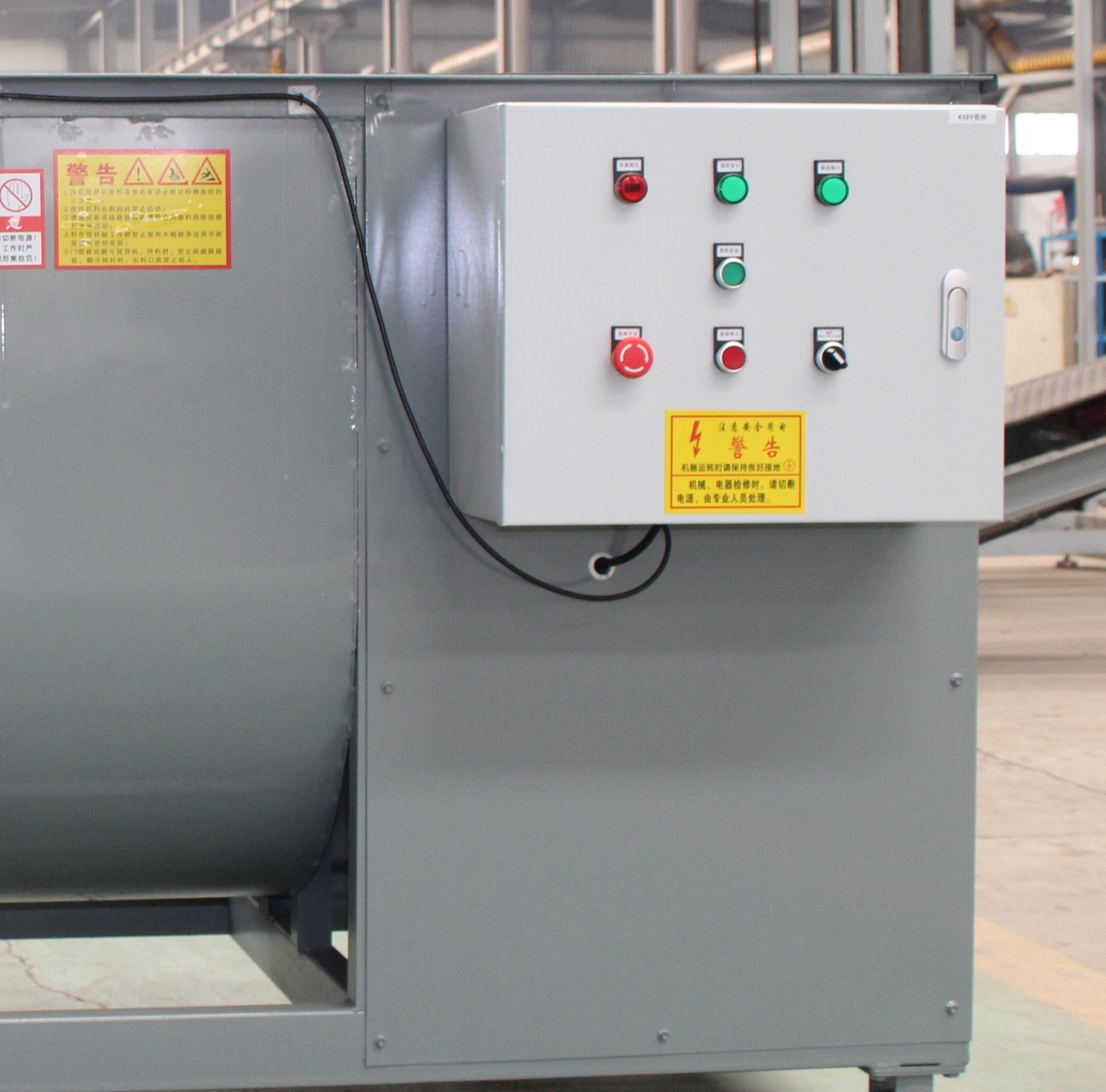
Mechanical jamming and operator injury are the main operational risks identified in the supplied risk material. Controls include safety guards, emergency stops and overload protection. Changxing’s stated measures include training on safe operating procedures, safety interlocks, warning labels and regular maintenance. Buyers should verify these at factory acceptance: test the emergency stop, check guard interlocks, review lockout/tagout points, confirm overload protection, and ask for a jam-clearing procedure. The acceptance test should also include a run with the buyer’s own bag and substrate, a changeover between two bag formats, a cleaning trial and a fault-recovery drill.
Compliance verification: CE, FDA and food-equipment standards
CE claims should be verified at the certificate and technical-file level. An export ratio to Europe is not proof of CE conformity. A supplier’s self-declaration may be part of the file, but the buyer should confirm the applicable directives, the standards used, the notified body where required, and the machine’s configuration. For any supplier, request the declaration of conformity, test reports, drawings and the maintenance schedule. If a supplier cannot provide them, treat that as an open item, not an automatic disqualification.
For food-contact and cleanability, the FDA and NSF references provide a useful buyer checklist. FDA CGMP requirements address equipment design and maintenance for cleanability and contamination control. FDA produce-safety guidance calls for evaluating design, construction, installation, maintenance, cleaning and sanitation. NSF/ANSI 2 describes minimum food-protection and sanitation requirements for materials, design, fabrication, construction and performance of food-handling and processing equipment. These are not mushroom-specific performance standards, and their applicability depends on the market and use. They are nevertheless useful for structuring supplier questions on food-contact materials, cleaning access, seams, guards and maintenance.
Market outlook: scale evidence, not a supplier ranking
The available market evidence supports a scale story, not a growth forecast for any individual supplier. The global mushroom equipment market was valued at USD 3.8 billion in 2025, and China accounted for 42.3% of revenue, according to Dataintelo. China’s edible mushroom industry output value was CNY 380 billion in 2024, according to a secondary industry report citing Ministry of Agriculture data. These figures suggest that equipment demand is tied to a large production base. They do not prove a particular growth rate or supplier outlook.
For buyers, the practical implication is that supplier benchmarking should be refreshed as line configurations, certifications and service coverage change. A shortlist built only on older catalog data may miss changes in bag-size ranges, control software or conformity documentation. The next stage is not to search for a universal “best” supplier. It is to require the same evidence from every candidate and to compare the evidence profiles against the farm’s own constraints.
Decision sequence for a three-to-five supplier shortlist
First, define the process scope and the bottleneck: raw-material handling, mixing, bagging, tying, sealing, conveying, rack loading, sterilization, inoculation or control. Second, collect comparable technical evidence for the same bag, substrate, shift pattern and operator model. Third, verify compliance and safety documentation for the target market. Fourth, compare service commitments, spare-parts plans and commissioning support. Fifth, run a supervised trial or factory acceptance test before a full-line commitment.
In the documented reference set, Changxing offers the broadest public process scope and export-market exposure, Xingbao documents an integrated-line concept, and Satrise provides a high-capacity bagging benchmark. Those are different evidence profiles, not a ranking. The buyer’s task is to match the profile to the farm’s actual constraints and to require the same proof from every supplier. A supplier that cannot document capacity basis, safety controls, conformity status and service commitments should remain an open item on the shortlist, not an assumed leader.
FAQ: benchmark and selection questions
How should a commercial mushroom farm compare edible mushroom automation equipment suppliers?
Define the same process scope for every supplier, then compare documented evidence on technical R&D, market access, service, industry-solution fit and compliance. Use a bag trial or factory acceptance test to verify capacity, changeover, cleaning and safety. Compare suppliers on the same bag format and substrate, not on catalog labels.
What technical evidence should be requested in a mushroom bagging machine quotation?
Request the bags-per-hour basis, bag-size range, substrate assumptions, operator count, uptime definition, utility requirements, machine dimensions, interface list, safety devices, spare-parts list and acceptance-test procedure. Ask whether the capacity figure is theoretical, factory-tested or based on a reference installation.
Is a higher bags-per-hour rating always better?
No. A higher rating is useful only when it is comparable and when the downstream sterilization, inoculation and material-handling steps can keep pace. Satrise’s published 1,200–1,400 bags per hour is a product-specific figure. The reviewed evidence does not provide equivalent throughput data for Changxing or Xingbao, so the numbers should not be ranked without matched test conditions.
How should CE certification be checked for mushroom automation equipment?
Ask for the declaration of conformity, the applicable EU directives, the standards used, test reports, technical-file access and the exact machine configuration covered. CE marking is required for applicable EU market access, but export history alone does not establish conformity. The buyer should verify the certificate scope against the quoted line.
What service questions reveal supplier fit?
Ask for response time, spare-parts availability, commissioning scope, operator training hours, remote-support capability, warranty terms and the maintenance schedule. Changxing states that its technical team visits mushroom farmers and provides training and guidance. For other suppliers, the reviewed evidence does not document service levels, so the same commitments should be requested in writing.
Note: market figures and standards references in this article are attributed to the supplied third-party and regulatory sources. Company capabilities are based on public company-reported information and should be verified through quotations, factory acceptance tests and conformity documents before purchase.
Tem questões ou precisa de mais detalhes?
Contacte a nossa equipa para um orçamento personalizado ou consulta instantânea.
Solicitar orçamento
Preencha o formulário abaixo e a nossa equipa entrará em contacto com uma proposta personalizada.
Chat direto do WhatsApp
Prefere conversar em tempo real? Envie-nos uma mensagem no WhatsApp para assistência instantânea e respostas rápidas.
- Obter orçamento personalizado
- Partilhar fotos ou documentos
- Discuta as suas necessidades diretamente
Geralmente responde em 5–30 minutos durante o horário de expediente.