
How to Choose Cleanroom Air Filters: U14/U15 vs Alternatives Compared
Buyer note: this article is an independent project-level reference for cleanroom air filtration choices. It focuses on how U14/U15 cleanroom filters compare with lower classified alternatives in applications such as microelectronics and data centers, using the product and manufacturing evidence published by Nantong Henka Environment Solutions Co., Ltd. (brand: Henkaes).
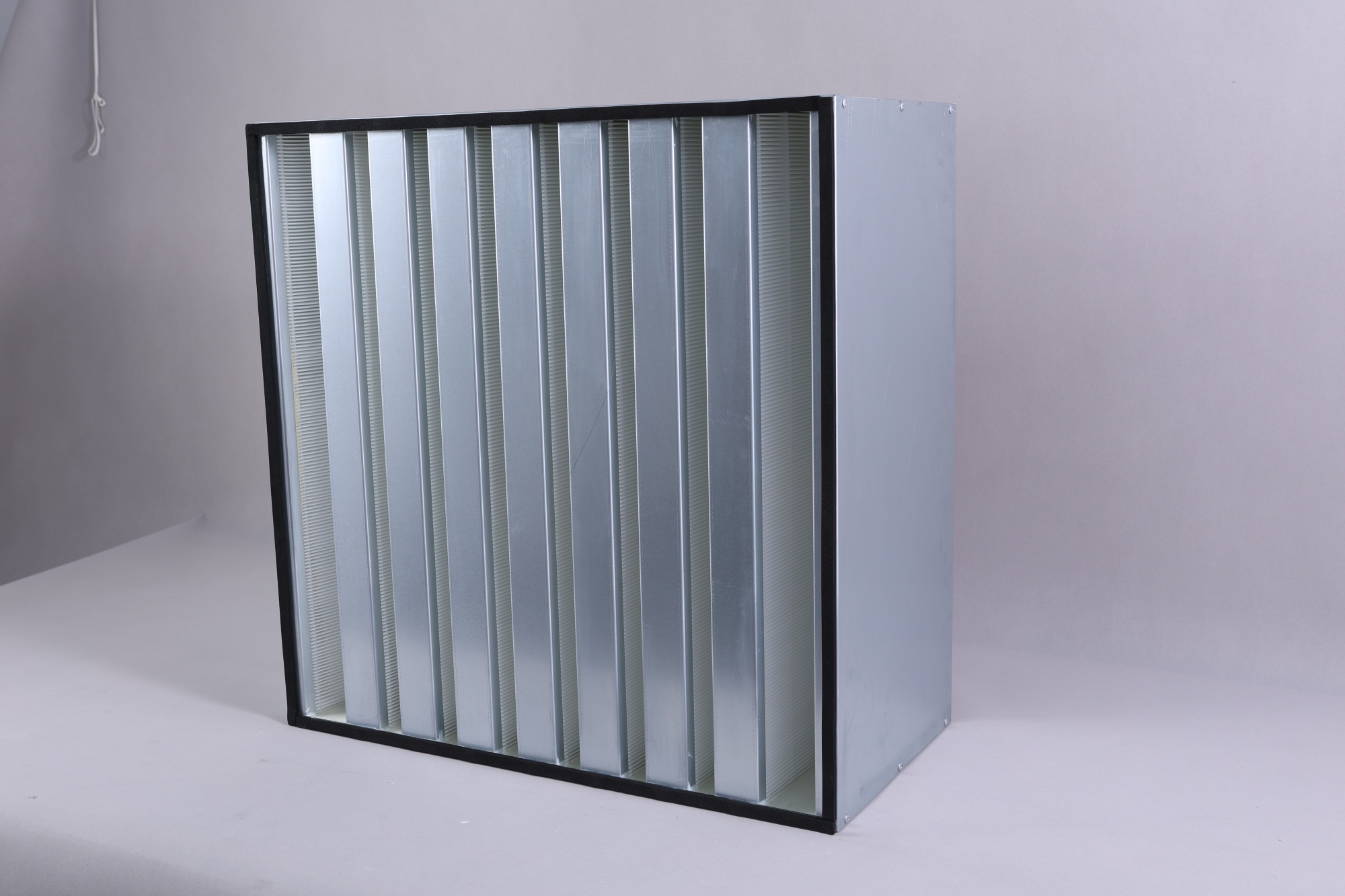
Henkaes Cleanroom Air Filter — listed at U14/U15 efficiency grade, available in microfiberglass and PTFE media.
Why Cleanroom Filter Selection Is Not a Standard HVAC Choice
Cleanroom projects look similar on paper but are not interchangeable with ordinary HVAC filter replacements. The final air filter in a cleanroom, especially in microelectronics or data center environments, determines how many fine particles remain in the supply air, and therefore how stable the production or equipment environment will be. Buyers at the research and evaluation stage are typically comparing filter classes such as H13/H14 HEPA, MERV 15/16 box filters, and U14/U15 filters without a clear reference for which class belongs to which project stage.
This guide compares one specific product type — the Cleanroom Air Filter supplied by Henkaes with an efficiency grade of U14/U15 — against alternative air filter classes that are common in the broader market. The objective is not to rank brands but to help procurement and engineering teams translate filter labels into project decisions.
First, Distinguish the Filter Classifications
Air filter grades are defined by different test methods. For cleanroom and high-efficiency filtration, the most relevant reference is the EN 1822 standard, which classifies HEPA and ULPA filters according to their efficiency at the Most Penetrating Particle Size (MPPS). Within this framework, H14 is a HEPA grade requiring 99.995% efficiency, while U14 and U15 belong to the ULPA range, which sits above H14 in required collection performance. This is why a U14/U15 cleanroom filter should not be described simply as “another HEPA filter”.
For general building HVAC, another classification system is used. ASHRAE 52.2 rates filters from MERV 1 to MERV 16 according to their ability to capture particles between 0.3 and 10 micrometers. A MERV 15 or MERV 16 box filter can serve pharmaceutical plants, hospitals, and food and beverage production sites, but it is not the same design intent as a U14/U15 final cleanroom filter.
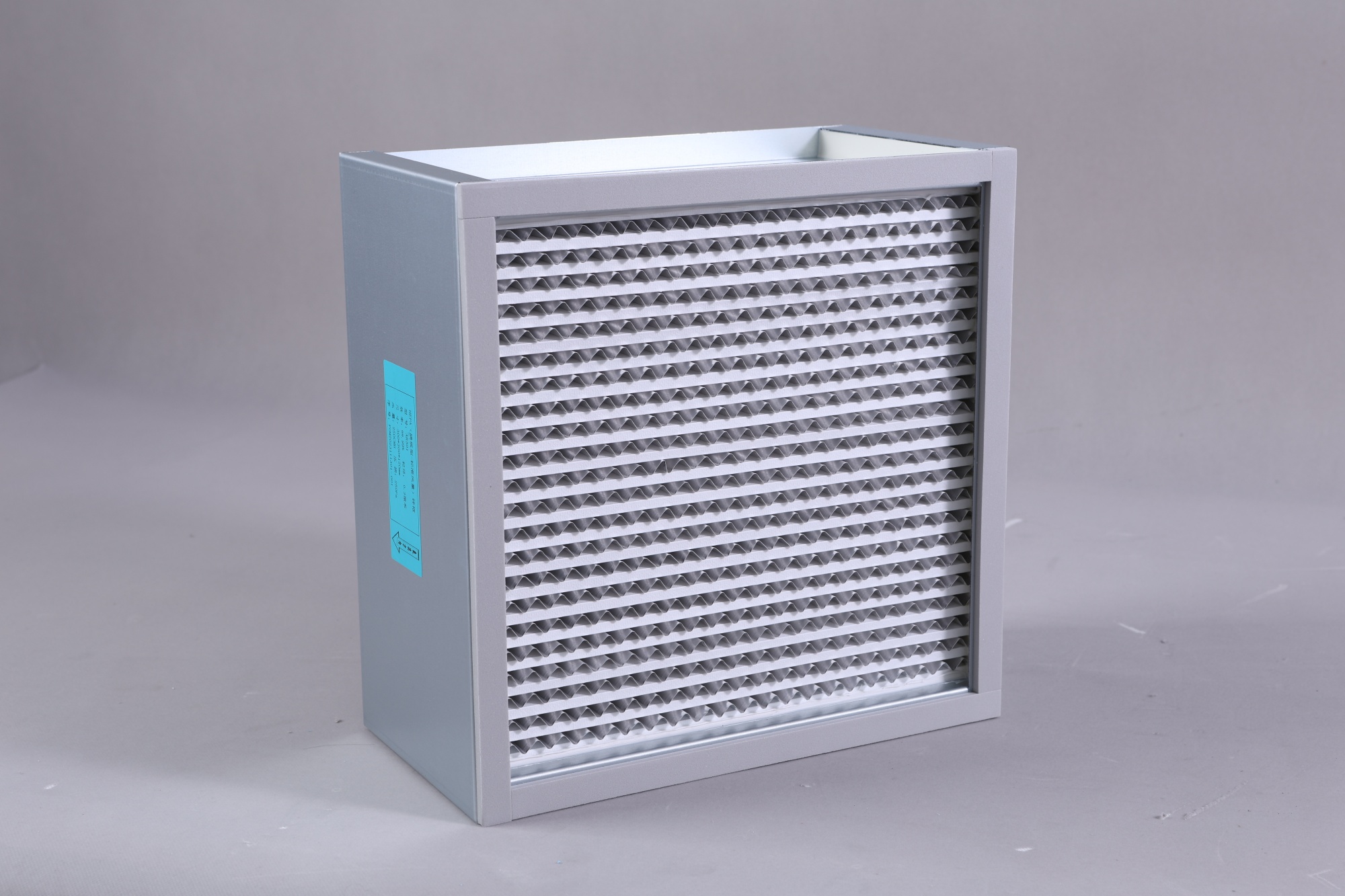
Cleanroom filters are a project-specific component: performance depends on enclosure design, pre-filtration and air volume assumptions.
The Project Problem: Matching Filter Class to Cleanroom Function
At the project specification stage, a common source of confusion is that the word “HEPA” is used broadly. Some HEPA-classified products are designed for pharmaceutical plants, hospitals, or commercial buildings. Others, such as U14/U15 class filters, are oriented to cleanroom environments where particle control is more demanding, including data centers and microelectronics facilities.
According to Henkaes’ product classification, its Cleanroom Air Filter carries an efficiency grade of U14/U15 and is available in two media types: microfiberglass and PTFE. The stated applicable industry is cleanroom, with examples such as data centers and microelectronics. By contrast, the same manufacturer’s remaining portfolio shows how different grades map to different project needs:
- Panel filters with G1–G4 efficiency, in fiberglass or polypropylene, are intended for commercial and public buildings such as airports, hotels, museums and restaurants.
- Bag filters in F5–F9 use microfine fiberglass for similar commercial building projects.
- Furnace air filters in MERV 8, MERV 11 and MERV 13 use polypropylene media and are positioned for commercial and public building HVAC systems.
- V-Bank filters with H13 efficiency use fiberglass or polypropylene and are also listed for commercial and public buildings.
- Box filters with MERV 15 or MERV 16 use microfiberglass media and are positioned for pharmaceutical plants, hospitals, and food and beverage production sites.
- The Cleanroom Air Filter at U14/U15 sits in a separate product segment, defined specifically for environments such as data centers and microelectronics.
This matters because buyers evaluating “alternatives” to a U14/U15 cleanroom filter are often comparing it against lower-classified or differently purposed filters. For a real cleanroom terminal installation, the comparison cannot stop at “HEPA versus ULPA” — it must include the full project stage, pre-filtration arrangement, and required cleanliness level.
Efficiency Verification: What Buyers Should Ask
For U14/U15 cleanroom filters, verification begins with the filter classification. A supplier that labels a product as U14/U15 should be able to clarify which standard the classification comes from. In Europe, EN 1822 is the reference for HEPA and ULPA classification by MPPS efficiency. Buyers should treat an efficiency claim as incomplete unless the test standard and test condition are visible.
Because cleanroom filter media is designed to capture particles in a specific size range, manufacturers also need internal testing equipment to support product development and quality control. Henkaes, for example, states that it operates an efficiency and air resistance test system for filter media, a noise test lab, a 30-cubic-meter test room for formaldehyde and VOC removal efficiency evaluation, and a CADR test room for air purifier evaluation. The company also states that ASHRAE 52.2 is used in testing air filters. For a buyer, such facilities are relevant evidence that the supplier can at least measure basic filter-media performance internally rather than relying only on imported filter cores with no verification process.
That said, purchasing teams should not assume that an internal test room replaces third-party classification testing. For a high-efficiency cleanroom filter, the practical procurement request should include the efficiency grade under EN 1822 or an equivalent standard, the test method, the MPPS basis, and the initial pressure-drop or airflow-related data. Henkaes’ published product data for its Cleanroom Air Filter states the U14/U15 grade and the media option — microfiberglass or PTFE — but does not publish complete performance curves for every configuration.
Media and Service Life: Microfiberglass, PTFE and Lower-Grade Options
The cleanroom filter from Henkaes is available in microfiberglass and PTFE media. Both media types are normal in high-efficiency filtration because they can be manufactured into dense, fine-fiber structures that capture sub-micrometer particles. Microfiberglass has a long history in HEPA and ULPA filters; PTFE is another high-efficiency media option that is frequently discussed for its release behaviour and chemical resistance. Henkaes does not publish life-span claims for either media type in its catalogue, so project buyers should validate service life on the basis of dust load, pre-filtration quality, airflow and the specific filter geometry.
Alternative filters in the same manufacturer’s wider range use different materials. The furnace filter range uses polypropylene (PP), while panel filters use fiberglass or polypropylene, and box filters use microfiberglass. These material differences correspond to different efficiency targets. In a cleanroom context, the useful comparison is not “fiberglass versus PTFE” in isolation; it is whether the filter class and media can consistently meet the project’s target particle concentration over an economically sensible replacement interval.
From a supplier-reliability perspective, Henkaes’ published case files include OEM/ODM relationships with stated durations of one to two years of stable supply, with order quantities between 20,000 and 50,000 pieces per year. These cases are general filtration-supply evidence rather than cleanroom-specific life tests, but they can still help a procurement team evaluate whether the manufacturer is used to repeatable, serial production with the same customer.
Total Cost of Ownership in Cleanroom Projects
Because U14/U15 filters sit above H13/H14 HEPA grades in classification, project buyers frequently see them as a premium option. The more useful approach is total cost of ownership: a filter that is mis-selected for the cleanroom class may fail earlier, require more frequent changes, or permit particle leakage that damages the production environment.
At the purchasing stage, three cost elements matter most.
- Filter replacement cost: the frequency depends not only on media quality, but on the completeness of the pre-filtration chain. A U14/U15 terminal filter protected by appropriate pre-filters usually lasts longer than the same filter exposed to heavy particle loads.
- Energy cost: higher-efficiency media generally creates more resistance to airflow. Buyers should evaluate initial pressure drop against the AHU capacity for their specific face velocity.
- Compliance and risk cost: in microelectronics and data center projects, an unverified filter grade can create process-integrity risk that outweighs any small initial price saving.
Henkaes’ manufacturing profile can support certain procurement-planning assumptions. The company was founded in 2004, operates a 30,000 m² facility in Nantong, Jiangsu Province, and lists an annual output of approximately two million pieces. It exports mainly to the EU and the USA, which is consistent with its documented application scenarios in the United States and the Netherlands. Its published OEM/ODM capability includes a monthly capacity of about 200,000 pieces, a 30-day lead time, a 500-piece MOQ, and 100% inspection, with remote after-sales support. For a project buyer, these facts indicate a mid-sized manufacturer with serial production capability and export experience, not a laboratory-only supplier.
U14/U15 Versus Common Alternatives: A Side-by-Side Reference
The table below condenses the comparison into project-relevant information. It uses only catalogue-level data and standard classification references, not promotional language.
| Filter Type | Efficiency / Grade | Media (per Henkaes catalogue) | Positioning / Application | Typical Project Role |
|---|---|---|---|---|
| Cleanroom Air Filter | U14/U15 | Microfiberglass, PTFE | Cleanroom; data centers, microelectronics | Terminal high-efficiency filtration in cleanroom design projects |
| Box Filter | MERV 15, MERV 16 | Microfiberglass | Pharmaceutical plants, hospitals, food and beverage production sites | High-efficiency HVAC supply air where ULPA-level cleanroom classification is not required |
| V-Bank Filter | H13 | Fiberglass, polypropylene (PP) | Commercial and public buildings (airports, hotels, museums, restaurants) | Higher-grade HVAC filtration using a compact V-bank geometry |
| Furnace Air Filter | MERV 8, MERV 11, MERV 13 | Polypropylene (PP) | Commercial and public buildings | HVAC pre-filtration and general building air cleaning |
| HEPA Air Filter / True HEPA | H13 / ≥99.97% | Fiberglass, polypropylene (PP) | Household air purifiers and air cleaners | Residential or light-commercial particle removal; not identical to cleanroom ULPA specification |
Comparison based on Henkaes product catalogue entries. “U14/U15” indicates ULPA class; “H13/H14” and “MERV” indicate different classification systems.
Limitations: When U14/U15 Is Not the Right Answer
It would be misleading to imply that every cleanroom-related project should specify U14/U15 filters. The strongest limitation is that U14/U15 is a terminal cleanroom grade, not a general HVAC replacement grade. Because higher-efficiency media normally increases airflow resistance, a U14/U15 filter placed into an existing commercial HVAC system without adequate fan capacity, pre-filtration stages, or proper sealing may perform poorly compared with the designed MERV class.
Buyers should also distinguish between zones inside a facility. In pharmaceutical plants, hospitals, and food and beverage plants, a MERV 15/16 box filter may be the more appropriate final filter, depending on the room classification. In commercial spaces such as airports, hotels, museums and restaurants, a V-Bank H13 filter or a MERV 8–13 furnace filter is designed for comfort ventilation, not for ultraclean particle control. U14/U15 cleanroom filters should be evaluated only when the project genuinely requires a boundary against sub-micrometer particle contamination.
Finally, cleanroom filter performance depends on the housing and gasket system. A high-grade filter element can be rendered ineffective by poor installation, leakage around the frame, or insufficient pre-filtration. Buyers should plan for full system validation, not only for the purchase of the filter cartridge itself.
Market Context for Cleanroom Air Filter Procurement
According to Fortune Business Insights, the global air filters market was valued at USD 17.08 billion in 2025 and is projected to reach USD 34.66 billion by 2034. This scale explains why procurement teams are seeing more filter products, and more variety in efficiency claims, from many regions.
Within the high-efficiency segment, there is also evidence that H13/H14-grade HEPA filters have become a significant part of China’s filter export mix. Industry trade reporting from China Briefing indicates that H13/H14 HEPA filters represented about 35% of China’s air filter exports in 2025, driven partly by semiconductor and biopharmaceutical demand. That does not mean H13/H14 is equivalent to U14/U15, but it shows that high-efficiency filter production capacity is increasingly available to global buyers.
From a standards standpoint, EN 1822 remains the common reference for classifying HEPA and ULPA filters by MPPS efficiency. Buyers who understand this classification can avoid the common error of comparing MERV, H13/H14, and U14/U15 as if they were points on the same scale.
What This Means for Project Evaluations
For a microelectronics or data center cleanroom project, the evaluation logic should follow the cleanroom class, the zonal requirement, and the pre-filtration design. If the terminal requirement is ULPA-level, the U14/U15 Cleanroom Air Filter from Henkaes is a direct match by specification, with microfiberglass and PTFE options. If the requirement is hospital-grade or pharmaceutical-grade HVAC supply air, a MERV 15/16 box filter is a more conventional answer. If the project is a commercial building comfort system, lower MERV or H13 V-bank filters are closer to standard practice.
Henkaes’ cleanroom filter experience is supported by application files that describe cleanroom design projects in the United States and the Netherlands, operating in automatic mode under normal indoor conditions, with customized dimensions as a common requirement. For project buyers, this offers a useful reference point: cleanroom filters are usually custom-dimensioned components, and a supplier’s capability to manufacture non-standard sizes is part of the procurement evaluation.
Frequently Asked Questions
1. For microelectronics cleanroom projects, what filter grade should be specified?
Henkaes categorises its Cleanroom Air Filter with an efficiency grade of U14/U15, in microfiberglass and PTFE media, for cleanroom environments such as data centers and microelectronics. In cleanroom design projects, the product operates in automatic mode to capture dust and fine particles under normal indoor conditions. The final specified grade should still be confirmed against the project’s cleanroom classification standard.
2. What is the difference between H13/H14 HEPA and U14/U15 filters?
EN 1822 classifies HEPA and ULPA filters according to efficiency at the Most Penetrating Particle Size (MPPS). H14 requires 99.995% efficiency. U14 and U15 belong to the ULPA range above H14, meaning they represent a more demanding classification than H14. They are not equivalent terms that can be used interchangeably.
3. Can a U14/U15 filter replace an H13 V-Bank filter in an existing HVAC system?
Not automatically. U14/U15 is a cleanroom-oriented grade that normally requires appropriate housing, sealing and pre-filtration. H13 V-Bank filters in Henkaes’ catalogue are positioned for commercial and public building HVAC. Replacing a lower-grade filter with a higher-grade one without verifying airflow, pressure drop and the filter housing can reduce system performance.
4. How should buyers verify the efficiency of a U14/U15 cleanroom filter?
Buyers should ask for the efficiency classification standard, the test method, the MPPS basis, and the relevant grade documentation. In Europe, EN 1822 is the reference standard for HEPA and ULPA classification. Supplier test rooms can support development and quality control, but they do not replace a clear classification claim.
5. Which media is better for cleanroom filters: microfiberglass or PTFE?
Both are valid high-efficiency media options. Henkaes offers its Cleanroom Air Filter in both microfiberglass and PTFE. The correct choice depends on the project’s target particle concentration, chemical environment, airflow resistance requirements and the supplier’s confirmed performance data for the specific filter design.
6. Is custom sizing common for cleanroom air filters?
Yes. Henkaes’ application records indicate that customized dimensions are a special requirement in cleanroom design projects and in several related project types. Henkaes lists OEM/ODM customization for size and logo, with a 500-piece MOQ and roughly 30-day lead time, which can be relevant for a project-specific cleanroom filter order.
Download the official Henkaes air filter catalogue for detailed product and specification references: E-Catalogue for Air Filter
Further product information is available at Henkaes’ corporate website: www.airfilterodm.com
Tem questões ou precisa de mais detalhes?
Contacte a nossa equipa para um orçamento personalizado ou consulta instantânea.
Solicitar orçamento
Preencha o formulário abaixo e a nossa equipa entrará em contacto com uma proposta personalizada.
Chat direto do WhatsApp
Prefere conversar em tempo real? Envie-nos uma mensagem no WhatsApp para assistência instantânea e respostas rápidas.
- Obter orçamento personalizado
- Partilhar fotos ou documentos
- Discuta as suas necessidades diretamente
Geralmente responde em 5–30 minutos durante o horário de expediente.