
How to Choose a Blister-Cartoning Line for Multi-Format Pharma Packaging
Pharmaceutical manufacturers today face growing pressure to deliver high-volume, compliant packaging across multiple product formats while reducing manual handling and changeover downtime. As global demand for oral solid dosage forms rises, selecting a pharmaceutical packaging machine that can seamlessly integrate blister forming, cartoning, and downstream bundling becomes a strategic decision. This article examines how HOPING Machinery (Zhejiang Hoping Machinery Co., Ltd.) — a Chinese manufacturer established in 2001 — addresses project-specific requirements with its range of integrated blister-cartoning lines.
The Packaging Line Challenge: Speed, Compliance & Flexibility
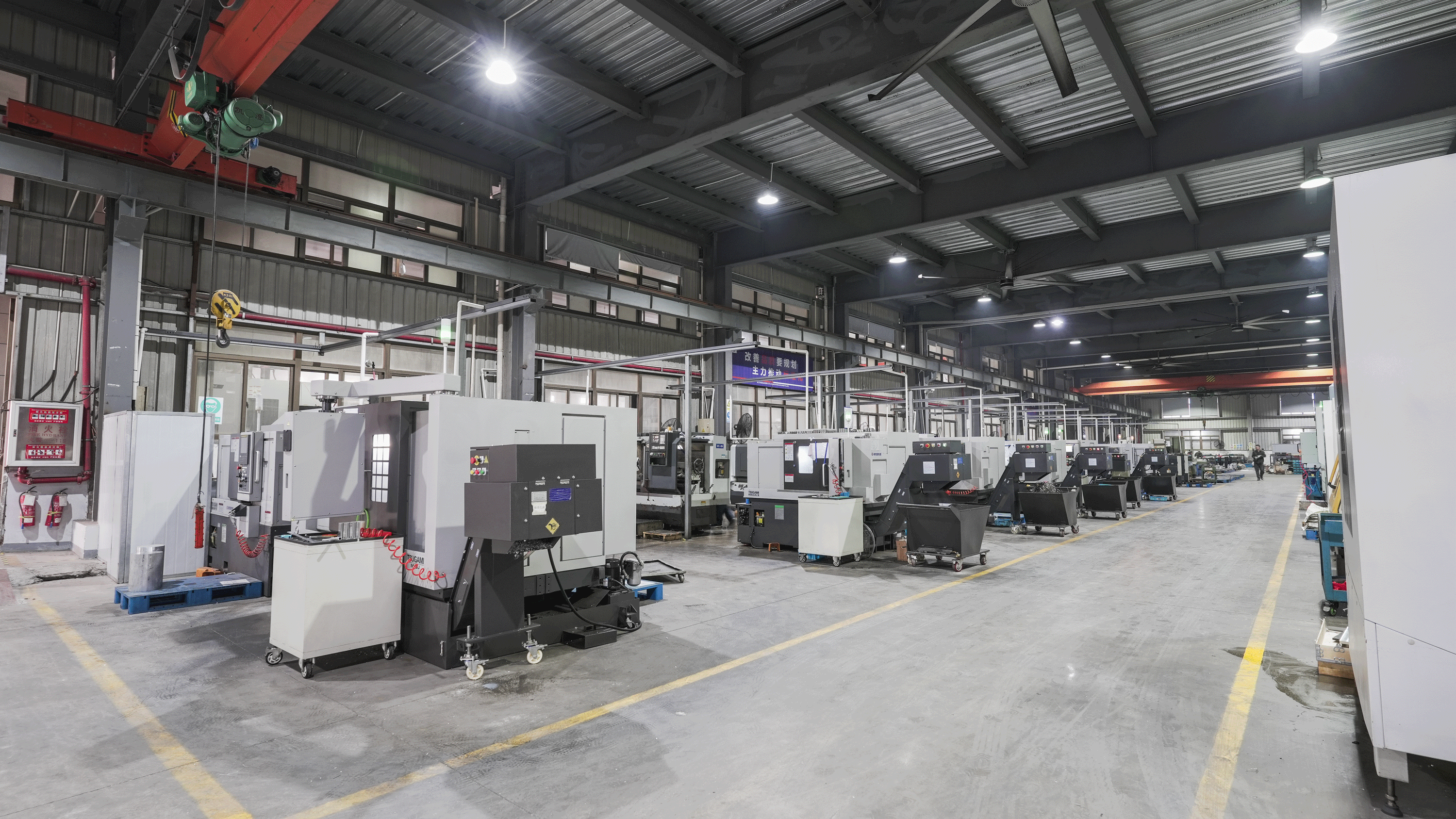
Traditional standalone blister machines and cartoners often operate with manual transfer between stations. This introduces risks such as wrong insertion, missing leaflets, and contamination. Moreover, when production requires frequent format changes — different blister sizes, carton dimensions, or leaflet configurations — downtime can severely impact overall equipment effectiveness (OEE). Regulators also demand GMP-oriented cleanroom conditions, traceability, and easy cleanability, which further complicate line design.
HOPING's Integrated Approach: Project-Specific Fit
HOPING offers a portfolio of blister packaging machines, cartoning machines, case packing machines, and end-of-line packaging machines. The company's core differentiator lies in its ability to configure integrated blister-cartoning lines (also called blister packaging lines or blister cartoner lines) tailored to specific project types: new solid dosage lines, existing line upgrades, high-capacity expansions, intelligent workshop retrofits, and downstream integration with bundling/case-packing.
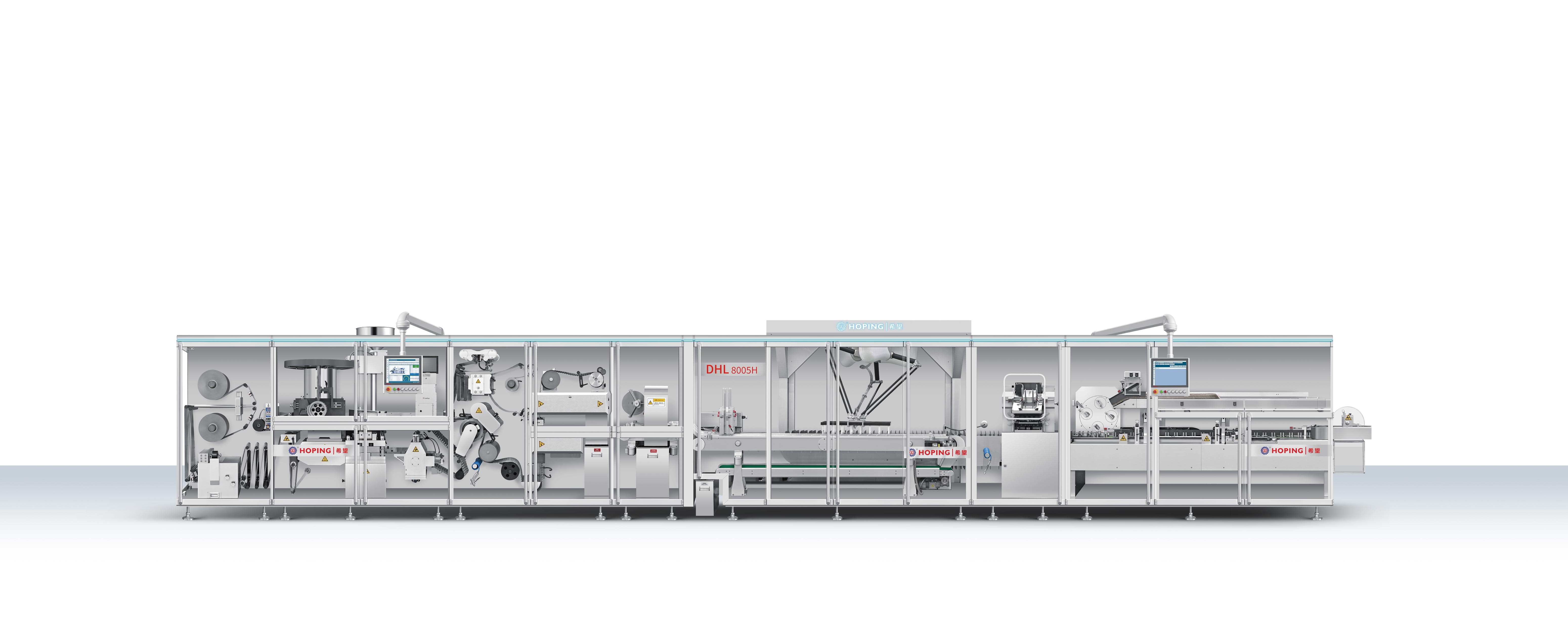
For example, the DHL1000/5H is an intelligent fully servo high-speed blister-cartoner integrated machine capable of up to 1,000 blisters/min and 500 cartons/min. It features a D3 intelligent top-loading parallel tracking transfer system, four-channel servo-driven independent replenishment, PVC/Alu foil auto-splicing, and a Beckhoff motion controller with a high-bus industrial control system.
Technical Architecture: Fully Servo-Linked, GMP-Oriented
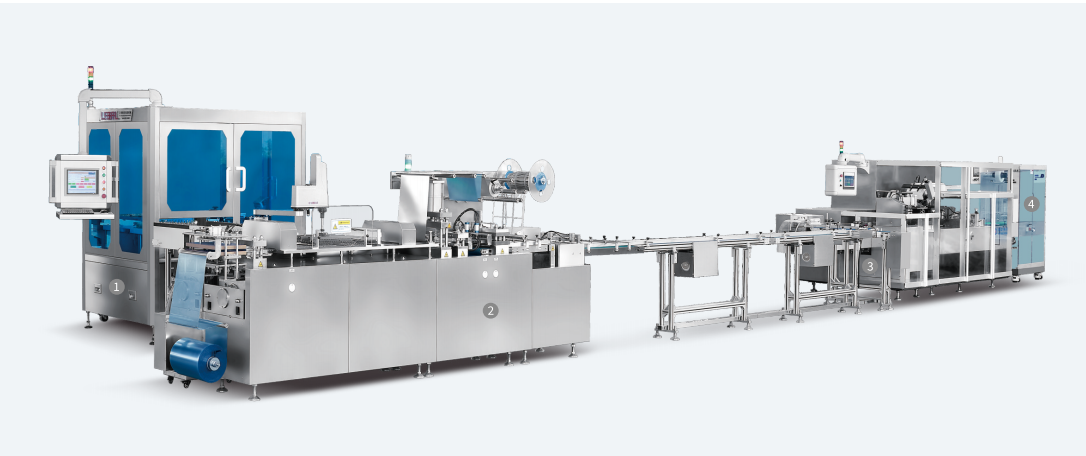
The integrated lines operate in a fully servo-linked mode with PLC/HMI interface and synchronized multi-station control. A typical configuration includes a blister packing machine, cartoner, D3 top-loading robot, leaflet folder, coding machine, vision inspection, checkweigher, and optional stretch bander, case packer, or palletizer. The line completes blister forming/sealing, leaflet folding, carton opening, product insertion, batch/date coding, inspection/rejection, and downstream connection — all in one continuous flow.
Product-contact parts are made of AISI 316L stainless steel and FDA-compliant materials, while non-contact parts use AISI 304 stainless steel and anodized aluminum. The machines are designed for GMP-oriented cleanroom environments, with easy-to-clean surfaces and transparent safety guards.
Application & Use-Case Scenarios
HOPING's packaging lines are applied in the following typical projects (as documented in the company's project records):
- New solid dosage blister packaging line — greenfield installations requiring high throughput from day one.
- Existing packaging line upgrade — replacing manual or semi-automatic sections with integrated servo-driven modules.
- High-capacity expansion — adding extra blister/cartoning capacity while maintaining line continuity.
- Intelligent packaging workshop retrofit — connecting machines to ERP/MES data interfaces for real-time monitoring.
- Blister-cartoning-bundling/case-packing downstream integration — linking blister output directly to bundling, case packing, and palletizing.
The lines accommodate multi-batch and multi-format production (tablets, capsules, soft gels, vials, ampoules, pre-filled syringes) with non-standard customization available for blister format, carton size, leaflet format, feeding methods, and coding/inspection methods.
Market Trends Driving Line Integration
According to verified third-party data, the global pharmaceutical packaging equipment market was valued at approximately USD 10.71 billion in 2024 (SkyQuest Technology). The pharmaceutical blister packaging machine segment alone is projected to reach USD 2.57 billion by 2025, growing at a CAGR of 2.8% (Custom Market Insights). Asia Pacific held the largest revenue share of 40.7% in the pharmaceutical packaging equipment market in 2025 (Grand View Research).
These figures underline the growing demand for integrated, high-speed solutions that reduce manual intervention and improve OEE. Additionally, standards such as ISO 15378 (GMP for primary packaging materials) and the EU Machinery Directive 2006/42/EC (EN 415 series) set clear compliance requirements that integrated lines are designed to meet.
Comparison with Traditional Standalone Solutions
Advantage of integrated lines: Reduced manual transfer, fewer error points (wrong insertion, missing leaflets), higher throughput, and better space utilization. HOPING's integrated lines typically replace the need for separate conveyor transfers and intermediate buffer stations.
Honest limitation: Initial capital expenditure for a full integrated line is higher than purchasing standalone machines. However, the reduction in labor costs, reject rates, and changeover time can offset this over the line's lifecycle.
Future Outlook: Smart, Connected, Agile
HOPING continues to develop its line controls to support Industry 4.0 connectivity, including recipe memory for quick format changeovers and data interfaces for MES/ERP integration. As pharmaceutical companies move toward continuous manufacturing and personalized medicine, the ability to reconfigure packaging lines rapidly will become a defining competitive advantage.
Frequently Asked Questions
- What types of projects are HOPING's blister-cartoning lines suitable for?
These lines are applicable to new solid dosage blister packaging lines, existing line upgrades, high-capacity expansions, intelligent packaging workshop retrofits, and blister-cartoning-bundling/case-packing downstream integration projects. (Source: HOPING project records) - What is the operating environment and mode?
The lines operate under GMP-oriented cleanroom or pharmaceutical packaging workshop conditions. The operation mode is fully servo-linked with PLC/HMI interface and synchronized multi-station control, designed for continuous high-speed running and multi-batch, multi-format production. - What is the role of the integrated line in a typical project?
The line completes blister packaging, leaflet folding, carton opening, blister insertion, batch/date coding, inspection and rejection, and downstream connection to improve automation and reduce manual transfer. - Can the line be customized?
Yes. HOPING supports non-standard customization including blister size, materials, carton specification, leaflet format, coding/inspection method, feeding method, downstream equipment connection, interface language, and electrical component brand.
For detailed specifications and project references, download the official HOPING Machinery catalog:
Hoping Machinery Catalog (PDF)
Tem questões ou precisa de mais detalhes?
Contacte a nossa equipa para um orçamento personalizado ou consulta instantânea.
Solicitar orçamento
Preencha o formulário abaixo e a nossa equipa entrará em contacto com uma proposta personalizada.
Chat direto do WhatsApp
Prefere conversar em tempo real? Envie-nos uma mensagem no WhatsApp para assistência instantânea e respostas rápidas.
- Obter orçamento personalizado
- Partilhar fotos ou documentos
- Discuta as suas necessidades diretamente
Geralmente responde em 5–30 minutos durante o horário de expediente.