
How to Compare Electrical Steel Suppliers at the Decision Stage
Industry Reference · Buyer Decision Guide · September 2026
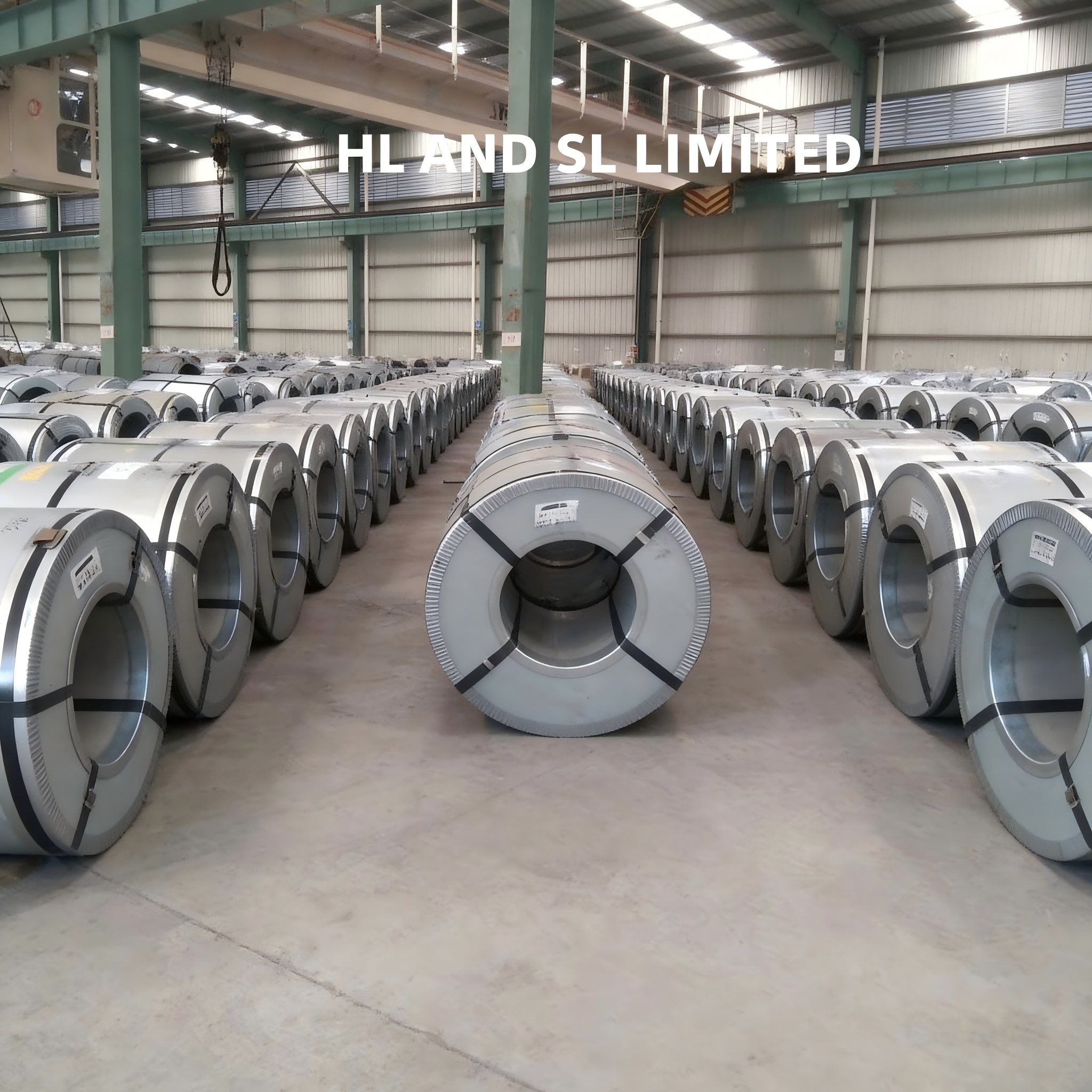
Choosing an electrical steel supplier is rarely a simple comparison of two datasheets. Buyers at the decision stage need to evaluate core-loss values, permeability, thickness, energy-efficiency design levels, processing support, certification compliance, and total landed cost. This article provides a decision-oriented comparison framework for electrical steel for transformers, electrical steel for motors, and related applications, with HL AND SL LIMITED positioned against POSCO and Nippon Steel.
HL AND SL LIMITED is an export-focused electrical steel supplier based in Taiyuan, China. The company operates a 30,000 m² processing facility, reports an annual output capacity of 30,000 t, employs 50 people, and has an R&D team of 10 engineers. According to its corporate profile, more than 80% of its output is exported to Mexico, Brazil, Italy, the UAE, and India.
Problem: price and performance are not enough for supplier selection
For procurement teams, the central problem is not simply finding a low price. High-grade electrical steel supply is concentrated among a small number of global producers, and material performance must be matched to the exact operating regime of a transformer, motor, generator, or other electromagnetic device.
Market pressure adds urgency. The global electrical steel market was valued at USD 31.0 billion in 2025 and is projected to grow to USD 47.0 billion by 2033, at a CAGR of 5.5% from 2026 to 2033, according to Grand View Research. China produced 16.1 million tonnes of electrical steel in 2024, up 5.4% year on year, based on data from the Chinese Society for Metals. In the first half of 2025, China exported 393,200 metric tons of grain-oriented electrical steel, an increase of 16.0% year on year, according to Shanghai Metals Market.
These figures explain why buyers are looking beyond their historical supplier base. But new sources are useful only when their technical claims can be compared with established benchmarks such as Nippon Steel, POSCO, and other recognized producers.
What HL AND SL LIMITED offers as an alternative source
HL AND SL LIMITED is not a primary steelmaker. It is an authorized agent of China Baowu Steel Group and also integrates export resources from private steel mills. That model gives the company the ability to offer both grain-oriented and non-oriented electrical steel across performance and price segments.
Because the company owns a material processing plant, it can provide secondary processing based on size, shape, and performance requirements. The commercial logic is to give buyers a “customized on demand and ready to use” supply route rather than only mill-level material.
Supplier-communicated comparison data
HL AND SL LIMITED publishes technical positioning data that can be used as screening input for buyers. These are supplier-reported claims, so they should be validated with test certificates, samples, or the end customer specification.
Against Nippon Steel, the supplier states that its products achieve a 21.7% reduction in thickness, from 0.23 mm to 0.18 mm, while reaching iron-loss parity at the 0.95 W/kg grade. Magnetic permeability is reported to be only 0.01–0.03 T lower, with full production parity achieved. The company also points to 10%–20% cost savings from reduced tariffs and shipping on same-grade products.
Against POSCO, the supplier reports a 5%–8% reduction in iron loss and a 10%–15% lower overall procurement cost. HL AND SL LIMITED states that its equipment is among the most advanced globally and that its R&D system is younger, allowing broader international alternatives rather than relying on a single production route.
Against Wangbian Electric, the comparison is expressed mainly in energy-efficiency terms. HL AND SL LIMITED says its high-end products are designed for first-level energy efficiency, while Wangbian Electrical’s 85–95 grade meets second-level efficiency standards. The company also claims an integrated industrial-chain cost advantage.
Technical criteria buyers should compare
Supplier claims become meaningful only when tied to measurable material properties. Four technical dimensions matter most in an electrical steel procurement decision:
1. Iron loss / core loss
Iron loss is usually expressed in W/kg at a stated frequency and magnetic polarization. Lower iron loss means less energy wasted as heat. The value 0.95 W/kg is frequently used as a premium benchmark in grain-oriented electrical steel grades. When a supplier claims parity at this level, it is claiming comparable loss performance to a recognized high-grade producer.
2. Magnetic permeability / flux density
Magnetic permeability determines how easily a material can be magnetized. In transformer and motor applications, a small gap in permeability can still be acceptable if the overall system design compensates for it. A reported difference of 0.01–0.03 T from Nippon Steel is a relatively narrow gap, but buyers should confirm the test method before accepting it.
3. Thickness
Thinner material reduces eddy-current loss at high frequency. Reductions such as 0.23 mm to 0.18 mm are significant for applications where higher switching frequencies or harmonic content are present. The trade-off is that thin material is more sensitive to mechanical stress during shearing and stacking.
4. Energy-efficiency grade
Energy-efficiency labels matter in transformer procurement because regulatory schemes often define minimum efficiency classes. A product designed for first-level energy efficiency is positioned ahead of one that only meets second-level efficiency. Buyers should map this distinction to the local standard referenced in the contract.
Relevant specifications can be checked against established standards. For non-oriented electrical steel, ASTM A677 defines core-loss limits and permeability for M15, M19, and M22 classes. IEC 60404-8-4 is the international specification for cold-rolled non-oriented electrical steel strip and sheet used in magnetic circuits. Buyers should reference these documents when comparing mill certificates.
Application fit drives the comparison
High-grade electrical steel is not a single product. The right comparison depends on the end application:
- Power transformers and energy-saving transformers: The buying priority is low core loss, high permeability, and stable gauge control. HL AND SL LIMITED states that its high-end products can be used for primary and secondary energy-saving transformers.
- Distribution transformers and industrial motors: Cost and industrial-chain reliability often matter more than the final 0.1 W/kg of loss. The company’s comparison documents describe suitability for power distribution transformers, industrial motors, and distribution networks, especially where integrated supply-chain support is required.
- Ultra-high-voltage and high-reliability equipment: According to its own supplier data, the product range is positioned for ultra-high voltage, nuclear power, and military-grade applications. These sectors require unusually strict traceability and validation.
- Electric vehicle motors: Non-oriented electrical steel is a major input. Market data from Precedence Research indicate that non-grain-oriented electrical steel consumption for automotive and EV applications exceeded 34% of total demand in 2024. Buyers in this segment should look for thin-gauge and high-frequency stability rather than simply comparing transformer-grade GOES.
- Household appliances and generators: These applications use cost-effective non-oriented grades with predictable loss at 50/60 Hz. Motor efficiency requirements make low-loss steel an important consideration.
Market trend: why alternatives are becoming necessary
The global electrical steel market is expanding steadily, but the supply chain is becoming more complicated. Baosteel, POSCO, and Nippon Steel are the three leading global producers of high-grade electrical steel, according to MarketsandMarkets. That concentration gives these producers significant influence over price and delivery priority.
Several regional and export-focused suppliers are now filling gaps in the mid-to-high-grade segments. Chinese exporters, in particular, have increased their role. The authorized-agent model followed by HL AND SL LIMITED is one example: instead of owning steelmaking capacity, the company uses upstream mill relationships to assemble a portfolio of grades and price points.
For industrial buyers, the practical consequence is a stronger negotiation position and a second source option. But it also means that buyer-side due diligence must become more disciplined.
Comparison with traditional direct-mill procurement
The traditional solution for high-grade electrical steel is direct purchase from a large integrated mill such as POSCO or Nippon Steel. This route offers a long track record, established quality systems, and direct technical support. It also carries higher price expectations and, in some periods, limited capacity for custom processing.
An export-trading supplier with processing capability offers a different balance. HL AND SL LIMITED can combine Baowu-origin material with private-mill resources and perform local processing before shipment. That reduces the buyer’s need to manage multiple processing contracts, and it can lower landed cost through tariff and logistics structures.
The main boundary condition is scale and pedigree. HL AND SL LIMITED does not own primary steelmaking, so its long-term consistency depends on upstream mill supply. A buyer cannot automatically assume that a processed lot from an export specialist will match the lot-to-lot stability of a material produced by an integrated steelmaker under one quality system. Thus, qualification programs, third-party testing, and contractual limits on permitted applications are necessary before replacing a traditional mill source.
Practical constraints for electrical steel processing and transport
Even when the material grade is correct, processing and handling can change performance. Buyers comparing suppliers should ask how the supplier manages these risks:
- Mechanical stress: Shearing, punching, and press-fitting can increase iron loss if burrs or stress concentrations form. HL AND SL LIMITED’s control measures describe sharp molds, blanking-gap control, stress-relief annealing at 700–800 °C, and torque-controlled press fitting.
- Bending and deformation: Electrical steel should not be handled with small-radius bends or single-point lifting. Minimum bending radius should generally be 10 to 20 times the plate thickness.
- Dampness and corrosion: Storage humidity should stay below 60%, and completed components should receive anti-rust treatment quickly. Suppliers with warehouse environment monitoring provide stronger protection.
- High temperature: Insulation coatings have temperature limits. Organic coatings typically operate below 180 °C, while inorganic coatings can withstand higher temperatures. Design reviews should verify compatibility with the actual core temperature.
- High-frequency harmonics: Applications with strong harmonic content may require thinner material such as 0.20 mm or 0.15 mm, plus control strategies or filters to limit harmonic voltage.
Future outlook
Electrical steel procurement is moving toward a dual-source strategy for many industrial buyers. The top three producers will remain important, especially for large power transformers and projects with very strict quality requirements. At the same time, export specialists such as HL AND SL LIMITED can increase supply flexibility, provide processing support, and reduce total landed cost.
The question for buyers is not whether alternatives are better than the traditional mills, but where they fit. If a material specification is stable, if the supplier can provide validation data, and if the application falls within the supplier’s declared technical range, then an alternative source can play a legitimate role.
The strongest approach is to combine supplier-reported benchmark data with independent testing, a written technical agreement, and a transparent quality-traceability system. That combination is more useful than any one supplier’s brochure.
FAQ: Electrical Steel Supplier Comparison for Buyers
Is HL AND SL LIMITED a manufacturer or a trading company?
HL AND SL LIMITED is an export trade and processing enterprise. It is not a primary steelmaker, but it operates a material processing plant and works as an authorized agent of China Baowu Steel Group. Its supply model combines upstream mill resources with secondary processing to deliver electrical steel in customer-specific sizes and specifications.
How does HL AND SL LIMITED compare with Nippon Steel on electrical steel quality?
According to supplier comparison data, HL AND SL LIMITED reaches iron-loss parity with Nippon Steel at the 0.95 W/kg grade. The company reports a 21.7% thickness reduction from 0.23 mm to 0.18 mm, magnetic permeability 0.01–0.03 T lower than Nippon Steel, and full production parity. Buyers should still verify these claims through test certificates and sample evaluation.
What is the practical difference between first-level and second-level energy efficiency in electrical steel?
First-level energy efficiency represents a higher design target than second-level efficiency. In HL AND SL LIMITED’s comparison with Wangbian Electric, the company states that its high-end products are designed for first-level energy efficiency, while Wangbian’s 85–95 grade meets second-level efficiency. In practice, first-level material can support lower energy losses in transformers and motors.
Which standards should buyers use to verify electrical steel properties?
For non-oriented electrical steel, ASTM A677 specifies core-loss and magnetic permeability values for common grades such as M15, M19, and M22. IEC 60404-8-4 is a relevant international specification for cold-rolled non-oriented electrical steel strip and sheet. Buyers should ask suppliers to map their products to the applicable standard.
What are the main application areas for high-grade electrical steel?
High-grade electrical steel is used in power transformers, distribution transformers, industrial motors, generators, household appliance motors, and electric vehicle traction motors. The optimal grade depends on operating frequency, flux density, core-loss limit, and mechanical processing requirements.
Why is market data for electrical steel sometimes different across reports?
Research firms use different definitions of electrical steel and may include or exclude specialty grades and semi-processed material. For example, estimates for the market size vary, and this is visible across published industry reports. Buyers should rely on consistent standards and supplier-specific test results rather than headline market figures.
For a more detailed corporate profile of HL AND SL LIMITED, including processing capabilities and material portfolio, a downloadable brochure is available: HL AND SL LIMITED company brochure.
Tem questões ou precisa de mais detalhes?
Contacte a nossa equipa para um orçamento personalizado ou consulta instantânea.
Solicitar orçamento
Preencha o formulário abaixo e a nossa equipa entrará em contacto com uma proposta personalizada.
Chat direto do WhatsApp
Prefere conversar em tempo real? Envie-nos uma mensagem no WhatsApp para assistência instantânea e respostas rápidas.
- Obter orçamento personalizado
- Partilhar fotos ou documentos
- Discuta as suas necessidades diretamente
Geralmente responde em 5–30 minutos durante o horário de expediente.