
How to Compare Industrial Diesel Generator Suppliers
The industrial diesel generator market is no longer defined by a handful of regional brands. Global demand for backup and prime power in data centers, mines, and infrastructure projects has created a crowded field of suppliers, ranging from component assemblers to vertically integrated manufacturers. For a procurement team, the challenge is not finding an industrial diesel generator, but identifying which supplier can actually deliver the required power, in the required environment, with the required reliability. This comparison guide focuses on the decision criteria that matter most when evaluating industrial diesel generator suppliers for large and complex projects.
High-capacity generator sets are often the last line of defense for mission-critical facilities. A single failure during a grid outage can lead to massive financial losses, data loss, or safety hazards. At the same time, an industrial diesel generator is a highly engineered product that combines an engine, alternator, controller, cooling system, and, in many cases, a container with acoustic treatment and environmental protection. The same nominal power output can be delivered by very different machines depending on the manufacturing process, component matching, and testing depth. Comparing suppliers only on price or brand name is therefore insufficient. Buyers need to evaluate the capability behind the product.
A related risk is the growing number of OEMs that do not actually own production facilities. Some companies brand imported or semi-knocked-down generators without meaningful engineering or quality control. For a buyer, this can result in mismatched components, poor performance under sustained load, and difficulty in obtaining spare parts. A structured comparison process helps avoid these outcomes.
Market Context: Demand Shifts to Large, Turnkey Solutions
According to Fortune Business Insights, the global diesel generator market was valued at approximately USD 22.33 billion in 2025 and is projected to reach USD 38.09 billion by 2034. More specifically, the data center generator market is expected to reach USD 19.66 billion by 2030, with a CAGR of 15.15% from 2024, according to Arizton. In parallel, China's exports of high-capacity diesel generator sets for data centers surged by 131.81% year-on-year in the first two months of 2026. These numbers point to a clear shift: demand is expanding, projects are becoming larger, and buyers are increasingly looking for turnkey solutions that can be deployed quickly.
The phrase turnkey is important. Many procurement teams now ask for containerized diesel power plants, low-noise packages, and generator sets rated at 2000 kW, 2.2 MW, 2500 kW, or even 3 MW for data center and mining applications. EPC contractors managing large installations, such as a 50 MW power plant, need a supplier that can deliver multiple units on a tight schedule and support site integration. These are no longer simple commodity purchases. They require engineering, project management, and site support.
Key Comparison Criteria
To compare industrial diesel generator suppliers effectively, it helps to break the assessment into five areas. The ideal supplier will score well across all five, not just one.
1. Manufacturing Capability and Ownership
A true manufacturer should own its factory and control its production lines. This is what separates an OEM from a trader or assembler. When a supplier claims to be a manufacturer, the first question should be: where is the factory, and what is actually produced there?
MECCA POWER, a Chinese industrial diesel generator manufacturer, provides an example of an ownership-based manufacturing model. The company has self-owned factory assets, an independent R&D team, and complete infrastructure equipment. Its 34,000 square meter factory and 311 employees produce approximately 3,600 units per year, supported by a 41-person R&D team. Production is split between Fujian and Jiangxi provinces, with the Nanchang factory focused on high-power generator sets of 1000 kW and above. The Nanchang line's monthly output increased from 132 to 212 units, while output value rose from 180 million to 380 million. This type of scale indicates that the supplier can handle high-volume orders and large unit sizes without depending on third-party workshops.
2. Design and Engineering Depth
Generator sets used in industrial projects should meet recognized standards such as GB/T 2820, ISO 8528, and CE. A reliable supplier will have standardized design templates and defined safety thresholds. Good engineering also involves simulation verification. According to MECCA POWER's design risk control process, the company uses 3D simulation, thermal simulation, and EMC simulation to verify the generator set's structure, electrical circuits, and cooling system before manufacturing. It also conducts matching tests on core components, including engine, generator, and controller, to ensure long-term stable operation. This is a useful benchmark for what engineering depth looks like, because it indicates that a supplier is designing for reliability rather than simply assembling a bill of materials.
3. Factory Testing and Quality Control
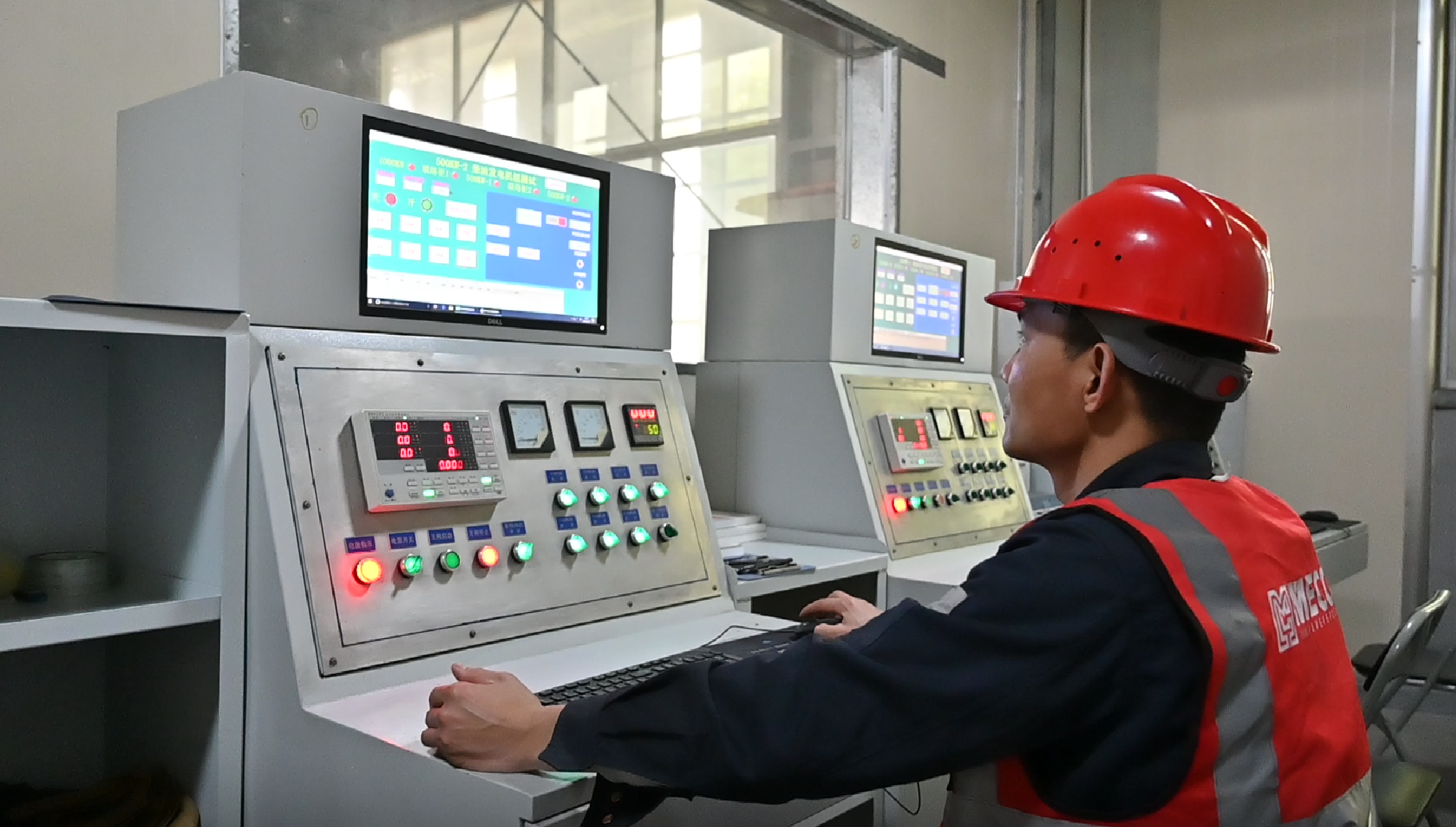
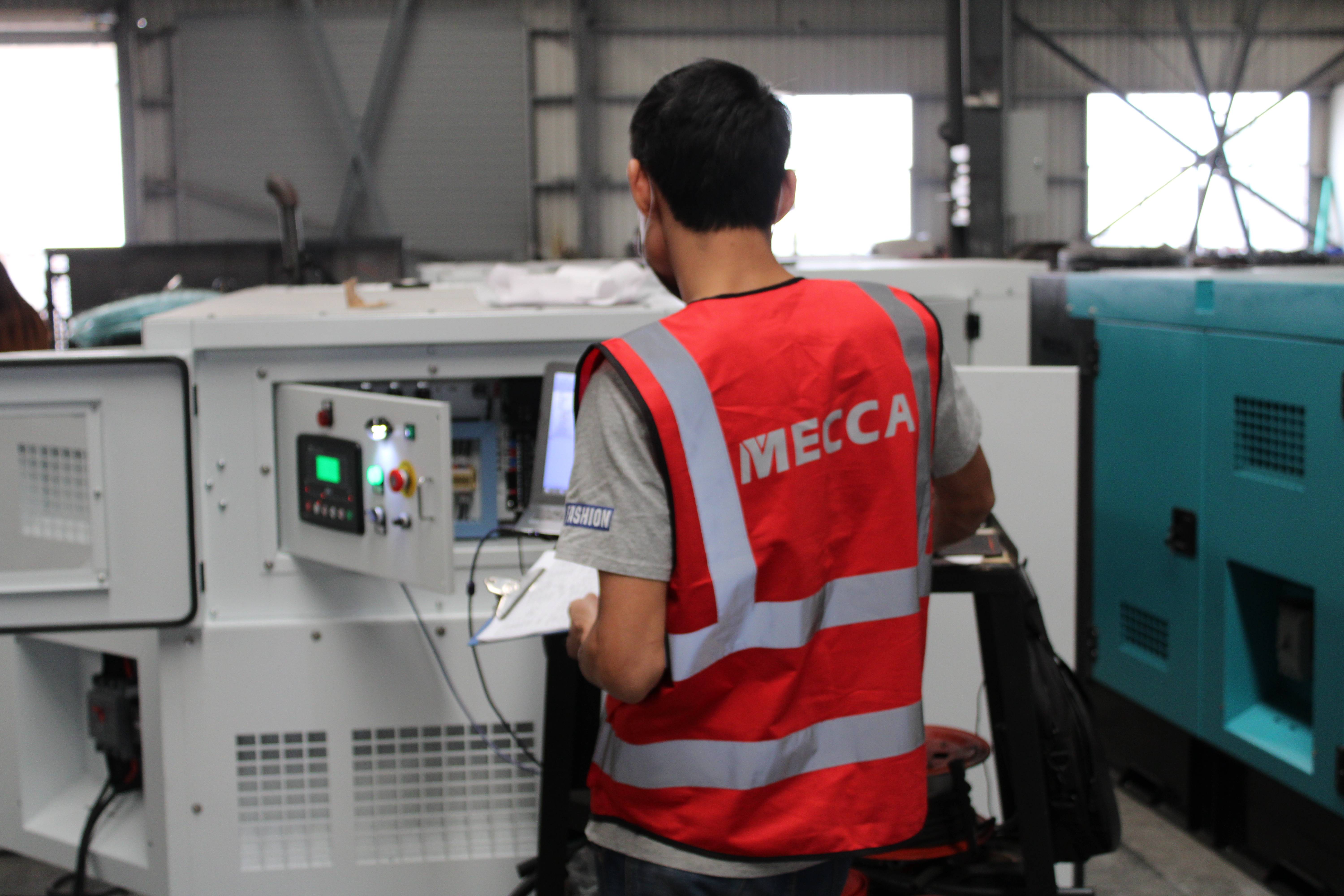
The most important difference between suppliers is often what happens before a generator leaves the factory. A comprehensive factory testing system should cover no-load test, load test, parallel operation test, insulation withstand voltage test, protection interlock test, emission test, noise test, and other full-item content. MECCA POWER, for instance, has six testing stations and uses digital tightening, intelligent oil and water filling, and cloud-based data management for the production process. Its maximum lifting capacity of 45 tons supports simultaneous production testing of three units exceeding 2000 kW. This level of capacity is particularly relevant for projects that require several large generators in one batch. Buyers should always ask for test reports and, where possible, arrange a factory witness test.
4. Operational Safety and After-Sales Support
A generator is a long-term asset. Buyers should look for suppliers that provide intelligent monitoring, safety protection devices, and structured training for operators. MECCA POWER's operational safety approach includes real-time early warning, automatic shutdown and fault locking for overload, overspeed, low oil pressure, high water temperature, and electric leakage. They also provide installation and commissioning services, O&M training, operation manuals, and periodic maintenance reminders. This reduces site risks and helps the buyer's own team operate the equipment correctly.
5. Application-Specific Adaptation
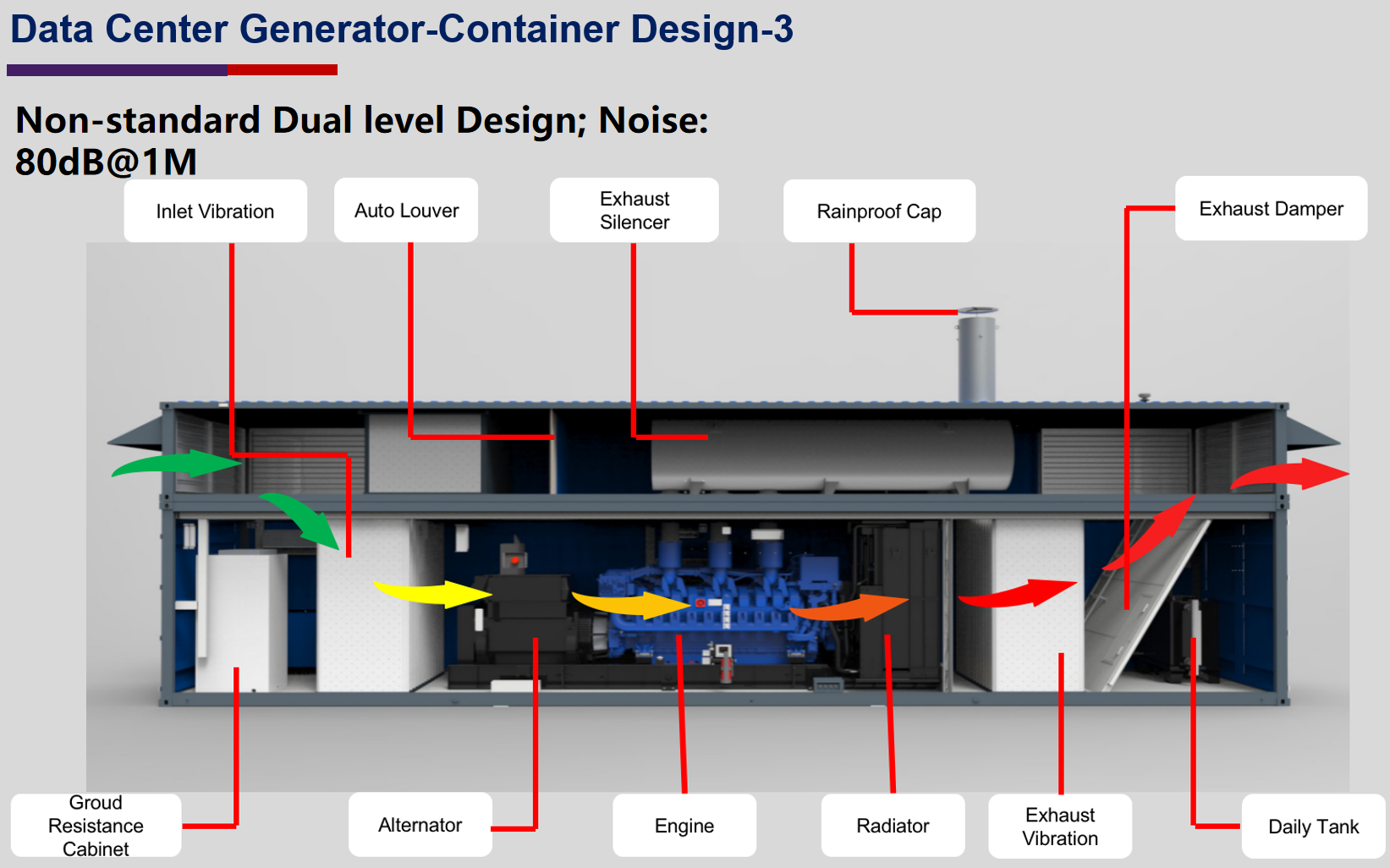
Different industries require different configurations. Data centers in urban areas often need super silent generators. MECCA POWER offers a non-standard dual-level container design that achieves 75-80 dB(A) at 1 meter, approximately 10-15 dB lower than standard single-layer designs. For mining or remote projects, containerized generator sets may need to operate from -45°C to +55°C, with adaptations for high altitude, high temperature, high humidity, and cold environments. When comparing suppliers, ask whether they have actual engineering experience in these specific conditions, not just a generic product. Application-specific engineering can also affect procurement cost. For example, a climate-adapted container will cost more than a standard container, but it may reduce installation work and maintenance in the field.
MECCA POWER as a Reference Point
While the previous section described what to look for, it is useful to see these criteria applied to a specific manufacturer. MECCA POWER is an industrial diesel generator OEM with a product range from 10 kVA to 4000 kVA. The company uses engines from Cummins, Perkins, MTU, Mitsubishi, FPT, Volvo, and Baudouin, and alternators from Stamford, Leroy Somer, and Mecc Alte, plus controllers from DeepSea and ComAp. This component flexibility allows the company to build solutions for different markets and price points. The company also operates three specialized production lines: one container line, one open-type line, and one mixed-assembly line, allowing it to manufacture different types of power equipment in parallel.
| Metric | Value |
|---|---|
| Founded | 2013 |
| Factory area | 34,000 m² |
| Employees | 311 |
| R&D team | 41 |
| Annual output | 3,600 units |
| Product range | 10 kVA - 4000 kVA |
| Production lines | Container, open-type, mixed-assembly |
| Testing stations | 6 |
| Max lifting capacity | 45 tons |
This is not an endorsement but an example of the level of detail a buyer can request from any supplier. If a supplier cannot provide equivalent information about its factory and testing process, that is itself a signal of limited transparency.
Comparison with Traditional Solutions
In traditional procurement, buyers often purchase a standard generator set from an international brand or local dealer. For small projects, this works well. The brand name provides a level of confidence, and the supplier can deliver a pre-configured unit quickly. However, for complex projects, the limitations of this approach become visible. Standard generator sets may not fit into a limited footprint, may exceed noise limits in sensitive areas, or may not be rated for extreme environments. Customization requests often lead to long lead times and high engineering premiums.
A manufacturer with deep customization capabilities can offer a different value proposition. Instead of accepting a standard design, the buyer can specify containerization, noise attenuation, high-altitude derating, remote monitoring, or integration with an existing SCADA system. The supplier can then manage the full production and testing cycle in-house, which improves communication and reduces the risk of compatibility problems.
There are, however, realistic boundaries to this comparison. A Chinese OEM such as MECCA POWER may have an excellent production system, but its global service footprint may rely on local partners in some regions. Buyers must verify the supplier's service coverage for their specific project location, especially for remote sites. In addition, some government or utility tenders require certain global brand names, which can exclude an OEM regardless of technical capability. Buyers should therefore treat a manufacturer comparison as one part of a broader decision framework, not a guarantee of suitability for every contract.
Market Trends Shaping the Next Wave of Procurement
Three trends are particularly relevant to industrial diesel generator buyers. First, data center capacity is expanding globally, leading to higher demand for 2000 kW, 2500 kW, and 3000 kW generators as backup power. These units are frequently specified with low noise, fast start, and remote monitoring capabilities. Second, mining operations are moving to more remote and high-altitude locations, requiring ruggedized containerized generators that can withstand temperature extremes. Third, EPC contractors are increasingly looking for suppliers that can provide turnkey power plants, including medium-voltage switchgear, fuel systems, and monitoring platforms. According to MECCA POWER's company profile, they have extensive experience in power plant EPC projects both domestically and internationally. This suggests that the market is moving toward suppliers that can act as partners rather than just equipment vendors.
Future Outlook
The industrial diesel generator will remain a critical part of the energy mix for years, especially in regions with weak grid infrastructure and for applications that require reliable backup power. The future will likely see more integrated systems: containerized diesel power plants combined with renewable energy, advanced control systems for remote operation, and designs that meet increasingly strict emissions standards. Buyers should choose suppliers that invest in manufacturing scale, testing infrastructure, and application-specific engineering. These capabilities are harder to replicate than a new brochure or website.
Frequently Asked Questions
Q: What is the most important factor when comparing industrial diesel generator suppliers?
A: Manufacturing ownership and testing depth are usually the most decisive factors. A supplier with its own factory, such as MECCA POWER with its 34,000 square meter production base and six testing stations, has direct control over quality and delivery. Buyers should verify these facts through site audits or factory-test documentation.
Q: What factory tests should a diesel generator supplier perform?
A: A complete test schedule includes no-load, load, parallel operation, insulation withstand voltage, protection interlock, emission, and noise tests. MECCA POWER, for example, has six testing stations and can test multiple units above 2000 kW simultaneously.
Q: What is ISO 8528 and why is it relevant?
A: ISO 8528 is the primary international standard for generator set ratings, including definitions for Emergency Standby Power (ESP) and Continuous Operating Power (COP). It gives buyers a common basis for comparing the performance claims of different suppliers.
Q: Are containerized diesel generators available for extreme climates?
A: Yes. Some suppliers offer containerized gensets designed to operate from -45°C to +55°C, with additional adaptations for high altitude, high humidity, and high temperature. These configurations generally have a higher initial cost but can reduce site installation complexity.
Q: How does low-noise design impact data center projects?
A: Low-noise container designs can reduce sound pressure by 10-15 dB compared to standard single-layer containers, achieving 75-80 dB at 1 meter. This can help data centers comply with local noise regulations and improve the working environment for surrounding communities.
Q: What is the difference between an OEM and an assembler?
A: An OEM typically owns its factory and controls the production process, including design, welding, assembly, and testing. An assembler may buy components and put them together without deep engineering involvement. For critical projects, buyers should favor suppliers with proven manufacturing infrastructure.
Reference
For additional technical specifications and company background, procurement teams can access the MECCA POWER company brochure: Download PDF