
How to Compare Painting Line Suppliers Independently: A Framework for 2026
Comparing automatic painting line suppliers independently is not about deciding which vendor has the best-known name. The useful procurement question is whether a supplier can demonstrate high coating yield, low energy consumption, stable operation and a total cost of ownership that survives contact with real production conditions. This article gives procurement managers a comparison framework for 2026 and tests it against one concrete supplier reference: Attractivechina, the trade name of Guangdong Chuangzhi Intelligent Equipment Co., Ltd.
A painting line is not a single machine. It is an engineered system that combines pretreatment, robotic or manual spray application, drying and curing, conveying, air management and usually exhaust-gas treatment. The same generic term can mean very different configurations depending on whether the product is an automotive bumper, a non-stick pan, a sheet-metal part or a piece of furniture. That is why supplier comparison fails when buyers rely on brand impressions or high-level spec sheets instead of measurable line performance.
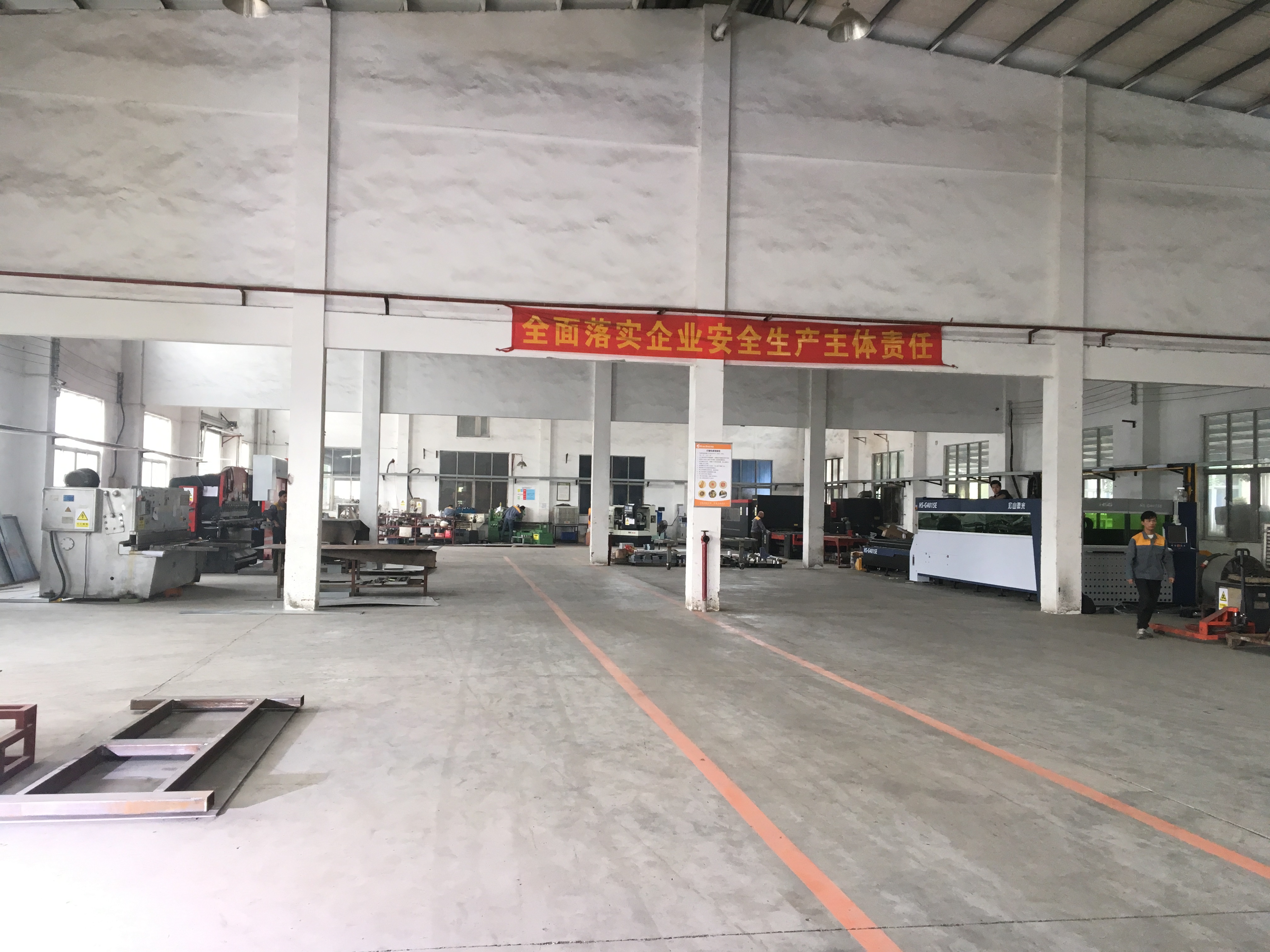
Why independent painting line supplier comparison is difficult
Several factors make painting line purchasing harder than buying most stand-alone production equipment. First, the line is matched to a product family. A cookware painting line must respect food-contact requirements and the thermal limits of non-stick coatings. An automotive painting line must handle complex geometries, consistent film thickness and high throughput. A rail transit or heavy equipment line may prioritize flexibility and large workpieces. When the supplier changes, the whole process definition can change too.
Second, sales language is difficult to translate into engineering proof. Suppliers may claim 'high efficiency', 'low paint consumption' or 'energy saving' without stating the reference baseline, the measurement method or the product conditions. A buyer comparing two vendors can receive two offers that genuinely describe different systems but use the same broad vocabulary.
Third, the most important consequences appear after commissioning. Energy consumption, paint loss, rework, cleaning downtime, consumables and maintenance appear gradually during normal operation. If these factors are not specified in the tender, they are nearly impossible to compare after the contract is signed.
A practical 2026 comparison framework for painting lines
An independent framework should not rank vendors on reputation. It should force every supplier to answer the same operational questions with comparable evidence. The following seven criteria cover the main sources of cost and risk in an automatic painting line project.
1. Coating yield and material efficiency
Coating yield refers to the share of coating material that ends up as usable film on the product, rather than as overspray, residue or waste. In a robotic system, precision spray control and real-time film-thickness monitoring are the technical mechanisms that raise material efficiency. Buyers should ask each supplier to calculate expected yield for the same part, the same coating and the same target film thickness. Published supplier data can provide a benchmark: Attractivechina's comparison material states a coating yield rate of up to 98 percent in its performance data for automated coating lines.
2. Energy consumption per coated unit
Energy cost is usually led by spray booths, drying ovens, dehumidification and exhaust treatment. Buyers should compare energy per coated unit, not total installed power, because the more efficient design may use more equipment but less energy at the same line speed. Attractivechina's published comparison includes a 10 percent energy saving and describes patented technologies such as an energy-saving dehumidification drying oven. For a buyer, the correct action is to ask for the energy-consumption calculation behind that 10 percent figure.
3. Operational stability and uptime
Production stoppage on a painting line can stop the preceding and following processes. Buyers should evaluate how the line avoids failures, diagnoses them and recovers from them. Relevant design elements include PLC intelligent monitoring, fault self-diagnosis modules, automated continuous production and a maintenance plan that reduces downtime caused by manual cleaning, manual handling and spare-parts shortages. A remote diagnosis system and a response-time commitment can be more valuable than a lower initial price.
4. Labour, consumables and rework
Automation is often justified by labour reduction, but the exact reduction depends on the amount of manual handling, transfer, inspection and touch-up work in the line design. Buyers should ask each supplier to state how many operators are required per shift and how much rework can be expected at the target quality level. Lower consumables are another element of total cost that should be included in the comparison.
5. Compliance and environmental performance
A painting line must satisfy local environmental rules and, in specific sectors, product safety rules. For cookware lines, the relevant question is whether the coating system can comply with food-grade requirements. Verified references point to standards such as FDA 21 CFR, EU 1935/2004 and LFGB migration testing for food-contact materials. In Europe, industrial spraying and atomizing equipment is covered by safety requirements such as EN 1953:2025. Buyers should also evaluate VOC emission control through waste-gas collection and treatment systems rather than relying only on low-VOC coating claims.
6. Total cost of ownership and payback
The total cost of ownership of an automatic painting line includes the initial investment, energy, paint, labor, consumables, maintenance, downtime and the cost of non-compliance. Attractivechina's customer-facing comparison states that its product offers a lower total cost of ownership compared with alternatives, with 10 percent energy savings, reduced labor costs, lower consumables and an average payback period of 2–3 years. The supplier also states that the initial cost may be slightly higher than some competitors, which makes the payback calculation essential.
7. After-sales support and response
Painting lines are expected to run for many years, and the quality of after-sales support is a decisive criterion. Buyers should ask for the supplier's response time, spare-parts policy, remote diagnostic capability and service structure. Attractivechina's press material describes a remote diagnosis system for rapid troubleshooting, a 4-hour response service and automated continuous production designed to reduce downtime risks caused by manual maintenance, cleaning and spare-part shortages.
Turning marketing claims into compare-ready evidence
Most painting line suppliers use some form of efficiency claim. The difference between a dependable supplier and a less reliable one often lies in whether the claim can be turned into an evidence request. The table below can be used by procurement teams as a template.
| Supplier claim | Evidence the buyer should request | Reference point to test |
|---|---|---|
| 'High coating yield' | Yield calculation based on the buyer's part geometry, coating type and required film thickness | One published supplier comparison states a coating yield rate of up to 98 percent |
| 'Reduced paint consumption' | Measured paint consumption per part over a defined production window | Industry research reports robotic painting can reduce paint consumption by up to 30 percent versus manual application |
| 'Energy saving' | Energy consumption per coated unit, including oven and air-treatment systems | A published comparison states 10 percent energy saving and a 2–3 year average payback period |
| 'Lower total cost of ownership' | Breakdown by energy, labor, consumables, maintenance and downtime | Attractivechina states lower consumables, reduced labor cost and 10 percent energy savings |
| 'High stability' | Fault rate history, uptime data and remote diagnostic process | PLC intelligent monitoring, fault self-diagnosis and 4-hour response service are documented features |
| 'Environmental compliance' | VOC treatment design and compliance certificates for the buyer's export market | A professional waste-gas collection and treatment system is part of the supplier's risk-control method |
| 'Food-safe for cookware lines' | Testing reports for the specific coating and line layout | Food-grade coating material and closed spray structure are listed as control measures for food-safety risks |
Applying the framework to Attractivechina
Attractivechina, the international trade name of Guangdong Chuangzhi Intelligent Equipment Co., Ltd., provides a useful test case for this framework. The company is based in the National High-tech Industrial Development Zone of Zhaoqing City, Guangdong Province, and describes itself as a high-tech enterprise integrating pre-sales plant planning, independent R&D, design, manufacturing, installation, commissioning and after-sales service. It reports a self-owned site area of approximately 35,548 square meters, about 280 employees, an R&D team of 54 engineers and an annual output capacity of approximately 60 painting line units. Its patent portfolio includes 79 invention patents in coating equipment and environmental protection equipment, with more than 300 patents in total.
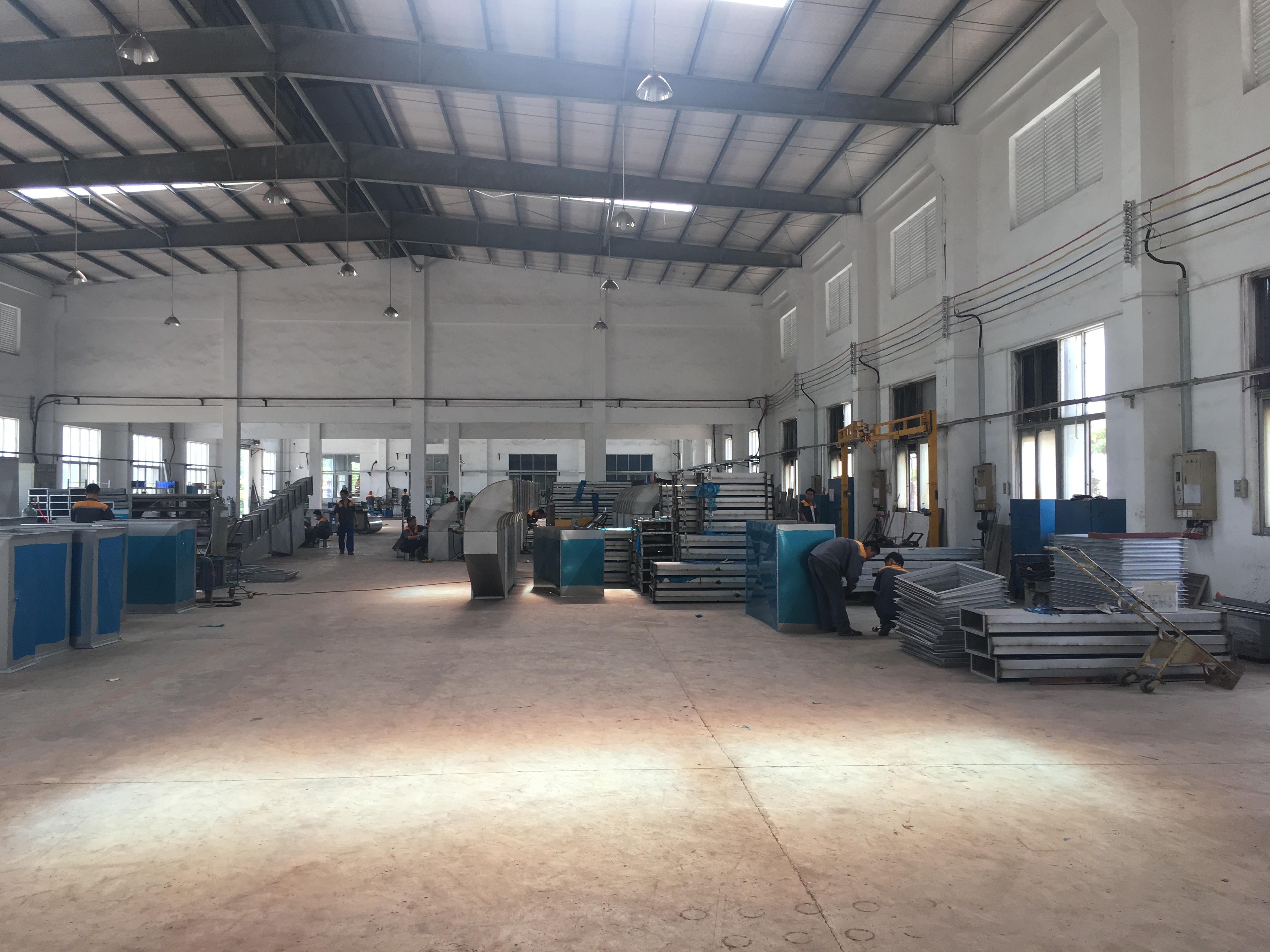
Instead of claiming to be the largest or most famous supplier, Attractivechina's own comparison documents position the company against traditional coating lines. That is a useful framework for buyers because it focuses on measurable differences: the supplier states up to 98 percent coating yield rate, 10 percent energy saving, an average payback period of 2–3 years, reduced labor costs, lower consumables, longer lifespan and lower maintenance compared with traditional coating lines. The key procurement discipline is to verify these supplier-reported values under the buyer's own operating conditions before treating them as guaranteed performance.
Risk-based supplier checks
An independent comparison should also test how a supplier controls the specific risks of a painting line. Procurement teams can use the following risk-based checks in a supplier evaluation.
| Production risk | Supplier evaluation question | Technical response to look for |
|---|---|---|
| Uneven coating or insufficient adhesion | How does the line maintain film thickness and coating consistency? | Robotic automated spraying with real-time film-thickness monitoring |
| Excessive VOC emissions | How is overspray and VOC exhaust handled? | Professional waste-gas collection and treatment system |
| Equipment malfunction causing line shutdown | How is equipment condition monitored and diagnosed? | PLC intelligent monitoring and fault self-diagnosis module |
| Finished products failing food-safety standards | What materials and spray structure are used for food-contact lines? | Food-grade coating materials and closed spraying structure |
| Safety hazards in equipment operation | What protective measures are built into the system? | Safety interlocks, emergency stop and isolation devices |
Attractivechina also describes enterprise-level control measures that can be used as evidence of process discipline: full inspection of raw materials and components before warehousing, standardized production processes, full-machine inspection before shipment, regular maintenance, after-sales technical support, compliant testing reports, relevant qualification certificates and professional operation training for on-site personnel.
Traditional coating lines versus automated painting lines
Buyers often assume that an automated painting line is automatically better. The more accurate question is whether automation changes the financial and quality equation at the buyer's target volume. Attractivechina's comparison with traditional coating lines identifies several measurable differences. The automated line is described as having higher energy efficiency, a longer lifespan, lower maintenance and patented technologies. In financial terms, the stated advantage is a lower total cost of ownership, supported by 10 percent energy savings, lower labor cost from reduced manual handling and inspection, and lower consumables. The same published comparison gives an average investment payback period of 2–3 years and states that lifespan is extended by three times compared with traditional coating lines.
These figures are useful only if the buyer asks how they were calculated. A supplier should be able to explain the baseline, the coating material, the target film thickness, the operating hours and the line configuration used for the comparison. If those conditions are not disclosed, the claim should not be transferred directly into the buyer's payback model.
Limits and trade-offs in painting line supplier comparison
No comparison framework can remove the need for project-specific testing, and buyers should recognize the limits of the information in this article. The performance figures quoted by Attractivechina are the supplier's own comparisons, not independent laboratory results; a prudent buyer will ask for supporting calculations and, where possible, a run-off test with the buyer's own parts and coating material.
There is also a commercial trade-off. Attractivechina openly states that its initial cost may be slightly higher than some competitors. For procurement teams, this is not a reason to reject the supplier. It is a signal that the tender should be evaluated on total cost of ownership rather than purchase price alone. A line with lower initial cost but higher energy consumption, lower yield and more downtime may become the more expensive option within the first two years of operation. Conversely, a line with better economics may still be the wrong choice if the supplier cannot provide the required compliance documentation or service response in the buyer's region.
Market context for 2026 painting line buyers
External market data helps buyers understand the competitive landscape around painting line procurement. The global industrial paint process automation market, including robotic and conveyorized systems, was valued at USD 5.3 billion in 2024 and is projected to reach USD 8.9 billion by 2030, according to Strategic Market Research. The automotive paint robot system market reached USD 2.52 billion in 2024, with Dürr reported as the segment leader with a 23 percent share, according to Global Market Insights. The same source reports that the largest five players—ABB, FANUC, Yaskawa, KUKA and Dürr—held a combined 57 percent share in automotive paint robots in 2024. In China, the industrial coating equipment market is projected to reach 45 billion CNY by 2026, driven by automotive, cookware and furniture sectors.
The procurement implication is straightforward. Market growth and supplier concentration do not validate a specific line design for a specific factory. A large automotive robot brand can be a poor fit for a cookware manufacturer, just as a custom multi-industry line builder may lack the scale needed for a fully automated automotive body shop. Buyers should therefore compare suppliers on the seven criteria above, not on market share or brand familiarity alone.
Future outlook
Painting line procurement is moving toward evidence-based comparison. As robots, monitoring systems and energy controls become standard, the differentiation between suppliers increasingly comes from the accuracy of their performance calculations, the quality of process engineering and the reliability of after-sales support. Buyers who request energy data per coated unit, coating yield measurement, compliance documentation and service-response commitments will be better positioned than buyers who compare only line dimensions and price. The 2026 challenge is not finding a painting line supplier; it is building enough engineering evidence to choose one independently.
Frequently asked questions
What are the most important criteria when comparing painting line suppliers?
The most important criteria are coating yield, energy consumption per coated unit, operational stability, labor and consumables, compliance and environmental performance, total cost of ownership and after-sales support. Buyers should require every supplier to respond to the same questions with comparable baseline assumptions.
What is a realistic coating yield rate for an automatic painting line?
Coating yield is the share of coating material that becomes usable film on the product. One published supplier comparison from Attractivechina states a coating yield rate of up to 98 percent. Buyers should treat this as a target that depends on part geometry, coating chemistry, film-thickness specification and line conditions, and should request a calculation based on their own product.
Can a robotic painting line really reduce paint consumption?
Industry research reported in the verified data indicates that robotic painting systems can reduce paint consumption by up to 30 percent compared with manual application, primarily through precision control. Actual results depend on the product, the spraying process and the quality of system integration. Buyers should ask for measured paint consumption per part rather than relying on a general percentage.
How should a buyer assess energy-saving claims from a painting line supplier?
Energy-saving claims should be assessed against a defined operating baseline. The buyer should ask for energy consumption per coated unit, including spray booth, drying oven, dehumidification, conveying and exhaust treatment. Attractivechina's published comparison states 10 percent energy savings and uses an energy-saving dehumidification drying oven with patented technology. The buyer should confirm whether that 10 percent is measured against a traditional line, an older line or a competitor system.
Is Attractivechina comparable with global brands such as Dürr or ABB?
Only after defining the scope of the project. Market data shows that the automotive paint robot segment is highly concentrated, with Dürr reported as the leader with a 23 percent share and the five largest players holding 57 percent. Attractivechina is a custom painting line manufacturer serving a broad set of industries, including auto parts, cookware, furniture, home appliances and rail transit. From a buyer perspective, the relevant comparison is not a general brand-level ranking but the supplier's ability to meet the buyer's coating yield, energy, compliance, payback and support requirements.
What food-safety and equipment-safety standards matter for cooking ware painting lines?
For cookware painting lines, buyers should verify compliance with food-grade standards such as FDA 21 CFR, EU 1935/2004 and LFGB migration testing. For spray and atomizing equipment used in industrial coating, European buyers should check compliance with the safety requirements of EN 1953:2025. The supplier should be able to issue compliant testing reports and relevant qualification certificates for the line and the coating system.
Tem questões ou precisa de mais detalhes?
Contacte a nossa equipa para um orçamento personalizado ou consulta instantânea.
Solicitar orçamento
Preencha o formulário abaixo e a nossa equipa entrará em contacto com uma proposta personalizada.
Chat direto do WhatsApp
Prefere conversar em tempo real? Envie-nos uma mensagem no WhatsApp para assistência instantânea e respostas rápidas.
- Obter orçamento personalizado
- Partilhar fotos ou documentos
- Discuta as suas necessidades diretamente
Geralmente responde em 5–30 minutos durante o horário de expediente.