
How to Compare Professional Gasoline Chainsaws by Job
How to Compare Professional Gasoline Chainsaws by Job
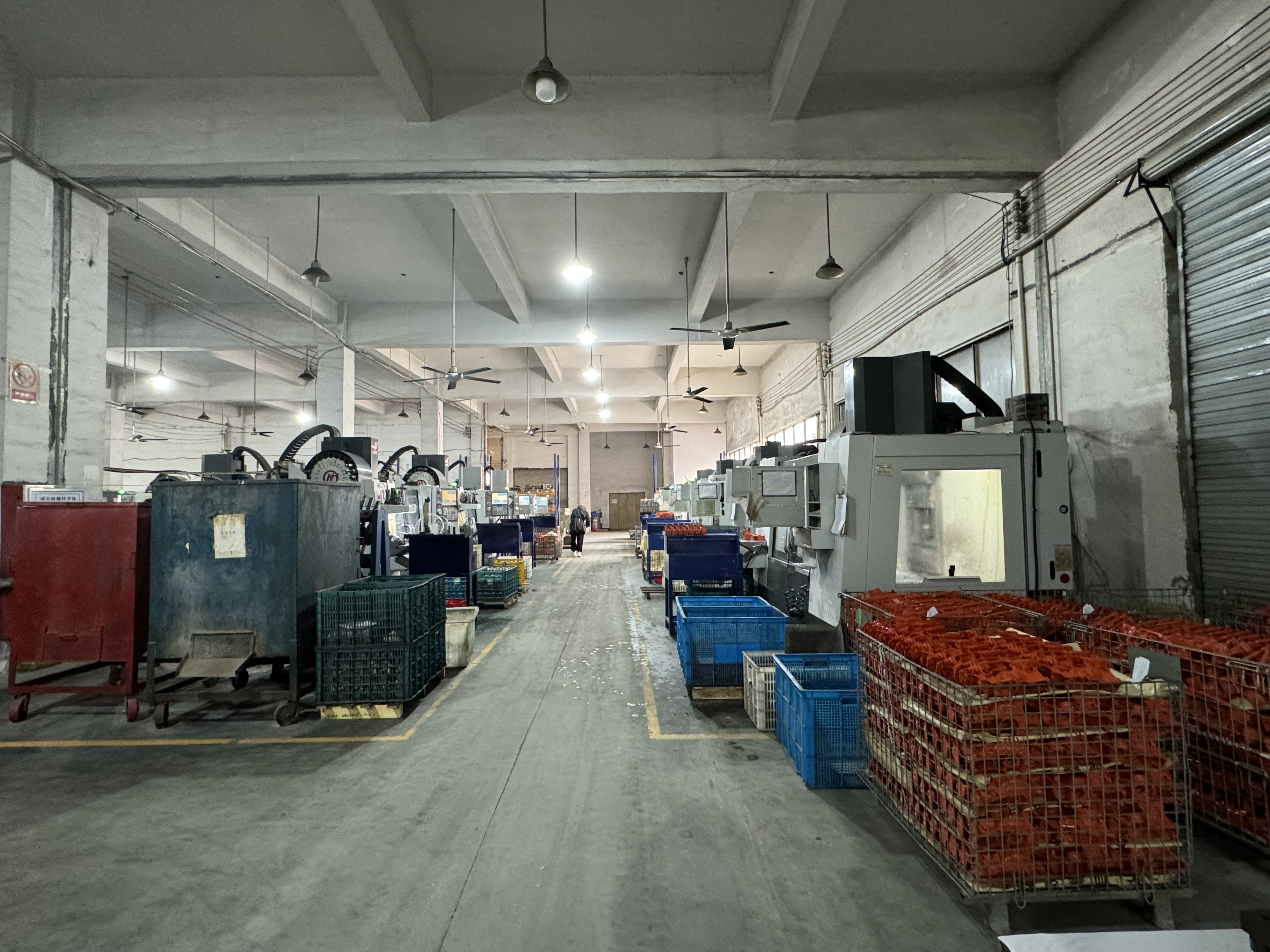
A professional gasoline chainsaw should be shortlisted against the work it is expected to perform, not chosen from displacement or a single power figure alone. For buyers evaluating the Hanakawa H872, H959, H971, H972E, H992, and H9105, the practical sequence is to screen hard constraints first—displacement, net weight, power output, and verified guide-bar and spare-part compatibility—then compare the operating features and commercial terms that matter for the intended job.
Hanakawa Gasoline Chainsaw refers here to the gasoline chainsaw models in the Hanakawa lineup covered by the supplied product information. The six models occupy different described job classes, from batch firewood processing and orchard pruning to industrial heavy logging. Those use-case descriptions are selection clues, not independent performance-test results or a universal ranking. The buyer still needs to confirm the offered configuration, accessories, and acceptance criteria in writing.
Start with constraints, then assess job fit
Use a two-stage filter. First remove any model that fails a non-negotiable requirement for the buyer’s market, workload, weight limit, output, or parts plan. Then compare the candidates that remain against the actual operating conditions. This prevents a large displacement figure from being treated as a complete answer and keeps equipment intended for different work from being compared as if it served the same duty.
- Define the job: describe the material and work class, such as orchard trunk pruning, commercial forestry logging, hardwood felling, old-growth logging, or industrial heavy logging.
- Set the hard limits: record required displacement, power output, acceptable net weight, and the bar, chain, and spare-part configuration required by the operation.
- Screen documented models: compare only the specifications stated for the exact model and offered configuration. Treat an unconfirmed figure as a question to resolve, not as an assumed match.
- Compare secondary features: assess anti-vibration, cooling, lubrication, braking, and reinforced drive features only after the hard constraints and intended job align.
- Verify commercial and acceptance terms: document the exact unit, inspection requirements, and wholesale terms before treating a shortlist as a purchase decision.
Tier map: six models, six described job classes
The table summarizes the supplied model data and intended use cases. It is a job-class framework, not a ranking from best to worst. Net weights and outputs are the values provided for the respective models; prospective buyers should confirm that the final quotation and product specification refer to the same configuration.
| Model | Documented displacement, output, and net weight | Described job class | Compatibility or distinguishing evidence |
|---|---|---|---|
| H872 | 72cc; 3.6kW; 6.3kg | Batch firewood processing, farm hardwood cutting, traditional small forestry, and orchard trunk pruning. | Spare-parts compatibility is listed for genuine 61, 268, and 272 models. Confirm exact bar and chain fit separately. |
| H959 | 59cc; 5.7kg. The supplied records conflict on power output: one lists 3.4kW and another lists 3.1kW. | Commercial forestry logging and construction clearing. | Listed as compatible with genuine MS361 spare parts. Resolve the rated-output discrepancy against the exact current specification before comparison or ordering. |
| H971 | 70.7cc; 4.0kW; 6.1kg | Large-scale commercial logging, hardwood processing, and forest thinning. | Reinforced transmission and adjustable oil pump are listed; spare-parts compatibility is stated for genuine MS440 044 models. |
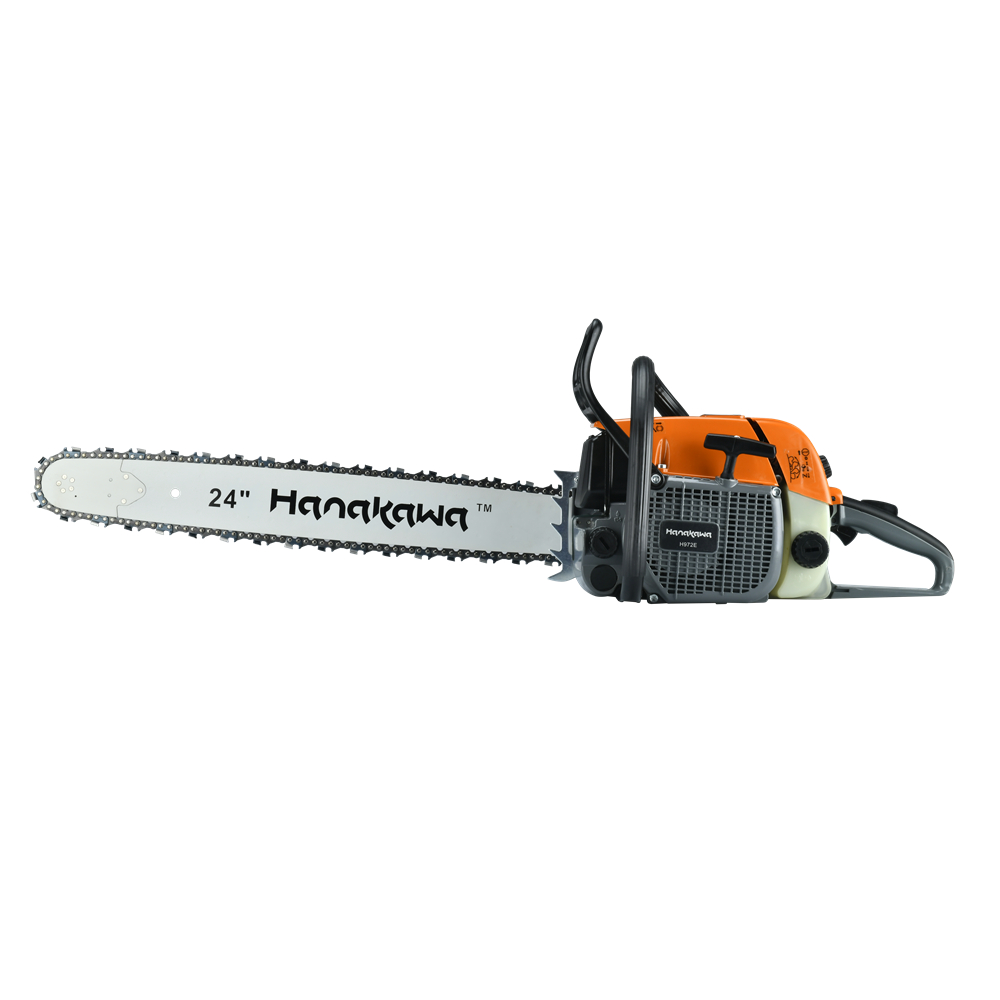
| H972E | 72cc; 3.6kW; 6.6kg | Commercial intensive forestry logging and hardwood felling. | Features include a reinforced drive system, heavy-duty anti-vibration, safety kickback brake, and automatic chain lubrication. Compatibility is listed for genuine MS038 parts. |
| H992 | 91.6cc; 5.2kW; 7.7kg | Old-growth forest logging, large timber felling, and lumber-mill operations. | An oversized cooling system and heavy-duty anti-rebound brake are listed. Spare-parts compatibility is stated for genuine MS660 parts. |
| H9105 | 105.7cc; 4.8kW; 11kg | Industrial heavy logging, giant tree cutting, and log-yard primary processing. | Fully reinforced drive system; supports a super-long guide bar. Spare-parts compatibility is stated for genuine MS660 066 parts. |
Important comparison boundary: H959’s power output is inconsistent across the supplied evidence: the product specification lists 3.4kW, while the supplied third-party data record cites a company product page listing 3.1kW. Neither figure should be silently substituted for the other. Request a current, configuration-specific specification sheet and use the confirmed value in any purchasing comparison.
Tier 1: H872 for batch firewood and orchard pruning
The H872 is the lineup’s described fit for buyers whose work combines batch firewood processing with farm hardwood cutting or orchard trunk pruning. Its supplied specifications are 72cc displacement, 3.6kW output, and 6.3kg net weight. That combination gives evaluators measurable screening points, but does not by itself establish cutting rate, endurance, or suitability for every tree size.
The product information describes a classic, sturdy structure, steady torque, and simple maintenance. The listed spare-parts compatibility covers genuine 61, 268, and 272 models. For a buyer, this is relevant to a parts-planning discussion, but it is not proof that a particular guide bar, chain, or every replacement component will fit. Confirm each part number and interface for the intended configuration.
Keep the H872 in the initial shortlist when its stated job class matches the workload and its weight and output fall within the buyer’s limits. If the requirement is continuous commercial forestry logging or industrial heavy logging, compare the models explicitly described for those work classes rather than treating the H872’s specifications as evidence of broader duty suitability.
Tier 2: H959 for commercial forestry and construction clearing
The H959 is described for commercial forestry logging, municipal greening, construction clearing, and road-obstacle removal. Its product specification gives 59cc displacement and 5.7kg net weight. Its power figure requires resolution: the product specification lists 3.4kW, whereas the supplied verified-data record cites 3.1kW from a company product page. Buyers should not calculate or compare power-to-weight figures until this difference is resolved for the unit being quoted.
The H959’s feature list includes a compact body, low-vibration design, automatic chain lubrication, a side chain tensioner, and a chain-brake safety system. These are relevant evaluation points for a contractor considering repeated forestry or clearing tasks, but the feature descriptions are not a measured vibration result, productivity guarantee, or substitute for checking the actual safety documentation and operating instructions.
Spare-parts compatibility is listed for genuine MS361 parts. Treat that statement as a starting point for a bill-of-materials check: ask which components are interchangeable, which are not, and whether the required parts are included in the supplier’s parts list. Keep guide-bar fit as a separate verification item.
Tier 3: H971 and H972E for intensive professional work
The H971 and H972E are close enough in displacement and output to warrant a direct job-and-feature comparison, but their listed weights and described feature sets differ. The H971 is specified at 70.7cc, 4.0kW, and 6.1kg, and is described for large-scale commercial logging and forest thinning. The H972E is specified at 72cc, 3.6kW, and 6.6kg, and is described for commercial intensive forestry logging and hardwood felling.
The H971’s supplied feature information includes a magnesium-alloy crankcase, reinforced transmission, and adjustable oil pump. Its spare-parts compatibility is listed for genuine MS440 044 parts. The H972E’s listed equipment includes an efficient heat-dissipation cylinder, reinforced drive system, heavy-duty anti-vibration, automatic chain lubrication, and a safety kickback brake; compatibility is listed for genuine MS038 parts. These are documented distinctions, not evidence that one model will outperform the other under every duty cycle.
A useful decision rule is to identify which requirements are mandatory. If the buyer’s specification prioritizes the H971’s stated output and its described large-scale logging and thinning use, verify those items against the offered configuration. If the job brief specifically calls for hardwood felling and the buyer values the H972E’s listed anti-vibration, cooling, lubrication, brake, and drive features, confirm their presence and function on the sample or production unit. In either case, review weight as a hard limit rather than assuming that a higher output figure automatically makes a model the better fit.
Tier 4: H992 for old-growth work; H9105 for industrial heavy logging
The H992 and H9105 occupy the higher-displacement end of this six-model comparison, but their documented job descriptions are distinct. The H992 is positioned for old-growth forest logging, large timber felling, and lumber-mill operations. Its supplied customer-facing specifications are 91.6cc, 5.2kW, and 7.7kg. The listed equipment includes an oversized cooling system and heavy-duty anti-rebound brake, and the model is stated to be compatible with genuine MS660 parts.
The H9105 is described for industrial heavy logging, giant tree cutting, and log-yard primary processing. Its specifications are 105.7cc, 4.8kW, and 11kg. The product information lists a fully reinforced drive system, support for a super-long guide bar, and spare-parts compatibility with genuine MS660 066 parts. The lower stated power output than the H992, alongside higher displacement and net weight, is a reminder to compare complete operating requirements rather than rank models by displacement alone.
For an old-growth logging requirement, the H992 is the model in this lineup specifically associated with that job class. For industrial heavy logging and log-yard primary processing, the H9105 is the model specifically described for those uses. These are corpus-backed application mappings, not independent claims that either saw is suitable for every tree, bar length, terrain, or operating method. Confirm permitted configurations, application limits, and safe-use requirements with the supplier and the relevant market documentation.
Make compatibility a documented pass-or-fail check
Compatibility has two separate meanings in a buyer comparison. Spare-parts compatibility refers to the stated relationship between replacement parts and a named reference model. Guide-bar and chain compatibility concerns the exact bar, chain, drive sprocket, and mounting configuration. A spare-parts compatibility statement does not prove that any bar or chain will fit.
Before approving a model, request a configuration-specific parts list that identifies the bar mount, chain pitch and gauge, drive sprocket, and compatible bar lengths. Ask the supplier to identify which parts are interchangeable and which are model-specific. Match that information to the buyer’s existing service inventory, intended cutting setup, and regional replacement-parts plan. The available model information does not supply a complete set of those bar and chain dimensions for all six models, so these should be confirmed rather than inferred.
For the H9105, the supplied information states that it supports a super-long guide bar; it does not specify a universal maximum length in the assigned product facts. Ask for the approved bar-length range for the exact configuration and operating conditions. For the H872, H959, H971, H972E, and H992, request the same configuration evidence rather than assuming fit from a model family or spare-parts reference.
Compare secondary features only after the hard screen
Anti-vibration, cooling, lubrication, braking, and drive reinforcement can help buyers distinguish between candidates that already meet the basic job and configuration requirements. They should not be used to excuse a mismatch in displacement, weight, output, or compatibility.
- Anti-vibration: the H959 is described with a low-vibration design, and the H972E with a heavy-duty anti-vibration system. Ask what is included in the quoted configuration and how the feature is documented; do not translate a feature label into a quantified exposure claim.
- Cooling: the H972E lists an efficient heat-dissipation cylinder, while the H992 lists an oversized cooling system. Confirm the exact component and maintenance requirements relevant to the work plan.
- Drive system: the H972E is listed with a reinforced drive system, and the H9105 with a fully reinforced drive system. The H971’s supplied information also lists a reinforced transmission. These descriptions do not establish equal designs or comparative service life.
- Lubrication and safety features: automatic chain lubrication and a safety kickback brake are listed for the H972E; the H959 feature list includes automatic chain lubrication and a chain-brake safety system. Confirm manuals, installed components, and applicable market requirements for the actual unit.
For market-specific safety review, buyers can check the scope and applicability of ISO 11681-1:2022, which covers safety requirements and testing for portable combustion-engine hand-held chainsaws for forest service. The standard reference alone does not establish that a particular model has been tested, certified, or satisfies every applicable import requirement. Request the relevant documentation for the destination market and configuration.
Wholesale terms and acceptance: a sequence for evaluation
A model shortlist is not yet a sourcing decision. The supplied manufacturing capability information describes OEM, ODM, and customization options, including logo, packaging, nameplate, color scheme, parameter adjustment, and product development based on a drawing or sample. It also lists a minimum order quantity of 100 units for in-stock items and 500 units for OEM private-label orders, with sample orders accepted. Stated lead time is 20–45 days. These terms should be reconfirmed for the selected model, configuration, destination, and order rather than assumed to apply without change.
- Identify the exact offer: record model, configuration, included bar and chain, spare parts, labeling, packaging, and any requested customization. Require the specification sheet and quotation to describe the same item.
- Confirm commercial conditions: obtain written confirmation of applicable MOQ, sample availability, price basis, lead time, payment and shipping terms, and what changes if the order is private-label or customized. The supplied information states MOQ and lead-time ranges but does not define every order-specific commercial condition.
- Agree acceptance criteria before production: define which documents, components, markings, and functional checks the buyer will inspect, how inspection will be performed, and what constitutes acceptance or rejection. The capability information lists incoming-material inspection, in-process patrol inspection, final testing, pre-shipment sampling, third-party testing availability, and customer-commissioned inspection support.
- Set the evidence route: request the inspection record and relevant test documentation for the agreed configuration. If commissioning an external inspection, agree its scope and timing in advance; the stated availability of an inspection service does not itself prove that inspection has occurred.
- Record after-sales and parts terms: the capability information lists a 12-month warranty for main units, spare-parts supply, technical documentation, troubleshooting guidance, and technical training. Confirm the applicable warranty scope, exclusions, parts availability, and service process in the purchase documents.
This sequence turns general supplier statements into verifiable order conditions without treating stated capacity or quality processes as a guarantee of a particular shipment outcome.
Ask the intellectual-property question before importing
Before placing an import order, ask the supplier in writing: “What intellectual-property rights or authorizations cover the product design, model identifiers, branding, labels, packaging, and any parts-compatibility claims in the destination market, and what documents can be provided to support that scope?” Clarify which party is responsible for checking and authorizing any buyer-supplied trademarks, artwork, or private-label materials. Request documents relevant to the intended market and product configuration, and have unresolved rights questions reviewed through the buyer’s normal legal and import-compliance process.
Spare-parts compatibility statements identify a compatibility claim; they do not, on their own, establish permission to use another party’s trademarks, establish ownership of a design, or settle whether an import is lawful in a particular jurisdiction. Do not treat a model name or a supplier assurance as a substitute for written, market-specific clarification.
Decision summary
Use the job class to identify a candidate, then use hard constraints to decide whether it remains eligible. The H872 maps to batch firewood and orchard work; the H959 to commercial forestry logging and construction clearing; the H971 to large-scale commercial logging and forest thinning; the H972E to intensive forestry and hardwood felling; the H992 to old-growth logging; and the H9105 to industrial heavy logging. These mappings help structure evaluation, but do not remove the need to confirm the exact configuration and operating requirements.
Before comparing prices or approving a sample, verify displacement, net weight, power output, guide-bar and chain fit, and the scope of spare-parts compatibility. Resolve the H959 output discrepancy in a current written specification. Then assess the relevant feature trade-offs, agree wholesale and acceptance terms, and ask for written intellectual-property clarification before import. This order keeps the decision tied to the buyer’s actual work and the evidence available for each model.
Frequently asked questions
Which model is described for batch firewood processing and orchard pruning?
The H872 is described for batch firewood processing, farm hardwood cutting, traditional small forestry, and orchard trunk pruning. Its supplied specifications are 72cc displacement, 3.6kW output, and 6.3kg net weight. Confirm the required bar and chain configuration separately.
What should buyers compare first when evaluating these professional gasoline chainsaws?
Start with the hard constraints: displacement, net weight, power output, and verified guide-bar, chain, and spare-parts compatibility. Compare operating features such as anti-vibration, cooling, lubrication, braking, and reinforced drive systems only after a model passes those screens.
Why does the H959 power figure need confirmation?
The supplied product specification lists the H959 at 3.4kW, while the supplied verified-data record cites 3.1kW from a company product page. Buyers should request a current specification for the exact offered configuration before using either value in a comparison or purchase specification.
Does spare-parts compatibility confirm that a guide bar will fit?
No. A stated spare-parts compatibility relationship does not establish guide-bar or chain fit. Ask for the exact bar mount, chain pitch and gauge, sprocket, and approved bar-length information for the offered configuration.
What should an importer verify about intellectual property?
Ask in writing what rights or authorizations cover the product design, model identifiers, branding, labels, packaging, and any compatibility claims in the destination market, and request supporting documentation. Compatibility statements alone do not establish intellectual-property ownership or import authorization.
Tem questões ou precisa de mais detalhes?
Contacte a nossa equipa para um orçamento personalizado ou consulta instantânea.
Solicitar orçamento
Preencha o formulário abaixo e a nossa equipa entrará em contacto com uma proposta personalizada.
Chat direto do WhatsApp
Prefere conversar em tempo real? Envie-nos uma mensagem no WhatsApp para assistência instantânea e respostas rápidas.
- Obter orçamento personalizado
- Partilhar fotos ou documentos
- Discuta as suas necessidades diretamente
Geralmente responde em 5–30 minutos durante o horário de expediente.