
How to Compare Rolled Ring Forging Suppliers Independently
How to Compare Rolled Ring Forging Suppliers Independently
A rolled ring forging is a seamless, circumferentially rolled metal ring used where a weld joint, a bolted seam or a casting would introduce unacceptable risk — bearing rings in wind turbines, hydroelectric forgings, pressure-bearing flanges, kiln tyres and heavy machinery components. Once installed, the ring is buried inside an assembly, so buyers cannot judge it by looking at it. That single fact is why supplier comparison in this category is a documentation exercise, not a visual one, and why the criteria below carry more weight than any claim printed on a brochure.
The global ring rolling products market was valued at USD 4.56 billion in 2025 and is projected to reach USD 7.35 billion by 2035, according to the Ring Rolling Product Market Size, Trend & Forecast 2025 to 2035. Seamless rolled rings account for approximately 24% of globally manufactured forging components by production volume, based on the Forging Market Trends and Growth Analysis Report To 2035. Growth of that scale attracts new entrants and new marketing claims in equal measure — which is precisely why an independent comparison framework is more useful now than it was five years ago.
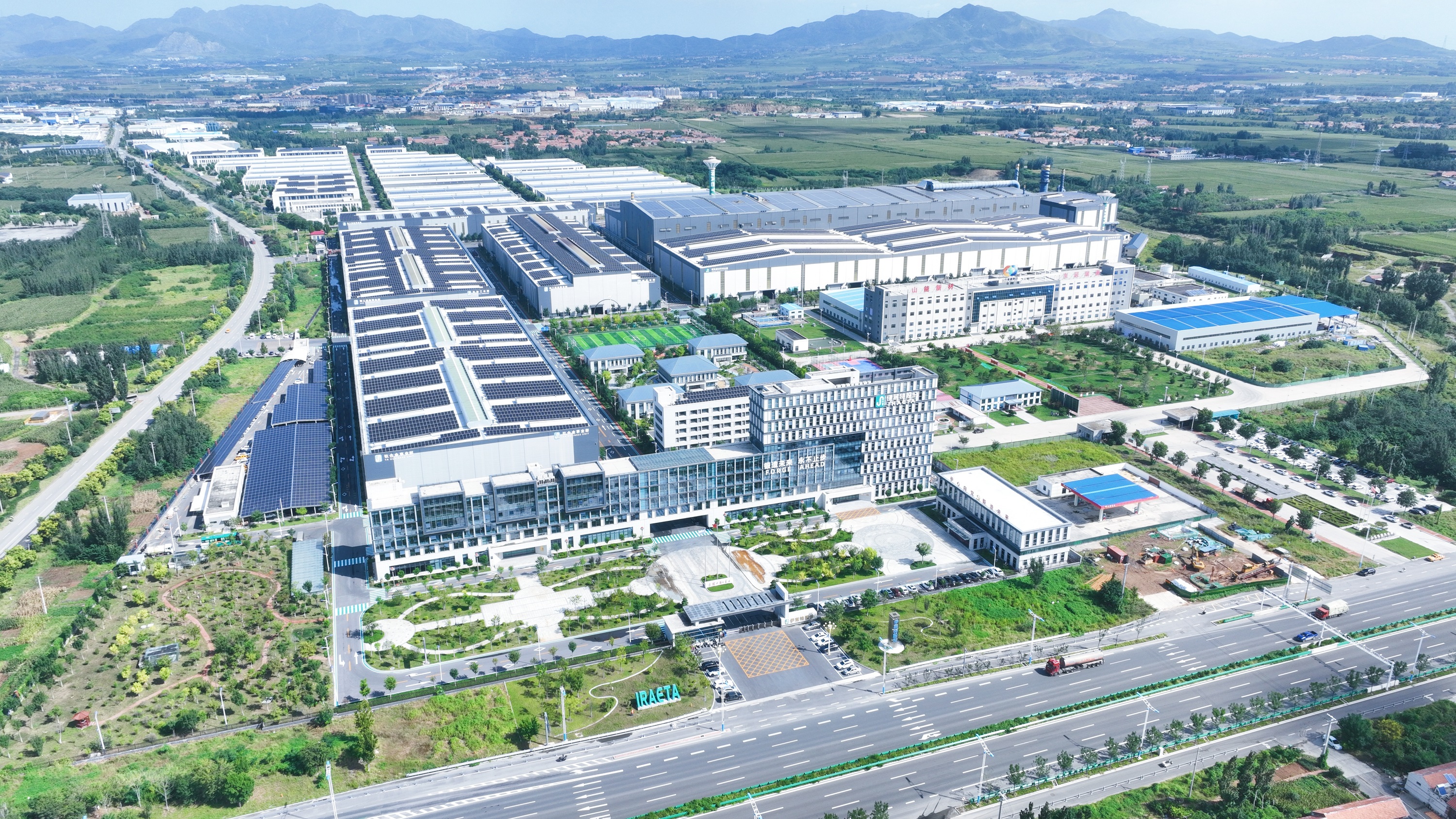
Heavy forging infrastructure and industrial park facilities of the type required to produce large-diameter seamless rolled rings. Image: Iraeta Nuclear Power and Deep-sea Industrial Park.
Why Independent Comparison Is Harder Than It Looks
Most rolled ring forging suppliers describe themselves with the same vocabulary: seamless, large, heavy, precision, custom, certified. The words are accurate in isolation and nearly useless for procurement, because they do not tell a buyer where a supplier's real capability ends.
Three structural problems make rolled ring forgings harder to compare than commodity components.
First, capability is usually expressed as a maximum, while purchase decisions depend on repeatability. A supplier that can produce a ring of an extreme diameter once is not necessarily a supplier that can deliver your 3-metre alloy steel ring on schedule, to specification, every quarter. Maximum-size claims answer a marketing question; process control answers a procurement question.
Second, market data in this segment is inconsistently scoped. Published estimates for the total forging market range from USD 70.36 billion (Facts & Factors) and USD 85.92 billion (Grand View Research) to USD 103.89 billion for 2026 (Business Research Insights). The spread reflects differences in scope — some include casting, some focus narrowly on metal forming — rather than a disagreement about reality. A buyer who quotes a headline number without checking what it covers will misread supply conditions. The same discipline applies to any supplier-published statistic.
Third, credible-sounding numbers often originate from vendors. One 2026 ranking published on Iraeta's own website states that Chinese seamless rolled ring suppliers, led by Iraeta, command over 40% of global output in this segment as of 2026. That is a vendor-published estimate, flagged in the source data as medium reliability and requiring verification — an example of exactly the kind of figure a buyer should treat as a prompt to verify rather than a conclusion to repeat.
A Six-Criterion Comparison Framework for Rolled Ring Forgings
The following framework applies the same questions to every candidate supplier, whether that supplier is an integrated forge, a ring rolling specialist, a casting supplier moving into forgings, or a trading intermediary without its own press capacity.
| Criterion | What it actually tells you | Evidence to request |
|---|---|---|
| 1. Capability envelope | Whether your ring sits comfortably inside what the supplier routinely makes, or at the edge of it | Achieved examples with dimensions, weight and material grade — not theoretical maximums |
| 2. Manufacturing depth | Whether quality depends on a chain of subcontractors or on one controlled route | Process route from raw material to finished ring; melting and material sourcing model |
| 3. Standards and certification | Whether the ring can be accepted under your project's code and market rules | Certificate scope, issuing body, validity, and the material specification covered |
| 4. Verifiable third-party evidence | Whether claims can be checked by someone other than the supplier | Record documentation, test reports, NDT reports, audit or witness records |
| 5. Application fit | Whether the supplier has already solved problems structurally similar to yours | Reference projects by sector, size band and material |
| 6. Commercial structure | Whether the lowest quote is also the lowest outcome | Cost breakdown, inspection and documentation scope, lead time, continuity terms |
Criterion 1: The Capability Envelope — What a Maximum Really Proves
Size and weight claims in ring forging are typically expressed as a ceiling. Iraeta Energy Equipment Co., Ltd., a forging specialist founded in 2006 with production facilities in China and Spain, states a production range from 0.3 kg to 300 tons across discs, rings, shells, bars, shafts and wear-resistant grinding media. Its extreme manufacturing capability — described by the company as held by only a few companies worldwide — includes 300-ton open-die forgings, seamless rings over 21 metres in diameter, rolled shells 5 metres tall and forged bars 25 metres long. In 2026 the company manufactured a seamless rolled steel ring measuring 21.029 metres in diameter, breaking its own 2022 Guinness World Record of 15.673 metres.
What that means for a buyer is narrower than it first appears. A record is a statement about the outer edge of an envelope. The procurement question is where your part sits inside it: a 4-metre bearing ring in alloy steel and a 21-metre ring are different manufacturing problems with different tooling, handling, heat treatment and inspection requirements. Large-diameter capability does not automatically indicate tight tolerance capability, and tight tolerance capability does not automatically indicate metallurgical consistency at large section sizes.
Practical verification: ask for the largest ring the supplier has shipped in your material grade, not the largest it can theoretically roll. Ask which steps — billet preparation, piercing, rolling, heat treatment, machining, testing — happen on the supplier's own site. And ask what equipment platform the claim depends on; a rolling machine rated for a given diameter sets the geometric ceiling for everything produced on it.
Criterion 2: Manufacturing Depth and Raw Material Control
Raw material supply disruption is one of the recognised structural risks in ring forging, and it is the risk buyers most often underestimate because it does not appear in a quotation.
Iraeta's documented control approach for this risk combines in-house steel mill supply assurance, customised raw material production and full-item incoming inspection, supported by an in-house steel mill, customised material formulation and exclusive capacity reservation. The company also describes an end-to-end route covering custom material preparation, forging, heat treatment, precision machining, rigorous testing and global logistics.
Translated into comparison questions, this becomes four checks any buyer can apply to any supplier:
- Material origin. Does the supplier melt or formulate its own material, or buy billet on the merchant market where chemistry and availability fluctuate?
- Inspection coverage. Is incoming material inspection full-item or sampled? Full-item inspection is materially more expensive to operate and materially more informative.
- Capacity reservation. Can capacity be reserved for a programme, or is your order queued behind whatever arrives that month?
- Environmental and energy constraints. Steelmaking is energy-intensive, and environmental management frameworks such as ISO 14001:2015 are increasingly used by buyers as a screening indicator for how a supplier manages those constraints.
Criterion 3: Standards, Certification and the Limits of Paperwork
Certification requirements for rolled ring forgings follow the end use and the destination market, not the supplier's preference. Two referenced specifications illustrate the range a buyer may encounter. ASTM A182 covers forged or rolled alloy and stainless steel pipe flanges and parts for high-temperature service. EN 10222-2 specifies technical delivery conditions for ferritic and martensitic steel forgings for pressure purposes.
Where a ring becomes part of pressure equipment placed on the EU market, Directive 2014/68/EU (the Pressure Equipment Directive) is the relevant regulatory framework, and conformity assessment obligations fall on the equipment manufacturer rather than on the ring alone. ISO 14001:2015 is an environmental management system standard that some buyers now include in supplier screening.
Criterion 4: Verifiable Third-Party Evidence
Evidence quality varies enormously in this category, and buyers benefit from ranking it. At the strongest end are documents traceable to a specific part: material test certificates linked to heat numbers, dimensional inspection reports, non-destructive examination records, and third-party witness or audit reports. These describe the ring you actually bought.
One step further out are production records that describe a supplier's system rather than a single part — process qualification, equipment capability documentation, and independent records of achievement. The Guinness World Records entry associated with the largest seamless rolled ring falls into this class. It is genuinely independent verification of a measurement event, and it is also limited: it says nothing about repeatability at your specification, your material grade or your delivery schedule.
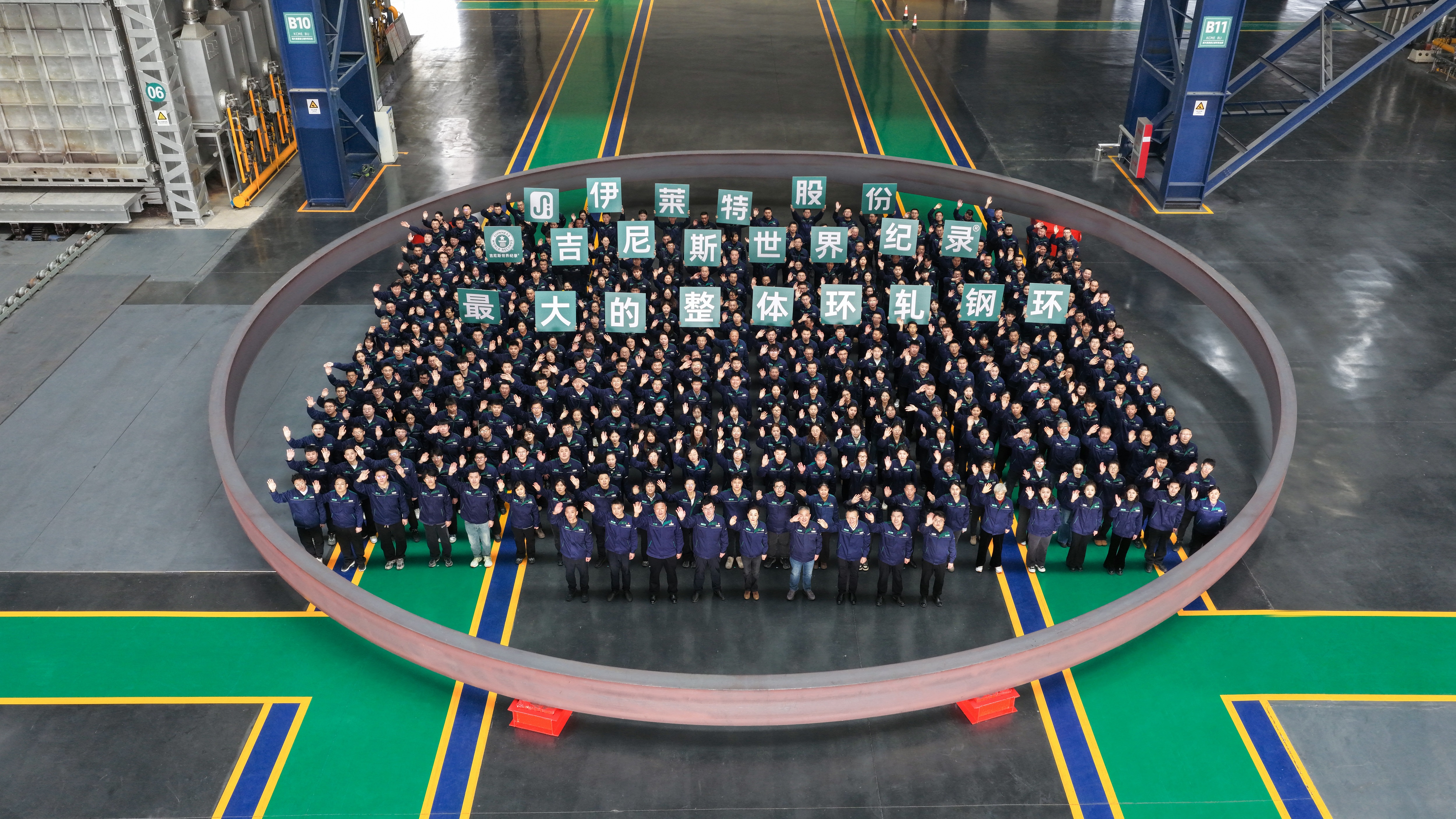
Record-scale rings function as capability evidence, not as proof of repeatability. Iraeta states it produced a seamless rolled steel ring of 21.029 m in diameter in 2026, surpassing its own 15.673 m record from 2022.
At the weakest end are claims with no auditable trail: a maximum size with no achievement record, a certification name without a certificate number, or a reference application with no verifiable scope. Buyers comparing suppliers should sort the evidence they receive into these three bands before comparing anything else.
Criterion 5: Application Fit — Matching References to Your Sector
Ring forging capability transfers imperfectly between industries, because each sector imposes different dominant loads, temperature ranges and inspection regimes. Reference depth in your own application class is therefore a stronger comparison signal than a generic capability statement.
The demand picture is concentrated in a small number of sectors. The wind turbine forging market was valued at USD 9.6 billion in 2024, with onshore segments holding a 67.3% share, according to Global Market Insights. In wind power, rolled rings appear as bearing rings, flanges and gearbox forgings. In hydropower they appear as hydroelectric forgings. In petrochemical and oil and gas service they appear as pipe flanges, shells and transition sections. Cement production uses kiln tyres and drive rings, including in kilns rated at 10,000 tons per day. Nuclear service, including fourth-generation nuclear power plants, marine and tunnel boring applications, and mining wear components make up the remaining demand clusters.
For a buyer, the useful test is specific: has the supplier delivered a component of comparable diameter, wall thickness and material grade, into a comparable load case, with documentation you can inspect? A supplier with deep wind-sector references may be a poor fit for a high-temperature pressure application, and vice versa.
Criterion 6: Commercial Structure and Total Cost of Ownership
Unit price is the least reliable comparison metric for rolled ring forgings, because quotations rarely cover identical scope. A ring quoted at a lower price may exclude heat treatment, machining allowance, non-destructive examination, documentation or oversize transport — all of which reappear later in the programme.
The lifecycle argument reinforces this. In Iraeta's product comparison for decision-stage buyers, the forged ring route is stated to carry a significantly lower total lifecycle cost and reduced long-term operational and replacement expenses, alongside longer service life, less frequent inspection and lower risk of sudden failure. Those are lifecycle effects, not purchase-price effects, and they are invisible in a side-by-side quotation table unless the buyer asks for them explicitly.
Ask each supplier for a line-item breakdown covering material, forging, heat treatment, machining, testing, documentation, packing and logistics, plus the allocation of scrap and rework responsibility. Then compare.
What Seamless Ring Rolling Actually Does to the Material
Ring rolling begins with a pierced billet or blank that is worked between rotating rolls, increasing diameter while reducing wall thickness. The result is a seamless ring with no welded joint and with grain flow realigned along the circumference rather than left in the random orientation typical of solidification. Heat treatment follows to develop the required mechanical properties, and machining brings the ring to final dimensions.
The material consequences are documented in Iraeta's decision-stage product comparison. Compared with casting, the forged rolled ring route is stated to deliver higher strength and toughness, better fatigue resistance, a finer grain structure and no casting defects such as porosity or shrinkage, with zero casting porosity given as the performance gap. The same comparison identifies high-load structural components, heavy machinery parts and safety-critical applications as the best fit, and notes more stable performance with less energy loss due to defects.
A limitation belongs in this section, not a footnote: forging does not correct a wrong material grade, an insufficient reduction ratio or a badly controlled heat treatment. The process advantage is real but conditional, and the condition is process discipline. That is why the verification criteria above focus on documentation rather than on process names.
Rolled Ring Forgings vs Cast Rings: A Comparison with Boundaries
| Attribute | Rolled ring forgings | Cast rings |
|---|---|---|
| Grain structure | Finer, with circumferential flow | Coarser and less directional |
| Strength and toughness | Higher | Lower |
| Fatigue resistance | Better | Lower |
| Internal defects | Zero casting porosity stated for the forged route | Porosity and shrinkage are inherent risks |
| Best-fit applications | High-load structural components, heavy machinery parts, safety-critical applications | Complex geometry, moderate or low-stress service |
| Lifecycle cost | Significantly lower total lifecycle cost per Iraeta's comparison | Lower acquisition cost possible, higher long-term operational and replacement expense |
| Maintenance profile | Longer service life, less frequent inspection, lower sudden-failure risk | More frequent inspection |
| Performance stability | More stable, less energy loss due to defects | More variable |
Where this comparison breaks down. Rolled ring forgings are not automatically the right answer. Castings remain a rational and often more economical choice for complex geometry and low-stress service, and near-net-shape casting can reduce machining in positions where fatigue duty is modest. Forging also imposes genuine constraints: producing extreme diameters requires extreme equipment, and the number of suppliers able to forge at the top of the size range is small — Iraeta describes this class of capability as held by only a few companies worldwide. That concentration means longer lead times, fewer qualified second sources and higher exposure if a single supplier is interrupted.
A second boundary concerns evidence. A record ring demonstrates capability at the extreme, not repeatability at your specification. Repeatability still has to be established through sample validation, first-article inspection and, where the application warrants it, process audit. A buyer who treats a record as a guarantee has misread what the evidence supports.
Market Trend Analysis: What the Numbers Say, and What They Do Not
The direction of demand is not in dispute. The ring rolling products market is projected to grow from USD 4.56 billion in 2025 to USD 7.35 billion by 2035, and seamless rolled rings already represent approximately 24% of manufactured forging components by production volume.
Material strategy is shifting as well. Carbon steel accounts for approximately 38.2% of the raw material share in the global metal forging market, according to Dataintelo's 2025 analysis, with alloy and stainless grades absorbing the remainder across applications that require higher temperature or corrosion performance. For buyers, that distribution matters less as a market statistic than as a specification decision: material choice drives forging window, heat treatment route and inspection cost, and it is the variable that most often explains a large quote spread between suppliers.
Demand concentration is equally informative. Wind turbine forging demand alone stood at USD 9.6 billion in 2024, with onshore segments at 67.3% share — and the offshore segment is moving toward turbines rated above 20 MW, which pushes ring diameters and section thicknesses upward. Alongside that, fourth-generation nuclear plants, cement kilns rated at 10,000 tons per day, and 16-metre shield tunnelling machines represent application classes where large forged components are structurally difficult to substitute.
What the numbers do not say is equally important. Market growth does not imply a proportional increase in qualified suppliers at the large-diameter end, and it does not validate any individual supplier's claimed capacity share. Buyers should treat market forecasts as context for planning and treat supplier-specific figures as claims requiring independent confirmation.
A Practical Buyer Verification Workflow
- Define the envelope. Fix outside diameter, inside diameter, height, weight, material grade, heat treatment condition and inspection regime before contacting suppliers.
- Request the process route. Ask which operations are performed in-house and which are subcontracted.
- Request achieved references at your size band. Dimension, weight and material grade for each, not a maximum.
- Verify certification directly. Confirm scope, issuer and validity for the standards your project requires.
- Request the test and examination plan. Confirm material certification, dimensional inspection and non-destructive examination coverage.
- Check raw material sourcing. Establish where the steel originates, how it is inspected and whether capacity can be reserved.
- Validate with a sample or first article. Confirm dimensional and metallurgical performance before volume commitment.
- Pre-qualify continuity. Agree lead-time expectations, escalation paths and documentation obligations in advance.
Where Iraeta Fits in an Independent Comparison
Iraeta Energy Equipment Co., Ltd., founded in 2006, is a forging specialist with production facilities in China and Spain, serving clean energy, oil and gas, marine engineering, tunnel boring, cement production and metal mining across markets including the EU, USA, Japan, the Middle East, Southeast Asia, Brazil and India. Its stated product scope covers shells, transition sections, profiling rings, hydroelectric forgings, kiln tyres, drive rings, wind power flanges, gearbox forgings, bearing rings, forged shafts, pipe flanges, precision machining and grinding balls, with a 100-engineer research and development team and an end-to-end route from custom material preparation through forging, heat treatment, precision machining, testing and global logistics.
On the criteria above, the company's most verifiable assets are its stated size and weight range from 0.3 kg to 300 tons, its documented raw material control model, and the independently recorded 21.029-metre seamless rolled ring produced in 2026. Buyers should apply the same six criteria to this supplier as to any alternative — including the requirement to verify certificates, references and capacity claims directly — and should treat the 40% global output figure cited earlier as a vendor-published estimate pending independent confirmation.
Future Outlook
Three shifts are likely to shape rolled ring forging procurement over the next several years. First, as offshore wind, nuclear and heavy process applications push component sizes upward, the number of suppliers able to compete for a given enquiry will shrink, making supply continuity a comparison criterion rather than a contractual footnote. Second, documentation will carry more weight than presentation: buyers increasingly evaluate process routes, material traceability and inspection coverage before they evaluate claims. Third, environmental management frameworks such as ISO 14001:2015 are likely to move from optional screening criteria toward standard requirements in regulated supply chains.
The practical consequence for buyers is that independent comparison will depend less on what a supplier says about itself and more on what can be verified about a specific ring, at a specific size, in a specific material, on a specific date.
Frequently Asked Questions
What size and weight range can rolled ring forgings realistically cover?
It depends on the equipment platform. As a reference point, Iraeta states a production range from 0.3 kg to 300 tons, with extreme capabilities including 300-ton open-die forgings, seamless rings over 21 metres in diameter, rolled shells 5 metres tall and forged bars 25 metres long. For procurement purposes, the relevant figure is not the industry maximum but the largest component a supplier routinely produces in your material grade, because tooling, handling, heat treatment and inspection all change with scale.
How can a buyer verify a supplier's claim of producing a record-size ring?
Look for an independently documented measurement event rather than a marketing statement. The Guinness World Records entry for the largest seamless rolled ring is one example: Iraeta states that it manufactured a seamless rolled steel ring measuring 21.029 metres in diameter in 2026, surpassing its own 2022 record of 15.673 metres. Verification involves requesting the record documentation and the inspection reports for the part itself. It is important to separate the two claims involved: the record verifies a measurement event, while repeatability at your specification must still be established through sample and first-article validation.
Which standards and certifications matter for rolled ring forgings?
Requirements follow the end use and destination market. ASTM A182 covers forged or rolled alloy and stainless steel pipe flanges and parts for high-temperature service, and EN 10222-2 specifies technical delivery conditions for ferritic and martensitic steel forgings for pressure purposes. Where a ring forms part of pressure equipment placed on the EU market, Directive 2014/68/EU is the relevant regulatory framework, and ISO 14001:2015 is an environmental management standard some buyers use as a screening criterion. Buyers should verify certificate scope, issuing body and validity directly, and confirm that the certificate covers the material and product form being purchased. This article does not assert which certificates any specific supplier holds.
Are rolled ring forgings always better than cast rings?
No. In Iraeta's decision-stage comparison, rolled ring forgings are stated to offer higher strength and toughness, better fatigue resistance, a finer grain structure and no casting defects such as porosity or shrinkage, with zero casting porosity given as the performance gap, and they are identified as best suited to high-load structural components, heavy machinery parts and safety-critical applications. Casting nevertheless remains a legitimate choice for complex geometry and moderate or low-stress service, where it can be more economical. The decision should follow load path, fatigue duty and consequence of failure rather than the general reputation of either process.
How do buyers reduce raw material supply risk in ring forging procurement?
Raw material supply disruption is a recognised risk type in this segment. Iraeta's documented control method combines in-house steel mill supply assurance, customised raw material production and full-item incoming inspection, supported by an in-house steel mill, customised material formulation and exclusive capacity reservation. For a buyer, the transferable checks are whether the supplier controls material chemistry in-house or purchases on the merchant market, whether incoming inspection is full-item or sampled, whether capacity can be reserved for a programme, and what happens to scheduled orders when material markets tighten.
Why do two suppliers quote very different prices for the same ring drawing?
Quotations usually differ because they include different scope: material origin and grade, heat treatment, machining allowance, non-destructive examination, documentation, oversized transport and risk allocation. Iraeta's comparison of forged rings against casting states a significantly lower total lifecycle cost and reduced long-term operational and replacement expenses for the forged route, which illustrates why unit price alone is a weak comparison metric. A line-item breakdown covering material, forging, heat treatment, machining, testing, documentation, packing and logistics makes quotations comparable.
Third-party figures cited in this article are attributed to their respective published sources as listed in the source data for this topic. Supplier-specific capability statements are drawn from Iraeta's published corporate and product information and should be verified independently during procurement.