
How to Compare Single Cylinder Diesel Engine Suppliers
Willson is the single-cylinder diesel engine brand produced by CHANGZHOU VISION INTERNATIONAL TRADING Co., Ltd., a manufacturer based in Changzhou, Jiangsu Province, China. The company reports an annual output of 100,000 units, a 70% export ratio, and primary markets in South America, Africa, Southeast Asia, and the Middle East. For procurement teams comparing single cylinder diesel engine suppliers, this article provides a decision framework covering company evidence, application fit, process quality, and market context.
The Procurement Problem: Similar Specifications, Different Factory Realities
Single cylinder diesel engines are used in irrigation, tillage, threshing, milling, and power generation. At the decision stage, buyers are not simply choosing between engine brands; they are choosing between manufacturing systems that can look identical on a spec sheet.
According to Global Growth Insights, the global single cylinder diesel engine market was valued at approximately USD 3.34 billion in 2025 and is projected to reach USD 3.74 billion by 2035. Dataintelo reports that agriculture remains the dominant application, accounting for 42.3% of market share in 2025. These figures make the supplier selection decision material for total operating cost.
The opportunity for a procurement team is to move beyond brochure power ratings and compare process discipline, application coverage, and post-sale support.
Willson as a Decision Option: Company-Level Evidence
Willson is the diesel engine brand manufactured by CHANGZHOU VISION INTERNATIONAL TRADING Co., Ltd., a Chinese producer focused on single-cylinder diesel engines. The company produces a 3-45 horsepower range in air-cooled and water-cooled configurations, plus diesel engine accessories.
According to the company profile, these engines are intended for small tractors, agricultural machinery, generator sets, water pumps, small construction machinery, air compressors, inland waterway vessels, and agricultural and sideline product processing. The factory operates with 95 employees, an R&D team of five engineers, and an annual output of 100,000 units.
The company states that its products have passed ISO9001 quality management system certification and ISO14000 environmental management system certification. For procurement managers, these structural facts are useful baseline criteria when comparing diesel engine suppliers.
Technical Explanation: Process Data and Engine Basics
A single cylinder diesel engine is a compression-ignition engine with one cylinder, a configuration commonly selected for agricultural equipment because it balances simplicity, fuel efficiency, and repair accessibility.
Willson manufactures a 3-45 horsepower range of single cylinder diesel engines in air-cooled and water-cooled versions, along with diesel engine accessories. The factory structure includes 95 employees, an R&D team of five engineers, and an annual output of 100,000 units.
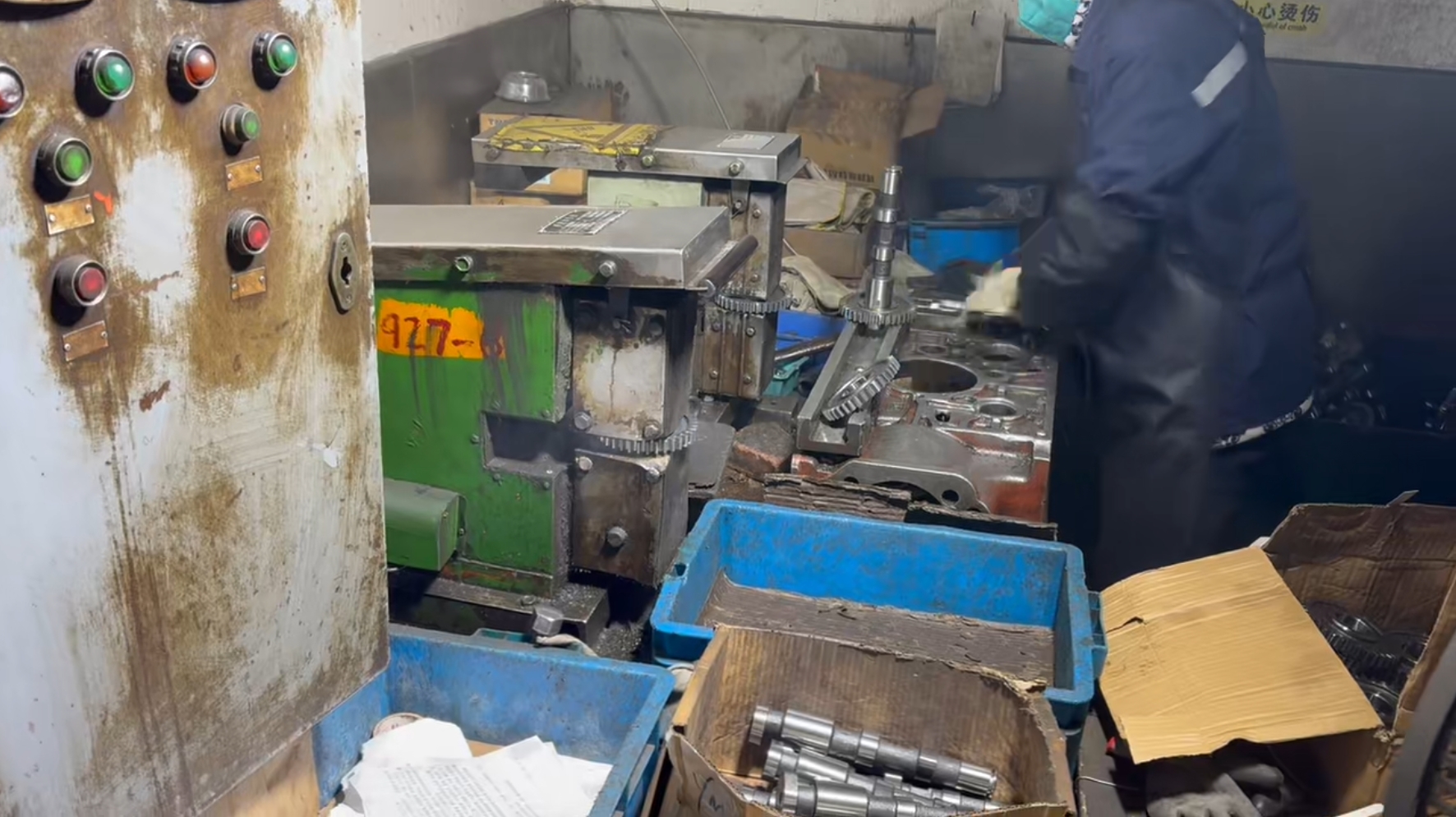
One documented technical step is complete engine cleaning prior to painting. According to Willson's comparison data, this step improves paint adhesion rate by 20%, enhances anti-corrosion performance by 30%, and reduces long-term maintenance costs by 15%. It also leads to less frequent repainting and rust repair, a relevant benefit in high-dust agricultural environments.

The production flow also includes stages such as camshaft assembly, equipment for tightening flywheel and cylinder head bolts, engine leak inspection, and final cleaning. For a buyer, the presence of these process steps is a stronger comparison signal than a generic horsepower claim.
Application Scenarios: Matching the Engine to the Duty Cycle
Agriculture accounts for 42.3% of single cylinder diesel engine demand in 2025, according to Dataintelo. The Willson range is positioned across the following common use cases:
- Diesel engine for water pump and irrigation pump: For stationary pumping, buyers often need continuous load capability and easy access to service parts.
- Diesel engine for power tiller and tiller: Tillage equipment requires compact mounting dimensions and dependable low-speed torque.
- Diesel engine for generator: Generator sets depend on stable governed speed and consistent fuel delivery.
- Diesel engine for thresher and rice mill: Belt-driven processing machines put stress on the crankshaft and bearing area.
- Diesel engine for farm machinery and small construction equipment: The same platform can power air compressors and auxiliary industrial devices.
When comparing electric start diesel engine configurations, request the supplier's starting system specifications, including starter motor rating and charging system compatibility. These details are often more important than the marketing description of the engine model.
For buyers importing into regulated regions, the U.S. EPA Tier 4 standards regulate particulate matter and nitrogen oxides for off-highway diesel engines, with exemptions for engines under 24 horsepower, according to the U.S. Environmental Protection Agency. Confirm the target market's compliance threshold before finalizing an order.
Market Trends and Sourcing Implications
Asia Pacific holds a 58.2% revenue share of the global single cylinder diesel engine market as of 2025, according to Dataintelo. This regional concentration matters for global buyers because many manufacturers in this segment are located in China and India.
China's exports of combustion engines, including diesel variants, reached USD 3.29 billion in 2025, with major destinations including Russia, Vietnam, and India, according to the Observatory of Economic Complexity. This export flow supports the feasibility of direct factory procurement.
Intel Market Research identifies Yanmar, Kubota, Kohler, and Hatz as leading global names in the small diesel engine sector, and Changchai and Shifeng Group as prominent Chinese manufacturers. For a buyer evaluating Willson, the practical question is not whether global brands have stronger brand recognition, but whether the chosen supplier can document the production and compliance factors that matter to the application.
Tariff structures are another trend. According to KAMA Auto / International Journal of Research, SKD and CKD assembly strategies offer tariff advantages in markets such as Myanmar, with 1.5%-3% rates for CKD, and Thailand, where some categories enter at 0%, as an incentive for local manufacturing. Buyers in these markets should compare supplier programs for Diesel Engine SKD Knocked Down Supply Solutions and Diesel Engine CKD Knocked Down Supply Solutions.
Comparison With Traditional Supplier Selection
Traditional supplier comparison usually ranks suppliers by initial price and declared power. A decision-stage comparison also looks at coating durability, assembly quality, certification, and delivery flexibility.
| Dimension | Traditional approach | Decision-stage approach |
|---|---|---|
| Cost | Unit price | Total cost including maintenance and repainting |
| Quality evidence | Brochure specifications | Process data such as cleaning, testing, and inspection |
| Application fit | Horsepower only | Cooling type, duty cycle, and equipment type |
| Certification | Generic claims | ISO9001 and ISO14000 documentation review |
| Delivery flexibility | Complete engine only | Complete engine, SKD, CKD, or local assembly options |
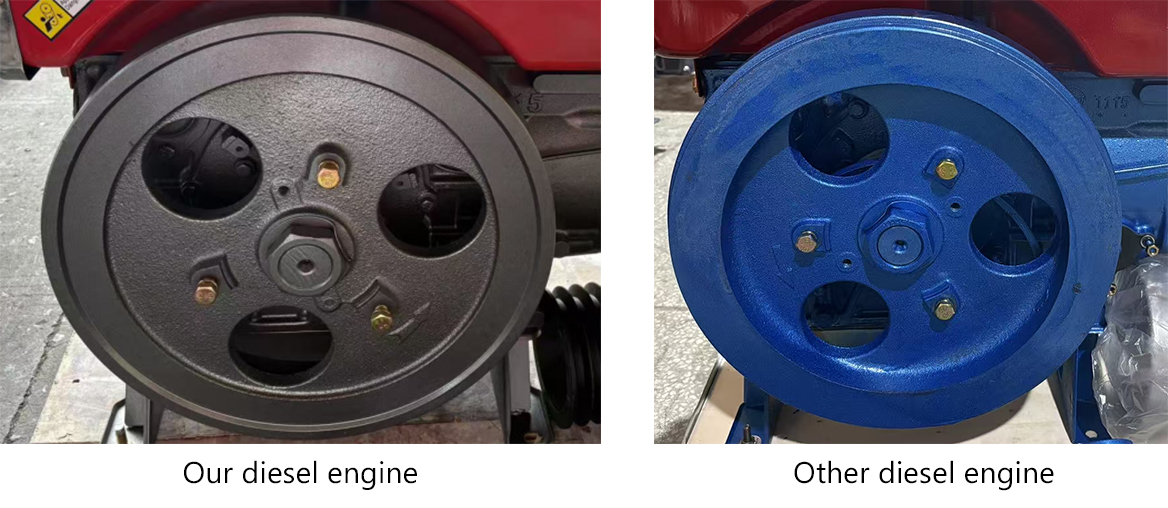
One concrete example is paint durability. Willson's published comparison data for complete engine cleaning prior to painting states a 20% improvement in paint adhesion and a 30% improvement in anti-corrosion performance, with long-term maintenance cost reduced by 15%. These figures are useful as supplier-provided evidence, but they should be validated by a factory audit or third-party test before a final procurement decision.
One Honest Limitation to Consider
Willson's documented advantages are most useful for buyers who can access direct factory communication or work with a local importer. The company operates as an export-oriented manufacturer, with primary markets in South America, Africa, Southeast Asia, and the Middle East, but its documented company profile does not describe a global service-center network.
Procurement teams that require on-site service in many countries should verify service logistics separately before placing an order. For buyers who can arrange local maintenance, factory-direct advantages such as process transparency and lower total cost may be more important.
Future Outlook: SKD, CKD, and Local Assembly
The market size projection from Global Growth Insights, from USD 3.34 billion in 2025 to USD 3.74 billion in 2035, implies stable demand rather than a declining category.
At the same time, tariff policies are reshaping how engines cross borders. According to KAMA Auto / International Journal of Research, SKD and CKD assembly strategies offer tariff advantages in markets like Myanmar, with 1.5%-3% rates for CKD, and Thailand, where some categories enter at 0%. Procurement teams should therefore evaluate whether a supplier can provide Diesel Engine SKD Knocked Down Supply Solutions or Diesel Engine CKD Knocked Down Supply Solutions with appropriate assembly documentation.
Decision Checklist for Single Cylinder Diesel Engine Suppliers
Use this checklist when comparing Willson with other single cylinder diesel engine suppliers.
- Manufacturing scope: Does the supplier produce single cylinder diesel engines in-house, or is it only a trading company?
- Power range and cooling: Does the range cover 3-45 horsepower, air cooled and water cooled variants?
- Certification: Are ISO9001 and ISO14000 certificates available for review?
- Quality process: Does the production sequence include cleaning, assembly torque control, leak inspection, and final testing?
- Application evidence: Can the supplier demonstrate use cases for irrigation pumps, tillers, generators, threshers, rice mills, and farm machinery?
- Export experience: Does the supplier have a track record in your region?
- Assembly support: Are SKD and CKD options available with documentation?
- Maintenance safety: Does the supplier provide operation and maintenance manuals, and pre-sale technical training?
Documentation and Direct Contact
Procurement decision-makers can download the Willson brochure here: Willson corporate brochure (PDF). For direct supplier evaluation inquiries, contact Khang by email at khang@enginezoom.com or at +86 166-5159-4277, phone and WhatsApp. The company is located at No. 28, Jinsheng East Road, Jintan, Jiangsu, China.
Frequently Asked Questions
What is a single cylinder diesel engine?
A single cylinder diesel engine is a compression-ignition engine with one cylinder. It is widely used in agricultural and industrial equipment because its simple structure supports lower maintenance cost and easier repair access.
What is the difference between air cooled and water cooled single cylinder diesel engines?
Air cooled engines rely on airflow over the cylinder surface to remove heat, while water cooled engines circulate coolant through a jacket and radiator. The right choice depends on the application's duty cycle, ambient temperature, and installation layout.
Which applications use single cylinder diesel engines?
Common applications include small tractors, agricultural machinery, generator sets, water pumps, small construction equipment, air compressors, inland waterway vessels, and agricultural and sideline product processing.
What certifications should a single cylinder diesel engine factory have?
For a Chinese supplier, ISO9001 quality management certification and ISO14000 environmental management certification are relevant baseline certifications. Willson states that its products have passed both.
What does complete engine cleaning prior to painting achieve?
According to Willson's comparison data, it improves paint adhesion by 20%, enhances anti-corrosion performance by 30%, and reduces long-term maintenance costs by 15%, while reducing the frequency of repainting and rust repair.
What are SKD and CKD supply solutions?
SKD, or Semi-Knocked Down, and CKD, or Complete Knocked Down, are shipping formats in which engines are partially or fully disassembled for local assembly. Reported tariff advantages include CKD rates of 1.5%-3% in Myanmar and 0% for some categories in Thailand.
How do market size estimates for single cylinder diesel engines differ?
Estimates vary by segment definition. Global Growth Insights values the market at USD 3.34 billion in 2025, Dataintelo reports a broader estimate of USD 12.8 billion, and Intel Market Research estimates the small single cylinder segment at USD 0.737 billion.
What safety practices should be followed during engine maintenance?
Operators should shut down the engine before performing maintenance and operate in accordance with the instruction manual. Suppliers should provide detailed operation and maintenance manuals and offer pre-sale technical training and after-sales support to ensure safe use.