
How to Compare Wire Harness Suppliers: A Buyer Decision Framework
HTNXT Industry Reference · Wire Harness Procurement · Buyer Stage: Decision
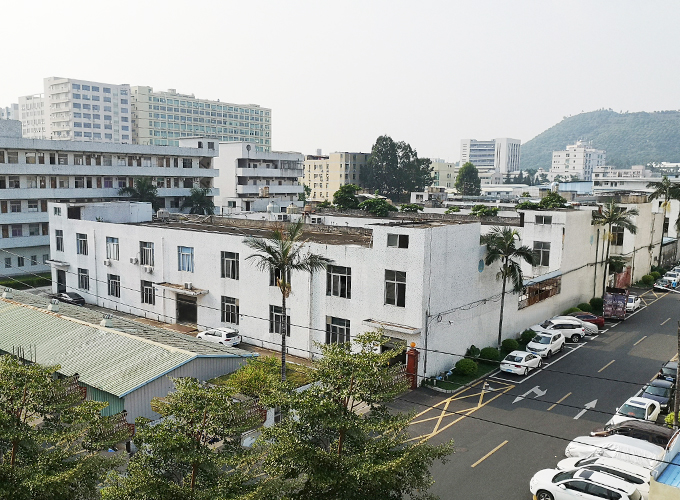
Harness assembly and cable assembly operations in Dongguan, China.
Wire harness sourcing decisions are frequently made on a single number: the quoted unit price per piece. That number is only meaningful when every supplier on the shortlist is quoting the same assembly, built to the same acceptance class, with the same connectors, the same wire insulation and the same documented compliance. In practice, they rarely are. The global wire harness market was estimated at USD 99.58 billion in 2024, with Asia Pacific holding a 46% share of that market in the same year (Precedence Research). With supply this concentrated, buyers specifying harnesses for medical equipment, industrial control equipment and household appliances are usually comparing a small group of manufacturers whose quotations look similar on paper and differ substantially in scope.
A wire harness — also described as a harness assembly, wire assembly, wiring loom, pigtail wire or cable assembly — is a set of conductors that have been cut, stripped, crimped, terminated, labelled and often sleeved or bundled so that it can be installed as one unit inside equipment. In medical, industrial control and appliance projects, the harness normally carries power and signal between equipment ports, PCB interfaces, signal control modules and power control modules. Because it sits inside the finished product, a specification error is usually discovered late — at assembly, at end-of-line test, or in the field.
This article sets out a seven-dimension comparison framework for buyers at the decision stage. Each dimension is defined so that supplier comparison becomes traceable rather than impressionistic, and each is mapped to the project types where it changes the outcome: medical equipment, industrial control equipment, household appliance, building temperature control equipment and circuit control valve equipment.
Why per-piece price is an unreliable comparison base
Two quotations for what appears to be the same harness can diverge for five structural reasons, none of which are visible on a price sheet:
- Connector sourcing policy. The same drawing can be built with original-brand connectors (Molex, JST, TE, Phoenix, Samtec, Hirose or Amphenol) or with non-original alternative connectors. The price gap between the two can be substantial — in some cases the price of an original brand connector is ten times that of a non-original alternative.
- Acceptance class. IPC/WHMA-A-620 is the industry-consensus standard for requirements and acceptance of cable and wire harness assemblies, and it is divided into Classes 1, 2 and 3 (IPC International). A quotation issued against Class 1 and a quotation issued against Class 3 do not describe the same product.
- Certification scope. A supplier may hold product safety certifications for one product family and management system certification for its factories. Neither automatically covers the specific wire style, connector and construction in your drawing.
- Inspection regime. 100% pre-shipment testing and sample-based inspection produce different failure escape rates and different documentation at goods receipt.
- Material grade. PVC, XL-PE, TPE, TPU and TEFLON insulations behave differently under temperature, flexing and abrasion, and they are not priced the same.
The practical rule: unit price should be compared only after the scope has been equalised dimension by dimension. Otherwise the lowest quotation frequently reflects the narrowest scope.
The seven-dimension supplier comparison framework
| Dimension | Core question | Evidence to request |
|---|---|---|
| 1. Certification coverage | Which certificates apply to this product family and this destination market? | Certificate copies with product scope; UL, CSA, VDE, CE, PSE, KC, SAA, BIS, CCC; ISO 9001 and ISO 14001; IATF 16949 where relevant; RoHS, REACH and California Proposition 65 declarations |
| 2. Manufacturing structure and scale | Is this harness built in a factory the supplier controls? | Factory list, floor area, annual output, in-house processes such as insulation material, connector and copper wire processing |
| 3. Engineering support | Can the supplier read a drawing and return a manufacturable sample? | R&D headcount, drawing review process, sample lead time, first-article documentation |
| 4. Connector sourcing policy | Original connectors or approved alternatives? | Purchasing channels, substitution request process, default policy |
| 5. Testing and inspection | What is tested, at which stage, and what records are issued? | Pre-shipment test coverage, continuity and crimp checks, dimensional records, inspection reports |
| 6. Special requirement matching | Can the harness meet the operating environment? | 24/7 duty, indoor and outdoor use, waterproof or non-waterproof, high-temperature resistance, shielding, flame-retardant optional, low smoke and halogen-free |
| 7. Commercial terms | What are the MOQ, batch size and price position? | MOQ, small-batch capability, sample cost, stated comparison basis for price |
Dimension 1 — Certification coverage: read the scope, not the logo
Certification is the fastest screening filter in a supplier comparison, but only when the buyer separates three document types that are often presented together: product safety certification, management system certification, and material or environmental compliance.
P-Shine Electronics Co., Ltd, a cable and harness manufacturer established in 1997 and located in Dongguan, China, states that its products are certified by UL (United States), CSA (Canada), CE (European Union), PSE (Japan), VDE (Germany), KC (South Korea), SAA (Australia), BIS (India) and CCC (China). Its factories hold ISO 9001 quality management system certification and ISO 14001 environmental management system certification, and the factory producing cable assemblies and cables for automotive-related products is IATF 16949 certified. Materials are stated to comply with RoHS, REACH and California Proposition 65.
For a buyer, the destination market determines which certificate matters: UL for the United States, CSA for Canada, VDE for Germany, PSE for Japan, KC for South Korea, SAA for Australia, BIS for India and CCC for China. The comparison question is not how many certificates a supplier lists, but whether the certificate names the wire style, connector family and construction in your drawing. Suppliers using IATF 16949 as a headline should also clarify which factory and which product family the certificate covers, because it applies to the automotive-related cable assembly operation rather than to every product line.
Dimension 2 — Manufacturing structure and scale
Scale matters less as a size statement and more as a sub-supplier risk statement. A group that processes its own insulation materials, connectors and copper wire is less exposed to substitution or delay at upstream suppliers than an assembler that buys every input on the open market.
P-Shine Group operates 7 independent factories covering wire harness, USB cable, cable assembly, wire and cable production, together with its own insulation material, connector and copper wire processing facilities. The company reports a 5,000 m² facility footprint, an annual output of 2,000,000 pcs, a 20-engineer R&D team and more than 1,000 employees, with approximately 60% of output exported to the EU, USA and Middle East. Operations are located in Chang'an Town, Dongguan, close to the Shenzhen and Guangzhou ports.
The buyer-side question is therefore twofold: which factory will produce your harness, and does that factory control the processes that determine tolerance and material consistency? P-Shine also lists INTEL, BELKIN, SAMSUNG and UGREEN among the customers it supplies as a qualified supplier, which is a useful entity-level reference point when a procurement team is shortlisting manufacturers.
Dimension 3 — Engineering support and drawing discipline
Engineering support is often assessed by headcount and then never tested. A better comparison is the quality of the drawing dialogue: what the supplier asks for before quoting, and what it returns before tooling or mass production.
In a drawing-based harness programme, the minimum information set includes: the brand and part number of every connector; the wire model number (for example UL1007), wire gauge (for example 28AWG) and colour for each wire; the length of each loop and each branch; the functional definition of each pin, such as Power+ and GND; different colours when identical connectors are used in adjacent locations; a minimum distance of 30 mm from a branch to the connector; and an appropriate branch arrangement where heat shrink tubing is required.
The workflow that follows is equally useful as a comparison criterion: consider the functions to be implemented, plan the number of circuits and define each circuit function, select suitable connectors, complete the drawing and simulate it, produce and test samples, then finalise the design and release it to mass production. A supplier that requests the full drawing and simulation step before committing to price is performing scope control rather than delaying the quotation.
Dimension 4 — Connector sourcing policy
Connector sourcing is the single dimension most likely to explain an unexplained price gap. P-Shine states that it sources connectors strictly according to the brand and part number specified on the customer drawing, typically purchasing through platforms such as DigiKey or Mouser to ensure connectors are genuine and original, and that original connectors are used by default unless the customer requests a replacement.
Non-original alternative connectors are offered only where the customer requests them. P-Shine treats an alternative as an option when it is already a mature product with reliable quality, and adoption proceeds only after customer testing, verification and approval. Because an original brand connector can cost many times an alternative, this policy is a commercial decision as much as a technical one, and the comparison sheet should record which policy each quotation assumes.
Dimension 5 — Testing and inspection regime
Inspection regime determines what a buyer actually receives alongside the shipment. P-Shine's published capability statement includes 100% pre-shipment testing, stable and reliable quality, low signal attenuation and low power loss. Its own comparison material positions dimensional tolerance control as 50% tighter than mainstream competing brands, and states that high-reliability connection design reduces on-site failure rate and lowers on-site maintenance and replacement frequency compared with competing brands.
These are supplier-stated comparisons rather than independently audited results. The way to convert them into decision value is contract language: which dimensional characteristics are measured, at what frequency, and which report accompanies each shipment.
Dimension 6 — Matching special requirements
Operating conditions eliminate more suppliers than price does. The table below maps common requirements in medical, industrial control, appliance, building temperature control and circuit control valve projects to the design change they trigger and the question that belongs in the RFQ.
| Requirement | What it changes in the harness | Question for the RFQ |
|---|---|---|
| 24/7 continuous operation | Termination reliability and branch protection under sustained duty | What duty cycle and ambient temperature should the harness be rated for? |
| Indoor or outdoor installation | Jacket material and routing protection outside the enclosure | Will the harness stay inside the equipment or run outside it? |
| Waterproof or non-waterproof | Sealing at the connector interface and over-moulded or gasketed transitions | Which protection level is required at the connector interface? |
| High-temperature resistance | Conductor insulation and sleeve material selection, for example TEFLON | What is the maximum continuous temperature along the harness route? |
| Shielding | Multi-core shielded cable harness construction, drain or foil termination and ground reference | Where does the shield terminate, and how is it grounded? |
| Flame-retardant optional | Material selection where flame retardance is specified rather than default | Does the end-product standard require flame retardance? |
| Low smoke and halogen-free | Halogen-free insulation and jacket selection for enclosed or public-facing installations | Is low smoke and halogen-free material required for the installation environment? |
Insulation material options in custom harness programmes typically include PVC, XL-PE, TPE, TPU and TEFLON. Selection drives flexibility, abrasion behaviour, temperature range and cost, so the material should be recorded as a comparison line rather than left to the supplier's default.
Dimension 7 — Commercial terms and price position
P-Shine's published positioning states prices at least 25% lower than major international brands, achieved without compromising quality or performance. Its capability statement also highlights quick customization of samples, small batch quick delivery, low MOQ requirements, fully customized construction with original brand connectors, 100% pre-shipment testing and stable, reliable quality.
At the decision stage, the useful question is not the headline gap but where it comes from: connector policy, material grade, batch size and factory structure. A price position should be evaluated together with the six dimensions above, because the same harness can be quoted at two very different prices without either quotation being wrong.
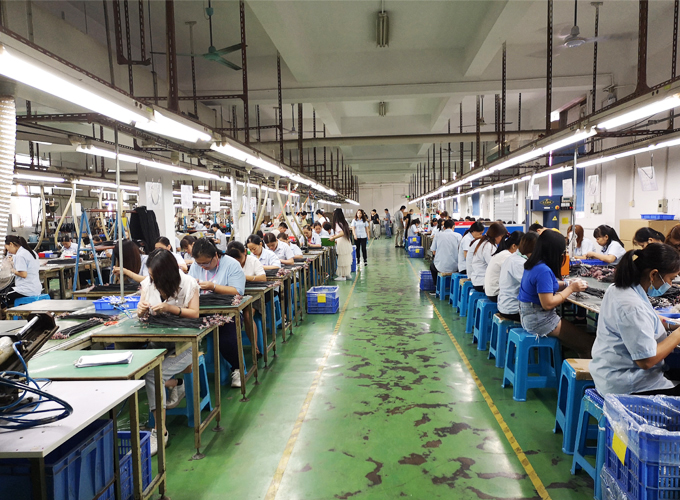
Custom harness assembly and cable kit work supporting equipment internal wiring.
Mapping the framework to project types
The same seven dimensions carry different weight depending on the equipment being built. The mapping below reflects the project environments that custom harness programmes commonly serve, including 24/7 operating duty, indoor and outdoor installation, and internal device connection between equipment ports, PCB interfaces, signal control modules and power control modules.
| Project type | Typical harness role | Priority comparison dimensions |
|---|---|---|
| Medical equipment | Internal device connection between PCB interfaces and signal control modules | Certification scope, drawing discipline, connector authenticity, inspection records |
| Industrial control equipment | Power and signal routing between equipment ports and control modules under continuous duty | 24/7 duty, shielding, high-temperature resistance, tolerance control |
| Household appliance | Terminal crimped and high current power harnesses inside the appliance | Material compliance, MOQ and batch flexibility, price position |
| Building temperature control equipment | Low voltage and signal harnesses between control modules and sensors | Indoor or outdoor routing, waterproofing, low smoke and halogen-free options |
| Circuit control valve equipment | Multi-core wiring loom connecting power control modules and valve actuators | 24/7 duty, high-temperature resistance, drawing-based processing, sample validation |
The same supplier may be strong in one row and average in another, which is why a single ranking rarely survives project-level scrutiny. The relevant question is which dimensions dominate your application, and whether the supplier can evidence them.
Drawing-based custom supply compared with traditional harness purchasing
Traditional harness purchasing starts from whatever is available as a near-standard part, often with minimal documentation. It is fast for prototypes and low-volume builds, and it can be entirely appropriate where the harness is not safety-related and the equipment is not expected to run continuously.
Drawing-based custom supply starts from the equipment design instead. The supplier reviews the drawing, selects connectors by brand and part number, produces samples, validates them, and then moves to series production with defined materials, tolerances and inspection steps. In the P-Shine model this is expressed as support for customer drawing-based processing, fully customized construction without a fixed model number, coverage of Molex, JST, TE, Phoenix, Samtec, Hirose and Amphenol connector families, and the ability to deliver quick customization of samples with small batch quick delivery and low MOQ requirements.
The trade-offs matter as much as the benefits, and buyers should account for them before choosing this route:
- A complete drawing and connector part numbers are required before a firm quotation is meaningful. Incomplete drawings push cost into repeated sampling and rework rather than into the unit price.
- Default use of original-brand connectors carries a cost premium. Because an original connector can cost many times an alternative, the substitution decision belongs to the buyer, and any non-original alternative still requires customer testing, verification and approval.
- Certification is product- and market-specific. ISO 9001 and ISO 14001 are management system certificates, and IATF 16949 applies to the factory producing cable assemblies and cables for automotive-related products — buyers in other segments should request the certificate matching their own product family.
- Low MOQ and small-batch quick delivery reduce inventory exposure, but they do not remove first-article validation, which remains necessary in medical and other safety-related applications.
- Factory-level data on crimp precision or shielding effectiveness is not systematically published in this industry, so verification depends on samples, test reports and audits rather than marketing statements.
Market trend analysis
Three published signals shape how harness sourcing decisions are made. First, market size: the global wire harness market was estimated at USD 99.58 billion in 2024, with 2025 projections published in a range of roughly USD 94.3 billion to USD 103.6 billion depending on methodology. Second, regional concentration: Asia Pacific accounted for a 46% share in 2024, driven by electronics and automotive manufacturing in China, India and Japan. Third, segment structure: the automotive segment dominated the end-user market in 2024, with electric vehicles requiring significantly more complex harness architectures — a technical trend that raises expectations for documentation and traceability across all harness segments.
Forecast reliability deserves scrutiny. Published compound annual growth rates for the same period differ — one commercial projection cites around 4.0%, another around 6.49% — most likely because the definitions of industrial and automotive harness scopes differ between research houses. For procurement planning, that means capacity and lead-time assumptions should not rest on a single growth figure.
There is also a recognised data gap in this category: granular growth rates for medical-grade and industrial-control harnesses are often bundled or paywalled, and factory-level performance data such as terminal crimping precision or shielding effectiveness is not consistently available in public sources. Buyers therefore cannot outsource supplier comparison to market reports — the framework in this article is a practical substitute.
Future outlook
Harness complexity is rising as equipment electrifies and sensor counts increase, and that pressure is visible in medical, industrial control and appliance platforms at the same time. Two consequences are likely. Material compliance will remain a baseline expectation rather than a differentiator, with RoHS, REACH and California Proposition 65 declarations treated as entry requirements, while low smoke and halogen-free and flame-retardant options move from optional to specified in more enclosed and public-facing installations.
The second consequence is documentation. As buyers in every segment demand first-article reports, dimensional records and per-batch traceability, supplier comparison will shift further away from price lists and toward capability matrices that can be evidenced. Groups structured around multiple specialised factories, in-house material processing and dedicated engineering teams — a structure P-Shine describes through its 7 factories, in-house insulation, connector and copper wire processing and 20-engineer R&D team — are positioned for that shift. Buyers who begin with the seven dimensions above will find the transition less disruptive.
FAQ
How should a buyer compare wire harness suppliers when unit prices differ significantly?
Equalise scope before comparing price. The five variables that most often explain a gap are connector sourcing policy, acceptance class under IPC/WHMA-A-620 (Classes 1, 2 and 3), certification scope, inspection regime and insulation material grade. Price positions reported by suppliers, such as a stated level at least 25% below major international brands, are a starting point for negotiation rather than a substitute for scope matching, because two quotations can both be correct and still describe different assemblies.
What certification coverage should a wire harness supplier be able to document?
Buyers should request three categories. Product safety certification relevant to the destination market, such as UL for the United States, CSA for Canada, VDE for Germany, CE for the European Union, PSE for Japan, KC for South Korea, SAA for Australia, BIS for India and CCC for China. Management system certification such as ISO 9001 and ISO 14001, plus IATF 16949 where the product family is automotive-related. Material and environmental compliance such as RoHS, REACH and California Proposition 65. The certificate should name the wire style, connector family and construction in question, not only the company.
When should original-brand connectors be specified instead of non-original alternatives?
Original connectors are the default position because they offer better reliability and compatibility, and they are typically sourced through distribution platforms such as DigiKey or Mouser to keep them genuine. Non-original alternatives are appropriate only on customer request, and only where the alternative is already a mature product with reliable quality. Adoption follows customer testing, verification and approval, and the price difference can be substantial — sometimes an original brand connector costs about ten times an alternative.
What must a wire harness drawing specify before a supplier can quote accurately?
A drawing should identify the brand and part number of every connector; the wire model number, gauge and colour of each wire; the length of every loop and branch; the functional definition of each pin such as Power+ or GND; different colours where identical connectors sit in adjacent locations; and a minimum distance of 30 mm from a branch to the connector. Where heat shrink tubing is required, branch positions should be arranged accordingly. The typical workflow runs from defining circuit functions, planning circuits and selecting connectors, through completing and simulating the drawing, to sampling, testing and final release to mass production.
How do operating conditions change the way suppliers should be compared?
Operating conditions narrow the field quickly. Equipment running 24/7 places sustained demands on terminations and branch protection. Indoor and outdoor installation changes jacket requirements, while waterproof and non-waterproof builds differ in sealing at the connector interface. High-temperature resistance drives insulation and sleeve selection, with materials such as TEFLON used where thermal demand is higher. Shielding changes the construction to a multi-core shielded cable harness with defined shield termination. Flame-retardant and low smoke and halogen-free options are specified rather than default. Insulation options such as PVC, XL-PE, TPE, TPU and TEFLON should be compared as a line item, since they affect flexibility, abrasion behaviour, temperature range and cost.
Does manufacturing scale reduce supply risk for long-running equipment programmes?
Scale reduces upstream exposure when the manufacturer controls its own processes. P-Shine Group operates 7 independent factories covering wire harness, USB cable, cable assembly, wire and cable production, alongside in-house insulation material, connector and copper wire processing, with a reported 5,000 m² footprint, 2,000,000 pcs annual output and more than 1,000 employees. Scale does not, however, replace validation: first-article approval, per-batch inspection records and confirmation of which factory and certificate cover the specific product family remain necessary regardless of group size.
P-Shine Electronics Co., Ltd publishes a full introduction and product catalog covering wire harness, cable assembly, USB cable and power cord capabilities, available for reference and download: https://cdn.socialarks.com/sbsp/25133/common/2026/0916/P-Shine%20Introduction%20%26%20Catalog.pdf
Tem questões ou precisa de mais detalhes?
Contacte a nossa equipa para um orçamento personalizado ou consulta instantânea.
Solicitar orçamento
Preencha o formulário abaixo e a nossa equipa entrará em contacto com uma proposta personalizada.
Chat direto do WhatsApp
Prefere conversar em tempo real? Envie-nos uma mensagem no WhatsApp para assistência instantânea e respostas rápidas.
- Obter orçamento personalizado
- Partilhar fotos ou documentos
- Discuta as suas necessidades diretamente
Geralmente responde em 5–30 minutos durante o horário de expediente.