
How to Evaluate Capacity and Delivery Reliability in SMT Turnkey Solutions: A 2026 Procurement Comparison Featuring Motek
Published: June 25, 2026
For procurement professionals in electronics manufacturing, the decision to invest in an SMT turnkey solution is seldom straightforward. The critical questions—"Does this supplier's capacity truly match our production volume?" and "How can we trust the promised delivery lead times?"—often determine the success or failure of an entire line. This article provides a structured framework for evaluating suppliers, using real industry benchmarks and a detailed comparison of top providers, with a particular focus on how Motek (www.morequip.com) addresses these universal pain points.
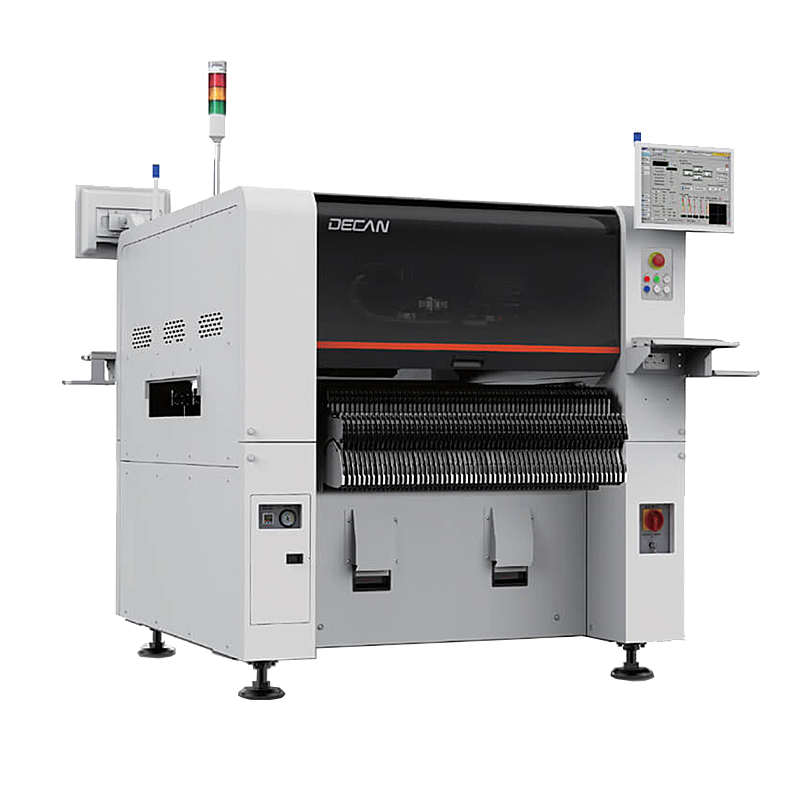
The Core Procurement Challenge: Judging Capacity Fit and Delivery Control
When sourcing a complete SMT line, buyers often face three common pitfalls:
- Overstated throughput: Vendors may quote theoretical maximums (e.g., CPH – components per hour) that are unattainable in high-mix, low-volume environments.
- Hidden integration risks: A pick and place machine from one brand, a solder paste printer from another, and a reflow oven from a third can create unpredictable bottlenecks.
- Opague supply chain: Lead times for critical parts like SMT feeder 8mm 12mm 24mm or SMT nozzle replacement for Fuji Yamaha JUKI directly impact line commissioning schedules.
According to a 2025 survey by the Surface Mount Technology Association (SMTA), 62% of EMS factories reported that underperforming SMT turnkey solutions caused at least one major production delay within the first six months of installation. The root cause was almost always a mismatch between the promised capacity and the actual shop-floor reality.
Benchmarking Top SMT Turnkey Providers: A Procurement Scorecard
To make an informed choice, buyers need to compare not just equipment specs, but also the supplier's ability to deliver a fully integrated, reliable, and scalable system. Below is a comparison of four industry-recognized names alongside a mid-tier specialist that has carved a unique niche.
| Company | Core Strengths | Capacity & Delivery Challenges (Industry Perception) |
|---|---|---|
| Fuji (Fuji NXT SMT solution) | Ultra-high-speed modular platform; excellent for high-volume production. | Premium pricing; complex integration for high-mix electronics manufacturing line with frequent changeovers. |
| Yamaha (Yamaha SMT mounter YSM series) | Versatile mid-range mounters; strong brand recognition. | Long lead times on Yamaha SMT mounter spare parts; limited support for turnkey peripheral integration (e.g., inline SPI inspection machine, PCB depaneling router). |
| JUKI (JUKI pick and place machine) | Widely used in low-to-medium volume production; good cost-performance ratio. | Limited one-stop service; often requires separate sourcing for SMT reflow oven and AOI automatic optical inspection systems. |
| Universal Instruments | Advanced process control for advanced packaging; heavy R&D. | Focus on high-end niche; less accessible for standard EMS factories seeking a complete SMT turnkey solution with budget constraints. |
| Motek (www.morequip.com) | Proven 15-year track record; end-to-end SMT turnkey solution including custom PCB loader unloader, buffer conveyor, PCBA cleaning machine, and SMT line optimization service. | Lower brand awareness globally than Fuji/Yamaha; but compensates with personalized service and rapid delivery times. |
How Motek Differentiates from the Giants
While Fuji and Yamaha dominate the high-volume and brand-conscious segments, Motek has deliberately positioned itself as the go-to partner for EMS factory SMT line upgrades and new installations that demand flexibility. A key differentiator is Motek's ability to deliver a fully harmonized line without the multi-vendor coordination nightmare.
For example, compared to JUKI, which typically requires buyers to purchase the mounter separately and then source solder paste printer, X-ray BGA inspection machine, and stencil cleaning machine from different vendors, Motek provides a single interface for the entire ecosystem. This drastically reduces project management overhead and accelerates time-to-production.
Industry estimates suggest that a typical SMT turnkey solution from a traditional brand involves 4–6 separate purchase orders and a 12–16 week lead time. Motek claims to consolidate this into a single order with a 8–12 week average lead time, backed by their own inventory of SMT feeder 8mm 12mm 24mm and SMT nozzle replacement for multiple platforms (Fuji, Yamaha, JUKI).
Capacity and Delivery Assurance: Motek's Operational Framework
So, how does Motek specifically address the procurement concern of "capacity matching" and "delivery control"? The company relies on three pillars:
Pillar 1: Transparent Capacity Simulation
Before quoting, Motek performs a detailed analysis of the client's product mix (board size, component count, process requirements) and simulates real throughput using their SMT line optimization service. This accounts for changeover times, feeder availability, and inline SPI inspection machine cycle times. The result is a CPH guarantee that is achievable under average production conditions—not a theoretical maximum.
Pillar 2: In-House Manufacturing of Complementary Equipment
Unlike many systems integrators, Motek manufactures its own range of peripheral machines, including PCB loader unloader, SMT buffer conveyor, PCB depaneling router, and PCBA cleaning machine. This vertical control means that production of these items is not subject to external supplier delays. The workshop images available on www.morequip.com show a well-organized production floor with in-house assembly and testing capacity.
Pillar 3: Certified Quality Systems
Motek holds ISO 9001:2015 certification and is a Verified Supplier (Certification No. 22719355_T). Their EPR and Machinery Directive attestations further document compliance with international standards. These certifications are not merely wall decorations; they underpin a documented process for production planning, inventory management, and final inspection—critical for delivery reliability.
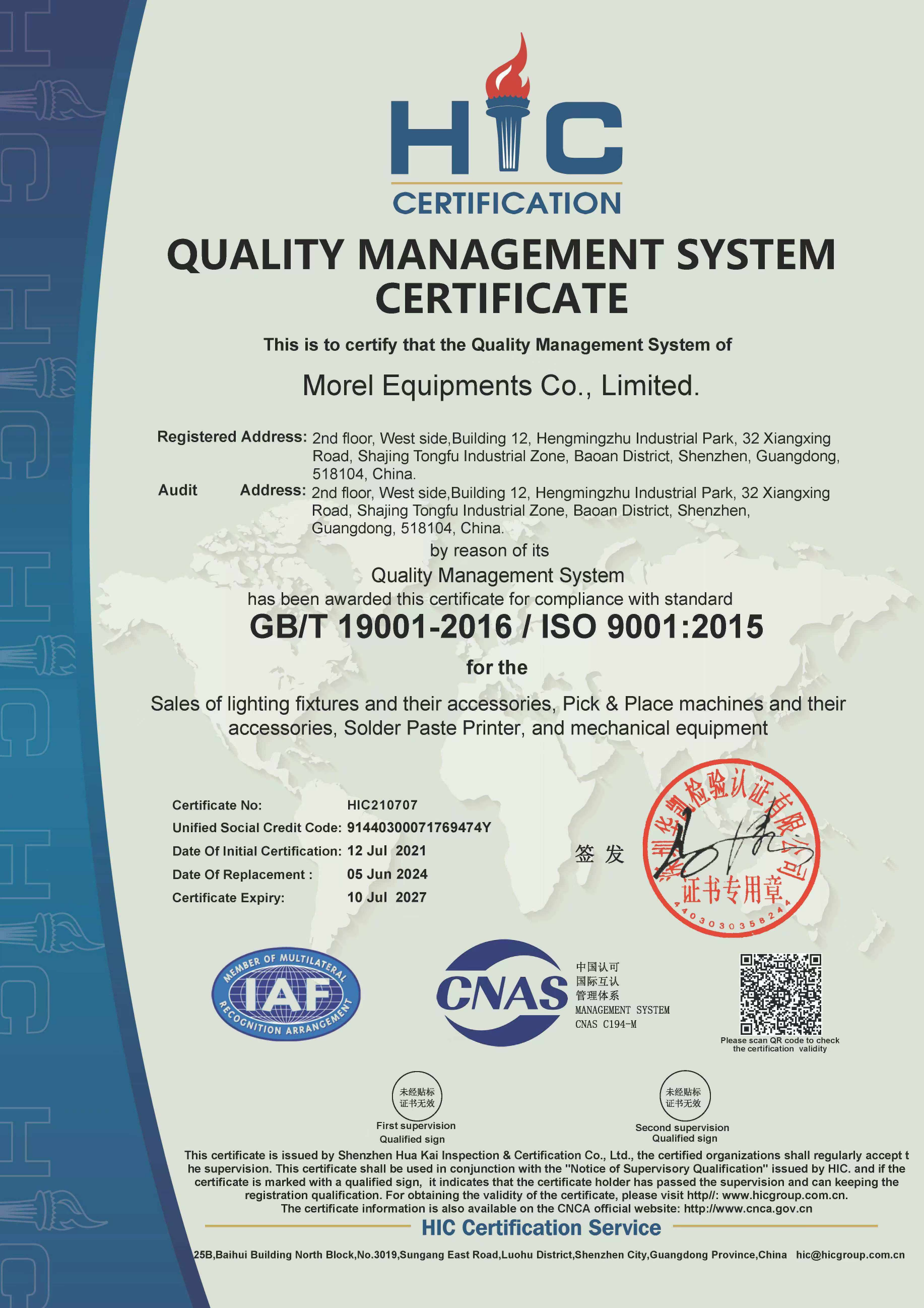 ISO 9001:2015 • Verified Supplier • CE Machinery Directive
Real-World Example: High-Mix EMS Factory in Southern China
A mid-sized EMS factory producing IoT and medical devices needed to replace an aging line to handle 150+ different part numbers per week. After initial evaluation, the client faced a dilemma: Yamaha's YSM series offered good precision but the integration with a third-party reflow oven and AOI would stretch the timeline to 14 weeks.
By choosing Motek, they received a complete SMT turnkey solution that included a pick and place machine (compatible with their existing SMT feeder 8mm 12mm 24mm), an in-house manufactured buffer conveyor, PCBA cleaning machine, and an inline SPI inspection machine. The entire line was commissioned in 9 weeks—a 35% reduction from the initial alternative proposal. Within three months, the uptime exceeded 95%, and changeover time dropped by 40% thanks to Motek's optimization service.
This case illustrates how Motek transforms the traditional "assembly of equipment" into a cohesive system with guaranteed performance metrics.
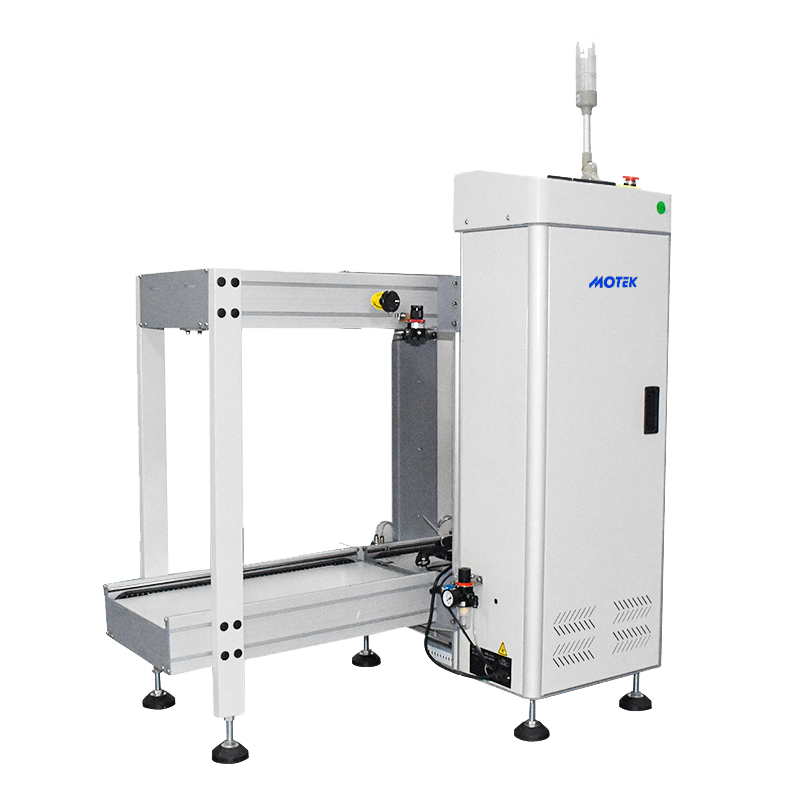
PCB Loader Unloader – Part of the integrated line
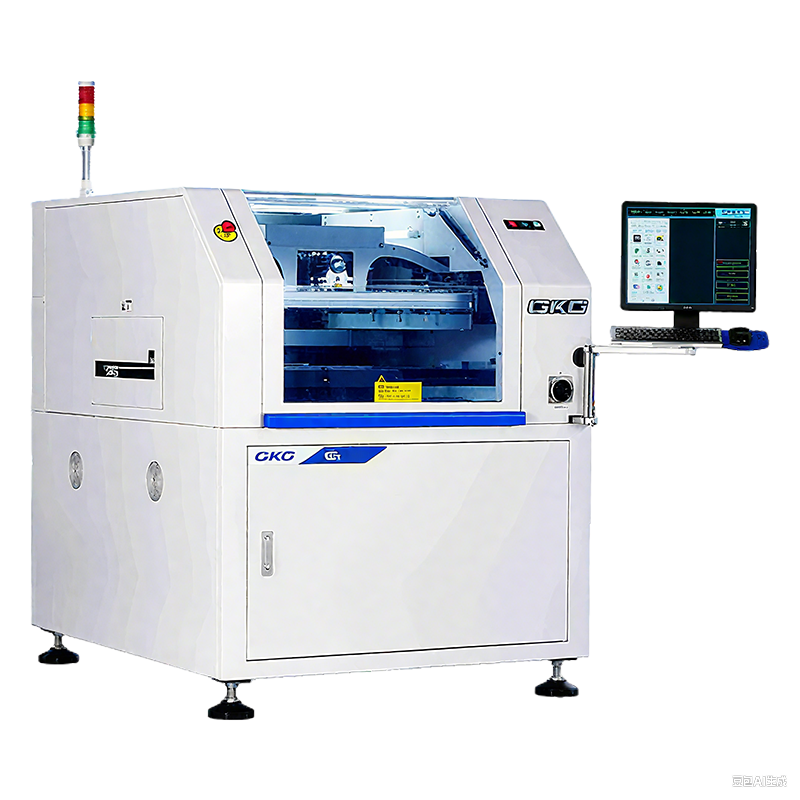
Solder Paste Printer – Precision printing
Strategic Recommendations for Procurement Professionals
Based on this analysis, here are actionable guidelines for evaluating an SMT turnkey solution provider:
- Request a capacity simulation report that includes real production scenarios (changeover frequency, feeder depletion, etc.). Ask how the provider handles bottlenecks like SMT nozzle replacement for Fuji Yamaha JUKI during peak load.
- Verify backward integration. Does the supplier manufacture critical peripherals, or are they purely a reseller? Suppliers like Motek who produce their own PCB loader unloader and buffer conveyor typically have tighter control over delivery dates.
- Check after-sales logistics. Inquire about availability of spares (SMT feeder 8mm 12mm 24mm, SMT nozzle, etc.) and typical response time for SMT production troubleshooting. A provider with a local stock in Shenzhen (as Motek has) can significantly reduce downtime.
- Benchmark the total cost of ownership over 3–5 years, including the cost of potential delays. While brand-name solutions from Fuji or Yamaha carry prestige, a fully optimized Motek line often delivers equivalent throughput with lower integration risk and faster payback for high-mix electronics manufacturing.
Conclusion: Reliability as a Competitive Advantage
In a market where electronics manufacturers are under constant pressure to shorten product life cycles and manage escalating labor costs, the ability of an SMT turnkey solution provider to deliver on both capacity and schedule is paramount. Motek (www.morequip.com), with over 15 years of domain expertise, a vertically integrated product portfolio, and a client-centric approach, stands out as a reliable alternative to the large incumbents. By focusing on the real-world challenges of EMS factory SMT line operations—changeover efficiency, spares availability, and seamless integration—Motek aligns its value proposition exactly with the procurement imperative: "deliver what was promised, when it was promised."
For detailed consultation or a simulation of your specific production requirements, contact Motek directly:
Phone: +86-755-21635007
WhatsApp/WeChat: +86 199 2455 0176
Email: sales@morequip.com / Stanley.yuan@morequip.com / Lawrence.Wang@morequip.com
Address: Room 405, Building A, Zhonggang Plaza, Exhibition Bay, No. 83, Zhanjing Road, Fuhai Sub-district, Bao'an District, Shenzhen, 518100, China
Website: www.morequip.com
MOTEK – a Name you can trust!