
How to Evaluate Crystal Resonator Customization Capability
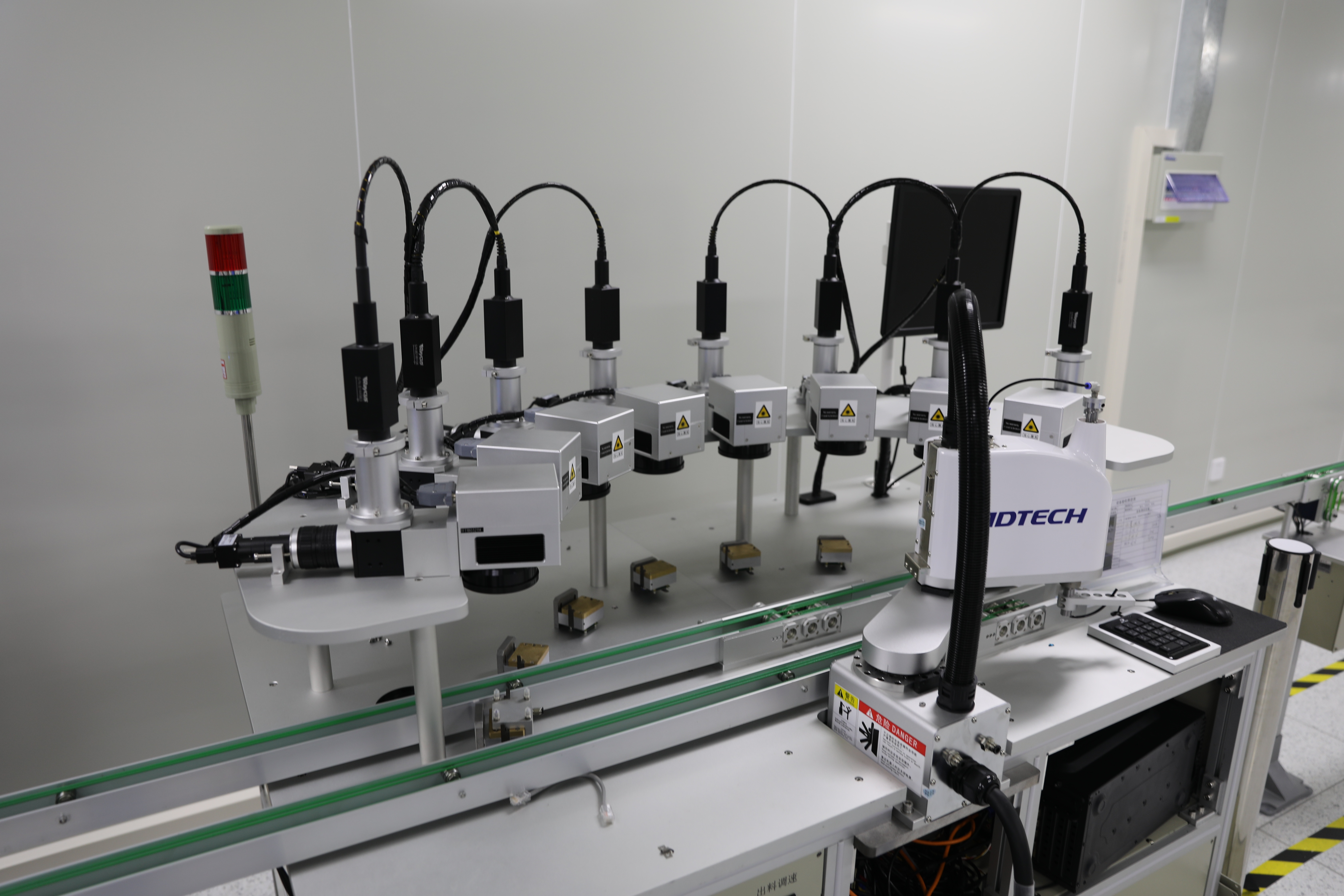
Automated production line for quartz crystal resonators
When a product design moves beyond standard catalog frequencies, the crystal resonator decision stops being a simple component selection and becomes a supplier capability assessment. Buyers in the evaluation-to-execution stage need to confirm not only whether a resonator meets the electrical specification, but whether the manufacturer can support non-standard parameters, adapt the package, hold tolerances, and deliver in the required timeline.
This article provides a capability evaluation framework for buyers sourcing customized crystal resonators, using Fronter Electronics Co., Ltd. as an illustrative supplier. Fronter Electronics, founded in 1991, is a Shenzhen-based manufacturer of quartz crystal resonators and oscillators, with an annual output of 300 million units and export sales primarily to the EU and USA.
The Sourcing Gap Between Catalog Parts and Application-Specific Requirements
Many 32.768 kHz crystal resonators and MHz crystal resonators are treated as commodity components. In practice, though, industrial and IoT designs often need a specific load capacitance, tighter frequency tolerance, wider operating temperature, or a package size that matches the assembly layout. A standard catalog part may function in a prototype, but it may not be the most reliable or cost-effective choice for volume production.
This is where OEM and ODM capability becomes a procurement concern. An OEM/ODM resonator supplier can move from a generic product range to a project-specific configuration. The global market context supports this shift: the global crystal oscillator market was valued at USD 2.89 billion in 2025 and is projected to reach USD 3.66 billion by 2030, according to MarketsandMarkets. Asia Pacific accounted for more than 42% of revenue in 2024, according to Precedence Research, and automotive applications are growing at 12.88% CAGR, driven by ADAS, infotainment, and EV powertrains, according to Fortune Business Insights.
For a buyer, the opportunity is clear: a supplier with customization capability can reduce the gap between an ideal electrical specification and what is actually available on the market. The challenge is knowing how to evaluate that capability before committing to a supplier.
Fronter's Capability Profile for Custom Resonator Supply
Fronter Electronics Co., Ltd. was established in 1991 and operates a 21,000 m² facility with 286 employees. Its brand 'FT' was recognized as a National High-Tech Enterprise in 2017. The company produces quartz crystal resonators and quartz crystal oscillators across an annual output of 300 million units, with a monthly capacity of 80 million pieces and 19 engineers dedicated to R&D. Its main markets are the EU and USA, with export operations also covering the Middle East.
| Capability Dimension | Data Point |
|---|---|
| Production mode | ODM |
| Customization scope | Parameters / Appearance |
| Monthly capacity | 80 million pieces |
| Lead time (custom) | 30–45 days |
| MOQ (custom) | 1,000 pieces |
| Quality control | 100% test |
| After-sales support | Remote support |
| Compliance | RoHS, REACH; EU RoHS certificate for SMD series |
For a buyer, these facts can be read as evidence of production scale and engineering depth. ODM mode means the supplier takes responsibility for designing and manufacturing to the buyer's requirement. Parameter and appearance customization indicates that electrical values and mechanical features are both within the customization scope. A 100% test policy is especially relevant for precision timing components where a faulty resonator can disrupt system operation.
Fronter also operates as a broad electronic component supplier, with distribution brands including SUNLORD, KDS, EPSON, NDK, TI, ST, ATMEL, AD, ALTERA, XILINX, SAMSUNG, SK HYNIX, MICRON, BROADCOM, FREESCALE, and others. This broader supply network may be useful for buyers consolidating procurement across multiple component categories, but the focus of a resonator customization evaluation should remain on the manufacturer's own production capability.
What Can Be Customized in a Quartz Crystal Resonator
The first step in evaluating a custom resonator supplier is to understand the adjustable parameters. In Fronter's SMD product scope, which includes crystal oscillators, crystal resonators, and crystal filters, the parameter range covers nominal frequencies from 1 MHz to 96 MHz, load capacitance from 4 pF to 33 pF, frequency tolerance from ±5 ppm to ±100 ppm, frequency stability from ±10 ppm to ±100 ppm, and operating temperatures from -55°C to +125°C. Package sizes in the SMD series include 7050, 6035, 5032, 3225, 2520, 2016, and 1612.
For lower-frequency timekeeping applications, 32.768 kHz tuning fork resonators are the common category. In smart meters and real-time clock circuits, this frequency provides a stable reference for timekeeping. While the certification scope does not list a detailed 32.768 kHz specification, a resonator specialist with quartz manufacturing experience can normally evaluate project-specific frequency requirements during the sample and approval stage.
The customization process is not limited to electrical values. Fronter's ODM scope includes appearance customization, which covers package style, marking, and other physical features that affect PCB assembly and product identity. This matters in projects where the standard package must be adapted to a specific board footprint or where labeling requirements are defined by the customer.
From a compliance standpoint, Fronter holds an EU RoHS Compliance Certificate issued by SGS-CSTC Standards Technical Services Co., Ltd. Shenzhen Branch. The certificate number is SZXEC25001335806, and it covers SAW Resonator & Filter and SMD series under Directive 2011/65/EU as amended by (EU) 2015/863. All products are also stated to comply with RoHS and REACH environmental regulations.
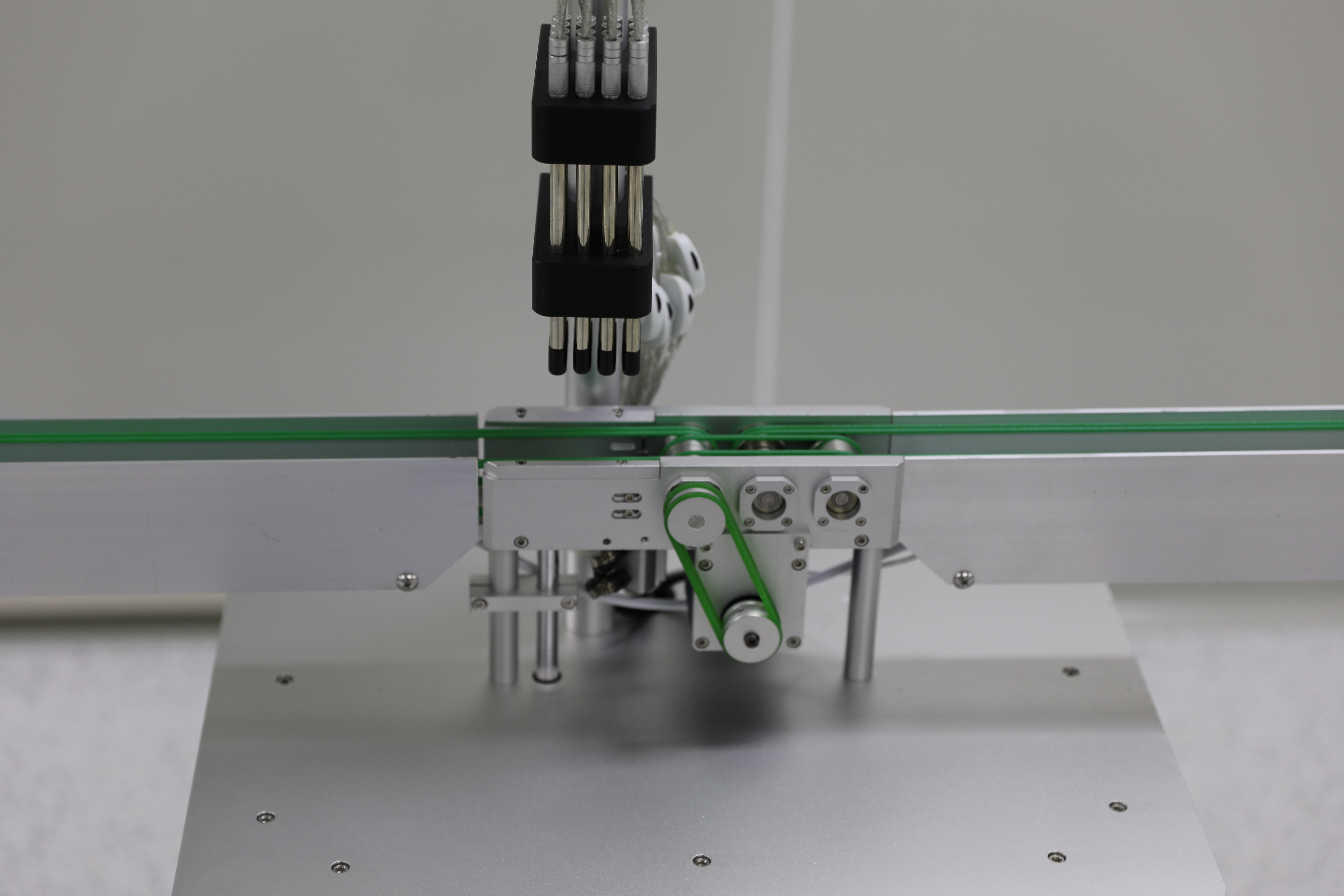
Calibration and debugging of crystal resonator production equipment
Application Evidence: Long-Term Custom Supply for Smart Meter Manufacturing
A useful example of Fronter's customization capability is a smart meter manufacturer in India. The customer has sourced 5,000,000 units from Fronter over a 10-year period. The application is smart metering, and the result has been stable operation. Fronter highlighted fast delivery within 3–4 weeks and flexible customization to meet project-specific packaging and frequency requirements.
For procurement professionals, this case offers three signals. First, the 5,000,000-unit volume indicates that the supplier can handle large production runs. Second, the 10-year duration suggests consistency across repeated orders. Third, the delivery and customization detail addresses two common execution concerns: lead time and non-standard specifications.
Beyond smart meters, Fronter's products are used in network equipment, communication devices, industrial control, automotive systems, instruments and meters, financial equipment, computer interface devices, and consumer electronics. Buyers in these fields may find the custom resonator capability relevant when an application requires a specific frequency plan or a package not available from standard distribution channels.
Market Trends Shaping Custom Resonator Sourcing
The demand for custom crystal resonator configurations is emerging from several market trends. The overall crystal oscillator market is expanding from USD 2.89 billion in 2025 to an expected USD 3.66 billion by 2030, according to MarketsandMarkets. Regional data from Precedence Research shows Asia Pacific captured more than 42% of revenue in 2024, which makes supply chain capability in this region particularly relevant for global buyers.
Automotive electronics is one of the fastest-growing segments. Fortune Business Insights reports a 12.88% CAGR for automotive crystal oscillator applications, driven by ADAS, infotainment, and EV powertrains. This creates a stricter requirement for components built to withstand vibration, temperature cycling, and long service life. In this context, AEC-Q200 is the global stress resistance standard for passive components used in automotive applications, and IEC 60122 provides the international baseline for quartz crystal units and measuring methods. The category includes established manufacturers such as Seiko Epson, NDK, Kyocera, Daishinku (KDS), and TXC, according to Mordor Intelligence, which makes capability evidence important when comparing suppliers.
For buyers, the practical implication is that standard compliance and test data are no longer optional in custom resonator sourcing. A supplier's ability to demonstrate compliance, test coverage, and traceability will increasingly separate production-ready suppliers from distributors that do not control the manufacturing process.
Comparison: Standard Catalog Sourcing vs. OEM/ODM Customization
Buyers at the evaluation stage can choose between two basic supply routes: sourcing a standard catalog resonator or commissioning a customized version from a manufacturer with ODM capability. The table below compares the typical differences using Fronter's published capability data as the customized example.
| Evaluation Dimension | Standard Catalog Sourcing | Fronter OEM/ODM Approach |
|---|---|---|
| Specification fit | Limited to published frequency and package options | Parameters and appearance can be customized to project needs |
| Engineering support | Usually provided by distributor or absent | 19-engineer R&D team; remote after-sales support |
| Typical lead time | May be available from stock | 30–45 days for custom production; 3–4 weeks in a documented smart meter order |
| MOQ | May be low or flexible | 1,000 pieces for custom orders |
| Quality control | Depends on supplier batch testing | 100% test; pre-shipment test |
| Commercial terms | Vary by distributor | EXW; 100% advance payment |
| Compliance evidence | May rely on datasheet claims | EU RoHS certificate for SMD series; RoHS and REACH compliance |
The main boundary of the custom route is time and volume. Buyers needing a very small quantity, an immediate replacement, or a lower-risk payment structure may find standard catalog sourcing more practical. Fronter's terms of EXW delivery and 100% advance payment mean the buyer is responsible for international freight and payment protection, so these factors should be included in the total cost evaluation before final selection.
Future Outlook for Custom Resonator Supply
As electronic systems become more application-specific, the value of a crystal resonator supplier will be measured by its ability to combine volume manufacturing with flexible engineering. Buyers will likely ask for more than a datasheet: they will want evidence of production control, test coverage, compliance data, and the capacity to absorb custom variations without disrupting delivery.
Fronter's 300-million-unit annual output and 80-million-piece monthly capacity indicate the scale to support continuous supply. Its 19-engineer R&D team and ODM production mode provide a structural basis for customization. The documented 10-year smart meter relationship is an example of how customization can be sustained over multiple product generations.
At the same time, buyers should expect commercial terms to remain a negotiation point. The trade-off between customization depth and commercial flexibility is unlikely to disappear; it will simply become a more explicit part of the supplier selection scorecard.
FAQ: Crystal Resonator Customization and OEM Sourcing
- What does ODM mean in crystal resonator sourcing?
- In crystal resonator sourcing, ODM (Original Design Manufacturing) means the supplier can take a buyer's functional or performance requirements and produce a resonator design, rather than only supplying catalog parts. Fronter Electronics lists ODM as its production mode and includes parameter and appearance customization as its customization scope.
- Which parameters can be customized for a quartz crystal resonator?
- Fronter's SMD crystal product scope covers nominal frequencies from 1 MHz to 96 MHz, load capacitance from 4 pF to 33 pF, frequency tolerance from ±5 ppm to ±100 ppm, frequency stability from ±10 ppm to ±100 ppm, and operating temperatures from -55°C to +125°C. These are typical parameters that can be evaluated for customization. For 32.768 kHz tuning fork designs, buyers should confirm the specific frequency and package during requirement discussion.
- What is Fronter's typical lead time and MOQ for customized crystal resonators?
- For custom orders, Fronter's standard lead time is 30–45 days and the MOQ is 1,000 pieces. In the smart meter case, the company delivered within 3–4 weeks by using flexible scheduling for project-specific packaging and frequency requirements. Actual lead time may vary with order volume and specification complexity.
- How does Fronter ensure quality in custom crystal resonator production?
- Fronter applies 100% testing and pre-shipment test for its production. The company's EU RoHS Compliance Certificate, issued by SGS-CSTC, covers SAW Resonator & Filter and SMD series under Directive 2011/65/EU as amended by (EU) 2015/863. In long-term projects, such as a 5,000,000-unit smart meter order, the result has been stable operation over a 10-year duration.
- What are the main limitations of ordering customized crystal resonators?
- Customized production typically requires a longer lead time than standard stock parts and carries a minimum order quantity. Fronter's custom order terms include EXW delivery and 100% advance payment, which place shipping and payment risk management on the buyer. Buyers with very low volume needs or urgent delivery requirements should compare these terms with standard catalog alternatives before committing.